Archives for category: The kind of world we are building for our children

When was it the last time that a craftsman has ever told you “This is not the proper way to do this!”?

OK, no matter what we ask them to do, most artisans won’t, yet, do obviously idiotic things. Like outright and evidently dangerous.
But most of them are increasingly willing to cut corners in order to please us, their customers.

What’s going on here?

The customer is king?!?
Even the drug addict?

And how about the ‘boss rules’?
1. The boss is always right.
2. Whenever the boss is not exactly right, refer to rule #1.

Now please take into consideration the fact that decisions are taken according to ‘the chain of command’. Which tends to be unidirectional. From top to bottom.
While information circulates on other grapevines. Usually only ‘on demand’. Whenever the boss asks, he gets whatever information those bellow him dare to share…
Of course, there are also the ’emergency cases’. When the hard reality slaps us in the face. Bosses and foot soldiers alike. But only too late…

No wonder then that too many of those who actually do something give up to the whims of the paying customers/’narrow minded’ bosses.

Or give up altogether.
And demote themselves to the rank of the unthinking robots.

Do/shoot first and damage control/ask questions later….

https://www.improgrammer.net/wp-content/uploads/2014/01/BOSS-is-always-RIGHT.jpg

And you’re still wondering ‘were did all these rules and regulations came from?’ Why is ‘the government’ so adamant that we need ‘guidance’?

Because we no longer pay any attention?
Hence nobody speaks up anymore….
Neither bothers to learn in earnest!

Most commentators treat Maslow’s as if it were a pyramid. A succession of five receding floors constituting a structure in the three dimensional space.

Something which can exist, and function, on its own.

I see it as a mere triangle. Drawn on a two dimensional surface by Maslow’s imagination and imperfectly reproduced – according to our individual manner of seeing things, on the surface of our consciences.

My point being that each of those levels are nothing more than a set of opportunities.

The first two, which are described as ‘basic needs’ are the stages where we have the opportunity to learn how to drink, eat, manage our immediate environment and our own strength.

And so on.

Basically, it’s what we choose to do in each of those stages which determines whether we graduate to the next one.

OK, sometimes we are dealt with an ’empty set’ situation. There is no food available. Or no water. Use your own imagination.
But since in that situation there is nothing to be done except waiting for something to change – death is a form of change, that situation is of no interest for me. There’s noting to be decided so…

What we choose to do…

All that Maslow is trying to teach us is that our freedom of will might be free but will always be influenced by the situation in which we find ourselves.

When hungry, our attention – hence freedom of thought, will be necessarily drawn to finding food. We will still be relatively free to choose our individual manner of gathering/cooking it but much of our ‘bandwidth’ will be spent trying to fulfill that task.

And so on.

The really interesting stage/floor being, of course, the last one.
Where we’ll continue to feel hungry – from time to time, at least, were we’ll continue to be vulnerable to various potential aggressors, where we’ll continue to depend on friends and associates, were we’ll continue to pay attention to what other people say about us.
But where all those needs will be modulated by our manner of relating to them.
Ascending through the first four floors meant that our understanding of things was modulated by our needs. Reaching the top means that our conscience has finally learned to ‘turn the tables’. To peek on the other side. To trans-cede.

To whatever stage our precedent choices have set for us.
For us to play our freedom.

What better way to treat depression than visiting some of the great achievements of humankind?

Stonehenge, the Great Pyramids, Machu Pichu, a selection of Europe’s Medieval Castles and Cathedrals, the Taj Mahal, Beijing’s Forbidden City, the Golden Gate, Burj al Khalifa …

I should take my wife along, right?

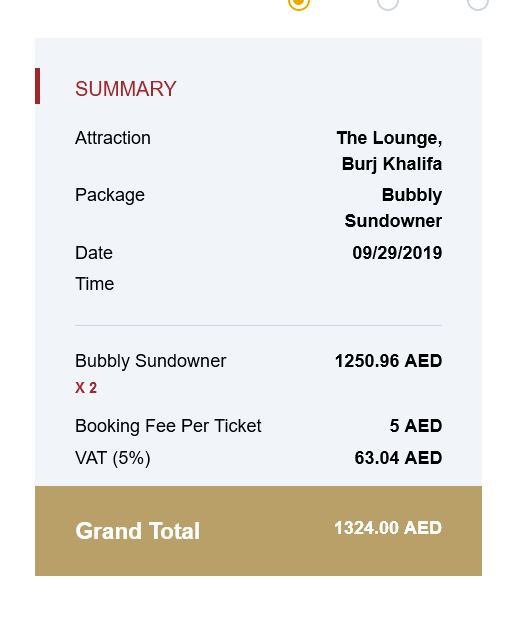
1324 AED roughly translates into 325 Euros. Not exactly cheap but… one also needs to get there.

Good thing I haven’t bought the tickets for the Lounge yet… I must reschedule…

On the other hand, does any of this make any sense for any of you?

Five hours of traveling over the clouds at almost 1000 kms per hour costs the same as spending an hour and half in a bar half a mile up in the sky? OK, Wizz Air is a low cost company, you have to pay extra if you fancy any refreshments… but still….

I’m not at all sure this trip would do anything good to my depression.

Let me put my feet back on the ground first!

Laurie Santos – psychology and cognitive sciences professor at Yale, believes that ‘we really need to do something about it’.

And I saw just students who were, you know, so depressed it was hard for them to get up in morning. I saw cases of students who were so anxious about their summer internships that they could barely function. And I thought, this is — first of all, this is what — not what I expected of college student life. You know, I remember college back when I was there in the ’90s as being relatively happy. And so, it was kind of striking. And the class came out of a goal that I had, which is that we need to do something about this as educators. We’re kind of like — we’re not in the position to really be teaching students if they’re in the midst of this mental health crisis. I think as professors we sometimes think we can teach students, you know, Chaucer and economics and things. But if the stats are right and 40 percent of them are too depressed to function and other two-thirds are so anxious that they can — you know, that they’re having panic attacks, you know, we really needed to do something about it.

And why shouldn’t they be? Depressed and panicked, that is?

Not so long ago, universities were perceived as fountains of knowledge and dispensers of philosopher’s stones. Having a degree was one of the most coveted things in the world. And one of the most useful.

Nowadays?
Universities are described as the origin of evil.
Just as Saudi-funded Salafist religious schools have radicalized large swaths of the Islamic world, American universities are radicalizing an increasingly large share of America.  This is aided by the fact that nearly 70% of kids now go to college, where most of them are taught not to think.

That would explain the depression. But ‘panic attacks’?
Experienced by the young generation of the most civilized and affluent people in the whole world?
Well, just remember the financial burden students and their families have to shoulder…

So. Students are depressed and prone to panic attacks…
Which only proves that the die-hard ‘conservatives’ are right. Millennials and Generation Z are nothing but a bunch of sissies.

Yeah, right.
Only these two generations have grown under our watch.
They are our children. We raised them. We have built the world they have to cope with.

In fact, we are the ones who need to be depressed. And panicked.
Very soon we’ll need to retire. For no other reason than becoming too old to fend for ourselves.
We’ll actually need our arses to be wiped clean and our world to be managed by somebody else but us.

Who will step in our shoes?

Furthermore, what example are we offering the next generation?

Why would they care about us if we don’t care about them? Offering them an extremely expensive education isn’t a proper expression of our love…
Why would they care about us when we don’t care about our fellow human beings? Extremely expensive health care and unaffordable housing isn’t a proper expression of ‘love thy neighbor as you love yourself’.
Why would they care about us, their parents – after we will no longer be of any real use, when we don’t really care about our employees. About those who actually make things happen?
Amazon goes further than gig economy companies such as Uber, which insist its drivers are independent contractors with no rights as employees. By contracting instead with third-party companies, which in turn employ drivers, Amazon divorces itself from the people delivering its packages. That means when things go wrong, as they often do under the intense pressure created by Amazon’s punishing targets — when workers are abused or underpaid, when overstretched delivery companies fall into bankruptcy, or when innocent people are killed or maimed by errant drivers — the system allows Amazon to wash its hands of any responsibility.
You see, Jeff Bezos did a very good thing when maintaining that “Americans deserve an economy that allows each person to succeed through hard work and creativity and to lead a life of meaning and dignity.”
Only words without deeds… might mean that we, the eventually needy parents, might end up uncared for. Sweet-talked to the end but…

On the other hand, depression might be good. Evolutionary speaking, of course.
The depressed have less energy. Hence are unable to put in practice major mistakes. Except killing themselves, of course.
The depressed have a lot of time on their hands. Huge opportunity to think things over. To notice and understand the mistakes that led them here.

Those who will resist the urge to give up – either by actually killing themselves or by falling back into the old morass, will shape ‘tomorrow’.

We, but let me start with the beginning.

First of all, I find it very interesting that Adam Smith never used the expression.
He explained the intricacies of the market without describing it as being ‘free’. For him, the market had to be free in order to function properly…

But, perhaps, no country has ever yet arrived at this degree of opulence. China seems to have been long stationary, and had, probably, long ago acquired that full complement of riches which is consistent with the nature of its laws and institutions. But this complement may be much inferior to what, with other laws and institutions, the nature of its soil, climate, and situation, might admit of. A country which neglects or despises foreign commerce, and which admits the vessel of foreign nations into one or two of its ports only, cannot transact the same quantity of business which it might do with different laws and institutions. In a country, too, where, though the rich, or the owners of large capitals, enjoy a good deal of security, the poor, or the owners of small capitals, enjoy scarce any, but are liable, under the pretence of justice, to be pillaged and plundered at any time by the inferior mandarins, the quantity of stock employed in all the different branches of business transacted within it, can never be equal to what the nature and extent of that business might admit. In every different branch, the oppression of the poor must establish the monopoly of the rich, who, by engrossing the whole trade to themselves, will be able to make very large profits. Twelve per cent. accordingly, is said to be the common interest of money in China, and the ordinary profits of stock must be sufficient to afford this large interest.”

OK, he was talking about the XVIII-th century China… but I’m sure you already know that.

Then what was it which lead Britain on what is currently known as the ‘free market path’ but blocked China, until very recently, from following suit?
After all, the participants to both markets were driven by the same self interest and their efforts were determined by the same division of work. Not to mention the fact that China’s was a many times bigger market than Britain’s. Initially, of course.

Both countries had a lot in common. Both populations were similarly stratified and class conscious, both monarchies had reached the same level of impotency, both states were run by specialized coteries … what was the difference?

“A country which neglects or despises foreign commerce…”

For a market to be truly free – as in ‘fully functional’, those who participate in it need to be free to do as they see fit and to go wherever they wish.
For this to happen the participants have to feel free – to be conscious of their freedom, and those who oversee the market need to act only as ‘arbiters’ and never as rulers.

This was the difference between the XVIII-th England and China. The British authorities were a lot more permissive than those ‘in charge of’ China and the British subjects felt a lot freer than the Chinese.
While the British authorities did nothing more than police the market, the Chinese Mandarins actually run the day to day activity.
The end result being that the British merchant men learned to deal with each-other and ask for help only when the law was broken, while the Chinese were conditioned to look up for directions at every corner of the road.
As a consequence, the free participants to the free market have learned to respect each-other, and to collectively defend their freedom, while the mainland Chinese have been conditioned to accept that bowing your head was safer.

But people learn fast.
Just look at what’s currently happening in Hong-Kong.

If you think of it, life – yet another word for ‘survival’, is about growing up from being a ‘parazite’ to pulling your own weight.

And this is valid at both individual and ‘collective’ levels.

All individual organisms – from viruses to bacteria to human, are born as helpless ‘parasites’ and survive for only as long as they don’t go ‘against the grain’.
Similarity, new species appear completely by chance and survive for only as long as they do not create enough disturbance for the rest of those who live in the neihborhood to take ‘punitive actions’.

Higher up the ‘evolution tree, ‘cultures’ – ‘wisdom’ accrued while surviving specific sets of circumstances, continue to help those who observe them for only as long as the observants don’t try to impose ‘theirs’ where they do not fit.

Furthermore, rulers continue to rule for only as long as their presence is an asset for the system.
Otherwise, the whole system goes south but the responsibility belongs to the ruler, not to the entire system. Which, nevertheless, bears the brunt of the consequences.

In some circles, the process is also known as ‘becoming a responsible adult’.

“Do you know why I hate capitalists?

1. All they care about is money

2. They have all the money”

This is a bi-partisan joke. Some of the haves use it to demonstrate that money is the essence of modern life while the ‘lefties’ use it to demonstrate the ‘malign’ nature of capitalism.

Both sides are wrong.

According to Adam Smith, the market consists of many specialized economic actors who sell their wares/services. Thus helping each-other lead a better/simpler life than if each of them had to ‘do everything’. Furthermore, a free market is better than a ‘cornered’ one, simply because competition keeps everybody on their toes.
In this sense, a capitalist is a guy who organizes a group of synergically skilled operators in such a manner as to increase their aggregated efficiency.
In order for the market to remain free, a.k.a. efficient, there must continue to exist a certain degree of competition between the said capitalists. And for the whole thing to remain a market, each of the capitalists must remain but an actor, not become a dictator. A.k.a a monopolist.
Differently put, for the market to remain functionally free, capitalists should remain/must be kept level with the other ‘merchant-men’. The bakers sell their bread-making skills, the brewers their beer-making skills, the butchers their ability to carve carcasses while capitalists sell their ability to organize people. Their entrepreneurial skills.
OK, there is difference. But only in our heads. While each of the others use specialized tools – ovens, vats, knives, etc., capitalists use money. Yet another tool but one which seems familiar to all of us. But very few of us see money as a tool and even fewer accept that using money, a lot of it, implies a huge responsibility.  Hence the enormous misunderstanding. No reasonable human being – except for a carpenter, of course, would dream to amass a huge number of, say, hammers, but a majority of people are convinced that having a lot of money would make them happy.

And why did I say “both sides are wrong”?

Because real capitalists are focused on the needs of their business partners – a.k.a. ‘consumers’, not on their pockets/paychecks. Because real capitalists understand that sellers would go hungry if there was no money to buy their wares.
Because free market capitalists are focused on making money go round – and getting handsomely paid for this, instead of constantly attempting to hoard all the money in their grasp.

It’s not me who says so.
Jamie Dimon, Alex Gorsky, Tim Cook, Ray Dalio….


Reading this excellent article by James Poulter, BBC Three, I was reminded of Marx. Karl, not Groucho.

“The lower middle class, the small manufacturer, the shopkeeper, the artisan, the peasant, all these fight against the bourgeoisie, to save from extinction their existence as fractions of the middle class. They are therefore not revolutionary, but conservative. Nay more, they are reactionary, for they try to roll back the wheel of history. If by chance, they are revolutionary, they are only so in view of their impending transfer into the proletariat; they thus defend not their present, but their future interests, they desert their own standpoint to place themselves at that of the proletariat.”

 Karl Marx, Friedrich Engels, The Communist Manifesto, 1848.

The XX-th century had been torn apart by two totalitarian lines of thought. Communism and fascism/nazism.
The communists had backed their claims on Marx’s class struggle while the fascists/nazists had used a plethora of other authors as pretexts. Despite the differences, the results had been the same. Callous spin doctors had used popular discontent to get uncontested possession of the political levers. And kept playing with them until entire countries crumbled under their own weight.

But what was it that made some nations destroy themselves on the left side of the authoritarian spectrum while others have done the same thing but on the right side?

The nature of the popular discontent!

At any given point, the majority of the people living in a country might see itself as being in one of the following three situations:
– Leading a relatively comfortable life and having a decent perspective to improve its lot or at least to maintain its present status.
– Having always led a bad life and finding absolutely no perspective of improvement.
– Having led a relatively good life for a while, lost that status and finding no way to resume it.

According to Marx, the first situation would have necessarily led to the third and, eventually, to communism.
According to history, people living in the second situation had always been manipulated into communism while people struggling in the third have been led into fascism/nazism.

Meanwhile, people living in the first situation have remained there for as long as they maintained their social cohesion. But that will be the subject of another post.


Science is, above all, a state of mind.
One that posits the world can be understood, one fact at a time.
Science also says that The (complete) Truth will never be fully acquired, only people tend to forget that part.

Some history, first.
Science, as an attitude, had appeared on the shores of the Medieval Mediterranean Sea. The Arabs had just discovered Ancient Greek writings about the ‘natural order of things’ while the Catholics were trying to figure out what God had in mind for the future of the mankind.

We have seen that the laws of nature depend on other laws of nature, which ultimately depend on God’s will.

Put all these together – the wish to understand God’s will, the belief that God’s will is expressed through the natural order of things and the systematic observation of nature, and, Eureka, you have ‘science’.

Which attitude had made Europe what it is today. Both the good and the bad of it.

Europeans have initiated the orderly study of everything around them.
As I said before, the initial intent wasn’t any technological improvement. Technicians and scientists were two completely different breed of people. As in ‘tinkerers’ and ‘philosophers’. Tinkering was sometimes confused with witchcraft while ‘philosophy’ was almost synonym with theology.
Well, both ‘professions’ could lead those to practiced them to a ‘funeral pyre’… whenever either of them ‘trespassed’… Many of those who are able to read are familiar with what ultimately happened to Giordano Bruno but very few of us know the fact that the ‘un-certified healers’ were seen with ‘suspicion’.

“Questioned whether she heals sick persons, answered yes Sir.
Questioned with what kind of medicines, answered by picking betony up and washing it like salad and crushing it into a mortar to get its juice and to give it to her patients for 3, 4 and 5 days, telling them that the more they drunk it, the better it was.
With these words the healer Gostanza da Libbiano, tried for witchcraft in 1594,….”
“The difference between them (healers) and physicians was the specific kind of tasks assigned to doctors: physicians, who rarely touched impurities and who regularly graduated from the university, were believed to be able to make the pain cease, whereas the healer, due to the fact that she actually touched her patients, was able both to make pain cease and to cause it”

Donatella Lippi, Witchcraft, Medicine and Society in Early Modern Europe, 2012

On the face of it, ‘science’ was, and continues to be, declared to depend exclusively on facts. Regardless of those facts being the expression of God’s will or, ultimately, of a serendipitous nature.
In fact, science is about what we, ‘scientists’, have been taught to accept as facts by our teachers and peers.

Another interesting thing.
When most scientists were still believing in God, their natural arrogance was kept in check by their belief that there was somebody who knew more than them. He.
As soon as God was declared dead, all hell broke loose.

‘Practical’ sciences continue to be kept in check by … well… practice! For any engineer, biologist, chemist, physician and all other related scientists and practitioners of science  it is obvious that Karl Popper and Werner Heisenberg were, and continue to be, right. No matter how much we will ever learn, we’ll never be able to know everything. Hence, we should proceed with utmost care.
Those who practice ‘secondary degree’ sciences – sci-Po being the most obvious example, share the belief that the world can be learned but are enjoying a far longer ‘leash’. Simply because the consequences of their actions come a lot later than those experienced by the ‘practical sciences’ practitioners. Add the fact that the ‘effects’ are harder  pinpoint to one specific cause/action…
And since God has become, at most, a personal matter… he no longer exerts the taming influence it used to…
Science has become independent. It is practiced for/in its own right, not as the only available manner of ‘divining’ God’s Will.
In fact, we use science as a manner to design our future. Independently. As each of us see fit and as allowed by those around us.
Which is good. Attempting to learn before proceeding is commendable, of course.
But proceeding with the unshakeable belief that we already know everything about what lies ahead of us is… foolish. Even more so when we speed up…  with total disregard about what other people, our colleagues/peers/fellow human beings, have to say and/or feel about the whole thing. Because we momentarily can.


Three things have grabbed my attention this week.

Carrie Lam, the Cambridge educated Hong Kong’s top civil servant, whose career spans more than 40 years, who happens to be a devout Catholic, had tried to fast track legislation allowing the Hong Kong authorities to extradite people to mainland China.

More than a million of the 7.4 million inhabitants of Hong Kong have taken to the streets, in protest.

Across the Pacific Ocean, in Venezuela, a pregnant mother accompanied by her two small children, had joined other 31 people who attempted to flee their impoverished country. They had climbed aboard Ana Maria, a fishing boat which was supposed to take them to Trinidad but never made it across the 20 km wide stretch of treacherous water.

Maroly Bastardo, the Venezuelan mother, was trying to survive. Since it is harder and harder to find food in Venezuela – for themselves and for their children, more and more people attempt to leave the country. Which, despite having an immense natural wealth, is being led to disaster by a group of ultimately incompetent people.

The one million people protesting in Hong Kong have adopted another strategy. They attempt not only to survive, physically, but also to preserve their way of life. Their cherished way of life.

These two are relatively easy to figure out. It’s easy to understand the need to survive. Equally easy to understand is the determination of those who want to continue a lifestyle they enjoy.

But what drives the Carrie Lam’s and the Nicholas Maduro’s of this world?
OK, I might accept the idea that, somehow, each of them might have ‘lost it’.
But what about those around them? How come so many people still consider they can, somehow, contradict the entire human history?
‘This time will be different!” ” ‘This Reich’ will rule for one thousand years!”

Yeah, right…