Your ‘most cherished’ tool for bringing people back into submission being the all mighty thunder. Jupiter Tonans. The Thundering God. Thor yielding his Mjoelnir…
And now what?!? Every worshiping place has a lighting rod installed…
What do you feel? Have all those people lost their faith in you? In you behaving as a rational being? In your ability to treat them right? Are they convinced they are now insulated against your wrath?
War and chess have a lot in common. Most strikingly, the different manners in which both of them end.
The king is captured. Or the other side gives up.
A tie is nothing but the prelude for an encore, not a real end.
Even the roads to the end are very similar in both cases. While at the start of the game/’joust’ everything is ‘possible’ – nobody knows what the other side might be doing next, as the end nears each of the combatants are more and more limited in their currently available choices by the consequences of their previous decisions. By the very path they had followed since the beginning. Which path becomes more and more evident for everybody present. Opponent as well as spectators.
Finally – but not the least important, the similarities go even further. Deeper? The king is the most ‘important’ piece but not the most powerful. In fact, the king cannot do much by itself. It can help the other pieces achieve their common goal but when left alone it is basically powerless. The only thing it can do is run. But only as far as the board allows it to go… A pawn, if it manages to reach the eight rank, gets to be promoted. To become the new ‘right hand’ of the king. The new ‘most powerful member of the team’.
‘OK. And the real point of your post is?’
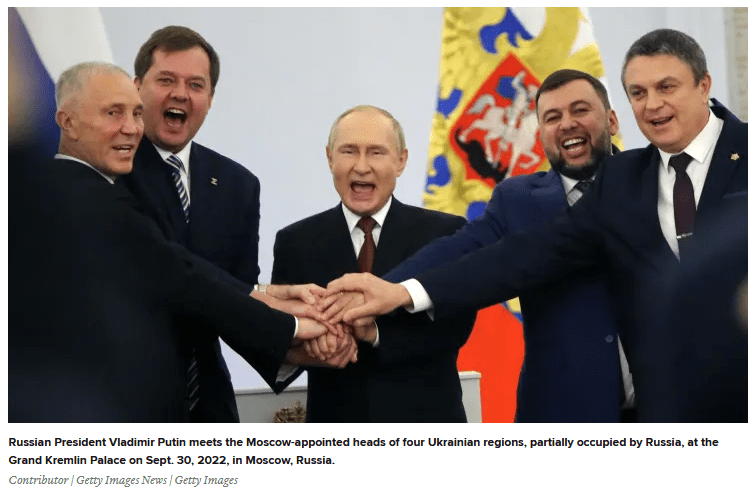
Putin cannot win this war – cause war it is, by himself. Hence he needs to preserve the loyalty of his henchmen, to instill enough fear into his opponents to make them quit and to convince the ‘spectators’ that their efforts to help Ukraine are too expensive.
Now! Are we smart enough to understand that we, each of us, are ‘next’? That each time a bully gets his way, all other (would be) bullies present become even more bullish? Are we smart enough to understand that the most meaningful thing we can do in this situation is to separate Putin from his power base? From the ordinary people who see no other alternative and from those who, for various reasons, continue to support Putin’s misconstrued ‘vision about the world’? Are we smart enough to understand that no matter how hard it is for us, the Ukrainians have it ten times harder?
Democracy is about every body having the opportunity to speak up their minds. To speak up their minds, not to kill their neighbors under the pretext that there is a difference of opinion between them!
“We didn’t invade Ukraine,” he claimed. “We declared a special military operation because we had absolutely no other way of explaining to the West that dragging Ukraine into Nato was a criminal act.” “Russia is not squeaky clean. Russia is what it is. And we are not ashamed of showing who we are.”
Are you trying to figure out what’s the real meaning of Lavrov’s words? Let me translate for you this fine example of NewSpeak.
‘We – those who are currently running Russia, will do whatever we need to do in order to preserve our power. In order to achieve that, we first and foremost need to convince the ordinary Russians to continue to obey our orders. In order to achieve that, we need to convince the ordinary Russians that you are the enemy and that their only chance lies with us, their current masters. Hence each time we destroy an Ukrainian apartment block and any of you says ‘Russians are savages’ we’re one step closer to our goal. Each and every time any of you declares ‘Russia has to pay for what it has done in Ukraine’ we tell them, the ordinary Russians, ‘See? This is what they plan to do to you once we’re are gone’.
WWI had lasted until 1945. We have the opportunity to end the Cold War now. The war in Ukraine will reach a conclusion. Let’s make it so that after the war will have ended, Russia will fold in the family of ‘civil’ nations.
Those nations that choose to live in peace! Not because they cannot win wars but because they have learned that winning wars it’s not enough. Those nations which have learned, the hard way, that war has but one winner while for peace to last every body must be a winner.
Going back is not an option. If back were good enough, we wouldn’t have left it in the first place.
Many people believe we’re reliving the fall of Rome. Contemporary with that fall was the advent of Christ’s teachings. The fact that, eventually, Christianity has altered his teachings to fit the needs of the christian hierarchy doesn’t demean any of what he taught us.
That people who treat each-other respectfully fare a lot better than those who allow the exploitation of the weak.
That people who live ‘together’ fare a lot better than those who keep forgetting that ‘strong’ and ‘weak’ are both relative and temporary.
That people who are convinced that ‘survival belongs to the fittest’ will eventually make place for those who understand that evolution is solely about the demise of the unfit.
“And Jesus knew their thoughts, and said unto them, Every kingdom divided against itself is brought to desolation; and every city or house divided against itself shall not stand: And if Satan cast out Satan, he is divided against himself; how shall then his kingdom stand? And if I by Beelzebub cast out devils, by whom do your children cast them out? therefore they shall be your judges. But if I cast out devils by the Spirit of God, then the kingdom of God is come unto you. Or else how can one enter into a strong man’s house, and spoil his goods, except he first bind the strong man? and then he will spoil his house. He that is not with me is against me; and he that gathereth not with me scattereth abroad.”
How many times have these words been invoked? By people who use them to divide? To carve a follow-ship? A follow-ship for them to lead…
How many times have these words been invoked? By individuals cocky enough to pretend they are speaking for Christ? Cocky enough to pretend they are able to fill Christ’s shoes…
Many people consider man – as in ‘human people’, is a fallen creature.
For the simple reason that we had failed to obey our father.
Failing to obey your father may be considered a bad thing. The particulars of the incident should also be taken into account but, generally speaking, we should indeed obey our fathers. At the bare minimum, we should pay attention to what they have to say about things.
Coming back to us, humans, being fallen creatures, let’s examine what we’ve done to deserve this label. According to the ‘many people’ I’ve already mentioned, we are fallen creatures because we have eaten – against our father’s specific interdiction, “from the tree of the knowledge of good and evil“.
Further more, the guilt for our transgression is unequally shouldered between men and women. Since it had been Eve who had talked Adam into eating that fruit, women are considered to be the ‘weaker’ amongst us, humans.
Now it’s the moment for me to remind you about Cain. Abel and Cain had been the two children brought to life by Eve. For whatever reason – and, again, against God’s advice, Cain had slain his brother Abel.
We – according to what the ‘many people’ continue to believe, in a literal manner – are the direct descendants of Cain. And of Eve, of course.
Yet we are ‘fallen’ because Eve had helped her husband, Adam, to develop a conscience. To learn the difference between good and evil. Cain killing his brother has nothing to do with our promiscuous nature …
To me, it’s more than obvious that our fallible – not fallen – nature consists in the fact that we are prone to ‘misunderstandings’. We tend to see things in the most favorable manner. Favorable for us, those who get to call things as being good or evil.
Whenever we are able to do it, we distribute ‘guilt’ and appropriate success.
Eve had offered us the ‘apple’. The opportunity to see ‘the’ difference. From now on, it’s up to us to consider the facts.
Both fascism and communism appear when enough people are fed up. Really fed up. So fed up that they have become gullible enough to accept the lies promised by those who want to get ‘at the top’, in the given circumstances. The difference between fascism and communism, the only one, being the exact conditions which had caused the ire of the people. Communism can, and will presently be, presented as the only possible alternative to those confronted by a ‘black ceiling’. Fascism, on the other hand, can, and will presently be, presented as the only possible alternative to those confronted by a ‘glass ceiling’. The always poor who have no chance of improving their lot will accept the lies promised by the communists. They don’t know any better so they believe those lies are possible. The impoverished who have no chance of returning to their former situation will accept the lies professed by the fascists. They know what they have lost and need to find a culprit to blame for what had happened.
In a sense you can identify fascism with the right and communism with the left. In reality, fascism and communism are the two ugly faces of the same fake coin.
For the outsiders, it seems like Gorbachev ‘made’ Putin. Gorbachev had destroyed the Soviet Union and, thus, had set the scene for Putin to take over.
I’m afraid things are a little more complicated than that.
Gorbachev – at that time, the best informed decision maker in the whole USSR – had been smart enough to understand that no matter what he might had tried to do, the corpse was already rotten. That everything but a major ‘upheaval’ could not accomplish anything more than prolong the agony. What he had done was nothing more than allowed the things to happen according to their nature.
I’ll make a short break here and remind you that all ‘imperium’ had eventually ended in failure. The tighter the control exercised by the ruler, the more abject the eventual failure. Check your history book.
So. Gorbachev had taken the appropriate steps. What he had done was in step with the natural flow of history.
Eltsin and Putin, on the other hand, had done the exact opposite. Eltsin had tried and Putin had succeeded in regaining the ‘reins’ of the government. The reins, the whip, ever stronger control over the barn where the whole stash of hay is deposited…
Why things had unfolded like this? Because they – Eltsin and Putin, had chosen this venue and because nobody else had been able to do anything about it.
OK, Gorbachev, Eltsin and Putin had made their respective calls in basically the same social and political environments. The economic situations were ‘somewhat’ different but this doesn’t change what I want to stress out. Each of them had done what had crossed each of their individual minds. Each had been able to do whatever each of them had wanted because… Because that particular ‘social arrangement’ allows the ruler to make whatever decisions they may see fit. Because that particular ‘social arrangement’ – dictatorship, no matter how much window-dressing had been slapped on it, allows the person who happens to clamber ‘on top’ to keep making mistakes until the whole ‘carriage’ disintegrates.
There is an old Romanian saying which goes like this:
A bat is all you need to break a wagon-full of pottery.
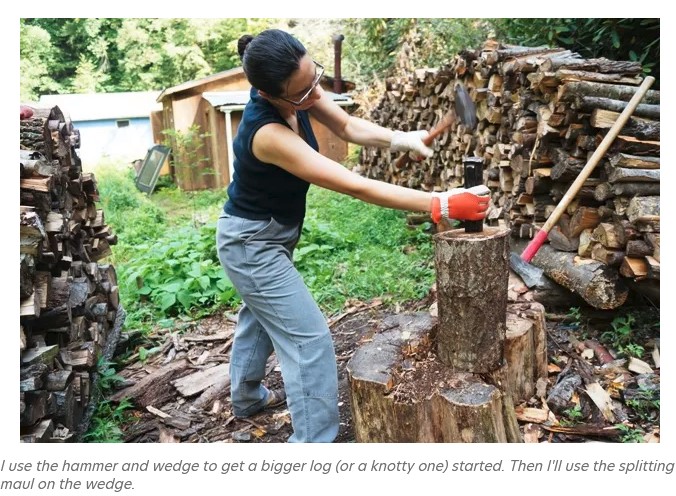
When it comes to splitting fire-wood, things are no longer that simple. Using the same blunt force approach, even if theoretically possible, would yield disappointing results. ‘Destroying’ has nothing to do with ‘re-shaping’.
Hence ‘wedge’.
On the other hand, a wedge can accomplish the same results as a bat by using a lot less brute force. Simply because the wedge concentrates more effectively, and in a more precise manner, the available energy in a very small area.
But the more important difference is the fact that using a wedge demands a way more skilled operator than a ‘mere’ bat.
‘Why don’t you cut the crap and just spill out what you have brewed in that twisted mind of yours?’
Darius, Alexander, Genghis, Napoleon, Hitler. All of them had started their campaigns in a very successful manner. Two of them had even ended their careers that way. Undefeated. The fact that all of them, including the successful ones, had been nothing but tyrants is irrelevant here.
And where is the difference?
Darius, Napoleon and Hitler had been, eventually, defeated. Each of them by a coalition.
Alexander had basically vanquished one enemy. Which was already past its prime. And Genghis had successively conquered a long list of ‘unrelated’ targets. In both cases it was more about blunt force being applied in a more or less skillful manner and nothing about splitting anything. Except for some skulls…
Each of Darius, Napoleon and Hitler had been successful at first. They had started as skillful splitters of coalitions. But each of them had been eventually bogged down. In their own respective successes…
You see, a bat remains a bat. You have to shatter a huge amount of pottery before the bat wears down. In fact, most of the times the batter goes out before the bat…
When it comes to wedging… While pottery is ‘consistent’ – equally fragile, ceteris paribus, no two logs had ever been created equal. Furthermore, even when dealing with a single log, some sections may be easily split apart while others may so ‘tough’ that it’s easier to ‘destroy’ them than to use a wedge on them. In these situations, being a skillful splitter means being able to recognize which sections should be left alone…. But which would-be emperor has ever been able to let somebody else be? Live in peace…
If they live long enough, all emperors will eventually ‘attempt’ an impossible-to-split coalition!
But when has a would-be emperor been born wise enough to recognize such a situation?!? Or every one of them, to date, have seen each coalition they happened to encounter as an opportunity? As a log waiting to be split?
Which makes me wonder… Why are would-be emperors so blind when it comes to reading history? And how about their courtiers? Also ‘blind’?
Bonus reading. An excellent piece by Cynthia Calhoun.
Social cohesion is a key concept in modern sociology. There are many definitions – most of which complement each other, and the gist of them is ‘glue’.
Do you actually perceive modern society as being glued? Bonded? Together?!?
As an engineer – MSc in Mechanical Engineering, Bucharest Politechnica University 1986 – I’m primarily interested in ‘consequences’. ‘Causes’ come second. A close second but still second. Because it’s ‘consequences’ we have to face/endure directly, not ’causes’. Whenever I feel bad, really bad, I begin by stopping everything that I was doing. To have enough time to determine the proper cause for my malaise. Identifying/dealing with causes ‘on the go’ – usually by having faith in what I already know, without realizing that it was exactly that which had led me to where I am now – is not such a good option.
Very few societies (countries, nations) continue to behave coherently. Many of them – most of them, actually, used to. Until very recently. Yet most of my ‘recent’ colleagues – B in Sociology, Bucharest University 2009, continue to discuss about ‘cohesion’.
Communities continue to be cohesive. And, as a consequence, continue to behave coherently. Why? The easiest answer is ‘by definition’. That’s how you recognize a community. A group of people who act coherently because they are ‘bound together’ by ‘social cohesion’. How that happened to be? Some other time!
Societies, on the other hand, no longer are. Nations, which used to be whole, are now ‘fractured’. Not entirely, but they certainly behave a lot less coherently than, say, 50 years ago. OK, this is not the first time that something like this had happened….
Civil wars are nothing new. None of them had been ‘civil’ though. Which makes ‘civil war‘ an oxymoron… Something so ‘impossible’ that we haven’t coined a proper word for it. Something so horrible that we speak about it using an ‘impossible’ name in order to properly mark its utter impropriety.
What is new is the amount of knowledge we currently have about the whole matter. About the inner workings of our collective psyche. How we use that knowledge, what we have understood from learning it, the manner in which we allow that information to shape our actions … that’s another matter!
Whose consequences are in the making. There are no other ‘makers’ but us. Also, there are no other people to bear the consequences of what we’re doing now.
Because it illustrates perfectly the prevailing trend. How things change because of us. How we – collectively, change the world around us.
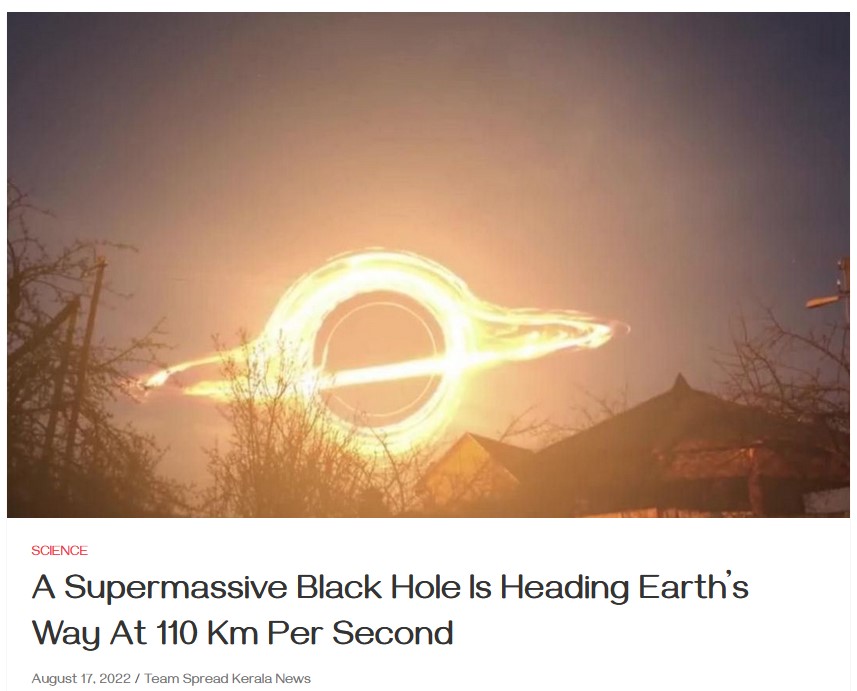
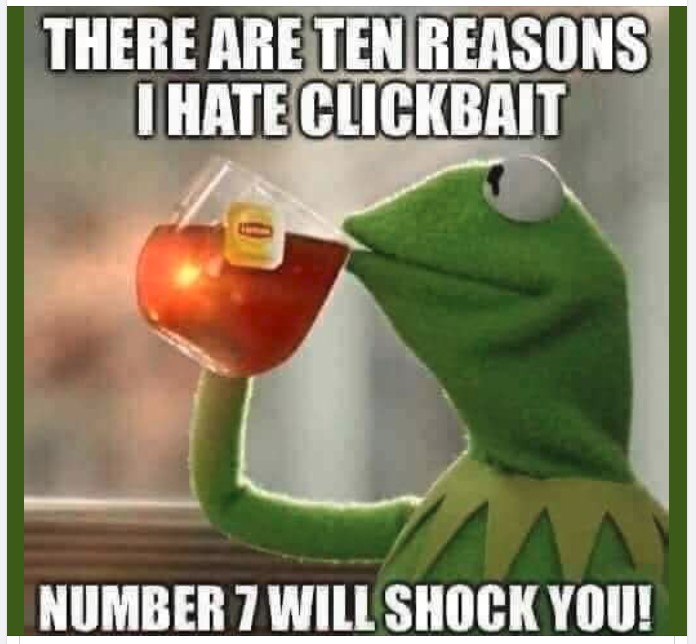
At first, click-bait had been used by ‘fraudsters’. ‘Publishers’ who used to cram completely useless information under some very ‘enticing’ titles.
Now… you may say that the information about our galaxy – the Milky Way, being on a collision course with Andromeda – our closest galactic neighbor, is also useless. Maybe… After all, that will only happen after 4 billion years had already passed… Anyway, this time, the targeted public is rather different than before. More ‘scientifically minded’… Which proves my point. That using click-bait has become a lot more acceptable.
The new normal…
Which brings me to the next question. How many of you are going to watch this?
Now I’ll attempt to offer an ‘alternative’ understanding of inflation. Not what it is – we all know that, but what it does. It will be a functionalist view of the matter. Evolutionary, even. As in ‘why do we still have inflation’. Why inflation continues to ‘survive’.
For most of our history, economy had been about solving needs. Regardless of the market being momentarily free or not, for things to go on a balance had to be struck. Demand had to be balanced by supply. Hence ‘price’.
Demand was mostly driven by the number of people needing something while supply was driven by the available natural resources AND by our ability to transform those resources into actual commodities. For example, the price of wheat was influenced by the number of people living in a certain area, by the amount of arable land AND by the agricultural technology used at any given time. OK, the weather also had an impact but it was mitigated by the technology.
‘But how about imports? After all, ‘international’ grain trade is three millennia old. Ancient Athenian ships had been distributing ‘Ukrainian’ wheat all around the Aegean sea since before the Trojan war…’
Yeah, and how about emigration… the Irish had gone to America to escape famine, didn’t they? We’ll get there. ‘Baby steps’, otherwise we may trip!
When population increased, they tried to add more arable land. If they could. If not – and/or in parallel, they tried to increase yield. But the process was not linear. They could not ‘fine tune’ the increase of yield – by either method, exactly to the population growth. Hence the variation of price. Hence the ‘secondary mitigation measures’ – import/export and emigration.
‘OK, I understand. But prices can go both ways. Up AND down! Inflation only goes up…’
You’re speaking about individual prices. Which, indeed, go both ways. And, yes again, inflation goes – in medium to longer time frames, only up!
You see, we have ‘price adjustments’ and (compounded) inflation.
Price adjustment is the mechanism through which the market – free or otherwise, balances the market for individual ‘items’. Encourages the consumption of wheat when the price is low and encourages the farmers to plant more wheat when the prices are high. Same thing for, say, shoe-shinning! Meanwhile, (compounded) inflation is the mechanism through which the market – again, free or otherwise, balances itself.
‘Huh?!?’ For example, if wheat becomes too expensive, consumers (and suppliers) might decide to replace it with something else. Rice. Or potatoes. Or, when grain prices become prohibitively low, farmers might abandon their plows and buy, say, shoe-shining tools.
‘But if rice – or anything else – would yield a lot more than wheat per the available arable land, the over all prices for food – and everything else, should go down, right? Not up…’
Well… in a rational world… maybe. That’s another long discussion. The short version being that we usually wait for too long before making the necessary changes. Which is not necessarily wrong but that’s yet another long discussion. Only hindsight is 20/20…
Let’s say it would be possible to grow wheat and rice on the same plot of land without making any technological adjustments. If the growers would know what kind of weather would come in the next season, they would be able to plant the right crop. But they don’t. And it takes time for people to grasp the weather patterns have changed – and adjust the pertinent technology. On top of that, adjusting technology requires money. Investment. Fresh ‘inputs’.
And who would do such a thing – plowing money into the ground, literally – without expecting an increased return? Something ‘extra’ for their effort?
In economic terms, nobody invests their money in a deflationary environment. Why would anybody do such a thing? Buy now when waiting till ‘tomorrow’ would make it possible to buy more for the same money?!?
That’s why inflation goes up. Period. Cause otherwise the whole economy would become obsolete. We’d all be waiting for ‘tomorrow’.
NB. This was a gross ‘simplification’. A bare sketch. Even in a deflationary environment, some prices do go up. For years overall prices have gone down – because of our increased technological prowess – while housing, education, healthcare and insurance have become more and more expensive. ‘Tilting’ the whole market. More about this in the next post on the subject.






 nicichiarasa