Archives for category: Psychology

Social cohesion is a key concept in modern sociology.
There are many definitions – most of which complement each other, and the gist of them is ‘glue’.

…the glue that bonds society together…

Do you actually perceive modern society as being glued? Bonded? Together?!?

As an engineer – MSc in Mechanical Engineering, Bucharest Politechnica University 1986 – I’m primarily interested in ‘consequences’. ‘Causes’ come second. A close second but still second. Because it’s ‘consequences’ we have to face/endure directly, not ’causes’.
Whenever I feel bad, really bad, I begin by stopping everything that I was doing. To have enough time to determine the proper cause for my malaise. Identifying/dealing with causes ‘on the go’ – usually by having faith in what I already know, without realizing that it was exactly that which had led me to where I am now – is not such a good option.

Very few societies (countries, nations) continue to behave coherently. Many of them – most of them, actually, used to. Until very recently.
Yet most of my ‘recent’ colleagues – B in Sociology, Bucharest University 2009, continue to discuss about ‘cohesion’.

Communities continue to be cohesive. And, as a consequence, continue to behave coherently.
Why?
The easiest answer is ‘by definition’.
That’s how you recognize a community. A group of people who act coherently because they are ‘bound together’ by ‘social cohesion’. How that happened to be? Some other time!

Societies, on the other hand, no longer are.
Nations, which used to be whole, are now ‘fractured’. Not entirely, but they certainly behave a lot less coherently than, say, 50 years ago.
OK, this is not the first time that something like this had happened….

Civil wars are nothing new.
None of them had been ‘civil’ though. Which makes ‘civil war‘ an oxymoron
Something so ‘impossible’ that we haven’t coined a proper word for it. Something so horrible that we speak about it using an ‘impossible’ name in order to properly mark its utter impropriety.

What is new is the amount of knowledge we currently have about the whole matter. About the inner workings of our collective psyche.
How we use that knowledge, what we have understood from learning it, the manner in which we allow that information to shape our actions … that’s another matter!

Whose consequences are in the making.
There are no other ‘makers’ but us.
Also, there are no other people to bear the consequences of what we’re doing now.
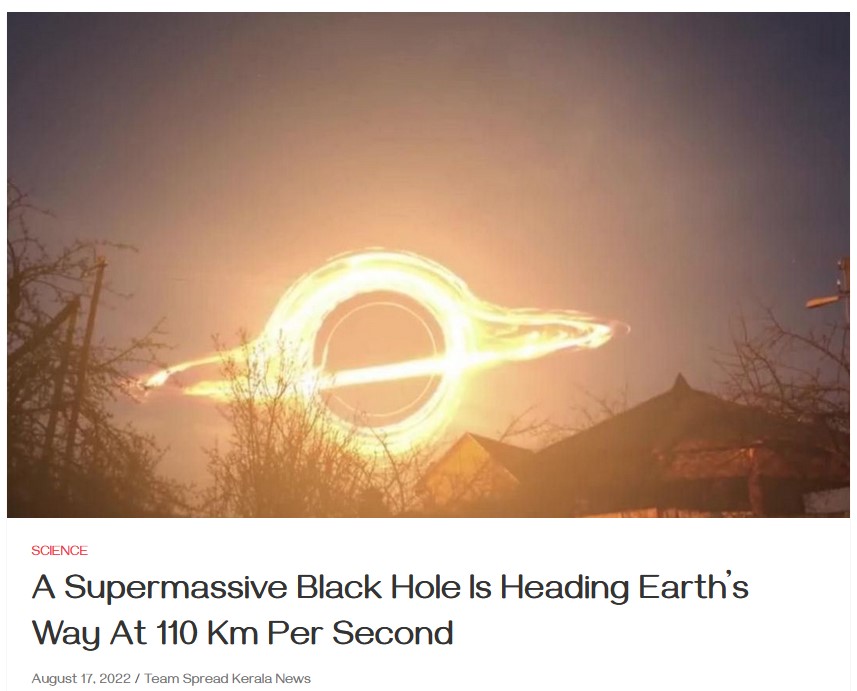
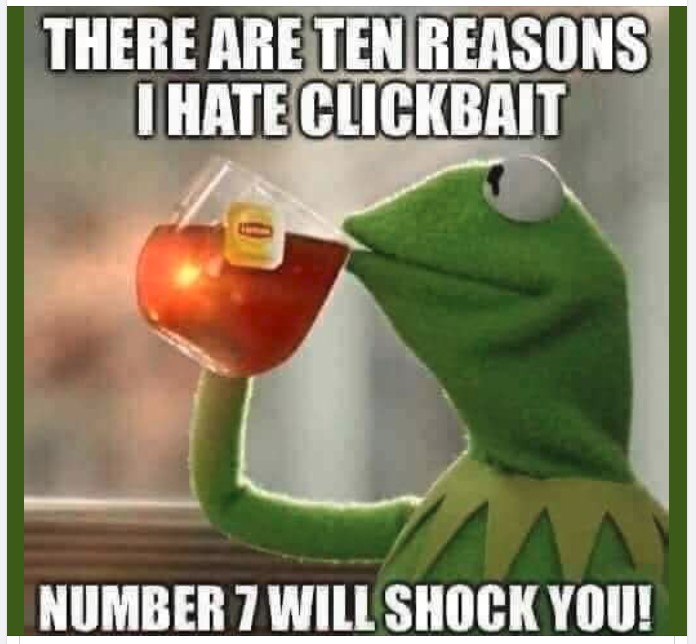
Is this the epitome of ‘click bait’?

Then why do I bother with it?

Because it illustrates perfectly the prevailing trend. How things change because of us.
How we – collectively, change the world around us.

At first, click-bait had been used by ‘fraudsters’. ‘Publishers’ who used to cram completely useless information under some very ‘enticing’ titles.


Now… you may say that the information about our galaxy – the Milky Way, being on a collision course with Andromeda – our closest galactic neighbor, is also useless. Maybe… After all, that will only happen after 4 billion years had already passed… Anyway, this time, the targeted public is rather different than before. More ‘scientifically minded’…
Which proves my point.
That using click-bait has become a lot more acceptable.

The new normal…

Which brings me to the next question.
How many of you are going to watch this?

https://fb.watch/eZRdlM0nNq/

Want to find more?
To figure out, on your own, why this trend worries me?

Read this. Well worth your time, I promise.

https://www.wsj.com/articles/how-to-trick-the-guilty-and-gullible-into-revealing-themselves-1399680248

I sketched earlier a brief description of how we got here.

Now I’ll attempt to offer an ‘alternative’ understanding of inflation. Not what it is – we all know that, but what it does.
It will be a functionalist view of the matter. Evolutionary, even.
As in ‘why do we still have inflation’. Why inflation continues to ‘survive’.

For most of our history, economy had been about solving needs.
Regardless of the market being momentarily free or not, for things to go on a balance had to be struck.
Demand had to be balanced by supply. Hence ‘price’.

Demand was mostly driven by the number of people needing something while supply was driven by the available natural resources AND by our ability to transform those resources into actual commodities.
For example, the price of wheat was influenced by the number of people living in a certain area, by the amount of arable land AND by the agricultural technology used at any given time. OK, the weather also had an impact but it was mitigated by the technology.

‘But how about imports? After all, ‘international’ grain trade is three millennia old. Ancient Athenian ships had been distributing ‘Ukrainian’ wheat all around the Aegean sea since before the Trojan war…’

Yeah, and how about emigration… the Irish had gone to America to escape famine, didn’t they?
We’ll get there. ‘Baby steps’, otherwise we may trip!

When population increased, they tried to add more arable land. If they could. If not – and/or in parallel, they tried to increase yield.
But the process was not linear. They could not ‘fine tune’ the increase of yield – by either method, exactly to the population growth. Hence the variation of price. Hence the ‘secondary mitigation measures’ – import/export and emigration.

‘OK, I understand. But prices can go both ways. Up AND down! Inflation only goes up…’

You’re speaking about individual prices. Which, indeed, go both ways.
And, yes again, inflation goes – in medium to longer time frames, only up!

You see, we have ‘price adjustments’ and (compounded) inflation.

Price adjustment is the mechanism through which the market – free or otherwise, balances the market for individual ‘items’. Encourages the consumption of wheat when the price is low and encourages the farmers to plant more wheat when the prices are high. Same thing for, say, shoe-shinning!
Meanwhile, (compounded) inflation is the mechanism through which the market – again, free or otherwise, balances itself.

‘Huh?!?’
For example, if wheat becomes too expensive, consumers (and suppliers) might decide to replace it with something else. Rice. Or potatoes.
Or, when grain prices become prohibitively low, farmers might abandon their plows and buy, say, shoe-shining tools.

‘But if rice – or anything else – would yield a lot more than wheat per the available arable land, the over all prices for food – and everything else, should go down, right? Not up…’

Well… in a rational world… maybe. That’s another long discussion.
The short version being that we usually wait for too long before making the necessary changes. Which is not necessarily wrong but that’s yet another long discussion. Only hindsight is 20/20…

Let’s say it would be possible to grow wheat and rice on the same plot of land without making any technological adjustments. If the growers would know what kind of weather would come in the next season, they would be able to plant the right crop. But they don’t. And it takes time for people to grasp the weather patterns have changed – and adjust the pertinent technology. On top of that, adjusting technology requires money.
Investment. Fresh ‘inputs’.

And who would do such a thing – plowing money into the ground, literally – without expecting an increased return? Something ‘extra’ for their effort?

In economic terms, nobody invests their money in a deflationary environment.
Why would anybody do such a thing?
Buy now when waiting till ‘tomorrow’ would make it possible to buy more for the same money?!?

That’s why inflation goes up. Period.
Cause otherwise the whole economy would become obsolete. We’d all be waiting for ‘tomorrow’.

NB.
This was a gross ‘simplification’.
A bare sketch.
Even in a deflationary environment, some prices do go up. For years overall prices have gone down – because of our increased technological prowess – while housing, education, healthcare and insurance have become more and more expensive. ‘Tilting’ the whole market.
More about this in the next post on the subject.

Named after the Ancient Greek mythological serpent, the freshwater hydra has a remarkable ability to regenerate (Credit: Natural Visions/Alamy)

Just finished reading a very interesting article on BBC.com/future. Why do we die. Authored by William Park.
Just click on the picture above and read it.

Despite the “we” in the title, it’s a compendium of plausible explanations for why most individual organisms eventually die. And an interesting row of examples of species comprised of individuals which live practically for ever.

Here’s another explanation.

Charles Darwin’s Evolution was about ‘species’. Not about individuals!

Very few species have been able to survive without ‘killing’ their individual ‘members’.
Hydra, the species of fresh water jellyfish pictured above, is one of those species. Each individual hydra is able to survive practically everything but total annihilation. Cut it into pieces and each piece would regenerate the rest of the organism. Allow a big enough (?!?) piece of it to survive while attempting to eat a hydra… and you may be able to eat it again! If you live long enough for the encounter to happen again…

Since when have we been observing this species? A hundred years? Two hundred? Have we had preserved an individual hydra since the start of our observations? Is is still alive? In the ‘original form’?
And even if ‘yes’, so what? That would only prove that an individual hydra is able to survive for more than, say, two hundred years. Not that it would live forever….
Again, being able to regenerate a portion of an organism doesn’t mean the whole organism would be able to live indefinitely. As in live forever. Never die…
The way I see it, being able to regenerate the rest of the organism is only yet another form of ‘reproduction’, not the ability to live forever. Bacteria use the very same mechanism. We the ones who use a different name for it, under the pretext that bacteria are unicellular organisms…

Now, the fact that there are so few species whose individual members are able to regenerate parts of their organisms does tell us something.
And the fact that it’s only the ‘simply organized’ species – among the animal kingdom, at least – which share this ability must surely mean something. Evolutionary wise!

We need to eat.
At some point, we discovered that by cooking it we got more out of the food we had at our disposal.
Then we learned to cook tastier and tastier meals.

Nowadays, more and more of us wonder

Why Do We Love Unhealthy Foods So Much?

Because we’ve some how convinced ourselves that being happy trumps being alive.

Evolutively speaking, pleasure is a ‘heads up’. It tells us that we do ‘the right thing’. That the food we eat is suitable for us. Nourishing.
Evolutively speaking, happiness is a heads up. That we’re on the right track. That we’re doing nothing to jeopardize our survival.

Those ‘heads – up’ were valid. Once…
And they still are. When ‘used with discretion’.

The problem being that we’re currently harnessing the horse behind the cart.

We’re no longer pursuing life as a wholesome experience.
We just want to be happy!
We no longer eat to remain alive.
We just want to have a better experience! An even better experience than the previous one…

Should we return to the Stone Age?
When so many of us died of hunger? Of illness?
Should we give up the ‘pursuit of happiness’ as a legitimate goal?!?

How about being happy while pursuing a meaningful life?

I’m going to discuss four things in this post.

The difference between a scientific paper and a piece of ‘mere’ literature.
And what can be learned by analyzing a message.

I’ll start with the second.

A message has two layers of meaning.
The ‘prima facie’ and the ‘deeper levels’.

When somebody asks ‘What time is it, please!’, the first thing you do is to check your watch.
Most of the time, it’s the proper way to react in this situation.
But not always! Sometimes, the guy only wants to find out what kind of watch you’re wearing. To determine if it’s worth the effort. To steal it from you!

If looked at from the proper angle, most messages speak volumes.
The first volume is always about what the ‘speaker’ wants to convey to their audience.
The next ones are about the speaker. About their ability to speak, about their manner of thinking… and so on.
When speaking, the speaker wants to convey a limited amount of information. The intended message. When listening, an attentive listener may learn more about the speaker than about the issue at hand!

A scientific paper starts by stating a conclusion.
And continues by listing the arguments.
An ‘ordinary’ piece of literature builds a ‘scaffolding’. Introduces a series of ‘things’ and leads the reader towards a conclusion. Which is more likely suggested rather than imposed.

Should I continue?
About what I learned by reading the Amnesty International report?

The most important issue here – for Amnesty International, being the fact that “Ukrainian fighting tactics endanger civilians”.
As if Ukraine was the big bully. Who had enough resources to carefully select ‘tactics’!

“Attacks launched from populated civilian areas”.
Hello!!! Ukraine itself is a populated country! Mostly by civilians…
This is not a joust. Which may be organized ‘out there’, on an open field. If both sides agree…
This war, like almost all others, is about conquering, and defending, populated areas!

Such violations in no way justify Russia’s indiscriminate attacks, which have killed and injured countless civilians
Finally!

But shouldn’t this be the ‘main course’ of the Amnesty International report?!?
After all, it was Putin who had ordered the Russian army to invade Ukraine…
It had been his orders which had started this mayhem!

I will wrap up this post by introducing the third concept.
The phrase useful idiot designates a naive or credulous person who can be manipulated or exploited to advance a cause or political agenda.

Instead of any conclusions, I’ll be asking you a question.
What is the real importance of studying ‘humanities’?

Formally, availability of education for children has increased around the world over the last decades. However, despite having a successful formal education career, adults can become functional illiterates. Functional illiteracy means that a person cannot use reading, writing, and calculation skills for his/her own and the community’s development. Functional illiteracy has considerable negative effects not only on personal development, but also in economic and social terms.

I’m getting old. Old enough, as a good friend of mine had noticed, to have a way closer relation with sex than ever before.

I am a sexagenarian!

Which gives me certain bragging rights.
You see, everything around us has been made – or started – during my watch. Or earlier…

There is a small catch, though.
Not everything around us is good. In working order. Sustainable!
Some 50 years ago, humankind had developed the means to destroy itself. Remember MAD?
We – our fathers, actually, took a step back. And took the necessary steps. In the end, nothing happened. We’re still here, in spite of having the possibility to spoil everything.
Nowadays, we’ve reached another inflection point. And no, I’m not speaking about ‘global warming’. Not exclusively, anyway.

Global warming is only one of the many things which may go wrong.
One of the many ways in which we may fuck everything up!

My point being that it’s not the first time in history that we are able to fuck everything up.
It’s the first time in history that we are fully aware of the many ways in which things might go totally wrong and we’re practically doing nothing!

Why?!?
Because we have grown old!

When I grew up, there were relatively few old people around.
A lot more than when my parents had grown up but a lot less than now.

When apes had become human – when humanoids learned to speak – old people were precious assets.
Having lived a lot – and being able to share their experience, in detail – they had become depositories of knowledge. The go-to place for when you wanted to learn about something. When you needed a certain piece of information.
Hence the old-timers had, gradually, accrued a lot of respect. As a category.
Add the fact that in order to grow old – to survive for long enough, it helps to make ‘the right calls’. OK, you also need to be lucky… but being smart does come in handy…

Are you done yet? Adding these two? Being looked up to because you are old with thinking good about yourself?

Did you get ‘confirmation bias‘?

In the ‘good old days’, people who had reached my age had their ‘confirmation bias’ tempered by ‘impotence’.
No, not only sexual impotence…
In those days, individuals were a lot more aware than we are today of how much we depend on each other. Of the fact that individually we are impotent! The old ones knew they were going to starve if the young ones would cease providing for them while the young ones were aware of how useful the old ones could be.
Nowadays… We, the oldies, continue to believe we know everything – we survived, didn’t we? – while the young bucks believe they can find out whatever they might need from the internet…
Meanwhile, we – the oldies – no longer need the youngsters to provide for us.

We are wealthier than ever before, we have pension plans and we vote as a team… the world is ours, as it should be!
And since we don’t have so much more to live…

But how sustainable is this situation?
For the shortest of the imaginable time-frames…

“Faced with reckless U.S. disregard of China’s repeated and serious representations, any countermeasures taken by the Chinese side will be justified and necessary, which is also the right of any independent and sovereign country,” foreign ministry spokesperson Hua Chunying told a daily briefing in Beijing.

‘Repeated and serious representations…’

‘I told you how I see things.
Hence if you do what I warned you not to, I’ll be free to punch you in the nose!’

Is this the epitome of ‘bullying’?

Or, rather, of pushing yourself into a corner?!?

Now, if Pelosi actually lands in Taiwan, how far will Xi go in order to ‘save face‘?
Let it go… he would lose too much of it. Too much ‘face’. Any threat he would utter from then on, would be met by deaf ears.

Do anything foolish…

On the other hand, China is the world’s biggest importer of food! And energy…

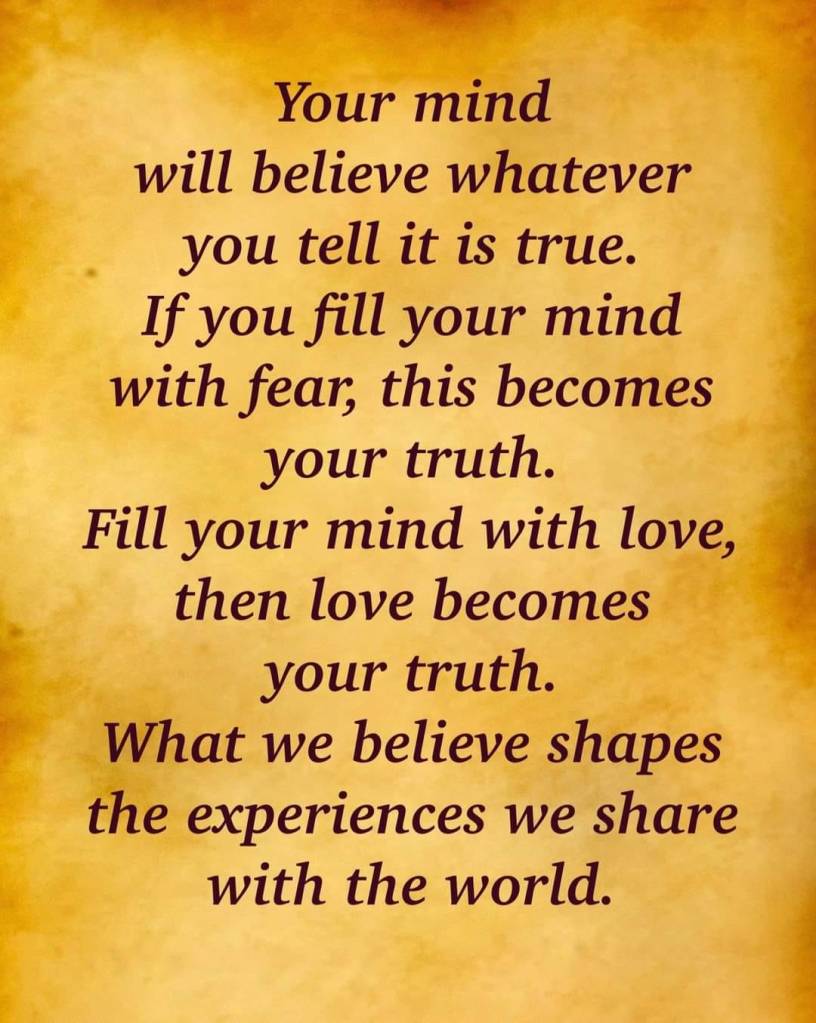
Who is telling the mind? Am I not my mind?”

“Your mind is only a part of you. Like the driver is only a part of a car. Irreplaceable but…

Most of us believe it’s the driver who tells the car where to go…

Well, the driver has to follow the road, obey the rules, interact with the other drivers, take care of their own needs… fuel and maintain the car… only then they are ‘free’ to ‘pursue’ the destination.
Which destination is, more often than we care to admit, chosen by the heart rather than with the help of the mind.

So yes, it’s the mind who should tell itself what to believe. Only it needs to reach a certain serenity in order to make a proper decision.
To be able to choose by itself instead of accepting, indiscriminately, ‘suggestions’!”

Sand for the statue and fences for protection.

Not for a particular king!
No.
Not even for kings in general.

Only for all those ‘in charge’!
As a reminder for the fact that their authority is very fragile.
Goes for only as far as it is accepted. Protected by those who respect it.

As a reminder for the fact that fences not only protect but also separate.

The point being that whenever those calling the shots no longer suffer the consequences, the situation becomes extremely fragile.
That whenever a ‘king’ needs to be protected from his subjects instead of by them…