Archives for category: Mutual Respect

That all things, at least those belonging to the real world, have a certain thickness… is a truism.

Yet so often we ignore this evidence and relate only to the appearance we are looking at.
At a given moment.
By chance, by design or by negligence.

Take for instance Marine le Pen’s ascension to the second tour in the French elections.
Quite a number of ‘pundits’ put the ‘blame’ for this squarely on ‘Bruxelles” shoulders. Including her and her followers. And, not at all surprisingly, Trump and Putin.

And not without reason!

After all the EU bureaucracy, headquartered in Bruxelles, is responsible for many of the consequences brought upon our heads by the very existence of what is currently known as the European Community.
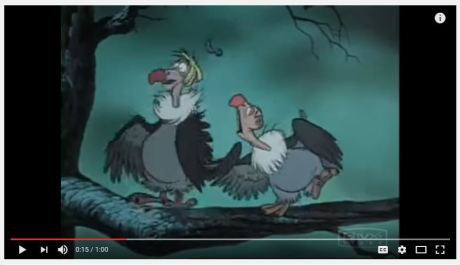
what we gonna do

Click on the bloody picture, will ya!

First of all let me remind you what brought about the current edition of the ‘European Project.’

OK, it has been attempted before. By the Romans, by Charlemagne, by Napoleon, by Hitler… and don’t tell me that Putin wouldn’t love to be ‘crowned’ as The European Leader.

The problem is that all those attempts had started as individual initiatives and had happened to be ‘against the grain’. As in those who had to shoulder the burden for it didn’t see any benefit from it coming to life.

A small parenthesis. There is nothing ‘unnatural’ for strong willed individuals to try to widen their domination to the farthest possible corner. It had happened when and where ever geographical and historical conditions had allowed it.
The problem is that all imperia have eventually failed, usually in an abysmal manner. History is so full of examples that I won’t bother presenting any.

This edition of the European Project has started out of necessity.

At the end of WWII the continent was in a state of disarray.
The West was mired in self doubt and extremely tired while the East had experienced both the German occupation and the blessings of being liberated by the Soviets.

Understanding that Europe had to be helped, or else – it could have been, in a short while, overwhelmed by the Soviets, America had drafted the Marshall Plan.
For the sake of efficiency, the Americans had asked the Europeans to organize themselves at the receiving end. The Europeans responded by calling a Conference for European Economic Co-operation. It would be beyond the scope of this post to get into further details but this was the start of the Organisation for European Economic Co-operation which a short while later had set the stage for the European Coal and Steel Community – the precursor of the present-day European Community.

As we all know, the project has fulfilled its intended goals.

Europe has recovered nicely and the Soviet Union was contained.

‘But you haven’t mentioned, at all, the (professed?) reason for which the European Community was forged in the first place! To make sure that Europe will never again be drenched in blood as a consequence of war!’

Yes, this had indeed been the professed motive, “The European Union is set up with the aim of ending the frequent and bloody wars between neighbours, which culminated in the Second World War“.
It did its job, briliantly, only it was just a ‘marketing gimmick’. Ever since the Soviet Union had started to export, by force, its particular brand of (extremely authoritarian) socialism to the countries under its ‘sphere of influence’ it had become abundantly clear that the rest of Europe had only two alternatives. Stick together in order to be able to fend of the Soviets or be gobbled up piece by piece.
Fighting among themselves? In those conditions? Not even Stalin could have dreamed of something like that…

Why did America continued to help?
First of all, they were already heavily invested here. Just think of it. To save Europe from  the Nazis only to allow the Soviets to occupy it… doesn’t make much sense, does it?

Then why are so many trying to tear it apart now? From inside as well as from outside?

You don’t have to be a rocket scientist to understand Putin’s motives so I won’t waste any of your time on this.

It’s a little bit harder to understand the Americans who wish the European Project would fail. After all we are their most important trading partner AND their closest ideological neighbor. I used ‘neighbor’ on purpose, instead of ‘friend’.

Distant neighbor, I have to add…

You see, being protected by two oceans and by a very effective ‘nuclear umbrella’ may induce a certain feeling of coziness… just remember how long they had waited before intervening in WWI and WWII. Add to that the fact that people’s memories are very short and you’ll understand why the ordinary Americans do not care much for what is going on this side of the Atlantic.
Why are some of the American ‘plutocrats’ weary of the EU and rather friendly towards Putin? For the very same reason for which their peers had done business with Hitler, even after the start of the war…. Some of them might still be convinced that their corporations would be more profitable under an authoritarian regime than under a more democratic one. And since Putin makes the right noises…

And we have reached now the really tricky part.
Why on Earth are some people trying to tear apart the EU from the inside?!?

One might very well consider they, or at least some of them, constitute a post-Soviet fifth-column, meant to destabilize Europe and make it more susceptible to be influenced by Putin and his eventual heirs.

Since I cannot prove any of this, one way or the other, I’m going to use a different tack.

History teaches us that people commit mistakes for two reasons. Alone or in conjunction: Lack of adequate understanding of the matter and/or callousness.

Take your pick: Quisling, Petain, Lord Haw-Haw… but don’t forget Daladier, Chamberlain and also von Papen.

But there’s a catch.
No amount of stupidity and/or callousness on the part of any of the politicos may produce any damages unless the situation is ‘right’. Or ‘ripe’?!?

You see, all these jerks had been able to make their ultimately stupid moves simply  because the social yarn had already been messed up by a long line of political, and economic, blunders. From the French insistence that the Germans pay huge war reparations after WWI to, but not exclusively, the Fed mishandling rates during the ’20es and the 30es.

The current situation is nowhere near as bad as it was before WWII but does share with that a couple of converging points.

To be continued

If we don’t believe in freedom of expression for people we despise, we don’t believe in it at all.

There’s plenty to criticize about the mass media, but they are the source of regular information about a wide range of topics. You can’t duplicate that on blogs.

The elections are run by the same industries that sell toothpaste on television.

Changes and progress very rarely are gifts from above. They come out of struggles from below.

There’s very little dislike of Americans in the world, shown by repeated polls, and the dissatisfaction – that is, the hatred and the anger – they come from acceptance of American values, not a rejection of them, and recognition that they’re rejected by the U.S. government and by U.S. elites, which does lead to hatred and anger.

It is easier to go to the Internet than to go to the library, undoubtedly. But the shift from no libraries to the existence of libraries was a much greater shift than what we’ve seen with the Internet’s development.

Romania, which had the worst dictator in Eastern Europe, Ceausescu, he was a darling of the West. The United States and Britain loved him. He was supported until the last minute.

Free speech has been used by the Supreme Court to give immense power to the wealthiest members of our society.

As a tactic, violence is absurd. No one can compete with the Government in violence, and the resort to violence, which will surely fail, will simply frighten and alienate some who can be reached, and will further encourage the ideologists and administrators of forceful repression.

Anarchism means all sort of things to different people, but the traditional anarchists’ movements assumed that there’d be a highly organized society, just one organized from below with direct participation and so on.

In ideal form of social control is an atomised collection of individuals focused on their own narrow concern, lacking the kinds of organisations in which they can gain information, develop and articulate their thoughts, and act constructively to achieve common ends.

Governments are not representative. They have their own power, serving segments of the population that are dominant and rich.

I remember at the age of five travelling on a trolley car with my mother past a group of women on a picket line at a textile plant, seeing them being viciously beaten by security people. So that kind of thing stayed with me.

State formation has been a brutal project, with many hideous consequences. But the results exist, and their pernicious aspects should be overcome.

In the literal sense, there has been no relevant evolution since the trek from Africa. But there has been substantial progress towards higher standards of rights, justice and freedom – along with all too many illustrations of how remote is the goal of a decent society.

If you ask the CEO of some major corporation what he does, he will say, in all honesty, that he is slaving 20 hours a day to provide his customers with the best goods or services he can and creating the best possible working conditions for his employees.

Occupying armies have responsibilities, not rights. Their primary responsibility is to withdraw as quickly and expeditiously as possible, in a manner determined by the occupied population.

It’s dangerous when people are willing to give up their privacy.

The doctrine that everything is fine as long as the population is quiet, that applies in the Middle East, applies in Central America, it applies in the United States.

In the United States, we can do almost anything we want. It’s not like Egypt, where you’re going to get murdered by the security forces.

Not all his ideas sound as outlandish as some want us to believe, do they?

“It is a very difficult decision for all parents because we live in a society that values profit over public health.”

“It’s more like listening to what other mothers were saying…
There was a … huge amount of evidence that it was harmful. Even if there weren’t ways that we could scientifically prove it, it was just talking from one mother to another.”

“Doctors do not do their own research, they are heavily brain-washed when they end school  with this idea that it is all good and then they do not question it much themselves”.

“A beautiful child went to have a vaccine and came back and a week later he had a tremendous fever, got very, very sick and now is autistic”

vaccine sceptic island

Well, the scope of this post goes way beyond the dispute between the vaxxers and the skeptics.

As a matter of fact, at face value all the four quotes I started with are spot on.

Most autistic children living in the so called civilized world have been immunized before having been diagnosed, both the doctors and the anti-vaxxers have been ‘brain-washed’ by their peers into holding to their current beliefs while very few of them have conducted any independent scientific research into the matter and yes, we do seem to live in a society which values profit over public health.

What next?

Ayn RAnd

Ayn Rand in 1957: her novels The Fountainhead and Atlas Shrugged earned her a cult-like following, dubbed the Collective. Photograph: New York Times Co./Getty Images


“But Rand’s philosophy of rugged, uncompromising individualism – of contempt for both the state and the lazy, conformist world of the corporate boardroom — now has a follower in the White House”

So.
The author tells us that Rand despises both (big) government and the ‘corporate boardroom’. He also tells us that the current American President shares the same convictions. I might agree about Trump despising ‘corporate boardrooms’ but I have a definite feeling about Trump having nothing against the notion of ‘big and powerful corporations’ (specially those he controls personally).
“Born Alisa Zinov’yevna Rosenbaum in 1905 in St Petersburg, Russia, she saw her father impoverished and her family driven to the brink of starvation by the Soviet revolution, an experience that forged her contempt for all notions of the collective good and, especially, for the state as a mechanism for ensuring equality.”
It looks like Ayn Rand hated (big) government simply because the Soviet one had failed to deliver what it had promised… And that she had lost confidence in the notion of ‘common good’ for the very same reason…
The problem is that trusting the Soviets, or any other authoritarian regime, is childish to start with…. well then, maybe we shouldn’t wonder about her reaction…
Further more, expecting the government, any of them, to ‘ensure equality’ is even worse! Governments are meant to ‘maintain order’, not to decide the outcome of the game…Regardless of what some of those who climb to power seem to believe!

As for rejecting the very notion of common good, that means rejecting capitalism itself.
“It is not from the benevolence of the butcher, the brewer, or the baker that we expect our dinner, but from their regard to their own self-interest. We address ourselves not to their humanity but to their self-love, and never talk to them of our own necessities, but of their advantages”
If each of those ‘professionals’ didn’t see their personal interest as being conjoint with the ‘common good’ each of them would have tried to double-cross the others. The baker would have tried to use the worst possible flour, the brewer to sell whatever stinking concoction while the butcher would have tried to pass rotten dogs as dry cured beef.

Oh, that’s what’s currently going on in our no longer free market?

Then maybe Rand was a prophet, after all….

“Put more baldly, the reason why Republicans and British Conservatives started giving each other copies of Atlas Shrugged in the 80s was that Rand seemed to grant intellectual heft to the prevailing ethos of the time. Her insistence on the “morality of rational self-interest” and “the virtue of selfishness” sounded like an upmarket version of the slogan, derived from Oliver Stone’s Wall Street, that defined the era: greed is good. Rand was Gordon Gekko with A-levels.”


“Talking about morality in a class about nationalism is sort of like talking about modesty in a swingers club or moderation in a crack house.”

John Faithful Hammer

Absolutely brilliant observation!

I haven’t tried swinging but I imagine that each of the participants does exert a certain form of ‘modestly’, otherwise they would be rapidly kicked out by the rest.
Similarly, no crack addict would survive even his first ‘session’ without being actually ‘moderate’.

As for ‘nationalism’… well, there is nothing wrong when people stick together in an attempt to lead a decent life, in close cooperation with the other nations.
Nationalism becomes dangerous, a.k.a. immoral, only when the people promoting it attempt to lead a (more) than decent life at the expense of all those who happen to live around them. The ‘funny’ part being, of course, the fact that this kind of nationalism invariably leads to tragedy. Mostly for those foolish enough to ‘swallow’ it, but not exclusively.

Now is the winter of our discontent, made glorious summer by this sun of York was coined by Shakespeare and put into print in Richard III, 1594. The ‘sun of York’ wasn’t of course a comment on Yorkshire weather but on King Richard. In this play Shakespeare presents an account of Richard’s character that, until the late 20th century, largely formed the popular opinion of him as a malevolent, deformed schemer. Historians now view that representation as a dramatic plot device – necessary for the villainous role that Shakespeare had allocated him. It isn’t consistent with what is now known of Richard III, who in many ways showed himself to be an enlightened and forward-looking monarch. The discovery of Richard’s skeleton under a car park in Leicester has provided precise evidence of the extent of his deformity. While being somewhat curved Richard’s spinal deformity has now been shown to have been exaggerated and deliberately faked in some portraits.

Living matter is a ‘particular case’ of  ‘ordinary matter’. It’s composed of the very same kind of atoms and its ‘living character’ is provided by the particular manner in which those atoms relate to each other. Otherwise said, the living matter is ordinary matter organized in a particular manner.
Furthermore, this ‘particular’ manner of organization’ has been honed through eons of ‘evolution‘.

Living matter depends on being able to perform two things.
It has to ‘Differentiate’ and to ‘Communicate’.

Each organism, no matter how simple or how complex, has to be able to keep its ‘inside’ separate from its ‘outside’ and to be able to ‘decide’, according to its own rules/needs, what goes in and what goes out.
A previously living individual organism dies the very moment when it can no longer fulfill any of these two conditions.

All organisms which live by exactly the same ‘rules’ belong to the same species and need to be able to communicate those rules across successive generations. As soon as the organisms belonging to one species  fail to do so that species becomes extinct.
A special observation must be made about the fact that the species whose organisms have found ways to communicate directly among the members of the same generation tend to be ‘sturdier’ that those whose members communicate exclusively with their successors.
For instance bacteria which have ‘learned’ to transmit to their ‘kin’ information about how to survive when ‘intoxicated’ with antibiotics have it easier that those who cannot do such a thing.

Human being are a ‘special case’ in the animal kingdom, just as ‘living matter’ is a special case of ‘ordinary matter’.
We are both animals and something else than that.

We’ve taken differentiation and communication to the next level. We perform them ‘on purpose’.
We have become ‘aware’ of what we are capable of.
We knowingly use our power to differentiate and choose (some of) the criteria we use when differentiating.
We knowingly use our power to differentiate and choose what to communicate of what we know.

And we consider this behaviour as being ‘rational’.

Some of us are so aware of what is going on that are constantly warning us about the limited nature of our rationality.
They say that our rationality is in fact ‘bounded‘ and that we should give up pretending that we are maximizing/optimizing anything since, in reality, all that we do is adopt/defend the first solution that seems good enough for our self-imposed goals/criteria.

Yet so few of us yield to this kind of warnings and continue to purposefully use ‘communication tricks’ in order to establish their version of the reality. Just as the Bard had done in his days.

Let me go back to what humans are in relation to the rest of the animal kingdom and extend the analogy with the difference between living matter and ordinary matter.
I’ve already mentioned that species whose members are ‘more generous’ communicators are better survivors than those whose members communicate less.
Now please imagine what would happen if a few bacteria, otherwise able to ‘share’ their ‘knowledge’ with their brethren, learn how to ‘crack’ a certain antibiotic but choose to keep that to themselves.

The ‘optimists’ among us would say that those bacteria will eventually give birth to a new species of ‘super-bugs’
The pessimists would observe that their small number dramatically increases their chances of being ‘cooked’ to death in an autoclave or ‘dissolved’ by the next swab with bactericide before having any chance at multiplying themselves into eternity.
Meanwhile the cynics/realists among us would start studying how to convince more bacteria to stop contributing to the shared pool of information about how to beat their common enemy, the antibiotic. And, probably, the best way to do it would be to inform the other bacteria that some of them are holding up information. If the bacteria would behave like so many of us currently do all of them would stop all information sharing. To our delight, of course.

Let’s take a step closer to the end of this post and try to evaluate what would happen if those few bacteria would choose to share false information about how to deal with antibiotics. Purposefully, in their attempt at becoming ‘dominant’.

A very ‘rational’ attempt, according to some of us…

‘Alternate reality’, anyone?

I keep hearing about capitalism having failed us.

I’m afraid this is not possible.

Capitalism cannot fail, simply because it is nothing but a human concept.

It is us who are failing.
It was us who had identified the concept, used it properly for a while and then replaced it, tacitly, with another.

‘Capitalism’ worked wonders, as long as we applied it ‘as advertised’, while ‘monetarism’ – the surrogate we allowed to creep in where capitalism used to stand proudly, has started to unveil its ugly face.

You see, capitalism used to be about ‘faith’. We trusted that ‘the other’ would honestly attempt to meet his end of the bargain. That trust convinced us to close, and take to fruition, business deals which were designed (a.k.a. negotiated) to meet our respective needs. We were doing that simply because we had understood that a good deal today – good for both of us, that was, would mean at least another good deal tomorrow.

For some reason – bad money drives out good, capitalism is being replaced, slowly but too fast, by ‘monetarism’.

Too many of us start ‘businesses’ with the sole goal of ripping their ‘business partners’, a.k.a. clients,  of as much money as they possibly can. Legally or otherwise.

Without understanding – or caring, even, that they are actually slaughtering the goose with the golden eggs. Capitalism itself.

epipen

No matter what opinion each of us entertains about ‘alternate reality’, fact is that none of us is able to grasp all relevant aspects of even the most basic concepts.

Growing under a communist regime I had learned, very quickly, to keep my mouth shut.

Like all authoritarian regimes, communism eventually crumbled.
Mostly under the pressure that had been built from within and which could not be accurately measured, simply because people were conditioned to keep their mouths shut.

Nowadays technology makes it possible for some of us to ‘look’ ‘beyond’ what most understand by ‘freedom of expression’.

… anxiety and action shouldn’t be based only on what could happen in theory as much as what’s likely to happen in practice — and how much it will affect you.

Some people are afraid of sharks. While the prospect of being eaten by a giant fish is vivid and terrifying, it’s also unlikely, old chum. In fact, the drive to the beach is far more dangerous than the swim once you get there.

Likewise, avoid getting hacked. But more important, start taking action on the bigger risk: The stuff publicly posted on social sites.

Alternate meaning of ‘freedom of expression’?

‘You are free to express yourself and I am free to use whatever information you have chosen to share’!

Actually it makes a lot of sense.

Let’s imagine, for instance, that my son comes home and tells us he is going to marry someone.
Twenty short years ago my wife would have phoned her best friend and told her about it. In two days the news would had traveled around and feed back would had poured in, specially if we were living in a small community. We would had been informed about all past indiscretions attributed to our son’s intended spouse, as long as any had ever surfaced.
Nowadays, being technological savvy, my wife would google the name first, even before phoning her best friend – if she wasn’t already privy of ‘enough’ indiscretions, of course.

Would it make any sense to blame the public authorities who do the same thing? Or the private agents who, in their attempt to fulfill their jobs, use whatever information is publicly available about each of us?
My question should have a special meaning for those of you who live in democratic countries – where the public authorities execute whatever mandate you have entrusted them with, and under an economic regime governed by the (more or less) free market – meaning that all ‘private’ agents need at least some support from their stakeholders (yes, that’s you!) in order to remain economically viable.

I’ll come back to this subject.

Meanwhile you can learn more about it by reading the article that spurred my rantings:

“Anything you post can and will be used against you”

Just click on the title.

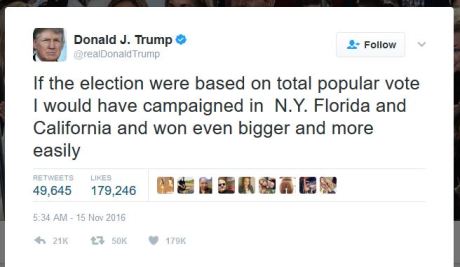
bigger-and-more-easily

Human memory is rather shallow.

Two and a half months later I had already forgotten about this.
My memory has been refreshed by a FB post.

“Just as you don’t have to outrun the bear, just the other guy, your political proposal doesn’t have to be perfect, just better than the other guy’s.”

What do we really mean when we say ‘politics’?

A beauty pageant intended to crown the most skillful public speaker/con artist among us?

Or a social mechanism used by the whole community in its attempt to adjust to whatever fate throws at it?

And how about cooperating with the other guy in taming the bear instead of racing him to our mutual deaths? ‘Cause outrunning all the others doesn’t mean survival.

It only means having to watch all of them being eaten.

Somebody shared this tweet on Facebook:

technicality

Nothing but American ingenuity efficiently solving the problems at hand.

The technicality used to put Capone away was ‘invented’ because Capone had pissed off so many people, so hard, that enough of them had eventually decided to do something about him.

Let’s see what Trump chooses to do from now on.