Archives for category: Mutual Respect

Democracy works. Authoritarianism works too.

Athens, the Ancient version, had become the dominant power of the Ancient Greece as a democracy. Only the Parthenon was build under Pericle’s rule. And Pericle was, for all intents and purposes, a dictator.
Rome, the Ancient version, had build a huge empire. As a democracy. Then enlarged it some more. As a growingly authoritarian and eventually discretionary regime.

England had started as the most democratic kingdom in Europe. Building upon the democratic traditions developed by the Vikings, the barons had forced King John to sign Magna Charta Libertatum. Way back in 1215.
Meanwhile, France – England’s neighbor and long time competitor, had become the dominant power in Medieval Europe. As an increasingly absolutist monarchy.

At some point, the people living in the future United States of America had decided that they had enough. That they wanted to enjoy the same privilege as their British counterparts. “No taxation without representation”.  George III would have no such a thing so the US had been established as the first democratic modern state. And the most successful to date. By almost every measure.
Following on America’s foot steps, the French had their Revolution. After a very short – and very tumultuous, democratic stint, they had reverted to authoritarianism. And conquered almost all Europe, under the command of Napoleon Bonaparte the First. Only to be eventually defeated by a coalition led by the more democratic British empire.

On the other side of Eur-Asia, things had been more linear.

The Russian Empire was developed in fits and starts. When the dictating ruler knew what he was doing – Peter the Great, for instance, things went forward. When not…
India had been, for all but the last 70 years or so, a melting pot of feuding dictatorships. Yet had developed a fascinating culture and much of what we currently call science and technology. The numbers our computers crunch had been invented there. And the steel we use to build our cars
The Chinese Middle Kingdom had once been the most civilized country on Earth. Then had crumbled under the assault of the marauding already democratic Europeans… only to revive, like the famous Phoenix… and all these while remaining submissive to a succession of authoritarian regimes.
Japan is a story by herself. Never fully authoritarian and yet still ‘imperative’ in many ways even today, she had somehow managed to put up a relatively good show. But for the period when she had succumbed to the ‘charms’ of hard core dictatorship, of course.

Coming back to Europe, I have to note that in the last century the inevitable tension between democracy and authoritarianism has produced immense tragedy.
WWI was the consequence of the inflexibility inherent to the authoritarian regimes. The leaders of the Keiserlich und Koniglich Habsburgic Empire, the Deutches Reich and the Russian Empire were not able to solve their disputes otherwise than dragging the whole continent into a huge mess.
Which, unsolved, had given birth to a second, and more horrible, one.
To complicate things even more, the battle was not fraught between the democratic regimes and the authoritarians.
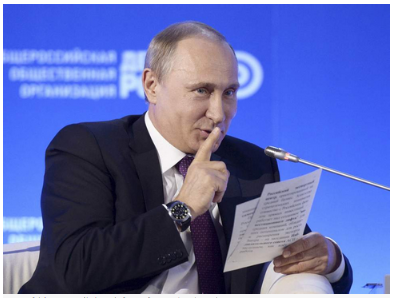
An old Romanian saying posits that when God wants to punish someone, He starts by dulling their wits.

What if ‘fake news’ are a symptom of (some of the) journalists having earned the wrath of God?
Or is it the whole countries whom God wants to teach a lesson? Or two?


https://www.independent.co.uk/news/world/europe/vladimir-putin-says-he-has-never-made-a-mistake-because-god-wanted-him-to-be-perfect-10309628.html

What we currently call ‘science’ is both an activity and an attitude. Something some of us do and the way in which some of us see the world.

In current lingo, those who ‘do science’ are involved in ‘technology’ while those who see the world ‘scientifically’ partake in a certain philosophical tradition.
If we look at things in this way, it becomes obvious that doing science and thinking scientifically might not be the same thing.

Science, as an attitude, had sprung up in Ancient Greece, been kept alive by the early Islamic scholars, rekindled by the Medieval Catholic theologians, come of age during the Renaissance and ‘exploded’ after the Enlightenment.
Technology, on the other hand, is way older. And had been developed mainly elsewhere than the scientific attitude. China and India had been technological powerhouses and thriving civilizations in times when Europe was still learning to wash its hands before dinner.

‘Modern’ science – what we have now, appeared only after technological prowess had been married to the right attitude. 

OK.
It is easy to accept that technology, the more widely distributed part of ‘science’, had appeared as a consequence of mere necessity. People needed things in order to survive, then wanted things in order to increase their comfort… things which had to be produced… as efficiently as possible… hence people had put their minds to it and … voila!
But what had driven some of those around the Mediterranean Sea to develop the scientific attitude?

The same thing which drives us?
The attempt to find out the future, one second earlier than it really happens?
Because they thought, like we do, that reality is unique and that man is meant to master it?

Man, the guy who was made by God in His own image and who was told to rule the world?

Roger Bacon, Duns Scotus, Occam,  Galileo, Newton, Darwin, Georges Lemaitre… some of them might have been persecuted by the church – personally or had their their ideas ‘challenged’, but they all had been raised in the Christian tradition and had been active members of their religious communities. Even Galileo, the only one among these who had been ‘physically’ affected by the way in which his ideas had been received by his contemporaries, had a more or less ‘functional’ relationship with the heads of the Church… he had died in his own bed, arrested in his own villa, not at the stake …


Christians call it fate while Buddhists call it karma.
Christians’ main goal is called salvation while Buddhists’ is called nirvana.

And no, these are not exactly the same thing.
Not different enough to separate them easily, not similar enough to consider them the same thing.

Fate depends on what God has in mind for you while karma depends exclusively on what you have decided all along your life.

Salvation is even more complicated.
Catholics believe that each individual can obtain it, regardless of what they had done until that moment, by simply acknowledging ones sins and by repenting before God/priest. Protestants, on the other hand, believe that individual salvation is entirely at God’s mercy. Mortal individuals can do nothing more than putting their faith in God’s all encompassing love and waiting for it.
Meanwhile, since Buddhists don’t have a God, they believe that accomplishing nirvana is the responsibility of each individual… All somebody has to do in order to achieve this goal is to transform their inner self. There is no outside, objective (?!?) benchmark to be reached here… no other arbiter to please…

Yet fate and karma are not that different either… Life experience in Asia may be different from that in Europe but the differences aren’t huge enough to consider them two different things. Not to mention the growing number of Buddhists living in the Euro-Atlantic region and the burgeoning number of Christian converts in Asia….

As for salvation versus nirvana… the man made Catholic one is almost similar – even if a lot easier to obtain, to the Buddhist nirvana while the Protestant one is just as dis-similar from it’s Catholic equivalent as it is from the Buddhist nirvana.
Yet, again, is it really possible for peace of mind to be that different on the opposing ends of EurAsia? Peace of mind experienced by very similar human individuals…. The only difference between them being the culture they have grown into….

Which brings us to chance.

Rationally minded people – scientists, economists, etc., are convinced that any decision can be perfect… If  only people were diligent enough to educate themselves properly, to think with their brains instead of allowing their hearts to take over…

‘Rationally minded people…’
But how rational is to expect a human being – an animal, first and foremost, to behave in a perfectly rational manner?
How rational is to expect a human being to overcome all emotion AND all biases? Known and unknown….
How rational is even to expect a human being to ‘diligently’ research all available data before making a decision? How much time would that take? When should someone be satisfied enough with the information gathered about a particular subject?

How much is each of us indebted to Lady Luck about the place we’ve born into?
Christian Europe or Buddhist Asia?
About the time of our birth? Before any of Christ/Buddha had preached or after?
How much is each of us indebted to Lady Luck about the amount of opportunity each of us have had to decide about during our lives?

My last question was a tricky one, indeed.
OK, Lady Luck is responsible for many things. For the place and time of our birth. For the fortunes of the families we’ve been born into and for the mental and physical each of us enjoys. Or lacks…

Only we do share in the final responsibility for our fate/salvation/karma/nirvana!

Our decisions are equally shaped by the circumstances in which we’ve reached those decisions AND by our diligence in making them.
Each of our decisions opens up some new doors and shuts down others. Or, at least, turns our heads towards new openings and away from others.

‘And your point is?’

Don’t blame others for your bad decisions and don’t praise yourself too much for your good ones.
Don’t blame others for their bad decisions. Are you sure they had a real alternative for the situations you found them in? Mind you, not whether there was a real alternative! Did THEY had access to that alternative?
Extend a helping hand. You’re not responsible for saving everybody else but to see somebody in need and not offer your help sets the stage for you needing help and everybody else passing by without noticing you.
Don’t overdo it. When you see someone drowning, get them out to safety. That’s enough. Don’t lecture them about the dangers of getting into water. Firstly, you don’t know how they got in and, secondly, if they are not able to figure this out by themselves you’re wasting your time.
Don’t prevent everybody else from getting in simply because somebody had (nearly) drowned. You’re not God. You don’t know everything. You just happened to be there when somebody was drowning and you was strong and brave enough enough to save them. That’s all there is to it.


And no, this is no joke! Alas…

Populism is scientific because its ‘adepts’ have a very rational behavior and use scientific tools to increase the appeal of their public messages.
And, on the other hand, populism is scientific because its advent is perfectly explainable given what we currently know. About our society, about our brains, about our psychology….

Let me start from the beginning.
In Thomas Kuhn’s terms, the last 60 or so years have witnessed a tremendous paradigm shift.
Science has replaced religion as the main paradigm and ‘religion’ has been demoted to  ‘religions’.

Science becoming the main paradigm means that we have grown confident about our knowledge. We might be aware that we don’t know everything yet but we continue to believe that we’re able to learn everything. That if we are diligent enough we’ll sometimes be able to look under every rock that is.
This attitude has led us to search for ‘perfection’. ‘Efficiency’ has displaced ‘redemption’. We have ceased our quest for salvation and are now obsessed with ‘buy low, sell high’. In other words, ‘make the most of it but strain yourself as little as possible’.

Which makes a lot of sense, doesn’t it?

A lot of sense… mainly when you no longer perceive the guy next to you as being a full-fledged member of your community. Your religious community, that is. Of your church.

You see, ever since Emil Durkheim, the sociologists have been aware that religion was not so much a story about the making of the world as a ‘common ground’. The ‘common core’ shared by the members of a given community. Which ‘common core’ makes it possible for those who share it to have respect. For themselves and for the other faithful members of the community. By sharing that common core, the individuals find their bearings in the ‘wide, wide world’ and, thus, know how to behave relative to their ‘neighbors’. With enough mutual respect among the individual members that the community is able to function. To survive, that is.

We no longer have that kind of community.
Our primary allegiance is no longer towards ‘church’. Most of us consider themselves primarily as members of a nation – something governed more by formal laws than by public sentiment, and only secondarily – if at all, as members of a ‘religious’ community.

Now, putting two and two together, it’s very simple to understand that in the given circumstances ‘populism’ was inevitable, right?

Too many of the would be leaders have no qualms about how they get what they want.
Power.
‘Buy low, sell high’ is the current mantra, remember? Accepted by all of us. Buyers, sellers, by-standards…
Too many members of the general public are willing to accept promises which are in line with their own expectations, even if those promises being put in practice means a lot of misery for OTHERS. Who cares about those others, anyway? They are not members of OUR ‘church’!

I’ll let you decide how sustainable is such a situation. I was going to use ‘community’ instead of ‘situation’ but it would have been horribly wrong. We no longer live in communities. We only happen to live in the same place.

For how long?

The relatively flat layout of most parliamentary chambers has induced in us the idea that society is linear. From left to right and backwards.
Also, the current almost ubiquitous existence of parliaments drove us to forget that until recently – historically speaking, of course, most societies have been punctiform. The sovereign king was the only one able/entitled to make any significant decision…

Meanwhile we are told by the political scientists that long term political stability can be achieved only through ‘checks and balances’. Meaning that the state has to be organized in such a way that nobody can get amass too much power.
Actually most modern states have an executive, a legislative body and a judiciary. Each of them performing their specific tasks while keeping a jealous eye on the other two.

The problem with long term political stability being that it is a very abstract goal while most people just want to be happy. And are willing to go at considerable lengths in order to achieve their goals….

And it’s exactly here where ideologues start to argue among themselves

Some say that the individual is sacrosanct. That individual freedom is the most important value that is and the most fundamental ‘human right’.
Others say that society is more important than any individual. That all individuals should put themselves at the service of the society and that individual liberty pales when confronted with social necessity.
And a third category consider that democracy is a waste of time and of opportunity. That the best for any society is that a capable person/group of persons to be given absolute power over it. The rationale being that ‘the capable’ will take good care of their ‘property’. A far better kind of care than any group of bickering politicians would ever be able to offer….

On the practical side, those preoccupied with ‘freedom’ consider that the main duty of the state is to preserve/protect individual liberty. That people, once free, will know how to achieve their personal happiness.
The socially minded consider that individual happiness cannot exist before/outside the well being of the entire society. Hence the ‘rational citizen’ has to postpone (read forget) any personal goals and sublimate their own persona into the society.
‘The more capable than the rest’ consider that the ‘incapable’ cannot be trusted with defining their own goals and have to be told what to do. For their own good!

It is very easy to observe that none of the three ‘ideal types’ described above doesn’t work on its own. That each have been experimented and found to be ‘unpractical’, to say the least.

Individual absolute freedom exists. The Saan living in the Kalahari desert and the  Baka in the Cameroon don’t have any formal rules, no social hierarchy and are absolutely free to do as they please. Both have been easily overcome, their habitat is being encroached/destroyed by their ‘neighbors’ and have been able to survive only by going further and further away from anything.
Socially minded people have, time and time again, congregated. Only to witness their communities dissolve or develop malignantly. From the early christian settlements to the XiX-th century phalansters.
The ‘know better’ is, apparently at least, the most successful arrangement. All kingdoms and empires have been organized according to this principle.
And all of them eventually failed. Even Plato’s idea of ‘king priests’ has led to Alexander the Great’s ultimately disastrous campaign into the Middle East. Not to mention the fact that the erstwhile mighty Athens had fallen into anonymity just after starting to be governed by specially trained rulers.

Since the pure ideal types didn’t work, let’s see what we get if we combine them.

Since I’ve been experimenting it for the first 30 years of my life, I’ll start with the result of crossing ‘social minded’ with ‘know better’. Does ‘communism’ ring any bells with you?
Let’s cross ‘liberty’ with ‘know better’. Actually this has already been done. It was about liberty for those who knew better… Nazism, and its newer variants, are the first examples which come to mind.
And the most interesting result comes from crossing freedom with social minded. This has also been experimented. In the democratic Ancient Athens and in during the truly Republican phase of the Roman Empire. The same combination was used by the vikings and somehow perpetuated to this day. Its offshoots being the western style democracy.

Which democracy – just like the Roman Empire, will survive for only as long as it will conserve both individual freedom and social mindedness while allowing, but only when needed, the ‘know better’ to take over for the short periods of time when their presence at the helm is absolutely necessary.

According to Humberto Maturana, what we call consciousness – our ability to ‘observe ourselves observing‘, is the result of what sociologists would call a ‘cultural process’.
Meaning that consciousness has been developed in time – as is millennia, and is constantly shaped through daily interactions between us.

I don’t intend to discuss its genesis now, I’m just gonna point to one of its many consequences. Our need to explain everything.

We’ve developed our consciousness by talking to each-other. If we are to accept Maturana’s theory – of course, which I do.
At some point in time, during this process, there must have been an ‘aha’ moment.
Or, more precisely, a ‘what if’ moment.

Until then, everything was ‘natural’. Sun up, sun down, birth, death… and everything in between.
While learning to ‘observe ourselves observing’ one of our ancestors must have noticed that we make a lot of decisions. Unconsciously – until that moment, of course, but, nevertheless, still momentous. To ‘flee or fight’, which fig tree to climb, which cave to use tonight, which pelt to skin, which flint to flake…

The very next moment our ancestor must have asked their-self:

What if the Sun doesn’t get up next morning? Will I wake up from sleep tomorrow?
Who decides these things?
Are there only rules – like ‘every time you touch a flame you get burned’ and ‘ice is always cold’ or on top of the rules there is somebody who calls the shots? As in ‘decides whether this time the lion will attack on sight or it will let this one go’?

And we’ve tried to explain away our fears ever since…
By determining which are the pertinent ‘natural rules’, by placing the responsibility on somebody else’s shoulder – read ‘God’, or both at the same time. Again, I’m not going to develop this subject either, I’ll just remember you that Buddhism – for example, doesn’t reject older creeds. The Japanese, for instance, follow both Buddhist precepts and Shintoist traditions. Also, many Christians entertain a lot of local and not so local superstitions. Like never start walking with the left foot or having a very strong ‘respect’ for the third number after 10.

Let me make a short recap.
We taught ourselves to speak, we talked to each other until we developed something called consciousness to such a level that we’ve started to ask ourselves existential questions and then we came up with more or less credible scenarios meant to allay our fears.

‘OK, … and your point is?’

Don’t be so ‘surprised’ when somebody ‘irrationally’ defends their own ‘story’. ‘Their story’ encompasses their world. That’s where they had been living, together with everybody they used to know/consider their kin.
Don’t attempt to force your story upon them. Let aside that you might be wrong yourself… any attempt to forcefully impose a narrative upon somebody else is nothing but “rape”. Don’t do it unless you are prepared to get raped yourself.
And keep in mind that it’s not ‘their story’ that harms you but ‘their actions’.

No story has ever harmed anyone. For any story to have consequences, people must act upon it. According to how they have chosen to relate to the it.  That’s where we can see eye to eye, regardless of the stories each of us keep dear.
Are we ready to accept that we might be wrong? That our story might be incomplete? That our explanation of the world might need some adjustments?

Are we ready to understand that enlarging our explanation to encompass others will actually increase our own ability to survive?
Or are we going to defend ‘our’ version, no matter what?

Are we going to keep looking for explanations or to become the subject of yet another one?

Which is worse?

– Making mistakes?

– Calling them out as a manner of ‘making ends meet’?

– Embellishing/inventing mistakes as a manner of promoting your own interests?

Or sheeple-shly standing by while those involved in the vicious circle described above merrily destroy the world around all of us?

I keep hearing that “America is not a Democracy, it is a Republic if you can keep it“.

Well, if nothing else, this is yet another example of how dangerous it is to give up studying ‘humanities’. As in classical languages, history…

‘Republic’ comes from Latin. Res Publica. Meaning a sociopolitical arrangement, a.k.a. country, ‘where “things” – “res”, in Latin, are decided upon by the “public” or the representatives that they elect.

Democracy comes from Greek. Demos Kratos. Meaning a sociopolitical arrangement where ‘power’ – ‘kratos’, belongs to ‘the people’ – demos.

Starting from here, it becomes a lot easier to understand that it doesn’t really matter whether the guy sitting at the formal top of a country calls himself king or president.
It’s who calls the definitive shot which determines whether a country is run as a democracy or is being ruled as an authoritarian regime.

“Government is suppose to be a negative force that leaves people alone.”

I’m afraid this would make any of the Founding Fathers weep.
It’s the ministers – secretaries of state, as the Americans call them, who need to be kept in check, not ‘Government’.
“Government of the people, by the people, for the people” means that the people governs itself. The people determines its own future. All the people …. not just ‘the government’. Extracting, at the conceptual level, ‘the government’ from ‘the people’ means freeing those who happen to be ‘the government’, at any given moment, from their responsibilities. Telling ‘the people’ that ‘the government’ should leave them alone actually means that the people should also leave the members of the government to do as they please.
Really? Would any of you be comfortable with such an arrangement?

“Once Rome left the tenets of their Constitution they adopted Democracy and soon people were left demanding more from the Gov’t. A Gov’t that could not provide.”

In reality, Rome had thrived for only as long as it had managed to preserve the truly democratic features of its government. As long as the citizens went to the Forum – the Roman Agora, and voted their true minds. As long as the Senators did their jobs honestly and decided for the future of the entire city.
Only after the Roman People had given up and stood idle while their democracy was corrupted into ‘mob-rule’ by the bribe-greedy senators, the Roman Empire had started to crumble. The Roman Empire was no longer a true republic nor a functional democracy when it was abolished by Augustus being proclaimed Emperor by his soldiers.
And the final nail was beaten into the Roman coffin when the people itself had started to accept bribes.
When Rome had started to be ruled according to the ‘panem et circenses’ principle. When the people had let himself be bribed by those who wanted to stay in power and when the people had stopped censuring those who determined the fate of the entire social organism.

When ‘the government’ had extracted itself from the people.

And yes, Republic has to be kept. Only not for its own sake. For ours.

It doesn’t matter whether a country calls itself a kingdom or a Republic, it’s how the shots are called which is really important. By the People or by a small number of individuals. While it is true that the Roman Empire had to devolve from a Democratic Republic to a dictatorial kingdom before crumbling, let’s not forget Germany and Russia.
Both had thrown out their rulers – Kaiser and Tzar, only to fall under the spell of dictatorial ideologies which had led both of them to ruin.
To republican ruin.
Both Nazi Germany and Soviet Russia had been ruled as republics by small coteries of callous manipulators.

What’s more important?

Commonalities or differences?

To understand what happened or to determine who’s responsible?

Truth or meaning?

Being safe or being content?

To feel (happy) or to be perceived as being (happy)?


How many of these answers had just sprung up and how many had been the result of careful consideration?