
The truer the lie,
the harder it is be recognized.

It is true that many fighters die during a war.
That many castles are built, after the war, by the profiteers.
But, when won by the right people, wars also bring freedom!
For those who deserve it.
The truer the lie,
the harder it is be recognized.
It is true that many fighters die during a war.
That many castles are built, after the war, by the profiteers.
But, when won by the right people, wars also bring freedom!
For those who deserve it.
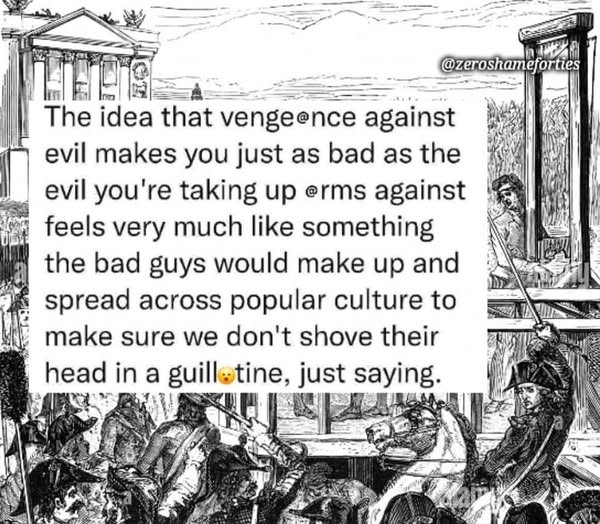
It’s the ‘vengeance’ part which spoils the whole thing.
Evil is to be resisted, of course, only this is better done in a sustainable manner.
WWI was won for nothing. The vengeance part in the Versailles ‘peace process’ had spoiled the whole thing.
Hence the war had to be won again.
During the process, the winners had become wiser. Some of them, at least.
The peace process had been inclusive this time.
The North Atlantic region, the end result of that peace process – no scare marks needed this time, is one the most successful stories of human development.
So, when Popper doesn’t tolerate intolerance,
he is being mean?
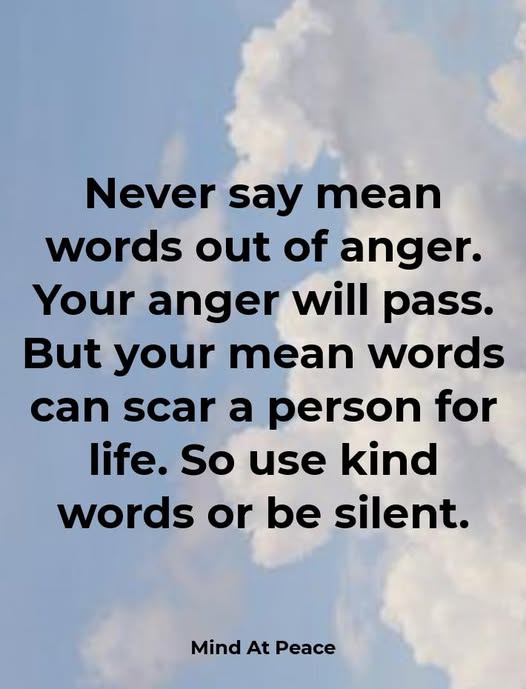
Intolerance is something no one should tolerate.
From where I’m looking, intolerance is like a pebble in your shoe. You may walk for a while, without removing the pebble, but the damage will be there. For certain.
And if you persevere, the damage will be permanent.
Your question is a tricky one. Popper is not necessarily mean when refusing to tolerate intolerance.
He would have been mean only if he used unkind words when trying to convince the intolerant to change their hearts.
There’re no blinder people
than those who don’t want to see…
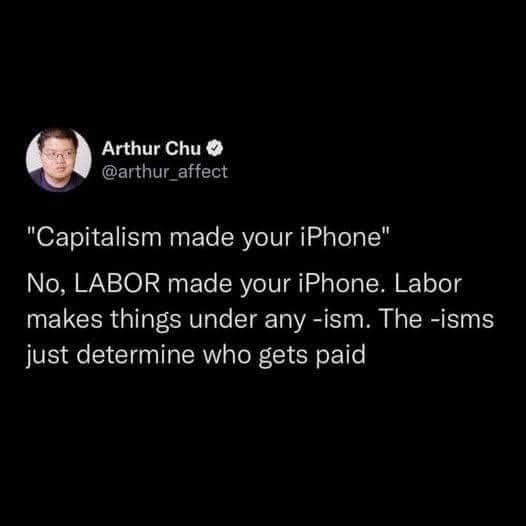
Attempting to determine who ‘made that’ is similar to trying to find out which came first.
The chicken or the egg…
As if one was possible without the other…
Yeah, it’s labor which makes each thing.
And it’s capitalism which makes things possible…
Capitalism is a setting. A way of doing business.
Labor is a process. Through which some things – ideas included – are transformed into solutions.
If you want to plant a tree, you have to dig a hole.
If there was no shovel around – no capital available – you’d have to dig the hole using your bare hands. And dig the sapling out from the forest. Still bare handed.
If you happen to live in a capitalist setting – you may borrow a shovel and a sapling, if you didn’t have them already. And start an orchard.
The interest is too high? Capital has become too concentrated/expensive?
It happens from time to time. Usually just before a major crises.
Is there anything that might be done? To mitigate this boo-bust cycle?
Make sure the market remains actually free. That no one becomes too powerful.
Too powerful for our own good.
The Sherman Antitrust Act “makes it illegal to monopolize, conspire to monopolize, or attempt to monopolize a market for products or services“.
The Clayton Act “aims to promote fair competition and prevent unfair business practices that could harm consumers.“
Actually simple… if dully implemented …
And don’t fool yourself.
Socialism is nothing but state-run capitalism. A bunch of con-men take over the government and make all the decisions. Everything of value – all capital – theoretically belongs to the people and all the meaningful shots are called exclusively by the big shots who control the government.
Fascism, the other ‘alternative’ experimented during the XX-th century, is very much similar. Property remains, theoretically, private but the major calls are also called by the big shots who control the government.
“If you’re an academic (like me),
Epstein has a particularly uncomfortable example
of how people in a perfectly comfortable profession like mine
can be happy and yet still itch with ressentiment about others
whose talents seem more valued than our own.
“Why does some ignorant lawyer have enough money to buy a villa in Tuscany
when one knows so much more about the art of the Italian Renaissance?
What kind of society permits this state of things to exist?
A seriously unjust one, that’s what kind.””
Our worst enemy..., Tom Nichols

Aaron Mostofsky, the guy pictured above, “has worked as an assistant architect in New York“.
Which means he must have at least some idea about the ‘art of the Italian Renaissance’, right?
And now I wonder. His ressentiment had been seeded in his soul during college? Earlier?

Popper, Karl Raymund, had witnessed the entire XX-the century. Both WWs and their aftermath. The advent of the USSR, that of the III-rd Reich and that of the Red China. And the defeat of the imperialistic Japan. Him insisting that collectivism – as put in practice by the fascists and by the communists – leads to a very dark cul-de-sac is spot on and perfectly aligned with what history teaches us.
But who has enough time to read nowadays … we glance at the internet, catch a meme … interpret it according to our own weltanschauung… and then storm the Capitol!
Because the individual is above the state. “An end in itself”…
The teachers/parents should have done a better job? At explaining what Popper had in mind? At teaching the next generation that you don’t ransack the Capitol whenever you don’t like the outcome of an election?
Which teachers?
Which parents?
WE?!?
https://www.amazon.com/Our-Own-Worst-Enemy-Democracy/dp/0197518877

When do you stop cleaning something? How do you determine it is clean enough?
When do you stop cleaning the living room? When there’s no more visible dirt, right?
When do you stop cleaning an operating room? You follow the procedure and you check using the appropriate methods and apparati, right?
When do you stop cleaning the operating room where your child will have their life-saving surgery? I’m afraid the surgeon will have to drive you out of the room. You’ll never declare it clean enough….
My point being that we’re rational only as far as there’s nothing personal involved in the choice we have to make.
And as soon as we’re personally invested in the whole thing, we suddenly start to rationalize.
To find rational arguments which favor the position we’ve already adopted. The decision we’ve already made.
My child deserves the best!
Which is true, of course. For as long as we really know what’s good for them…
What capitalism has to do with any of this?!?
Well, most of the ‘hoarders’ rationalize their habit by ‘blaming it’ on their children.
“I have to take care of their future”.
In their attempt to control the future, the hoarders convince themselves that amassing capital will shield them, and their children, from insecurity.
Which is partially true. If the hoarded capital is sustainable…

Every time I read something like this over the internet – more and more often – I remember that it was us.
We have raised our children into what they are today.
We have amassed vast amounts of financial capital – fiat money – believing that our children will be grateful.
We had not been there when they were growing up. We had not been there when they were learning things.
And now we are the ones who don’t understand why there are no more bonds between us. Between us and our children. Why our children see the world differently from how we do it…
Is it to late?
Or should I say “straight”?!?
After all, not everything that comes from the right is ‘right’.
Not everything that comes from the left is ‘wrong’. Or good…
And even ‘straight’ has always been complicated but nobody seemed to care!

Neither ignorance or education can do anything.
On their own. Education is a process and ignorance a mere situation.
It’s what the educated choose to do with their knowledge that makes the difference!
The key words in the statements above are “I always believed” and “It seems”.
It’s not ignorance that’s going to willingly destroy anything and it was the educated which had always ‘produced’. Moved things towards carefully chosen goals. ‘Rationally’ chosen goals, according to the latest fad.
Everything there is is the consequence of something initiated by educated people. The good, the bad and even the very ugly!
‘Another biased and inconsiderate post.
You completely dis-consider the ignorant. Assuming they are impotent and inconsequential.’
I’m afraid somebody else is assuming things.
First of all, there are no ignorant. Only the actual idiots are ignorant and they cannot do much. We, all the rest, start learning from the first minute of our life. Each according to how lucky we are.
Secondly, even the highest educated ignore most of the existing knowledge. But that doesn’t make them ignorant. The most important thing a person must learn before calling itself ‘educated’ is that nobody, that person included, will ever know enough.
Thirdly, all action is initiated from a piece of information. One starts to look for food after realizing they are hungry. After transforming a feeling into a resolution and making a plan to fulfill that resolution. A reaction – like pulling back your hand from a hot stove – doesn’t need much thinking indeed. But that’s only a reaction. Not at all a carefully, supposedly rationally, chosen goal.
“Facts don’t care about your feelings.“

It’s the act which does the trick.
It is the fact that it was you who had determined whether to keep them or not as they were given to you which actually affirms ‘it’.
Simple, actually, if you consider it with an open mind…
And here’s another question.
How wise is it for people to not care about other people’s feelings?
‘Cause I don’t expect facts to care about feelings. Mine or anybody else’s…

Is this a wise thing to do?
To ride a motorcycle without any eye protection? Whatsoever?
We’re constantly being modeled by everything which happens to us. By what we do and by what is being done to us.
We are what our past has made of us.
Our ego is the intersection between ‘what we could have been’ and ‘what the circumstances allowed us to become’.
Which intersection, no matter how wide or narrow, is inhabited by our I-s. By each of us.
Those intersections, where are crammed all the pasts that have already happened to us, are the only places in the world over which we, each of us, will ever be in command.
In each successive moment of our life, in what we call ‘the present’, we have the freedom to choose where we want to be, inside the place where we can be. Inside the intersection I was speaking about just now.
Inside those intersections there’s nobody but each of us and each of our pasts.
Are we comfortable with our past?
Have we digested our past? Have we learned from it?
Have we cleared it?
Have we made it transparent enough? To see the future through it?
Are we comfortable enough with our past?
Comfortable enough to bring it, with us, into the future?
“I mean by a “fact” something which is there, whether anybody thinks so or not.“
“Facts are what make statements true or false.”
Bertrand Russell

What do you see here?
A ‘fact’ or ‘gravity in action’?
Bertrand Russell? Isaac Newton?
Or both?
After all, Earth pulling down yet another apple is (nothing but) a fact.
Yeah, but ‘Earth pulling down apples’ had become a fact only after Newton had figured it out.
And received this name, “fact”, only after Russell had coined the concept.
My point being that some things happen in the special place we call ‘conscious mind’.
The United States, currently the most powerful country on Earth, exists because some people had put it in their minds to make it.
Gravity exists, as we know it, because Isaac Newton had noticed it and described it to us.
Facts exist, as we think of them, because Bertrand Russell had introduced them into our thinking process.
‘Do you imply that apples did not fall down before Newton noticed the process? That people didn’t think before Russell told them how? That the US would have remained a colony if not for the Boston Tea Party?’
I believe you’re fully aware that the question above had sprung up in a mind before being put down on paper… before being tapped on a keyboard, actually…
Of course gravity existed before Newton had described it. Of course people had been thinking for a while before Russell let us in on his thoughts on this subject. And of course I have no idea about what would have happened if those guys in Boston had brewed the tea instead of throwing it in the harbor.
But it is very clear for me, “self-evident” as the Founding Fathers had put it, that some things do happen in a certain manner.
That not all of us think in the same way – god forbid, that would be against our very nature – but all of us think according to some ‘rules’. Hence the results of our thinking are not exactly ‘haphazard’.
The point of today’s post being that my method is ‘thinking’.
I use my ‘conscious mind’ as an instrument. As a scalpel-cum-microscope with which I attempt to study how my mind works.
Being fully aware (?!?) that this process takes place ‘inside my head’. Inside my ‘limited’ head. Limited in both space and time.
That ‘that’ head is made of the same matter – atoms – as the rest of the Universe. Hence some of its limitations.
And that ‘that’ head works ‘inside’ the cultural universe created by the aggregated effort of every human that has ever lived on Earth. Hence another set of limitations.
 nicichiarasa