Archives for category: fail better

You’re handed a pot.
So heavy, you need to hold it with both hands.
So hot, you want to let go of it.
On your feet?!?

I’ve argued sometime ago that all living organisms act as if they were ‘aware’.
All of them are adept at keeping their insides in, most of the outside out and, most importantly, they are the ones deciding what from the outside goes in and what from their inside goes out. And when!
I call this awareness 1.0. Or life…

We congratulate ourselves over being the only creature wielding ‘self-awareness’. The ‘full fledged’ variety… according to our way of understanding it, of course. “Consciousness”, we call it.
How about ‘awareness 2.0’?

Some of us are involved, heavily, into ‘faking’ things. From building something called ‘artificial intelligence’ to using ‘technology’ to mess up other people’s minds.
They are ‘delving’ in the ‘next’ level. Knowingly but unwittingly playing god.

Life is driven by ‘natural selection’. Or ‘evolution’… as Darwin called them.
‘Happenstance’, if you look at it from another angle.
The process of life/natural selection/evolution depends on it taking place ‘individually’. While evolution is a matter regarding ‘species’ – as Darwin itself had put it – the whole process depends on the fact that each individual organism which belongs to each species is distinct/different from all other members of the same species.

‘Self-awareness’ depends on the existence of other self-aware individuals. Willing to cooperate with the ones developing it. Just as no living organism has been observed, yet, while putting itself together starting from innanimate matter, no individual has ever been observed developing self-awareness with no outside help.
Mind you, while the process involves ‘mature’ individuals helping ‘fledglings’ to ‘fly’, the process isn’t entirely ‘voluntary’. The outcome, the emerging individual consciousness, depends on the actions performed by those helping it but only inasmuch as the result of the natural evolution depends on the actions performed by the previous generation. Achieving ‘self-awareness’ is a ‘natural’ process, not a ‘deus ex machina’ machination!

Awareness 3.0, on the other hand… the ‘artificial’ kind…
In this context, I wish to remind you of what happened when we, willingly but unwittingly, have reduced the natural bio-diversity in certain areas. According to our needs and understandings…

The Green Revolution’s success also brought serious costs: intensive farming drained groundwater, degraded soil and contaminated fields with pesticides, while wheat and rice monocultures eroded biodiversity and heightened climate vulnerability, especially in Punjab and Haryana.
Swaminathan acknowledged these risks and, in the 1990s, called for an “Evergreen Revolution” – high productivity without ecological harm. He warned that future progress would rely not on fertiliser, but on conserving water, soil, and seeds.
A rare public figure, he paired data with empathy – donating much of his 1971 Ramon Magsaysay Award amount to rural scholarships and later promoting gender equality and digital literacy for farmers long before “agri-tech” was a buzzword.
Reflecting on his impact, Naveen Patnaik, former chief minister of Odisha, says: “His legacy reminds us that freedom from hunger is the greatest freedom of all.”
In Swaminathan’s life, science and compassion combined to give millions that very freedom. He died in 2023, aged 98, leaving a lasting legacy in sustainable, farmer-focused agriculture.

https://www.bbc.com/news/articles/cn7eln1pm4ro


What happened to our capacity to compromise?
When did life become nothing but a zero sum game?

Our capacity to compromise – in the good sense of the word – has diminished when religion – the thing which keeps us together – has been split into religions.

And it completely drained out when we’ve become too confident in our ability to think things over.

We’re so confident now that our solution/decision is not only better than any other but the only one possible that we’re no longer capable of considering a compromise.

While religion taught us to respect and trust each-other, religions have split us into factions.
Our intellectual arrogance has done the rest.

The vaunted human capacity for reason may have more to do with winning arguments
than with thinking straight
“.
Elizabeth Kolbert, Why Facts Don’t Change Our Minds

I love that. Just love it.
“The … human capacity to reason”!

Other thinkers hail reason as the thing which sets us apart from the rest of the animals…

The way I see it, reason is nothing but just another tool.

The thing which sets us apart from the rest of the animals being our ability to observe ourselves while interacting with the rest of the universe. Otherwise known as consciousness.

Basically, reasoning is nothing more than a ‘dialogue with myself’.
When I ‘consider a thing’ in my mind, consciously, I practically put my brain to work.
I order my memory to summon up all the data it has on the subject and I ask my frontal lobe to process that data and to reach a conclusion. In theory…
In the real world, my amygdala – the piece of the brain where emotions are processed – already has an opinion about everything which crosses my mind. The more familiar the thing, the stronger the opinion. The more often my mind – meaning I, had expressed itself regarding a subject, and the more recently, the stronger the opinion my amygdala already has about the matter.
If the matter is considered for the first time, and has no connection with anything else I had already ‘conclusioned’ about, only then my amygdala might keep its opinion for itself. The key word here being ‘might’…

Since this is nothing more than a blog post, I’m not going to prove my opinion. To discuss the importance of the fight-flight mechanism and to mention that this mechanism had done more – evolutionary wise, than reason for our survival. For us having the opportunity to develop this vaunted capacity for reason…

I’ll just end it abruptly.
Mentioning that our individual consciousnesses use reason as a tool. To arrange facts in such a manner as to confirm the already reached conclusionary opinions put forward by our amydalae. “To win arguments”, if you will, including when debating with ourselves.
Only when the facts – the harsh reality, contradict in a flagrant manner the already held convictions we might change our minds.
The more immediate the danger we put ourselves into by sticking to our convictions, the more likely we are to cave in to the facts.

To the facts as we perceive them… Which is yet another story!

For some reason, there still exists a considerable number of people not yet convinced that what had been experienced in the Soviet Union was “a true socialist/communist form of government”

The sad reality is that the Russian Revolution did establish a true socialist form of government!
As per Marx’s teachings.
The communists had been in charge of things, and the things failed to become better.
In fact, they had become worse.
Eventually, the Soviet Union – along with all other socialist attempts, had crumbled under their own weight.

Those who want to find better alternatives to democratic capitalism – good luck with that – need to find another word but socialism to describe their goal.
Or wait a few generations before attempting to give it a new meaning. The current one had been wasted by the likes of Marx, Lenin, Stalin, Mao, Kim, Ceausescu…

Word of mouth has it that a dissatisfied customer will be more vocal than a happier one.
A search over the internet yields unconvincing results. The statistical jury seems to be still out on this one.

A misspell in the search window unveiled something a lot more interesting.

The brain is hard wired to recognize an angry voice. As well as an angry face.

Are we aware of all this?
Probably not. Statistically speaking…

And this is important why?

Being able to recognize anger makes it easier for us to deal with conflict.
Individuals who do it better have more chances to survive when involved in dangerous situations. Or even to turn them around. To find ways in which to use conflict in a profitable manner. Profitable for them… And only time will tell for how long!
Communities adept at taming conflict into something useful have greater chances to survive than those less able to deal with it.

Now, where are we in this moment?
Do we talk to each other? Are we aware of what’s going on around us? Cognizant enough to take the appropriate measures?
Or do we just vent out our bile? Creating such an environment that no coherent answer will be presented when needed?

Are we, each of us, part of the solution?
Or we just create more and more problem?

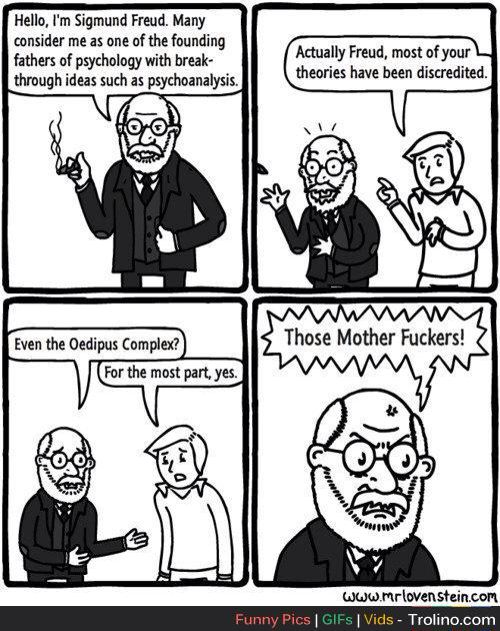
On the other hand, Newton was also ‘discredited’ by Einstein…

Not to mention how discredited had been Aristotle, the scientist, by those who came after him!

Yet nobody speaks badly about either Aristotle or Newton.
Because they are considered ‘stepping stones’…

https://www.britannica.com/…/Aristotle/The-unmoved-mover

Isn’t it rather funny that something called “crypto” is run on a completely transparent platform?
So transparent that all the tracks are apparent but many of the ‘access points’ remain cloaked?

“The thing is, once smart-contract code is live on a blockchain, you can’t update it. If you discover a bug, it’s too late: the whole point of blockchains is that you can’t alter stuff that’s been written to them. Worse, code that’s hosted on a blockchain is publicly visible—so black-hat hackers can study it at their leisure and look for mistakes to exploit.”

Ideology is but one of the many tinted glasses which shape what we feel into actual, and actionable, perceptions.

Ideology stands out because it’s the only one chosen by us.

We may grow up steeped in ‘tradition’ – in any tradition, but the ideas we become into become our ideology only after we assume them.
We, each of us, become mature agents only after knowingly and self-awaringly chose our ways in life. Our own ways!

ideology, a form of social or political philosophy in which practical elements are as prominent as theoretical ones. It is a system of ideas that aspires both to explain the world and to change it.”

As you already know, choosing something is very much like entering a door.
It’s not like the other doors suddenly close!
By entering a door, all other previously apparent doors only disappear from your immediate perception. Your recollectible memories tell you they were still there when you last looked and your imagination helps you visualize them. If you care to remember…
But you cannot actually see them. And they slowly fade away…

Here’s a glass.
Is it half empty? Half full?

I’m not going to spell out the obvious! This is the sensible way to pour a glass of wine…
I’m only going to point out that it’s not such a bright idea to full a glass up to the brim. You might easily pour too much and then it will be practically impossible to raise. And to drink from it…

Then why have we transformed a ‘fully functional glass’ into such a big topic?
Because we like to split hairs?

Since I have no idea about what’s going on in other people’s heads/minds I’m going to point your attention to something else.
To the dangers of waddling into murky waters.

Are you happy with the half full glass? You might end up with less than you might have gotten.
Are you disappointed with the half empty glass? So disappointed that you’re going to give it up as being inadequate?

You’ve just wasted a perfectly ‘workable’ glass!
Both of you.

When given a half full glass you don’t just enjoy what’s in it! And walk away…
When given a half empty glass you you don’t just refuse it! And throw it away…

Before stepping into a room, no matter how much personally inclined to do it, check out the other open doors which happen to be around you. And even pry some of the closed ones…

Don’t allow others to fool you into seeing the world as they want you to!
Don’t allow yourself to be entangled into other people’s problems.

And, even more importantly, don’t accept – indiscriminately, their methods of solving the problems they have invented for you!

Alive.

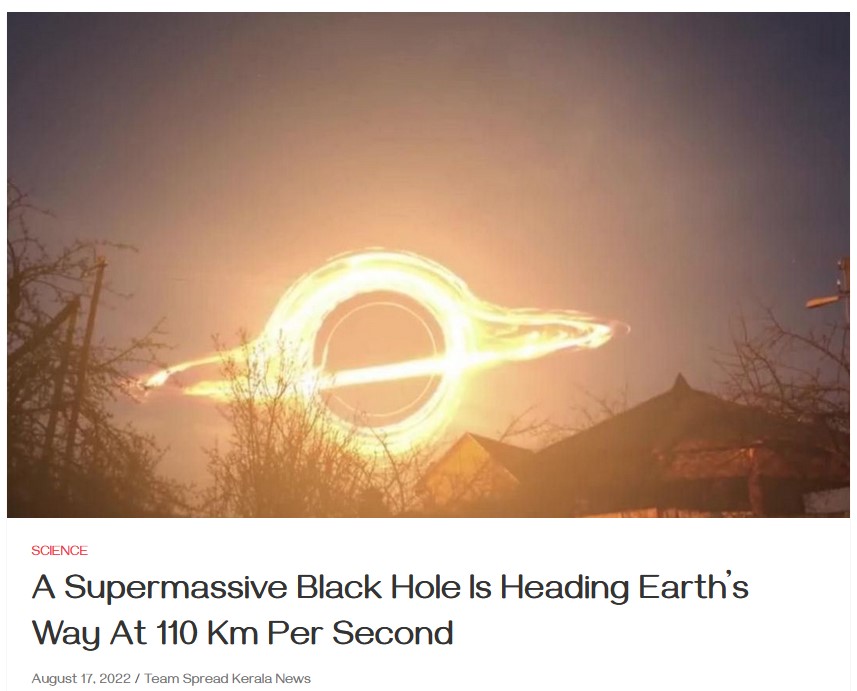
Is this the epitome of ‘click bait’?

Then why do I bother with it?

Because it illustrates perfectly the prevailing trend. How things change because of us.
How we – collectively, change the world around us.

At first, click-bait had been used by ‘fraudsters’. ‘Publishers’ who used to cram completely useless information under some very ‘enticing’ titles.


Now… you may say that the information about our galaxy – the Milky Way, being on a collision course with Andromeda – our closest galactic neighbor, is also useless. Maybe… After all, that will only happen after 4 billion years had already passed… Anyway, this time, the targeted public is rather different than before. More ‘scientifically minded’…
Which proves my point.
That using click-bait has become a lot more acceptable.

The new normal…

Which brings me to the next question.
How many of you are going to watch this?

https://fb.watch/eZRdlM0nNq/

Want to find more?
To figure out, on your own, why this trend worries me?

Read this. Well worth your time, I promise.

https://www.wsj.com/articles/how-to-trick-the-guilty-and-gullible-into-revealing-themselves-1399680248