Archives for category: evolution
Matthew Horwood/Getty Images

Get a vaccine, wear a mask…

“You can’t deprive others of their liberty without forfeiting your own. Liberty is lost with every person seeking to control others for their comfort and sentiment.”

Getting a vaccine and wearing a mask are sensible things to do, right?

Establishing a free environment, where all individuals might enjoy their liberties, is also a sensible thing!

For the simple reason that even a casual examination of history provides ample proof that freer societies fare far better than those which curtail individual freedoms.

Simpler said than done…
Mention the mandatory mask and the imperative advice to get vaccinated to those passionate about individual liberty and you have a hornets’ nest on your hands.

Or maybe this is an excellent occasion to discuss the ‘gap’ we constantly need to bridge between individual freedoms and a free society?

Can you have a free society composed of slaves?

The answer depends on who gives it to you.
I’d spent the first 30 years of my life under communist rule.
My country, Romania, was declared, by those who were ruling it at that time, as being free. Both domestically and internationally.
The only free individual was the ruler. Nicolae Ceausescu. He was the only guy who could do as he pleased. And only for a while… Until 25 December 1989…
In the end, the regime had crumbled and the only ‘free’ individual had met with the consequences of how he had chosen to use his freedom.

So no, you cannot have a free society when one individual, or a group of individuals, impose their will on everybody else.

‘Your liberty to swing your fist ends where my nose begins’

Otherwise put, if you refuse to get vaccinated/wear a mask you might be instrumental in getting me sick. Or dead.

‘Might’! It’s the ‘might’ part which troubles you!
Why should you shoulder a minimal risk/discomfort for my safety? Specially when you’re not convinced that my safety is in danger… Or, maybe, you’re thinking ‘let him take whatever precautionary measures he considers to be necessary!’

Because of India, that’s why!
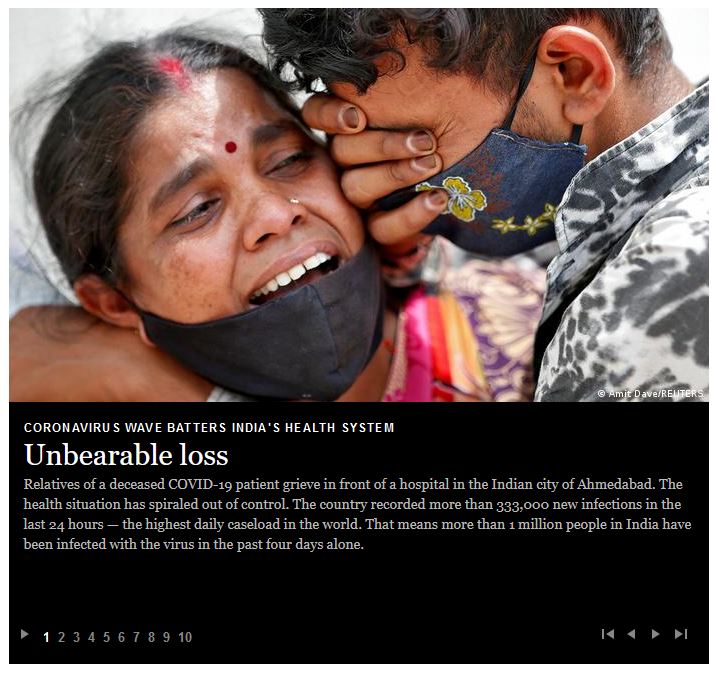
Do you consider present day India to be a free society?
Do you consider that people currently living in India are truly enjoying their freedom? Today?!?

And no, I’m not going to contrast what’s going on in India with what the Chinese government had done.
First pretend nothing had happened then lock up the entire population.

No!
I’m going to contrast what’s going on in India with how the ‘other’ China had reacted to the Covid pandemic. Or with the South Korean response.

Different economic realities… Different cultures…
Maybe!
But also different levels of economic and social disruption!

Don’t tell me that what’s going on in today’s India won’t have repercussions!

‘Japanese’ logic:
If somebody can do it, I can too.
If nobody could do it, I will.

‘Romanian’ logic:
If somebody can do it, let them do it!
If nobody could do it, why should I?

These two capture rather accurately the respective Weltanschauungs.

There are two things which bother me, though.

Once a Romanian determines that something must be done, they will find a way. No matter how unconventional…
It’s not any lack of individual self-confidence which keeps Romania back…

Secondly – but, to me, far more important,
who gets to determine whether ‘it’ is worth doing?
The doers themselves or somebody else?
And what governs the relationship between the two?
Is any mutual respect involved there?

For some reason, this whole thing made me remember Oscar Hoffman’s words.

‘Logical correctness isn’t enough. For a sentence to be actually true, it also has to make epistemological sense’.

Nature is made of atoms.

Same thing is valid for viruses. And for people.

Both viruses and people are atoms put together according to specific sets of rules.
Further more, the same sets of specific rules determine how each of them interact with the places where each of them happen to live.

I need to make a pause here.
And mention the fact that life alters, profoundly – if given enough time, the space where it ‘unfolds’.
For instance, the blue-green algae have transformed the Earth atmosphere into what it is today.

We balk at it today but blue-algae, also known as Cyanobacteria, is responsible for the Earth atmosphere having so much free oxygen.

Same thing is valid for viruses. And for people.

Viruses which kill too much of what they get in contact with do not survive for long.
They either peter out, like Ebola usually does, or have been wiped out. Like small pox was. And polio is close to be.

People who destroy too much around them… soon find out they no longer have a viable home.

And this is valid both for individuals and for the entire species.

Nature, on the other hand, doesn’t care.
It simply goes on.

My wife loves flowers. Cut, potted, our house is full of them.

She’s also very good at taking care of them.

I like playing with a camera.
I’m not as good as she is. None of my pictures convey the true beauty of her flowers…

Yesterday, when shooting some close-ups, something hit me.

We modestly cover up our bodies while with shameless naivety proudly display the sexual organs of the plants we grow for this very purpose.

Becoming mature implies giving up a lot of things.

A lot of the erstwhile held convictions.
No matter how they had happened to accure on you.

For instance, growing up means giving up the widely held belief that growing old will, eventually, ‘open up’ your mind.
That living long enough will transform each of us into a wise person.

Living is nothing but an opportunity.
What happens during that time depends heavily on ‘Lady Luck’.
And, of course, on what each of us is able to make of the opportunities presented by the afore mentioned Lady Luck.

In dear memory of Petre Anghel,
my Teacher,
who had passed away before we had the chance to finish discussing this subject.

“The Enablers fail to grasp that, by enabling, they marginalize themselves. That every time they kowtow to their subordinates in a ploy to remain relevant they advertise their creeping irrelevance. The gap between their superficial and actual power, between their status and the waning value of that status, is widening. Soon, they will be like the president of Germany, whoever he is.”

I’m not exactly old.
Only old enough to continue to check my email. From time to time…

For reasons outside my knowledge, this morning I’d found – in the ‘promotions’ section’ a link to a ‘common sense with Bari Weiss’ article. The title was apealing, the name rang a bell – even though I had no idea about who the person was, so I read it.

My reaction was intense enough to start writing.
Not before looking her up…

The point being that she is basically right. Enabling is a powerful phenomenon.
But she is also basically wrong.

Powerfull it might be, only enabling is not necessarily malignant. As she implies.

Enabling is done by people with means. Powerfull and or resourcefull enough for their actions to be effective.
What the enablers choose to enable… is something else.

And the consequences of enabling depend on the enablers’ choices!

Things might come up right. Or wrong.

The kind of enabling curently predominant in America has been detrimental to the society at large. Leading to the enablers becoming irrelevant.
Just as Weiss advertised. Trump has been supplanted by those who had occupied the Capitol – after being enabled by him, while on the other side of the political divide things aren’t going any better. Cultural cancellation isn’t going to end up well.

But enabling can lead to different outcomes. Depending, of course, on what is being enabled.

Take Germany, for instance.
Yes, nobody knows who its President is. Only the country, as a whole, functions far better than many of those whose Presidents are on everybody’s lips. Simply because the German enablers had chosen to enable the ‘right’ kind of behaviors.

PS
Frank Walter Steinmeier

There’s an entire literature discussing which animals – besides us, humans, are able to use tools.
Most authors also make a clear distinction between the animals which just pick an object and transform it into a tool by using it as such and the animals which actually transform the future tool according to the intended use.

The difference between using a twig ‘as it was found’ and sharpening it first with the teeth.

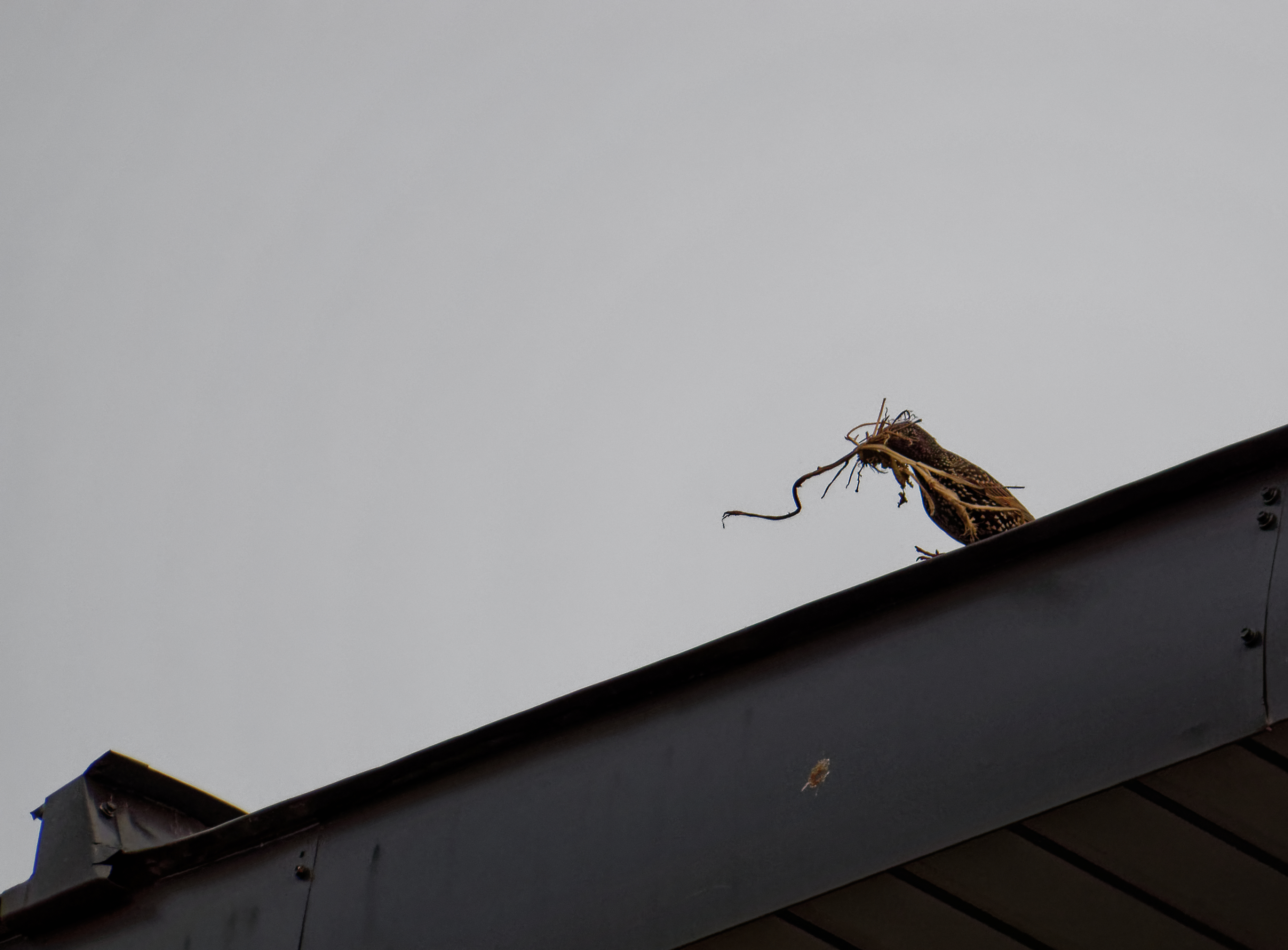
This morning, watching some birds while having my breakfast, I just realized that the vast majority of them are superb tool makers. Them birds, I mean. Not just the heavily publicized Caledonian Crows….

I repeat. Most of them.
Most of them are superb tool makers.

Most birds are nest builders.
In fact, they not only build houses, of sorts.
They are building uteri. Or uteruses, if you prefer this spelling. Places where eggs are laid and cared for.

What more elaborate tool is there?

This book represents Djuvara’s thesis for his 1974 Doctorat d’Etat.

There are two main ideas which are to be pointed out here.
A first one hidden under the distinction he identifies between ‘culture’ and ‘civilization’.
The second being the bread and butter of his thesis. That civilizations are initiated in one place, diffused/exported for a while and then replaced – or led further, depending on how one chooses to interpret the facts, by people until then living somewhere on the fringes of the civilization they are replacing/refurbishing.

Nothing really new, right?
‘Cyclical History’ wasn’t invented yesterday. And certainly not by Neagu Djuvara.

Well, Djuvara’s ideas – like everybody else’s, are nothing but ‘overgrowth’. Things which sprung in people’s minds ‘on top’ of what those people had already learned. Found out. Or, of course, both.

In a sense, what I’ve said in the previous sentence is the very condensed abstract of Djuvara’s second ‘main idea’.
The first, the ‘hidden’ one, – again, in an extremely abridged version, being that ‘history, as a narrative, is nothing more and nothing less than what historians choose to make of the facts they had learned about’.

Too blunt?
Well, first and foremost, I’m an engineer. Not a fancy pen-pusher…

OK. Let’s go further.
I’m going to illustrate, briefly, Djuvara’s main thesis by presenting his version of what had happened in Europe. What had started as an European phenomenon, more precisely.

The Roman civilization had grown at the periphery of the Ancient Greece. And, eventually, took over more ‘space’ than the Ancient Greeks.
The Russian civilization had grown at the periphery of the Byzantine/Orthodox one and eventually took over. Or, at least, attempted to…
The Holy Roman Empire of German Nation ‘recycled’ – or, at least, attempted to, the ‘ancient’ values and traditions.
Great Britain had grown at the periphery of Europe until it took over the whole world. At least for a while…
The US, which had started as a British colony, had grown into the most powerful nation known to man.

‘OK, I understand what you meant by trailers and trailblazers. Some of those who trail might end up trailblazing.
Do you want to add anything?
Is there an actual point to your post?’

Yep.
As they say about the market, ‘past performance is no guarantee about the future’.
The fact that things have happened as they did is no guarantee that they’ll keep unfolding in the same manner.

In a sense, Fukuyama was right, after all…
Even if not in the sense he thought it!

According to “The end of history” people – all over the World, had realized the relative merits of ‘liberal democracy’ and ‘capitalism’. Which were going to be put in practice, effectively marking ‘the end of history’.
Thirty years past that moment, it seems that things aren’t going in that direction.

I’m I contradicting myself? Who’s right, after all?
Djuvara? Since history doesn’t seem to have stopped?
Or Fukuyama, but for some other reason? Than the one advertised by him?

‘History, as a narrative, is nothing more and nothing less than what historians choose to make of the facts they had learned about’

Then, if history is ‘man made’, what about the future?

Can we really make it? Predict it?

‘Make it’, for sure!
If not us, then who?!?

‘Predict it’… that’s something totally different!

There are signs, though.

First of all, Djuvara had described something which can be compared with fire burning in a savannah. It starts in one place, burns for a while… and then starts up some place else. Until now, no fire – no fire known to man, had burned any savannah so thoroughly that nothing was left for a ‘second’ fire.

Secondly, Fukuyama said that history will end when all humankind will sync. When all ‘civilizations’ will be run according to the same paradigm. According to the liberal democratic and capitalist paradigm, in Fukuyama’s vision.
We’re still far from that.
Only there is one paradigm which is willing to play that role! To fill those shoes…

The ‘greed is good’ paradigm!
Or, if you don’t like to think in ‘monetary’ terms, the ‘my version is the only right one’ paradigm.

The problem being that these two work in concert.
They are two facets of something called ‘intellectual arrogance’.

I’ll come back to this notion sometime in the future.
Now I’ll end up telling that there’s not much left of the ‘savannah’.

When things were unfolding as Djuvara described them, the planet itself was more or less ‘virgin’. Unexploited. Unoccupied.
Human culture used to be diverse. Ideas were developing. Traded. From one place to the other. From one culture to the other.

Nowadays, much of the planet – our home, is occupied by the, more or less, same civilization. And by an increasingly similar culture.

Nothing inherently good nor bad here, mind you!

If we still have no definitive history, then the future hasn’t been written yet.
It’s up to us to choose the right trail.
For no other reason than the fact that there are very few trails left for us to burn!

Attempting to value individualism over collectivism is similar to trying to establish which came first, the chicken or the egg.

Having experienced both – collectivism and individualism put in practice as political principles, I have noticed that neither extreme is capable of working in a sustainable manner.

Communist regimes had fallen one after another.
Fascist regimes did the very same thing.
Pirate republics could never resist for long.

Coming back to what is happening in the US, I’m afraid very few people are aware of how much collective thinking had been embedded in the American Psyche. The good kind of collective thinking…
Americans go to church. A place where you go to to be together, not alone.
Americans used to help each-other. Charity used to be a big thing. Slowly, it had become a dirty word.
And so on.

Individuals can not exist on their own. They need each other to survive. And to thrive.
Collectives can not last for long unless the individuals who constitute them do respect each-other. Help each-other maintain and develop their individuality.

As simple as that.

I had recently shared this image on FB:

“Those are called Witches Stairs. Allegedly, witches can’t climb up them. You will occasionally find them in very, very old New England homes.

(photo by Daphne Canard)”

Yesterday I got a notice from FB:

I presume this was the ‘consequence’ of some artificial intelligence employed by FB doing its job.

Doesn’t make much sense but…

For whatever reason, I made a screen capture of the notice and shared it on FB.
A friend asked me about the original post.
I looked it up and it was no longer there!
I searched FB for the picture… and there it was. Shared multiple times by multiple people. Sometimes with the accompanying text, sometimes baren.
And, at least once, bearing a very similar warning:

I’m not questioning FB motives for fact checking the information on its walls.
That’s a good idea.
Only I’m not so sure the ‘artificial’ intelligence FB uses to implement that idea is intelligent enough for the task….