As living organisms, we are defined by the genes inherited from our parents. As socialized human beings, our thoughts are shaped by the particular culture seeping through our consciences. As politically governed inhabitants of various countries, our destinies depend on the wisdom of those calling the shots. On more than one level…
We don’t have much to say when it comes to our genes. We can always interpret the tenets of the above mentioned cultures. As citizens, and very much depending on the particulars of each ‘polity’, we can always try to influence the decision making process.
We cannot do much about our genes for a very simple reason. They are part and parcel of our ‘inner-workings’. The immutable part of what we are. We can interpret culture and attempt to influence others because of our consciousness. Our ability to develop a certain kind of awareness.
Consciousness, the ability, can be construed as a space. The place where our individual consciences exist, meet and interact. Our individual consciences can be understood as atoms inhabiting the consciousness. Like all other spaces. consciousness has dimensions. Hence regions. Each region ‘functioning’ according to certain sets of rules. Sets of rules otherwise known as ‘cultures’. Culture, in general and each of the individual ones, is ‘alive’. Just as life itself is ‘alive’.
Unfortunately, life is only ‘aware’. Not yet aware of it’s own self. Not yet conscious. Only a certain species of individual living organisms has, as far, developed this ability. ‘Culture’ – a living thing because it is animated by individual living organisms, the conscious ones – is also ‘aware’. Just as life is ‘aware’. But, again like life, culture has not yet developed a full consciousness. And awareness of
Atoms, in the real world as well as the individual consciences inhabiting consciousness, ‘cooperate’. Democrit’s atoms, in various combinations, constitute the ‘real’ world. Including here the individual living organisms harboring individual consciences. Conscious ‘atoms’, the individual consciences harbored by the living organisms which have been able to develop one, are about to take over a portion of the above mentioned ‘real’ world.
Space is where ‘evolution’ happens. Where interaction shapes whatever is.
For space to exist, something must be there. Space needs ‘limits’. Which define it. ‘There’s a gap between these two bricks’. ‘This pile of bricks blocks the way’
‘Space’ is, simultaneously, a place, a concept and a word. We, writing and reading about it, exist. Somewhere. Somewhere in ‘space’… We’ve realized that. That we exist. Hence we came up with the concept. We needed to share that knowledge. To discuss it. We needed the word!
A wise man, using tools crafted by his predecessors, has calculated that whatever exists in space shapes its form. The heavier the object, the deeper the dent. Which depth of the dent influences the flow of time…
Time… the metric we use to measure ‘evolution’. The order and speed of happening… Time… Another ‘thing’ which exists, simultaneously, as a ‘reality’, a concept and a word.
Einstein, the wise man with the calculus, did his thing trying to understand. To put together an explanation for everything. Reading his findings, the results of his calculating, we can push our imagination. How about switching time for space?
How about considering ‘time’ as being the place where events exist? Interact, producing the ‘space’ needed for that process? Where the ‘weight’ of events, their ‘importance’, shapes the form of time. Which form of time influences the space ‘becoming’ as a consequence of those events existing/interacting in the place called time…
My point being … You see, Einstein’s predecessors had developed what we call ‘mathematics’. Our predecessors, also called ‘ancestors’, had developed a thing called language. Used it to communicate. Among themselves, as individuals, and among themselves – as a cultural species – and the surrounding reality. Language as the tool we use to digest and reshape the reality… Before we ‘do’ anything, we think about it. Using language to parse pertinent information stored in memory. Using language to consult with others. Using language to coordinate with others…
One of the languages we’ve developed is mathematics. Einstein, using this language, reached a ‘conclusion’. Wrote a story. Others call it a theory. Convincing enough for interested people to try. To try to prove it, to try to disprove it. To attempt to implement it into practice…
We exist. In space, using whatever resources we can identify and building time as a consequence of our actions. We do this using language. To explore, think and coordinate. That’s how we’re calling things. Space is where things happen and time is the ‘conclusion’ of whatever we do. Mathematics suggest that time and space are interchangeable.
So what?!?
Have we already solved all our immediate problems?
After all, we’re the only adults in the room. In the limited space called planet Earth. Or, at least and for all that it might matter, we’re the only adults in the room who care. Who should care about our own fate… Time’s running out, faster on the route we’re currently using!
You’re handed a pot. So heavy, you need to hold it with both hands. So hot, you want to let go of it. On your feet?!?
I’ve argued sometime ago that all living organisms act as if they were ‘aware’. All of them are adept at keeping their insides in, most of the outside out and, most importantly, they are the ones deciding what from the outside goes in and what from their inside goes out. And when! I call this awareness 1.0. Or life…
We congratulate ourselves over being the only creature wielding ‘self-awareness’. The ‘full fledged’ variety… according to our way of understanding it, of course. “Consciousness”, we call it. How about ‘awareness 2.0’?
Some of us are involved, heavily, into ‘faking’ things. From building something called ‘artificial intelligence’ to using ‘technology’ to mess up other people’s minds. They are ‘delving’ in the ‘next’ level. Knowingly but unwittingly playing god.
Life is driven by ‘natural selection’. Or ‘evolution’… as Darwin called them. ‘Happenstance’, if you look at it from another angle. The process of life/natural selection/evolution depends on it taking place ‘individually’. While evolution is a matter regarding ‘species’ – as Darwin itself had put it – the whole process depends on the fact that each individual organism which belongs to each species is distinct/different from all other members of the same species.
‘Self-awareness’ depends on the existence of other self-aware individuals. Willing to cooperate with the ones developing it. Just as no living organism has been observed, yet, while putting itself together starting from innanimate matter, no individual has ever been observed developing self-awareness with no outside help. Mind you, while the process involves ‘mature’ individuals helping ‘fledglings’ to ‘fly’, the process isn’t entirely ‘voluntary’. The outcome, the emerging individual consciousness, depends on the actions performed by those helping it but only inasmuch as the result of the natural evolution depends on the actions performed by the previous generation. Achieving ‘self-awareness’ is a ‘natural’ process, not a ‘deus ex machina’ machination!
Awareness 3.0, on the other hand… the ‘artificial’ kind… In this context, I wish to remind you of what happened when we, willingly but unwittingly, have reduced the natural bio-diversity in certain areas. According to our needs and understandings…
“The Green Revolution’s success also brought serious costs: intensive farming drained groundwater, degraded soil and contaminated fields with pesticides, while wheat and rice monocultures eroded biodiversity and heightened climate vulnerability, especially in Punjab and Haryana. Swaminathan acknowledged these risks and, in the 1990s, called for an “Evergreen Revolution” – high productivity without ecological harm. He warned that future progress would rely not on fertiliser, but on conserving water, soil, and seeds. A rare public figure, he paired data with empathy – donating much of his 1971 Ramon Magsaysay Award amount to rural scholarships and later promoting gender equality and digital literacy for farmers long before “agri-tech” was a buzzword. Reflecting on his impact, Naveen Patnaik, former chief minister of Odisha, says: “His legacy reminds us that freedom from hunger is the greatest freedom of all.” In Swaminathan’s life, science and compassion combined to give millions that very freedom. He died in 2023, aged 98, leaving a lasting legacy in sustainable, farmer-focused agriculture.“
We live in the world of our own making. Literally!
This is a picture. A man-made picture. God is depicted, by Michelangelo, as being very intent while ‘man’ seems to be casual about the whole thing. Disinterested. Somewhat absent. Let me remind you, in this context, that Michelangelo’s painting was named “The Creation of Adam”.
The world we live in, very much like Michelangelo’s painting, has been made by us.
Unlike his predecessors – those who had painted the walls of Lascaux – Michelangelo had adorned a man made structure. A ceiling. Unlike his predecessors – who had, most likely, painted on their own volition – Michelangelo was hired, ‘commissioned’ is the PC word to be used in these circumstances, by the pope, to interpret the Genesis Creation Narrative. Very much like his ancestors, Michelangelo was also made of flesh and bones. Had to breathe, eat, drink and painted using substances ‘borrowed’ from the ‘nature’.
The point I’m trying to make here is both simple. And very hard to swallow.
We live inside ‘something’. We use ‘reality’, the word, to describe a portion of that ‘something’. The portion we ‘control’. We think we know about and are able to interact with. Very few of us accept the fact that what we call ‘reality’ is ‘tainted’ by us. That we have a growing contribution in the process of ‘reality’ becoming what it is. And what it’s going to be. To become…
The ‘something’ we inhabit is far wider that what we call ‘reality’. It’s full of everything we do not know about. And choke full of everything we have invented and does not fit in what we call ‘reality’. Choke full of gods, spirits, ghosts, ideologies, theories, explanations, narratives and so on and so forth. ‘Metaphysics’, if you know what I mean.
‘Another atheist. I should have known better…’
“It’s full of everything we do not know about”…. I never said there is no God. It might very well be. Or not… All I have to say about this is that what we consider to be ‘our god’ exists nowhere but in our imagination. Beyond the ‘physical’ world.
‘According to what your saying, we’re involved not only in ‘reality’. We’ve also ‘constructed’ a sizeable portion of the ‘netherworld’…’
As a matter of fact, yes. We’ve not only ‘created’ what we call ‘reality’, we’ve also created the ‘netherworld’ itself. Both inside the ‘something’ which encompasses everything.
‘ “Created…” how did we ‘create’ anything?!? Least of all ‘reality’…’
Language is a very powerful tool. And naming is a very powerful feature of that tool! By naming something, anything, we separate that something. From the rest. We actually establish a barrier, in our collective mind, between that something and the rest of whatever there might exist. And I leave aside the fact that our language coordinated efforts have drastically altered our portion of ‘something’, our ‘reality’, since the days when Michelangelo’s ancestors, ours, used to paint the walls of the Lascaux cave.
‘Reality’ itself is a very interesting word/concept. Until not so long ago, Gods were real. And still are, for some of us. But even in those times, people felt the need to make the difference between the real, hands on, reality and the rest of the things they believed into existence. ‘Metaphysics‘, the word itself, was coined by Aristotle’s editor. A certain Andronicus of Rhodes, sometimes in the first century BC. As a consequence, everything was real, in those times, but some portion of what was real existed only in people’s minds. “ta metá ta phusiká“… 1500 years later, when science was budding – again, in our Medieval forefathers minds, the ‘tables had been turned’. The scientific state of mind demands that only the factual/physical things can be deemed as belonging to ‘reality’ while all the rest, including the metaphysical realm, belongs someplace else…
Nowadays… things have become rather complicated. Science tells us we don’t know everything. Worse still, that we’ll never know everything. On the other hand, everyday life proves, beyond any doubt, that things which exist only in our heads/minds do shape, dramatically, our daily lives. I’ll give you but two examples.
The church and the traffic light.
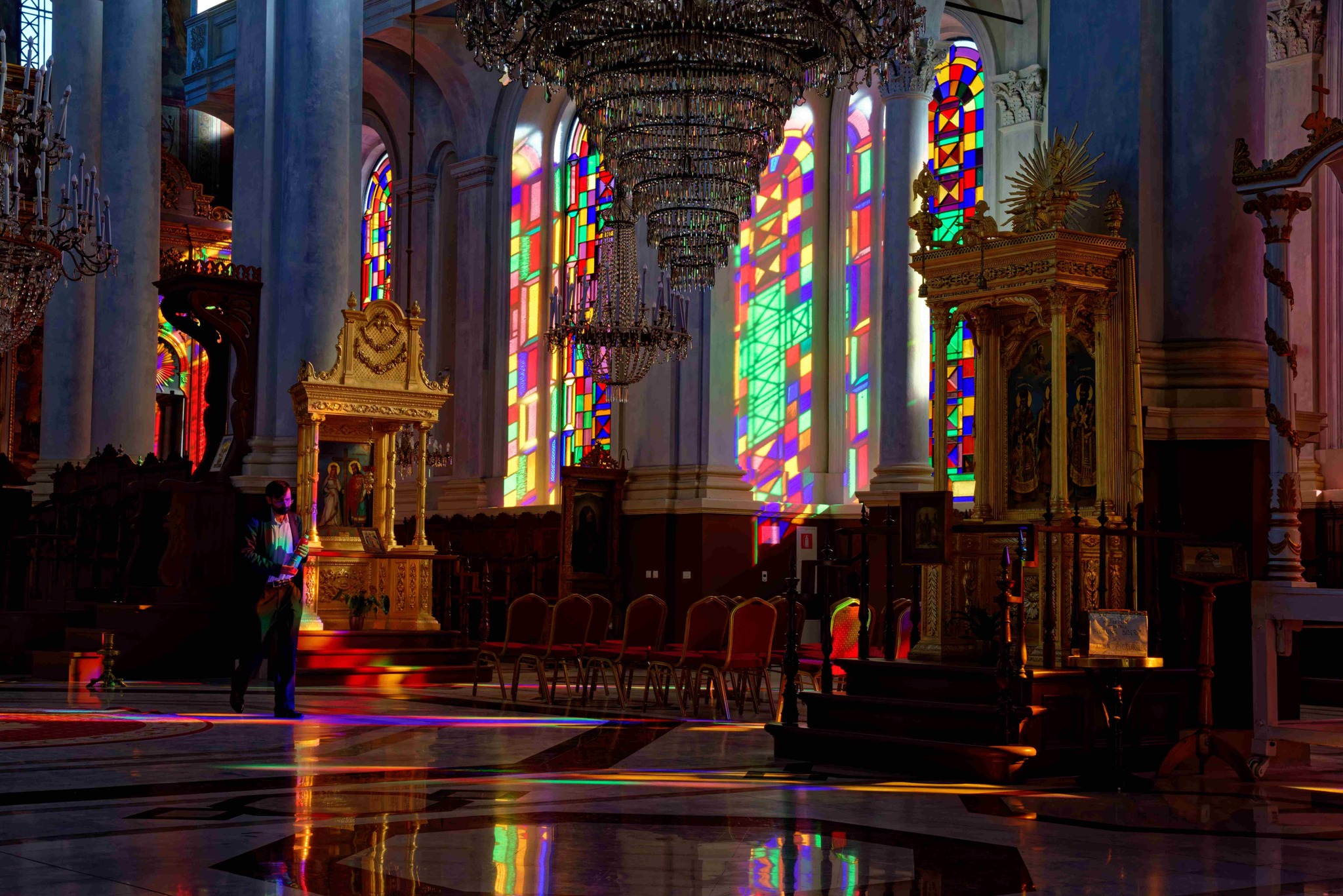
People go to the church because they believe. Most of them. Very few people visit churches, ordinary churches, out of touristic curiosity. People ‘obey’ the traffic light because they actually believe life has been made simpler, and safer, since the traffic lights have been invented/installed. Like churches, we don’t ‘obey’ them because they are there! We install them because we’ve understood our lives have improved since their inception.
In 1995, University of Colorado Boulder physicists observed BEC, a fifth state of matter that only exists within a sliver of absolute zero. At such a low temperature, individual atoms overlap so much that they collapse into a single quantum state where they collectively act as a single entity.
Positing that ‘space is where things happen’ is nothing short of stating the obvious. It does have some merit, though. It leads to the real subject of today’s post.
When no temperature is present – 0 degrees Kelvin – there’s no interaction between the things which happen to be there.
So whose temperature are we measuring?
The temperature of the space? Of the place harboring whatever happens there? Or not… The temperature of the things happening to be there? Or the amount of interaction between the things populating that place?
A space station circling the watery pebble we call home…
Cooperation brought us so far. A majority of us have enough to eat and some of us – albeit very few – get to see the world from above.
Some of us might wonder: What’s the point of ISS?!? Wouldn’t that money be better spent feeding the hungry?
The short answer is: ‘We don’t need the ISS money. Feeding the hungry is well within our current possibilities. We just haven’t yet figured out how important this is!’
And here’s the explanation. We’re no longer able to feed ourselves. Individually… In order to enjoy our current standard of life, we need to cooperate. In order to cooperate, we need to trust each-other.
Nobody has asked to be born. Yet here we are. La Legion Etrangere goes by “Marche ou Creve”. Keep walking or ‘make way’. Now that we’ve been born, how about we make the best of it?
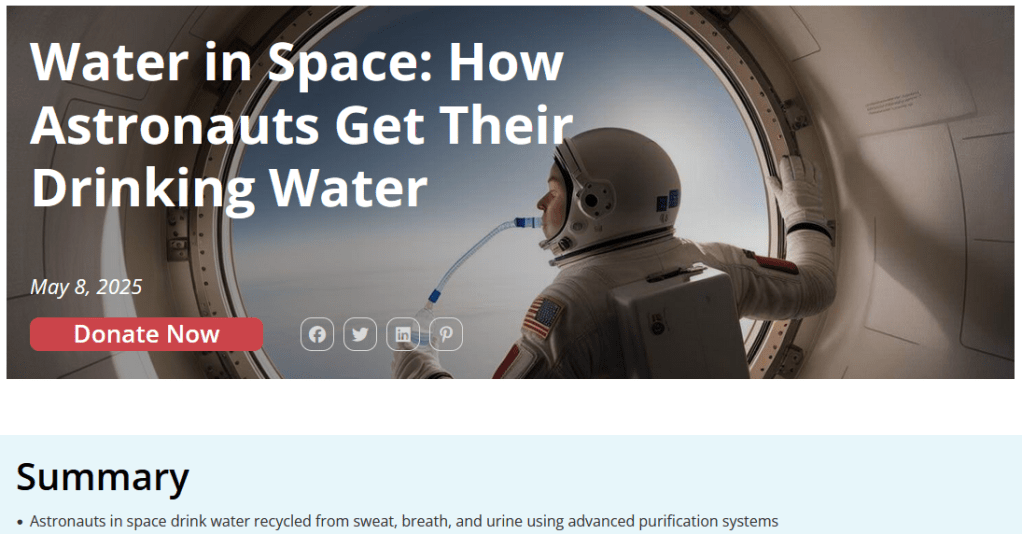
Those who get to see the world from above did have a say about the whole thing. Nobody gets there against their wishes. And they know what they’re signing for. Not everything – some of them don’t get to get there – but they have a fair image of what’s gonna happen to them. Including the facts about the water they’ll be drinking while enjoying the view.
Maybe it’s time for the rest of us to understand the limited nature of the Earth itself. Not as limited as the ISS but I’m sure you understand my drift.
The astronauts trust each-other.
And they trust the rest of us. Those who have made it possible for them to go there.
We, the rest, need to learn the trick. How to actively, agentically, build trust 2.0.
An open wound will be ‘colonized’ by various organisms. A mixture of water and flour will develop a ‘froth’. A naive person will be swindled.
A healthy immune system will, eventually, take care of the infection. Successfully or not… If in the hands of an experienced baker, the mixture of water and flour will – eventually – become the starting point for a delicious sour-bread loaf. The previously naive person, once swindled, might learn something from the experience.
Life is nothing but an added layer of opportunity. The pre-animated world is about strict rules. No variation, except for that brought about by happenstance.
Life is also about rules. But way laxer than those governing the pre-animated world. While the pre-animated world is about nothing more than mere existence, life is about surviving in the given conditions. About evolution. About change.
And here’s the catch. Pre-conscious change is also mainly about happenstance. Darwin’s evolution is driven by minute changes at the DNA level. Those which are helpful are perpetuated while those which are harmful either kill out-rightly the organism where they have appeared or restrict its ability to ‘give birth’. Nota bene. Darwin’s evolution was about “On the Origin of Species by Means of Natural Selection“ In his understanding, and in the real world, evolving – biology wise – is done by the species. Not by individual organisms!
Conscious change, on the other hand… is driven by individuals! Happenstance continues to be involved, heavily, but the main drive comes from ‘want’. From individuals willing/wishing to ‘make a difference’.
Is this a good or a bad thing?!? It is a fact. Neither necessarily good or bad. Just a fact. The outcome, evolution wise, depends on how the social organism – the cultural species – digests the experience.
For a while, I was convinced we were living in a virtual reality. In a reality of our own making. As I mentioned earlier, ‘vir‘ is a Latin word. “Man”. “Hero”. Hence ‘virtual’ literally means ‘man-made’. ‘Manufactured’.
Now I’ve realized we live inside an experiment. We are both the objects and the agents of the intersecting experiments currently active.
In the 20 odd years since Caro and Hauser have set the bar for what teaching means quite a number of species have been found to do it. To fully or at least suggestively cross all the necessary t-s. From ants to primates.
Interestingly enough, all of those species have a clear ‘collective’ behavior. All individuals belonging to a species collaborate, of sorts, towards the survival of that species. This goes without saying. But in some species this collaboration is more intense than in others. Ants and bees versus most other insects. Elephants versus cheetahs. Or leopards. Even chimpanzees versus orangutans…
OK, for some species hand to hand collaboration between generations is impossible. Most parent insects are dead when their offspring hatch. Orangutans live in forests where food is too scarce for more than 1 individual to forage. Others have found their niches. Where the individual approach is good enough for them to survive. Cheetahs, leopards. Bears, even…
Charles Darwin taught us about evolution. Merging individual lives into the survival of the species those individuals belong to.
Life, as I see it from a “functional and mechanistic perspective“, is yet another manner in which matter is organized. Yet another ‘state of matter‘. For life to be present, three conditions have to be met. – Individual organisms have to be exchanging, in a controlled manner, substances with their environment. To ingest nutrients and to excrete the by-products of their metabolism. – Individual organisms have to be exchanging information with their environment. And with their interior. Otherwise the exchange of substances would no longer be controlled by the individuals. – Individual organisms have be passing to the next generation the pertinent information needed for the species to survive. In the kind of life we are familiar with, that would be ‘the genetic information’.
Considering the above, I dare to make a difference between what Caro and Hauser consider to be teaching and what we, humans, do. Intent!
I doubt that any of the ‘animal teachers’ do it under their own volition. After all, nobody has yet identified an animal con-artist who cons the members of their own species… as we do! As far as we currently know, ‘teaching behavior’ is displayed inside species which collaborate more closely than other species. Which suggests that that kind of behavior is somehow innate to those species. A ‘habit’, not a choice. As it is with us.
What makes it possible? This difference? Our special kind of conscience and our use of language. The fact that we are the only species – as far as we know – capable of building a ‘virtual image’ of the surrounding reality. Capable to select certain aspects of what surrounds us and codify them using various forms of ‘notation’. And to do this according to our own, individual, interests! Sometimes even against the interests of the community/species to which we belong.
I was arguing in the previous post that we think using images stored in our memory. While we are convinced that we deal with real ‘objects’… ‘Hammers’ versus ‘nails’…
As you should have already noticed, Abraham Maslow had said more or less the same thing sometimes in the first half of the previous century… Well, he was a ‘clinical’ psychologist while I’m nothing more than an engineer. He was interested in how our mind works, I’m interested in the consequences of how our minds work. If you understand what I mean…
‘And what about the pretext you used for today’s post?’
Free market capitalism is nothing but an environment. Man made, for sure, but also ‘natural’. As in ‘evolved’ to the present state as opposed to ‘designed’ in the present state. Free market capitalism doesn’t do/cause anything. People toiling in this environment do whatever happens here.
Gravity doesn’t cause any falls.
Gravity pulls us, all of us, towards the center of the Earth. Regardless. Of us walking sober in the middle of the town versus skating ‘under the influence’ on a thin iced lake in the middle of nowhere.
Life, in general, is about species evolving in a given set of circumstances. If the circumstances allow it, live will appear. And survive for as long as the circumstances remain livable. We must keep in mind that life changes the environment in which it evolves. Social life, the human kind in particular, is about cultural species evolving in given sets of circumstances. For as long as the circumstances remain livable, cultural species will continue to evolve. To put their culture to work and to build civilizations. Each set of circumstances influencing both the culture which inhabits the circumstances and the civilization being built there.
Currently, there are three main categories of cultures. Imperial, democratic and incomplete.
I will start by noting that those cultures which are ‘incomplete’ have remained so because they didn’t have enough time to make ‘full use’ of the limited resources they had at their disposal. The difference between the imperial and the democratic cultures being the fact that the imperial ones stagnate as soon as they reach a certain level of development while the democratic ones continue to evolve for as long as they manage to remain democratic. To retain their ability to change as soon and as far as they need in order to survive. To maintain their democratic character.
Need proof? Are you familiar with any empire which had lasted for long? The Egyptian? 33 dynasties covering 3 millennia? Is that long enough for you? Well, not so fast. ’33 dynasties’ actually means 33 different empires. It was very seldom that a dynasty ended when/because there was no available successor… Most dynasties were removed from power rather than petered out. And, nevertheless, who cares about why a certain dynasty was replaced by the next one?!? The simple fact that it was replaced is enough for me. The replaced dynasty was no longer able to cope! Hence it had to make place for the next one. Another set of decision makers, naturally following a (however slightly) different mantra.
Don’t believe me? Consider any other empire. Evaluate the duration for which each dynasty had managed to hold the helm. And compare it with the fact that the Roman Republic had survived, as a functional democracy, for almost 5 centuries.
And no, Europe isn’t the only place where democratic forms of self-rule had happened during human history. Kurultai, Loya-Jirga… The mere existence of the concepts is proof enough for the budding democracies which might have developed in those places, given enough time and resources.
Then, if democracy is so much ‘better’ – as in more helpful towards the survival of a certain set of mores/culture – then why is it so ‘scarce’?
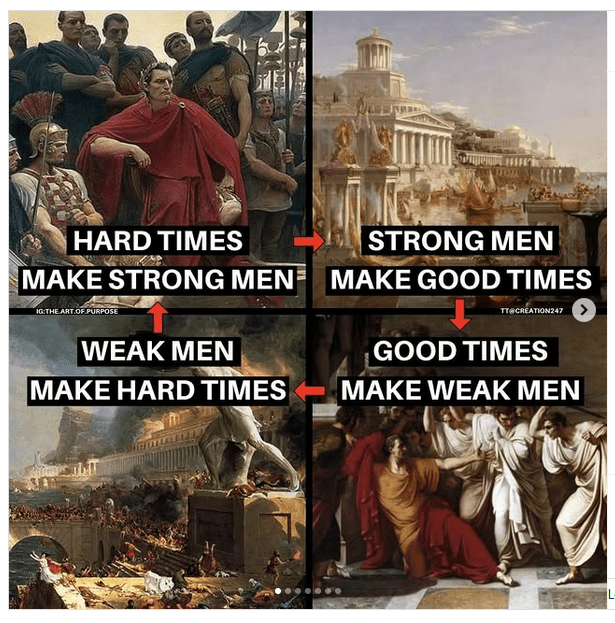
Well, for democracy to remain functional, at least some wise men need to remain both strong and focused on the job at hand. Otherwise, the helm will be confiscated by the would be strong but not so wise….
And why is it that good times tend to make weak people? First of all, good times tend to weaken ‘the people’. Not as much to weaken the individuals living a good life as to make them careless. To take the good times for granted. To convince them that ‘times’ will continue to remain good regardless…..
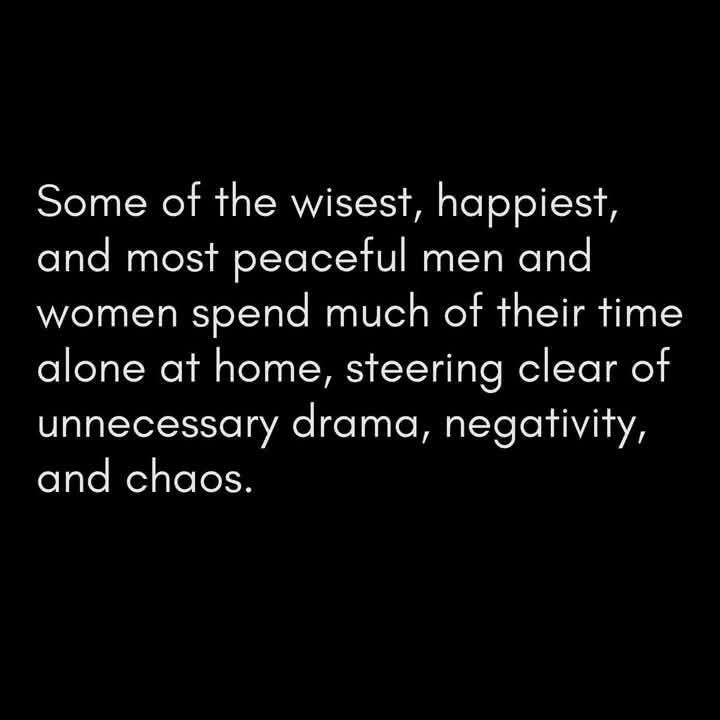
Not having to struggle for their day to day existence tends to make ‘some of the wisest, happiest, and most peaceful men and women to spend much of their time alone at home, steering clear of UNNECESSARY drama, negativity and chaos’.
This being how successful democracies sometimes succumb to tyranny and how empires eventually crumble under their own weight.






 nicichiarasa