Archives for category: corruption

For more than a year now I was struggling to understand the circumstances that have produced the current political mess in America.

I finally figured it out.

Confusion and dissatisfaction!

If you have enough people that are both confused and malcontent then all kind of ‘strange’ things will happen.

Only one of them won’t be enough to explain the whole gamut of what’s going on and that’s why I wasn’t satisfied by any of the many articles that pointed out one reason or another for the ‘popular discontent that brought the Donald to the White House’.
In fact no amount of ‘unhappiness’ can explain how two mature parties can nominate such lousy candidates. Neither Hillary Clinton nor Donald Trump fit, not even loosely, the profile of a decent President. That’s why the voter turn-out was the lowest in the last 80 years or so.

But if you add ‘confusion’… things begin to clear out.

And no, I’m not speaking here about the regular people being confused as a result of the ‘politicos’ having misbehaved horribly.
I’m afraid things are way deeper than this.
Even those who believe themselves to be educated in these matters seem to be swimming in a sea of thicker and thicker fog.

Take, for instance, the current debate about the differences between ‘republic’ and ‘democracy’.

A republic is a representative type of government, and its goal is to simultaneously control the majority while protecting the minority. For example, in the republic of the United States, the government is limited constitutionally, and power is divided between the three branches of government.

A democracy is a type of government that grants eligible citizens the right to equal participation. This right is provided directly through the creation and development of laws or through elected representatives. The interest of the majority is the most important aspect in a democracy.

A republic is a representative form of democracy. A republic has an elected head of state, such as a president, that serves for a specific period of time. In a republic, the interest of the majority rules through its elected representatives. However, a republic has a constitution that protects the minority from being entirely overruled or unrepresented.

See what I mean? Adding insult to injury this definitions were published by a site which calls itself ‘reference.com‘ …

I’m not going to pick truth from fiction in that quote, that would only add to the already too thick confusion.

Enough for me to say that ‘republic’ is indeed a manner in which societies are organized (a.k.a. ‘governed’) while ‘democracy’ is a manner in which societies decide for themselves. Yes, these two things have a lot in common but we should not confuse them.

There are republics which only pretend to be democratic – like the late Soviet Union or the current Democratic Republic of Korea, some which are democratic in a rather strange way – Iran for example, or which are slowly ‘loosing’ democracy behind – like Orban’s Hungary or Putin’s Russia. History has also a few examples of republics which had given up democracy all together. Hitler’s Germany, for instance.

On the other hand there are monarchies (OK, constitutional monarchies) which are perfectly democratic. The British Commonwealth, Sweden, Norway, Holland, Belgium…

What can explain the current confusion?
‘The interest of the majority is the most important aspect in a democracy’?!?
A major lack of understanding about what democracy really means?

A terrible confusion between the formal aspects of democracy – freedom to vote for what ever candidate accompanied by a fair account of the ballots – and the really important tenets of democratic behavior – honest, open and mutually respectful exchange of ideas about the current state of affairs between the interested members of the society?
My point being that true democracy is about the opportunity to rationally convince those around you/making yourself available to be convinced by rational arguments, not about the majority imposing its view on the minority. That is nothing but mob rule, a horrid perversion of what democracy was meant to be.

Basically, what happens – under all forms of social arrangements/forms of government: republic, constitutional or absolute monarchy – in a society is that people need to know where that society is headed to. Authoritarian societies are run by the ruler – and the people, willingly, unwillingly or with mixed spirits, agree for the time being – while the democratic societies entertain a certain ‘effervescence of ideas’ which bring forward the important problems that need to be resolved and what would be the socially acceptable manners for those problems to be fixed.

But in order for that ‘effervescence of ideas’ to be efficient, the ordinary people have to contribute in earnest to the exchange and the politicians need to pay close attention and to cooperate among themselves and with the rest of the society towards solving those problems.

That’s why I’d like you to remember when was the last time that people on the different sides of the political divide have actually talked together?
Why do we have a ‘political divide’ in the first place?

Aren’t we supposed to be ‘all together’ in our respective countries?

What’s gotten into us that made us fight each-other so bitterly?

Why do we succumb so easily to ‘divide and conquer’?

Why are there still so many politicos who keep using this method, despite the ample proof that has been provided to us, through out the history, that ‘divide and conquer‘ inevitably ends up in disaster?

http://politics.blog.ajc.com/2017/06/16/when-your-own-rhetoric-gives-you-license-to-commit-mayhem-and-worse/

Theoretically it means “from each according to their abilities, to each according to their needs”.

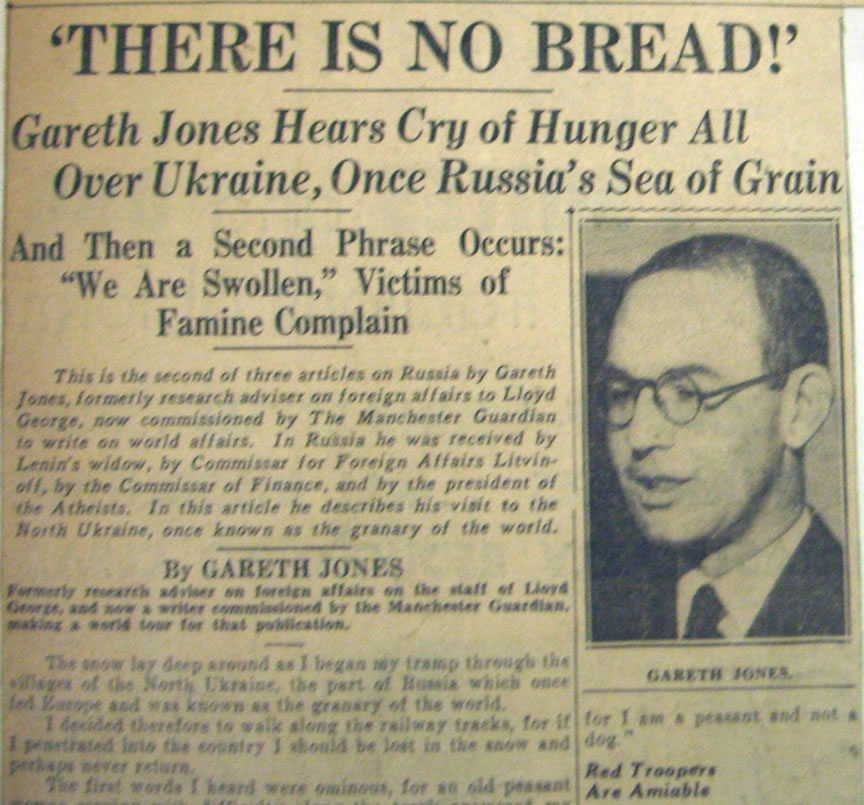
Practically it looks like this.

famine-in-ucraine

In fact real life communism still is, and always was, about a whole country kow-towing to a dictator who pretends to care for nothing else but for the welfare of the people. His people!

The point being that each resource allocation game needs a referee. Otherwise all rational people would take as much as they could carry from the communal reserve – because it is free – and bring back as little as possible, hence nothing if not coerced to – because it implies some effort.

OK, any reasonable five years old would tell you that the communal reserve would very soon become empty if things would go like this – hence that presumably ‘rational’ behavior would be anything but – only it would be very rational to at least try, wouldn’t it? For how long it would work, no matter how short that interval…

And something else.
You are most likely familiar with ‘bad money drives out good’. There have been a lot of examples to prove this, one of them being Christ driving the money changers out of the Temple.
Some of you might not be familiar with how money worked in those days so here is it.
A coin was a simple ‘slab’ of precious metal, of somewhat constant weight, approximately round, which had been ‘stamped’ with the face of the local ruler. At first, in the minting shop, all coins belonging to the same edition were more or less of the same weight. But, since the edges of the coins were not ridged, ‘smart’ people started to ‘shave’ the coins.
And, after the first guy had started to shave them, each individual who got a coin would have been foolish not to shave it, just a little bit. Maybe the next guy would be foolish enough to accept it, after being shaved. To contest it the recipient would have had to go to the money changers and pay for their expertise. And this is how the coins became smaller and smaller…
Only the priests at the temple didn’t want to be fooled. So they hired some money-changers to vet the coins the believers brought to the Temple. The very money-changers that Christ had driven away. “God doesn’t need this kind of guardians. If we keep them here it would mean that we expect people to cheat. Even here, at the Temple. And if we expect them to cheat, they will surely do so!”

Only some people do cheat. And since some cheat, the rest will have to do something about it. Either make cheating the rule, which would lead nowhere, or make it so hard to cheat as to become impractical. Hence the ridges at the edges of the modern coins. Which can no longer be shaved because the ridges would make it obvious.

Coming back to our ‘communal reserve’ you would have to employ a guardian to make it sure that no one would take any more than they really need and that everyone periodically brings back stuff according to their abilities.
But how would that guardian determine what are the real needs and the real abilities of each of those individual members of the community?
And, even more importantly, what would stop the guardian from taking the whole ‘communal’ reserve into his private possession? As in acting like a communist dictator? Simply because ‘he needs it’?

The only alternative that worked was the free market. That where you sold your abilities and where you could buy things to fulfill your needs. Where prices were set at the meeting point between ask and demand.
But the same principle, bad money drive out the good, acts even here.
‘Smart’ people try to organize ‘monopolies’. Which, basically, is the same thing as they attempting to become the owners of the ‘communal reserve’.

This whole thing looks like an intractable vicious circle?
Take heart, that’s what ‘reeds’ are for.
We invented those, when we realized that we needed them, didn’t we?

reeded-coins

You still wondering what to use in order to transform that vicious circle into a virtuous one?
How about individual freedom coupled with a healthy dose of mutual respect?

Until not so long ago it was possible to buy unlimited coverage against the risks that scared you.
After things became too complicated and fraud a too widespread occurrence even the Lloyd’s gave up and started to introduce caps on insurance policies.
In fact Lloyd’s of London was the only place – that I knew of – where risk was understood, at least in part, in a ‘functionalist’ manner.
Risk is something that can be seen in two ways.
As yet another opportunity for making profit or something that has to be mitigated for the profit of the entire community.
Let me deal with the latter ‘option’ first.
Somehow I don’t buy it that Bismarck was primarily motivated by the well-being of the workers.
But what the German industrial barons of the day needed in order to catch up with the British ones – the Albion was the industrial power house of that time, o tempora…- was more and more people willing to leave the relative safety of the country-side and come to the city to work in the newly built factories.
In order to appreciate the huge difference between these two situations we must remember that in those times families were a lot larger than they are now and that their members used to help each other in times of need. But this could happen only if the members of the same family remained in close vicinity and worked on very flexible schedules – agriculture or family owned shops. You cannot go help your ailing mother if you work in shifts and live two hundred miles away from her.
So, in order to ‘lure’ more and more people out of the fields, and in a very short time, Bismarck had to offer them a ‘safety net’.
OK, let’s accept the idea that, maybe, there are some risks that the society, as a whole, should concern itself with.
But how to fulfill this ‘social need’?
How to identify which risks should be dealt with in a collective manner and which should be left alone. Then how to manage the whole process?
‘State-wide’ or through privately owned/operated initiatives?
Does it really matter?
I don’t think there is a universally valid recipe here.
The Bismarck’s social insurance system worked in Germany.
Lloyd’s has functioned almost seamlessly for 3 centuries. In England.
Both systems, one centered mostly on profit and the other on the safety of those who took part in it, worked because they spread out both the risks and the profits.
Current systems, where only the risks are being mutualized while the benefits tend to become more and more centralized – by ‘design‘, by corruption or both – are no longer functioning properly.
Take ‘Obama Care’, for instance. Most people, including Donald Trump, agree that something has to be done about ‘public health’ but the whole thing isn’t yet working properly.
Instead of fighting among ourselves on whether the state/government should have anything to do with risk management how about considering for a moment where our current infatuation with ‘profit‘ has brought us?

People are very passionate when discussing about their future and their rights.
As they should be.

Children are a very strong ‘avatar’ for our future while the rights to live and to freely dispose of our bodies two of the most important rights.

And this is where things get really complicated.

Some people advocate mandatory vaccination against the most dangerous diseases.
Some people advocate women’s absolute freedom to have an abortion – a few of them extending this right up to the last moment of the pregnancy.

Other people believe that vaccines are mostly benefiting the big pharma and choose not to immunize their children.
Other people believe in the absolute right of the fetus to live – so much so that some of them would even ban all contraceptive methods.

The ‘interesting’ thing here is how this four categories of people intersect each-other.

A lot of the people who advocate women’s right to have abortions also advocate the mandatory vaccination of children while a lot of people who consider abortion a mortal sin also consider vaccination to be inspired by the devil.

Now let me get this straight.
You have the right to ‘kill’ your baby inside the womb but you should not be allowed to let them die of a preventable infectious disease?
You are to defend a fetus, at all costs and against all consequences for the mother, as long as they inhabit the womb only to let them catch whatever preventable infectious disease might come across their path?

Consistency is over-rated?

We really need to restart using our common sense?

‘He just says what he has to say in order to get himself elected. Once he will get there he will do like all the others, he will mellow down. Besides that, the system of checks and balances is too strong for one man to upset it.’

The first, and most obvious, problem with this line of reasoning is ‘why on Earth have we grown so accustomed with being lied that we find it acceptable’? Why do we brush aside so easily the lies professed by ‘our’ candidate – along with many other indiscretions, while we meticulously and vehemently point out those committed by the ‘opposition’? Weren’t we supposed to be making ‘rational choices’ when it comes to who governs the country?

The sad fact that there isn’t much to choose from doesn’t exonerate us from the consequences of our mistakes.

But our laziness has yet another – and even more malignant, ‘after-growth’.

By voting for a candidate who promises rather ‘unsavory’ things in order to get elected we not only encourage him to ‘make good’ those promises but we actually ask him, imperatively ( 😉 ), to do his ‘best’ in order to achieve as many of those promises as he possibly can.

Hoping that once elected he will ‘forget’ about (some of) them is both near-sighted and ‘double-standard’.

shark2-625x352

Over reliance on ‘tradition’ and over reliance on ‘science’ (a.k.a. rational thinking).

The individual prone to falling victim to the first method is convinced that:

They has adequately framed the problem.
– The answer, to that particular problem or to one close enough so that the old answer is still usable,  has already been found and recorded in the collective archive currently known as ‘tradition’.
– They is smart enough to identify the correct answer inside that huge wealth of  rather haphazardly accumulated knowledge.

The individual prone to falling victim to the second method is convinced that:

– They has adequately framed the problem.
– The answer to that particular problem can be reached scientifically.
– They is smart enough to identify the correct answer using the scientific tools currently at their disposal or to develop new ones, if necessary.

If, on top of all this, that individual, in no matter which of the two situations described above, is so convinced of the adequacy of “their” answer as to be prepared to impose it on others, even against their will – or without telling them before starting the implementation of “the answer”, then all hell will break loose – sooner or later.

By now you have probably figured out why these two methods are ‘only apparently different’.

In fact both of them are nothing but variations of the ‘inflated ego syndrome’.
This theory has been proven by the fact that all the dictators that have ever ‘ruled the Earth’ have always been convinced they were ‘rational people’, regardless of all of them either pretending to had been ‘blessed by God’ or explaining their ‘arrival’ as a ‘natural consequence’ of Marx’s scientific/dialectic materialism and/or Nietzsche’s Will to Power.

The people suffering from this syndrome can be identified by the manner in which they react to every input they receive. If their response is either ‘No, you’re wrong about this’ or ‘Yes, I was thinking along the same lines’ but never ‘Thank you for this fresh and very interesting perspective’ then you are dealing with someone harboring a very ‘inflated’ – and usually also very jealous – ego.

This kind of people are usually very good at spearheading change but allowing any of them  to acquire any considerable amount of power is, to say the least, suicidal.

OK, then please someone explain to me what the heck is going on here.

“Other researchers have pointed out the correlation between education rates and declining female health outcomes. The most shocking study, published in August 2012 by the journal Health Affairs, found that life expectancy for white female high-school dropouts has fallen dramatically over the past 18 years. These women are now expected to die five years earlier than the generation before them—a radical decline that is virtually unheard of in the world of modern medicine.”

femalemortalityratesmaplg

(Health Affairs/The Population Institute, University of Wisconsin)

“…women in parts of the country have been left behind, and in some cases, they are dying younger than they were a generation before.”

swing-states-20161


This map shows the probable number of votes each parties candidate would win in the Electoral College if the meeting of the College were held today.  If you live in a red state on the map above you probably do not have to vote for anyone for the office of POTUS but you should vote for a candidate for all  the other offices on the ballot.  – Abyssum

If you are not aware of at least some of the many ‘forces’ which attempt to control your mind, at least in part, you are just as ‘out of your mind’ as those who believe their minds are successfully and consistently controlled by outside agents.

And those who are convinced they are in control of other people’s minds.

“It is as irrational to reject all conspiracy theories as it is to accept them.”

Nassim Nicholas Taleb

Conspiracy theories are similar to religious superstitions.
They offer comfort to the emotionally insecure and create a meeting ground for the like minded.

Unlike full grown religions they lack a proper structure but that doesn’t mean their main ideas are not used for propaganda purposes, just as all religious dogmas have been. And still are….

Another difference between conspiracy theories and religions is that while both have been produced by human minds some of the conspiracy theories had been proven true while the most that can be said about religions is that they had been useful …

But what is a conspiracy theory and what does Utopia have to do with anything?

“Conspiracy theories as a general category are not necessarily wrong. In fact as the cases of Watergate and the Iran-Contra affair illustrate, small groups of powerful individuals do occasionally seek to affect the course of history, and with some non-trivial degree of success. Moreover, the available, competing explanations—both official and otherwise—occasionally represent dueling conspiracy theories, as we will see in the case of the Oklahoma City bombing…[but] there is no a priori method for distinguishing warranted conspiracy theories (say, those explaining Watergate) from those which are unwarranted (say, theories about extraterrestrials abducting humans).” (Brian Keely, Of Conspiracy Theories)

According to this definition a conspiracy theory is a ‘shape-shifter’. The notion covers both the true and the bogus ones while it can be used both ‘admiratively’ and disparagingly.
Again, just as it happens with religion, the mind set of those who consider each of them is of paramount importance.

Meanwhile ‘Utopia’ is, yet again, another creation of the human mind.
While religions and conspiracy theories are shared mental constructions that try to explain something which already exists Utopia is a shared mental construction which describes the ‘ideal’ state of  something that already exists and is perceived by those who experience it as being ‘perfectible’.

The link between all these being that the only two roads that lead to Utopia are, of course, ‘religion’ and ‘conspiracy theories’.

Am I being too harsh?

Utopia, “an imagined place or state of things in which everything is perfect“, is a word coined by Sir Thomas More “for his 1516 book Utopia, describing a fictional island society in the Atlantic Ocean.“. It “comes from the Greek: οὐ (“not”) and τόπος (“place”) and means “no-place“, and strictly describes any non-existent society ‘described in considerable detail’.”

Now why would a reasonable person attempt to reach a ‘no-place’ unless conned into it by a ‘conspiration’? No matter how desirable that ‘place’ might be…

The way I see it this is yet another argument that rationality is not at all the perfect ‘balancing’ tool some of us believe it to be. In fact we are not ‘rational’ at all but ‘rationalizers’. Since it is impossible to gather and analyze all pertinent information before making a decision we try to convince ourselves, and others, that the decision we are about to make (or have already taken) is the right one. In order to do that we marshal all arguments we can find that confirm our hypothesis and we (honestly?) try to water-down those who are contrary to our views.

Until our coveted utopia becomes a real-life dystopia…

That makes a lot of sense, doesn’t it?

What would we be without ‘our values’?
How could we judge things/people and evaluate situations without being guided by them?

But what if the ‘objects of our judgement’ do not belong to the same value system as we do?

What then?

I’m writing this immediately after reading a FB post. A female teacher, who ‘tries to be vegan’, has rather abruptly informed one of her female students “I don’t eat animals”, right after she had finished boasting about hunting a deer with her father. The student’s face ‘fell of’ and the teacher was wondering whether the Principal will chastise her.

So.
Is ‘not eating animals’ a value?
What is a value, after all? And do we go on affirming our values on every occasion?

By Google-ing ‘value’ one gets “principles or standards of behaviour; one’s judgement of what is important in life.”they internalize their parents’ rules and values””
It seems that a value is something extremely personal, ‘one’s judgement of what is important in life’, but also something that is learned from somebody else, “they internalize their parents’ rules and values”…

In this situation it would it be safe to say that a value is something which is simultaneously considered important by both a group and the individual members of that group?

Doesn’t make much sense? Except from an ‘arithmetical’ point of view?

Well… Let me give you an example.
Europe used to be a Christian continent.
Not anymore. A considerable number of Europeans no longer belong to any church and a lot of them do not consider anymore that God is their Maker.
But, on the whole, most Europeans still consider Christianity to be a ‘value’. Because they understand the role played by Christianity in the development of humankind, because there still are a lot of people who share this faith… the really important thing here being that very few Europeans would purposefully deface a Christian symbol, even when/if nobody would ever find out who did it. And this is valid even for the majority of the hard-core atheists.
At the same time, very few Europeans would – even among the believers – dream of imposing their creed, by force, on other people.

So what is the real value here? ‘Faith in God’ or ‘Live and let live’?

Actually I’m convinced that there is a direct connection between these two.

The Old Testament teaches us that ‘God made Man in his own image.’
It is very simple to make another step forward and understand that those who had written this believed that all men (or at least all those who shared their values) were equals among them (simply because they had been cast in the same ‘mould’) and, at the same time, that each of them shared at least a spark of divinity (the mould having a divine origin).
Europeans shared this value for two millennia.
No wonder that at some point it had morphed into what we now call ‘the human rights’ – a very similar concept/value, which produces the same social consequences: ‘Live and let live’.

Then how come some of the Christians felt very comfortable when using the sword as an argument to convert ‘the pagans’ to the only ‘true religion’?

Well… an alternative definition for ‘value’ could be ‘a certain conviction, reached out rather as a consequence of a specific set of circumstances than as a rationally deliberated conclusion, and shared by the members of the group living under those circumstances’.
According to this hypothetical definition the functional role of a value would be to ‘make it easier’ for each of those people. The ‘shared’ value would constitute a communication medium among the members of the community and a standard/guide for each of the individuals.

The problem with all this, as proven all along the human history, being that from time to time people act as if ‘values’ are ‘castles to be defended’. Or even ‘banners which have to be implanted on conquered soil’. Remember the Christians who used the sword to baptize pagans? Or the pyre to cleanse the souls of the sinful witches and those of the wicked heretics?

What happened in those moments with ‘Live and let live’? What drove those people to forget that ‘the others’ were also made ‘in His image’?

Or, in our days, how come there are so many people who consider that it’s OK to practically insult others while professing their own ‘values’. Which are not so widely shared as they would like them to be.

The strangest thing of all being that this very insistence, which sometimes becomes bullying, constitutes one of the reasons for which some of those values have such a hard time being accepted by ‘the others’.