Archives for category: collective identity

I hate crowded malls and supermarkets.
As a consequence I make it so that I seldom have to buy anything during the weekend. And when I do I wake up early and I beat the crowd to it.

Not today. It so happened that I started late so I had to experience ‘weekend shopping’ at full intensity. Farmers market, a hypermarket, a discount store and a supermarket. All in under two hours – it’s a relatively small city, those places are not so far away from each other and I know exactly where each item I need is shelved in each store.

And now the reasons for my current post.

– Why on Earth would a pensioner chose to buy anything during the weekend rush except for the things that have to be absolutely fresh. For instance fish or lettuce?
OK, I can understand that some of them were shopping for the Sunday dinner but still… they could have done that on Friday morning when the shops are empty and they don’t have to wait at the cashiers desk or to navigate the heavy trolleys through a dense crowd…

– We are raising a very strange generation of kids. The shops were full of parents who were obviously quite disconnected from their children. My guess being that the kids spend the week at the kindergarten/school/after school (or with a nanny) and the parents ‘take over’ only during the weekend.
In those two short hours I witnessed innumerable interactions that suggested to me that the parents had no clue about their children and that the children practically didn’t know/trust their parents.


armed citizens
Terrorism needs three things in order to produce victims.
Some disgruntled/deranged individuals to perpetrate the actual crimes.
Some callous individuals who for various reasons organize/support the disgruntled/deranged.
A large enough section of the community which is too tired/despondent/discouraged to care about what’s going on in its close vicinity – that’s where the terrorists (hit men and the support network) hide while preparing a hit and where the support network will try to sink itself afterwards.
Since it is practically impossible to corral all the deranged and to smoke out all the schemers beforehand the only really viable strategy  remains to make it so that the general public no longer assists catatonically to whatever is happening in its close vicinity. Until it’s so late that even drawing a gun is no longer very helpful.

I don’t even think that arms are such a must.
They might come handy in certain occasions but what we really need is a much more active attitude. A calm and considerate one but firm enough to impose respect.


coruptia ucide

Every 25 years or so Romania startles the rest of the world.

In 1989 we had to pass through the bloodiest Revolution in the Eastern Block in order to get rid of the most unreasonable communist dictator in Europe, bar Stalin of course.
In 2015 we had to be awaken by a disastrous fire in a night club to oust a prime minister who is currently under investigation for alleged corruption.

What’s going on here?

Some history first.

For the last 2000 years the Carpathian mountains have been the first obstacle that had to be negotiated by the migratory peoples that came to Europe from the depth of Asia.
Since for the first 1000 years on the plains where now lie Northern Poland and Northern Germany there was nothing to be plundered while the Northern shores of the Sea of Marmara were harboring a very rich city – Byzantium – most of those tribes transformed the area between the Carpathians and the Black Sea into a sort of highway. That’s why whatever forms of political structures the local population – the proto-Romanians – were trying to set had very short lives. They usually were fleeting fiefdoms run by chieftains from the migratory tribes whose authority survived only till the next, and more powerful, tribe arrived in the region.
After the huge Russian plains have been somewhat stabilized by the establishment of the Crimean Khanate the situation became even more complicated. The area was a battle ground for Bulgarians, Turks, Tartars, Hungarians and later Austrians and Russians. Besides the constant political instability this situation included the fact that very seldom the people who were in charge with running the place had a strong connection with the people they were leading. If any at all.
This had very insidious consequences, the most important being a huge distrust of authority. The present days libertarians would argue that this is a good thing… Well, think again.

If the people do not, not at all that is, trust those who happen to be in power and those in power do not care at all about those under their patronage you have the ‘perfect’ set of circumstances for the onset of an all pervasive corruption.

During the last five centuries the Western Europe has slowly evolved from Feudalism – the rule of he who happened to be powerful enough, tamed by some traditions inspired by religion, to what is now known as ‘The Rule of Law’. Meanwhile, in the European provinces occupied by the Ottoman Empire people lived in an almost schizophrenic manner. They passionately hated their rulers – and did their best to cheat them when ever they could, while developing a very strong respect for traditions, the only thing that kept the people together.
By the way, this is also the explanation for what has happened in the former Yugoslavia, where strong ethnic and religious allegiances were played upon by callous political adventurers.

This constant distrust/disdain between the rulers/administration and the general public has only deepened during the Soviet imposed communist rule and produced a real chasm between these two social strata. And it’s exactly this divide that is the reason for which all dictatorial regimes fail abysmally, sooner or later.
A convincing explanation for this was provided, long ago, by Pareto: ‘whenever the circulation of the elites (social mobility) is hindered, the society where this is happening is in great danger’.
Another way of explaining the unfailing demise of any dictatorship is corruption. When ever the rulers do not care about anything else but their very short term interests and the ruled do their best to cheat the system the corruption becomes so pervasive as to clog the entire social mechanism.

If left to itself this cancer can lead to implosion. The Roman Empire, for instance, didn’t fell because it was mortally wounded by the barbarous migrant tribes. It had became so weak because of wide spread corruption as to allow the barbarians to provide him with the fatal blow… Just consider what Caligula used to do for fun… The Soviet Empire did almost the same thing.
Now that I’ve reached this point I’ll have to remind you that corruption does not always have to be about money but covers all instances when people misuse, intentionally, their power.

You see, people make mistakes.
There is no way of avoiding this.
And the main difference between a corrupt society and one which is more or less ‘normal’ is that in a normal society he who notices a mistake has at his disposal enough means to report that mistake to the relevant authorities while having a decent chance to survive the attempts of the ‘perpetrator’ to ‘cover his tracks’.

The fire that started the current uprising in Romania was nothing but the final straw that broke the camel’s back. People have witnessed, individually, so many instances of corruption that had become fed up with it. But each of them wasn’t quite sure about what the guy next door was going to say/do about it. Meanwhile the authorities were more a part of the problem than providing a solution.

When this tragedy struck a lot of people have finally understood that this has to stop. And took their grief to the street.

Somebody shared a picture on FB and I finally understood the strange relationship between the American People and their Government.

“One of the things taken out of the curriculum was civics,” Zappa went on to explain. “Civics was a class that used to be required before you could graduate from high school. You were taught what was in the U.S. Constitution. And after all the student rebellions in the Sixties, civics was banished from the student curriculum and was replaced by something called social studies. Here we live in a country that has a fabulous constitution and all these guarantees, a contract between the citizens and the government – nobody knows what’s in it…And so, if you don’t know what your rights are, how can you stand up for them? And furthermore, if you don’t know what’s in the document, how can you care if someone is shredding it?”

The quote belongs to, obviously, Frank Zappa. I found it in an article written by Kevin Courrier and published in CriticsAtLarge.com.

What grabbed my attention was not the fact that a musician is so passionate about politics but the huge confusion that sits at the bottom of his political weltanschauung.
The American Constitution, any constitution for that matter, is not at all a contract between the government and the people but a contract that binds together the citizens that inhabit a country. The government, any government, is ulterior to the signing of that contract so it cannot be a part of that contract.

OK, I can understand how that confusion came to be only I cannot understand how it could survive for so long.
For more than two centuries, that is.
As we all know the US were, at first, British colonies. For the last nine centuries or so Britain was run more or less according to Magna Charta – which is indeed a sort of contract between the Monarchy and the British people. But that is valid for Britain. It is the Great Britain that traces its ‘essence’ back to the idea of a divinely sanctioned Monarch who owned, entirelly, the whole country and who autocratically ruled over all the aspects of its life. And that at a certain point in history the Monarch agreed to sign a contract with his subjects, promising to treat them fairly.

But at an ulterior point in the history of the British Empire the American people had decided that they didn’t want anymore to be subjected to any worldly authority so they had sent the British Governor packing. From there on the essence of the American state was no longer the persona of the Monarch but ‘We, the People’.

That’s why the American Government is, by right, nothing more than an employee of the American People while the British one is a servant – or an employee – of the Monarch.

Let me put it a little differently. America is like a huge corporation while the citizens are its shareholders. The people own the country and the Government who runs it is the Board of Trustees. The people are the employers and the members of the government are the employees.
In Britain the Monarch is the ‘owner’, the people are ‘tenants’ and the government is the administrator of the whole business. The government is employed by the owner and payed by the tenants – who have a say because they are paying the rent, otherwise known as ‘taxes’.

Then how come, two hundred years after the Constitution that settles the conditions of ‘incorporation’ was adopted so many Americans still see the Government as being different from the ‘people’? Could it be that Zappa is right? That too few people have understood that “this nation, under God, shall have a new birth of freedom—and that government of the people, by the people, for the people, shall not perish from the earth.”?

I know, I know… These words are not from the American Constitution – they are widely attributed to Lincoln. But they describe perfectly its spirit, even if some people accuse Lincoln for being a dictator – because he didn’t allow the South to seccede, as if this decision was his to make… You see, the confusion is deep indeed. When people are passionate about something they tend to pick up from the entire picture only the pixels that fit their view of the world…

We the People of the United States, in Order to form a more perfect Union, establish Justice, insure domestic Tranquility, provide for the common defense, promote the general Welfare, and secure the Blessings of Liberty to ourselves and our Posterity, do ordain and establish this Constitution for the United States of America.”

Then why so many of the ‘we the people’ still believe that the constitution is a contract between them and their Government?
Or maybe Zappa was (half) right after-all? Civics should indeed be brought back …

PS
Coming back to ‘Government of the people, by the people, for the people’ some people attribute these words to John Wycliffe and still others to Thomas Cooper.

Yet another misleading title

OK, I fully understand the editors’ need to grab readers’ attention… I also understand the fact that the readers themselves have become somewhat forgiving… in the sense that most don’t even notice that the title which convinced them to read an article is only vaguely connected to the rest… but how far down this road do we need to go before understanding how dangerous it is?

Most people do not trust the media anymore… could it be that this had been helped by the continuously widening distance between the titillating titles and the actual content of the articles?

How about ‘Men are attracted by smart women but not enough for them to overcome a certain weariness’?

Now, that I’ve hopefully grabbed your attention, let me delve into the matter.

“…more and more research reveals that though the thought of a smart woman is appealing to men, a real, live smart woman standing in front of them is actually a turnoff.”

“Researchers at the University of Buffalo, California Lutheran University, and the University of Texas at Austin” developed a two tiered study to test their hypothesis.
During the first step 105 men where read a “hypothetical scenario in which a woman either outperformed or underperformed them in a math or English course, and then (they were) instructed … to imagine this woman as a romantic partner”. During this step the men who were outperformed tended to describe a more favorable impression about the woman they were compared to than the one offered by the others. And this finding seems to validate another claim made earlier this year: “Men value intelligence in women far above large breasts and long legs.”
During the second step each of the same men were asked to complete something that looked like an intelligence test and then offered the opportunity to meet a woman that had either out or under performed them. Surprisingly (or not?) the men who were going to meet a woman that was smarter than them “distanced themselves more from her, tended to rate her as less attractive, and showed less desire to exchange contact information or plan a date with her,”

This being somewhat inline with the conclusion of another study which finds that: “men’s avoidance of more intelligent or ambitious women could be due to fear of rejection by these higher quality women.”

Can we even try to draw a conclusion? Given so much contradictory information?

Let’s start from here:

“This study also did not take into account men who are already in a relationship with a more intelligent woman.”

Wow! It wasn’t that hard, after all…
Until now we were considering ‘thoughts’ and ‘impressions’ provided by individuals confronted with ‘hypothetical scenarios’ but who had no first hand experience about the real deal…

But do not despair. You haven’t lost precious time reading all this.

Here’s some ‘homework’ you might find challenging:

Why are some men – those who haven’t yet discovered that this situation could be comfortable – avoiding a romantic relationship with a more intelligent/ambitious woman? While so many same sex friendships bond people who display different levels of intelligence/ambition?

Are we that stuck in our old ‘gender roles’? Do males’ egos still tend to be threatened if they are not the alpha member of their household?

Or could it be that some of the males tend to associate female smartness with a variety of rather aggressive feminisms and it’s this that puts them off, not the the intelligence itself?

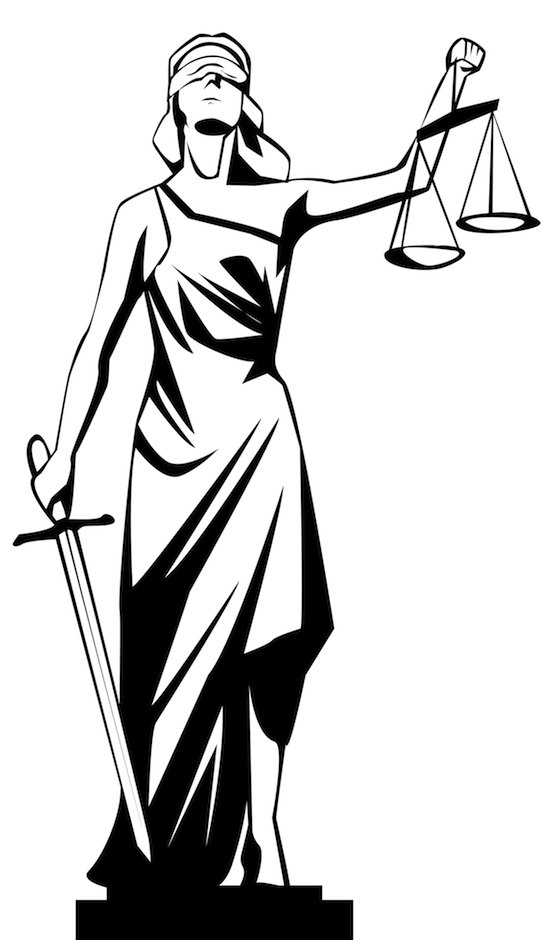
And why is it that justice is usually depicted as a blindfolded woman instead of an overbearing male?

One-Time
Monthly
Yearly

Make a one-time donation

Make a monthly donation

Make a yearly donation

Choose an amount

$5.00
$15.00
$100.00
$5.00
$15.00
$100.00
$5.00
$15.00
$100.00

Or enter a custom amount

$

As much as I love writing, I do have to eat.
And to provide for my family.
Earning money takes time.
If you’d like me to write more, and on a more regular basis, hit the button.
Your contribution will be appreciated!
Another very efficient way to help would be to share my posts.

As much as I love writing, I do have to eat.
And to provide for my family.
Earning money takes time.
If you’d like me to write more, and on a more regular basis, hit the button.
Your contribution will be appreciated!

As much as I love writing, I do have to eat.
And to provide for my family.
Earning money takes time.
If you’d like me to write more, and on a more regular basis, hit the button.
Your contribution will be appreciated!

DonateDonate monthlyDonate yearly

The current spate of dissent on this subject has been spurred by this guy, Angus Deaton, being presented with The Sveriges Riksbank Prize in Economic Sciences in Memory of Alfred Nobel

“A Nobel prize in economics implies that the human world operates much like the physical world: that it can be described and understood in neutral terms, and that it lends itself to modelling, like chemical reactions or the movement of the stars. It creates the impression that economists are not in the business of constructing inherently imperfect theories, but of discovering timeless truths.”

I’m afraid that the author had been so disgusted by the obvious mistakes that have been committed by so many of the supposedly reputable economists of this world that he has become amenable to throwing out the baby along with the bath water.

First of all we must remember that “Science is wrong. By definition.” All theories are imperfect and there is no such thing as ‘timeless truths’.
Ever since Karl Popper introduced the idea of ‘falsifiability’ as the litmus test for determining if any piece of information has any scientific value and Berger & Luckmann noticed “The Social Construction of Reality” it had become apparent both that science is being updated constantly – hence always ‘wrong’, or at least incomplete – and that people are ‘doing science’ on purpose – hence any discussion about reality being ‘described and understood in neutral terms’ is unrealistic, to say the least.

Coming back to Popper, Hermann Bondi had declared that ‘There is no more to science than its method, and there is no more to its method than Popper has said.’
True enough but as any ‘scientific declaration’ this is highly ‘updatable’.

In fact Science is, above all, a human enterprise. It’s a human that picks up – or devises – which method to use in a certain situation when he wants to find out something about a certain subject. Furthermore that method is applied by human individuals, not by robots. The same as those who had chosen it or by others, doesn’t make much difference. And, at the end of the cycle, some other people will evaluate – and sometimes try to replicate – the results.

So the mere fact that a certain set of results could not have been replicated by a certain team of evaluators doesn’t mean that much, by itself. This has been silently acknowledged by Andrew C. Chang and Philip Li in a paper published by the Federal Reserve in 2015: “Is Economics Research Replicable? Sixty Published Papers from Thirteen Journals Say ”Usually Not””. The couple admitted they needed some help from the original authors to replicate the results in a few instances and in some-others they didn’t have access to the same computer software as the first publishers.

But the most interesting fact is that in no instance the authors have been able to positively determine that the results published in any of the analyzed papers are inconsistent with the data presented by the original authors and/with the method invoked. In all instances when they failed to replicate the original results that happened because the original authors didn’t present at all the initial sets of data, they were incomplete or the method/sofware used to  process that data was incomplete, altogether missing or proprietary. And all this despite in some cases the papers being published by journals specifically requesting that all data/methods/software being made available at the moment of publication.

In this situation I find the conclusion reached as being both correct and highly objectionable. And above all lacking any scientific value.
“Because we successfully replicate less than half of the papers in our sample even with assistance from the authors, we conclude that economics research is usually not replicable.”

Yes, it seems that too many papers published by presumably reputable journals are not replicable. But that is due exclusively to the journals themselves not observing their own rules or by some of the authors acting less than ‘over the table’. This phenomenon has nothing to do with ‘economics’ being less of a science than, say, physics and everything to do with humans being… well… human!

Let me go back to where I started, to Joris Luyendijk claim that “Don’t let the Nobel prize fool you. Economics is not a science.”
The author ‘illustrates’ his claim by remembering the infamous LTCM – a hedge fund set up by, among others, a couple of economists who had received a … you guessed it… a ‘Nobel prize for economics’ less than a year before the hedge fund went bust. Kind of ironic, isn’t it?
But the problem remains. The fact that LTCM went bust doesn’t prove anything except the fact that its management was completely inadequate.
The point is that trying to assert that ‘economics’ is not a science only because some guys used a couple of economic theories and failed, abysmally, is akin to claiming that physics is not a proper science because no weather bulletin is 100 percent accurate. Or that biology is not a full blown science because medicine has not yet found a cure for cancer. Or to claim that chemistry is bogus simply because Big Pharma is ripping us off.

At the end of their paper Chang and Li offer some very pertinent advice about how things could be vastly improved. Their main idea being that everything must be ‘above the table’ – both the raw data and the method/software used to process it must be made available for whomever wants to replicate the results. In fact this exactly what science, real science, is about. People have to be able to check thoroughly whatever the proponents of a theory are trying to ‘peddle’. This is the only way for a theory to be proved true or false. Or incomplete so further research might be declared necessary.

Similarly, at the end of his article Joris Luyendijk points his finger at the real culprit.
In reality economics, as a space where people try to gather information, is different from, say physics, only because we, the people, approach them with different attitudes.
Time has taught us, repeatedly, that every-time we’ve tried to deny the obvious we ended up with a bloody nose. The problem is that not all of us are, yet, able to recognize the obvious.
No one in his right mind will pretend, nowadays, that the Earth is flat. Meanwhile some people still pretend that vaccines may induce autism. They don’t. But some of the ‘anti-Vaxxers’ continue to pretend this even after a study partly funded by themselves demonstrated that there is no link between the two.

As suggested by Luyendijk and demonstrated by these examples the real culprit for what is going on, not only in the economic field, is our arrogance.
Arrogance that has led to the survival of what is known as ‘tehnocratic thinking’ despite more and more people learning of the role ideology plays in our decision making.

After all what can be more arrogant than pretending that you have ‘scientific reasons’ for what you do, despite the obvious fact that every one of us acts according to his own ideology?

I’m not going to pretend now that there are good and bad ideologies. I obviously think they can be classified but I cannot pretend that my classification is the correct one.
But I can pretend, and you should too, along with Joris Luyendijk, Andrew C Chang and Philip Li, that each of us should honestly state its point of view along with his opinion when ever discussing something.

After all each of us having an ideology is a reality while pretending that any of us can act as if it doesn’t is a rather pathetic lie.

To conclude I’ll have to keep the promise I’ve made at the beginning of all this and ‘update’ Bondi’s statement about Popper:
‘There is no more to science than its method and there is no more to its method than Popper has said’ but we should always bear in mind that science is exclusively ‘performed’ by human individuals.


‘Europe has never seen such a number of immigrants since the fall of the Roman empire’ and ‘no European country can cope with so many in such a short time’!

I believe you’re already familiar with such headlines, right?

The Greek exodus from Smyrna in Turkey is the seminal event in Tsalikoglou’s haunting novel. Topical Press Agency / Getty Images
Greek tragedies: The Secret Sister is a novel about the impossibility of escaping the past.

Let me remind you of some facts.
“Settlement in Greece was not a uniform experience for the approximately one million Ottoman Greeks who fled Turkey in the aftermath of the Greco-Turkish war of 1920-1922. Contemporary primary sources ranging from government reports to eyewitness accounts and memoirs of relief workers point to a mixed reality: while some Ottoman Greek refugees enjoyed hospitality and warm support upon arrival in Greece, many others found settlement in the new country a painful experience of material hardship, segregation, and status deprivation. The precarious circumstances of the massive exodus created the refugee drama. The inability of the Greek state to handle a crisis of such magnitude, along with the serious incidents of refugee discrimination and exploitation by Greek officials ans civilians, exacerbated the refugee’s plight.”

Similarly “During the First World War and the subsequent Greco-Turkish War (1920–1922) about 1.2 million Muslims migrated to Turkey, among them the 400,000 persons who were forcibly exchanged as a result of the Treaty of Lausanne.”

So two war torn countries, Greece and Turkey, were able to absorb, without really major problems, about a million refugees each – 17% and 7.5% of the respective populations. Maybe this will give us some perspective. One million refugees represents less than 0.2% of the current population of the EU and less than 1.2% of the population of Germany.

OK, now you’ll tell me that those headed to Greece and Turkey  were going home while these coming to Europe will suffer a cultural shock.
There might be some truth in both assertions, of course. Yet I beg you to read again the quote about the fate of the Greek refugees who ‘came home from Turkey’. In the end they somehow managed to fold in. Same thing happened with the “the (mostly Greek-speaking) Muslim population” that was “compulsory” transferred to Turkey.

So how about we quit whining and start helping these poor people in earnest?

It’s not our responsibility, you say?

Maybe not but how about taking a second glance at history?

The tragedy experienced by the 2 million people exchanged between Turkey and Greece was due, at least in part, to the Treaty of Sevres which was imposed by the Allies to the Ottoman empire and which inspired Kemal Ataturk to raise arms and forge the present day Turkey. Just as the fate experienced now by the Syrian people is influenced not only by Sykes-Picot but also by us dragging our feet while the Assads, both father and son, were massacring their ‘subjects’.

But how about the fate of the Roman Empire that had fallen under the burden of the immigrants?
First of all I must remember you that the Roman Empire had a mixed population to begin with and that the Romans themselves had invited more than one migratory tribe to come in and contribute to the well fare of the empire. For instance the German and Iazyges soldiers that were settled by the Romans in Britain.
Then I must remind you that the western part of the Roman Empire started to crumble only after it had become an extremely authoritarian state, where the rulers were concerned more about fulfilling their obscene pleasures and less with the management of the current problems of the empire. Panem et circenses was their preferred method of governing, if that rings any bells.

The point is that exactly as the protagonists of The Secret Sister cannot escape their history neither of us will be able to escape the consequences of our actions. Or inaction.

And another lesson from the Ancient Times: no wall was ever tall enough to keep out those who really wanted to get in. Neither Hadrian’s nor the Chinese Walls had been able to protect those inside from their own ineptitude.

I believe that you’ve already watched the video before starting to read so I’m not going to discuss about what’s going on there.

The point I’m trying to make is that all rights come with a huge responsibility attached to them.
No, not the one to take that right to it’s ultimate consequence:

Every right has to be exercised with the utmost discretion and consideration.
Or else:

And no, this would be funny only if it wasn’t already tragic:

“Publicly, law-enforcement officials have been reluctant to link the movement’s antipolice rhetoric to the spike in violent crime. Privately, they have been echoing South Carolina Gov. Nikki Haley, who said in a speech last week that the movement was harming the very people whose interests it claims to represent. “Most of the people who now live in terror because local police are too intimidated to do their jobs are black,” the governor said. “Black lives do matter, and they have been disgracefully jeopardized by the movement that has laid waste to Ferguson and Baltimore.””

Photo credit: Akram Abahre. While European countries are being lectured about their failure to take in enough refugees, Saudi Arabia – which has taken in precisely zero migrants – has 100,000 air conditioned tents that can house over 3 million people sitting empty.

Those tents have been erected there precisely for the pilgrims who go there for the Hajj. They are empty now because at this time of the year there are no pilgrims, yet.
If the Saudis were to invite refugees to stay, temporarily, in those tents, they would have to provide for those refugees more stable lodging by the time of the next Hajj.
Integrate them, that is.
And this is the reason for which the Syrians are not at all welcome there, just as the Palestinians were not welcome either. They would upset the balance of power.
Basically the rulers of the Gulf states bribe their citizens with money coming in from the rest of the world while shamelessly exploiting imported workforce, allowed to stay only on temporary visas. The Syrians (and the Palestinians) would have to be accepted on a more permanent basis and offered the option for a full citizenship. That would both dilute the per capita revenue of the citizens and introduce a more liberal line of thought in a very conservative society.
Yes, a more liberal line of thought. The Syrians do not insist that their women cover their faces and have tried, repeatedly, to out-throw the ruling family.
So yes, the wealthy Gulf States are indeed very hypocritical “when it comes to helping with the crisis.” (they have helped create) but that’s no excuse for us to follow their example.
After all it is us who came up with the notions of ‘human rights’ and ‘pursuit of happiness’, didn’t we?

Here in the West we have a ‘healthy’ mistrust in almost everything, including the press.

Yes, some of the media outlets have indeed became manipulative or basically empty of meaning.
We shouldn’t forget though that we, the public, have contributed to this situation. We are the ones who buy/follow this kind of media. And, above all, we allowed them to condition us into following ‘our’ media outlets. When was the last time any of you watched a show or read an article coming from a media outlet which doesn’t belong to ‘your political affiliation’?

Meanwhile out there some brave journalists operate in less than ideal conditions:


Hürriyet’s editor-in-chief Sedat Ergin

“You raided our home at midnight with stones and sticks. You stayed there for hours. You chanted, “You dog Doğan, do not test our patience.” You chanted “Re-cep Tayyip Er-do-ğan” slogans and “God is great.”
There are some people who push a button. There are groups who are ready to act when the button is pushed. How did this happen? Let’s track it step by step.”

To me this just another proof that what is going on in the world right now has very little to do with ‘religion’ per se and almost everything to do with the individuals who manipulate our religious sentiments for their own benefits.

And we let them get away with it. Includingly by pretending that the media is not to be trusted and then believing, indiscriminately, everything that comes out of ‘our’ media outlet (loudspeaker).

Could it be that the raiders were pissed off not only by Hurriyet’s constant criticism towards Erdogan but also by this article?

Why do we bash the West but not Saudi Arabia?