Archives for category: collective identity

st_2015-12-09_middle-class-03


Middle income or middle class?

The terms “middle income” and “middle class” are often used interchangeably. This is especially true among economists who typically define the middle class in terms of income or consumption. But being middle class can connote more than income, be it a college education, white-collar work, economic security, owning a home, or having certain social and political values. Class could also be a state of mind, that is, it could be a matter of self-identification (Pew Research Center, 2008, 2012).”

OK, so even those who rely heavily on money as an indicator for who belongs to the middle class concede that there are other connotations to the concept.

Let’s consider the situation from a functionalist point of view. As in how the members of  various social strata react to the day to day challenges of the normal life.

‘Day to day’ meaning not only ‘normal’ things – waking up and brushing your teeth – but also things that we wish will never happen, although all of us know they are ‘normal’ occurences. A car accident, a broken leg or even having three children in one go when you were praying for one.

Usually the wealthy take them in one stride, those belonging to the middle class manage to cope – sometimes welcoming some help from their friends, relatives or even insurance company, while the really poor almost certainly sink under the burden. But not always.
Sometimes even the wealthiests loose it when faced with adversities they were not accustomed with while some of the poorest find it in themselves to rise from the ashes.

Then how about setting a slightly different system of ‘classes’: the extremely resilient, the ‘middle class’ and the very fragile?

As a rule of thumb it’s true that a certain amount of wealth does miracles when some resilience is needed so, roughly,  these two classifications look more or less the same, but, on a qualitative rather than quantitative level, we are speaking of two different things here.
When we are speaking of ‘money’ we are dealing mainly in ‘resources’ while when we’re speaking about resilience we have to take into account the attitude of the concerned individuals. It is true that the above mentioned attitude is, more often than not, heavily influenced by the affluence of the respective individuals but the function is hardly a direct one.

Based on these considerations – and on my personal experience of dealing with people, I’m going to propose the following synopsis.

The ‘resilient’ are those convinced they are able to cope, more or less on their own, with almost everything life can throw at them. Unfortunately some of them grow ‘spiritual callouses’, simply because they have never experienced any real hardships.
Or because they have over-compensated after dealing with those hardships, sometimes after succeeding to do so without receiving significant outside help.

The ‘fragile’ are those who, by lack of material resources, spiritual stamina or both,  behave more like leafs driven by the wind than like masters of their own fate – as every human being should.

By now you’ve probably figured out that  ‘my middle class’ is composed of individuals who have a certain degree of resilience but who, on the other hand, are perfectly aware that there are things on this world that they wouldn’t be able to face on their own.

In a sense, possession of money – or other resources, ‘encourages’ an individual to reveal his true nature.
If a person is naturally inclined to grow ‘callouses’ then being ‘insulated’ from the outside world by a thick wad of money will provide him with enough space to let those callouses grow but if his skin is ‘in the game’ then those callouses will be constantly shaven while interacting with his peers.
But if the stakes of the game are very meager – and the insulation provided to the players by their respective possessions is practically nonexistent,  then instead of growing callouses most of the players will be rubbed raw during the intercourse. Mind you, neither  the ‘stakes of the game’ nor the ‘individual possessions’ need to necessarily be of a strictly material nature.

In conclusion, the ‘callously resilient’ will tend to mind to their own – simply because their sensitivity towards the outside world is dampened by their callouses, the ‘fragile’ will tend to mind to their own raw wounds while those belonging to the ‘middle class’ will be the only ones really interested in maintaining the well being of the social organism. The one to which they ‘knowingly’ belong.
Because they are the only ones with enough time/energy/resources on their hands to consider the matter, the real interest to do so and the willingness to put some effort into this endeavour.

pent up anger

As you can very easily infer from the title, I define myself as being an agnostic.
I’m reasonably satisfied with the scientific explanation about how the world came to be but I cannot rule out any intervention from an out-side agent during the process.

Hence my unwillingness to commit myself to any of the extreme positions.

And hence my conundrum.

A significant portion of the theist believers are convinced that God, their God, is behind everything that takes place on the surface of the Earth. And beyond.

All scientific materialists are convinced that everything takes place according to some immutable and implacable ‘natural laws’.

Then how come any of them has enough gumption to contradict any of the others?

How come a religious believer can say to another ‘your God is false’ if he is convinced that nothing in this World can happen without the knowledge and approval of his own one? Isn’t this a form of censorship towards his own God?
How come a religious believer can say to an atheist ‘you are going to rot in Hell’?
Last time I checked all Gods were very jealous, all religious teachings I know are clear about this: ‘You do your job and let Me do the judging.’ Then how come so many zealots feel free to usurp the place of their Gods and pass judgement on their peers?

How come so many of the atheists feel free to poke fun at the believers?
According to their own creed, religion is a natural thing. It does exist, isn’t it?
And by its mere existence it necessarily observes the very natural laws the atheists so staunchly defend. As if any of them needs any defense, let alone to be imposed upon the others…

When are we going to accept that religion, any of them, is nothing but an environment, not a yoke?
Just a place with some rules, not some kind of a prison?
That the final responsibility for our acts belongs to us, regardless of any God watching or not over our fates?

Here on Earth, anyway.

661211-_uy447_ss447_


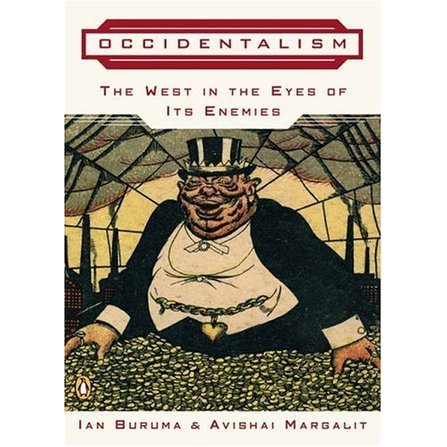
Just finished reading about the West as an object of hate.

Next in line is a book about the Orient as an object of study.

51k6n6ma-nl

Bearing in mind the fact that the Occident is still very much hated by a significant number of people residing in the Eastern part of the World it seems that we, the Westerners, have  been rather poor students of the Orient.

Or that some of us don’t give a damn about the long term consequences of their actions?

“To understand is not to excuse, just as to forgive is not to forget, but without understanding those who hate the West, we cannot hope to stop them from destroying humanity.”

I’d say these are very wise words which constitute an excellent starting point.
Towards the end of their book Ian Buruma and Avishai Margalit argue that “despite Christian fundamentalists speaking of a crusade, the West is not at war with Islam. In fact the fiercest battles will be fought inside the Islamic World.” (translation belongs to me, I have a Romanian version of the book)
How about us, in the West, helping the ‘right’ side in an innovative way?
By giving them an example.
By mending our own ways, before telling others to mend theirs!

God thanks

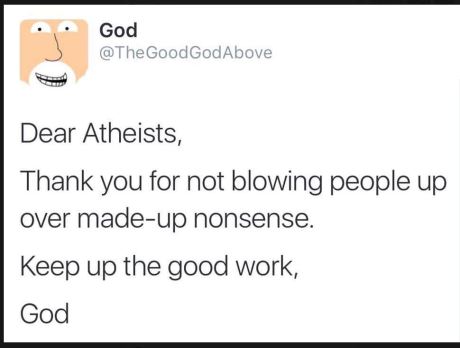
I recently shared this meme, originally posted on FB by Black Atheists.

The broad spectrum of the commentaries made on this subject enticed me to elaborate on it.

There are people who blow people up under religious pretenses and people who blow people up under their own ‘rationale’.

This meme can be interpreted as God praising those who do not use his name when committing heinous crimes.

Who do not misinterpret religious teachings to fit their callously narrow goals.
Who do not make up self-serving nonsense simply because they have enough sleigh of mind and an audience who, for various reasons, is willing to believe anything that might provide some psychological comfort.
Who do not use religious pretexts when horribly mistreating others.

And don’t get me wrong. God doesn’t praise them for what they’re doing – there is nothing to be praised there.

He praises them for what they are not doing.

Using false pretenses, that is.

cz0qnrnwaaibsy2

First, some very condensed history.

Humankind evolved in Africa and then migrated around the word.

During its African childhood Man had never encountered Winter. OK, he did have to face barren desserts, dry seasons, inundations,  wild-fires, earthquakes, you name it…but none of these even comes close to watching the light of the day becoming shorter and shorter, the weather becoming colder and colder and the food becoming scarcer and scarcer.

Remember, at that time Man was a hunter-gatherer who had no notion of stashing food or any interest in astronomy. Simply because there is no real scope for hoarding large reserves of food in Equatorial Africa and no real scope for astronomy since at the Equator there are no seasons to speak of.

Now, try to imagine the horror experienced by the migrants who had climbed the Anatolian plateau for the first time and, after a while, felt the snow melting on their faces and the frost biting at their bare feet. All this while the sun kept sinking lower and lower towards the horizon.

Was it possible that those migrants did start thinking about the end of the world?

Were they pondering on whether they had entered the realm of a strange god who was trying to get rid of them by cooling the entire (or at least the ‘visible’) Earth and by making the food extremely scarce?

Did they try to placate that god? Through prayers and offerings?
Was that the very reason for which Abraham came back to Canaan after having “tarried for seven years at Harran“?

Were they extremely elated when noticing that the light of the day was becoming longer and longer? Did they throw a party to thank that God for listening to their prayers, soon after noticing that the winter solstice had passed – even before knowing what a solstice was?

And this is why in most cultures that have developed in the temperate regions of the Earth people celebrate, under various guises, the rebirth of the world that takes place right after the winter solstice.

That is why, after a while, Christians have started to celebrate Christmas on the 25th of December.

But, if you remember, those migrants didn’t take the whole thing as a gift but as a trade.
They prayed, made offerings and the God kept his side of the bargain.
Same thing here. Christ had to offer himself so that the world could be redeemed.

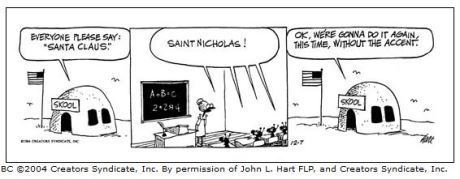
In time another habit had evolved. When I was a small child, even in communist Romania, Saint Nicholas was serious business. People used to eschew any formal links between Saint Nicholas – presented as an opportunity to educate the children – and Christmas. That’s why Saint Nicholas was tolerated by the authorities – and we, the kids, could discuss openly at school the presents that had miraculously appeared during the night in our socks, carefully prepared the evening before, while Santa Claus had disappeared altogether – having been replaced by a Santa-Freeze who came on the New Year’s Eve instead of during the Christmas Night.
And now I’m wondering how many of you remember that Saint Nicholas brought presents only to the good children and that those who misbehaved during the year got either a rod or a few lumps of coal instead of the candy so keenly expected by everybody.

In fact Saint Nicholas is way closer to reality than Santa Claus. He doesn’t give anything for free.
Not that he doesn’t love us.
He really does and that’s why he doesn’t indulge us with undeserved gifts.
So that we don’t become frustrated later in life when we’ll have to work, hard, for any whim we might have. Not to mention the effort to feed our belies, clothe our backs and make sure our children make it safely to adulthood.

That’s why I think it’s time for us to cut the crap. Santa Claus might be a nice gimmick for the big retailers who came up with the whole concept.
But look at what he brought to the rest of us.

saint nicholas

Yeah, I know.
“If I couldn’t have the nice childhood I dreamed about at least my children should have it.”
Only ‘nice childhood’ is one thing while ‘spoiled rotten’ is quite another one.

And ‘spoiled rotten’ can be achieved along many routes.

One of them being the one described above. Hard working parents, who consciously spoil their children, trying to compensate, through their kids, the hardships  experienced during their childhood.
Another one being followed by the parents who are so busy that they basically don’t get to know their children. And who try to compensate the time not spent with their kids by showering them with gifts. The end result being the same.

After the children have become young adults, with no marketable skills, no exercise at self control and after never trying hard at anything, the shit hits the fan:
‘We have done our best yet we’ve raised a couple of ‘good for nothing’ bummers!’

Well, your ‘best’ wasn’t good enough and, mostly, it’s your fault. Not theirs!

Just as most of our ancestors didn’t need to till the soil before migrating to the Middle East – simply because they had enough to eat even without having to work/plan hard for it, our children won’t develop the necessary skills nor the necessary mindset if we insulate them from the right stimuli. In fact, if we insulate them from the real world.

After all, our ancestors might have been ‘the children of the Humankind’ while ours are simply ‘children’ but, in the end, ‘children are children’.

Read the comments to any article that deals with the European Community and you’ll certainly find something to this tune:
“This is the end of the EU”

That might happen anytime, of course, but I’d still like very much to know why so many contemplate this possibility with so much glee? And I’m not talking here about those who think they have something to gain from a weaker Europe. Putin, for instance. Or Erdogan.

Why so many ordinary Europeans are so angry towards the very idea of a closely knit European Union?

How about reading the entire history of this continent as a long story of individuals striving hard to become more and more autonomous?

Some would say that Europe was about individuals becoming free, and I can agree with that. Only that freedom had strings attached.

“My freedom stops where your freedom begins”.

Meaning that none of us is really free unless each of us respects the liberty of all the others. That our individual liberties depend on each-other. Well, that’s the definition of autonomy, not that of ‘absolute freedom’ but let’s not be bogged down by words.

In fact what helped Europe become what it is today is an unique combination of ever growing individual freedom made possible by an ever stricter respect for the rule of law.

This was not at all a smooth process.

From time to time some individuals garnered a lot of liberty for themselves precisely by depriving all other of theirs and sometime even succeeded in writing this into law. For instance, until 1848 it was still lawful to own slaves in France.

Another type of ‘garnered’ freedom is what happens in a dictatorship. The dictator and his henchmen are freer than the rest of the people, but none of them as free as the people living in a truly free country. And Europe had witnessed a considerable number of dictatorships.

Which all eventually failed.

But something lingered in the collective memory of the Europeans. Their disdain for being told what to do. Their mistrust for rules imposed from above, for regulations that did not have the opportunity to become evident, through the passage of enough time, for those called to follow them.

This is why the ‘enthusiasm’ with which “l’aquis communautaire” was peddled by the Brussels bureaucrats to the new entrants has been met with such reticence.
This is why the measures being practically imposed by the more powerful members of the Union to the rest of the gathering are met with such scorn.

Very little real consideration is being given to the manner in which these measures are adopted and then communicated ‘from above’  and, simultaneously, very little attention is paid, by those called to put them in practice, to what their real effect would be – if they’d be applied in earnest.

And, unfortunately, there is no real shortage of callous political mavericks who eagerly try, and sometimes succeed, to capitalize on these misgivings.

As if we didn’t know any better.


Mencken, democracy perfected

Just stumbled upon this meme.

It gave me the creeps.

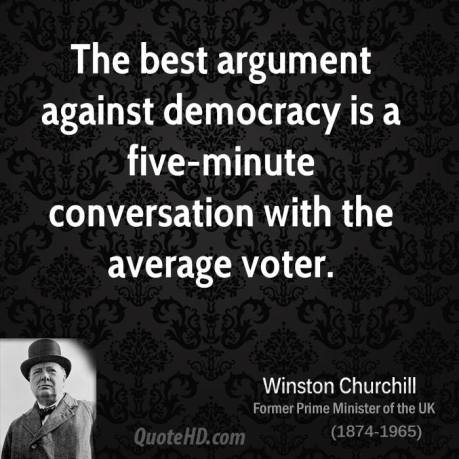
If such an influential personality like H.L. Mencken had such a warped understanding of the democratic process what can we ask from the proverbial ‘regular guy’?

One question haunts me.
How come so many otherwise bright people fail to grasp the obvious fact that ‘democracy’ is what happens before the voting process?

Voting itself is nothing but logistics, arithmetic and honesty. A process more or less akin to a social survey, one through which the electoral commission determines ‘the will of the people’ at a certain moment. A ‘mechanical’ process that has nothing to do with the living thing encapsulated in the concept of democracy.

…’living thing encapsulated in the concept of democracy’…

Do you think I’m exaggerating?

Then let’s go back to the Agora (the meeting place where the ancient Greeks congregated to discuss the public matters at hand) and watch carefully what happened there before each issue was decided upon.

Everybody who wanted to say something about a subject of interest had the opportunity to make his voice heard.

Yes, that’s the real essence of the democratic process! That’s why the Founding Fathers insisted so much about ‘The Freedom of Expression’. That’s why ‘the right to speak up’ comes First, before all others!

You see, the right to vote has no real meaning if the voters are kept in the dark, if they didn’t had access to all the information available prior to the deciding moment.

People will make a choice regardless of how much information they have, at a given moment, about something, precisely because they think they know everything that is to be known about that something.

That’s why people privy to more information than the ‘general public’ have come to reach the conclusion that the ‘ordinary voter’ is stupid.

winston-churchill-government-quotes-the-best-argument-against

Because instead of putting everything on the table and letting ‘the people’ decide in earnest, for some time now some of the ‘pundits’ have been playing a dangerous game of  ‘hide and seek’.
One which has resulted in the profound distrust felt by ‘the people’ about the ‘political establishment’. And in the barely masked contempt displayed by the ‘political elite’ towards the rest of the society.

So, instead of having an open discussion about issues and an atmosphere of trust between the various segments  of the social organism we have to pry bits and pieces of information from those who guard it dearly and such mutual distrust that, if we’ll look around carefully, we’ll notice that we’ve been living, for some time now, way inside ‘paranoia land’.

Can we still pretend that our societies are governed in a democratic manner? That each of us tries to shed some light over his area of expertise and by doing so contributes to all of us avoiding as many of the ‘potholes’ as possible?

‘Cause this is the real essence of democracy.
Not finding the best possible solution to every problem but avoiding the known/foreseeable potholes.

No matter how many of us will study a problem we’ll never find the best solution. After five minutes some fresh information will come about and the erstwhile ‘best’ becomes ‘obsolete’.

Compare this situation to somebody stumbling in a pitfall waiting for all of us, coming  back to warn the rest and not one of us heeding to his cries…

vluchtelingen-wegversperring

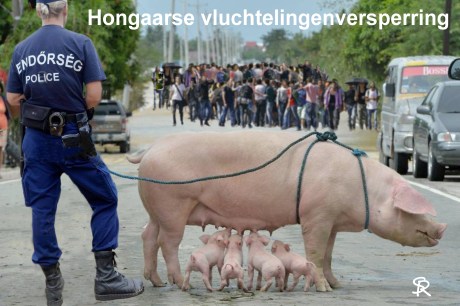
‘Hungarian self-defense’


… must we sink in our own, self induced, decrepitude before we’ll be able to notice the stink we, ourselves, have draped around us?

Before figuring out that it’s us who are ultimately responsible for our own fate?

Before figuring out that by allowing this kind of crap to be traded above our heads, and sometimes even by helping to its distribution, we soil the most precious of our ‘belongings’ – our souls?

This image has probably been ‘Photoshopped’ by somebody.
I’m not going to discuss that person’s motives here. We live in a free world and everybody should be able to express his/her feelings.

What I find extremely interesting – and dangerous – is the fact that this picture has been so widely circulated over the internet that it ended up in my mail. A short Google search confirmed that it comes from somewhere in Holland only the guy who sent it to me, horripilated, lives in Canada…

So, what’s the use for us to clamor virtuously about human rights and then make fun, shamelessly, of people who find themselves in a horrible situation?

And, please, do not make any mistake!
I’m not speaking exclusively about the refugees here.

Some of the manifestly dissatisfied Europeans who are protesting these days are not as much against the refugees themselves as they are against the hapless manner in which the European bureaucracy has been (mis) managing so many things recently.

Just as some of the political leaders who are lambasting the European Commission on this subject are not interested in improving the European Community but in ‘scoring swag’ with the disillusioned (and somewhat naive) electorate.

We need to break this vicious circle!

iqvl1s8v8lzmbki8xjyy

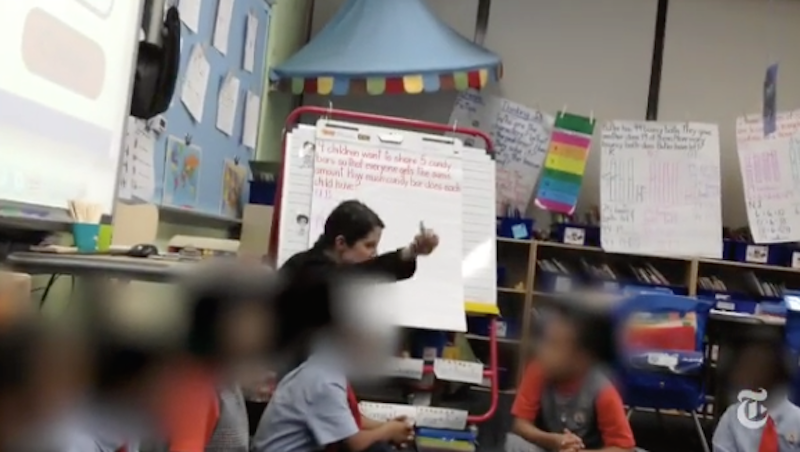
“Administrators at the Success Academy—a network of high-performing charter schools in the New York area—are standing behind what they call a model teacher, who was caught on camera ripping up homework and berating a first grade student for answering a math problem incorrectly.”


I totally disagree with this kind of behaviour.
Having said that let me offer you a glimpse of what’s going on in the minds of those who accept or even promote it:
Shouldn’t we be working at both ends of the problem?
Educate the educators about how to motivate the children to learn without crippling their souls AND educate the employers and their agents (managers) about how treating your work force with due respect would yield way better results than using mockery/belittlement as a motivation tool?
And shouldn’t we also be educating ourselves about the fine difference between spoiling a child and helping him/her into becoming a fully-fledged adult (a ‘man’ in the un-gendered meaning of the word)?

p03j0k3f

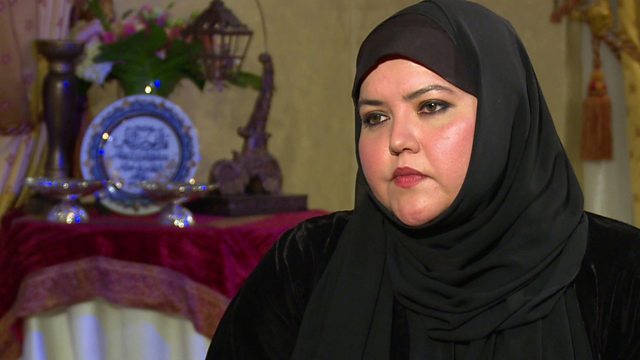
“Saudi women need to ‘think like men’

Gender segregation in Saudi Arabia has sometimes led to “immaturity”, a Saudi businesswoman and member of Jeddah’s municipal council has told BBC HARDtalk.”


sex education

“Last week, we heard the story of a West Texas high school that plans to expand its sex-ed program after its abstinence-only policy resulted in a mass outbreak of chlamydia amongst its students.”

Let me ask you something.

Could it be that most of the ‘modern’ children live in ‘bubbles’?
That they have (meaningful) contact almost exclusively among themselves and seldom with older/younger generations?
This being the reason for which ‘sensitive’ information passes so hardly from one generation to the other.
And this is valid for way more subjects than just ‘mere’ sex!
“It’s not the kids who aren’t mature enough to learn about sex, it’s their parents who aren’t mature enough to let them.”