Archives for category: collective identity

“Please” is an attempt to maximize your chances to get something.
“Thank you” is an attempt to maximize your chances at ‘second helpings’.
“I’m sorry” is an attempt to ‘reconnect’ after committing a ‘blunder’.

All of them, simultaneously, serve the individual uttering them and knit the community.

But there’s something which sets one of them apart.
While “please” and “thank you’ are ‘upfront’, “I’m sorry” has a more ‘hidden’ nature. And is a lot less used…

Both “please” and “thank you” have a very clear message. “I want/am grateful for something’ and ‘I acknowledge the fact that I cannot function/exist by myself’.

“I’m sorry” is far more complex and a lot less upfront.
‘I acknowledge not only that something went wrong but also that I have anything to do with the occurrence’. And ‘please do not banish me for what I have done’!

If we dig deeper, we’ll find some more ‘intricacies’.

“Please” and “Thank you” are ‘face to face’. You know what you want/are grateful for and by uttering them you transmit that information to your audience. Those who might fulfill your wishes or have already done that.

“I’m sorry” identifies you as the ‘culprit’. Or, even worse, tells the ‘victim’ that something nasty is going to happen.

It is here that things become really interesting.
Conscience is a function. A feature which helps the individual. To survive and to thrive. In order to do that, conscience must – first and foremost, to take care of itself. To protect and cherish itself. More about how it does that in my next posts. The point of the present one being that is far easier for ‘conscience’ to ‘please’ and ‘thank’ rather than to ‘apologize’.

First of all, ‘gratification’.
1.0 versus 2.0.
Getting what you want/need versus avoiding punishment.
Which is never as direct.

The ‘buried head’ fallacy.
‘What if/maybe they never find out’?
‘Who did it’ or even that it had happened at all …

The ‘I cannot afford to appear weak’ fallacy.
Or the ‘I cannot afford to accept having been wrong’ situation.

That’s why it is far easier to say ‘I’m sorry’ after stepping on somebody’s toe than to leave a sorry note on somebody’s windshield after denting their fender in an unsupervised parking lot.
That’s why it is far easier to apologize to a a coworker than to admit guilt, as a CEO, in a shareholders meeting.
That is why it is almost inconceivable for a dictator to publicly admit an error which had been committed under their watch.

So young… and yet so satisfied with himself… he must have had a strong set of beliefs on which to build such a strong self-esteem!

Let me put it another way.

Each of us needs to believe.
Something!
Would you have enough courage to go to bed at night if you weren’t absolutely convinced that the sun will come up next morning?
Furthermore, for things to work as we expect them to, enough of us must share a certain number of beliefs. For instance, would you go to work/accept payment if you weren’t more or less convinced that the money you’d get will enable you to fulfill at least some of your wishes?

Hence belief being based on a deep seated need to believe is a truism. Uttered only as a lame excuse for ‘you can’t convince a believer of anything’.

Which isn’t exactly a lie… only a half truth. A ‘fake news’, if you will!

First of all, a believer is already convinced.
Hence somebody had been able to convince him/her, at some point, of something.

Somebody had somehow convinced the aforementioned believer that the object of what was going to become belief was obvious enough to become ‘evidence’.

Complicated?

Let me rephrase.

‘I haven’t been able to convince a believer of what I was trying to convey to him/her. Hence it must be his/her fault.
Not mine!
Otherwise I would have to admit that what I was presenting as evidence was false, I wasn’t presenting my evidence in a believable manner or, lo and behold, both at the same time. Totally unacceptable!
Now I need to come up with a good enough reason for his/her inability to see the light!
His/her ‘need to believe’ must be the only explanation. Otherwise he/she would have accepted my evidence as being obvious….’

On the other hand, the rest of Sagan’s work cannot be dismissed.
Which proves that self-esteem is a good base on which to build a career.

The need to believe being yet another thing which cannot be dismissed!

A symbol is a very powerful thing. Because it can ‘hide’ a lot of meaning. As much meaning as we can store/recognize inside it.

And the stronger the symbol, the more we can hide/store/recognize behind it.

“Why do you insist the universe is not a conscious intelligence, when it gives birth to conscious intelligences?”

This quote is attributed by Robert Lanza to Cicero. A Roman who used to think, and write, some 2000 years ago.
I have no idea who Robert Lanza is yet I’m sure most of you have already heard about Cicero.
But we now have Internet. And Google search…

Going back to Cicero’s Universe, I, for one, have never said the universe wasn’t conscious. For all I know, it may very well be.
But I’m sure it isn’t fully conscious. As God is supposed to be. Omniscient and Omnipotent.
Precisely because of the kind of ‘conscious intelligences’ it has given birth to.
Or is being born by?

Let’s assume the Universe is conscious. As in aware of its own awareness – the only kind of consciousness we’re aware of.

As far as we know – ‘know’ as opposed to ‘presume’, consciousness cannot ‘arise’ on its own. Each of our individual consciousnesses have been groomed by those around us. Children who happen to grow up outside ‘normal’ human intercourse never morph into ‘fully’ conscious human beings.
Hence Cicero’s Universe might have become conscious only along one of the following paths:

As a member of the Multi Verse club.
As an AI designed by some entity residing outside the Universe. This situation being the mother of all Oxymorons…
As a meta-consciousness. A web of individual consciousnesses who had evolved/coalesced into a wider, and ‘deeper’, range of awareness. Still limited, of course, but of a somehow different nature than that of the individual awarenesses composing it.

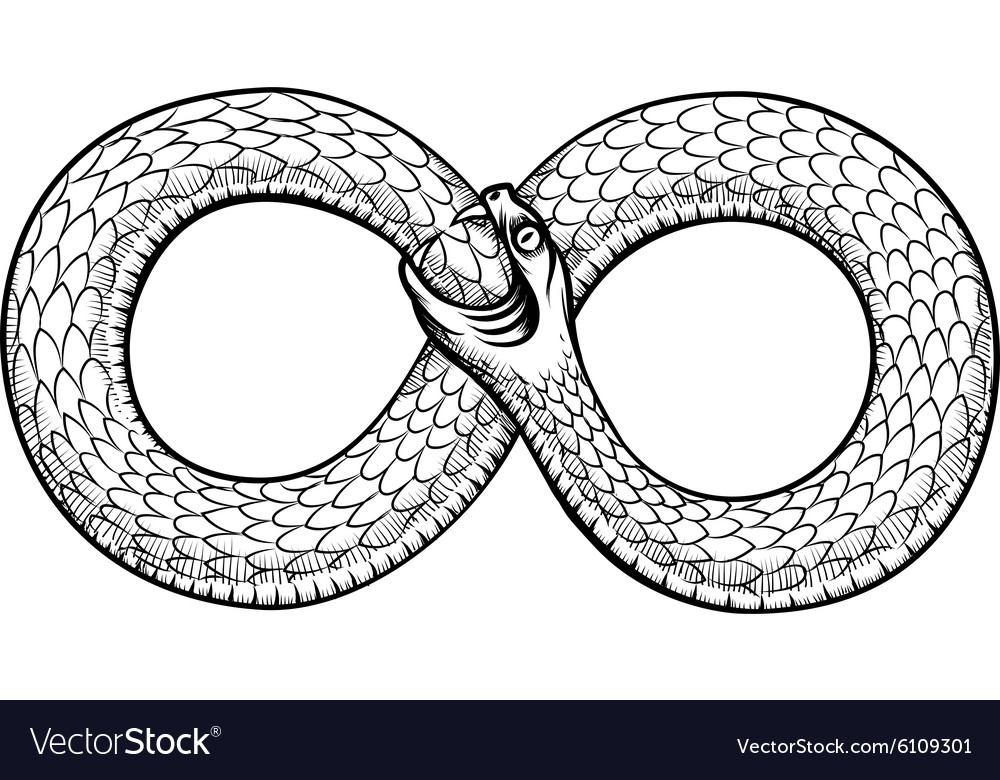
Which brings us back to the symbol I started with.
The Universe digesting itself repeatedly as a continuous attempt to reach its own essence.
Humankind reconsidering recurrent ideas until they actually make sense…

‘Hey, you forgot about two of your own hypotheses … the first and the second…!’

Thanks for the observation.
They slipped off my mind because both are particular cases of the third.
A Multi Verse is nothing but a bigger Universe.
And a combination between an Universe and an Outside Agent is nothing but a Duo Verse. A ‘smaller’ Multi Verse.

Tada!

“We are the tools and vassals of rich men behind the scenes. We are the jumping jacks, they pull the strings and we dance. Our talents, our possibilities and our lives are all the property of other men. We are intellectual prostitutes.”

The words, attributed to John Swindon by Richard O. Boyer and Herbert M. Morais were supposedly uttered sometimes in 1880.

Nowadays, back in 2019, more and more people blame the MSM – main street media, for the sorry state the contemporary society finds itself in.
In fact, those who consider the media to be the source of all evil have been numerous, and focused, enough to elect somebody from their ranks to the highest office in Washington…

Don’t get me wrong. I’m not naive enough to pretend that journalism is any different from any other human activity.

And this is exactly my point.
Journalists are humans. Like all of us.
There is no way that they’ll behave any different than the rest of us.
The day to day practice provides ample proof that far too many of us currently “are the tools and vassals of rich men behind the scenes”. Sometimes even without being aware of it… but that is another issue.
While it is true that too many of the journalists function as “intellectual prostitutes”, the same thing is valid for the members of too many other professions.

Then why do we – all of ‘us’, demand that journalists behave any differently from the rest of us?
Why do we accuse them for not being saints when we are sinners ourselves?
Our sins are lighter? Have less impact?

Are we so thick in our vehemence against journalists that we are deaf to Swindon’s real message?

“We are the tools and vassals of rich men behind the scenes. We are the jumping jacks, they pull the strings and we dance. Our talents, our possibilities and our lives are all the property of other men. We are intellectual prostitutes.”

Elliott Wave is a theory used by ‘technical analysts’ to predict the evolution of the stock market.
It works.
Robert Prechter had expanded the scope of Elliott’s ideas. He uses them to study how our societies work.
https://www.socionomics.net/

Here’s what I make out of all this.

Things, Structure, Mind.
The world, as we experience it, is the consequence of ‘things’ becoming structured enough for ‘mind’ to evolve out of the whole ‘mess’.

Art, Science, Religion.
Knowledge – everything that we know about the world, has started as ideas gleaned by ‘artists’, structured by ‘scientists’ and put together by ‘religious leaders’.

Opportunity, rules, conscience.
Each of us, individual human beings, are the consequences of the opportunities we had been able to identify. Of the manner in which we had put into practice the applicable set of rules. And the kind of conscience each of us has built for themselves.

By putting together these three sides of the evolutive mountain, we notice that ‘knowledge’ (our image about the world) is entirely ‘ours’. And that the world itself is increasingly being shaped by our actions. Actions which are shaped by us, according to our wishes. Wishes which are shaped by what we know about the world.

My point being that while until not so very long ago the world was evolving under its own steam, since we’ve become conscious – aware of our own awareness, in Humberto Maturana’s terms, our influence had grown significantly. Exponentially, in fact.
We’ve changed the geography of our planet. It’s biology, even.

And even though the planet is huge, the opportunities we’ll be able to identify are not infinite. For the very reason that the planet itself is not infinite.

Rather Malthusian, I know, but with a twist. It will be not our numbers which will be our undoing. Only our carelessness. Our infatuation. Our inability to look farther than the ends of our noses.

Wilhelm von Humboldt had initiated a current of thinking, linguistic relativity, which posits that the language used in a cultural space is a reflection of the ideas populating that space. And that there is a strong link between the workings of that language and the manner of reasoning favored by those who use it.

‘Dull as fuck’ is a perfect example.

Nowadays ‘conventional’ fuck is considered to be boring.

We’ve arrived to need all kinds of ‘gadgets’ and a cornucopia of titillation.

We’ve become addicts. Depending on porn.

Isn’t it interesting?

There is a then and there is a now.
We’re OK with ‘then’ and we’re not so comfortable with ‘now’.
Yet the only link between ‘then’ and ‘now’ is us.

Our generation took ‘then’ and brought it ‘now’.

Everything that happened between then and now had happened to us, by us.

Hunters and growers.

Then fighters, doers and rulers.

Now, doers and ‘commentators’.

Some people actually do something – be it ‘fighting’, producing something or being involved in government, while other just ‘speak’. OK, their ‘speech’ does have consequences.
So we might say they also ‘do’ something… yes, true enough, only their deed is more than indirect. And no, teachers don’t belong here. Nor ‘actors’. Or even writers. All these people might do nothing but ‘speak’ only they produce something through their speech. Education, show, literature…
‘Commentators’ is very straightforward. Even more straightforward is ‘talking heads’. But ‘talking heads’ isn’t wide enough!

The philosophers have only interpreted the world, in various ways; the point is to change it. ” Karl Marx, Theses on Feuerbach

We all know the consequences of people following Marx’s advice…
But what could have gone wrong? Weren’t philosophers supposed to be the brightest amongst us?
Wasn’t Plato – the founder of Western philosophy, advocating the very same thing? That society should be run by specially trained philosopher kings?

Let’s go back to the original division of work.
Not all people have become farmers. There still are a lot of humans who survive as hunter-gatherers. Some don’t need to bother – there’s enough food to be gathered where they live , while others couldn’t possibly farm anything. The Inuits, for instance.
Among the farmers, there’s further division. Some farm plants while others farm animals. Because of the specifics of local soil, geography…
Also, farmers need tools. Hence wood workers, metal workers, weavers… etc.
The farmers need protection. Hence soldiers.
Society, as a whole, needs organizing. Hence government.

Let me pause for a moment. These arrangements work simply because they are more efficient than each individual providing everything they need for their own survival.
The soldier protects so the farmer might plow in peace. Some farmers use better plows because of the woodworkers and the metal workers who have cooperated to produce it. The farmers with the better plows produce more than those who use a rudimentary one, built by themselves. And so on. But please remember that each of these people have a first hand experience in their domain of expertise. And that their livelihood depends directly on their expertise.

Now, the next level of analysis shows us that organized societies fare better than those who lack any ‘structure’. ‘Fare better’ in no other sense than having a better chance of survival, as a social organism.
Nota Bene! While an Inuit – or an Inuit family, has a far better chance to survive in the Arctic than you and me, we, together, have a better chance at surviving – and even thriving, anywhere on the planet. Including in the Arctic. But only as long as we act as an organism. Only as long as we cooperate among us.

And whose job is to organize this cooperation?
The government and the ‘commentators’, who else…
The government to act as a referee – to prevent the rogue among us from ruining the game, and the ‘commentators’ to convince us that behaving is a lot better than mis-behaving.

Yeah… only this is nothing more than an ideal… seldom maintained for long…
Usually, the ‘government’ becomes too powerful, the ‘commentators’ convince us – both ‘government’ and general public, that this is how it should be… tensions build up… and something snaps!

And the problem becomes even more acute when the ‘commentator’ pretends to become king. Pretends to have the ultimate truth. Pretends to be obeyed. Convinces us – this being his only skill, to obey him.

This being the moment for us to remember that the commentators have only indirect knowledge about the world. While each of the doers has at least some first hand experience about something, the commentators have nothing but second hand expertise. Everything they know, they know it because somebody has told them so. Or because they have read about it somewhere.
The commentators’ vision might be far wider than that of the doers but it is at least ‘once removed’ from the reality.

And this is the reason for which societies who have used Marx as their spiritual leader have failed. They have not respected the main principle which makes division of work function properly. Let those who know about it make it their job.
Let the doers do and let the commentators gather and aggregate knowledge.

Don’t mess up things.

Universal Grammar (UG) is intended to specify the most general principles of human language. It must provide an explanation for the extraordinary fact that a Japanese child raised in Paris will acquire French, but not Japanese, and a French child raised in Tokyo, Japanese, but not French. Either child may acquire both French and Japanese, of course, but neither will fail to acquire French or Japanese. Linguists and philosophers may have known this in antiquity; they did not say so with any great conviction, and they may not have said so at all. It was left to Chomsky to remark with the full force of his genius that every human language can be acquired by any human being. Universal Grammar, Chomsky concluded, must be a species-specific characteristic of the human race, biologically encoded, genetically transmitted.

The quote comes right out of an article written by David Berlinski and Juan Uriagereka. Never heard of any of them.

Reading that article, I remembered the reason for which I tend to avoid modern philosophers. Or linguists. Hard to discern which is which, anyway…

Let me return to the quote itself.
“An explanation for the extraordinary fact that a Japanese child raised in Paris will acquire French, but not Japanese, and a French child raised in Tokyo, Japanese”.
Read this to anybody who isn’t familiar with the notion of ‘Chomsky’. You’ll get a laugh and a troubled look. ‘What’s so extraordinary here?!? People will always learn whatever language is spoken around them… but only if they come in contact with the ‘exterior’ world!’

Home-school those Japanese/French children in Paris/Tokyo while preventing them from getting in touch with anybody else but their immediate family/trainers and they’ll learn only whatever language(s) their trainers/family will have chosen for them.

As an aside, what does Chomsky mean by ‘French’ and or ‘Japanese’?
‘Genetically’ French/Japanese? What if one parent is French/Japanese and the other German/Korean? What will the child be? Like the father or like the mother?
‘Culturally’ Japanese/French? According to their ‘mother’ tongue?!?
Forget it…

“Universal Grammar, Chomsky concluded, must be a species-specific characteristic of the human race, biologically encoded, genetically transmitted”.

‘Species specific characteristic of the human race’… told you these guys have a lot of humor… or, maybe, they cannot make up their minds…
What are we, humans?!? A species or a race?

OK, let me move forward.
Hidden underneath all this ado, there is a piece/gem of ‘harsh’ reality.
The simple fact that if/when we want to, we are able to understand each-other. To communicate with each-other. To exchange ideas. To trade meaning.
And there is indeed something species-specific about this ability of ours. Nobody else has it… according to our present knowledge about the world, anyway.

‘Nobody else has it’… yeah, right… as if you hadn’t watched, time and time again, two dogs ‘greeting’ each-other in the park.
OK, those dogs were interacting in highly unnatural circumstances. Walked by people, in a people infested environment …
Fact is that all animals have ‘procedures’ for interacting with other animals. Belonging to the same species or belonging to other species. Some of the procedures being inbred while others had been acquired trough learning or training.
Cats, for instance, have an inbred ‘procedure’ for chasing anything which might become a prey but need to be taught by their mothers how to finish the chase. How to kill that prey.
And yes, cats do have a species-specific, biologically encoded and genetically transmitted characteristic which allows them to kill and eat their prey. Or to play with the people who take care of them. They kill and eat using their claws and teeth while they play using their brain. OK, the brain also contributes during the chase… don’t be a nit-pick.

Let me summarize.
So cats have a specific set of tools, teeth and claws, which are ‘coordinated’ by a brain which needs to be taught in order to become fully functional.
And the overall ‘functioning’ of any given cat depends simultaneously on how well their organism works AND the quality of the learning they have been able to amass.

Then where’s the difference between humans and cats?
What is so species-specific in our ability to interact with the world?

I’m exaggerating, of course. We are able to understand each-other far deeper than the other great-apes, our cousins. There is something species-specific in all this.
But only in ‘depth’, not in ‘nature’.
We’ve been able to teach chimps to write. And cats to play with strings instead of catching mice. All three of us ‘share’ the more or less same kind of brain and surprisingly similar anatomies.

What really sets us apart is our learned ability to watch ourselves while doing something. To observe ourselves observing, as Maturana puts it.
And our ability, learned again, to formulate information in a transmittable form. To ‘build’ highly specific messages using rather ‘fungible’ building blocks and in such a manner that those messages might be transmitted from one individual to another. From one generation to another, even.
To make good use of the Universal Grammar noticed by Chomsky.

Can any of this be construed as species-specific? Of course. Without the huge brain we’ve got – or without the ability to articulate sounds, we most likely wouldn’t have been able to reach this stage of our evolution.
But to reduce everything to mere biology … I’m afraid that would be too simplistic.

Consciousness – or self-awareness, opens up huge evolutionary venues. Powered by our very ability to communicate so intensely. To use ‘Universal Grammar’, even without being aware of its existence.
But since both self-awareness and talking depends upon learning them from/with the others… biology is not enough. Necessary, indeed, but not enough.

Not by a long shot.

Liberty is freedom from being constricted, in any way, shape or form. Period.

Liberty is more of an adjective rather than a verb. A situation more than an action.

Liberty can be attached to a space, to an agent or to both.

A free space would be a space where no constriction may occur, whatsoever.
A free agent would be an individual entity outside any constriction, whatsoever.

Mathematically, both definitions are possible.
Philosophically, both definitions are imaginable. By philosophers, of course.

Oscar Hoffman, a Teacher, kept telling us, his students, “For a proposition to be true it is not enough for it to be logically correct. It also has to make ontological sense. For those of you who don’t remember what ontological means, a true proposition must describe something which has to be at least possible”

In the real world, where there is no such thing as absolute freedom, liberty has to be first noticed/invented. And then constantly negotiated.

‘No such thing as absolute freedom?!? But liberty is a (God given) (human) right!!!’

Do you remember what Hoffman had (just) said about things which can exist in practice and things which can exist only in our minds?
Liberty might be a right – for those who enjoy it, but that doesn’t mean that everybody has it. And, even more important, that there is – or ever will be, something even close to absolute liberty.
If you don’t believe me, try to fly off a balcony without any ‘mechanical’ help. Or stop eating for a day or two. The Earth will surely ‘constrict’ you back towards its center and your stomach will certainly constrict itself for lack of food. And both Earth and stomach will constrict you back to reality.

‘OK, so no absolute freedom for individuals. How about ‘free spaces’?’
‘As in spaces where no constriction, whatsoever, may be exercised?’
‘Yes.’
‘Well, that would be possible. If a space is completely empty… no constriction might be exercised in there, right? On the other hand, as soon as something, anything, populates that space, constrictions start to appear. For instance, since no two things can simultaneously exist in the very same place, the mere existence of a speck of dust in a whole stadium induces the restriction that no other speck of dust may exist in the very same spot. Sounds trivial, true, but this is it… No absolute freedom. Not for individual agents and nor for spaces.’

‘Then why are writing a post about ‘Free market’? Doesn’t make much sense, isn’t it?’

Let me finish with liberty before going any further.
I mentioned earlier that liberty must be first noticed and then negotiated.
You see, right or no right, liberty is, above all, a concept.
We’d first observed that a flying bird is freer that a crawling worm and bam!!! We realized that some of us were freer than the others. Then that freer groups/societies fared better than the more ‘stifled’ ones.
But only where liberty was more or less spread around, not concentrated in one hand. Dictatorships – where all liberty is concentrated at the top, are way more fragile than any democracy. I’ll come back to this.
Now, for the negotiation part.
‘Your freedom to swing your fist ends where my nose begins’. And vice-versa. Only this is rather incomplete.
Let me examine the situation where you are a person who likes to swing your fist. In the air, not with any aggressive intent, of course. So you were swinging your fist, after you had determined, in good faith, that there was no nose close enough to hurt. But what if I am a ‘nosy’ guy? ‘Nosy’ enough to bring my actual nose inside your reach? You having to restrict your swings – or to go somewhere else, isn’t a limitation of your freedom? An absolutely unnatural limitation of your freedom?
Has it become a little clearer? What I mean by negotiation when it comes to individual freedom?

OK, time has come for me to go to market. To the free market!

A market is a place. Obviously, right?
A place where people trade their wares. Because they have noticed that it is easier for each of them to do what each of them do better and then trade the results of their work instead of each of them providing everything for themselves. As in everything each of them needs. Or fancy.

Initially, markets were far from being free. First of all, supply was sorely limited. Transportation means were practically nonexistent so supply varied seasonally and was severely influenced by weather, soil and other similar factors. And, maybe even more importantly, supply was influenced by the sheer will of the most powerful ‘free agent’ who happened to be around. Or, more exactly, supply was heavily influenced by the whims of the most powerful free-agent who happened to be around.
Don’t believe me? Then consider the extreme famine experienced by the Bengalis in 1943. Or by the Romanians during the last years of Ceausescu’s reign.
Slowly, people have learned that freer markets tend to be a lot more stable than the less free. ‘Freer’ markets meaning freer from both exterior and interior limitations. For a market to become free(ish) the participants need to have a big enough pool of resources at their disposal and to be wise enough to organize themselves in a ‘free’ manner.

And what happens when at least one of the two conditions remains unfulfilled?
Time has taught us that while markets tend to be limited in space and that some of the participants tent to impose themselves over the rest there is one dimension where the liberty of the market is very hard to be limited. ‘Liberty’ here meaning that things tend to evolve more in their own terms rather than ‘according to plan’. Or according to anybody’s wishes.

Whenever the available resources dry up, the participants to the market move someplace else. Or die of starvation.
Whenever a market looses too much of its freedom – as in some agent controls too much of what is going on there, the market itself no longer functions properly. Whenever too many of the participants loose their ability to determine their fate/future they slowly become ‘sitting ducks’. Not as much easy to hunt down but actually unable to feed themselves.
And since hunger is the best teacher, they either learn to fight for their freedom or… die of starvation. Pol Pot’s Cambodia would be a good example, even if somewhat extreme. The fall of most communist regimes also makes a compelling case for what I have in mind.
Even more interesting, though, is what had happened to the American Automobile Industry. General Motors and Chrysler Corporation, once the dominant stars of the market – along with Ford, had to be rescued by the government. Quasi monopolistic positions tend to be bad for the monopolists also, not only for the rest of the market. Given enough time, true enough…