Archives for category: Choices we make

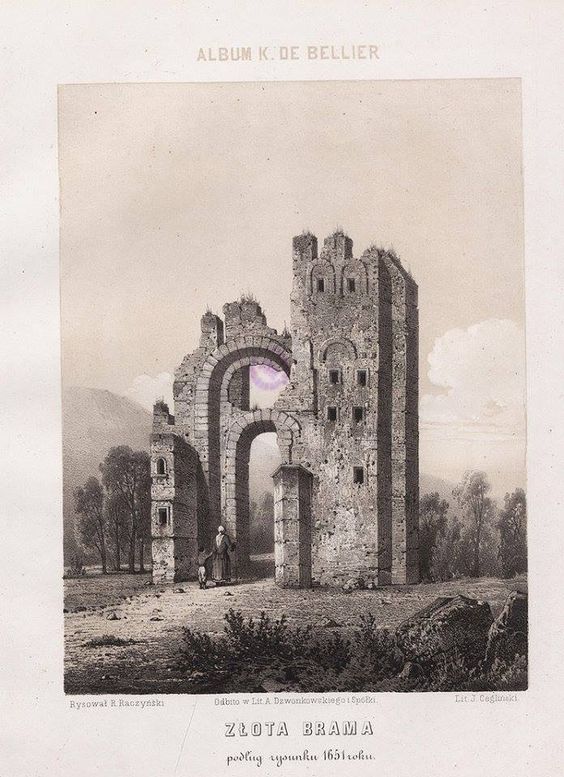
Circa 840, “three noble brothers” of Viking origin – Rurik, Sineus and Truvor, established “what came to be called Kievan Rus”.

“Rus,” which is where the name “Russia” comes from, purportedly derives from an old Nordic word for “men who row.”

882. Oleg the Prophet captures Kyiv and moves the capital of the Viking kingdom from Novgorod to Kyiv.
Thus the Rus becomes Kievan.

1703. Peter the Great of Rus-sia established Sank Petersburg as a bulwark against the Swedish Kingdom.
The city served as Russia’s capital from 1712 to 1918

1941. Hitler breaks the German Soviet Non Aggression Pact and starts a war against the Soviet Union.
Leningrad – the city formerly known as Sankt Petersburg, had been put under siege from September 8, 1941 to January 27, 1944

2022. February 24. Vladimir Vladimirovich Putin, the present day ruler of Rus-sia, in complete defiance of the Budapest Memorandum, started a “special military operation” meant to achieve the “demilitarization and denazification of Ukraine,”

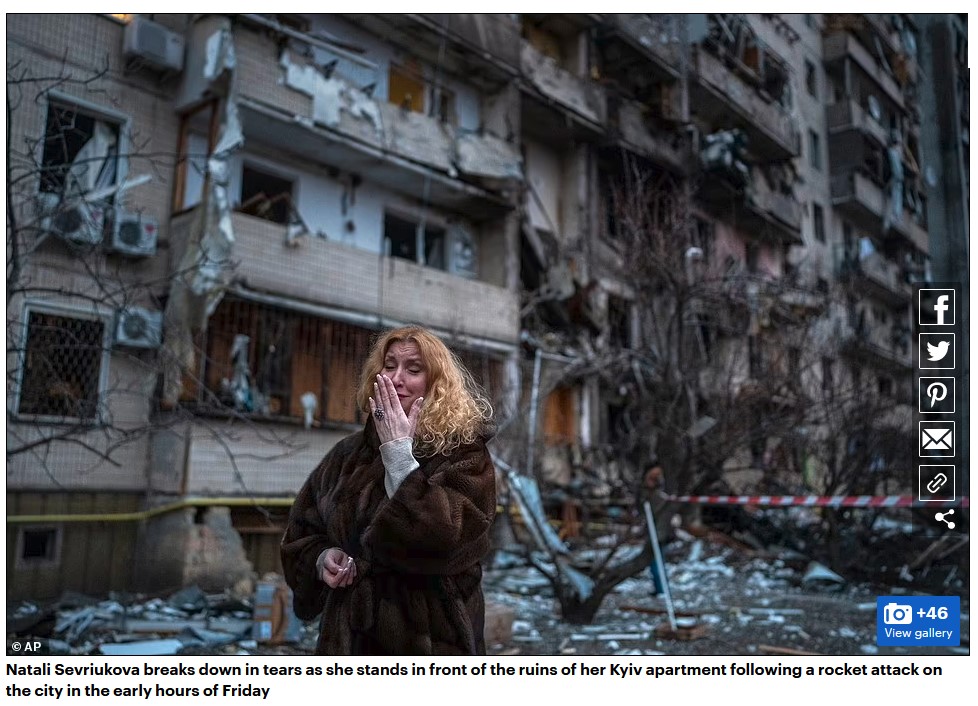
Kyiv hasn’t been besieged yet but has already been under heavy bombardment.

I’m Romanian.
Romanians don’t have very fond memories of what had happened to their country whenever the Russian soldiers had come by to ‘visit’.
As a teenager I read The 900 Days The Siege of Leningrad, 1968, by Harrison Salisbury

And wept.

Now, an already old man, I check out, on the Internet, what’s going out in Kyiv – the former capital of the Kievan Rus.

And weep.

Homo homini lupus has become a massive understatement.

My late mother used to quote a co-worker:

After you get used to it, being hanged becomes bearable.

Let me give you some context.

I live in Romania. You know, that country which shot its dictator, Nicolae Ceausescu, on the Christmas Day 1989.

I was drafted to the army in October 1980. When I left home, you could still find food to buy. Soap, chocolate, washing powder, toilet paper… you name it. Nothing fancy but life was ‘normal’.
Nine months later, in July 1981, food was already scarce.

In 1985, things were already bad. You had to queue up for anything you needed. For all of the above mentioned items.

By 1988, things had become even worse. On top of what I had already mentioned, rolling blackouts were common. Those of us who lived in apartments connected to central heating were ‘enjoying’ running hot water for only a few hours a day/a few days a week. And shivered during the entire winter.

I’m telling you all these because in December 1989 most of us were hugely surprised when communism had fallen. With a bang.

We’d become so accustomed with what was happening to us that we were convinced our lives were ‘normal’.

Compare that to what you see below.
Oh, I forgot to tell you that we had only 1 (one) TV channel. Which was on for 2 hours each working day from Monday to Saturday and 12 hours on Sunday. And 80% of what was churned out was pure propaganda.

1. Sow doubt.
2. Drop a loud fact. Or two… This will simultaneously ‘water’ the previously planted seed and act as a ‘foot in the door’ for your next move.
3. ‘Miss-interpret’ another fact.
4. Mention an universal human emotion, inviting your audience to identify itself with the ‘victim’.
5. Squarely state what you want your audience to believe.

1. ‘The Soviet Union didn’t crumple under its own weight. It was dissolved by Yeltsin so that Gorbachev’s position would disappear.
Leaving Yeltsin as the top dog of the day. Even if at the helm of a little smaller empire…’

2. ‘After the Cold War had ended, the West should have treated the ‘defeated’ as Germany, Italy and Japan had been treated after WWII. The West should have helped the Soviet Union to overcome the transition hurdles by extending to it an equivalent of the Marshall Plan.
Instead of that, the Americans had come up with the Wolfowitz – later Bush, Doctrine.’

3. ‘Gorbatchev was told by James Baker that NATO will not move an inch eastward’

4. “…1998, Yeltsin, late Yeltsin: ‘you promised not to do this! So, how do we trust you, if you make a promise?’ “

5.1. Vladimir Putin has been created by the United States.
5.2. The so called free media in general – and New York Times in particular, cannot be trusted to provide honest information.

Pozner’s discourse is far more ‘byzantine’ than the ‘stream-lined’ version I used to illustrate what skillful propaganda looks like. Skillful maskirovka, more likely?

This post has become long enough. Let me wrap it up.

The main question here being ‘did he actually say it? Did Baker actually promised Gorbachev that “NATO will not move an inch eastward” ‘?

Having met with Genscher on his way into discussions with the Soviets, Baker repeated exactly the Genscher formulation in his meeting with Foreign Minister Eduard Shevardnadze on February 9, 1990, (see Document 4); and even more importantly, face to face with Gorbachev.
Not once, but three times, Baker tried out the “not one inch eastward” formula with Gorbachev in the February 9, 1990, meeting. He agreed with Gorbachev’s statement in response to the assurances that “NATO expansion is unacceptable.” Baker assured Gorbachev that “neither the President nor I intend to extract any unilateral advantages from the processes that are taking place,” and that the Americans understood that “not only for the Soviet Union but for other European countries as well it is important to have guarantees that if the United States keeps its presence in Germany within the framework of NATO, not an inch of NATO’s present military jurisdiction will spread in an eastern direction.”

‘So he actually said it!’…

the Americans understood that “not only for the Soviet Union but for other European countries as well it is important to have guarantees that if the United States keeps its presence in Germany within the framework of NATO, not an inch of NATO’s present military jurisdiction will spread in an eastern direction.”

The Soviet Union is long gone, all the states which have been admitted into NATO are ‘in’ because they had asked themselves to join – and are now extremely glad to be protected by the famous 5th article – … while the only (frustrated) ‘agent’ who ever cried foul was Putin.
Not only cried foul but eventualy acted out his frustrations!

But Putin is not exactly alone…

Putin’s Munich speech was the first explicit warning of serious trouble if the West did not abandon its increasingly aggressive posture toward Russia; the Kremlin’s latest demands for security guarantees and a NATO military pullback from Russia’s borders may be the last warning. The United States and its allies are backing Russia into a corner, and that is profoundly unwise if the goal is to avoid war with a heavily armed great power.

Ted Galen Carpenter, Senior Fellow, Cato.org January 24, 2022

Trump: “How smart is that?”
Pompeo: “I have an enormous respect for him!”

Pozner seems to be somewhat right, after all.
His arguments don’t stand – as he had framed them – but he does have an inkling…

And yes, you can – and actually should, analyze my post following the steps I already mentioned.
Then please read this:

Manipulation: useful tool, mortal sin or what?!? April 27, 2015
‘Causing’ Circumstances March 1, 2022

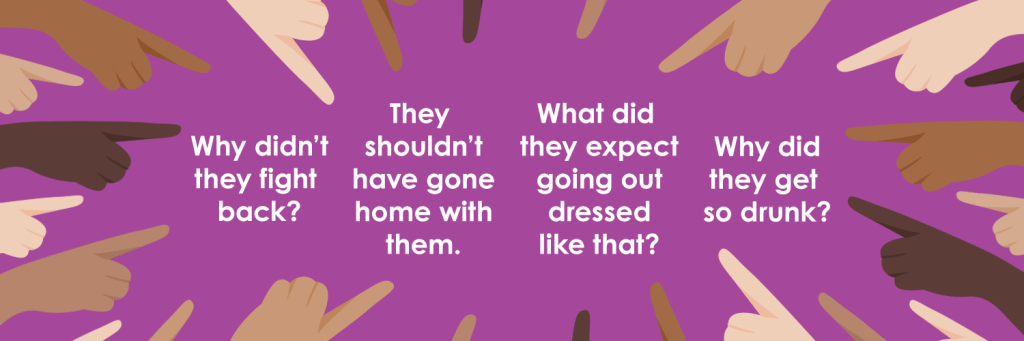
Whether it’s in day to day conversation or in the media, a common response to disclosures or mentions of sexual assault is a phenomenon called victim blaming. The term might be unfamiliar, but what it looks like in practice is all too familiar. It’s questioning people who experience violence — especially sexual violence — about their actions, and what they could have done to prevent it, or worse, invite it. It’s pointing out supposed weaknesses or differences in a person that could have made them a target. In general, it’s the common tendency for people to look for the cause of violence as something the person who experienced harm did or didn’t do to prevent it.”

Victim blaming is a fact.
As in ‘exists even if it doesn’t make much sense’. As in ‘still exists despite our intense efforts to make it disappear.’

Shouldn’t we try to understand it? Before blaming those who blame the victims?

What’s going on is that our minds are biased.
And one of the two most powerful biases is our need to make sense of the word. We actually need to perceive the world as being rational. We need to have causes, to identify causes, for everything which happens around us.
The other one being our need for relevance. We not only need to make sense of the world, we also need to control it. Hence we do our best to understand the world as controllable. Controllable by us! By us, the purveyors of the explanations. By us, those who understand it as a rational succession of causes and effects.

Let involve ourselves in a small thought experiment.

We’ve just had a few drinks. Not enough to get stoned but each of us is a little ‘merrier’ than usual. A tad dis-inhibited.
In this condition, one of us has sex with an under-age person and the other has a car accident.

In which of these two cases, ‘being under influence’ would be seen as a mitigating circumstance?
Why?

See what I mean?

Socially, it is unacceptable to DUI. Because you are far more likely to cause an accident.
Socially, it is more than acceptable to have a couple of drinks at a party. Because you are going to be a far more ‘pleasant’ person that way. Well, most of us are…

It’s actually reasonable to expect a driver to be sober and a party-goer to be ‘tipsy’-ish.
Simply because it’s a lot more unnatural to drive than to have social intercourse. Hence we need a lot more ‘self-control’ when driving than when talking to someone. Even if that person is very attractive.
We, statistically speaking, have a gut feeling which tells us it’s harder to drive than to behave. Hence the biases.

‘OK, but has any of this anything to do with victim blaming?!?’

Victim blaming is the ‘easy way out’ for both would-be victims and would-be aggressors.

Remember what I said about our need to make sense of the world as a controllable environment?
As a place where we, each of us, is in charge? With the known – and already agreed upon, limitations…

For those who see themselves as potential victims, doing the ‘right thing’ – or not doing the wrong one, is something which puts us in a safe place. We’ve done everything (in our power) so we’re safe. Or as safe as we could be… If we become a victim even after we’ve done everything in our power to avoid it, then it’s exclusively the fault of the aggressor. There was nothing more we could have done to avoid it. Hence there’s no self-guilt falling on our own shoulders.
And if we have reached ‘this’ conclusion – that ‘this’ is the right behavior, then each of the ‘trespassers’ do nothing but ‘contradict’ our ‘good judgement’. Hence our ‘need’ to ‘educate’ them.

For those of us who conceivably might become or had ever been – directly or indirectly, as in ‘one of our relatives had done it and we didn’t see it coming’, – an aggressor, the logic follows the same path. The victim should have taken every precaution, we are naturally ‘limited’ individuals who cannot ‘resist’ when ‘pushed over certain limits’.

‘OK, and your point is?
That it’s OK to blame the victim?!?’

Let me bring your attention back to the title.

‘Causing’ circumstances.

Who transforms a certain set of circumstances into a cause?
Who sees a certain set of circumstances as an opportunity to do something or as an opportunity to do the very opposite? Or to simply stay put?
To directly cave in to something which ‘might’ be seen as a provocation or to ask for permission first? And to accept ‘no’ for an answer, in no matter what circumstances …

Who bears the responsibility for choosing one way or another?

This is a stub.

Basically, this post will reinterpret the arguments used in the previous one.

This is a stub.

Using as little resources/effort as possible to get what you’ve set your mind to accomplish versus making as much profit as possible (in the given conditions)

Reversible versus ‘definitive’

Let us imagine, for a moment – or longer, than among the already innumerable objects circling the Earth is yet another surveillance satellite.
One operated by aliens…

What would they think of the current developments?

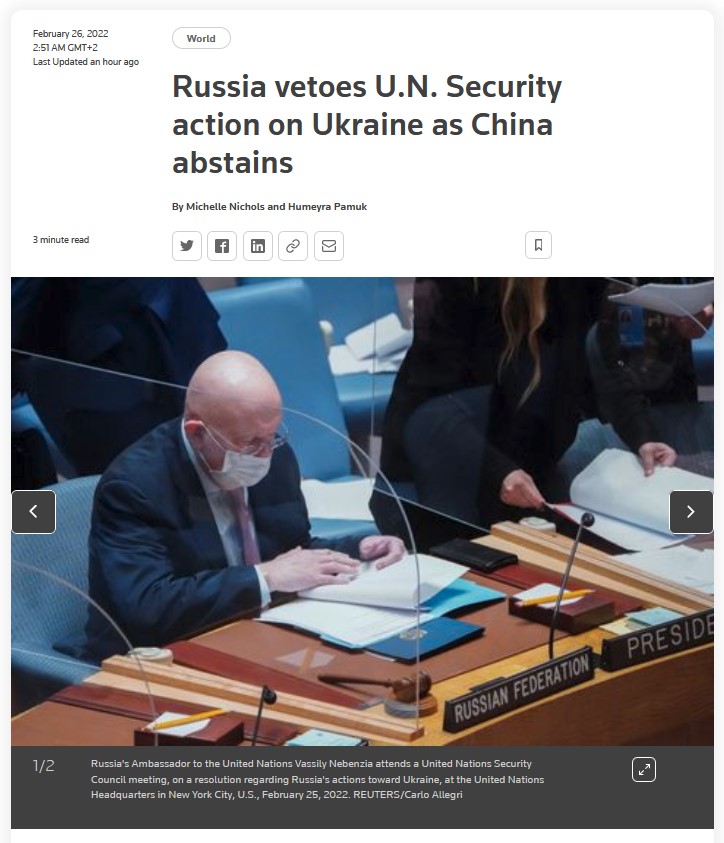
One of the five permanent members of the UN Security Council – the topmost watchdog pretending to guard the ‘normalcy’ on Earth, brazenly attacks its neighbor.
Both the aggressor and the victim are members of the organization watched over by the Security Council.
But the aggressor has veto power over the Council.
And, of course, uses that power whenever it sees fit.
Another of the “five permanent members” of the Council chooses to abstain from voting. When the Council is discussing the aggression perpetrated by one of the permanent members of the Council against another fully recognized member of the ‘international community’.

Would the alien observers be laughing their heads off?
Would they keep us isolated from the rest of the Universe? Lest we spread our suicidal behavior ‘among the stars’…?
Both at the same time?!?

‘Guided missiles and misguided people‘….

Quite a lot of people around the Internet are considering that ‘Ukraine is of little interest for the US’.
Even some of the Europeans are considering that isolating Putin’s Russia from ‘SWIFT’ is a too steep price to be paid, by them, for Ukraine’s independence.

I remind them, all of them, of what Martin Niemoeller had to say on this subject.

First they came for the Communists
And I did not speak out
Because I was not a Communist
Then they came for the Socialists
And I did not speak out
Because I was not a Socialist
Then they came for the trade unionists
And I did not speak out
Because I was not a trade unionist
Then they came for the Jews
And I did not speak out
Because I was not a Jew
Then they came for me
And there was no one left
To speak out for me.

Chapter 1. Explaining prediction.

I’ve trained to be an engineer. And practiced being one.
Then I felt the need to understand. And studied sociology.
That’s how I learned, the hard way, the difference between ‘hard’ science and ‘soft’ science.
Between ‘bona fide’ science and ‘bogus’ science…

Those of us still convinced that soft science is bogus have yet to grasp the whole meaning of ‘science’.
A collection of ‘special’ data, a ‘special’ method of gathering data and a ‘special’ state of mind.

We all know what ‘scientific data’ and ‘scientific method’ mean.
But there is almost no talk about ‘scientific state of mind’.
Most people consider that ‘scientific thinking’ is solelly about applying the scientific method when dealing with the ‘reality’. With what happens ‘outside’ of us.
Outside of our individual consciences…

Historically, science – the concept of science, had sprung up in the minds of people concerned primarily with physics and chemistry.
Hence the subsidiary concept of ‘consistency’.
Data can be considered to be scientific only if it had been gathered in a ‘consistent’ manner.
If by applying the same method, in the same circumstances, the end results will be the same – regardless of who had happened to be at the helm of the experiment.
And a method can be considered to be scientific only if it produces the same data whenever it is applyed, in the same circumstances, by no matter whom.

I’m sure that, by now, at least some of you have figured out what I’m driving at.
The main difference between ‘hard’ and ‘soft’ science is, of course, related to the relative inconsistency of the data yielded by the ‘soft’ sciences. This being the reason for which some people cannot even accept the ‘scientific’ nature of the soft sciences…

Hence the need to discuss about the ‘scientific’ ‘state of mind’…
Let me start by pointing out the fact that we, people, are rationalizers.
We pretend to be rational, true, but in reality we are nothing but very astute rationalizers.
So astute that we are not even aware of the fact.
We are so convinced of our rational nature that we are fooling ourselves.

Please read about this subject by hitting the link below if you are not familiar with the concept of rationalization before proceeding.
https://cushmanlab.fas.harvard.edu/docs/rationalization_is_rational.pdf

Accepting that we are deep enough into rationalization that we need to pay special attention when trying to be objective is the first step towards attaining a scientific state of mind.
The second, and just as important, step being the respect we need to extend towards our peers. Towards our fellow experimenters.

Changing tack – and approaching ‘scientific state of mind’ from another angle, I might try to describe it as a ‘work in progress’.
A never ending attempt at self improvement made by someone fully aware of the fact that they’ll never get there. Yet still striving towards that goal.
A never ending attempt made by somebody who knows they’ll never get ‘there’ yet they continue to encourage others to go further and further up that road.
A never ending attempt made by people who know they’ll never get there yet they respectfully help each-other towards their common goal.

And now, that I’ve done my best to explain what I mean by ‘scientific state of mind’ let me delve in the main subject.
The real difference between soft and hard science.

By their very nature, hard sciences are defined by the fact that an explanation constitutes a very good prediction.
If you are capable of explaining the Earth rotation around the Sun you are also able to compute where the Earth will be 10 seconds from now. As well as ten centuries from now…
If you are capable of explaining radio-activity you are also able to build an atomic bomb.
By understanding how DNA works we have been able to come up with a mRNA vaccine against the SarsCOV-2 virus.
https://www.cdc.gov/coronavirus/2019-ncov/vaccines/different-vaccines/mrna.html

The problem with soft sciences being that in their case, explanations – no matter how precise, cannot predict much.
We know why a maniac behaves like one – because …, but we don’t know what a maniac will actually do. Nor when…
We know that a free market works better than a monopoly but we cannot agree upon how free a market should be. Nor can we agree upon what a ‘free market’ really looks like…
We know what will eventually happen to an empire – it will fall, because of ‘negative selection’, but we never know exactly when and how that will happen… nor what will occur between the establishment of the empire and its eventual demise.

Savvy?

No home means ‘no sleep’.
No place secure enough for you to let you guard down – no matter how shortly, and relax.
Survival becomes problematic and occupies all your time. And brain power….

An uncomfortable home means ‘no dreams’.
Every waken moment is occupied by ‘how do I get a bigger home’ and whatever sleep you might muster is fitful.
You cannot rest properly so you cannot do much during your active hours. You’ll never reach your full potential so you’ll never be as useful/productive as you could possibly be.

Too big a home means ‘nightmare’.
Difficult to maintain – for your means, impossible to ‘explore’/’exploit’, always afraid somebody would try to steal it from you.
And, above all, too big a home means ‘insulation’ from the real world. You’re so far away from what’s really happening out there that you’re no longer able of proper decision making.
Nightmare.

I wish you a string of very good nights and some pleasant dreams.