Well, we must remember that solutions came a lot easier when we refuse to think inside a box. Inside any box. No matter how large or how nice.
Every time I understand/notice that somebody tries to frame my thinking process, I go ‘ballistic’.
I try to raise my mind perpendicularly above the frame. So that I may observe the limits.
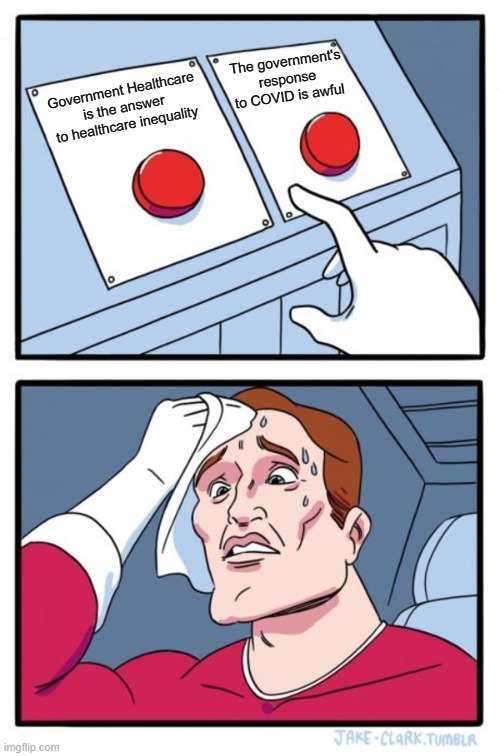
Every time when somebody is presented with an ‘either/or’ option there is a strong likelihood that the situation merits a more nuanced approach. As in ‘yes, the government was terrible at handling COVID-19’ and ‘yes, the government – as our servant, should be mandated by us, the people, to coordinate the help we need in our hour of need’.
How can we reconcile these two? Simple. Hire a better government and keep a keen eye on it!
And, if I’m not mistaken, wasn’t democracy meant to do exactly this?
Some people are convinced that nothing really changes. That progress is an empty word.
Others are convinced that progress is everything.
And each category has its ‘extremists’:
Some people are convinced that nothing should be allowed to change. Others are convinced that all change must be imposed, or at least approved, by them.
And the tug of war between these two categories actually hamper whatever progress happens naturally.
Mind you, both categories shoot themselves in the foot. Each of them shoots only the ‘specific’ foot but the result is equally crippling… Both end up being iron shackles for the rest of us.
Life, in general, is a matter of calibrating the intercourse between the inside of the organism and the environment in which it tries to survive. Or thrive…
Social life, both in general and in particular, is a matter of calibrating social intercourse between the members of a society in such a manner that, statistically speaking, the individual members would find it easier to survive/thrive in the given physical environment. Simply because each surviving/thriving individual adds resilience to the social organism/network.
COVID-19 is nothing but yet another test. For now – for as long a so many of us are still in ‘surviving mode’, it doesn’t matter “how” or “why”. All that matter is ‘what’.
“What WE do about it!”
Distance ourselves from the others and allow the pandemic to cool down? Distance ourselves from the others and allow each of our individual minds to think for itself?
While keeping in mind that long term survival requires the physical presence of as many of us as possible? That our own long term well being requires us to cooperate towards that common goal? As Adam Smith taught us?
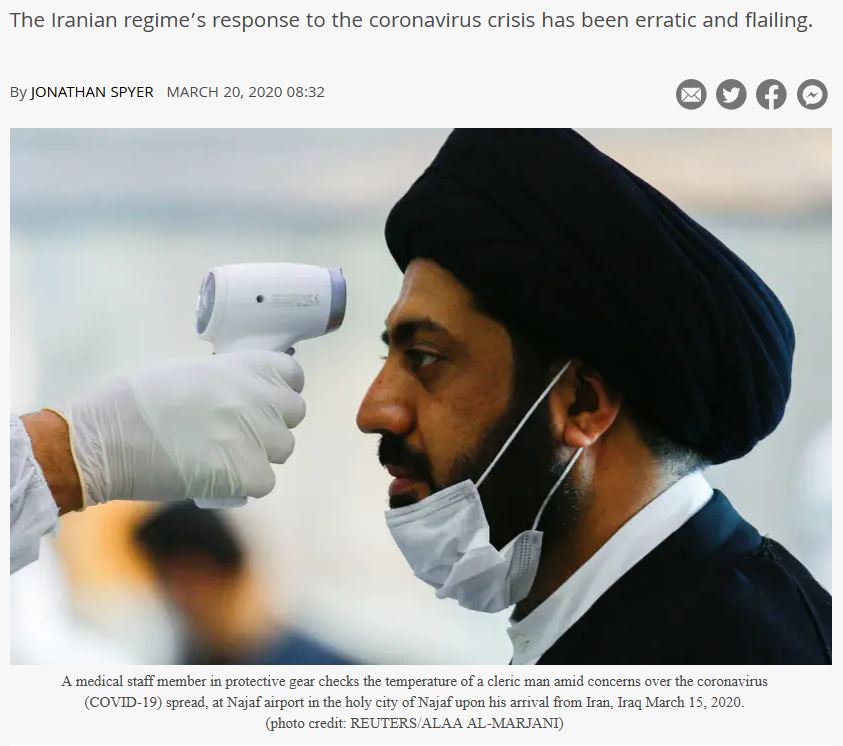
If you live on the Moon, or if enough time had passed since I’ve written this, click on the picture to read Jonathan Spyer’s excellent rendition of the facts which have driven me to post this.
Or you may proceed.
For me, there is a striking resemblance between what’s going on in Iran and what would happen in a hardcore libertarian society.
The mullahs are concerned only with spreading/enforcing their faith and consider everything else will take care of itself.
The extreme libertarians are concerned exclusively with upholding their understanding of liberty and consider that everything else would take care of itself. By itself.
And I’m convinced that everything will indeed take of itself! After all, life has continued after communism had failed. The communist leaders had been professedly concerned exclusively with enforcing their understanding of equality. And convinced that everything else would had taken care of itself. If only that equality could have been instated…
Yet I don’t think communism will be missed. By those who had experienced it hard enough to understand it…
Money, and its ‘derivatives’ – from ‘capital’ to ‘financial market’ and ‘stock exchange’, are the tools we used to get where we are now. Without them we would be still foraging in the woods.
Only something rather insidious has started to eat the whole scaffolding from inside. Same process has been happening with weapons. We invented them for hunting. Then used them for self protection. Against large beasts and fellow humans. Finally, after using them to conquer and defend our liberty, we used them to subjugate others. To impose our will upon some other people.
In other words, we used guns to shoot ourselves in the foot. Unwittingly. Both as hapless individuals and as a cultural species.
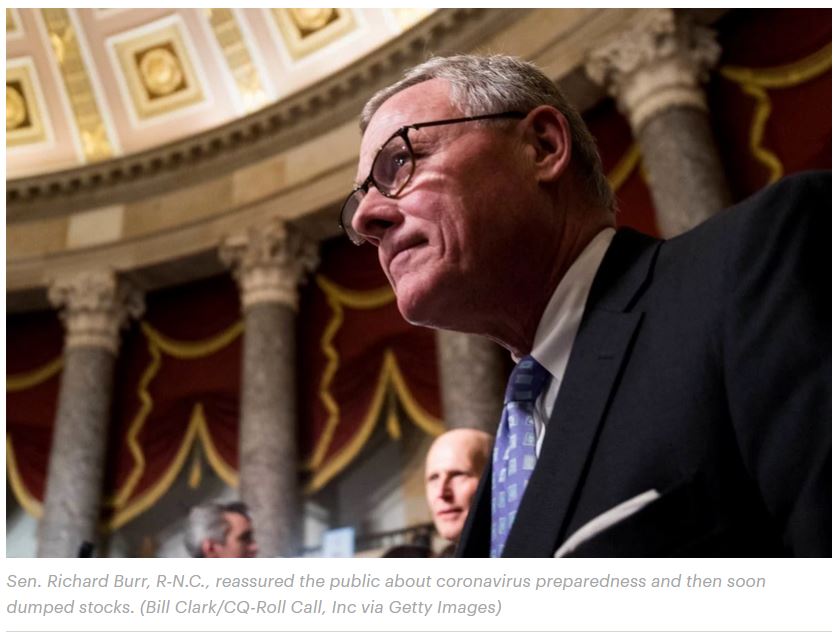
Money – and its derivatives, have suffered the same degradation. We used it, at first, to coordinate our efforts. The Stock Exchange had been an excellent way to coordinate otherwise disparate means. Very few of the corporations who have changed the world into what it is now – for good and for bad, wouldn’t have come to life without the money which fuel them. Nowadays, too many of those who trade on the Stock Market do it in a ‘barren’ manner.
They do not contribute anything but extract value. The inside traders being only the visible part of the iceberg. Which iceberg might tank the whole contemporary ‘arrangement’.
If we keep sleeping during our watch. And there’s no one else on deck…
Smarter people than me are already prepping for the aftermath. For the opportunities which will have ripened by then.
Which, let’s face it, is a wise thing to do. Most of us would have done it. Prepping for what we fear. And for what we covet.
Also wise would be for us to remember that everything we experience today – the good and the bad of it, together, is the consequence of how we have chosen to use the opportunities opened up by the previous crisis.
Meteorology has to do with physics. Something which doesn’t change as you learn more about it. Only the researcher’s understanding of what is going on goes deeper and deeper into the matter.
Economy has to do with both hard facts – how much coal/arable land is available at one moment, and psychological unknowns. What people will do if/when…. The hard facts might change – just as meteorological data does. But in a rather foreseeable manner. What people will do… is a lot harder to predict. Simply because people change their understanding of facts, based on what they learn.
Just as the meteorologists do. And while it is relatively easy to predict that meteorology will become more and more accurate – for the foreseeable future, at least, it is a lot harder to predict what the meteorologists will do as a consequence of their increased abilities.
I’m sure you’ve already learned everything worth knowing about how to flatten the curve…
My post is about something else. About the need to think with our own heads. Individually. Each on their own.
More damages are caused by the manner in which we have chosen to react than by the pathogen itself.
‘Then what should we do?’
I don’t know. And I just told you to stop taking cues, blindly.
There is something I do know. Nobody can get out of something like this on its own. Alone. And another thing. If we get out of it as a herd, we’ll very soon end up in another trap.
‘Damned if you do, damned if you don’t… I really can’t figure out what you want to say….’
OK. We, humans, are social animals. We not only raise our young – all mammals do that, we raise them in a social context. We live in groups and we raise our children to belong there.
Living in a social context has consequences. From being prone to infestation to having adopted specific behaviors. Humberto Maturana is actually convinced that our very conscience – ‘our ability to observe ourselves while observing‘, a paraphrase, is a product of us leading our lives in close community.
One of these specific behaviors is the herd instinct. Whenever in a dire strait, the members of a group pay a lot more attention to the rest of the group than in the ‘peaceful moments’. This has two bright sides and one huge drawback.
All members of a group paying close attention to the others makes it easier for those who need it to get attention. And help. All members of a group paying close attention to the others makes it easier for the group to follow when one of them finds a way out. All members of a group paying too close attention to the others makes it very likely that the entire group will dash out at the first opportunity. Without checking first where they’re going to land. Nor whether there are any other opportunities.
Another specific behavior is ‘opportunism’. Some of us have figured out that by keeping their chill in a crises they are more likely to identify whatever opportunities might exist in that moment. And the deeper the crises, the bigger the opportunities.
Theoretically, these two should work like a charm. The opportunists keep their chill, look around, identify the best way out and the rest of the herd follows them to safety. A win-win situation.
Yeah… but!
Wouldn’t it be a way lot better whether all (or, at least, ‘more’) of us would keep their chill? Wouldn’t we be able to identify even more ways out? It would take a lot more time? We’d need to discuss things over, to negotiate… we’d have to exert a lot of discretion… True enough. Hence we’d need to evaluate two things. First, how urgent the dangerous situation is and, then, whether a better alternative would be worth searching.
And something else. In a ‘follow me blindly’ situation there’s no going back. The consequences for a hasty choice might be tremendous.
We might end up with more people being hurt by our blunder-some reaction than by the cause which had spooked us.
Yet another specific behavior is responsibility. Living in a social context means that, sooner rather than later, individuals are censored for their actions. By the rest of the community or, sometimes, by the stark reality. Unfortunately, sometimes entire communities are censored, by the stark reality, for not behaving responsibly. For not imposing responsibility upon their members.
For not taking enough time before choosing between flight and fight.
Let me put things into perspective. How many of you have chosen to continue smoking despite having been warned? How many of you have emptied the shelves despite being told there’s enough for everybody? Or that there will be soon enough? How many of you do not smoke in the presence of your children? Because you know it will hurt them? How many of you have taken active measures to protect the elderly? For the very same reason…
As for the economy being the main casualty of the present scourge… I’m afraid ‘the economy’, as we know it, has been dying for quite a while now. That’s why it is so susceptible to SARS CoV-2.
The Ancient Greeks had come up with the concept of ‘oeconomia’ as the art of making the ends meet. Adam Smith had described the free market as the place/environment where competing agents made it so that people – solvent demand, could satisfy their needs. Nowadays, too many of us understand/accept ‘economy’ as the art of getting rich. ‘Free’ in ‘free market’ is understood as ‘free’ to do anything you want. Because very few are asked to answer for the long term consequences of their actions.
The economy, as the manner in which we cooperate towards fulfilling our needs, has fallen prey to our gluttony. And to our nearsightedness. Greed is not good. And SARS CoV-2 is only an eye opener, not the cause for the current implosion.
And the more important the subject – or closer to their hearts, the harder for them to reconsider their position.
I’m very close to 60 myself and I haven’t yet made peace with my dad. We’re very good business partners, he lives in the same house with me – my mom passed away almost 25 years ago, and yet not a single day passes without us locking horns.
This morning, it finally downed on me. He cannot accept my version of things because that would mean he had been wrong – on certain issues, during his entire life.
And what makes me so sure that my version of things is the right one?!?
Simply because his position is: ‘You should be the wiser one. You told me such and such for so long and I haven’t budged. Maybe you should have grown accustomed to the situation long ago and accepted it’.
I actually can accept that, after a certain age, human brain looses some of its flexibility. That is one of the saddest facts of life. Only we had this very same discussion, on and of, for the last 40 or so years. Both of us were in our prime. He still is…
To make things clearer, before we get to the important part, the differences between us are of a cultural nature. He is a born and bred Armenian while I’m a mixed breed. He grew up in a consistent cultural environment while I had to adapt to carrying a funny name and to uncountable social changes. He has a clear understanding of the world – which had served him well, while I’m full of questions. And still looking for answers.
And finally, I found one of them.
The funny thing being that I was already aware of the concept for at least 10 years now.
Can you imagine an Eastern Mediterranean patriarch – something all men seeped in that culture attempt to become when growing older, caving in to contrarian opinions expressed by his totally unconventional son?
Can you imagine a successful ‘old timer’ accepting that the methods he had used to get to the top might actually be the causes for what we experience now?
Imagine now what would have happened if the world would have been ruled by people who had made up their minds some 200 years ago. Then imagine what would have happened if we would have forgotten what had happened 200 years ago…
Cherish your old ones – cause they made you possible, but don’t take them too seriously. It hurts.
The last proposition also makes a lot of sense. Democracy, when functional, lowers ‘political temperature’ to levels where individual members of the community/nation may focus on identifying and solving the problems which might endanger the survival of the entire social organism. Otherwise put, democracy dramatically increases the survival chances of the communities who are wise enough to maintain its true character. Who are wise enough to make it work. Properly.
What prompted me to believe such a thing? Look back in history. All authoritarian regimes – a.k.a. ’empires’, have eventually crumbled under their own weight while no democracy has ever ‘folded its hand’ before loosing first its democratic character.
Which brings us to ‘what is the gist of democracy’? Or, in ter Haar’s terms, who is responsible for maintaining it? Who ‘runs’ the “conflict management within states”?
This is where I part ways with ter Haar. For me, democracy is something natural. It has to come from within. There is no one who can, or should, manage it. Administer it – as in accurately counting the ballots and making sure that rules are followed, obviously. Actually managing the process?!?. No! That would defeat the very purpose of the democratic process. For the people to find its own way.
But there are so many who can spoil it… Willingly or unwillingly!
First among them being those who decide to stay at home. To keep mum. For whatever reason!
Because those who keep mum are those who allow the ‘pirates’ to ‘steal’ the helm. Just as keeping quiet is the worst attitude when somebody bullies you, staying at home on election day empowers those with less than fully democratic attitudes to ascend to power.



 nicichiarasa