Archives for category: authoritarianism

Our children have to make do
with the consequences of what we’ve cooked up.
The happier amongst us live in states run as liberal democracies.
Most countries on this planet define themselves, constitutionally speaking, as being democratic.
And except for a very few, all the others behave in an apparently capitalistic manner. Some under a free(ish) market and the rest under a ‘mixed’ regime.

Since we’re speaking about the ‘current’ socioeconomic arrangement, which is in flux, we still don’t have a name for it.
We do have a name, though, for the previous one. Feudalism.
And for the one before that. Slavery.
Or, to use a modern term, all the previous regimes might be bundled together as ‘authoritarian-isms’. Regimes where authority flows from top to bottom and where feed back comes only in the form of revolution. Coup d’etat. Dynastic change… and other euphemisms.

History suggests, and those wise enough to notice implement this lesson where ever possible, that all authoritarian regimes crumble under their own weight.
While liberal democracies tend to survive for as long as they maintain their liberal nature. Their freedom!

What’s the difference between liberal and ‘illiberal’ democracies?

“It’s not who votes that counts
but who counts the votes”

Josef Stalin

Now, speaking seriously – as Stalin style ‘popular democracies’ have crumbled more than 30 years ago, following all other ’empires’ which no longer exist, there is a difference between liberal, a.k.a. functional, and make-belief democracy.
People maintaining a liberally democratic regime take their job seriously.
They speak up their minds. Hence the problems become known.
They listen what the others have to say. Hence the people are not only aware of problems as they arise but people also have the opportunity to understand the nature of those problems.
They respect each-other. Hence they treat all problems, affecting all the people, in a fair manner. Thus maintaining the natural stability of the social arrangement.

It goes without saying that in a liberal democracy everybody can vote and each vote is counted…

An illiberal democracy, on the other hand, is where things are more complicated.
The most illiberal situation is that where it doesn’t matter whether people vote or not. The results have been counted beforehand. The latest example being Venezuela 2024.
A more ‘subtle’ picture is offered by, for example, Hungary. As a matter of fact, it was Viktor Orban, the Hungarian “dictator“, the one who had coined the very notion of “illiberal democracy“. A revamped Constitutional Court, some Constitutional Amends, “emaciated checks and balances“, tight controls imposed over the media

What about the ‘capitalist’ part of the current arrangement?
I’m afraid we waddle in confusion here.
We no longer make any distinction between ‘capitalism’ seen as ‘hoarding money as a sport’, and ‘using accumulated fiscal deposits as resources for building something new’. New and useful, of course…

‘Fiscal deposits’ – hoarded fiduciary money – have been around since coins have been minted. And IOU notes have been written. But capitalism, as Adam Smith understood it, wasn’t born yet at that time.

Under authoritarian regimes, having a lot of money does offer some leverage. But no immunity!
Consider what had happened to the Templar Monks when France’s Philip the IV-th coveted their money. Or the fate of the richest Chinese, after he had been perceived as being too cocky by the communist regime…
Whenever ‘capitalism’ takes place in liberally democratic settings, the market can be described as being ‘free’. Each economic agent – buyer or seller – decides in an autonomous manner. Takes their own advice and has to obey nobody’s orders. Has to obey the law but doesn’t have to abide to any whims.

Putting two and two together, for a society to remain functional in the longer run, the most importing thing is the ‘free market’.
The key word here being ‘free’. The meaning attached to the word and the understanding people have about the concept.
There is ‘free’ as in ‘free for all’ and free as in ‘freedom under the law’.
‘Free for all’, also known as ‘the law of the jungle’, inevitably ends up as a ‘dog eat dog’ situation while freedom under the law remains functional for as long as The People bring the law up to speed whenever needed.
The ‘market’ part is a lot simpler.
A ‘place’, an ‘open’ space, where both ideas and wares are exposed and exchanged. Amongst those who come to the market, to the agora, to solve their problems. To fulfill their needs.

As long as that ‘space’ remains free – as in ‘open’ for all – most people are able to make ends meet. The situation remains stable. For everybody to enjoy.
As soon as one ‘operator’ starts to ‘corner the market’ – using any of the already known ‘technologies’, the most popular being the old fashioned lie – the situation becomes potentially dangerous.

Whenever ‘The People’ have a sound understanding of what freedom really means, the bullies are ejected from the system. The ‘antitrust’ legislation is put to work and the budding ‘monopolies’ are dismantled before real harm was done.
If not… If von Papen hadn’t helped Hitler to rise into power and if Chamberlain hadn’t led the free world into submission…
Had we not threaded so lightly when Putin snatched Crimea back in 2014….

https://carnegieendowment.org/posts/2017/03/revisiting-the-2014-annexation-of-crimea?lang=en

“he said abortion bans early in pregnancy went too far,
suggesting Republican candidates needed to be moderate enough on the issue
to “win elections”.”

The point I’m trying to make here being that what candidates say matters.
That we really need to see through their words.
Whether they are interested in solving issues – and which of them – or they simply want to accede to power.

Doesn’t matter? As long as they keep their promises?

Do you really expect a lying bully to keep up with their words? To fulfill their promises?
Are you comfortable with ‘hiring’ a lying bully to mind the future of your children?

“It is said
that one man’s terrorist
is another man’s freedom fighter.”

Sami Zeidan, Desperately seeking definition…, 2003

‘Truth’, ‘freedom-fighter’ and ‘terrorist’ are words. On the side where we get in touch with them.
We see/hear them first before they penetrate our minds. If at all…
We think of them and only afterwards they get pronounced by our mouths or typed by our fingers.

On the other hand, ‘propaganda’ – another ‘word’ – is a ‘technology’. A particular manner in which some of us choose to spread out their ideas.
Same thing goes for ‘conspiracy’. A particular manner of doing things. ‘Cloaked’. Hidden from sight and involving a number of vetted participants.
Nota Bene! Those involved in ‘conspiracy theory’ are also vetted.
The ‘theorists’ vet their targeted audience by choosing the subjects of their discourse and by wording it in a certain manner. The members of the ‘public’ ‘vet’ the ‘influencers’ by following them. And themselves – they set themselves apart from the rest – by allowing themselves to be ‘entertained’ by the message they keep returning to.
‘Terror’ itself is also a ‘technology’. A sort of ‘propaganda’ 2.0.

While ‘propaganda’ is a manner of spreading ‘the word’ around – presenting the ‘message’ in an easier to ‘accept’/’digest’ form for the targeted audience – ‘terror’ is a ‘technology’ used to convince an entire population that there’s no alternative. No alternative other than that ‘proposed’ by the terrorist.
A technology used to break the will of those whom the terrorist wants to submit.

And what ‘happened to THE truth’?!?

The truth of the matter is that there is no ‘truth’.
No ‘one size fits all’ kind of truth!

A truth is something we agree upon. In this moment!
Something we agree to consider as being true for as long as nothing meaningful contradicts the generally accepted ‘true thing’.

But what if there’s no longer a ‘we’?
What if those who – for whatever reasons – want to separate us manage to do exactly that?
What if ‘we’ no longer see each other eye to eye regarding not so long ago widely accepted ‘subjects’?
What if ‘we’ – a sizeable portion of us – accept ‘alternative facts’ as being at least as valid as the ones previously accepted as being true?
What if we, too many of us for our own good, start to doubt as a matter of creed?

“Too many of us for our own good”?!?
What happened to ‘doubting as a matter of creed’ being the ‘stepping stone’ for science?!?

Words… so many words, no matter how beautiful…

‘Science’ is, first and foremost, a state of mind. The ‘open’ state of mind which conserves the willingness to change ‘the truth’ according to the newly acquired information, if this new information is convincing enough. If it comes from more than one sources AND if ‘the conclusion’ can be reached again and again. Independently!
Being in a scientific state of mind means keeping the door open for new information.
Questioning everything with the transparent intent to impose a single version of ‘the truth’ is more than propaganda.
It’s a form of terrorism!

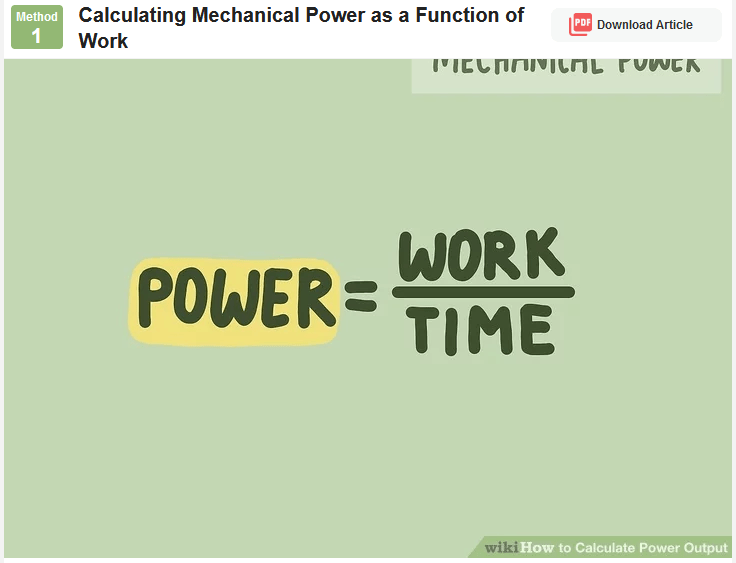
An amount of interaction expressed in the considered amount of time.

Where ever there is power, there is also resistance.
Michel Foucault in the footsteps of Isaac Newton

Michel Foucault used to be a post-Marxist philosopher and sociologist.
As the rest of the Marxists, two of his main subjects were Power and the individual’s (philosopher) duty to put their own convictions into practice. To make a difference, preferably ‘against’ the establishment.

From a Darwinian point of view, Foucault’s insistence that we shouldn’t restrict ourselves to the ‘straight and narrow’ makes perfect sense. The ability to change along with the changes in the environment is paramount to survival. Furthermore, the ability to induce change is paramount to what we call ‘progress’.

On the other hand, life itself demands that we, successive generations of individuals belonging to different evolving species, need to retain a certain congruence.
Succeeding generations share the genetic information needed to preserve the nature of the species.
Species living together evolve in such a manner as to maintain the viability of ‘their’ ecosystem. Or else…

The ‘law of the jungle’ is nothing more than something we believe to have noticed. And then convinced ourselves that we were right when we have formulated our observation in the current form. “The law of the jungle…

“Power” is but a word.
And words have the nasty habit of cloaking more than one meanings. Well, most of them…

“Power” means many.
From a ‘certain amount of work divided by the time in which that work had been performed’ to ‘the influence somebody has over the people happening to live in the vicinity.
And also something very pervasive yet seldom noticed.

Something which ‘permeates everything and “makes us what we are”‘.

Contradictory?
A tool, teleologically yielded by agents, or a fixture of the ‘environment’?
Both a the same time!
Imagine a group of people cavorting in a pool. Each of them using water to splash the others.
Or two ‘teams’ of angry men fighting near a river and using stones retrieved from the riverbed to crack each-others’ skulls.

‘A fixture of the environment’ identified as such and used by agents as a tool with which to further their goals.

Knowledge is power and power creates knowledge...
Both Bacon/Hobbes and Foucault have been right.
By identifying new and increasingly powerful instruments people have transformed knowledge into power while by putting power to work, the powerful have generated new meaning and driven things towards where they wanted them to be.

Having been able to draw from more accrued knowledge (a.k.a. culture) than Hobbes. Foucault is marginally ‘even more right’ than his predecessors.

“People know what they do;
frequently they know why they do what they do;
but what they don’t know is what what they do does.”

This being the explanation for all ‘social arrangements’ where power has been concentrated in a too small number of hands/heads having eventually failed.

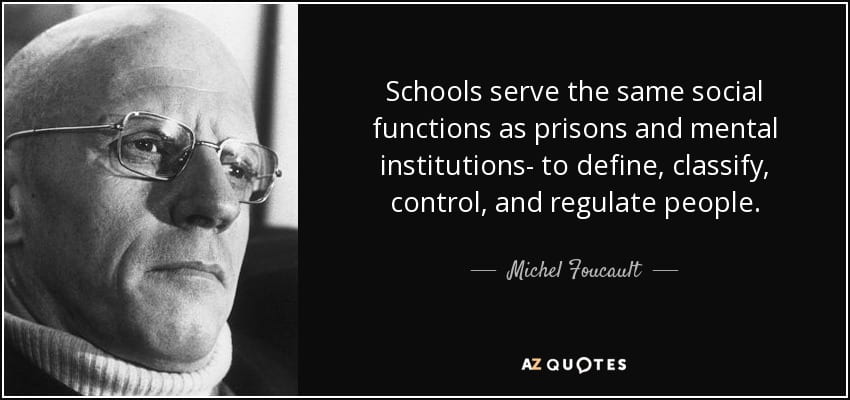
A society where schools and prisons are hard to tell apart – or perceived as such by those who have to spend time in any of them – is sooner rather than later going to reconsider it’s ‘knowledge’ regarding ‘power’. Or else…

Congress shall make no law respecting an establishment of religion,
or prohibiting the free exercise thereof;
or abridging the freedom of speech, or of the press;
or the right of the people peaceably to assemble,
and to petition the Government for a redress of grievances.

Doesn’t make much sense?
Mentioning ‘God’ on money is the first step towards the establishment of an officially sanctioned religion?

Well…

In my previous post I posited that property, the concept, is the stepping stone for social order.
I’ll add to that a simple observation. Whenever too much property gets hoarded by a too small number of people, the community which had allowed that to happen is in great danger.

Same thing here.
We have religion – a social phenomenon – and religions.

We have a certain understanding of the world, shared by the members of a community – which allows the community, as a whole, to behave in a coherent manner. Not that much different from what happens when people use a common language. They can communicate. Same thing happens with people partaking in a religion. They ‘see’ things in a coherent manner. Hence can coordinate their efforts.

And we have religions…
To reach the ‘certain understanding of the world’ I mentioned before, each community had traveled a road. A particular road through the particular circumstances in which each cultural community – currently known as ‘nation’ – had had to build their culture. Their identity.
Some communities had put together certain scenarios to accompany them along this road. To help them make sense of what was happening to them.
Some communities have used more than one scenario during that journey while others use more scenarios simultaneously.

Sociologically speaking, all that matters is social coherence.
All is well as long as the community conserves its ability to function. To survive.
As long as the individuals who compose that community continue to have a common enough understanding of the world in which they live.

For the simple reason that they, we, live in the same world!
And if we, individually or in small ‘gangs’, start behaving as if the world is different for each of us…

The Founding Fathers had a common understanding of the world. They belonged to the same (functional) religion despite belonging to different ‘denominations’. For them, the First Amendment was about reigning in the powers of the Government. They had realized that a Government able to impose a certain religion – a certain scenario – upon the entire community would eventually bring destitution.
The Founding Fathers could not foresee a situation in which a few of us would deny the practical daily realities of this world. Invoking their particular scenario as an argument… As the supreme argument for refusing to see the reality.

The reality as it is.
And as it is seen by a majority of us.

I mentioned earlier that some communities have changed their scenario along their history.
They did it when they have found new meanings. They have seen new things about the reality and they have integrated those new things into their newer scenario.
By changing the scenario they have actually built a new reality.
Societies which have clung to their scenario to the bitter end… are no longer with us.
Societies which have somehow found it in their collective minds to adapt their scenarios to the reality changed by their own efforts continue to survive. To thrive, even.

“Hoarded by a too small number of people” means controlled by a handful of people.
Sometimes coordinated.
As it happens in any dictatorial regime. It doesn’t matter who formally ‘owns’ something if the use of that something is tightly controlled by somebody else.
Furthermore, a certain ideology may end up having a lot of clout without being imposed by an authority. Nevertheless, the fact that an ideology dominates, for a while, makes it so that the community which allows this to happen to experience a dictatorial regime.
For whatever reason, some people were convinced that witches were real. And burned them at the stake.
For whatever reason, a lot of people continue to believe that communism might be a good thing.
For whatever reason, some people continue to believe that they are entitled to determine whether a woman may or may not abort a fetus.

What is the difference between an ideology and a scenario?
The manner in which people relate to it.

Having been told that they were the children of the same God made it possible for the believers to stick together. To act like brothers. To respect each-other. To invent and implement capitalism and democracy. Both relying on trust. On mutual trust and on the freedom of the market. Both the market where goods and services are traded and the public forum. Where ideas are traded…

Being told that only one particular understanding of a certain text/idea/concept is correct some people remove themselves from the ‘general population’. Which ‘general population’ becomes ‘the others’.

‘The others with whom we don’t have anything in common’.

Quite an untenable situation, given the fact that the world is becoming smaller and smaller.

The Polish state broadcaster on Saturday suspended
a television journalist who, during the Olympic Games opening ceremony,
reacted to a performance of John Lennon’s “Imagine” by saying it was a “vision of communism.”

Communism is perfect!
Communism is the perfect lie…

Communism was ‘invented’ by Marx and proposed as the only solution to a real problem.

The problem with communism as a practical solution is that it cannot be put into practice!

Humans, both at individual and social level, need freedom.
Without individual and social freedom, individuals regress to an animalic state and societies fail. Abysmally!

According to Marx, communism was the only solution for what he had perceived as a problem.
According to Marx, when a critical mass of people belonging to the middle class will become destitute, they will accept to be led out of their predicament by ‘the communists’. But since the rest of the society continues to enjoy their perks or to ignore the dangers ‘lurking in the future’, in order to achieve their goal – communism for everybody, including for the unwilling, the communists will have to institute the socialist dictatorship. As a transition phase to communism. A phase in which the unwilling will be convinced.
According to history, no dictatorship – including the socialist – has ever survived. Has ever achieved its goal.

Communism, at least for now, is unattainable. For the simple reason that humankind has not yet learned how to survive dictatorship. How to live without freedom.

On the other hand, communism is very alluring.
For the idealists amongst us…
Communism is a very suitable subject for dreaming. A very nice thing to have, albeit impossible to achieve…

Since the idealists are hard to convince, let me speak to the practical minded amongst you.
John Lennon invited us to dream. To dream a world with ‘no possessions’ and with ‘no need for greed or hunger’. What’s not to like in this dream, except for the fact that it can’t be put in practice?
Hunger is natural. Why eat if not hungry?!?
Greed is also natural.
Who doesn’t like/want more of what they consider to be pleasant?!? The wise amongst us?
How do we become wise? As wise as each of us is able to become…
By interacting with others? By learning from them? And from the consequences of those interactions?

Property – possessions – is a tool.
A tool society uses to make order. If each of us knows what they are able to use for what purpose things go smooth. There’s no need for outside intervention. Granted, this is valid for only as long as each – well, at least most – members of the society have enough to eat, where to sleep and what to protect their backs with.
Without the order construed by the society, collectively, using the tool known as ‘property’, how are the people going to cooperate?!? To interact? To learn, even…

How about we wake up?
Sleep is essential and dreaming a normal part of it.
But we also need some wake up time!
Pun intended…

My first hand experience has driven me to understand:
That ‘government’ – which is nothing but an instrument – will be hijacked whenever ‘the people’ doesn’t pay enough attention. Or has been incapacitated. One way or another.
That communism is just another pretext used by those yearning to hijack the government. And that those people would use any pretext to ‘prime’ the attention of those they want to use in their quest. In their quest to hijack the government.
That democracy – the kind that works – is not about electing the best man for the job. For the simple reason that there’s no way to determine what that person will have to do! The actual things they will be confronted with! In practice, the really useful kind of democracy is that which makes it simple for the people to remove from power/refuse those obviously unfit for the task.

For instance, what’s currently going on in Venezuela. The people tries to remove Maduro from office and the incumbent president refuses to go.

Sounds familiar?
Happened, tentatively, even where democracy was considered ‘too deep rooted to collapse’?

The third thing I understood living under a communist regime was that reproductive rights are very important. That if you want women to have more children, you have to make them ‘feel good’ about it!
That banning abortion will get you nowhere. That banning abortion – and books – will only show your true nature.

I’m vocal about these three things. Including on FB.
Exposing these ideas on FB made it so that I have friends who love Trump and friends who hate Trump.
As a matter of fact and all things considered, I’d describe myself as a Republican rather than as a Democrat. A never-Trumper Republican…

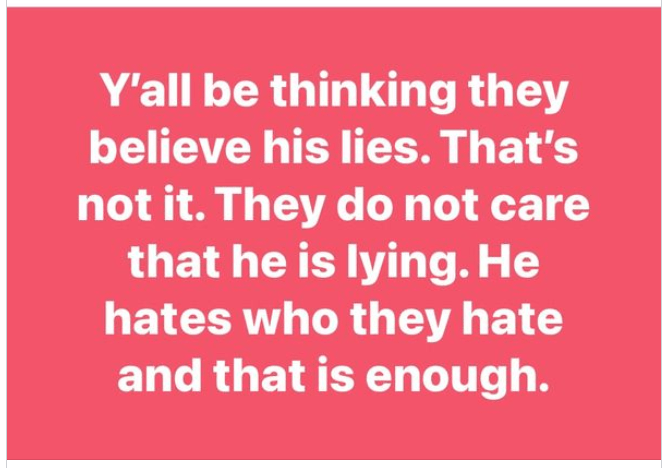
A couple of days ago, the meme above had been shared by a FB friend of mine. A Democrat.
Yesterday it was shared by a Trump die-hard.

Is this strange?

No, not really. We’re all people. Normal people concerned about the future.
The current situation is the consequence of what we’ve done.
Allowed ourselves to be divided into camps.
By those willing to do anything in order to hijack the government. Even if only temporarily.

How many of you cringe when hearing ‘X party/candidate has won the elections’?
Why do we continue to listen when the talking head/would be influencer makes such a horrible mistake?
An electoral process is about us deciding our fate, not a pageant!
Our collective fate!
We, as a community/people, are supposed to be the winners, not any of the candidates/parties…

What is going now in China – and in Russia, for that matter –
has nothing to do with the ‘left’.
With what is understood as “left” in Europe…
Instead, it has many similarities with fascism.
‘Corporatist’ states imbued with revindicative nationalism.

Nassim Nicholas Taleb has introduced the concept of “Skin in the Game“.
In short, it is about the fact that the decisions made by people who do not directly and immediately ‘enjoy’ the consequences of their choices have a high probability of being bad. A phenomenon that is accentuated as bad decisions are not immediately sanctioned by those who suffer.

Taleb’s observation only confirms the fact that all dictatorships/authoritarian regimes have collapsed.
Without exception!
Alternatively, it is very easy to see that democracies ONLY last as for long as they manage to maintain their ‘functionality’. That is, for as long as people can – and undertake – to voice their grievances. And for as long as people listen to each other. Respectfully! In vain, some shout about being ‘hungry’ if nobody listens/cares ..

Returning to the idea of ​​’leadership’, yes, countries are led. By some who consider themselves/are considered to be ‘elite’. ‘Led’ only from the operational point of view, however…
Countries are living things, ‘natural selection’ still has the last word!
Ernst Mayr, a biologist, said that ‘evolution is not about the survival of the fittest, but about the disappearance of those who cannot find their ‘right’ place. The misfits. ‘. That’s right, countries have big problems if/when they don’t manage to take down the ‘misfits’ who happen to have clambered into power.
Why countries don’t succeed to do this in a timely manner? How did they clambered there in the first place…
Everything starts when the popular dissatisfaction reaches a critical level. Which dissatisfaction is engendered when the members of that country no longer care for each-other. When mutual respect has disappeared.

I will conclude by returning to the major difference between communism and fascism.
Both of them appeared in situations when enough dissatisfied people were ‘wandering aimlessly’ while looked down by the rest of the society.
Some low-life profiteers seized the occasion and ‘grabbed the helm’. Profiteers who have been able to operationalize the dissatisfaction festering in the society. And the lack of vision of those who hated the others. I repeat myself, both communism and fascism had appeared when various sections of the society despised, and sometimes hated, the ‘others’.
The minor difference consists in the fact that the proto-communist dissatisfied looked up without having any chance to get there, while the proto-fascist ones wanted to return to where they had once been. The Russian muzhiks dying during WWI versus the unemployed German workers who had just lost WWI.

This being where the difference appears.
The difference which makes it hard to recognize what’s going on now in Russia/China as being a form of fascism.
Both the Russians and the Chinese have a lot better lives now than they had under communist rule. Statistically and from the material point of view! Psychologically speaking…
Those who live in well-established democracies – people who respect each other – have a greater tolerance for ‘insecurity’. Each of them knows they can rely on the others. In that environment, failure is temporary. People try as many times as they need to succeed. Or that’s how it used to be…
In communism, we had learned – the hard way, that one was not allowed to make mistakes.
When Russia and China switched to ‘capitalism’ and people saw what could happen to them – to make mistakes while trying – they had become frightened!
And, at least some of them, chose to return – especially psychologically, in the past. Where they felt safe…

What are electron spins:
Electrons are able to spin on an axis, like how the earth rotates on an axis, but much faster. Electrons can spin in either a clock-wise or counter-clock-wise direction. The spin on an electron is described by the spin quantum number (ms). The value of ms can be either +12 or -12. The +12 is called spin-up and denoted by a ↑, where the -12 is called spin-down and represented by ↓. Sometimes the spin of electrons will be described as angular momentum.
Each orbital of an atom can be occupied by up to two electrons. The two electrons will have opposite spins. This phenomenon was first described in the Pauli exclusion principle which states that each electron in an atom is described by a unique set of quantum numbers, including ms.”

Political spin, in politics, the attempt to control or influence communication in order to deliver one’s preferred message.
Spin is a pejorative term often used in the context of public relations practitioners and political communicators. It is used to refer to the sophisticated selling of a specific message that is heavily biased in favour of one’s own position and that employs maximum management of the media with the intention of maintaining or exerting control over the situation, often implying deception or manipulation.

Electrons ‘work’ in certain ways. Science has recently figured out some of those ways.
The point being that electrons keep to themselves. One spins in its direction, the other spins in the opposite direction and no more than two electrons fit in the same ‘orbital’.

People’s minds also work in ‘certain’ ways.
Not as ‘rigidly’ as the electrons but still ‘useful’ for those who know how to exploit this phenomenon.

By constantly pestering people with certain messages, you get to convince at least some of them.
You get to divide them into (political) camps.
You get them to fight among themselves instead of cooperating.
You get to lead them into battle.
And after the battle has been won, by no matter which side, you get to lead the winning party. At least for a while, but that is another subject.

And all lies, aka as ‘half truths’/alternative facts, start from something real.
Capitalism, for as long as the people remain awake, works. As advertised.
Socialism, on the other hand, doesn’t. It had failed, abysmally, whenever and wherever it had been experimented.

But there’s a caveat.

‘Capitalism’ is a rather clear-cut concept. Property belongs mainly to the individuals and individuals trust each-other enough to do business among themselves. Usually – but not always – capitalism is associated with ‘free market’ and democracy. With freedom to act – inside the confines of the law – and freedom to speak up.
I’ll say this again! For as long as the people remain awake, the market continues to be free and democracy still functions, capitalism works. Sustainably. But only for as long as the people remain awake…

‘Socialism’ is rather vague. From ‘public’ (instead of private) property associated with central planning of the entire society to softer versions which sometimes pay lip service to democracy. The central idea of ‘socialism’ being that society comes first and the individual is only a cog.
Who wants to be a cog? Those who see no alternative… Those who, once in a certain set of circumstances and exposed to a certain propaganda, succumb to the Sirens’ song.

The point being that in order to impose ‘socialism’ to a society you need to lure (enough of) the people into an ‘altered state of consciousness’. To make them believe a certain set of rules. To make them behave according to that set of rules.

The interesting part, as usual, comes at the end.
There is a ‘social arrangement’ where property remains private but where the people behave in a ‘certain’ manner. As if they have been made to believe a ‘certain’ – as in ‘forcefully unified’ – set of rules.

That social arrangement is just as fragile as ‘socialism’.
Again like socialism, it has already been experimented.
Both had failed. Abysmally. History is our witness.

The ‘other’ always failing social arrangement is usually called ‘fascism’.
In Germany, it has been known under the name of ‘NAZIonal socialismus’.

It is a truism that almost any sect, cult, or religion will legislate its creed into law
if it acquires the political power to do so,
and will follow it by suppressing opposition,
subverting all education to seize early the minds of the young,
and by killing, locking up, or driving underground all heretics.
Robert A. Heinlein, Postscript to Revolt in 2100.

Religion is the metaphusical ‘thing’ inside which people who hold a set of tenets to be true are able to build a community.

Religion is sociological phenomenon. Something belonging to the realm studied by those who try to understand how large number of people work together.

Religions – on the other hand – are ‘sets of tenets’ put in practice by various groups of people.
Sets of tenets which survive for as long as they continue to help the people who uphold them in their quest to survive as a group. As a community.

Religion cannot be ‘changed’.
Religion can be studied. May be better understood.
Like physics. You can’t ‘change’ physics! With what? With chemistry? Things don’t work like this. The only thing you may do about physics is to ‘deepen’ your knowledge about it.

Religions can, and sometimes have to, be changed.
By the very people who ‘use’ them to survive.

Since nobody can survive on their own, each and everyone of us needs to belong.
To a community.
To a religion, actually!

And what do people do when they realize survival is impossible in certain conditions?
Die or do something about it, right?

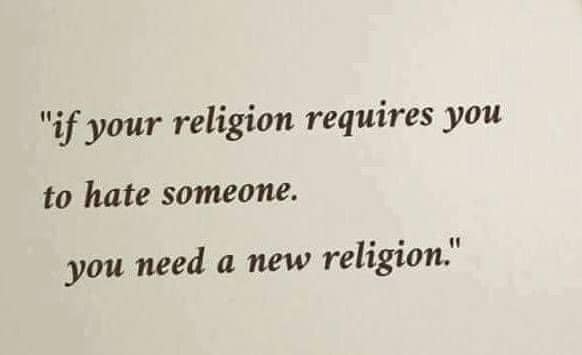
Now, which community can survive based on hate?
It doesn’t matter whether you are asked to hate somebody inside or outside your community.
Whether you hate individually or collectively.
Hating – or despising – somebody blinds you and exhausts you. Puts a huge burden on your back. Focuses your attention so tight that you are no longer able to notice the real dangers.
Those which actually make you less likely to survive.

And this is valid both for you as an individual and for you as a hating community.

Question: Where was God at Auschwitz?
Answer: Where was Man at Auschwitz?

What do Jews think about God not intervening in the Holocaust to save His chosen people?

“An old Jewish Rabbi dies and goes to heaven. He stands in line for a while for his chance to meet God in person.
His turn comes and he steps forward.
God says “Welcome. Do you have any questions for me?”
Rabbi: “No, I just want to tell you a joke about my time in that concentration camp.”
God: “How can you joke about such a thing?”
Rabbi: “I guess you had to be there.” “