Archives for posts with tag: Trust

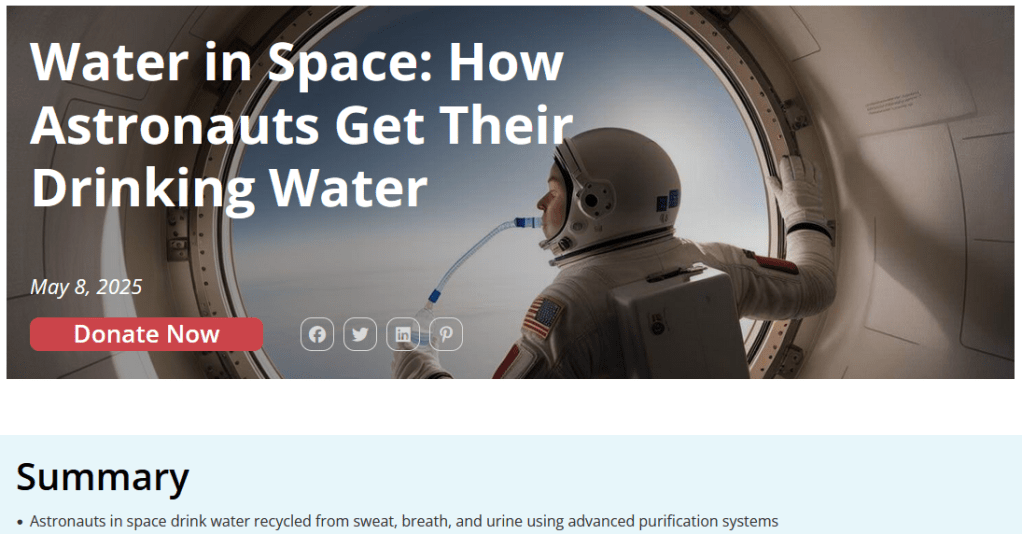
Astronauts don’t bring all their drinking water from Earth.
Instead, they rely on closed-loop water recycling systems
that recover and purify nearly every drop of moisture produced onboard.
That includes urine, sweat, breath vapor, shower water, and humidity from the air.

In space, nothing is wasted.

NASA 1132 77.0F

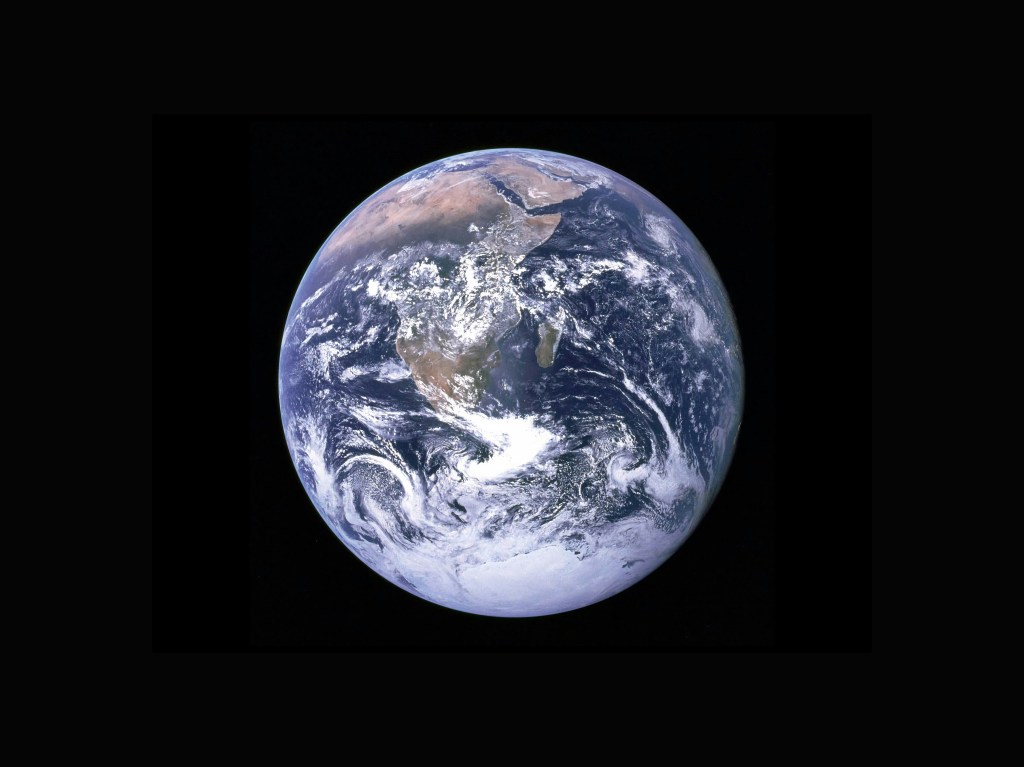
A space station circling the watery pebble we call home…

Cooperation brought us so far.
A majority of us have enough to eat and some of us – albeit very few – get to see the world from above.

Some of us might wonder:
What’s the point of ISS?!?
Wouldn’t that money be better spent feeding the hungry?

The short answer is:
‘We don’t need the ISS money. Feeding the hungry is well within our current possibilities. We just haven’t yet figured out how important this is!’

And here’s the explanation.
We’re no longer able to feed ourselves. Individually…
In order to enjoy our current standard of life, we need to cooperate.
In order to cooperate, we need to trust each-other.

Nobody has asked to be born.
Yet here we are.
La Legion Etrangere goes by “Marche ou Creve”. Keep walking or ‘make way’.
Now that we’ve been born, how about we make the best of it?

Those who get to see the world from above did have a say about the whole thing.
Nobody gets there against their wishes.
And they know what they’re signing for. Not everything – some of them don’t get to get there – but they have a fair image of what’s gonna happen to them. Including the facts about the water they’ll be drinking while enjoying the view.

Maybe it’s time for the rest of us to understand the limited nature of the Earth itself.
Not as limited as the ISS but I’m sure you understand my drift.

The astronauts trust each-other.

And they trust the rest of us.
Those who have made it possible for them to go there.


We, the rest, need to learn the trick.
How to actively, agentically, build trust 2.0.

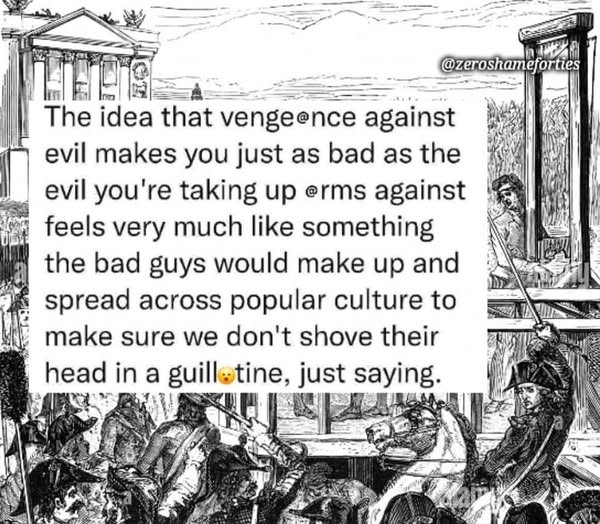
It’s the ‘vengeance’ part which spoils the whole thing.

Evil is to be resisted, of course, only this is better done in a sustainable manner.

WWI was won for nothing. The vengeance part in the Versailles ‘peace process’ had spoiled the whole thing.
Hence the war had to be won again.
During the process, the winners had become wiser. Some of them, at least.
The peace process had been inclusive this time.
The North Atlantic region, the end result of that peace process – no scare marks needed this time, is one the most successful stories of human development.

He was my friend. We trusted each-other.

He was huge. 150 pounds of muscle. Pitch black.
Some people feared him. Specially when seeing him for the first time.

He had earned the respect of many. Canine friends in the park. People who had come in contact with him.

Respect is a tricky thing.

Fear is simple. Not that different from love. Somewhat contrary…
Trust is simplish. After enough time spent together, you learn whether you can trust the other.
Respect, on the other hand….

You cannot respect something/somebody which/whom you find repulsive.

You can ‘trust’ a bully to make your life miserable but you cannot respect them.

Do you fear a bully?
Not necessarily. You don’t need fear to avoid a danger. You only need to understand what’s going on.

Then what is ‘respect’?
Something you learn about. While trust is something you learn to.
Trust is something to be rather felt while respect is something you experience with your mind. First and foremost.

Furthermore, nobody fakes trust. Unless presented as ‘respect’.

Why have I chosen an animal to illustrate this post?
Because ‘fear’ is what drives awareness. Fuels conscience. And, as far as evidence suggests, it is widely felt in the animal kingdom.
Our family. Our only home in this world!

Our children have to make do
with the consequences of what we’ve cooked up.

The happier amongst us live in states run as liberal democracies.
Most countries on this planet define themselves, constitutionally speaking, as being democratic.
And except for a very few, all the others behave in an apparently capitalistic manner. Some under a free(ish) market and the rest under a ‘mixed’ regime.

Since we’re speaking about the ‘current’ socioeconomic arrangement, which is in flux, we still don’t have a name for it.
We do have a name, though, for the previous one. Feudalism.
And for the one before that. Slavery.
Or, to use a modern term, all the previous regimes might be bundled together as ‘authoritarian-isms’. Regimes where authority flows from top to bottom and where feed back comes only in the form of revolution. Coup d’etat. Dynastic change… and other euphemisms.

History suggests, and those wise enough to notice implement this lesson where ever possible, that all authoritarian regimes crumble under their own weight.
While liberal democracies tend to survive for as long as they maintain their liberal nature. Their freedom!

What’s the difference between liberal and ‘illiberal’ democracies?

“It’s not who votes that counts
but who counts the votes”

Josef Stalin

Now, speaking seriously – as Stalin style ‘popular democracies’ have crumbled more than 30 years ago, following all other ’empires’ which no longer exist, there is a difference between liberal, a.k.a. functional, and make-belief democracy.
People maintaining a liberally democratic regime take their job seriously.
They speak up their minds. Hence the problems become known.
They listen what the others have to say. Hence the people are not only aware of problems as they arise but people also have the opportunity to understand the nature of those problems.
They respect each-other. Hence they treat all problems, affecting all the people, in a fair manner. Thus maintaining the natural stability of the social arrangement.

It goes without saying that in a liberal democracy everybody can vote and each vote is counted…

An illiberal democracy, on the other hand, is where things are more complicated.
The most illiberal situation is that where it doesn’t matter whether people vote or not. The results have been counted beforehand. The latest example being Venezuela 2024.
A more ‘subtle’ picture is offered by, for example, Hungary. As a matter of fact, it was Viktor Orban, the Hungarian “dictator“, the one who had coined the very notion of “illiberal democracy“. A revamped Constitutional Court, some Constitutional Amends, “emaciated checks and balances“, tight controls imposed over the media

What about the ‘capitalist’ part of the current arrangement?
I’m afraid we waddle in confusion here.
We no longer make any distinction between ‘capitalism’ seen as ‘hoarding money as a sport’, and ‘using accumulated fiscal deposits as resources for building something new’. New and useful, of course…

‘Fiscal deposits’ – hoarded fiduciary money – have been around since coins have been minted. And IOU notes have been written. But capitalism, as Adam Smith understood it, wasn’t born yet at that time.

Under authoritarian regimes, having a lot of money does offer some leverage. But no immunity!
Consider what had happened to the Templar Monks when France’s Philip the IV-th coveted their money. Or the fate of the richest Chinese, after he had been perceived as being too cocky by the communist regime…
Whenever ‘capitalism’ takes place in liberally democratic settings, the market can be described as being ‘free’. Each economic agent – buyer or seller – decides in an autonomous manner. Takes their own advice and has to obey nobody’s orders. Has to obey the law but doesn’t have to abide to any whims.

Putting two and two together, for a society to remain functional in the longer run, the most importing thing is the ‘free market’.
The key word here being ‘free’. The meaning attached to the word and the understanding people have about the concept.
There is ‘free’ as in ‘free for all’ and free as in ‘freedom under the law’.
‘Free for all’, also known as ‘the law of the jungle’, inevitably ends up as a ‘dog eat dog’ situation while freedom under the law remains functional for as long as The People bring the law up to speed whenever needed.
The ‘market’ part is a lot simpler.
A ‘place’, an ‘open’ space, where both ideas and wares are exposed and exchanged. Amongst those who come to the market, to the agora, to solve their problems. To fulfill their needs.

As long as that ‘space’ remains free – as in ‘open’ for all – most people are able to make ends meet. The situation remains stable. For everybody to enjoy.
As soon as one ‘operator’ starts to ‘corner the market’ – using any of the already known ‘technologies’, the most popular being the old fashioned lie – the situation becomes potentially dangerous.

Whenever ‘The People’ have a sound understanding of what freedom really means, the bullies are ejected from the system. The ‘antitrust’ legislation is put to work and the budding ‘monopolies’ are dismantled before real harm was done.
If not… If von Papen hadn’t helped Hitler to rise into power and if Chamberlain hadn’t led the free world into submission…
Had we not threaded so lightly when Putin snatched Crimea back in 2014….

https://carnegieendowment.org/posts/2017/03/revisiting-the-2014-annexation-of-crimea?lang=en

“he said abortion bans early in pregnancy went too far,
suggesting Republican candidates needed to be moderate enough on the issue
to “win elections”.”

The point I’m trying to make here being that what candidates say matters.
That we really need to see through their words.
Whether they are interested in solving issues – and which of them – or they simply want to accede to power.

Doesn’t matter? As long as they keep their promises?

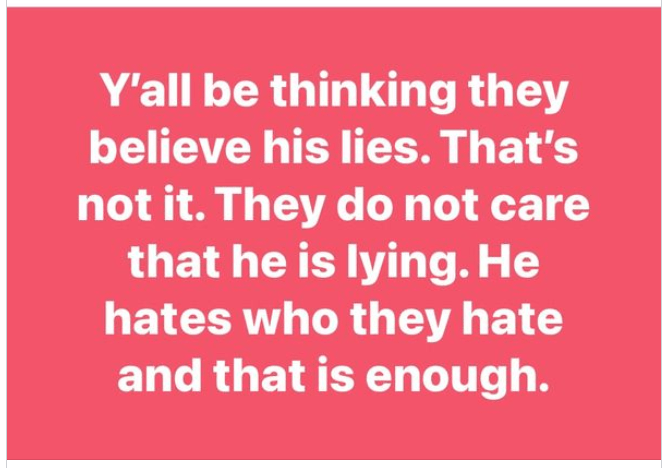
Do you really expect a lying bully to keep up with their words? To fulfill their promises?
Are you comfortable with ‘hiring’ a lying bully to mind the future of your children?

Congress shall make no law respecting an establishment of religion,
or prohibiting the free exercise thereof;
or abridging the freedom of speech, or of the press;
or the right of the people peaceably to assemble,
and to petition the Government for a redress of grievances.

Doesn’t make much sense?
Mentioning ‘God’ on money is the first step towards the establishment of an officially sanctioned religion?

Well…

In my previous post I posited that property, the concept, is the stepping stone for social order.
I’ll add to that a simple observation. Whenever too much property gets hoarded by a too small number of people, the community which had allowed that to happen is in great danger.

Same thing here.
We have religion – a social phenomenon – and religions.

We have a certain understanding of the world, shared by the members of a community – which allows the community, as a whole, to behave in a coherent manner. Not that much different from what happens when people use a common language. They can communicate. Same thing happens with people partaking in a religion. They ‘see’ things in a coherent manner. Hence can coordinate their efforts.

And we have religions…
To reach the ‘certain understanding of the world’ I mentioned before, each community had traveled a road. A particular road through the particular circumstances in which each cultural community – currently known as ‘nation’ – had had to build their culture. Their identity.
Some communities had put together certain scenarios to accompany them along this road. To help them make sense of what was happening to them.
Some communities have used more than one scenario during that journey while others use more scenarios simultaneously.

Sociologically speaking, all that matters is social coherence.
All is well as long as the community conserves its ability to function. To survive.
As long as the individuals who compose that community continue to have a common enough understanding of the world in which they live.

For the simple reason that they, we, live in the same world!
And if we, individually or in small ‘gangs’, start behaving as if the world is different for each of us…

The Founding Fathers had a common understanding of the world. They belonged to the same (functional) religion despite belonging to different ‘denominations’. For them, the First Amendment was about reigning in the powers of the Government. They had realized that a Government able to impose a certain religion – a certain scenario – upon the entire community would eventually bring destitution.
The Founding Fathers could not foresee a situation in which a few of us would deny the practical daily realities of this world. Invoking their particular scenario as an argument… As the supreme argument for refusing to see the reality.

The reality as it is.
And as it is seen by a majority of us.

I mentioned earlier that some communities have changed their scenario along their history.
They did it when they have found new meanings. They have seen new things about the reality and they have integrated those new things into their newer scenario.
By changing the scenario they have actually built a new reality.
Societies which have clung to their scenario to the bitter end… are no longer with us.
Societies which have somehow found it in their collective minds to adapt their scenarios to the reality changed by their own efforts continue to survive. To thrive, even.

“Hoarded by a too small number of people” means controlled by a handful of people.
Sometimes coordinated.
As it happens in any dictatorial regime. It doesn’t matter who formally ‘owns’ something if the use of that something is tightly controlled by somebody else.
Furthermore, a certain ideology may end up having a lot of clout without being imposed by an authority. Nevertheless, the fact that an ideology dominates, for a while, makes it so that the community which allows this to happen to experience a dictatorial regime.
For whatever reason, some people were convinced that witches were real. And burned them at the stake.
For whatever reason, a lot of people continue to believe that communism might be a good thing.
For whatever reason, some people continue to believe that they are entitled to determine whether a woman may or may not abort a fetus.

What is the difference between an ideology and a scenario?
The manner in which people relate to it.

Having been told that they were the children of the same God made it possible for the believers to stick together. To act like brothers. To respect each-other. To invent and implement capitalism and democracy. Both relying on trust. On mutual trust and on the freedom of the market. Both the market where goods and services are traded and the public forum. Where ideas are traded…

Being told that only one particular understanding of a certain text/idea/concept is correct some people remove themselves from the ‘general population’. Which ‘general population’ becomes ‘the others’.

‘The others with whom we don’t have anything in common’.

Quite an untenable situation, given the fact that the world is becoming smaller and smaller.

Each of us expects the others to behave rationally.
While each of us rationalizes their own biases.
And considers this to be normal!

Not so long ago – evolutionary speaking, things were free. As in ‘up for grabs’.
Our not so distant forefathers fed and clothed themselves by picking ‘things’ from nature.

By talking to each other they had become conscious human beings.
Then came up with the notion of property.

‘If I/we have this thing, you cannot have it too’.

Using this notion, they introduced some order unto the social stage.
Some things, albeit fewer and fewer, remained free/up for grabs while the rest – specially ‘the things of interest’ had become private.

Entertaining the notion of property means that individuals are able to link an object to its owner.
This link is a piece of information.
Discussing and remembering who owns what, our forefathers realized that information is important. Not only the information regarding the link between owners and their property but also information in general. Whatever ‘useful’ things had been learned, remembered and passed around.
Thus information became ‘a thing’.

The order created by the communities using the concept of property and by actively circulating information among the members had become the premise for those communities to thrive.

Somewhat naturally, the members of those communities had reached the conviction that:
Property is good. And that more property is better.
Old people are precious. For the simple reason that they deposit what had happened. By sharing their memories, old people make it so that the younger ones don’t need to learn again and again.

Since property and remembered information were good for the community, the communities using them developed faster and had a way better survival rate than those who didn’t. For whatever reasons.

Since in reality people rationalize rather than think rationally, they have reached the conclusion that the rich and old people were the ultimate cause for the well being of the community.
The individuals, not the modus operandi of the community.

“To use rules or laws to get what you want in an unfair but legal way”
From Longman Dictionary of Contemporary English

Having a name for ‘it’ means that we’re aware of it’s existence.
We’re still using it, though.
It is wise?

We’re not the first ones to use the method.
The HIV virus has somehow ‘learned’ to hide itself inside our immune system.
Not only to ‘bend the rules of life’ – all viruses do that for a living – but to bend the very rules of immunity!
But we are the first ones to use ‘it’ knowingly!

Not fully aware of the consequences but nevertheless on purpose!

How did we get here?

By ‘gaming’ the laws of nature!
Our ancestors believed flying was reserved for birds. By making good use of what we’ve learned about the ‘system’, we’ve been able to overcome many of our limitations.
We’ve also overcame our common sense…

We forget our planet is limited.
Vast but still limited.
We also tend to forget that our knowledge/understanding is also limited.
We’ve become so confident in our ability to game the system that we tend to ignore the two facts I’ve just mentioned.

Even worse, we’ve given up ‘the brotherhood of man’.
We’ve become humans by talking to each-other. By hunting together. By tilling the earth together.
Then we’ve started to fight. For the same earth we’ve been tilling together…
We’ve invented ‘capitalism’. A manner of doing business which relies mostly on trust. On the rational expectation that the partners will rather fulfill their respective parts of the deal than becoming known as fraudsters.
About the same time, we’ve also invented ‘democracy’. A social arrangement relying on mutual respect.

And we “saw that it was good“.
It lasted for a while…

Recently, capitalism has been gamed into a relentless hunt for profit.
Currently, democracy is being played with alternative facts.

We’re becoming viruses!
Some of us, anyway.


What happened to our capacity to compromise?
When did life become nothing but a zero sum game?

Our capacity to compromise – in the good sense of the word – has diminished when religion – the thing which keeps us together – has been split into religions.

And it completely drained out when we’ve become too confident in our ability to think things over.

We’re so confident now that our solution/decision is not only better than any other but the only one possible that we’re no longer capable of considering a compromise.

While religion taught us to respect and trust each-other, religions have split us into factions.
Our intellectual arrogance has done the rest.

Regardless of our individual beliefs,
it would be rather naive
to consider there’s nothing but the here and now.
Internet wisdom

What have you done since graduating into awareness?

Worrying about tomorrow?

Welcome to being a human.
And how do you assuage your fear?

Put your faith into an exterior agent?
Trust your fellow humans to bail you out if necessary?
Make sure you’ll never depend on anybody else but you?

Each of these three strategies presumes differently about what happens outside yourself.

The more responsibility you transfer to the outside agent – currently known as God in certain circles – the more serene your life. You don’t have to change anything except putting your faith in the outside agent of your choice. If that works for you. Only by transferring the ultimate responsibility to ‘the outside’, no matter how hard you continue to do whatever you were doing before the epiphany, you embrace the fact that your fate is determined outside of you.
If you expect your mates to do ‘the right’ thing, you must prime them first. You have to behave in a manner conducive to ‘community’. You and those around you. The community itself has to behave as a community.
To make sure you’ll never depend on anybody else, you need to know everything that might happen to you. In fact, you have to know everything.

Each of these three strategies, or any combination thereof, mandates that there are things happening beyond here and now. Beyond what each of us might know and control.

Are there any other alternatives?

Is this the epitome of ‘click bait’?

Then why do I bother with it?

Because it illustrates perfectly the prevailing trend. How things change because of us.
How we – collectively, change the world around us.

At first, click-bait had been used by ‘fraudsters’. ‘Publishers’ who used to cram completely useless information under some very ‘enticing’ titles.


Now… you may say that the information about our galaxy – the Milky Way, being on a collision course with Andromeda – our closest galactic neighbor, is also useless. Maybe… After all, that will only happen after 4 billion years had already passed… Anyway, this time, the targeted public is rather different than before. More ‘scientifically minded’…
Which proves my point.
That using click-bait has become a lot more acceptable.

The new normal…

Which brings me to the next question.
How many of you are going to watch this?

https://fb.watch/eZRdlM0nNq/

Want to find more?
To figure out, on your own, why this trend worries me?

Read this. Well worth your time, I promise.

https://www.wsj.com/articles/how-to-trick-the-guilty-and-gullible-into-revealing-themselves-1399680248