And God said… . . And God saw every thing that he had made, and, behold, it was very good.
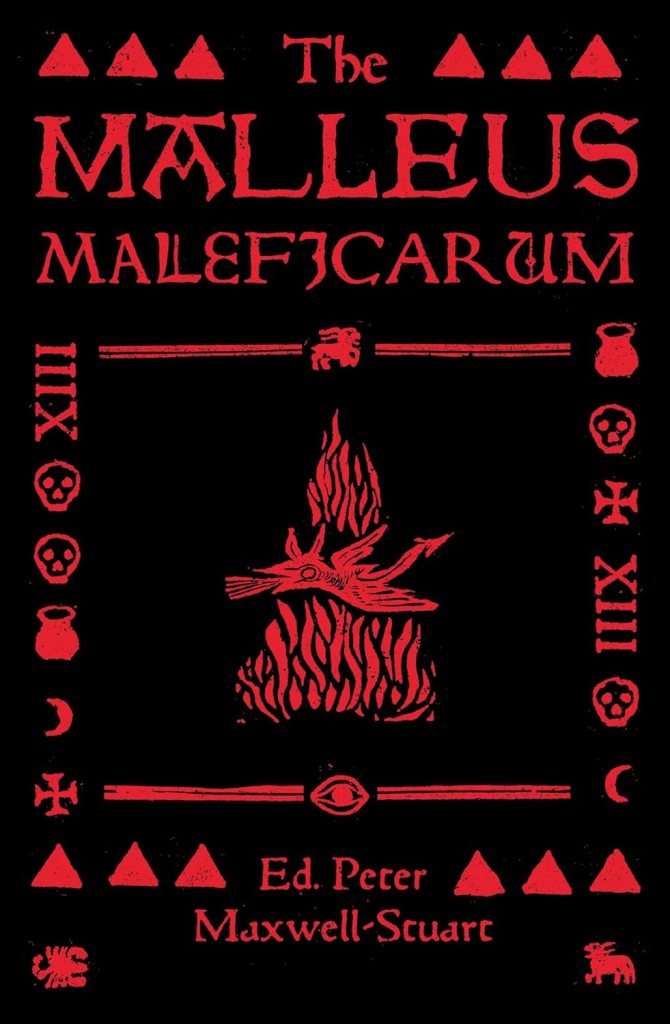
“Investigating Witch Trials In 1487, the zealous inquisitor Heinrich Kramer wrote a treatise that would have a remarkable influence on European history. Blaming women for his own lust, and frustrated by official complacency before what he saw as a monstrous spiritual menace, Kramer penned a practical guide to aid law officers in the identification and prosecution of witches. Fusing theology, lurid anecdotes and advice for those engaged in combating sorcery, The Malleus Maleficarum transports the reader into the dark heart of medieval belief – where fear and the supernatural converged in a gripping struggle for understanding and control. The book led to the burning of numerous heretics and ‘witches’ and had a lasting impact on the popular image of witchcraft.”
Basically, both – the alchemists as well as the witches – attempted the same thing. To perform/accomplish tasks which seemed impossible to the lay people. Witches were burned when caught by the ‘wrong people’ while the alchemists were feted.
Is there any sense to be made out of all this?!?
Well, let me go back. To the ‘genetic’ moment. When all ‘this’ started. As I’ve already mentioned, in my blog, I’m an agnostic. I don’t need a god as an explanation for anything. But I don’t know, as in ‘I can’t be sure’, whether any of this has been decisively influenced by a ‘deus ex-machina’. Hence my agnosticism. Furthermore, I’m absolutely convinced that the God worshiped by people is real. Made real by their belief! Now, anyway you look at the whole thing – believer, agnostic or even atheist – there is no denying that the Bible is choke full of information. Of sense!
‘But… but… how can you say something like that!?! What sense can you find in a book that inspired people to burn other people?’
Spot on, my dear Watson. That’s exactly the question I’ve been asking myself! What happened during those fifteen centuries. Between writing the Bible, as a collective work, and Heinrich Kramer writing Malleus Maleficarum. Between Christians building a certain culture and some people, claiming to belong to the same ‘denomination’, starting to burn witches, but not alchemists, at the stake. Stay tuned.
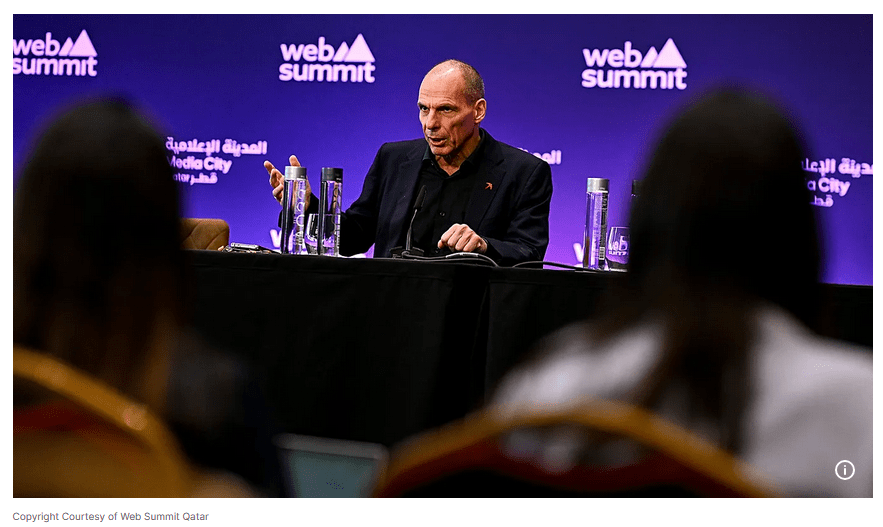
“Capitalism has already ended and we don’t even know it” is, helas, true. “Techno-feudalism” is, indeed, a pertinent description of the current state of affairs. Any further than that…
Varoufakis is ‘long’ on money. He’s so heavily invested in this concept that he has somewhat lost his bearings.
For him, capitalism had started to die when public money has been replaced with the private kind. When people have started to replace national currencies with encrypted ones. I’m afraid this is a huge misunderstanding. ‘Real’ money being replaced with the ‘fiat’ kind was a symptom, not a cause!
I hear you! For purists, ‘commodity money’ is the real thing while fiat money is printed by the government. Hence ‘commodity money’ is considered to have ‘intrinsic’ value while fiat money is seen as being less valuable than the paper it’s printed on. For some of those purists, bit-coin – and other equivalent coins – are real. In the sense that their valuation comes from the market. ‘Bit-coin is valuable because people keep buying it’. As if people buying gold, and accepting dollars in exchange for what they have to sell, is not the very same thing! Value being conferred by the free market… The way I see it, real money is the kind people trust to use while fiat money is the kind which is ‘made’ by somebody. These two are not mutually exclusive??? But why should they?!?
Back to Varoufakis’ confusion. Which is a continuation of that between capitalism and the primitive accumulation of money. Crassus, a very wealthy contemporary of Caesar, was loaded. Full of money. The real kind… Loads and loads of gold coins. Did that, Crassus owning an insane amount of money, made him an early capitalist?!?
Capitalism, the one hailed by Adam Smith, is about trust, not about money! We became capitalists the moment we started doing business with each other. When when trade was no longer sanctioned by the lord. When commerce no longer had to be ‘protected’ by the Mafia which previously controlled the territory. As was the case during the feudal era. Hence the insistence of those who know what they are talking about when it comes to market freedom! I repeat, capitalism began when market participants had enough mutual trust to trade directly. To deal with their partners without any intervention or mediation from the the powerful of the day.
And yes, if we look from this angle, capitalism has disappeared. People, those who populate the market, have lost both their trust and their freedom. The vast majority of them are obsessed with profit. And the obsessed are anything but free! Meanwhile none of them trust their business partners anymore. In earnest… People continue to trade because they rationalize their greed. Consider that chasing the fast buck is the rational thing to do and are convinced everybody in the market are equally ‘reasonable’. That since all of them chase the same thing, all of them will act rationally. Hence predictably…
Which, as we innocently discover periodically, is nothing but horse manure. Bull-shit. Pure and unadulterated crap!
Crassus wasn’t chasing even more money! He wanted power…
Another fallacy we keep entertaining is that ‘people respect the law’. And are going to fulfill ‘the contract’, without any outside intervention. We’ve grown accustomed with contracts being fulfilled, in good faith, during the ‘good old days’. When a handshake was enough. Nowadays… contracts are fulfilled only because the parties don’t want trouble. And this is not at all the same thing!
Unfortunately, Varoufakis is right. Capitalism is dying. But I’m afraid Varoufakis still has no clue about what capitalism really is! Used to be…
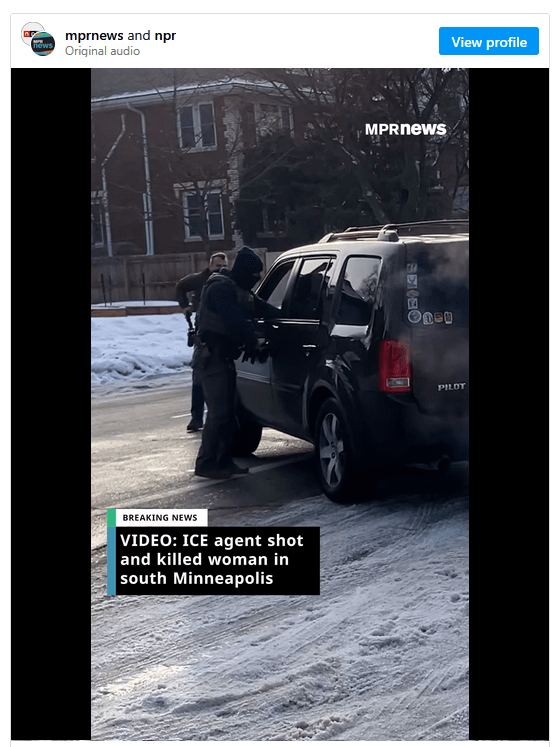
People living in the US have been told that some of them don’t belong there. That if and when those who do not will have been removed, the rest will resume their previously ‘great’ lives.
Things – every’thing’, actually – are/is relative. Relative to the agent evaluating each of those things. Accordin’ to Einstein, that is. He was the one who taught us to use whatever reference frame suits our needs.
Do you reckon anybody wasted any time or energy thinking about freedom before the advent of slavery? Me neither. Forget about the fact that, in those times, people didn’t have much time left for abstract thinking. Finding food and enjoying it with friends kind of drains your energy when you have to do it yourself… The point being that, in those times, everybody was free. Hence ‘had’ nothing to compare freedom with… No lack of freedom, no reason to speak/think about it. No reason to notice the thing and no reason to coin the concept…
Hunter-gatherers have no use for ‘property’. Personal objects are just that and everything else either belongs to Mother Nature or to the entire group. And this goes without saying. Or thinking about it. People share everything as a matter of fact and common sense discourages the others to use anybody’s personal objects unless in an emergency. Agriculture – either herding animals or growing crops – changed everything. Property, both as a concept and as an everyday manner of dealing with ‘things’, was invented and introduced in daily use. Productivity increased dramatically. Which made it possible for people to have ‘spare time’. For thinking. And for planning…
‘The neighbors have better crops. Let’s go take some for us. And while we’re at it, let’s take some of their women too’. The first slave was probably the first person to long for freedom…
‘Cheap’ slave work coupled with the increased social productivity induced by a markedly improved technology for obtaining food meant that some individuals could afford the luxury of thinking. The Ancient Athenians had both slaves and philosophers. The slaves did whatever was needed to be done while some of the ‘beneficiaries’ had enough time, and energy, to let their minds ‘free’. To roam free in search for meaning. To coin the concept and to explore freedom…
Relative “To whom”? To us! We’re responsible for freedom and freedom is relative to us. We have invented it. We’re the ones using it. In the sense that we’re the ones who need to notice that freer communities fare a lot better than the less free.
So freedom is relative both to those thinking about it and to each particular community. To each particular community which puts freedom into practice!
The answer you get depends on the question you try to answer…
“To see Steve Lazarides, Banksy’s former manager, tag his creative genius by staging an unsanctioned exhibit, complete with a souvenir shop, is the greed Banksy graffitied against,” Chapman responded by email. “I can only await his response – and I envision a large mural featuring a rat with a human face.”
‘Art’s uneasy alliance with capitalism’… ‘the greed Bansky graffitied against’!
I gather from Chapman’s words that Bansky has a grudge with greed, not necessarily with capitalism itself. And I wonder how ‘art’ and ‘capitalism’ may ever enter into an alliance. However uneasy…
Both art and capitalism are, first and foremost, concepts. On a more practical level, both can be construed as ‘places’. Art is the place where people so inclined ‘do their thing’. Capitalism is a social arrangement. The current manner in which most social organisms – nations, in modern parlance – run their economies. Organize the constant exchange between them, nations, and their environment. As well as the economic relations which exist between the individual members of each society.
OK, artists do need to eat… to wear clothes, to use a shelter… Artists are involved in the economic life of the society at large. So artists do have capitalist ties with the rest of the world. Organic ties, not agentic ones. The artists’ need to eat does not depend on their will. Only their greed, in as much as they allow that sentiment to manifest itself.
Which brings us back to Bansky… I understand from Chapman’s words that Bansky has a grudge against greed! Which is fine by me…
Some other people, quite a few, have developed a grudge against capitalism itself. Google ‘anti capitalist art’. Click ‘images’. Most of the ideas present there are valid. Many of those yielding a lot of power, a lot of ‘capitalist power’, do behave badly. Are too greedy. Disrespectful. Towards other people and towards the environment. But should we toss the baby out with the dirty bath water?
Consequences. We are the consequences of the decisions we take. Of the choices we make.
As biological organisms, our fate, both individually and as a species, depends on whether circumstances remain habitable. Whether we can continue to live.
As rational humans, our individual destinies depend on luck, genes and on our ability to make good decisions.
‘Good’ decisions! The tricky part being that nobody knows in advance the consequences of our decisions… whether a decision we consider to be good – when we take it – will remain so after its consequences will have been evaluated. After enough time will have passed for the full gamut of consequences to unfold…
To make things easier, humanity has developed ‘culture’. Layered information which has morphed into ‘Weltanshauung’. Experience distilled into knowledge and accrued in time. Advice we no longer need to ask, only to remember. When in a hurry, we do as we always used to. Back to the tried and tested.
But there’s a small problem here. The cultural norms might have been ‘tried and tested’, hence ‘right’, but are we applying the appropriate norm in the given circumstances? Have we interpreted whatever information we have in the right way?
Ukraine is at war. Resisting aggression against all odds. Despite some of those in power attempting to access ‘undeserved rewards’. Unfortunately, war profiteering and corruption are as old as civilization…
“Earlier this week, NABU (National Anti-Corruption Bureau of Ukraine) and SAPO (Specialized Anti-Corruption Prosecutor’s Office) said top company officials demanded illicit commissions of 10-15% from contractors. The corruption allegations center on contracts linked to Energoatom, which provides most of Ukraine’s electricity. According to investigators, an organized criminal group laundered the funds through an office in central Kyiv linked to the family of former lawmaker and suspected traitor Andriy Derkach. Among those named in the case was then-Energy Minister and later Justice Minister Herman Halushchenko.” https://www.kyivpost.com/post/64185
How do we choose to evaluate the current development?
As yet another step in the right direction? A country at war cleaning up its act?
Or…
Further more, what will we choose to DO?… after we will have chosen an interpretation to fit our ‘general disposition’… ’cause, unfortunately again, this is how we tend to evaluate things! Specially when we’re not diligent enough. Allow our ‘general disposition’ to take over and permit our reason to cowardly back off …
Help Ukraine to defend itself? And the rest of Europe? Freedom in general! Or give up? On Ukraine, on cultural norms which seemed set in stone until not so long ago…
Heidegger, the philosopher, has an interesting take on this ‘truth’ thing. Nobody does, and never will, know everything about anything. Lest of all about ‘everything’. Hence nobody has access to a ‘true’ piece of knowledge. Furthermore, ‘truth’ is about communication. About a message. An expressed piece of knowledge. And since there is no language precise enough to allow a communicator to cram into a message all they want to express… nor precise enough to allow a ‘reader’ to figure out everything the communicator had attempted to express… Which drives Heidegger to posit that truth depends on intent. On a communicator sharing honestly everything they know about a subject. On a communicator allowing the receiver of the message to reach their own conclusion.
I ended my previous post by mentioning the ‘fairy tales’ our ancestors have spun in order to ease their ‘passage into the great unknown’. Thus making their lives bearable. Enjoyable, even. In those times, ‘the truth’ – the unconcealed truth, in Heidegger’s terms – was that nothing made sense. That life itself was a meaningless joke. As a Romanian saying goes, ‘life resembles a hair from the private parts of the body. Short and full of shit…’ I’m not going to make a historical inventory of the various fairy tales the humankind has used to lullaby itself into accepting life as it used to be. Enough to say that they, the fairy tales, did the trick. Helped us reach the present stage.
I’m going to make a break here. And notice that any, or even all, of those fairy tales might, eventually, be proven as being true. No matter how improbable this might be. I’m not an atheist. I just don’t know whether a god, or more, do exist. What I do know is that, by their own admission, all of those stories have been spun by people. Each of those stories is about what the original ‘spinner’ saw fit to communicate on the subject. And the better stories, those who made more sense in the particular circumstances where they had survived, made it up to the present. Helped the respective believers to survive. Helped some of them to thrive, even.
Now, today, we need to make up our minds. Accept that our consciences are works in progress. That consciousness is a space caught up in an accelerating evolution. A cauldron of sorts. That each of those ‘fairy tales’ was useful in its own time. That the need to mitigate our cognitive dissonances continues to exist. That we’re responsible for our future. Nothing new here. And that there’s no one to save us. Not now. Or after we will have fucked up everything.
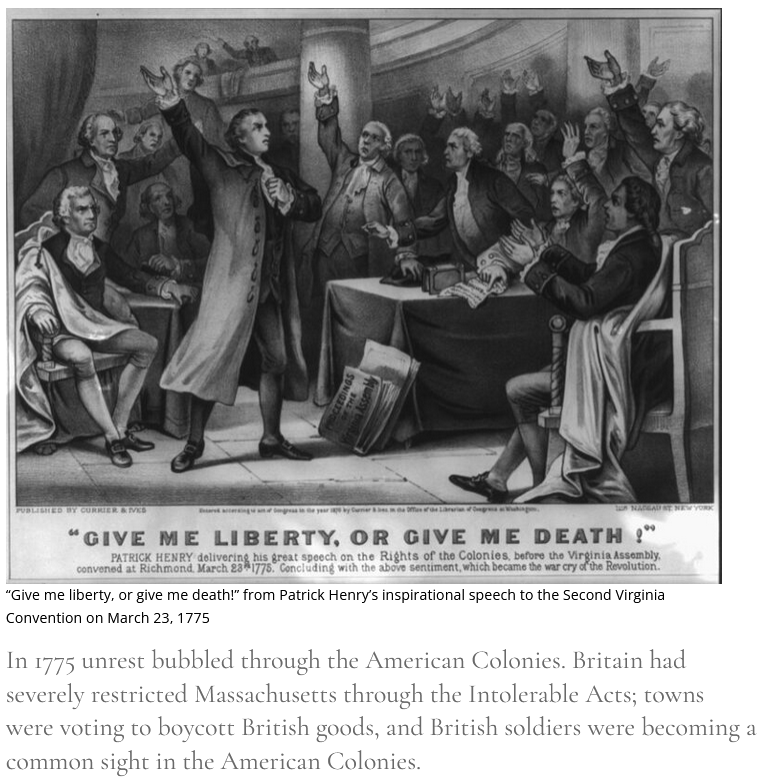
The ‘Truth’ being that ‘Give me Liberty or give me Death’ was a very effective call at arms. On the face of it, on the ‘logical front’, it doesn’t make much sense. ‘Death’ was, and continues to be, inexorable. Why, for the sake of ‘liberty’, jeopardize the few precious moments left to be experienced as a living creature? Specially when, according to the lore considered valid when Patrick Henry had uttered the words, a second life was going to open just ‘after’… ‘The Devil is in the details’! The belief in the ‘after-world’ works both ways. It encourages the freedom-fighters to take risks – believing they will get their reward ‘afterwards’ – and encourages the prudent to endure. Believing that they will get also get their reward ‘afterwards’.
Now, that I’ve ‘spilled it out’, I must confess that I’ve successfully convinced myself. I’ve rationalized, according to my standards, my belief that it’s our responsibility. To understand and accept that we’re responsible for the consequences we’re leaving for those coming after us. I don’t know what we should do. I’m no prophet. But I do know what we shouldn’t. You do too!
I argued in the previous two posts that we, humans, live in a three layered reality. At the intersection of three spaces.
One driven by a ‘primeval’ set of rules and inhabited by Democritus’ atoms. The living one. Inhabited by individual living organisms, ‘suffering’ the consequences of evolution and subject to laws pertaining to the biological realm. And what we call ‘reality’. A space opened up by our self-awareness. Inhabited by our individual consciences and furnished with culture. I prefer to call that space ‘consciousness’.
These three spaces have a few things in common. The actual, physical, place where they exist. The primeval set of rules. Which is valid for all those inhabiting these/this mingled space(s). The chemistry going on inside a living organism is no different from that happening in the inanimate world and the body of a fully conscious human continues to be pulled by gravity. Despite the fact that conscious human beings have have been building, and flying, airplanes for quite a while now. And a few ‘principles’ which ‘transgress’ from one space to another.
‘Inertia’. A ‘body’ tends to continue as it was. To move, on a ‘straight’ trajectory, or to stay put. Until subjected to a ‘burst of energy’. ‘Survival instinct’. A living organism tends to go on living. Until subjected to a ‘burst of energy’ or until it wears down. ‘Cognitive ‘Consonance”. Conscious subjects need to maintain a certain congruence. To close/rationalize whatever cognitive dissonances which happen to challenge their ‘Weltanschauung’. The story which imparts sense to their existence.
‘Inertia’ keeps the physical world together, ‘survival instinct’ drives individual living organisms to keep struggling against all odds and ‘cognitive consonance’ pulls us back from the precipice Nietzsche warned us about. “If you stare into the abyss, the abyss stares back at you”.
I’ve been speaking about three spaces. The older being the home and growing place for the newer one. Each of them being different from the previous one. But still having a lot in common.
Here’s another thing shared by all three spaces. ‘Evolution’. The concept – everything we speak about is a ‘concept’, first and foremost – has evolved out of our need to make sense of things. To make sense of what we noticed as going on in the world. Species disappearing and fresh ones springing up to make good use of new opportunities. All of these species having a lot in common and ‘evolving’ in order to survive changes in their environment. Well, if we look closer, ‘evolution’ takes place in all of those three spaces I mentioned.
Hydrogen, the first ‘species’ of atoms, gets together with other of their own kind and engender Helium. The process which keeps our Sun both hot and from gravitationally collapsing into a white dwarf. A gas, hydrogen, ‘coalesces’ gravitationally and evolves into a star. Hydrogen, the ‘basic’ chemical element, gets together with other members of their own species and evolves into the next chemical element. Through a nuclear reaction, but that’s another subject… And so on, until all the fuel is spent and the star either contracts into a white dwarf or explodes into a supernova. And then contracts into a black hole…
The main difference between the evolution of the living things and the evolution taking place in the inanimate realm residing in how ‘individual destinies’ end up in each realm. ‘Radioactive’ elements are unstable by definition. Bound to become simpler but not to ‘dissolve’ into their initial components, as individual living organisms do. ‘Stable’ elements are… well… stable. Expected to remain as such, unless they are sucked up into a star and transformed into something else. But to ‘die’, not even then … Stars ‘become’, ‘live’ and then become something else. Never ‘die’ ‘properly’!
Living things, on the other hand, are ‘actually born’, live and then actually die. The former organism ‘releases’ the chemical components back into the nature. To be – sometimes, if ever – part of another organism.
Until consciousness – the space – has been opened, to harbor individual consciences, ‘death’ didn’t ‘exist’. The process of dying happened unnoticed. Unnoticed and unnamed, of course. Not yet conceptualized, to use a fancy word.
Imagine now the complete bafflement which had engulfed the first conscious individuals who stared into the abyss. Who noticed and then attempted to understand death… What kind of cognitive dissonance must have been experienced at that point? At that stage in the evolution of what we currently call ‘consciousness’? Hence the various ‘cosmogonies’. Stories about how the world came to be. ‘Fairy tales’ meant to assuage fear rather than to explain anything. To ease the way out in order to make survival probable for as long as possible.
We live in the world of our own making. Literally!
This is a picture. A man-made picture. God is depicted, by Michelangelo, as being very intent while ‘man’ seems to be casual about the whole thing. Disinterested. Somewhat absent. Let me remind you, in this context, that Michelangelo’s painting was named “The Creation of Adam”.
The world we live in, very much like Michelangelo’s painting, has been made by us.
Unlike his predecessors – those who had painted the walls of Lascaux – Michelangelo had adorned a man made structure. A ceiling. Unlike his predecessors – who had, most likely, painted on their own volition – Michelangelo was hired, ‘commissioned’ is the PC word to be used in these circumstances, by the pope, to interpret the Genesis Creation Narrative. Very much like his ancestors, Michelangelo was also made of flesh and bones. Had to breathe, eat, drink and painted using substances ‘borrowed’ from the ‘nature’.
The point I’m trying to make here is both simple. And very hard to swallow.
We live inside ‘something’. We use ‘reality’, the word, to describe a portion of that ‘something’. The portion we ‘control’. We think we know about and are able to interact with. Very few of us accept the fact that what we call ‘reality’ is ‘tainted’ by us. That we have a growing contribution in the process of ‘reality’ becoming what it is. And what it’s going to be. To become…
The ‘something’ we inhabit is far wider that what we call ‘reality’. It’s full of everything we do not know about. And choke full of everything we have invented and does not fit in what we call ‘reality’. Choke full of gods, spirits, ghosts, ideologies, theories, explanations, narratives and so on and so forth. ‘Metaphysics’, if you know what I mean.
‘Another atheist. I should have known better…’
“It’s full of everything we do not know about”…. I never said there is no God. It might very well be. Or not… All I have to say about this is that what we consider to be ‘our god’ exists nowhere but in our imagination. Beyond the ‘physical’ world.
‘According to what your saying, we’re involved not only in ‘reality’. We’ve also ‘constructed’ a sizeable portion of the ‘netherworld’…’
As a matter of fact, yes. We’ve not only ‘created’ what we call ‘reality’, we’ve also created the ‘netherworld’ itself. Both inside the ‘something’ which encompasses everything.
‘ “Created…” how did we ‘create’ anything?!? Least of all ‘reality’…’
Language is a very powerful tool. And naming is a very powerful feature of that tool! By naming something, anything, we separate that something. From the rest. We actually establish a barrier, in our collective mind, between that something and the rest of whatever there might exist. And I leave aside the fact that our language coordinated efforts have drastically altered our portion of ‘something’, our ‘reality’, since the days when Michelangelo’s ancestors, ours, used to paint the walls of the Lascaux cave.
‘Reality’ itself is a very interesting word/concept. Until not so long ago, Gods were real. And still are, for some of us. But even in those times, people felt the need to make the difference between the real, hands on, reality and the rest of the things they believed into existence. ‘Metaphysics‘, the word itself, was coined by Aristotle’s editor. A certain Andronicus of Rhodes, sometimes in the first century BC. As a consequence, everything was real, in those times, but some portion of what was real existed only in people’s minds. “ta metá ta phusiká“… 1500 years later, when science was budding – again, in our Medieval forefathers minds, the ‘tables had been turned’. The scientific state of mind demands that only the factual/physical things can be deemed as belonging to ‘reality’ while all the rest, including the metaphysical realm, belongs someplace else…
Nowadays… things have become rather complicated. Science tells us we don’t know everything. Worse still, that we’ll never know everything. On the other hand, everyday life proves, beyond any doubt, that things which exist only in our heads/minds do shape, dramatically, our daily lives. I’ll give you but two examples.
The church and the traffic light.
People go to the church because they believe. Most of them. Very few people visit churches, ordinary churches, out of touristic curiosity. People ‘obey’ the traffic light because they actually believe life has been made simpler, and safer, since the traffic lights have been invented/installed. Like churches, we don’t ‘obey’ them because they are there! We install them because we’ve understood our lives have improved since their inception.
How many times did you came across this message? ‘Do your own thinking!’. ‘Do your own research!’. ‘Don’t believe everything you are told!’
Sounds reasonable, doesn’t it? What’s wrong in googling up a subject before making up your mind? What’s wrong in storming your brain before calling something one way or another?
Let’s examine something else first. There are ways in which we relate to ‘reality’. ‘Conservatively’ or ‘open-mindedly’. And no, this has very little to do with our intelligence or with our level of education.
It depends on how important the subject at hand is to our well being and whether we have already made up our mind about it!
How open minded are you when it comes to spending the last money you have in your pocket? With no prospect of getting any in the near future? How open minded do you remain after you have already declared, publicly, one way or another?
Most of those lavishly spraying their audience with ‘use your own heads’ – in my FB feed – also told their followers to avoid vaccines, at all cost. The one against Covid in particular – ‘it will eventually kill you’, but also those against measles. ‘It might cause autism’.
How this thing works?
Survival bias. We not only want to survive, physically, but also to ‘feel good’. To preserve the good opinion we have constructed about ourselves.
This being the reason for which those of us who struggle to find their next meal will not take time to consider any philosophical subject. Will gladly accept the more ‘convincingly’ stated opinion and get back to the more important task of ‘foraging’. And this being the reason for which those of us already entertaining a strong opinion about a subject see the world ‘differently’. Effectively associate different meaning to the same words!
“Do your own thinking” actually means different things to different people. For those who have already made up their minds it means “feel free to stick to your own opinion”. While for those who, for whatever reason, are open-minded about the subject at hand it means “please hear me out”.





 nicichiarasa