Archives for category: Transparency

If you use your mind to study reality,
you won’t understand either your mind or reality.
If you study reality without using your mind,
you’ll understand both.

Bodhidharma

According to “William Stein, a technology analyst at Truist Securities“, as of 28th of August 2024, “Tesla self-driving vehicles not ready for big rollout“.

Self driving vehicles rely on AI to navigate. The streets. To relate to, and to avoid, the other ‘objects’ which happen to be/pass by in the vicinity during the feat.
In a sense, each of the self driving vehicles behave as if they are alive(ish).

They take matter/energy from their ‘outside’ and transform it into ‘action’.
They attempt to ‘survive’ by reacting to what’s going on around them. They gather information through sensors and decide according to already learned algorithms. Which algorithms do include a certain lee-way.

So far, self driving vehicles – or, more exactly, those who promote them – haven’t performed convincingly enough to be accepted by ‘the general public’.

The ‘problem’ – one of them, anyway – resides in the manner we, the ‘general public’, understand ‘artificial intelligence’.

Which ‘artificial intelligence’ is a huge misnomer!

‘Intelligence’, the word, means at least two things.
An ‘ability’ shared by most human beings. Unevenly, but this is another subject.
An individual ability, used by each of the individuals to pursue their individual purposes. Each behaving according to their individually ‘accrued’ manners.
In this sense, individual intelligence is already ‘artificial’. Individual intelligence is relative to each ‘individual endowment’. To each individual’s ‘brain power’. The manner in which each individual tends to use their intelligence has been shaped by education and life experience. And each individual is able to choose, inside the ‘parameters’ I’ve already mentioned, what purposes to fulfill. To which ends to use their individual intelligence. And how to behave while attempting to fulfill those goals…

If individual intelligence is already ‘artificial’ then what about AI?

Let’s discuss first the difference between artificial and synthetic textile fibers.
We have natural – cotton, wool, silk – and man made fibers. Tencel, cupro, etc – collectively known as rayon – and nylon, Lycra, acrylic. Tencel is made of wooden cellulose. Cupro – a stand in for silk, used mainly for stockings, around 1900 in Germany – was made from ‘cotton waste’. Meanwhile, nylon, Lycra, acrylic and others are made from oil.
So, basically, both artificial and synthetic fibers are made by man. The artificial ones by slightly adjusting the nature of the original material while the synthetic ones are ‘achieved’ after the raw material – oil – has suffered a series of drastic transformations.

Same thing with ‘intelligence’.

As such, intelligence is an ‘animal’ ‘thing’. It’s the animals who do ‘intelligent’ stuff. We haven’t, yet, identified any intelligent actions performed by plants. Or fungi…
Each animal species has it’s own kind of intelligence. And each individual animal belonging to each of those species has its own level of that specific intelligence. But seldom in the animal world, with a few exceptions and in a rather limited manner, individual animal intelligence is honed through interaction between individuals.
Maybe this is why we, humans, consider some animals to be superior to others? Those who are able to learn? As they live? From us, as well as from other animals?

Compare animal intelligence with it’s human counterpart.
We learn during our entire life. We deposit the consequences of our intelligence – accrued knowledge – for later retrieval. By successive generations of intelligent agents willing to learn from past experience.
In fact, our collective intelligence is the consequence of a collective effort and all of our individual intelligences have been shaped through human interaction. Hence human intelligence, the collective as well as each of the individual ones, is ‘man made’. Already ‘artificial’.

But there’s more.
Life shapes its environment. The place it inhabits. Builds its ‘habitat’.
Yeast dramatically changes the dough, grasses transform soil into meadows and wolves fine tune the ecosystem in the Yellowstone park.

Back in 1968, said Smith, when the elk population was about a third what it is today, the willow stands along streams were in bad shape. Today, with three times as many elk, (wolves had been reintroduced in 1995) willow stands are robust. Why? Because the predatory pressure from wolves keeps elk on the move, so they don’t have time to intensely browse the willow.

Life, in general, shapes its environment.
In a natural way. ‘Unassumingly’ and without any intent, the mere interaction between life itself and the environment where living takes place shapes that very environment.

Humans have changed the nature of the interaction between life and the environment.
By assuming to know what they are doing and by having precise intentions about what they want to achieve, humans have started to build on purpose.

And the first thing we’ve built was an ontology.
While the rest of the living takes place directly in what we call “reality”, we live in the image we’ve built, for ourselves, about ‘reality’. While the rest of the living takes place directly in the hard reality – our ancestors had started their evolution in the very same place – we’ve gradually moved out to an ‘alternative’ reality. One – two, actually – of our own making.
We have the hard, but artificial, reality we have built for ourselves. Cities, agricultural fields, means of communication, pollution, global warming… and the image we have about ‘the Universe’.
The ‘stone built’ reality we inhabit and the culturally accrued understanding we have been distilling, since becoming conscious human beings, from the hard realities around us, for our own use.
Nolens volens, our hard reality has to be anchored in the real/natural hard reality. For it was made from the same ‘raw material’. Furthermore, our ontology has to make sense. Otherwise it would be contradicted – as it so often was – by the implacable real reality.

We have currently reached a very interesting moment in our evolution.
Until now, technology – the manner in which we put into practice the understanding we have about the world – was mostly about ‘outsourcing’ physical labour. A tool to extend our ‘practical intelligence’. Then we have invented the computer. A tool used to extent our ‘brain power’. Yet another lever…
At first, the computer apps were used to ‘mechanically’ amplify our individual intelligence. You know what I mean. Even now, if you have enough individuals with pen, paper, adequate knowledge and powerful enough communication means, you can calculate almost everything a computer can calculate.

Machine learning has changed all that.
Not only that we can’t replicate what’s going on inside the machine, we no longer fully understand the process.
‘Machine learning’ actually means that a machine develops its own understanding of something. Its own understanding/image regarding a piece of ‘reality’. Given the fact that machines learn/try to understand starting with/from a data base provided by humans… I have to conclude that the understanding/image developed by an AI machine regards a piece of an already artificial reality. A piece of a man made reality.

Meaning that the intelligence appeared/grown as the consequence of this process is a fully synthetic intelligence. And that the machine generated ‘ontology’ is twice removed from the hard reality.
Twice removed from the hard reality we try to understand by ‘training’ our machines at it…

For this is what we’re trying to do. Willingly or unwittingly…
We attempt to outsource thinking.
By training what we call ‘Generative Artificial Intelligence’ we attempt to build machines which would elaborate an alternative understanding of the world. Alternative from ours…
Will any of those alternatives fit?

Into the hard, real, reality?

It is not from the benevolence of the butcher,
the brewer, or the baker, that we expect our dinner,
but from their regard to their own interest.
We address ourselves, not to their humanity
but to their self-love,
and never talk to them of our own necessities
but of their advantages.
Adam Smith, The Wealth of NATIONS, 1776

I’m sure you already know that Adam Smith didn’t invent capitalism. As Marx invented communism and Lenin invented bolshevism.

Adam Smith had done nothing more and nothing less but described what was going on around him. How a bunch of people acting according to their ‘moral sentiment’ took care of business. How individual needs – for meat, beer and bread – were met and how the wealth of nations was built in the process.

“To some people, Gen Z may seem salary ‘obsessed’. In some cases, say experts, it may be hard for older generations to understand why young workers have such an intense focus on pay. “At Gen Z’s age, older people worked 40 hours a week, and made enough money to buy a house and have barbecues on the weekend,” says Corey Seemiller, an educator, researcher and TEDx speaker on Gen Z. “Gen Z works 50 hours a week at their jobs, and another 20 hours a week side hustling, yet still make barely enough to cover rent.””

Do you notice any need being fulfilled, in earnest, in this, new, situation?
OK, things were not that rosy in Smith’s times either. Most people had to work hard, a lot harder than today, to make ends meet. But since Smith and until some 40 years ago things went better. Year after year.
When Smith was writing his books, Regular Joe-s used to live in crowded shacks, usually rented out from their employers. Nowadays, most of those in their 50-ies and 60-ies own the house they live in. Which house has nothing in common with the afore mentioned shack.

So, is this the new kind of progress?
A looking back in anger kind of progress?
Are you even aware of the huge number of people pondering whether capitalism is not as good as advertised – by those who have already enjoyed its spoils? For the simple reason that in the current (no longer) free (enough) market so many people can no longer enjoy the kind of economic well being their grand parents took for granted…

As someone who had experienced both communism and capitalism, the situation is clear.

What’s wrong with them?
They know plenty and they have everything…
Yet they’re not even content, let alone happy!

‘Things’ “did not happen in a vacuum“.

For ‘man made’ things to happen – for anybody to do anything – three requirements must be met first.
‘Circumstances’, ‘determination’ and ‘opportunity’.

To serve a meal, the chef needs ingredients and tools, willingness to do it and a hungry client.
To engage in an act of terrorism, the terrorist needs a certain set of circumstances, the ‘determination’ to do ‘it’ and a ‘trigger’.

Is it far-fetched to compare these two things?
Feeding people and killing them?

From a ‘deterministic’ point of view, there’s no difference between deciding to serve a bowl of pasta and deciding to deliver a bomb.
The consequences are, obviously, completely different.
Supporting life versus taking it away.

There are more differences.
Nobody has yet seriously considered banning restaurants and everybody hates terrorism.
When subjected to acts of terrorism! Otherwise…

Meanwhile, PKK continues to remain a terrorist organization!

So…
Just as food tastes vary enormously, so does various people’s interpretations on what constitutes a terrorist act.
The first constant being the fact that food sustains life while terror tends to make it difficult.
And the second one being the fact that both restaurants and terrorist acts are community based phenomena.

A restaurant depends on the people who deliver the goods, on those who operate it and on the paying customers who keep the business afloat.
A terrorist depends on those who help and facilitate. And a terrorist depends on the rest of the community turning a blind eye towards what’s going on. For no matter what reasons! Until they realize how foolish they have been…

‘But who is a terrorist?’

That’s a very good question!
There are up to three types of ‘associates’ in any act of terrorism.
The ‘direct operator’, the ‘first hand facilitators’ and the ‘people behind’.
While it is quite simple to understand the roles played by the ‘direct operators’ and by the ‘first hand facilitators’, things become murkier when it comes to the ‘people behind’.
For some – including for me, the current Iranian leadership are among the ‘people behind’ the Hamas terrorist organization. But what about those who, willingly or unwittingly, make it so that whole communities become ‘restless’?
Restless enough to generate terrorists and careless enough to turn a blind eye towards terrorist acts being prepared in their midst?

My point being that just as nobody becomes a celebrity chef overnight, it’s almost inconceivable that anybody might engage in major acts of terrorism without being helped by some and noticed by many.
And just as a chef has to be talented to become noticed, a ‘direct operator’ needs to be in a ‘particular’ state of mind in order to operate. But just as an untalented cook is, eventually, ‘set aside’ by a run of the mill community, a willing ‘direct operator’ ends up, literally, being embraced by a ‘triggered’ community.
Or is eventually ‘sent away’ by a normal one. By a properly functioning society!


Just before starting this post, I heard somebody commenting on Antonio Guterres’s words: ‘Even if he will not have to resign, he won’t get another mandate’…
Now, as a coda, I feel the need to share that comment with you.

Thou shalt not make unto thee any graven image, or any likeness of any thing that is in heaven above, or that is in the earth beneath, or that is in the water under the earth: Thou shalt not bow down thyself to them, nor serve them: for I the LORD thy God am a jealous God, visiting the iniquity of the fathers upon the children unto the third and fourth generation of them that hate me

“The Reuters/Ipsos poll, which surveyed 4,414 adults nationwide online, showed a tight race in the November 2024 general election should Trump face Democratic U.S. President Joe Biden, who is seeking reelection and is not expected to face serious competition for his party’s nomination.

Biden led Trump 37% to 35% in a hypothetical matchup, with the remaining 28% saying they weren’t sure who to pick or would vote for someone else or no one at all.
Neither Biden nor Trump were widely liked by people outside their parties. Just 31% of independents had a favorable opinion of Trump and 32% thought as much about Biden.
At 80 years old, Biden is the oldest U.S. president ever to sit in the White House, and 63% of Democrats in the poll agreed with a statement that he was too old to work in government. Thirty-seven percent disagreed.

Still, Biden leads the Democratic contest by even more than Trump leads the Republican field, with 63% of Democrats’ support compared with 15% for anti-vaccine activist Robert F. Kennedy Jr.”

What’s going on here?
What happened with/in the greatest/most powerful democracy on Earth?
Why has the American People allowed itself to be split in half? Each of those halves bowing to its own idol…

Only because ‘they had avocados’?!?

And what about Reagan? He was right, after all… Trump was the government, wasn’t he?

Reagan was incomplete.
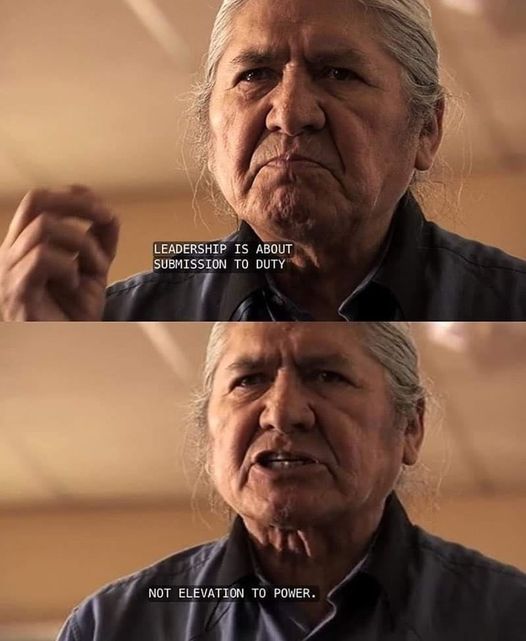
Government is nothing but a tool. A tool for the society to govern itself with. “of the people, by the people, for the people“. But also a tool for a dictator to exploit a country.
Blaming the tool never takes the blamer out of the ‘unpleasant’ situation.

A more complete statement would have been:

‘Any unchecked government tends, sooner rather than later, to become a problem.’

The key word here being ‘unchecked’, not government. For the same reason which had prompted ‘god’ to warn us:

Any graven image you will ever make will inevitably be incomplete. Not because of your incompetence but because of my infinite complexity. I, your god, am infinite. Hence incomprehensible. You might glimpse some, or even a lot, about my ‘true’ nature but you’ll never find out enough. Enough for you to make a ‘usable’ graven image.
A reliable idol…

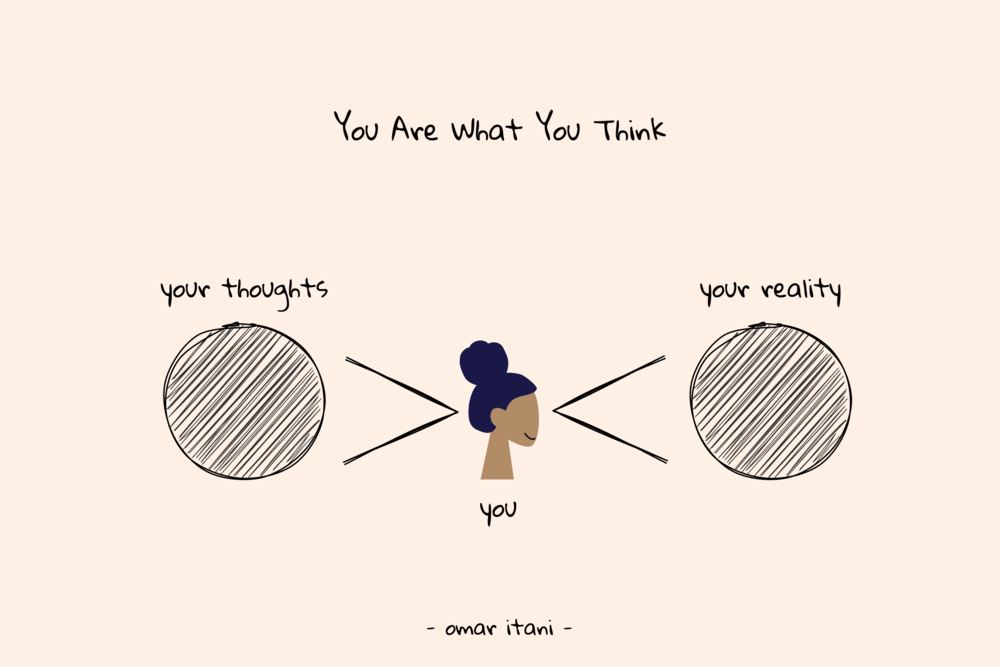
As a man thinks, so he is; as he continues to think, so he remains.”
James Allen

Sometime ago – more than 45 years, when food was still plentiful in communist Romania – I heard for the first time that ‘many people dig their graves with their teeth’.
I was too young to understand the deeper meaning of this. That sooner or later each of us will meet the consequences of our previous decisions.

15 years ago I read a book written when I was a toddler. Almost 60 years ago.
The Social Construction of Reality by Berger and Luckmann.

In it, they argued that society is created by humans and human interaction, which they call habitualization. Habitualization describes how “any action that is repeated frequently becomes cast into a pattern, which can then be … performed again in the future in the same manner and with the same economical effort” (Berger and Luckmann 1966). Not only do we construct our own society but we also accept it as it is because others have created it before us. Society is, in fact, “habit.”

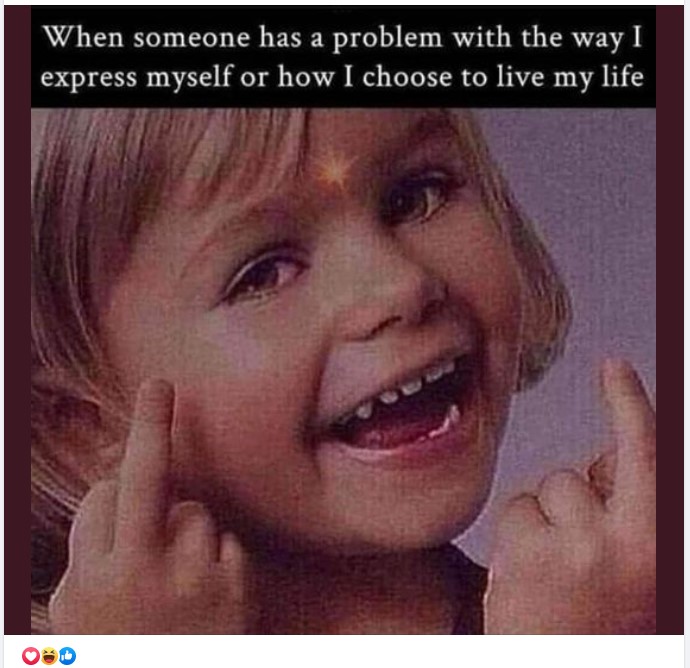
Nowadays, the social media is full of messages stating that the posters actually don’t care about what other people think of them.

What happened to “society is, in fact, habit”?

Have we become self-sufficient enough to live, each of us, on their own?
Really?

Do we really think like this?
Cocky enough to give the finger to everybody else?
Don’t we realize that we’re building a new pattern here? A new habit?

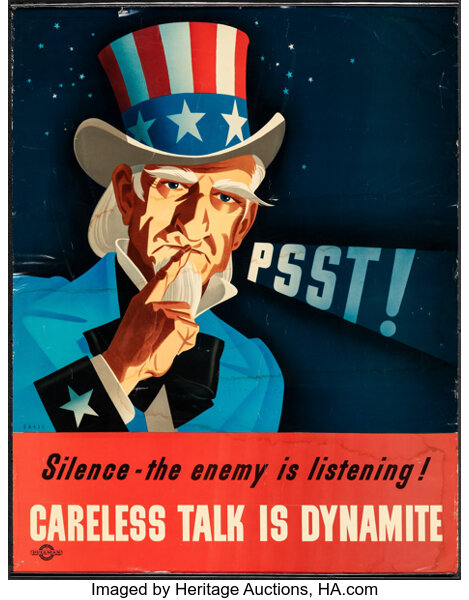
Will our children say that we’ve built the hell they’ll be living in by carelessly talking about it?

After all, the most dangerous enemy is that who worms its way from within.
Conceit cannot be survived!

Yesterday you’ve been babbling about painting an elephant. One which was already present in the room. Doesn’t make that much sense, does it?

In my childhood there was a certain emperor. Who had been duped by a couple of crooks to wear a suit of clothes so special that they were in fact invisible. Hence the emperor walked around naked, convinced he was wearing the coolest set of rags available on this Earth. Pun intended, of course. I forgot to mention the price. Not only hefty but also recurrent. Each set of clothes, of in-existent clothes, could be worn only once. They were too fragile for ‘second helpings’. The courtiers kept congratulating the emperor for his beautiful attire so the scam went on for quite a while. Until he took to the streets of his capital city to show off his clothes to the ordinary people. And a child exclaimed: “Look. the emperor is naked”. And those present started to laugh.

Same thing here. Everybody senses that something’s amiss. Except for those who should know better. Who, for various reasons – I’ll get there, soon enough, don’t believe what they see. Or, more exactly, refuse to ‘go to the bottom of it’.

Back in the ‘good old days’, emperors had jesters. Courtiers who were allowed to speak the uncomfortable truth. Cloaked under a thick layer of funny words, true, but well worth saying.
This is what I mean when I ‘babble’ about ‘painting the elephant’.

I’ve already mentioned the story about the naked emperor. Now it’s time for that about the four blind men being led to learn about the elephant. One got to feel the hind legs, one the huge belly, the third got acquainted with the ears and the last with the tip of the elephant’s trunk. When later asked to share what they had learned, the first said the elephant was a pair of tall columns, the second said the elephant was a huge barrel, the third contradicted the first two maintaining that the elephant was a leathery curtain of sorts while the last was convinced that the elephant was a thick snake ending with a finger.

As I said before, ‘same thing here’. For ideological reasons, we consider some things and disconsider others. Furthermore, for psychological reasons, we tend to coalesce into ‘bubbles’. Those who consider the same things tend to stick together. And to disconsider those who consider other things.

I’m afraid this is too hard for me to follow. You first want to paint an elephant, then come up with a naked emperor and end up with parts of an elephant. Is there any elephant at all? Or all we have is a collection of disparate impressions? Man made illusions, vaguely resembling parts of an elephant and involving nakedness?

Well, you got the gist of it but you’re afraid to say it out loud.
The elephant is indeed of our own making.
An image. Not an illusion, mind you! Just an incomplete image of what’s going on around us.
Let me try to spell it differently.

The world was complicated to start with. Both wide and deep. Too wide and too deep for any of us to be able to comprehend it in earnest. But for most of our history, we didn’t have to. We used to live ‘locally’. Both geographically and ‘spiritually’. Each of us, individual human beings, belonged to a place. To a village and to a tradition. When one of us happened to move to another village, they, more or less naturally, translated their ‘spirit’ into the local tradition.
Nowadays, the world has become even more complicated. We made it even more complicated than it was at the beginning. We uncovered many of the previously unknown nooks and crannies. Building the illusion of knowledge in the process. Then we assumed tradition. Called it culture and made it our own. Took it with us where ever we went. Shared it with others and, sometimes, even imposed it – or parts of it, upon others.

The world itself is no longer straightforward. For us…
Our ancestors didn’t make any distinction between the physical world and the tradition which made sense of it. The world – ‘Cosmos’, as they used to call it, was whole. ‘Reality’ was made of ‘objects’, the names of those objects and the rules between them. The point being that our ancestors did not make any difference between an object, its name and its place in the order of things. Between the physical reality and tradition. Between the objects per se and the meaning – name and connecting ties, we’ve attached to each object.
Only after the Ancient Greeks had come up with the concept of “phusis” things were separated into natural and man-made. Into real and illusory…

That being the moment when the elephant had been born.
When we have started to steer our fate. Not to determine it – we’ll probably never be able to do this in a comprehensive manner, but to influence it.
Which influence has two dimensions. Size and … there’s no words for what I have to say right now. ‘Awareness of what’s going on’?!? Our ancestors did what they used to do because they had to do it and they did it as things were done at that time. We, on the other hand, get to choose among the many things which should be done and the manner in which we see fit to do it. Meanwhile, we entertain the illusion of doing all these things in a fully conscious manner.

A part of the elephant I have in mind consists of the fact that our consciousness is limited. But our illusion about our consciousness is bigger than the reality of the matter.
Another part of the elephant consists of the fact that more and more of us no longer consider advice. From those who entertain different opinions (illusions?!?) than us.

And why should I accept advice from somebody who promotes illusions?

I didn’t say you should accept advice from a peddler of illusions. From a con artist or from a snake-oil distributor.
What I said was ‘be careful, your own convictions are nothing but, ultimately, illusions. Man made illusions. Some of them, maybe, closer to reality than those entertained by other people. Meanwhile, others of your illusory convictions – most of them, probably, are more distanced from reality than those entertained by those who ‘control’/master each particular realm of ‘knowledge’.
This being the reason for which we go first to the doctor instead of raiding a pharmacy when our child gets sick.

I didn’t say you should accept advice from any peddler of illusions.
All I said was that we should pay more attention to what other people have to say. More considerate attention to what other people say, bearing in mind that our own convictions – about anything, are nothing but ultimately illusory.

People who have never experienced communism speak freely about it.
Some are frightened by it – as they should be, while others are looking forward to it.

People who have no real idea about what fascism/nazism was about speak freely about it.
Some are frightened by it – as they should be, while others are looking forward to it.

While there is a consensus about communism being a ‘far left position’, fascism is usually – but not unanimously, considered to be ‘far right’. Some even speak about a ‘third position‘, whatever that might mean.


The way I see it, what we have experienced as fascism is what Marx had in mind when he wrote the Communist Manifesto.
According to Marx, at some point in what he hailed as ‘the future’, the middle class was going to become poorer and poorer. All the wealth generated by the capitalist economy and governed by the increasingly imperialist/monopolist states was going to be herded into fewer and fewer hands.

As a consequence, once impoverished, people until then belonging to the middle class were supposed to realize they had been duped and let themselves be led – out of misery – by the communists. ‘The most advanced and resolute section of the working-class parties of every country …’

What Marx was prophesying had soon enough come to be. The post WWI German and Italian peoples had lost their hopes and allowed themselves to be led by those who pretended to put ‘the best interests of the people’ above everything else.

Same thing happens whenever a crises is deep enough to impoverish a significant number of people. Who loose their hopes and allow callous political operators to advance closer and closer to power.

What we have experienced as ‘communism’ was a Leninist short-cut.
In Marx’s view, communism was going to happen after economically advanced societies had reached a certain pinnacle.
Lenin – and Mao, had introduced ‘socialism’ and ‘popular democracy’ as intermediary stages between their underdeveloped societies and what Marx had in mind.

So no, there is no such thing as a ‘third position’. We have democracy – where left and right cooperate towards the common good, and authoritarianism.
While democracy is clear and transparent, authoritarianism hides its true nature under a chameleonic cloak. Painted, by the spin doctors who run the show, in whatever hue happens to be more attractive to the masses which are about to be fooled.

Afterthought. I googled ‘third position’ and found out that:

“In the last few years of the 20th Century, according to an article by Chip Berlet, a new form of fascism emerged in a period of resurgent neo-fascism. Called the Third Position, it seeks to overthrow existing governments and replace them with monocultural nation states built around the idea of supremacist racial nationalism and/or supremacist religious nationalism.”

Footnotes:


https://www.marxists.org/archive/marx/works/download/pdf/Manifesto.pdf

We need to go forward.

Going back is not an option. If back were good enough, we wouldn’t have left it in the first place.

Many people believe we’re reliving the fall of Rome.
Contemporary with that fall was the advent of Christ’s teachings. The fact that, eventually, Christianity has altered his teachings to fit the needs of the christian hierarchy doesn’t demean any of what he taught us.

That people who treat each-other respectfully fare a lot better than those who allow the exploitation of the weak.

That people who live ‘together’ fare a lot better than those who keep forgetting that ‘strong’ and ‘weak’ are both relative and temporary.

That people who are convinced that ‘survival belongs to the fittest’ will eventually make place for those who understand that evolution is solely about the demise of the unfit.

“And Jesus knew their thoughts, and said unto them, Every kingdom divided against itself is brought to desolation; and every city or house divided against itself shall not stand: And if Satan cast out Satan, he is divided against himself; how shall then his kingdom stand? And if I by Beelzebub cast out devils, by whom do your children cast them out? therefore they shall be your judges. But if I cast out devils by the Spirit of God, then the kingdom of God is come unto you. Or else how can one enter into a strong man’s house, and spoil his goods, except he first bind the strong man? and then he will spoil his house.
He that is not with me is against me; and he that gathereth not with me scattereth abroad.”

How many times have these words been invoked? By people who use them to divide? To carve a follow-ship? A follow-ship for them to lead…

How many times have these words been invoked? By individuals cocky enough to pretend they are speaking for Christ? Cocky enough to pretend they are able to fill Christ’s shoes…

Wishful thinking!

Conspiracy theorists are absolutely convinced that they are the true critical thinkers…

That their critique of how things works on the face of the Earth is the only reasonable one!

Then what?
Sheeple and conspiracy theorists are nothing but the very same thing? Each of them on the other ‘side’ of the dividing mirror? The surface on which the conspiracy theory dew has been craftily etched? To blurr the vision of all those attempting to look through?

After all, what’s the difference between sheeple – those who follow the official narrative and consider the ‘alternative’ to be wrong, and the conspiracy theorists? Those who consider theirs to be the true version and the ‘official version’ a misleading lie?

Each of them exercise their right and ability to doubt. To look for alternatives. And to discard the alternatives they deem to be implausible!

Most conspiracy theories have already been proven as having been bogus?
With the current ones waiting in line?

This, I’m afraid, is the moment for me to remind you that science is wrong by definition. That all scientific theories are, by definition, falsifiable. That the scientific community is convinced that all knowledge is maybe not completely wrong but definitely incomplete!
Hence there’s a lot of room out there for conspiracy theories to thrive!

‘OK.
I can follow your arguments.
Or, more exactly, I can follow your logic….
But I still believe you’re wrong.
Conspiracy theories ARE bogus!’

Let me put it differently.
Both the official narratives and the conspiracy theories are fueled by the same human need.
By our need for consistency!
Human mind has a hard time processing cognitive dissonances. Pieces of information which contradict each-other. Hence we need a ‘script’. A meta explanation for ‘everything’. A way to discharge the tensions produced by the conflicting pieces of information which assault our attention.

‘And why some people choose to become sheeple – to buy into the official version of things, while others remain conspiracy theorists for life?’

You’ve just set aside the vast majority.
Those people who are explicitly or implicitly aware that both the official version and the conspiracy theories are at least incomplete. And sometimes promoted by people with ‘ulterior motives’.
People who have a deeper creed. Many times of a religious nature but not necessarily.
People who have too many on their heads, mostly worries, so are no longer ‘available’ for ‘petty things’.
As for conspiracy theories being bogus…
I just mentioned how science works. Whenever a theory is judged to be plausible by the peers involved, it becomes the official narrative. All other competing theories become bogus. But all those earnestly involved in the process are convinced that sooner or later the official narrative will be proven if not wrong, then at least incomplete!

‘Then what about ‘critical thinking’? Is it good or not?
And you haven’t answered my question!’

Critical thinking is a tool!
And as all other tools, it becomes good or bad only in the hands of the person who yields it!

The most important thing about critical thinking is that we must remain critical relative to our own opinions!
Open to whatever new evidence happens to cross our path!
Sometimes the evidence which comes first might be misleading. Or false. We might reach the wrong conclusion. If we cling to the already reached conclusion we might be wrong. It is absolutely understandable – admitting an error is hard, but still wrong. That’s why some people remain sheeple while others cling to their beloved conspiracy theories.

You see, the true definition for sheeple is not ‘those who believe the official version’. Far from it!
The real sheeple continue to pay lip service to the official version long after fresh evidence prove the official version has been ‘incomplete’!