… unless ‘offered’ with a pointed toe cap!
“The purpose of Halacha is to disturb. To disturb a world that cannot wake up from its slumber because it thinks that it is right.”
Rabbi Dr. Nathan Lopes Cardozo
What is currently known as the ‘North Atlantic Civilization’ is a construction whose blue prints have been initiated in the Middle East, on the Banks of Jordan.
The Jews, those who had started the process and one of the very few peoples/cultures who have survived since that era, have reached a very interesting stage in their development.
Rabbi Dr. Nathan Lopes Cardozo discusses, in a series of articles, some very important ‘contemporary issues’.
For those of you who are unfamiliar with the context:
– “The word “halakhah” is usually translated as “Jewish Law,” although a more literal (and more appropriate) translation might be “the path that one walks.” The word is derived from the Hebrew root Hei-Lamed-Kaf, meaning to go, to walk or to travel.”
– Yigal Amir had killed Yitzhak Rabin in an attempt to halt the Oslo Peace process and
– Baruch Goldstein had killed 29 and wounded 125 in “the Muslim prayer hall at the Tomb of the Patriarchs in Hebron“.
When reading Dr. Cardozo’s considerations please engage yourself in a mental experiment. Try to identify at least one aspect of those mentioned here that doesn’t fit the rest of the North Atlantic cultural space.
I encourage you to use the links and read Dr. Cardozo’s articles in full. I have selected some of his words trying to suggest something, there is a lot more to be learned there.
“One of the greatest tragedies of Judaism in modern times is that certain halachic authorities, as well as people like Yigal Amir and Baruch Goldstein, forgot to study the first book of the Torah. They have become so dedicated to the letter of the law that they have done the inconceivable and have caused the degradation of Halacha.”
http://www.cardozoacademy.org/thoughts-to-ponder/the-desecration-of-halacha/
“It is for this reason that Halacha has always developed on the basis of case law, and not because of overall well-worked-out ideologies. It is sui generis. Much depends on circumstances, the kind of person we are dealing with, local customs, human feelings, and sometimes trivialities. God, as Abraham Joshua Heschel explains, is concerned with everydayness. It is the common deed—with all of its often trivial and contradictory dimensions— that claims His attention. People do not come before God as actors in a play that has been planned down to the minutest detail. If they did, they would be robots and life would be a farce.”
http://www.cardozoacademy.org/thoughts-to-ponder/chaos-theory-halacha-part-1-3/
“Not only do we see a considerable amount of chaotic halachic literature, published by numerous authorities, which seems to lack consistency and order, but we may even find contradictions in the various writings of one halachist. This doesn’t mean that the writer lacks a particular line of thought and some basic principles; it just means that within these norms almost everything is an open market.
I believe this is the reason why the Conservative movement, with all its good intentions and great scholarship, was unable to grasp the imagination of many halachic authorities. It is not the lack of knowledge, but rather the over-systematization that is responsible for this. Once there is too much of a unified weltanschauung and agenda, Halacha loses its vitality. The multitude of attitudes, worldviews, chaotic thinking and sometime wild ideas, through which the greatest halachic authorities freely expressed their opinions, is what kept the Orthodox halachic world alive. In some sense, and even almost paradoxically, Orthodox Halacha is less fundamentalist than Halacha in other movements within Judaism.
None of this should surprise anyone. When looking into the Talmud, which is the very source of Halacha, we find a range of opinions so wide, and often radical, that it is almost impossible to find any sense of order. There’s a reason why the Talmud is compared to a sea in which storms create unpredictable waves and turbulence. The revealed beauty of this natural phenomenon is what attracts people to gaze at the sea for hours on end. It reflects their inner world, which thrives only in the presence of tension, paradox and chaos.”
http://www.cardozoacademy.org/thoughts-to-ponder/chaos-theory-halacha-part-2-3/
“In my opinion, Halacha is in need of more “chaos.” It must allow for many ways to live a halachic life unbound by too many restrictions of conformity and codification. It must make room for autonomy on the part of individuals, to choose their own way once they have undertaken to observe the foundations of Halacha. Acceptance of minority opinions will have to become a real option, and some rabbinical laws must be relaxed so that a more living Judaism will emerge. While some people need more structure than others, in this day and age we must create halachic options that the codes such as the Mishneh Torah of Maimonides and the Shulchan Aruch of Rabbi Yosef Karo do not provide.
Surely those who prefer to live by the strict rules of the codes should continue to do so. For some, these rules are actually a necessity – even a religious obligation – since this may be the only way they can experience God. But they should never become an obstacle to those who are unable to adhere to them. Labeling these new approaches “non-Orthodox,” or “heresy,” is entirely missing the point.
I wish to be clear: I am not advocating Reform or Conservative Judaism which, as I stated earlier, have paradoxically become overly structured and agenda-driven. They lack sufficient “chaos” to make them vigorous.
While there is great beauty in attending synagogue three times a day to pray, we clearly see that much of it has become mechanic – going through the motions, but no religious experience. Yes, it’s better than not being involved in any prayer at all, but the price we pay is increasing by leaps and bounds. It is pushing many away. Codification is the best way to strangle Judaism. By now, Orthodox Judaism has been over-codified and is on its way to becoming more and more irrelevant.
…
I believe that one of Halacha’s main functions is to protest against a world that is becoming ever more complacent, self-indulgent, insensitive, and egocentric. Many people are unhappy and apathetic. They no longer live a really inspiring life, even though they are surrounded by luxuries, which no one would have even dreamed of only one generation ago.
The purpose of Halacha is to disturb. To disturb a world that cannot wake up from its slumber because it thinks that it is right. The great tragedy is that the halachic community itself has been overcome by exactly those obstacles against which the Halacha has protested and for which it was created. Halachic living has become the victim of Halacha. The religious community has succumbed to the daily grind of halachic living while being disconnected from the spirit of Halacha, which often clashes with halachic conformity for the sake of conformity. Many religious people convince themselves that they are religious because they are “frum.” They are conformists, not because they are religious but because they are often self-pleasers, or are pleasing the communities in which they live.
Large numbers of religious Jews live in self-assurance and ease. The same is true of the secular community. Both live in contentment. But as Rabbi Dr. Louis Jacobs notes: “Who wants a life of contentment? Religion throughout the ages has been used to comfort the troubled. We should now use it to trouble the comfortable…” ”
http://www.cardozoacademy.org/thoughts-to-ponder/chaos-theory-halacha-part-3-3/
“It is as irrational to reject all conspiracy theories as it is to accept them.”
Nassim Nicholas Taleb
Conspiracy theories are similar to religious superstitions.
They offer comfort to the emotionally insecure and create a meeting ground for the like minded.
Unlike full grown religions they lack a proper structure but that doesn’t mean their main ideas are not used for propaganda purposes, just as all religious dogmas have been. And still are….
Another difference between conspiracy theories and religions is that while both have been produced by human minds some of the conspiracy theories had been proven true while the most that can be said about religions is that they had been useful …
But what is a conspiracy theory and what does Utopia have to do with anything?
According to this definition a conspiracy theory is a ‘shape-shifter’. The notion covers both the true and the bogus ones while it can be used both ‘admiratively’ and disparagingly.
Again, just as it happens with religion, the mind set of those who consider each of them is of paramount importance.
Meanwhile ‘Utopia’ is, yet again, another creation of the human mind.
While religions and conspiracy theories are shared mental constructions that try to explain something which already exists Utopia is a shared mental construction which describes the ‘ideal’ state of something that already exists and is perceived by those who experience it as being ‘perfectible’.
The link between all these being that the only two roads that lead to Utopia are, of course, ‘religion’ and ‘conspiracy theories’.
Am I being too harsh?
Utopia, “an imagined place or state of things in which everything is perfect“, is a word coined by Sir Thomas More “for his 1516 book Utopia, describing a fictional island society in the Atlantic Ocean.“. It “comes from the Greek: οὐ (“not”) and τόπος (“place”) and means “no-place“, and strictly describes any non-existent society ‘described in considerable detail’.”
Now why would a reasonable person attempt to reach a ‘no-place’ unless conned into it by a ‘conspiration’? No matter how desirable that ‘place’ might be…
The way I see it this is yet another argument that rationality is not at all the perfect ‘balancing’ tool some of us believe it to be. In fact we are not ‘rational’ at all but ‘rationalizers’. Since it is impossible to gather and analyze all pertinent information before making a decision we try to convince ourselves, and others, that the decision we are about to make (or have already taken) is the right one. In order to do that we marshal all arguments we can find that confirm our hypothesis and we (honestly?) try to water-down those who are contrary to our views.
Until our coveted utopia becomes a real-life dystopia…
That makes a lot of sense, doesn’t it?
What would we be without ‘our values’?
How could we judge things/people and evaluate situations without being guided by them?
But what if the ‘objects of our judgement’ do not belong to the same value system as we do?
What then?
I’m writing this immediately after reading a FB post. A female teacher, who ‘tries to be vegan’, has rather abruptly informed one of her female students “I don’t eat animals”, right after she had finished boasting about hunting a deer with her father. The student’s face ‘fell of’ and the teacher was wondering whether the Principal will chastise her.
So.
Is ‘not eating animals’ a value?
What is a value, after all? And do we go on affirming our values on every occasion?
By Google-ing ‘value’ one gets “principles or standards of behaviour; one’s judgement of what is important in life.”they internalize their parents’ rules and values””
It seems that a value is something extremely personal, ‘one’s judgement of what is important in life’, but also something that is learned from somebody else, “they internalize their parents’ rules and values”…
In this situation it would it be safe to say that a value is something which is simultaneously considered important by both a group and the individual members of that group?
Doesn’t make much sense? Except from an ‘arithmetical’ point of view?
Well… Let me give you an example.
Europe used to be a Christian continent.
Not anymore. A considerable number of Europeans no longer belong to any church and a lot of them do not consider anymore that God is their Maker.
But, on the whole, most Europeans still consider Christianity to be a ‘value’. Because they understand the role played by Christianity in the development of humankind, because there still are a lot of people who share this faith… the really important thing here being that very few Europeans would purposefully deface a Christian symbol, even when/if nobody would ever find out who did it. And this is valid even for the majority of the hard-core atheists.
At the same time, very few Europeans would – even among the believers – dream of imposing their creed, by force, on other people.
So what is the real value here? ‘Faith in God’ or ‘Live and let live’?
Actually I’m convinced that there is a direct connection between these two.
The Old Testament teaches us that ‘God made Man in his own image.’
It is very simple to make another step forward and understand that those who had written this believed that all men (or at least all those who shared their values) were equals among them (simply because they had been cast in the same ‘mould’) and, at the same time, that each of them shared at least a spark of divinity (the mould having a divine origin).
Europeans shared this value for two millennia.
No wonder that at some point it had morphed into what we now call ‘the human rights’ – a very similar concept/value, which produces the same social consequences: ‘Live and let live’.
Then how come some of the Christians felt very comfortable when using the sword as an argument to convert ‘the pagans’ to the only ‘true religion’?
Well… an alternative definition for ‘value’ could be ‘a certain conviction, reached out rather as a consequence of a specific set of circumstances than as a rationally deliberated conclusion, and shared by the members of the group living under those circumstances’.
According to this hypothetical definition the functional role of a value would be to ‘make it easier’ for each of those people. The ‘shared’ value would constitute a communication medium among the members of the community and a standard/guide for each of the individuals.
The problem with all this, as proven all along the human history, being that from time to time people act as if ‘values’ are ‘castles to be defended’. Or even ‘banners which have to be implanted on conquered soil’. Remember the Christians who used the sword to baptize pagans? Or the pyre to cleanse the souls of the sinful witches and those of the wicked heretics?
What happened in those moments with ‘Live and let live’? What drove those people to forget that ‘the others’ were also made ‘in His image’?
Or, in our days, how come there are so many people who consider that it’s OK to practically insult others while professing their own ‘values’. Which are not so widely shared as they would like them to be.
The strangest thing of all being that this very insistence, which sometimes becomes bullying, constitutes one of the reasons for which some of those values have such a hard time being accepted by ‘the others’.
Plant and fungi simply exist.
Animals ‘perform’.
Basically the main difference between plants and animals is that while plants – and fungi, ‘digest’ parts of their environment, the animals actively search for food and perform other activities which help them survive or result in the individual performer experiencing ‘pleasure’.
Most animals, number-wise, behave as if they were pre-programed. They act ‘instinctively’. Almost plant-like, only enjoying a lot more physical freedom. A bed bug will move a lot more than the plant on your night-stand but that doesn’t mean the bed-bug is considerably more intelligent than the lavender which guards your sleep.
At least some of the animals can learn. Meaning that individuals can alter their behavior, consistently, to suit changes in their environment. As if the ‘programs’ that have been ‘hard wired’ in them allow the individual members some leeway. As if parts of those programs can be re-written, at will, by the individual members themselves. And they don’t even need a brain to do that. These kinds of animals seem to enjoy a different sort of liberty than the simple liberty of movement
As we climb higher and higher up the evolutionary tree we encounter ‘trainable’ animals.
Which can be ‘convinced’ to perform a certain skill. For instance Norman, a dog, who has been bribed/trained to ride a bike.
Animals who can be trained usually can also learn by themselves. Wolves, and dogs, learn how to hunt by watching their brethren while a simple slime, as we learned earlier, can learn how to deal with certain chemicals.
Men have taken this to the next level.
Animals, as opposed to plants, have a certain liberty. They can move. It’s exactly this liberty which sets the stage for their ability to be trained. By the environment – the wolf who doesn’t learn to hunt ends up hungry, or by a trainer – the dog who rides a bike gets tasty treats.
People, the human beings, enjoy an even wider liberty than the rest of the animals. Those who grow up surrounded by other human beings, of course.
The handful of individuals who had the misfortune to grow up lacking adequate attention from members of their own species had failed to develop a certain part of their mind, hence they remained prisoners, even after being ‘found’, in the ‘animal kingdom’.
It’s as if a certain ‘opportunity window’ has to be used before it inexorably closes, sometime between the 5-th and the 10-th anniversary.
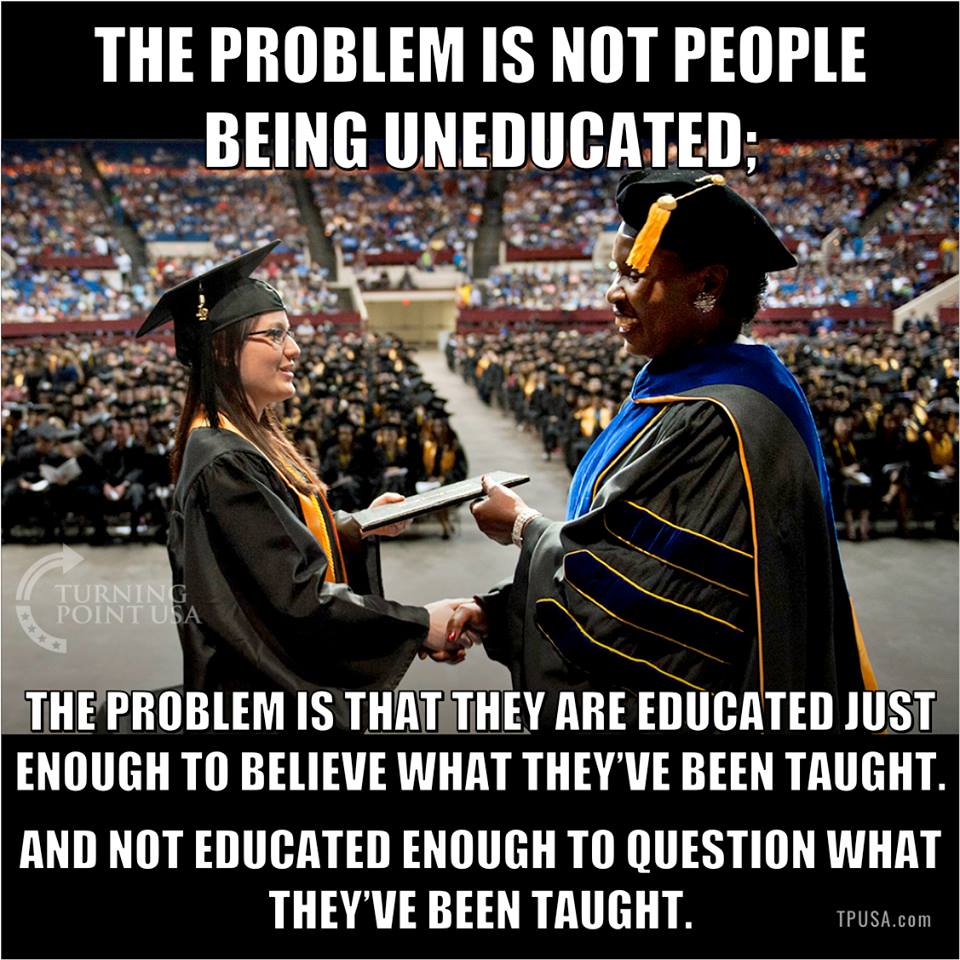
If all goes well, human individuals are conditioned – first by training and later by learning – by those around them into something which is deemed to be the ‘acceptable behavior’, as per the social standards valid at that moment in time.
During this conditioning process most individuals also learn – mainly by trial and error, as opposed to ‘being trained into it’, how much individual freedom is included in those social standards.
At some point during this conditioning process, which actually never stops, the individual is considered ‘mature’ enough to be held fully responsible for his fate/actions.
This ‘moment’ has varied significantly during our history and it depended on many variables besides the obvious one – individual proficiency. Well… usually even that was measured indirectly, by considering the age of the individual.
And, for most of the time, Lady Luck has been the most important factor in determining how much freedom was going to be enjoyed by a certain individual. One could have been born a slave, a slave owner, a free person, a man, a woman, a serf, a landowner, in Europe, in sub-Saharan Africa during the TransAtlantic slave trade, in Hitler’s Germany, in Stalin’s Russia, in Pol Pot’s Cambodia, in North Korea…
In each of these situations he had to learn, fast, a skill. In order to make himself useful enough to the rest of ‘his gang’ so that they would ‘make some room’ for him. So that he would be able to trade the results of his skillful work for the ‘resources’ he needed in order to survive or even to prosper.
In order to be efficient, one must also become ‘meta-skilled’. Being skilled, at anything, is almost never really useful if one doesn’t know when/how to use his skills.
And, on top of all this, one should also learn to what end to use his skills.
Choosing properly one’s goals – and being able to evaluate correctly what others do or promise to do, is important not only for each individual but also for those who had helped into his conditioning – if they are still around, for his other contemporaries and also for their children.
Let me give you an example.
Driving a car is a skill. A rather basic one. So basic that a monkey could do it.
Learning to refrain from driving when you are too tired, or in a blizzard if the vehicle is not suitable, is a meta-skill. Sometimes a lot more important than the mere ability to start a car and to drive it from A to B.
Volunteering to drive an unsuited vehicle trough a blizzard to save somebody’s life or refusing, despite being offered a huge bribe, to drive a lorry full of hazardous waste to an illegal dumping site is what gives the real measure of your true self.
And, also, how free was the society that helped in your ‘conditioning’.
Donald Rumsfeld (b.1932)
Protagoras of Abdera (c.485 – 415 BCE)
Plato (c.425 – 348/347 BCE, ‘translated’ by Johnatan Wolff in
An Introduction to Political Philosophy, 2006)
Aristotle (384 – 322 BCE)
“Give me a place to stand and I’ll move the Earth”
Archimedes (c.287 – 212 BCE)
“For every action there is an equal and opposite re-action”
Sir Isaac Newton (1642 – 1727)
Charles Darwin (1809 – 1882)
“Einstein deduced that there is no fixed frame of reference in the universe. Everything is moving relative to everything else….
… space has three dimensions, and the fourth dimension is time.
Space-time can be thought as a grid or fabric. The presence of mass distorts space-time.”
Albert Einstein (1879 – 1955)
“”Heidegger’s analysis of Plato attempts to show that a transformation occurs in the nature of truth in Plato’s philosophy, as a consequence of which Being is subordinated to the correct perception of beings. This subordination, Heidegger maintains, characterizes the history of Western philosophy as metaphysics.
The allegory of the cave is, for Heidegger, an illustration of the nature and process of paideia. At each level of ascent — within the cave to the light, and out of the cave to the sun — the individual experiences a painful blinding. Each stage requires an adjustment and transformation in vision. This transformation in vision expresses the turning of the soul from what is disclosed in one region to what is disclosed within another. This is paideia, according to Heidegger. The relationship of paideia, in this new sense, to alétheia is not apparent because, as Heidegger sees it, we have not only misunderstood the nature of education but, more importantly, have misconceived the nature of alétheia by conceiving it as “truth.” If paideia is a transition from one abode to another, affected by the soul’s receptivity to what is disclosed within each region, then alétheia is disclosure itself: “At first truth meant what was wrested from a concealment. Truth, then, is just such a perpetual wresting-away in this manner of uncovering.
Heidegger indicates that what “truth” means is not so much a correspondence as it is a disclosure.”
Martin Heidegger (1889-1976)
Werner Heisenberg (1901 – 1976)
Herbert Simon (1916-2001)
‘Evolution is not as much about the survival of the fittest as it is about the demise of the unfit’
Ernst Mayr, (1904 – 2005, What Evolution Is)
Humberto Maturana (b. 1928)
Nassim Nicholas Taleb (b. 1960)
It seems rather obvious that humankind has ‘consistently’ oscillated between two opposing views on things.
Some of us are convinced that the (whole) truth can be achieved (and that ‘they’ had already done that) while others have reasons to believe that while ‘individual efforts’ are indeed the source of everything that exists, the final results of those efforts are always being shaped/conditioned/reacted to by the medium where they are exerted and by those who bear the consequences.
Coming back to Rumsfeld’s words it seems that the most important (dangerous?) category is, contrary to our first impression, the (presumptive) ‘known – known’.
We cannot do anything about the unknown-unknowns, except for preparing ourselves in a ‘general manner’, and we can always ‘dig up’ something fresh about the known-unknowns but it seems that nothing can convince us that what we consider to be the known-known is but a thin layer of ice floating on a very deep lake.
So the real question that awaits our response is ‘What are we going to do, now that so many have told us what’s been going on?’
Quite a lot of things are currently going on on our Earth.
Many of them have a planetary importance and some of them make it into the news bulletins.
The manner in which they are selected by the editors speaks volumes about our, collective, mind set.
So let’s see what BBC, one of the most important news outlets, deemed as being important enough to make the cut this early morning – September 8, 2016.
US elections, Technology, A peek into how the Chinese Government manages its country, A little ‘human touch’ – an Australian family caving in to mental illness, A short but heated discussion about ‘ugly buildings’…
An so on…
The Middle East Crises is buried somewhere in “More World News” but still only two clicks away from the main page while if you want to find out more about the “Worst SE Asia Haze for 20 Years” you have to specifically search for it despite BBC itself wondering, only three short days ago: “Could air pollution cause brain damage?”
OK, but what about those ‘damned phones’?
So don’t you find it rather strange that ‘Apple’s new IPhone ditches headphone socket‘ makes it to the ‘first page’?