Archives for category: man induced fragility

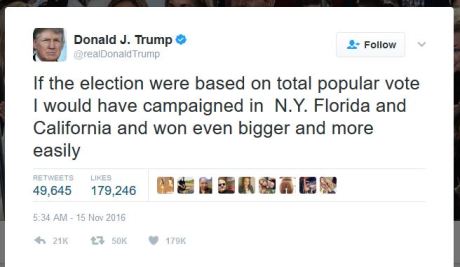
bigger-and-more-easily

Human memory is rather shallow.

Two and a half months later I had already forgotten about this.
My memory has been refreshed by a FB post.

“Just as you don’t have to outrun the bear, just the other guy, your political proposal doesn’t have to be perfect, just better than the other guy’s.”

What do we really mean when we say ‘politics’?

A beauty pageant intended to crown the most skillful public speaker/con artist among us?

Or a social mechanism used by the whole community in its attempt to adjust to whatever fate throws at it?

And how about cooperating with the other guy in taming the bear instead of racing him to our mutual deaths? ‘Cause outrunning all the others doesn’t mean survival.

It only means having to watch all of them being eaten.

Both are done ‘by hand’.

Apparently, any likeness between these two stops here.

But, if you pull back in earnest, the ugly thing becomes unraveled.
Not only that it is masturbatory, aka self-inflicted, (political) manipulation should also be classified as sado-masochistic.

Manipulation, as a process, can be examined from two perspectives.
A social one and an individual one.
Now, that everybody knows that ‘manipulation is bad for you‘, any individual who allows themselves to be manipulated into anything must suffer from a masochistic disorder while those who actively manipulate others must be cold blooded sadists.
On the social side, since time and time again manipulation has been proven to have had dangerous consequences, any community that sees any form of manipulation as an acceptable practice must have certain suicidal tendencies. Aka suffer from a ‘social form’ of masochistic disorder. While those who manipulate must be, themselves, cold blooded sadists.

As for being masturbatory, something which is brought upon one self by their own hand, that is almost as evident as Polichinelle’s secret:

Bona-fide politics, that made in earnest, involves open discussion between those who are going to be affected by the decisions and those who propose and support them. Discussions which take place before each major decision is made, during its implementation and after its consequences have started to be felt. The interaction between the politicians and the general public is direct, unmediated.
In Nassim Taleb’s terms, in this situation the politicians have their own ‘skin in the game‘.

Which results ‘risk management’ policy which is the complete opposite of the one adopted by those who believe themselves to be insulated from the consequences of their own actions.

The manipulators, on the other hand, window-dress themselves and the propositions they make. Their goal being not as much to contribute to the well being of their community as to ‘sell to the public’ whatever their minds have been focused on, at that moment. They consider manipulation to be a legitimate tool either because they are not fully aware of the great dangers involved or because they have convinced themselves that they will be forever exempt from contributing to the  the eventual price.
Meanwhile, those who allow themselves to be manipulated either do not realize they are being manipulated or have adopted ‘cynicism as a refuge’ in order to mitigate the cognitive dissonance that is eating away their self esteem.

In an ever-changing, incomprehensible world the masses had reached the point where they would, at the same time, believe everything and nothing, think that everything was possible and nothing was true… The totalitarian mass leaders based their propaganda on the correct psychological assumption that, under such conditions, one could make people believe the most fantastic statements one day, and trust that if the next day they were given irrefutable proof of their falsehood, they would take refuge in cynicism; instead of deserting the leaders who had lied to them, they would protest that they had known all along that the statement was a lie and would admire the leaders for their superior tactical cleverness.

Please note that in this situation the interaction is no longer direct. The manipulator and the manipulated do not ‘touch’ each-other. Therefore neither knows exactly what the other has in mind.
The interaction is mediated by symbols. Which are ‘photo-shopped’ by the manipulators and, sometimes ‘admiringly’, accepted by the manipulated.

It’s exactly this lack of direct contact between the manipulators and the manipulated which determines the whole thing.
The manipulators are, simultaneously, unaware of the true situation and growingly convinced of their ‘impunity’.
The manipulated have initial difficulties in determining that they are subjected to manipulation and, in a second stage, the impression that there is nothing left to be done about the whole thing.

When, eventually, the consequences catch up with both of them, it is usually too late for anything else but ‘damage control’.

People regret that they didn’t wise up earlier, promise themselves they’ll never let something like that happen to them… and forget. Until the next time.

Manipulation: useful tool, mortal sin or what?!?

Hannah Arendt Explains How Propaganda Uses Lies to Erode All Truth & Morality: Insights from The Origins of Totalitarianism

Masochistic Personality Disorder

Secret de Polichinelle

Cognitive dissonance

Karma

The Rorschach test consists of a trained specialist encouraging a subject to share his interpretations on 10 “ambiguous images“.
At the end of the discussion the trained specialist more or less ‘determines the fate’ of the subject, by filing his interpretation of the subject’s reactions.

The democratic process consists of everybody freely expressing their concerns about things.
Periodically some people are invested with enough power to solve the problems encountered by the community, in a manner consistent with the values agreed upon by that community. At the end of each such period the activity of these people is analyzed (interpreted ?!?) by those at the ‘receiving end’ of the political mechanism, with the intended goal of improving the ‘political process’.
The fate of the entire community being under a double determination. The diligence of the politicians invested to run the show and the diligence of the people when evaluating the results of the political process.

As you can see with a naked eye, there are a few striking similarities between  Democracy and the Rorschach test. Both depend heavily on the participants being honest and straightforward.

If the patient ‘doesn’t trust his doctor’ or ‘doesn’t feel like talking’ the ‘trained person’ will undoubtedly have problems in reaching a ‘fair conclusion’. Both will have to ‘suffer some consequences’.
If the ‘doctor’ has ‘ulterior motives’ and ‘unfairly labels’ his patient, it will be the patient to suffer the initial consequences but, eventually, those consequences will ‘bounce back’ to their source.

Same things happen in any society.
The difference between a democratic and an authoritarian one being that in a democratic environment ‘consequences’ become apparent, and are dealt with, a lot easier than in an authoritarian one.
This being the reason for which true, functional, democracies work better than any form of authoritarianism.

As long as both parties involved ‘interpret’ their roles appropriately, of course.

Growing in a communist country, Romania, I was ‘exposed’, naturally, to all sorts of communist propaganda. ‘Embedded’ in almost everything.
One ‘sugar coating’ that was very popular among the apparatchiks of the day was ‘crime novels’. ‘James Bond’-like  ‘literature’ which was supposed to educate us, ordinary citizens  who could almost never get an exit visa to go to a ‘capitalist’ country,  about the perils ‘our’ trading agents/diplomatic personnel had to ‘negotiate’ when sent abroad to ‘serve the country’.
The most publicized ‘peril’ being the ‘prostitute trap’. Supposedly the ‘pure’ communist was trapped by a skillful prostitute into believing she was heavily enamoured  of him and then lured to an apartment were the couple would be filmed while ‘consummating’  their new found passion. Later, of course, the recording would have been used to exert pressure in order to influence the hapless fool into betraying his country.

The recent articles regarding ‘the art of kompromat’ tend to suggest that those ‘novels’ were nothing but yet another example of a wolf crying wolf… but who knows…

Fast forward to our times.

Is there anything clear in all this?

And no, I’m not wondering whether there is an actual tape of Trump ‘frolicking in bed’ with anybody. Even if it exists, it is well guarded. After all, such a tape is way more valuable as long as it is hidden away than when out in the open. The threat to reveal it works only as long as nobody else but the black-mailer and the victim know about its existence.

Then why all this brouhaha?

A preemptive strike meant to dull the effect of Putin actually publishing such a tape?
Putin trying to ‘soften up’ his intended target?
But what is Putin’s goal? He cannot dream of ‘controlling’ the President of the United States. Even when that position is fulfilled by someone like Trump… The actions of any POTUS are so public that any influence would very soon become apparent, on one side, and Trump, himself, is a very ‘unreliable’ person to start with.

But what if Putin has another, and way more insidious, goal?

What if he wants to compromise the very concept of democratic elections?
To ‘demonstrate’ to us that ‘the public’ is (has become?) incapable of electing a good man to lead it to the future?

Well… the problem with ‘kompromat’ is that it has to be tailored to its intended victim.
Just imagine what effect would have had a tape depicting Obama in bed with someone else but Michelle. Who would have believed such a thing?
But Obama was, to a degree at least – as Trump had very astutely estimated, vulnerable to a campaign focused on his birth certificate. We all know what kind of ‘passion’ the birthers have managed to instill into some of the die-hard conservatives.
And we should not forget that Trump had started his political life as a friend of the Clintons. His words, “that Hillary Clinton ‘had no choice’ but come to his third wedding“, are now world famous…

Now, bearing all these in mind, shouldn’t we ask ourselves how farfetched is Putin’s project of destroying our faith in democracy? Using ourselves as minions?

After all, Trump was elected democratically!

And do you remember those discussions about the US being intended as a Republic by the forefathers, and not as a Democracy? Or Orban’s – Hungary’s authoritarian prime minister, one of Putin’s close political friends, concept of ‘illiberal democracy‘?

“I voted for Trump because I think his illiberal tendencies are actually a feature rather than a bug. When he undermines rule of law, I see not a danger, but someone who is undermining a system that has become a game for elites with access to armies of lawyers. When he browbeats Congress, I don’t worry about “checks and balances” which have become a recipe for dysfunction, but rather see him as a man taking on useless political prostitutes servicing everyone who can write a sufficiently large campaign check. When he strong-arms multinational companies like Carrier, I see someone standing up to the worst aspects of globalization.”

Who built the world as it is right now? The one where the young adult who wrote the words quoted above, had grown up into and was modeled by?

We did it? With both its good-s and its bad-s?

It is us who kompromised it?
Then it is us who’ll have to fix it!
Or we’ll have to endure the yoke the likes of Putin and/or Trump will undoubtedly try to put on our shoulders.


Modern technology has produced some rather perverse ‘side effects’.

What used to be called ‘democracy’ has slowly been driven into ‘mob rule’.

It is hard to determine whether this is the desired effect of some (un) ‘intelligent design’ or an unforeseen consequence of the callous machinations of the ‘power hungry’ but it doesn’t matter much, does it?

Let me first clarify some concepts.

For me ‘democracy’ is way much more than what happens in and around the polling stations.
Fairly counting the votes is indeed important but even more important is what takes place long before the ballots are cast.
A really functional democracy is that where every stakeholder has the opportunity to voice their concerns and where the rest pay attention to everything that is said in the public square. By both their political friends and by their political adversaries.
In fact no ballot can be cast efficiently unless the voters have developed a fair image of what is going on in their society. While no one can develop an actually complete understanding of anything, let alone one regarding such a complex system as an entire society, we must jealously keep in our minds that ‘not entirely complete’ is one thing and ‘heavily biased’ through a severe lack of pertinent information is quite a different one.

On the other hand ‘mob rule’ is a what happens when voters’ passions are so high that enough of them are no longer able to think with their own heads and allow themselves to be ‘led by the nose’. Into voting for a specific somebody or, alternatively, into not voting at all ‘because it doesn’t matter, anyway’.

At first democracy actually meant first hand, person to person, meetings in the public square.
The Ancient Greeks solved their ‘state affairs’ in the Agora, the Romans in the Forum while “Althingi” (the name of the oldest parliament that is still in existence, that of Iceland) means ‘General Assembly’.

Slowly, as the constituencies grew larger, the stakeholders needed some more sophisticated manners of keeping in touch. Luckily for them, Gutenberg had already invented the printing press. The American Founding Fathers – who had made good use of this first instrument of what was going to be the mass-media – had insisted passionately on the ‘freedom of the press’. And for good reasons. As I pointed out a little earlier, access to information is paramount for an efficient decision. Further more printed material is a very handy tool when it comes to conveying information from one person to another. Its rather stable nature allows it to survive unadulterated, at least for a while. So it can be handled around or kept for further reference since it is relatively easy to organize. And searched at will. All these discouraging the ‘communicators’ from lying – blatantly, at least. Since lies where relatively easy to pin-point and prove those who needed to maintain their credibility refrained themselves from ‘exaggerating’ too much. The fact that the general public was rather particular about this kind of things also helped in this matter.

Later, when radio and television were introduced, things had become more complicated. Given the fleeting nature of spoken – rather than printed – words, the ‘talking heads’ felt less compelled to stick to the straight and narrow.
Things were compounded by the advent of the ‘political-marketing specialists’ and of the ‘bean counters’.
The latter kept insisting that the mass-media venues have to be as profitable as possible – hence publish more and more of ‘what the audience asks for’ instead of bona-fide information while the former kept telling to the politicians that they have to ‘get under the skin of their constituents’ – by, again, telling them what they were more likely to believe instead of treating them as the grown-up adults they were.
The consequence of all this merchandising was that the erstwhile more or less compact public has been gradually carved up into discrete, and growingly separate, ‘publics’. Otherwise known as ‘echo-chambers’.

The apparition of the Internet/social networks has further deepened the already existent divides. People no longer know what the others really think or feel. But their ignorance doesn’t keep them from having opinions. Or from voting about things they do not really understand. So they vote how they are told by their trusted ‘analysts’/’experts’.

Now, is it of any use for us to blame anybody for what had happened?

Or would it be a lot better for all of us to grow out of this before the ‘whirlwind’ makes a ‘hard landing’ on top of our heads?


Israel has been backed up by the US ever since it was established.
They didn’t enjoy an unconditional carte blanche but the amount of help was  very consistent and, above all, very dependable .

Until a few days ago.
Nowadays Netanyahu, Israel’s PM, feels like he has been thrown in front of a bus by the departing President of the US, Barack Obama. Because the US ambassador, Samantha Powers, had abstained herself, instead of exercising her veto, about a resolution calling for Israel to “immediately and completely cease all settlement activities in the occupied Palestinian territory, including East Jerusalem.

Ever since Israel has been reestablished by his original inhabitants Russia’s rulers have tried to use this situation in their advantage. Egypt, Syria, Iraq, and lately Iran, have received backing from Kremlin in their fight against Israel. By meddling into this conflict Russian rulers were simply trying to get international stature.

Recently Russia’s ambassador to the UN had used his veto power to block a resolution asking for the ceasing of the bombardments in Aleppo. Yet another proof that Russia’s leaders do not care about how they become respected on the international stage, as long as that respect is manifest. As in ‘the world listens when they speak’.

During the Obama administration the US refrained itself from such drastic measures. The US has refused – for now, at least – to re-engage in the brinkmanship game with the Russian leaders. Effectively denying the latter the kind of status they so strongly desire.

Israel has just become yet another collateral victim in this conflict.
Just as the Arabs have been for the last three centuries.
Caught, at first, in the middle of the endless colonial wars between England and France on one side and the Ottoman empire on the other. And later in the cold conflict between Russia and the US.

Some people believe that “racial prejudice” is “the natural human inclination … to identity (sic) with members of one’s own tribe, race or ethnic group” and “Post-racial multiculturalism is the exact but equally extreme and insane opposite of Nazi racial ideology“.

Compare this to “Religion, which should foster sisterhood and brotherhood, which should encourage tolerance, respect, compassion, peace, reconciliation, caring and sharing, has far too frequently — perversely — done the opposite. Religion has fueled alienation and conflict and has exacerbated intolerance and injustice and oppression. Some of the ghastliest atrocities have happened and are happening in the name of religion. It need not be so if we can learn the obvious: that no religion can hope to have a monopoly on God, on goodness and virtue and truth“.

What’s going on here?

Where does all this ‘confusion’ come from?

Let me start from the ‘bottom’ of it.

“No religion can hope to have a monopoly on God, on goodness and virtue and truth”.

While I fully agree with Desmond Tutu on the gist of his words I must contradict him on something very important.

Religions cannot hope at all. About anything. Anyway you look at them. No matter which definition you use, religion – all of them – is something that people do together. A common effort.
It is the individuals who are the actual doers. Who love and hate. Or hope, in this case.
Who pretend that their religion is the only true one. Or understand, as Desmond Tutu did, that each religion is yet another manifestation of God.

“Religion has fueled alienation and conflict and has exacerbated intolerance and injustice and oppression.”

Again, it was individual ‘religious’ people who have done all of those things, not religion per se.
All sacred texts have been written by human people. I can even accept that the first manuscript of each religion was directly inspired by God. Only each of them have been copied a thousand times over. And heavily editated.
Then came the individual human people who have read those texts, interpreted them, passed them on and acted upon those interpretations. Upon their convictions, actually.

And this is how “Some of the ghastliest atrocities have happened and are happening in the name of religion”. Not because of ‘religion’ but ‘in the name of religion’.
Simply as a consequence of how certain people have chosen to interpret/use religious teachings.

And not only ‘religious’ teachings.

People are able to interpret – and use in their own (perceived) advantage, every bit of information that comes their way. And now, that we have started to understand more and more about how our brain is working, the manners in which we use that information have become more and more ‘convoluted’.

“Post-racial multiculturalism … began as an understandable overreaction to Nazi racial ideology…before being consolidated by academics into an instrument of socio-political intimidation, rewards, punishments, manipulation and control, a modern, secular replacement for the power-political role of medieval church ideology.”

So.
It was the academics/priests who have done the damage. Not their religion nor the information they had at their disposal.

But why?
How come people whose religions – all of them do this – are adamant about ‘respect your neighbor’ become involved in wars?  Sometimes even in ‘religious’ wars ….
How come academics, whose very job are to teach their students to think autonomously, use their ‘rank’ in order to subdue ‘their’ file?

Could the religious warriors have something in common with the intransigent academics?

How them sharing the unbreakable conviction that they own the truth?
Forged inside the ‘echo-chambers’ where they have grouped themselves according to their specific beliefs? (No matter whether those beliefs are of a religious or ‘rational’ nature…)

Only after I had reached this point in my discourse I was able to fully appreciate Desmond Tutu’s words: ‘Religion … should encourage tolerance, respect, compassion, peace, reconciliation, caring and sharing’.

He doesn’t say anything about giving up on your own kind.
Or about leaving your roots behind.

All he actually says is ‘Be very careful. If all of you will accept to see only the same side of things you will become a herd. And while there is indeed ‘safety in numbers’ all herd members are ultimately headed for the abattoir’.

Diversity isn’t something to be forcefully, hence falsely, celebrated. Or imposed on others.

What we need to preserve, and celebrate, is our ability to ‘walk around’ the things that we encounter. To entertain, and discuss among ourselves, different – even conflictingly different – versions of what we see around us. This ability would only enhance our chances to solve the problems we’ll certainly be faced with.

‘Culture’ is nothing but layer upon layer of place-specific information which have accumulated in time while ‘religion’ is how a certain group of people have learned, again in time, to cooperate in a certain environment.
It doesn’t matter whether that ‘environment’ has been created by a God, has evolved according to Darwin’s theory or both.
What really matters is how we react – conditioned by our cultures and by our religious upbringing – to what is happening to us. Both individually and collectively.

In this sense, each culture we manage to preserve will only add to our chances of long term survival. As long as we’ll learn to sincerely respect each-other, of course.
Again, both individually and collectively.

PS.
A comment on my FB wall, “True religion is God entering history and the lives of humans and revealing Himself. All other religions are man’s attempt to explain the world around him in terms of god or attempts to control lots of other people in the name of some god“, helped me to understand that “There is ‘religion’ – the shared attitude that helps us to cooperate, and there are religions – specific ways that individual communities have traveled in order to attain that attitude.
And something else. What if ‘God entering history’ and enough of us reaching the shared understanding that it is far better to cooperate amongst us – love thy neighbor – than to fight each-other are the same thing?
How to put this understanding into practice? In the various, and continuously changing, circumstances we have to face?

How about this being the very reason for us having so many religions/cultures?

People are very passionate when discussing about their future and their rights.
As they should be.

Children are a very strong ‘avatar’ for our future while the rights to live and to freely dispose of our bodies two of the most important rights.

And this is where things get really complicated.

Some people advocate mandatory vaccination against the most dangerous diseases.
Some people advocate women’s absolute freedom to have an abortion – a few of them extending this right up to the last moment of the pregnancy.

Other people believe that vaccines are mostly benefiting the big pharma and choose not to immunize their children.
Other people believe in the absolute right of the fetus to live – so much so that some of them would even ban all contraceptive methods.

The ‘interesting’ thing here is how this four categories of people intersect each-other.

A lot of the people who advocate women’s right to have abortions also advocate the mandatory vaccination of children while a lot of people who consider abortion a mortal sin also consider vaccination to be inspired by the devil.

Now let me get this straight.
You have the right to ‘kill’ your baby inside the womb but you should not be allowed to let them die of a preventable infectious disease?
You are to defend a fetus, at all costs and against all consequences for the mother, as long as they inhabit the womb only to let them catch whatever preventable infectious disease might come across their path?

Consistency is over-rated?

We really need to restart using our common sense?

Tallow = “the white nearly tasteless solid rendered fat of cattle and sheep used chiefly in soap, candles, and lubricants“.

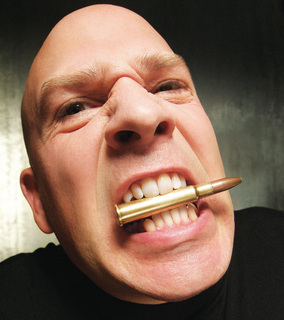
bite-the-bullet

The mutiny (India, 1857) broke out in the Bengal army because it was only in the military sphere that Indians were organized. The pretext for revolt was the introduction of the new Enfield rifle. To load it, the sepoys had to bite off the ends of lubricated cartridges. A rumour spread among the sepoys that the grease used to lubricate the cartridges was a mixture of pigs’ and cows’ lard; thus, to have oral contact with it was an insult to both Muslims and Hindus. There is no conclusive evidence that either of these materials was actually used on any of the cartridges in question. However, the perception that the cartridges were tainted added to the larger suspicion that the British were trying to undermine Indian traditional society. For their part, the British did not pay enough attention to the growing level of sepoy discontent.

tallowed-five-pounder

The new £5 notes contain tallow, a substance made from animal fat Credit: AP

“…a trace of tallow in the polymer pellets used in the base substrate of the polymer…”
“As the tweet was shared, social media users expressed their disgust at the news.
“New £5 note isn’t vegan. Was everyone’s 2016 New Year’s resolution to do ridiculously insane stuff like adding meat to money?” “

What are we to learn from these two (separate ?!?) incidents?

That we have not yet learned how, or when, to use tallow?

Or that we have reached, again, such a level of generalized discontent that people might use whatever plausible pretext in order to vent their accumulated grievances?

socialism-for-dummies-explained

What’s going on here has nothing to do with what the bona-fide socialists were about (long time ago they tried to reduce the imbalances produced by the ‘savage capitalism’ that was roaming freely in those days) and a lot to do with what’s currently going on in so many contemporary societies.

What’s left for us to do is to find out who is the ‘socialist’ here.

Those two bone headed morons who are fighting over who to be in control of that ladder?
And who are crying now because both halves have become useless?

Yes, that was what they were fighting for!
If all they wanted was to leave the pit it wouldn’t have mattered who did it first…

Or, maybe, the ‘serpent’ who offered to help those two divide the ladder amongst them?

And who, by doing precisely that, made sure that his control, over his ladder – which was not shown, remained unchallenged?

But what has any of this anything to do with socialism? At all?

Did anybody whisper ‘monopoly’?
Back there?

Anyone?