Archives for category: man as a measure for all things

Evolution is not about ‘survival of the fittest’.
Evolution is about the demise of the unfit.

Ernst Mayr, What Evolution Is, 2001

Well, it actually makes a lot of sense.

Being healthy is relative.
On having a diagnostic hanging over your head.

Here’s another way of looking at things.

Functional versus dysfunctional.
For as long as one is functional, that person is not a burden for anybody. Regardless of any diagnostic.
Even a dysfunctional person can be useful for those around them. Even if that person is completely dependent on those taking care of them. A good word spoken at the right moment makes wonders.

So yes, I would also love to die ‘healthy’. As in trying to do my best to be useful.
At least, to be as light a burden as possible.

On the other hand, health is yet another virtual thing. ‘Virtual’ as in man made…
Until not so long ago, ’cause of death’ for people over a certain age was always ‘old age’.
No longer. No matter how old the deceased, the body is transported to a medical facility and the particular cause of death is forensically determined.
It makes perfect sense. Scientifically speaking. There is no such thing as too much data, specially when it comes to something as precious to us as human life.
And it raises a ‘somewhat’ unreasonable kind of hope. That sometime, somehow, all causes of death will be mitigated. Diagnosed and treated.
That life will become ‘longer’. That we, humans, will live if not forever… then until an accident will happen to shorten our destiny.

Can you imagine something like that?
People living for 3 or 4 hundreds of years?

No retirement.
No risk taken.
No change…

Do your own thinking!

How many times did you came across this message? ‘Do your own thinking!’. ‘Do your own research!’. ‘Don’t believe everything you are told!’

Sounds reasonable, doesn’t it? What’s wrong in googling up a subject before making up your mind? What’s wrong in storming your brain before calling something one way or another?

Let’s examine something else first.
There are ways in which we relate to ‘reality’. ‘Conservatively’ or ‘open-mindedly’.
And no, this has very little to do with our intelligence or with our level of education.

It depends on how important the subject at hand is to our well being and whether we have already made up our mind about it!

How open minded are you when it comes to spending the last money you have in your pocket? With no prospect of getting any in the near future?
How open minded do you remain after you have already declared, publicly, one way or another?

Most of those lavishly spraying their audience with ‘use your own heads’ – in my FB feed – also told their followers to avoid vaccines, at all cost. The one against Covid in particular – ‘it will eventually kill you’, but also those against measles. ‘It might cause autism’.

How this thing works?

Survival bias.
We not only want to survive, physically, but also to ‘feel good’. To preserve the good opinion we have constructed about ourselves.

This being the reason for which those of us who struggle to find their next meal will not take time to consider any philosophical subject. Will gladly accept the more ‘convincingly’ stated opinion and get back to the more important task of ‘foraging’.
And this being the reason for which those of us already entertaining a strong opinion about a subject see the world ‘differently’. Effectively associate different meaning to the same words!

“Do your own thinking” actually means different things to different people.
For those who have already made up their minds it means “feel free to stick to your own opinion”.
While for those who, for whatever reason, are open-minded about the subject at hand it means “please hear me out”.

Take your pick.

And God saw every thing that he had made,
and,
behold, it was very good.

Our fore-fore fathers believed that the birth of gods was what had transformed the primordial chaos into a more orderly cosmos. A place where man could live, as long as he didn’t fall on the bad side of the local gods.

Our fore fathers, those who had invented monotheism, had condensed the previous generation of gods into a single one. Thus unifying the space and the time. Transforming Cosmos into the Universe.

We’ve given up god altogether.
We no longer believe in a unifying God. Some of us have given up religious belief while others continue to have faith in a personal god. Often times shared with the other members of their particular religious community.

But even though we no longer believe in a unifying god, we still consider that we all share the same world. The same Universe. Even if some of us consider the Earth to be flat…

So.
Our fore-fore fathers used common sense and hired human-like gods to make sense of and to bring order in their particular portions of the world. In those times, each region – or each piece of the world – was a cosmos in itself. Governed by a specific set of arrangements between those who lived there and the gods they believed in. And the people who had to move to another cosmos, or were conquered by people coming from another cosmos, usually changed their belief accordingly. Simply because faith came with the territory.
Our fore – fathers used philosophy to understand there was, and continues to be, only one world. Only one Nature. And changed their belief accordingly. After all, and after learning enough, one world and one god makes more sense than a plethora of gods running wild and doing as they please… One world… one God… obvious enough… but which God to believe in? Particularly when ‘I’m a jealous God’.

Since then, God no longer comes with the territory… but comes with those who believe in him.

It’s no longer god who makes sense of the world.
It’s the believers who choose their belief. Choose what to make of their world.

Of the one, otherwise known as ‘single’, world we have at our disposal.
“Be fruitful and increase in number; fill the earth and subdue it. Rule over the fish in the sea and the birds in the sky and over every living creature that moves on the ground.”

Where things take their places

In 1995, University of Colorado Boulder physicists observed BEC, a fifth state of matter that only exists within a sliver of absolute zero. At such a low temperature, individual atoms overlap so much that they collapse into a single quantum state where they collectively act as a single entity.

Positing that ‘space is where things happen’ is nothing short of stating the obvious.
It does have some merit, though.
It leads to the real subject of today’s post.

When no temperature is present – 0 degrees Kelvin – there’s no interaction between the things which happen to be there.

So whose temperature are we measuring?

The temperature of the space? Of the place harboring whatever happens there? Or not…
The temperature of the things happening to be there?
Or the amount of interaction between the things populating that place?

Logos continuously chiseling
new Reality
out of whatever Opportunity is at hand….

At the beginning there was nothing but Chaos.
Then Gods were born. One way or another.

The birth of Gods sowed order into Chaos.
Thus Cosmos was born.

For a proposition to be ‘true’
it is not enough for it to be logically valid.
It also has to make sense. Epistemologically speaking.

Oscar Hoffman

“This house belongs to me”.
“I own this house”.

Logically, these two propositions are equivalent. Both state the same thing.
But which one makes real sense?

Where do you belong?
Where do you feel at home?

What can your house do for you?
What have you done to your house?

“Terror management theory is the idea that we create culture
and aspects of our lives that will “outlive” us
because of our knowledge of our own mortality
which is innately terrifying to us.
“

Self awareness doesn’t come cheap…

Collectively, species-wise, we’ve done OK. We’ve become the dominant species on Earth.
For good and/or for worse…

Individually, on the other hand…

Doubts!
Self-awareness comes with plenty of them:
Will I be able to find enough food tomorrow? For me and for my family?
When will it start to rain?
Will the sun rise again?

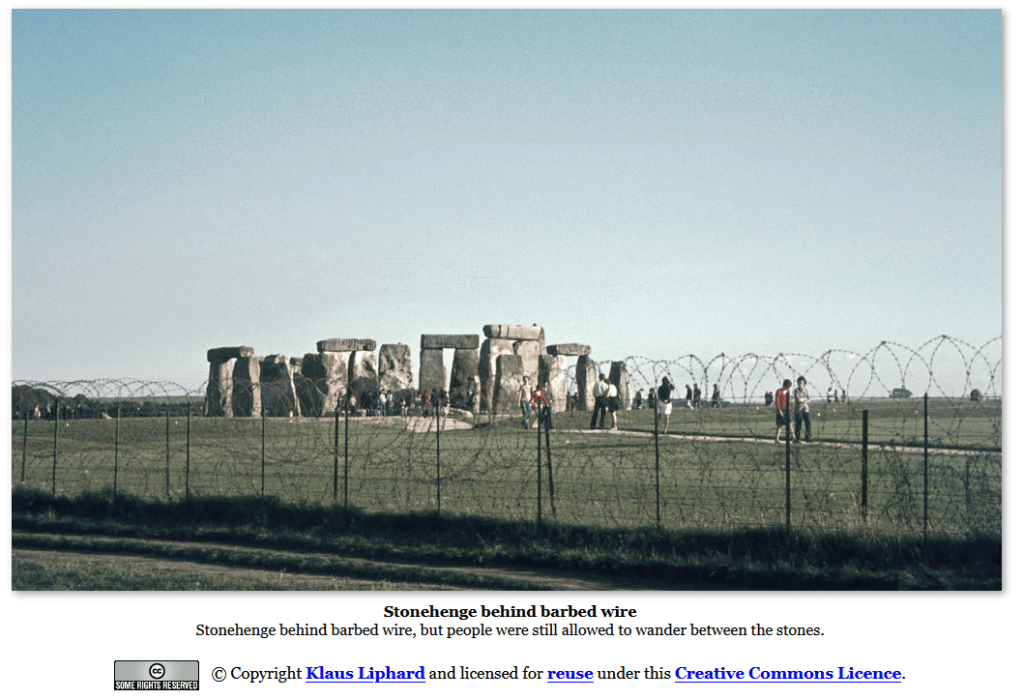
The way I see it, ‘The Stonehenge’ has been built for one thing only.
To assuage fear.

According to scientists researching the phenomenon, ‘The Stonehenge’ had been built by the immigrants who brought agriculture into Britain.
Solving the food problem wasn’t enough. Enough to bring peace of mind…
Now, that full bellied people had enough time on their hands, they started to think about ‘the future’:

‘OK, tomorrow will come. The sun will rise. We’ll be able to sow our crops for the next year. But is there an order in all this? How can we be sure?’
‘Let’s build something which will prove “order”. If we could demonstrate that year after year the summer solstice ‘falls’ under the same ‘parameters’ then there’s indeed an ‘order’. Things don’t just happen, they follow a ‘script’ ‘.

And they did exactly that. Built the first scientific instrument. Proved that the sun not only rises each day but also follows a precise path.

Quite a management feat.
And no, I don’t mean the stone stacking part. However remarkable that was…
Their real success was to convince themselves to keep toiling into the future!

Where there’s a way
There will be a will!

An open wound will be ‘colonized’ by various organisms.
A mixture of water and flour will develop a ‘froth’.
A naive person will be swindled.

A healthy immune system will, eventually, take care of the infection. Successfully or not…
If in the hands of an experienced baker, the mixture of water and flour will – eventually – become the starting point for a delicious sour-bread loaf.
The previously naive person, once swindled, might learn something from the experience.

Life is nothing but an added layer of opportunity.
The pre-animated world is about strict rules. No variation, except for that brought about by happenstance.

Life is also about rules. But way laxer than those governing the pre-animated world.
While the pre-animated world is about nothing more than mere existence, life is about surviving in the given conditions. About evolution. About change.

And here’s the catch.
Pre-conscious change is also mainly about happenstance.
Darwin’s evolution is driven by minute changes at the DNA level. Those which are helpful are perpetuated while those which are harmful either kill out-rightly the organism where they have appeared or restrict its ability to ‘give birth’.
Nota bene. Darwin’s evolution was about “On the Origin of Species by Means of Natural Selection“
In his understanding, and in the real world, evolving – biology wise – is done by the species. Not by individual organisms!

Conscious change, on the other hand… is driven by individuals!
Happenstance continues to be involved, heavily, but the main drive comes from ‘want’. From individuals willing/wishing to ‘make a difference’.

Is this a good or a bad thing?!?
It is a fact. Neither necessarily good or bad. Just a fact.
The outcome, evolution wise, depends on how the social organism – the cultural species – digests the experience.

For a while, I was convinced we were living in a virtual reality.
In a reality of our own making. As I mentioned earlier, ‘vir‘ is a Latin word. “Man”. “Hero”.
Hence ‘virtual’ literally means ‘man-made’. ‘Manufactured’.

Now I’ve realized we live inside an experiment.
We are both the objects and the agents of the intersecting experiments currently active.

We call them ‘lives’. Our lives…

We all know about it.
To the tune that none of us cares
anymore about what the rest of us think about it.

We’ve conditioned ourself to use a single perspective.
To measure with a single yard-stick.
To have but a single goal…


We have not yet been able to replace the founding illusion
The naturally born idol.
Our image of God…

Our hunting-gathering ancestors have become conscious, learned to speak, invented crafts. And painted numerous caves.
Life was nice in those days. A few hours spend foraging then you could do whatever you fancied. No point in gathering more food – it would have spoiled – and no point in making more tools than you could carry with you. So… lay back and enjoy.
The only problem with this was the fact that those people lived in a state of an extreme precarity. No provision could be made for tomorrow. Nobody ever knew what they were going to eat, if anything, the next day!

Hence they jumped at the first chance of agriculture. A far safer approach.

The problem with agriculture was that it had brought three things with it.

People were divided in three. Rulers, free people – men, usually and slaves.
It was far cheaper, and way more efficient, to use slaves instead of hiring free-people. They were spared for trading, fighting and other occupations which needed self esteem and a lot more personal autonomy than tilling.

Agriculture also brought about the need for protection. For an army.
Stashed produce, saved to be used during the entire year and sometimes beyond that, was liable to tempt some of the neighbors. Those who preferred to steal something rather than work for it.
The ‘protection force’ also came in handy when the slaves tried to leave their posts.

The third ‘thing’ was philosophy.
The society had enough spare resources to allow a few of its members to spend their time thinking. Instead of performing ‘menial’ tasks.

These thinkers have started to notice.
And continue to do so.
For as long as the thinkers concentrated their efforts towards the well being of the community and the community paid attention, things went well. Each generation fared better, on average and statistically speaking, than the previous ones.
Whenever things went astray – the thinkers started to ‘hallucinate’, the ‘public’ no long cared and/or both, things went the other way.

Until some 50 years ago, things were going in the right direction.
People were increasingly freer and fared increasingly better.
Since some 15 years before the communism had collapsed, things has started to sputter.

Stay tuned.

Living organisms constantly exchange information with their environment.

Then where is the difference between ‘us’ and the rest of the living creatures?
Information-wise, of course!

Language…

As far as we know, humans are the only critters currently living on Earth which are interested in how other creatures learn. Or teach…

“An individual actor A can be said to teach if it modifies its behavior only in the presence of a naive observer, B, at some cost or at least without obtaining an immediate benefit for itself. A’ behavior thereby encourages or punishes B’s behavior, or provide B with experience, or sets an example for B. As a result, B acquires knowledge or learns a skill earlier in life or more rapidly or efficiently that might otherwise do, or that it would not learn at all.” Caro and Hauser, 1992

In the 20 odd years since Caro and Hauser have set the bar for what teaching means quite a number of species have been found to do it. To fully or at least suggestively cross all the necessary t-s. From ants to primates.

Interestingly enough, all of those species have a clear ‘collective’ behavior.
All individuals belonging to a species collaborate, of sorts, towards the survival of that species. This goes without saying.
But in some species this collaboration is more intense than in others.
Ants and bees versus most other insects.
Elephants versus cheetahs. Or leopards.
Even chimpanzees versus orangutans…

OK, for some species hand to hand collaboration between generations is impossible. Most parent insects are dead when their offspring hatch. Orangutans live in forests where food is too scarce for more than 1 individual to forage.
Others have found their niches. Where the individual approach is good enough for them to survive. Cheetahs, leopards. Bears, even…

Charles Darwin taught us about evolution. Merging individual lives into the survival of the species those individuals belong to.

Life, as I see it from a “functional and mechanistic perspective“, is yet another manner in which matter is organized. Yet another ‘state of matter‘.
For life to be present, three conditions have to be met.
– Individual organisms have to be exchanging, in a controlled manner, substances with their environment. To ingest nutrients and to excrete the by-products of their metabolism.
– Individual organisms have to be exchanging information with their environment. And with their interior. Otherwise the exchange of substances would no longer be controlled by the individuals.
– Individual organisms have be passing to the next generation the pertinent information needed for the species to survive. In the kind of life we are familiar with, that would be ‘the genetic information’.

Considering the above, I dare to make a difference between what Caro and Hauser consider to be teaching and what we, humans, do.
Intent!

I doubt that any of the ‘animal teachers’ do it under their own volition.
After all, nobody has yet identified an animal con-artist who cons the members of their own species… as we do!
As far as we currently know, ‘teaching behavior’ is displayed inside species which collaborate more closely than other species. Which suggests that that kind of behavior is somehow innate to those species. A ‘habit’, not a choice. As it is with us.

What makes it possible? This difference?
Our special kind of conscience and our use of language.
The fact that we are the only species – as far as we know – capable of building a ‘virtual image’ of the surrounding reality. Capable to select certain aspects of what surrounds us and codify them using various forms of ‘notation’.
And to do this according to our own, individual, interests!
Sometimes even against the interests of the community/species to which we belong.