Archives for category: effective communication

rape in the not so virtual reality

Two concepts are slowly merging into one and becoming more and more obvious for the most oblivious among us.

Virtual reality was mentioned for the first time way back in the XXth century.
In 1938, Antonin Artaud described the illusory nature of characters and objects in the theatre as “la réalité virtuelle” in a collection of essays, Le Théâtre et son double. The English translation of this book, published in 1958 as The Theater and its Double,[2] is the earliest published use of the term “virtual reality”.
Nowadays the concept has been widened to cover a lot more than what’s happening inside the theaters.
In fact, the technology used to create VR is able to transform everyplace in a stage, everybody in an actor and to broadcast everything almost everywhere.

The other concept I was mentioning at the beginning of my post is a lesser known one.
The Social Construction of Reality“, published in 1966 by Peter L Berger and Thomas Luckmann eloquently explains how various groups of people collectively adapt their historically accrued habits (cultures) to the ever-changing surrounding reality. One of the sources of change being human activity itself.

The latest, that I heard of, addition to the realm of the not so virtual anymore reality is Periscope. A mobile app that lets its user broadcast, live, whatever he/she deems interesting enough from what is taking place around him/her. What is broadcast has a ‘shelf live’ of 24 hours but can be deleted at wish or made permanent. Also the sharing ‘voyeur’ has control over the audience, it can be set as ‘public’ or ‘private’ – and broadcast only to a selected few.

Some days ago two female high-school students and friends, one 18 and the other 17, met a 29 male in a Columbus, Ohio, mall. He bought them a bottle of vodka and “encouraged them to meet him the following day“.
The girls ‘honored’ the invitation, the three  ‘socialized’ for a while – read “had all been drinking“, and then the male proceeded to raping the youngest of the girls.
The older one live-streamed the rape using Periscope.

The case came to light when authorities were contacted after an out-of-state friend of the woman saw the images, Franklin County Prosecutor Ron O’Brien said.

It is not unusual for a rape to remain unreported by the victim. It’s not OK, but it happens.
Also it is not that unusual for a rape to remain unreported even after friends or relatives of the victim learn of the event. Again, it is not OK but it is known to have happened before.

Yet this is the first time that I’ve heard of a rape that had taken place practically in public and which wasn’t reported ‘live’ to the police.

‘She does everything possible to contain the situation even to the point of asking while it’s being filmed to these Periscope followers, “What should I do now? What should I do now?”‘ Shamansky said.” Shamansky being a lawyer for the older girl, who is currently charged with rape, alongside the male perpetrator.
Separately, she is being charged with “illegal use of a minor in a nudity-oriented material or performanceforlivestreaming her friend nude the day before the assault“.

And how did the viewers react to the broadcast? Except for the “out-of-state friend of the woman” who reported the incident, of course?

Here’s the prosecutor’s side of the story:

O’Brien said Lonina is seen trying to help only briefly during the 10-minute video. O’Brien said the victim was clearly screaming ‘stop’ and ‘no’ during the assault.
Although Lonina told police she was trying to record the assault as evidence, her behavior as people watching via Periscope ‘liked’ the assault painted a different picture, O’Brien said.

‘She got, I guess, taken up with all the “likes” that her livestream was getting and therefore continued to do it, and did nothing to aid the victim,’ O’Brien said.

I don’t know what, or even if, she could have done anything in a really effective manner – remember that all three had been drinking – but I know for sure that at least some people were watching the live stream. The ones “liking” it.

I still cannot understand how come all of them failed to call 911.
Just finished reading, again, another excellent post written by John Faithful Hamer on Committingsociology.com

I remember now that something was nagging me after reading it for the first time. I also remember the pangs of helplessness felt almost a year ago, when I couldn’t identify what was nagging me.

Well, this time I nailed it.

“Getting angry isn’t really like releasing the built-up pressure in a steam engine; it’s far more like exercising a muscle group. Every time you give in to the desire to lose it, you strengthen your “anger muscles”; every time you resist the urge, you weaken them.”….
“So perhaps it’s time to stop preaching the gospel of expression, and revisit the much-maligned virtues of repression.”

“Anger” and “getting angry” are not the same thing.
Anger is just a feeling – and, hence, a source of ‘energy’ – while ‘getting angry’ is the manner in which we allow it, consciously or unconsciously, to take us over.
I fully agree that ‘getting angry’ only worsens the situation only I’m afraid that ‘resisting the urge’ isn’t any better. In fact that would be no different from tightening your arse because you don’t want to fart in public.
The problem is not solved, not at all, only postponed. You still need to relieve yourself.
By widening Freud’s concept of repression to encompass more feelings than the simple embarrassment we might find a reason to continue to look for a manner in which to ‘release that built up pressure’.
Only now we are faced with a new problem, since we’ve already agreed that ‘getting angry’ is not the best thing to do.
Freud, again, to the rescue.
How about widening another one of his concepts, sublimation?
How about learning to express, this time consciously, our intense negative feelings in a socially acceptable, and hence a lot more effective, manner?

First and foremost language is perceived as a communication medium.

As such it needs clarity and consistency, otherwise information could not have been reliably exchanged and or preserved through its use.

But language is used for many other purposes than for simply ‘translating’ raw data. Where to find a certain object or how to execute a certain task.
We use it to convey sentiment – the way we are affected by the raw data that has become known to us, and to communicate our particular understanding of things. Our point of view about what has happened around us.
Furthermore we use it to convince people. To do things or to accept our points of view.

All these different uses involve a considerable amount of negotiation.

Regarding immediate goals – the things we are negotiating about, but also some that is taking place ‘under the table’ and involves the continuous fine tuning of the instruments used during the negotiating process. The words themselves.

These negotiation instruments – the language itself, in fact, have to be constantly re-calibrated for two rather obvious reasons.
For starters, the reality around us – and our understanding of it – is changing constantly.
Secondly, every negotiation involves a degree of ‘shade’. In fact that ‘shade’ is exactly the space where ‘change’ happens, where the positions of the two negotiators overlap and where the two can swap ideas.
If words would be rigidly precise than we’d have to invent new ones every time reality changes, no matter how minutely. Also whenever our understanding about things deepens, no matter how shallowly.
Simultaneously, too much ‘linguistic precision’ would kill not only poetry and our ability to convey our real feelings to other human beings but would also gravely impair our ability to influence each-other. Could you imagine how our life would be if a polite intervention would sound exactly like an SMS message of if a marriage proposal would be similar a requisition order?

More about how the linguistically mediated interplay between us has brought about our own self-awareness can be found here:

Humberto Maturana, The Origin and Conservation of Self-consciousness.

The ‘Panama Papers’ rekindled the public interest in the subject of ‘what legitimate goal could anyone have in setting up a company in a fiscal paradise?’.

Taxes, stupid!

Actually it’s quite simple.

Let’s pretend you are an alien from the outer space who has a business idea backed up by enough capital and you want to put it in practice somewhere on Earth. Aren’t you going to shop around for the best environment you might find? So that your business would have optimal conditions to grow? And when the business ripens wouldn’t you want to be able to cash on it – and end up with as much money as possible?

Rather conflicting demands, isn’t it?

First you want an ‘operational base’ with relatively low costs but secure and full of whatever amenities your business might need in order to thrive. Next you’ll need fast access to a market where to sell your wares. Last but not least it would be important for you to incorporate your business in such a way/place that you’ll end up pay the least amount of tax, both while operating the business and after the cash out moment.

While all these are legitimate demands there are a right and a wrong way to meet them.

I’ll refrain myself to discussing exclusively about the tax part, the rest being relatively easy to balance.

In this respect you can choose to incorporate the business in the same place you have selected for your operational base and pay whatever taxes are due in that place, under the rationale that those taxes cover the cost of doing business there and are nothing but a compensation for benefiting from the conditions present there at the time. After all, when you have chosen a particular place as the home of your business you have entered into an informal arrangement with that place. It lets you make good use of whatever is there to be used – exactly the things that convinced you to select that particular place, and expects you to fulfill your side of the bargain. Provide enough compensation so that that place can continue to be a good place to conduct business and, if possible, improve itself. Pay the local taxes.

Or, equally legitimate, use two different places for each thing. Organize your operational base where it would work best and incorporate your business in a place where you’ll be able to pay as little tax as possible.

And here’s the catch. No matter where you incorporate your business you’ll still have to pay some taxes in the place you have chosen as your operational base.

Then why bother?!? you might legitimately ask.
Since this is not an accounting dissertation I’ll just tell you that there might be serious financial advantages in making this choice, not the least of them having to do with the cash out moment.

And this is the very point where some people get greedy. They try to avoid altogether the taxes tied to the ‘operational base’ – by employing various semi, or even completely i-legal stratagems, and by doing so completely transform the very nature of the entire operation.

From one of fiscal optimization to one of money laundering.

There are a lot of rationalizations for this course of action. From ‘the state is a thief that uses force in order to part me from the fruit of my efforts!’ to ‘why give it to the state since the money will be squandered by the inefficient government?’.

Now let’s please remember where we started from.
OK, you are not an ‘alien from the outer space’ but what’s stopping you from conducting your business where ever you want on the face of this Earth? (My bad, this question is not valid for exactly everybody, there still are countries that don’t allow for people, or capital, to exit freely, but I’m sure you get my drift)
Oh, you like it where you are but you hate paying taxes and/or you’re disgusted by the way the government handles its finances!

Then let me remind you of two things.

First, you probably live in a democracy. Speak up. Make your concerns known. Loudly. Make sure you are listened to. Vote wisely.

Secondly, you are probably fed up not only by the fact that in your country taxes are really high but also by how little you get back in return.
Well… that’s because there are so many people who do not pay their fair share and that your government has to take more from those who do pay in order to make the ends meet.

Savvy?

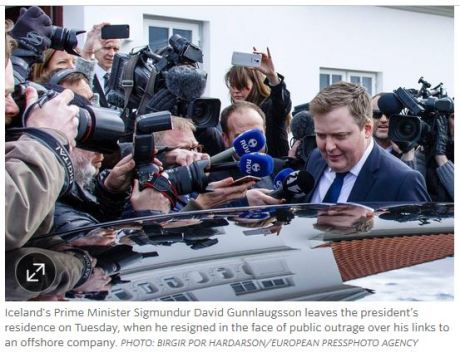
iceland prime minister resigns over Panama papers

Us electoral sinopsis, re-edited

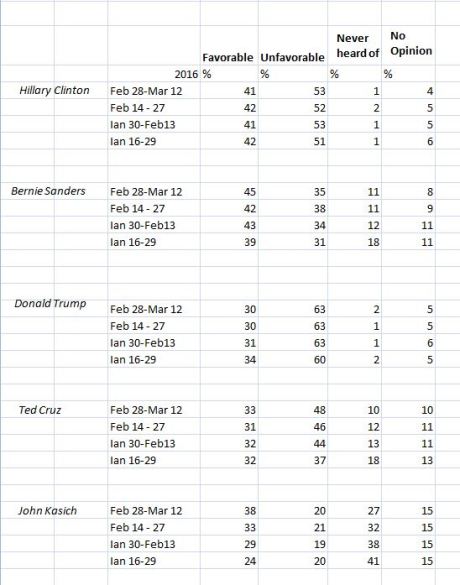
Favorability: People in the News, Gallup, April 2, 2016

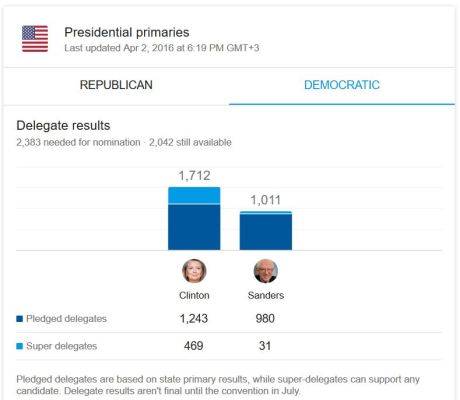
Clinton vs Sanders, April 2, 2016

Source: AP

So, it looks like that the concerned Democrats – those who bothered to show up for the preliminaries, and specially the ‘super delegates’, are going to send Hilary Clinton to compete on the national stage, despite her constant ‘negative favorability’ and despite the fact that Sanders is constantly improving his chances – both favorability and ‘never heard of’ scores are slightly better now than they were at the start of the year. Furthermore, Sanders is the one who can ‘grow naturally’ – simply by making himself known – while Clinton needs to convince the voters that their erstwhile opinion about her was mistaken. An almost impossible feat, given the length of her public career…

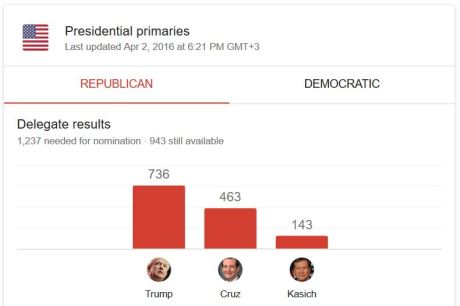
republican pack, April 2, 2016

Source: AP

On the Republican side things are even stranger.
Trump gathers more and more delegates while his ‘negative favorability score’ becomes slightly even ‘more negative’, Cruz gets a second lease on life despite his ‘unfavorable’ score increasing dramatically while Kasich, the least favored by the hard core Republicans, climbs nationally from +4% to + 18% in 4 short months. And if you look closely almost all new opinions on him, those that have been developed during the last 4 months, have been in his favor.

One of my Republican friends said “I can’t speak for the other candidates, but people support Cruz because they believe in what he believes, and feel that sometimes it’s more important to stand up for what’s right, rather than what’s popular.“.
OK, I can understand that. The despondent and/or exasperated use Trump as a banner for their state of mind while the hard core, value toting, Republicans hope that by backing Cruz they will somehow bolster those values.

But let’s see what some ‘significant Republicans’ have to say about the matter.

Scott Walker, Governor for Wisconsin and ex candidate, being interviewed on WTMJ’s Charlie Sykes Show:
““If you’re someone who is uneasy with the frontrunner, right now there’s really only one candidate—I think if you’re just looking at the numbers objectively, Ted Cruz, Sen. Cruz, is the only one who’s got a chance other than Donald Trump to win the nomination,” Walker said in the Wednesday interview on WTMJ’s Charlie Sykes Show. “Statistically, my friend Gov. Kasich can not.””

Then there is Lindsay Graham, Republican Senator for South Carolina and ex candidate who endorsed Jeb Bush when dropping from the race:
“Graham said there are other candidates he likes better, but he doesn’t think they can win. “I prefer John Kasich; Cruz is not my first pick by any choice,” the South Carolina senator explained. “But I don’t see how John Kasich can mount the opposition that Ted Cruz can to stop Donald Trump from getting 1,237” (the number of delegates needed to secure the nomination).
Graham has made it abundantly clear that he really doesn’t like Cruz at all. In January, he said Cruz has “exhibited behavior in his time in the Senate that make it impossible for me to believe that he could bring this country together,” adding that choosing between him and Trump is “like being shot or poisoned — what does it really matter?” Last month, he joked about Cruz’s general unpopularity among his colleagues, saying, “If you killed Ted Cruz on the floor of the Senate, and the trial was in the Senate, nobody would convict you.””

The way I see it, these guys, the Republican ‘apparatchiks’, are more concerned about derailing Trump than with promoting the more suited candidate among the trio. Suited for Presidency, that is.

sansele candidatilor

source: Huffpost Pollster

So, according to the polls compiled by Huffington Post, Sanders would lick the entire Republican field – if allowed to compete, while the Republican candidates are stacked, at least for now, according to the ‘who has the least chances on the national front’ criterion.

?!?

Does any of this make any sense? Any at all?

Here’s my Republican friend again: “In the case of Clinton, despite her unfavorability in the polls, there’s a sense in the Democratic Party that it’s her “turn.”
Some others think she is ‘in cahoots’ with the ‘big business’… “Family charities collected donations from companies she promoted as secretary of state“… Coming from Wall Street Journal this is a powerful allegation indeed…

But at least in this camp things are unfolding, lets say, ‘naturally’. The guys with vested interests (the super delegates, for example) are acting according to those interests while the rank and file Democrats are slowly (too slowly, maybe?) finding out what’s going on.

What really baffles me is what’s happening on the Republican side.

Some of the rank and file have adopted ‘the Donald’ as their mascot despite the obvious fact that he doesn’t belong, at all, in politics. He might have been a successful business man – read chock full of money, but the way he made that money disqualifies him from holding office. Does ‘eminent domain‘ ring any bells with you? Not to mention his antics on the public stage: “Excuse me”, ‘I’m the best thing that could happen to America!’
Are all these people delusional or are they so fed up with what’s currently going on in America that they can’t see the trees because of the forest (is on fire)?

Some others have gone ‘back to basics’ and try to revive what they consider to be the ‘sound Republican values’ – I’m speaking now about those who support Ted Cruz, if you didn’t figure that out by yourselves.
But what are these ‘hard core Republican values’?
How come some of Cruz’s followers are blaming Lincoln for being the first ‘statist’ in American history – not for abolishing slavery but for imposing that measure by force to the unwilling Southern States.
And how come those values have come to be embodied in someone so ‘popular’ among his Senatorial colleagues that “If you killed Ted Cruz on the floor of the Senate, and the trial was in the Senate, nobody would convict you.” ?

And isn’t it strange that so many Republicans are so mesmerized that they are willing to give up almost any chance of electing a Republican President?
OK, I can understand that way of thinking being used by ‘lay people’. But what is the real meaning of ‘pundits’ rallying behind the ‘value laden’ Cruz when it is obvious that Kasich is in a way better position on the national front?

Could it be that these pundits are more concerned about their own careers than with the fate of the Republican party? And even about the Republican values?
Farfetched?
Are you sure? Don’t you see that by energizing their constituencies into a frenzy they are simply building Republican (local) fortresses for their own use, leaving the rest of the (national) Republicans out to dry?

more stuff

Well, I was under the impression that Conservatism was about maintaining a common way of life, not about conserving privileges.

I still believe that.

ouroboros

Ever since people have become aware of their own awareness philosophers have entertained opposing views as to what is more important: matter or soul.

The materialists point out that everything, including us, is made of matter and, hence, nothing would be possible without it while the idealists maintain that everything that exists is nothing but a projection of our own thoughts.

As an engineer who had designed (material) objects before actually building them I find it strangely rewarding that both these fiercely opposing sides are, simultaneously, right.

Just as we are simultaneously made of flesh and animated by souls.

If you disagree, just pinch yourself.
Now tell me, ‘did it hurt?’.
Who felt it? Your flesh or your soul?
And who’s able to meditate about the whole experience? How come are we not only able to feel things but also to think about them? Then to communicate, efficiently, among ourselves about our relatively different experiences?
Surely, there must be something shared amongst us, something that constitutes not only a medium for our communication but also a common base for our experiences.

I’m going to use ‘reality’ to designate that commonality, irrespective of the fact that reality is a two tiered thing.

A material reality, something that exists per se – according to its own, natural, set of laws, and a social reality, something that we, the people, have agreed upon – either willingly or by omission to protest, efficiently, against it.

These two tiers of reality are no longer independent.

In fact they have never been. The social reality has grown, as a bud, ‘on top’ of the material reality. And this has happened according to an opportunity enshrined in the natural laws that govern the very existence of the material reality.

Now, after its birth, social reality has started to alter the material one.
In two ways.
By developing an ever more sophisticated understanding of the inner workings we gradually discover inside the material realm and, subsequently, by using various aspects of that (inherently limited) understanding in order to effect voluntary change.

I’m going to make a brief pause here.
Social reality is a human construct, one that came to life fueled by our own volition and shaped by the sum of the choices we’ve made during our entire history.
The mere fact that we are also ‘animals’ – and have changed the world around us by our mere, and long time unwitting, existence, is something else. Related to our social existence but nevertheless different from it.

What I’m trying to say is that by coming of age – by becoming aware of our own awareness, we are currently adding a third dimension to that Ouroboros thing.
The ‘serpent’ has been ‘eating its tail’ from the very beginning of the world. New stars have been born from the dust left after the older ones have exploded and decaying organic matter is what used to feed our crops until a few short years ago – and still does for the organic farmers.
But now, that we’ve become aware of the entire process – and of our contribution to it, we are in a position to influence its direction.

We can turn it into a vicious or a virtuous circle.

Which will it be?

who needs what

And please, please, don’t make this confusion.
People do, as for now at least, need ‘nature’ in order to lead what we call/feel to be a normal life.
But nature also somehow needs us. Otherwise it wouldn’t have allowed us to become what we are today.

Until now, during our development, we haven’t broken, not significantly at least, any natural laws. Otherwise we wouldn’t have reached this stage – according to Ernst Mayr’s interpretation of  Darwin’s teachings, anyway.
Evolution is not about the survival of the fittest but about the demise of the unfit.
We’re not dead yet, are we?

Let’s keep it that way, lest we’re gonna be replaced.

Fast.


As you can very easily infer from the title, I define myself as being an agnostic.
I’m reasonably satisfied with the scientific explanation about how the world came to be but I cannot rule out any intervention from an out-side agent during the process.

Hence my unwillingness to commit myself to any of the extreme positions.

And hence my conundrum.

A significant portion of the theist believers are convinced that God, their God, is behind everything that takes place on the surface of the Earth. And beyond.

All scientific materialists are convinced that everything takes place according to some immutable and implacable ‘natural laws’.

Then how come any of them has enough gumption to contradict any of the others?

How come a religious believer can say to another ‘your God is false’ if he is convinced that nothing in this World can happen without the knowledge and approval of his own one? Isn’t this a form of censorship towards his own God?
How come a religious believer can say to an atheist ‘you are going to rot in Hell’?
Last time I checked all Gods were very jealous, all religious teachings I know are clear about this: ‘You do your job and let Me do the judging.’ Then how come so many zealots feel free to usurp the place of their Gods and pass judgement on their peers?

How come so many of the atheists feel free to poke fun at the believers?
According to their own creed, religion is a natural thing. It does exist, isn’t it?
And by its mere existence it necessarily observes the very natural laws the atheists so staunchly defend. As if any of them needs any defense, let alone to be imposed upon the others…

When are we going to accept that religion, any of them, is nothing but an environment, not a yoke?
Just a place with some rules, not some kind of a prison?
That the final responsibility for our acts belongs to us, regardless of any God watching or not over our fates?

Here on Earth, anyway.

661211-_uy447_ss447_


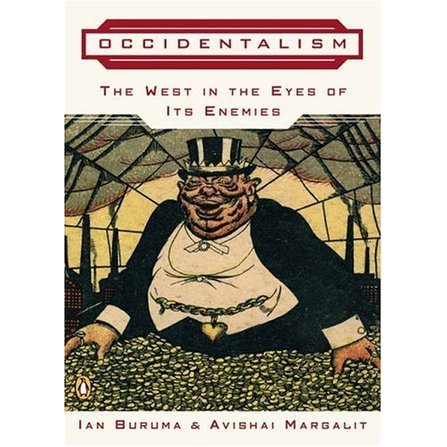
Just finished reading about the West as an object of hate.

Next in line is a book about the Orient as an object of study.

51k6n6ma-nl

Bearing in mind the fact that the Occident is still very much hated by a significant number of people residing in the Eastern part of the World it seems that we, the Westerners, have  been rather poor students of the Orient.

Or that some of us don’t give a damn about the long term consequences of their actions?

“To understand is not to excuse, just as to forgive is not to forget, but without understanding those who hate the West, we cannot hope to stop them from destroying humanity.”

I’d say these are very wise words which constitute an excellent starting point.
Towards the end of their book Ian Buruma and Avishai Margalit argue that “despite Christian fundamentalists speaking of a crusade, the West is not at war with Islam. In fact the fiercest battles will be fought inside the Islamic World.” (translation belongs to me, I have a Romanian version of the book)
How about us, in the West, helping the ‘right’ side in an innovative way?
By giving them an example.
By mending our own ways, before telling others to mend theirs!

I’m not a huge fan of the EU but I have a mostly positive opinion about it.

This morning my stance on this matter was about to change, dramatically.

I had found in my email a link towards a newspaper article, in Romanian, which said ‘the European Court for Human Rights in Strasbourg had ordered that starting with March 1 2016 people in Europe are no longer allowed to baptize their under-aged children‘.

Hard to believe something like that, isn’t it?

Are you really sure about that?

Now try to read articles like this – which are reasonably ‘well’ written, using the right lingo and having enough details thrown in to make them sound credible – through the eyes of a guy already worried by the so much hipped ‘migrant invasion’. Who was already pissed off by the various rules and regulations handed over from Brussels and acquiesced by the local, and supposedly sovereign, governments without any fuss.

Most people do not have the exercise of doubting everything they read, specially if the message comes from somebody they trust – a friend, for instance, or if the site where they read it seems legit.
OK, a certain proportion of them – not all, will exert some discretion if money is involved. That’s why phishing has a limited, yet certain, impact.
But when a particular piece of information apparently confirms an already entrenched stereotype – the bossiness of the EU, for instance – quite a large number of readers will fall for it.

Yesterday evening I was reading a comment added by Nassim Nicholas Taleb on his own Facebook wall: What social media finally did: destroy the press. It is more organic to get information from word-of-mouth, which it accelerated.
Corroborate that comment with a quote from an excellent article published by the same guy on Wired.com: “I am not saying here that there is no information in big data. There is plenty of information. The problem — the central issue — is that the needle comes in an increasingly larger haystack.” (Nassim N. Taleb, Beware the Big Errors of ‘Big Data’, Wired.com, 08.02.2013) and things start to gain some perspective.

What we’re dealing here is the famous lack of symmetry that currently bothers the strategic planners who presumably shape the future of the humankind.

In the ‘good ole’ days’ – when we had writers, publishing houses (newspapers, magazines, you name it) and ‘specialized’ readers, things were a lot simpler.
The writers had a certain notoriety and most of them didn’t want to jeopardize it by publishing bullshit.
Publishing houses didn’t dare to publish bullshit – except for those that did it on purpose, because most of their readers would no longer have bought their papers.
The specialized readers – those who usually bought a certain kind of magazines or books – were able to recognize most bullshit when they saw it, simply because they had some experience in the fields that used to elicit their interest.

Bullshit was being pushed in those days too, for sure. But it was a specialized job, that had to be done carefully.
And in that era, for bullshit to be effective, you had to have very ‘favorable’ circumstances.
Communism didn’t take hold but in very poor countries and fascism only in war torn Italy, Germany and Spain.

Nowadays, “…any simpleminded partisan with a political ax to grind can find an online community of like-minded whack-jobs who’ll be happy to provide him with plenty of ideological ammunition (e.g., bogus stats, pre-fab arguments, etc.). Before long, what was once a more-or-less harmless, single-issue troll has morphed into something far more monstrous and formidable: a veritable Swiss-army knife of bullshit, a perfect storm of bad ideas, a walking Wikipedia of stupid.” (John Faithful Hamer, From Here (2016) )

And since it’s very hard to police the Internet – even harder if we are determined to preserve the ‘freedom of expression’, we are in a very delicate position.

Is there anything to be done about this? Considering that there will never be a real shortage of ‘simpleminded partisans with political axes to grind’?

I think there is.

I started this post by mentioning three related concepts.

Freedom, responsibility and discretion.

We should not tamper with Freedom. Basically this is everything we’ve got, our most precious achievement.

So, we are left with ‘responsibility’ and ‘discretion’.

How is it that most sites manage to stay on line?

They are either sponsored by somebody or they sell advertising space, right?
Who provides that money? Who buys those advertised products? Who spreads around the news about those sites?

Who reads those bullshit laden articles and swallow them hook, line and sinker, simply because some of the (seemingly legit) arguments presented there happen to be consistent with our previously held convictions?

So, if you wish that your kids will be able to live in a better world, stop distributing bullshit through social media, stop buying things advertised on bullshit peddling sites – or, even better, stop going there altogether, and, above all, learn your kids to think with their own heads.

Even if that means they’ll end up contradicting us. As long as they’ll do it in a respectful enough manner – the second most important thing we’ll have to teach them about, all will be OK.


Update. A friend of mine, thanks Lucian, has done some digging over the Internet and found out where all this has started from:

baptising

iqvl1s8v8lzmbki8xjyy

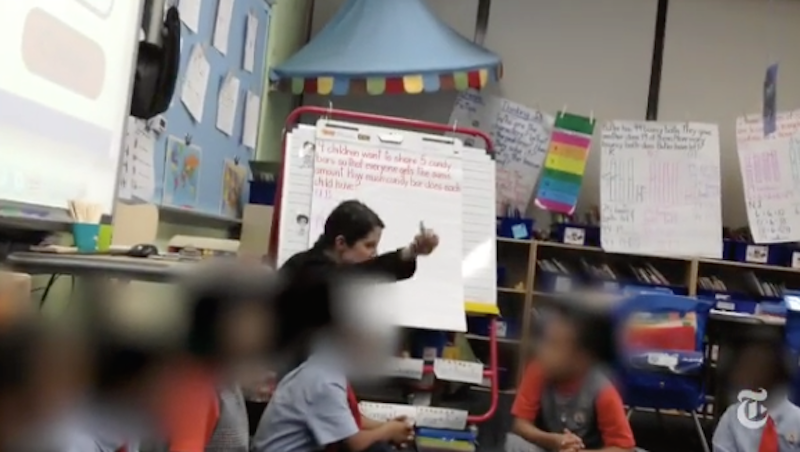
“Administrators at the Success Academy—a network of high-performing charter schools in the New York area—are standing behind what they call a model teacher, who was caught on camera ripping up homework and berating a first grade student for answering a math problem incorrectly.”


I totally disagree with this kind of behaviour.
Having said that let me offer you a glimpse of what’s going on in the minds of those who accept or even promote it:
Shouldn’t we be working at both ends of the problem?
Educate the educators about how to motivate the children to learn without crippling their souls AND educate the employers and their agents (managers) about how treating your work force with due respect would yield way better results than using mockery/belittlement as a motivation tool?
And shouldn’t we also be educating ourselves about the fine difference between spoiling a child and helping him/her into becoming a fully-fledged adult (a ‘man’ in the un-gendered meaning of the word)?

p03j0k3f

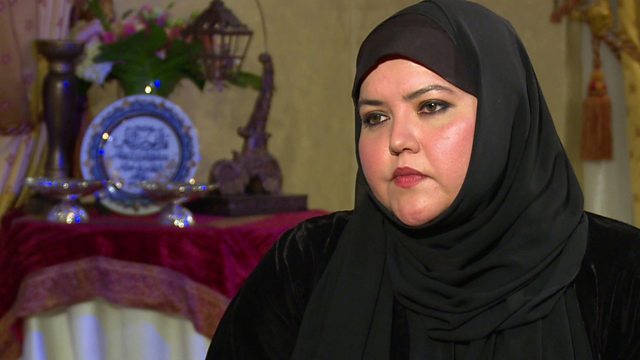
“Saudi women need to ‘think like men’

Gender segregation in Saudi Arabia has sometimes led to “immaturity”, a Saudi businesswoman and member of Jeddah’s municipal council has told BBC HARDtalk.”