As living organisms, we are defined by the genes inherited from our parents. As socialized human beings, our thoughts are shaped by the particular culture seeping through our consciences. As politically governed inhabitants of various countries, our destinies depend on the wisdom of those calling the shots. On more than one level…
We don’t have much to say when it comes to our genes. We can always interpret the tenets of the above mentioned cultures. As citizens, and very much depending on the particulars of each ‘polity’, we can always try to influence the decision making process.
We cannot do much about our genes for a very simple reason. They are part and parcel of our ‘inner-workings’. The immutable part of what we are. We can interpret culture and attempt to influence others because of our consciousness. Our ability to develop a certain kind of awareness.
Consciousness, the ability, can be construed as a space. The place where our individual consciences exist, meet and interact. Our individual consciences can be understood as atoms inhabiting the consciousness. Like all other spaces. consciousness has dimensions. Hence regions. Each region ‘functioning’ according to certain sets of rules. Sets of rules otherwise known as ‘cultures’. Culture, in general and each of the individual ones, is ‘alive’. Just as life itself is ‘alive’.
Unfortunately, life is only ‘aware’. Not yet aware of it’s own self. Not yet conscious. Only a certain species of individual living organisms has, as far, developed this ability. ‘Culture’ – a living thing because it is animated by individual living organisms, the conscious ones – is also ‘aware’. Just as life is ‘aware’. But, again like life, culture has not yet developed a full consciousness. And awareness of
Atoms, in the real world as well as the individual consciences inhabiting consciousness, ‘cooperate’. Democrit’s atoms, in various combinations, constitute the ‘real’ world. Including here the individual living organisms harboring individual consciences. Conscious ‘atoms’, the individual consciences harbored by the living organisms which have been able to develop one, are about to take over a portion of the above mentioned ‘real’ world.
Space is where ‘evolution’ happens. Where interaction shapes whatever is.
For space to exist, something must be there. Space needs ‘limits’. Which define it. ‘There’s a gap between these two bricks’. ‘This pile of bricks blocks the way’
‘Space’ is, simultaneously, a place, a concept and a word. We, writing and reading about it, exist. Somewhere. Somewhere in ‘space’… We’ve realized that. That we exist. Hence we came up with the concept. We needed to share that knowledge. To discuss it. We needed the word!
A wise man, using tools crafted by his predecessors, has calculated that whatever exists in space shapes its form. The heavier the object, the deeper the dent. Which depth of the dent influences the flow of time…
Time… the metric we use to measure ‘evolution’. The order and speed of happening… Time… Another ‘thing’ which exists, simultaneously, as a ‘reality’, a concept and a word.
Einstein, the wise man with the calculus, did his thing trying to understand. To put together an explanation for everything. Reading his findings, the results of his calculating, we can push our imagination. How about switching time for space?
How about considering ‘time’ as being the place where events exist? Interact, producing the ‘space’ needed for that process? Where the ‘weight’ of events, their ‘importance’, shapes the form of time. Which form of time influences the space ‘becoming’ as a consequence of those events existing/interacting in the place called time…
My point being … You see, Einstein’s predecessors had developed what we call ‘mathematics’. Our predecessors, also called ‘ancestors’, had developed a thing called language. Used it to communicate. Among themselves, as individuals, and among themselves – as a cultural species – and the surrounding reality. Language as the tool we use to digest and reshape the reality… Before we ‘do’ anything, we think about it. Using language to parse pertinent information stored in memory. Using language to consult with others. Using language to coordinate with others…
One of the languages we’ve developed is mathematics. Einstein, using this language, reached a ‘conclusion’. Wrote a story. Others call it a theory. Convincing enough for interested people to try. To try to prove it, to try to disprove it. To attempt to implement it into practice…
We exist. In space, using whatever resources we can identify and building time as a consequence of our actions. We do this using language. To explore, think and coordinate. That’s how we’re calling things. Space is where things happen and time is the ‘conclusion’ of whatever we do. Mathematics suggest that time and space are interchangeable.
So what?!?
Have we already solved all our immediate problems?
After all, we’re the only adults in the room. In the limited space called planet Earth. Or, at least and for all that it might matter, we’re the only adults in the room who care. Who should care about our own fate… Time’s running out, faster on the route we’re currently using!
The Ancient Greeks made the difference between Nomos and Phusis. Phusis was Nature and Nomos was what they made of it. And as long as the story ‘held water’… that was it.
By figuring out that they were the link between Phusis and Nomos, the Ancient Greeks were capable of integrating the miraculous into their daily lives. As long as they kept believing ‘the story’… For as long as ‘faith’ was doing its magic, things were OK. They, individually speaking, didn’t feel the need for much additional explanation. They kept figuring out what they could and accepted the rest. As belonging to the ‘other’ half of the realm they were inhabiting. People and gods sharing the same (cultural) space….
Phusis was what there was and Nomos was the words they used to describe what they saw. The words they used to make sense of what they were living. The words they used to spin ‘the story’ which kept them at ease with everything they couldn’t figure out.
Phusis and Nomos, together, was what made us possible. What we call ‘the Western Way of life’.
At some point, we’ve started to study physics. Newton figured out gravity. Not why things fell down, only the rate at which they did it. 9.81 m/second squared at sea level. Using far more advanced mathematical gimmicks, Einstein was able to calculate a lot more. But we still don’t know why mass tends to pull together. But we stopped worrying about it… now that we’ve been able to measure G. “Big G”, the gravitational constant, different from the “small g” measured by… Galileo Galilei. Forget it. The point being that we still don’t know why mass tends to pull together, to coagulate, as opposed to attempting to dissipate. As gases do… as long as there’s enough heat available!
To cut the long story short, we’ve cut out the miraculous from what we consider to be normal. Acceptabil in nominal terms. We attempt to measure everything. And to calculate what we cannot measure.
After all this time, we haven’t yet been able to accept our limits. Which is good. We keep pushing them.
Only sometimes we push them too hard. We keep pushing those limits where they have given up previously. And we don’t always notice what’s really going on.
Trying to understand physics, we’ve learned to fly. Hot air balloons, fixed wing air-crafts, rotary wing air-crafts, Lunar landing modules, nuclear-tipped cruise missiles… Trying to understand chemistry, we’ve learned to transform matter. The food we eat, the clothes we wear, the materials we use, prescription drugs, life-saving vaccines, poison gasses…. Trying to understand biology, we’ve learned to influence evolution. Cross-bred plants and animals, decoded – and then coded back – genetic information… Trying to understand economics, we’ve built the world as we currently have it. And put together the Efficient Market Hypothesis which keeps failing us… Trying to understand consciousness we’re messing up everything. Fake-news, post-truth, “artificial intelligence”…
And we still don’t know why mass tends to coagulate, how life came up to be, how consciousness grew up on top of everything…
You’re handed a pot. So heavy, you need to hold it with both hands. So hot, you want to let go of it. On your feet?!?
I’ve argued sometime ago that all living organisms act as if they were ‘aware’. All of them are adept at keeping their insides in, most of the outside out and, most importantly, they are the ones deciding what from the outside goes in and what from their inside goes out. And when! I call this awareness 1.0. Or life…
We congratulate ourselves over being the only creature wielding ‘self-awareness’. The ‘full fledged’ variety… according to our way of understanding it, of course. “Consciousness”, we call it. How about ‘awareness 2.0’?
Some of us are involved, heavily, into ‘faking’ things. From building something called ‘artificial intelligence’ to using ‘technology’ to mess up other people’s minds. They are ‘delving’ in the ‘next’ level. Knowingly but unwittingly playing god.
Life is driven by ‘natural selection’. Or ‘evolution’… as Darwin called them. ‘Happenstance’, if you look at it from another angle. The process of life/natural selection/evolution depends on it taking place ‘individually’. While evolution is a matter regarding ‘species’ – as Darwin itself had put it – the whole process depends on the fact that each individual organism which belongs to each species is distinct/different from all other members of the same species.
‘Self-awareness’ depends on the existence of other self-aware individuals. Willing to cooperate with the ones developing it. Just as no living organism has been observed, yet, while putting itself together starting from innanimate matter, no individual has ever been observed developing self-awareness with no outside help. Mind you, while the process involves ‘mature’ individuals helping ‘fledglings’ to ‘fly’, the process isn’t entirely ‘voluntary’. The outcome, the emerging individual consciousness, depends on the actions performed by those helping it but only inasmuch as the result of the natural evolution depends on the actions performed by the previous generation. Achieving ‘self-awareness’ is a ‘natural’ process, not a ‘deus ex machina’ machination!
Awareness 3.0, on the other hand… the ‘artificial’ kind… In this context, I wish to remind you of what happened when we, willingly but unwittingly, have reduced the natural bio-diversity in certain areas. According to our needs and understandings…
“The Green Revolution’s success also brought serious costs: intensive farming drained groundwater, degraded soil and contaminated fields with pesticides, while wheat and rice monocultures eroded biodiversity and heightened climate vulnerability, especially in Punjab and Haryana. Swaminathan acknowledged these risks and, in the 1990s, called for an “Evergreen Revolution” – high productivity without ecological harm. He warned that future progress would rely not on fertiliser, but on conserving water, soil, and seeds. A rare public figure, he paired data with empathy – donating much of his 1971 Ramon Magsaysay Award amount to rural scholarships and later promoting gender equality and digital literacy for farmers long before “agri-tech” was a buzzword. Reflecting on his impact, Naveen Patnaik, former chief minister of Odisha, says: “His legacy reminds us that freedom from hunger is the greatest freedom of all.” In Swaminathan’s life, science and compassion combined to give millions that very freedom. He died in 2023, aged 98, leaving a lasting legacy in sustainable, farmer-focused agriculture.“
God blessed them and said to them: “Be fruitful and increase in number; fill the earth and subdue it. Rule over the fish in the sea and the birds in the sky and over every living creature that moves on the ground.” Genesis 1:28
Engineers are trained to think first. And ‘shoot’ only after they have figured out what was going on. What was going to happen as a consequence of their enacted decision… Handymen, the hard working people who actually prevent the ‘wheels’ from halting screechingly, are trained – self trained, mostly – to repeat what has worked in the past.
Both engineers and handymen are convinced that they know better. That each of their Weltanschauungs are more appropriate. Both are right. The distance between them can be construed as (one of) the depths we need to fathom. If we wish to understand ‘reality’…
An engineer myself, MSc level, I had my midlife crises rather early. Went back to school. BA in Sociology. Trying to understand ‘decision making’. Figure out what reality really is… How to make a wise decision if you don’t know what’s going on?!?
Almost 20 years later – and a few entries in my blog – I found out that I was not alone. That more than a century ago, another guy – a former mathematician, had already broken the ‘glass-ceiling’. While ‘process philosophy‘ is as old as philosophy itself – traceable back to Heraclitus, Panta Rhei – it was Alfred N. Whitehead who had introduced enough epistemological order into the matter to make it a ‘real’ issue.
What’s the meaning of all this? Why haven’t we changed tack since Whitehead gave us such a powerful heads-up? Why most of us continue as ‘handymen’?!?
Process philosophy, as I understand it – with my engineering mind, is mostly about responsibility. Marx’s was about ‘taking charge’. Shoot first, ask questions later – if ever, was how communism had been translated into reality. Like all other dictatorial processes… Whitehead’s – if I read him correctly – is about understanding responsibility. Not about ‘merely’ assuming it but about accepting it. About accepting the fact that it will be us – or our children – at the receiving end of the processes we initiate.
‘Uncomfortable position’ is a very lame expression for feeling alone. When trying to decide ‘what next’… ‘Maybe we should just proceed as we used to?’
The Sapir-Whorf hypothesis, following ideas put forward by Wilhelm von Humboldt, posits that the kind of language used by various categories of people have a meaningful impact upon the ways each of those categories of people think. And see the world. The last iteration of the above hypothesis being the advent of AI. We train it using various languages. Those trained using precise languages – chess, go, ‘mathematics’ – work more or less as intended – aka ‘perfectly’ – while those trained using everyday English end up hallucinating…
We live in the world of our own making. Literally!
This is a picture. A man-made picture. God is depicted, by Michelangelo, as being very intent while ‘man’ seems to be casual about the whole thing. Disinterested. Somewhat absent. Let me remind you, in this context, that Michelangelo’s painting was named “The Creation of Adam”.
The world we live in, very much like Michelangelo’s painting, has been made by us.
Unlike his predecessors – those who had painted the walls of Lascaux – Michelangelo had adorned a man made structure. A ceiling. Unlike his predecessors – who had, most likely, painted on their own volition – Michelangelo was hired, ‘commissioned’ is the PC word to be used in these circumstances, by the pope, to interpret the Genesis Creation Narrative. Very much like his ancestors, Michelangelo was also made of flesh and bones. Had to breathe, eat, drink and painted using substances ‘borrowed’ from the ‘nature’.
The point I’m trying to make here is both simple. And very hard to swallow.
We live inside ‘something’. We use ‘reality’, the word, to describe a portion of that ‘something’. The portion we ‘control’. We think we know about and are able to interact with. Very few of us accept the fact that what we call ‘reality’ is ‘tainted’ by us. That we have a growing contribution in the process of ‘reality’ becoming what it is. And what it’s going to be. To become…
The ‘something’ we inhabit is far wider that what we call ‘reality’. It’s full of everything we do not know about. And choke full of everything we have invented and does not fit in what we call ‘reality’. Choke full of gods, spirits, ghosts, ideologies, theories, explanations, narratives and so on and so forth. ‘Metaphysics’, if you know what I mean.
‘Another atheist. I should have known better…’
“It’s full of everything we do not know about”…. I never said there is no God. It might very well be. Or not… All I have to say about this is that what we consider to be ‘our god’ exists nowhere but in our imagination. Beyond the ‘physical’ world.
‘According to what your saying, we’re involved not only in ‘reality’. We’ve also ‘constructed’ a sizeable portion of the ‘netherworld’…’
As a matter of fact, yes. We’ve not only ‘created’ what we call ‘reality’, we’ve also created the ‘netherworld’ itself. Both inside the ‘something’ which encompasses everything.
‘ “Created…” how did we ‘create’ anything?!? Least of all ‘reality’…’
Language is a very powerful tool. And naming is a very powerful feature of that tool! By naming something, anything, we separate that something. From the rest. We actually establish a barrier, in our collective mind, between that something and the rest of whatever there might exist. And I leave aside the fact that our language coordinated efforts have drastically altered our portion of ‘something’, our ‘reality’, since the days when Michelangelo’s ancestors, ours, used to paint the walls of the Lascaux cave.
‘Reality’ itself is a very interesting word/concept. Until not so long ago, Gods were real. And still are, for some of us. But even in those times, people felt the need to make the difference between the real, hands on, reality and the rest of the things they believed into existence. ‘Metaphysics‘, the word itself, was coined by Aristotle’s editor. A certain Andronicus of Rhodes, sometimes in the first century BC. As a consequence, everything was real, in those times, but some portion of what was real existed only in people’s minds. “ta metá ta phusiká“… 1500 years later, when science was budding – again, in our Medieval forefathers minds, the ‘tables had been turned’. The scientific state of mind demands that only the factual/physical things can be deemed as belonging to ‘reality’ while all the rest, including the metaphysical realm, belongs someplace else…
Nowadays… things have become rather complicated. Science tells us we don’t know everything. Worse still, that we’ll never know everything. On the other hand, everyday life proves, beyond any doubt, that things which exist only in our heads/minds do shape, dramatically, our daily lives. I’ll give you but two examples.
The church and the traffic light.
People go to the church because they believe. Most of them. Very few people visit churches, ordinary churches, out of touristic curiosity. People ‘obey’ the traffic light because they actually believe life has been made simpler, and safer, since the traffic lights have been invented/installed. Like churches, we don’t ‘obey’ them because they are there! We install them because we’ve understood our lives have improved since their inception.
One of the most celebrated personages in the history of the West. He revolutionized military organization and training; sponsored the Napoleonic Code, the prototype of later civil-law codes; reorganized education; and established the long-lived Concordat with the papacy. He was the moving spirit behind the intertwined series of conflicts known as the Napoleonic Wars, which had revolutionary repercussions, both militarily and politically, in Europe as well as other parts of the world. https://www.britannica.com/biography/Napoleon-I
Exasperated, the XIX-th century France had decided to change everything.
Please note that despite the rather inept leadership offered by the last three kings, France was the dominant European power of the moment. Economically, demographically and militarily. Exasperated people tend to make rather poor decisions.
Napoleon Bonaparte was permitted to rise to power. To absolute power… He yielded that power in such a way that he had angered most of his neighbors. Most of France’s neighbors… Which had banded together and defeated him. Twice.
Which was a premiere. A bully put down by an alliance… A bunch of autocrats put off by another who decided they had enough.
The same template was used against Germany’s dictators. Both Wilhelm II and Hitler had been put down by coalitions. By people fed up with their antics. A somewhat similar thing happened during the Cold War. A bullying regime, the Soviets, was kept in check by an informal ‘coalition of the willing’. ‘Informal’ in the sense that NATO was only the ‘tip of the iceberg. In reality, the Soviet Union had been defeated by the ‘free world’ working in concert.
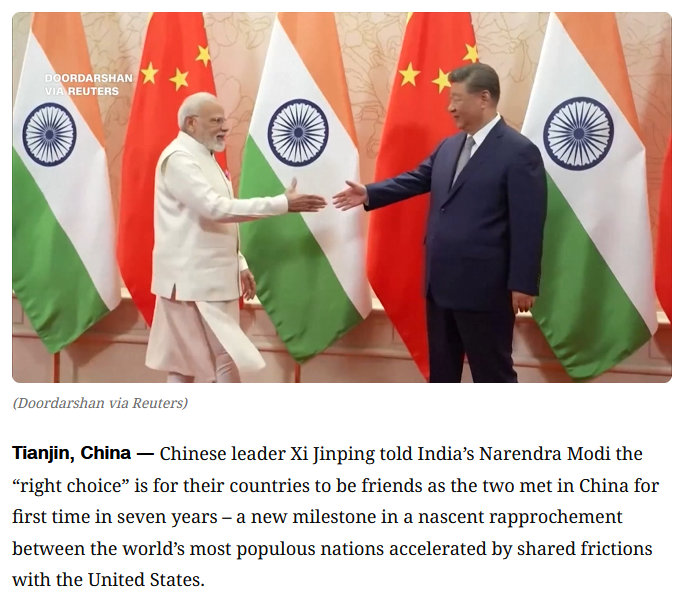
Nowadays, ‘living in interesting times’, we witness another coalition taking shape. Three authoritarian leaders ‘pushed together’ by a fourth one… By the antics perpetrated by a guy pretending to uphold freedom. Absolute freedom…!
Xi needs Putin to remain in power. To keep the Western Europe focused on something else but China. Trump needs Putin to remain in power. Otherwise the Western Union would stop begging for protection. And stop buying American built ‘defense hardware’… Meanwhile, various ‘fragments of the world’ pursue their own interests… as perceived by their respective leaders, of course!
America is the land of the free. ‘The people’ can, according to the Constitution, choose among the candidates. The politicians can, also in ‘certain’ conditions, choose their voters…
And those so inclined can choose their gender!
Do I have a problem with that?
No! But I find it very interesting that ‘gender-mandering’ is such a divisive subject. Very revealing, actually.
So, gerrymandering is one of the many common traits shared by both parties… “The Founders frequently wrote about the dangers of political parties. They often labeled them “factions” that were divisive and rooted in self-interest. In Federalist #10, James Madison wrote that factions were a majority or minority animated by “some common impulse of passion, or of interest” harmful to the rights of others and the common good. They could be a source of unjust laws and a threat to popular self-government. President George Washington concurred and warned in his 1796 Farewell Address that “the baneful effects of the spirit of party” included strong passions, jealousies and revenge, dissention, and despotism.” https://billofrightsinstitute.org/essays/the-history-of-political-parties-in-the-united-states
“Some common impulse of passion, or of interest”
And there is a common impulse of passion. And of interest! Both parties want power. And in order to get it…
Hence not only gerrymandering – used by both parties – but also ‘gender-mandering’. Using gender as a bone of contention. A very useful posturing pretext…
Who, but those experiencing gender-dysphoria, is actually interested in the subject? Maybe those baffled by the insistence with which some trans-women demand to be allowed to participate in professional sports… against cis-women, of course!
On the other hand… as a posturing pretext, the subject is invaluable! To some, it epitomizes ‘you can be whatever you want to become’. ‘Progress’ in its purest form. To others, it is anathema. The very notion of ‘against’. Against of nature, defying God’s will, you name it!
Did I make myself clear?
What about those living ‘in hell’?!? ‘Caught in the wrong person’? Who cares about them?!? They are few enough to be negligible. Except for when a scapegoat is in order…







 nicichiarasa