Archives for category: Culture

“Preluarea deşeurilor din recipientele şi/sau containerele amplasate în punctele de colectare de către alte persoane decât operatorii licenţiaţi pentru prestarea activităţii în aria de delegare respectivă constituie infracţiune de furt şi se sancţionează potrivit legii”.

Lupta dintre etatismul centralist si initiativa privata a ajuns sa se poarte si in jurul pubelei de gunoi.

La nivel declarativ: “Esenţa acestei legi nu a fost de a scoate pe cineva de pe piaţă, ci de a armoniza legislaţia şi partea de selectare a gunoaielor menajere cu normele europene. Era vorba despre o privire de ansamblu, comună, asupra a ce însemană strângerea, selectarea şi depozitarea gunoaielor, în spiritul normelor europene. Operaţiunile de selectare şi de transport se pot face împreună de un singur operator, sau separat, de mai mulţi. Administraţia poate decide cum să gestioneze acest serviciu de salubrizare”, explică senatorul Petru Filip, pentru gândul.”

La nivel practic: “în expunerea de motive a actului normativ se arată că una dintre intenţiile legii este şi îmbogăţirea bugetelor locale de pe urma valorificării deşeurilor, lucru care implică faptul că aceste deşeuri nu mai sunt valorificate de firme, ci de municipalităţi: “Colectate selectiv la sursa de producere, într-un mod eficient şi ulterior valorificate, deşeurile reciclabile pot deveni la rândul lor o resursă financiară pentru bugetele locale”.”

Cum spuneam mai devreme totul sa se stranga la centru. Ce conteaza ca exista deja 2000 de firme care se ocupa cu chestia asta…

Pot sa ii inteleg si pe cei de la salubritate. Ei planteaza borcanele alea mari de plastic pe strada si nu se aleg cu nimic pentru ca vin unii si intr-adevar fura hartia si plasticul din ele iar apoi le vand la firmele de colectare. Ba mai trebuie sa care si molozul pe care unii cetateni inventivi il arunca in containerele pentru deseuri reciclabile…

Ce nu inteleg eu e de ce nu putem face, macar o data, o treaba ca lumea, de la un cap la altul.

Pe vremuri exista un sistem care functiona foarte bine. Sticlele si borcanele se colectau la alimentara, adica exact asa cum se intampla acum in toata America, inclusiv PET-urile si dozele de bere. Hartia se aduna in centre de colectare, ‘fiarele vechi’ tot acolo…
Ce ne impiedica sa revenim la sistemul asta?

Mai departe. Pentru fiecare locuinta se platesc impozite locale. De ce nu se includ serviciile de salubritate curenta in aceste impozite? Ca mai apoi, din cand in cand, municipalitatea angajeze, prin licitatie, un prestator de servicii care sa faca curat? Sa stranga gunoiul, sa mature, sa deszapezeasca…Cetatenii sa fie obligati sa sorteze ei deseurile, inainte ca acestea sa fie ridicate: Umed, Hartie, Metal/Sticla/Plastic. Cine vrea n-are decat sa duca la centrele de reciclare ceea ce poate fi valorificat, cine nu le face cadou firmei de salubritate. Iar prestatorul sa aiba posibilitatea de a refuza colectarea gunoiului nesortat.

Firmele mari, care au nevoie de servicii speciale, sa poata sa faca contracte separate. Cu prestatorul angajat de primarie sau cu altul.
Tot prestatorul care a castigat licitatia organizata de primarie sa fie obligat sa ridice si cantitatile (mici) de moloz rezultat din lucrari de amenajari interioare, precum si mobila veche sau electrocasnicele mari; evident in urma unor programari care sa nu dureze mai mult de cateva zile.

Parca mai suna a economie de piata, nu?

Image

Thank you for living among us Alice Herz Sommer!

The link below opens a trove of information about her and, above all, the trailer of ‘Dancing under the gallows’.

The Inspiring Alice Herz-Sommer – Dancing Under the Gallows (formerly)

And remember, “hatred brings only hatred”!

De fapt a spune ca ‘politica este o curva’ e echivalent cu a spune ca a face sex e tot una cu prostitutia.

Am formulat asa tocmai pentru a sublinia ca expresia consacrata cu privire la politica e deficienta si din punct de vedere al exprimarii, o activitate – politica – nu poate fi ‘curva’ ci cel mult ‘curvasarie’. Partea proasta este ca expresia ne-a fost fluturata atat de mult prin fata ochilor incat ne-am obisnuit cu ea si am inceput sa o consideram a fi adevarata.
Nu, nu este intotdeauna asa ci doar in masura in care ii permitem noi sa fie.
Atunci cand facem sex (ma rog, eu unul prefer sa fac dragoste, nu sex, asta este expresia consacrata) ne alegem partenerul dupa preferinta si comoditate. Preferam o noapte salbatica dar fara batai de cap? Ne ducem la curve. Preferam o relatie stabila dar care implica responsabilitati? …

Cam asa e si cu politica. E o activitate esentiala, la fel ca sexul, fara de care comunitatile umane nu ar putea supravietui, si care poate fi incredintata unor oameni seriosi sau unor ‘curvari’.
Iar asta nu e totul.
Nici curvasaria si nici politica nu pot fi practicate de unul singur.
Dupa cum bine spunea Basescu: “Statul nu poate fi necompetitiv sau corupt fara un partener – mediul privat. Responsabilitatea trebuie asumata de ambele parti” tot asa politicienii nu ar putea sa-si bata joc de noi daca noi ne-am purta cu mai multa responsabilitate, pentru noi si pentru copii nostri.
Si inca ceva.
Cele mai multe curve ajung sa faca trotuarul de nevoie sau fortate de altii, nu de placere iar odata ajunse acolo nu mai pot scapa din cercul vicios. Am impresia ca tot cam asa se intampla si cu politicienii, odata ajunsi in hora nu mai pot da inapoi. Si hora se invarte din ce in ce mai tare…

Bine, si ce facem?
Legalizam prostitutia?
Se spune ca dupa ce ‘se potolesc’ curvele devin neveste foarte bune. Pare plauzibil. Dupa ce au trait in infern cele care au fost suficient de puternice si de inteligente incat sa supravietuiasca si sa iasa de acolo ar trebui sa fie tampite sa vrea sa se mai intoarca acolo.
Pe de alta parte orice om normal nu intra intr-o relatie pe termen lung cu altcineva fara sa afle ce a facut celalalt inainte.
Iar dupa aceea, indiferent de cata incredere are in partenerul sau, este atent sa vada ce face – exista si posibilitatea ca acesta sa innebuneasca la un moment dat si sa dea foc la casa, nu?
Primul si cel mai important lucru pe care il avem de facut este sa nu mai credem ca politica este neaparat curvasarie.
Conceptul asta a fost pus pe tapet tocmai de cei care vor sa ne obisnuiasca cu ideea ca nu mai este nimic de facut si ca trebuie sa ne obisnuim cu situatia. Iar partea si mai proasta este ca repetand-o nu facem decat sa ii descurajam pe oamenii cinstiti care ar vrea sa intre in politica: ‘pai daca acolo sunt numai curve eu de ce sa ma duc, ca sa se spuna si despre mine tot asa?’
Iar al doilea lucru este sa nu mai acceptam genul asta de comportament. Tin minte ca l-am auzit o data pe Basescu la un ‘telejurnal’ si nu reusesc sa gasesc undeva citatul ca: ‘nici un ministru sau director n-ar putea face nimic fara unii care sa-l ajute si fara ca cei din jurul lui sa inchida ochii’.
Pana la urma si politicienii sunt conectati la viata reala. Pe vremuri, cand politica era apanajul capetelor incoronate, lucrurile erau mai simple dar mult mai brutale. Daca cel care detinea controlul situatiei (suveranul, singurul care avea autonomie fata de ceilalti) o dadea in bara tara era atat de slabita incat cei din jur incepeau sa profite de situatie: mai luau o bucata de pamant, cateodata o ocupau cu totul…si uite asa se incheia domnia celor nepriceputi.
Acum teoretic e mai simplu, ne alegem conducatorii. Chestia e ca daca nu-i alegem cu grija, si mai ales daca nu stam cu ochii pe ei, ajung sa faca ce le trece lor prin cap si nu ce ar trebui sa faca pentru ca lucrurile sa functioneze cat mai bine. Asa ca nu mai este cazul sa asteptam sa ne cada sandramaua in cap si abia dupa aceea sa luam masuri.
De fapt scandalul care ia amploare in invatamant, cel cu banii din care urmau sa fie luate cadouri pentru profesori, este inca un semn ca oamenii s-au saturat sa mai rabde.

Broadly speaking all humans are intellectuals since all of them are conscious so, at least sometimes, they ponder upon things before deciding one way or another.

Nowadays, since we live in the era of the ‘peer reviews’, the concept is defined a lot stricter: one is an intellectual only if at least one ‘certified gatekeeper’ affixes him with an approval stamp…

OK, let me get serious.

Some people use their brains a lot more than others. Does this simple fact turn them into intellectuals?
Not so long ago, when books were not yet written directly on laptops, publishers used to hire people to do this job. Practically to copy a ‘manuscript’, usually typed (?!?), on a computer. Now, is that kind of a person an intellectual or not? After all he is working mostly with his brain, right? And in general people who work as clerks, or in a call center, are they intellectuals just because of their daytime jobs also?

No? Because their honest and respectable work, otherwise very useful, doesn’t result in anything new or original?
I concur.

So we might say that an intellectual is a person that uses his brain in such a manner that the end result of his activity is a new idea or concept, one that either fixes a problem that has become apparent, broadens the human knowledge or contributes to the artistic treasure of the mankind.
If we take this definition to be true then the limitation described when talking about peer reviewing looks rather stupid. Asking highly original people to evaluate the work of other highly original people would seem to be both a waste of their time and a subtle form of pressuring those whose work is being evaluated to conform to the established norms and customs of the ‘discipline’.
And this would be at loggerheads with the need for originality, wouldn’t it?
On the other hand in the modern days of very specialized science and technology it would be preposterous to accept every new ‘contribution’ as valid without previously checking it in some way or another…

And here we get to the really interesting part. The professionalism of the intellectuals.

What?!?

It’s simple actually. A professional is by definition a person who not only has the command of whatever skills he needs to perform his job but also such a high degree of self esteem that he always strives to do his best. In short a professional is a person who sees/describes himself as somebody who is able to perform a certain job above a certain level.

And exactly as we have doctors who save lives and quacks, writers and pen-pushers, cooks and people who waste good food, we also have people who love to think in searching for a solution or for the next new thing and people who think mainly about how to advance their ‘intellectual’ careers…

I’m not trying to convince any of you that bona-fide ‘intellectuals’ should volunteer their life and energy,  live on stale bread and dress miserably. I’m only suggesting that when a passionate one meets a ‘career’ man things will probably not work smoothly between them and if the career guy gets the upper hand it is the rest of us who are the real losers. The same thing happens if the society at large is not wise enough to make sure that the ‘professional’ ones have ‘enough to eat’ but this is a rather different problem.

Image

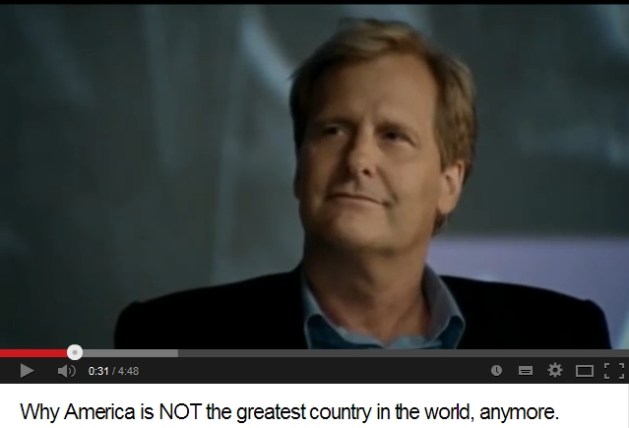
This is the second time I came across with this video.
While some of the arguments presented ‘inside’ are valid I beg to disagree with its conclusion.

Here are some valid arguments for rejecting that conclusion but I’m afraid they don’t get the gist of it.

America is number one, and has been for quite a while, because she is able not only to weather such soul searching controversy as depicted in this video without falling apart as a nation but also to draw a lot of energy from it.

For self centered foreigners and also for disgruntled Americans such bickering might seem a sign of divisiveness and frailty, but in reality this is how America keeps herself on her toes in absence of credible menace from outside. Well, sometimes she was so successful in scaring herself up that she started such hapless wars as the ones against drugs and poverty but this is another topic.

But when push comes to shove she is able to pull herself together. Hitler, the communist leaders of the USSR and bin-Laden are only a few of those who have mistaken lack of unanimity with lack of strength. They are all history now and haven’t arrived there using the recommended venue…

Being able to adapt to whatever comes to cross your path demands being able to think with your own head and original thinkers are renown for sometimes acting boisterously but that doesn’t mean they cannot team up to cross that treacherous mountain!

Image

M-a intrebat cineva ce cred despre articolul asta:

“Nouă personalităţi răspund pe ce se întemeiază credinţa lor: De ce cred în Dumnezeu”

Dupa ce am citit (doar) “Omul fara rost” am raspuns repezit:

“Icoana de pe peretele clasei nu este un indemn catre narcomanie sau orice altceva (din ‘clasa’ celor evocate de Dan C. Mihailescu) ci este unul catre conformism.

Si exact asta este motivul pentru care am intrat, cu totii, in criza in care suntem de vreo 50-60 de ani: am ascultat prea tare de altii si am imprumutat prea disciplinati modelele care ne-au fost propuse.
E adevarat ca dezvoltarea la care a ajuns spatiul cultural din care facem parte (cel ‘vest european’) are foarte mult de a face cu faptul ca am fost crestini numai ca noi oamenii am dat nastere crestinismului nu invers.
Cu alte cuvinte noi am dezvoltat crestinismul, noi l-am creat pe Dumnezeu (tocmai pentru ca avem credinta – “Nu M-ai cauta daca nu M-ai fi gasit!”) si nu invers.
Distanta care a aparut acum intre oameni si Dumnezeu nu se datoreaza faptului ca Dumnezeu ar fi facut ceva rau (nici nu poate, el este insasi ‘firea’ – tot ce exista – asa ca daca ar face ceva rau ar fi ca si cum si-ar trage un glont in picior.) Se datoreaza faptului ca unii smecheri incearca sa profite de credinta oamenilor. Prea mult preoti catolici isi bat joc de copii. Ortodocsii construiesc prea multe biserici monumentale si prea putine azile de batrani. Prea multi protestanti se straduie sa invete pe unii cum sa-i urasca pe altii (legile anti-homosexuali din Uganda se pare ca sunt opera unor evanghelisti americani) in loc sa-i indemne sa depaseasca diferentele dintre ei. Prea multe ulemale indeamna la varianta exterioara, violenta a jihadului.
In realitate oamenii nu se indeparteaza de Dumnezeu. Se indeparteaza de chipul pe care i l-au cioplit smecherii astia si ii cauta adevarata fata, cea care se arata fiecaruia dintre noi in particular si nu atunci cand batem matanii in fata bisericii ca Iliescu sau ca Bush dupa ce s-a ‘nascut a doua oara’. Sau ca sa ma intorc la Mihailescu oamenii merg “prin păduri, pe vârfuri de munte, prin livezi, podgorii, fâneţe, ori în largul mării” tocmai pentru ca acolo gasesc o fata a lui Dumnezeu mult mai sincera decat cele zugravite prin unele ‘altare’ sau zbierate prin difuzoare de unii predicatori!”
Abia dupa aceea am citit si restul articolului. Merita. Pe mine m-au interesat mai ales cele spuse de Radu Gologan. Pe urma am mai citit odata si predica parintelui Galeriu.

De prin anii 90 ai secolului trecut am inceput sa am impresia ca ‘bancurile’ sunt in realitate mult mai mult decat niste simple glume si ca reusesc foarte bine sa infatiseze perceptia publicului cu privire la ce se intampla in spatiul cultural in care circula.

Si nu-i asa  ca pusa sub forma asta idea mea pare aproape banala?

Mi-am adus aminte de chestia asta citind:

“Sa presupunem că… Guvernul acordă fiecăruia dintre noi cam 100.000 de lei.
Dacă cheltuim aceşti bani prin hypermarketuri, ei vor ajunge în China.
Dacă cumpărăm benzină, vor ajunge la arabi.
Dacă cumpărăm calculatoare, vor ajunge în India şi Hong Kong.
Dacă cumpărăm fructe şi legume, vor ajunge în Turcia, Spania, Italia, Egipt.
Dacă cumpărăm autoturisme mici şi economice, vor ajunge în Japonia sau Germania.
Dacă cumpărăm unul din multele gadgeturi electronice, vor ajunge în Taiwan.
Şi nu vor ajuta cu NIMIC economia românească.
Singura posibilitate de a păstra aceşti bani acasă, în România, este de a-i cheltui pe curve, pe gustosul vin românesc sau pe ţuică, deoarece acestea sunt garantat produse autohtone!
Eu aşa încerc să fac!
Dar e cam greu să-mi conving nevasta că fac aceste lucruri numai din patriotism.”

O dovada extrem de convingatoare ca ipoteza formulata de mine mai sus este corecta.

‘Intelepciunea populara’, cea care face ca bancurile sa circule, a sesizat cercul vicios in care ne aflam.
Daca procuparile noastre majore sunt betivaneala si curvasaritul intr-o atmosfera de inselatorie generalizata cum sa mai fim in stare sa ‘producem’ ceva de calitate?

I must clarify from the start that ‘yes we can’ sounds indeed more compelling but this is so only because ‘marketing’ has conditioned us to fall for ‘positive’ messages. ‘Yes we can!’ feels good because it implies that it is enough for us to set a goal and that goal will become accessible just because we declared it so. Very ‘American’ but also rather arrogant.

Besides that, how come that we are so sure that all things we have elevated to the rank of goal are worth pursuing?

On the other side of the barricade are the people who say there is no such thing as ‘progress’, that the advent of science and technology has done zilch to improve the human nature who has remained as sinful as ever.

Yes and no.

Science and technology are indeed nothing but innate tools, they cannot change anything by themselves. Human nature can change, for better or for worse, only under its own steam. It is the individual human being who is the ultimate decision maker about how those tools are going to be used.

There is another thing that needs clarifying. The sinful nature of the human being. In fact this notion is a purposefully distorted interpretation of a certain passage in the Bible:
 And the Lord God said, “The man has now become like one of us, knowing good and evil. He must not be allowed to reach out his hand and take also from the tree of life and eat, and live forever.””

As it becomes perfectly clear after reading that passage with an open mind, Adam and Eve were not banished from Eden because they disobeyed orders but because ‘they had learned to tell right from wrong’. This was not becoming sinful; it just means that from then on they had the ability to choose to behave badly. Or not. Having the ability to understated what is a sin does not necessarily mean that that sin will be committed.

So why banish them from the Paradise? First of all this is metaphor. The banishment was virtual, not real. Adam and Eve didn’t go anywhere, they only started doubting themselves and their judgments. Enough to loose one’s peace of mind. And rightfully so. As everybody knows people who have an exaggerated confidence in their own prowess are more inclined to making disastrous mistakes than people who are able to exercise a healthy dose of self control. And exactly this is the very reason for why God ‘expelled’ Adam and Eve from Eden (planted the seed of doubt into their soul): so that they’ll never have the opportunity to ‘eat from the tree of eternal life.’
Could you imagine what would happen if wrong choices would be able to last forever?

But how do people learn to behave? Through daily interactions with other people, of course. And the results of those interactions are ‘stored’ both in the individual memories of those directly involved but also in what is called ‘the collective memory’ of a group. Sociologists call that ‘culture’ and it influences individual behavior quite a lot. And that culture is also heavily influenced by the conditions in which individual interactions, those that accrue to eventually form cultural habits, take place.

Let me give you a practical example. I got my driver’s license quite late in life, I was 28 or 29 at that time, right after the fall of communism in Romania. (I had found a good job and I needed one in order to perform it properly so I took the exam and passed it). In those times the cars were rather few so the roads were relatively empty. This, correlated with the fact that policemen were treated with disrespect – they were still seen badly because in the previous regime they were used to suppress dissidence – and that after the so called ‘revolution’ had appeared quite a lot of rather aggressive ‘hot shots’ the manner of driving was chaotic to say the least. Nobody made any concession, no politeness, no nothing. But, I repeat, because the roads  were rather empty, accidents were relatively rare and bottlenecks practically inexistent.

A year or so after getting my license I had to drive to Istanbul. All my friends started to warn me ‘watch out, those Turks drive like madmen, you have to take care, etc., etc.’ I wasn’t exactly scared, in that year I had driven some 40 000 km (approx. 25 000 miles) so I wasn’t a novice anymore but still, I arrived there with more than a little apprehension.

Imagine my surprise when I realized that the Turkish drivers treat themselves with extreme consideration and foreigners with even more. OK, things were happening a lot more rapidly there but they were above all polite, something you almost couldn’t find on the Romanian roads at that time.

And it took me almost two days to understand that had they acted like the Romanian drivers acted at that time traffic would had halted in five minutes and the entire Istanbul would had become a huge bottleneck.

And you know what? Now, twenty years past, traffic in Bucharest has started to resemble the one in Istanbul at that time (I don’t know how it is now, I haven’t been there since, unfortunately). The not so surprisingly thing, for me at least, is that Romanian drivers have cleaned up their act considerably, at least inside the cities. And for good reason. Otherwise it would have been impossible to drive through the narrow and extremely busy streets we have to navigate. Things are not perfect – the Germans or the New Yorkers for instance are driving a lot nicer – but there is a huge improvement.

The point of this story is that most individuals will choose to make the right choice if and when they understands that it’s better to live and let live than to be a constant bully: sooner or later you’ll end up in very unpleasant situations.

And no, heavy handed policing isn’t enough, if the ‘guy in the street’ hasn’t reached ‘that’ level of understanding, if good behavior hasn’t become a cultural habit, people will have the tendency of misbehaving the very instant the policeman turns his head in the other direction. (Not to mention the fact that policemen come from the same community and share the same mentality)

So things can become better, progress is possible exactly because human nature is not inherently bad. Good individual choices coupled with strong interaction and a healthy dose of mutual respect can perform wonders.

Interesanta asocierea asta de termeni: “Prin cultură şi credinţă la libertate”.
– cultura: cunostinte/informatii adunate in timp si devenite bun comun pentru un anumit grup de oameni
– libertate: stare de relativa autonomie a indivizilor care compun un anumit grup, care stare ofera intregului grup o mai mare capacitate de adaptare si deci de supravietuire. De remarcat ca ‘libertatea’ tine atat de organizarea interna a grupului cat si de ‘pshologia’ indivizilor
– credinta: stare particulara a psihicului individual cu privire la prevalenta anumitor valori asupra altora si/sau cu privire la imanenta anumitor lucruri ce va sa se intample indiferent de orice altceva. In general ‘credinta’ are tendinta de a se generaliza in cadrul unui grup, conferindu-i acestuia coerenta si stabilitate dar in acelasi timp fiind capabila de a intarzia procesele adaptative.
In principiu primele doua sunt direct proportionale, pe masura ce una dintre ele creste apar conditiile pentru cresterea celeilalte in timp ce a treia este invers proportionala cu primele doua. Chiar daca credinta ofera un anumit confort pshihologic in situatii de incertitudine aceasta este de obicei abandonata pe masura ce cultura acumulata creste, indivizii acced la libertate, si-o asuma si, foarte important, ajung la concluzia ca libertatea lor nu valoreaza nimic fara libertatea celorlalti. De multe ori pierderea credintei este privita ca fiind un lucru rau, care ar putea duce la ‘pierderea busolei’, atat la nivel individual cat si de catre intregul grup.

Pana la urma probabil ca asta este examenul de maturitate al societatilor umane. Supravietuirea lor, ca grupuri capabile sa isi conserve identitatile culturale, depinde de modul in care sunt capabile sa isi asume libertatea in asa fel incat momentul in care dispare credinta sa nu coincida cu momentul pierderii coerentei grupului. Probabil ca asta tine de ceea ce se intampla in mintea fiecaruia dintre cei implicati si apoi de modul in care toate aceste ‘intamplari’ se tes intre ele. Banuiala mea este ca respectul pentru celalalt – care sta de fapt si la baza credintei crestine ca Dumnezeu l-a facut pe Om dupa chipul si asemanarea sa, deci fiecare individ/imagine a lui Dumnezeu este demn de acelasi respect ca si Domnul – poate si trebuie juca rolul hotaritor in aceste momente.

Even though I call myself a ‘feminist of sorts’ there is a side of feminism that I don’t understand/like.

“Michelle Obama took a fashionably shod toe and dipped it into her husband’s efforts to address the nation’s higher-ed gap, the move was greeted by some feminists with a relieved, “It’s about damn time!” “

For those of you who don’t care much about American politics she was just giving a speech about the importance of getting a solid education.

My problem lies with how some feminists choose to react to her behavior as First Lady:
“she dropped in the line that “at the end of the day, my most important title is still mom-in-chief.” Much of the nation may have been charmed; feminist commentators, not so much. “Why does mom-in-chief have to be the most important thing this strong, vibrant woman tells us about herself as she flexes the strange but considerable power of the office of first lady?” Emily Bazelon lamented on Slate.”

Why do some of the feminists feel they are entitled to tell others how to think or how to behave?
I still nurture the notion that true feminism is about empowering women to make their own choices, not to simply herd them in another pen.