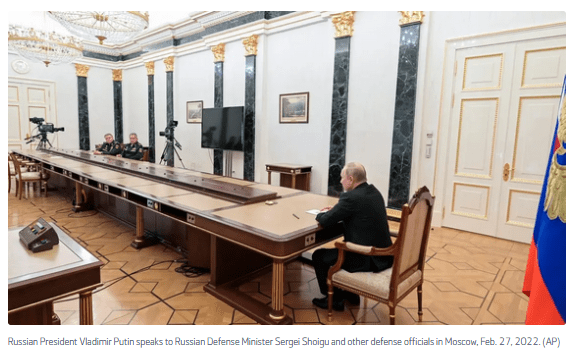
Putin advisers ‘too afraid to tell him the truth’ on Ukraine: US official “Putin didn’t even know his military was using and losing conscripts in Ukraine, showing a clear breakdown in the flow of accurate information to the Russian president,” the official said.
There are two ‘things’ which collide here.
Dictators tend to drive away really competent people and those remaining tend to put the entire blame on the ‘guy on top’.
As many of you already know, I grew up in the communist Romania. Ruled by Nicolae Ceausescu, the dictator who ended up being shot on Christmas Day, 1989.
At 28, I was already familiar with the notion of ‘yes-people’. Decision makers who ruled our daily lives were surrounded by people who provided the ‘right’ answers, effectively isolating the decision makers from the reality. This ‘development’ being the fundamental explanation for how all dictatorial regimes, including the communist ones, ended up in abject failure. For ‘how’, not for ‘why’ – but this is another issue.
After Ceausescu was toppled, I was absolutely flabbergasted when I first heard
‘He didn’t know what was going on. Had his close advisers kept him in touch with the real situation, he would have taken the proper decisions to rectify things’
Really?!?
Who had selected his ‘close advisers’?!?
Who prevented him from asking ‘a second opinion’? From stepping out of his office and ….
Who, step by step, had ‘created’ the ‘atmosphere’ which had driven all those unwilling to lick where ‘he’ had spat to flee, living ‘him’ surrounded by sycophants?
Sycophants attempting, after Ceausescu had been toppled, to pile all the blame on his shoulders…
I’m afraid we are witnessing a replay, with Putin as the lead character.
When I was six, my father took me to a German kinder-garden.
He was learning German, at 35, and thought I should start earlier. In the end, I didn’t exactly learn the language but during the process I met a lot of nice German speaking people.
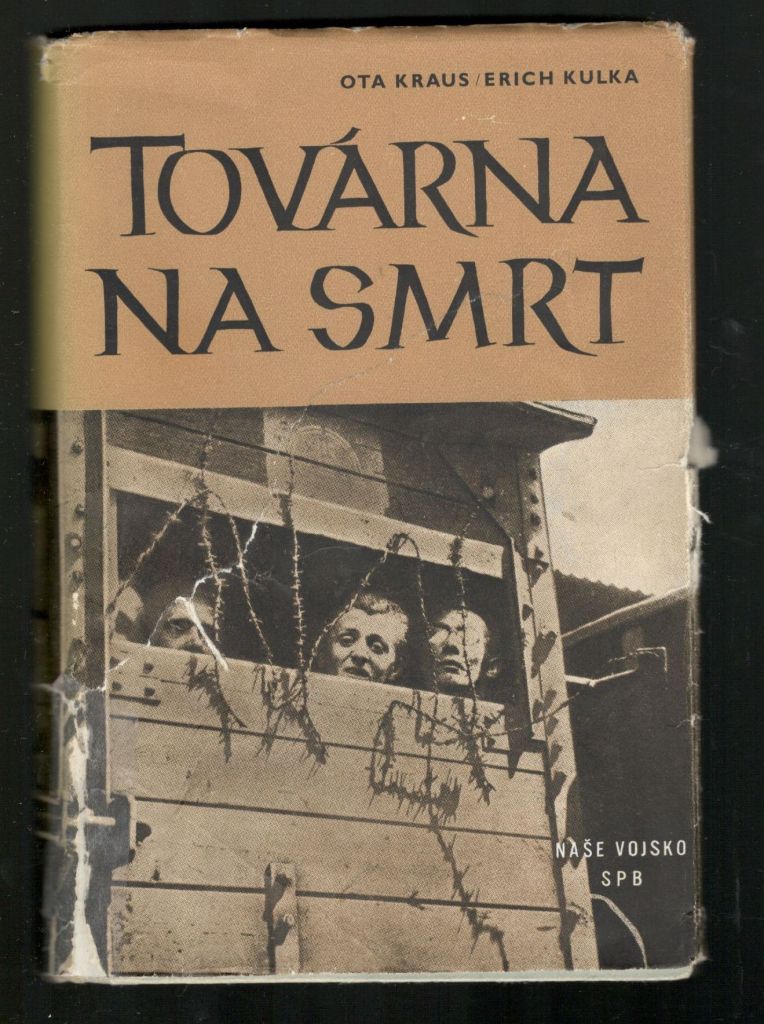
At 16 I read
The Death Factory, a book about the Auschwitz concentration camp
Well, actually it was translated in Romanian but the original cover is far more suggestive for non-Romanians.
That was when I learned to distinguish between a people as a whole and the atrocities committed by a minority.
As I grew up, under communist rule, I noticed the ‘little compromises’ my parents had to make in order to provide a better life for me. The small bribes offered whenever ‘necessary’, not speaking up their minds in ‘official settings’, allowing stupid, but powerful, individuals to boss them around… As a young adult, I understood how those small compromises, made by almost all of us, added up and eventually caused the entire regime to collapse. Eaten up, from inside, by institutionalized corruption.
As a no longer young adult, after the regime change, I noticed that ‘compromise’ was so entrenched in our habit that it had been carried over into the new regime. As if the new found liberty had been interpreted as the freedom to accept ‘un-earned benefits’ from whoever offered them. In exchange for things which were not ours to give… The same was happening in other ex-communist countries. The closer to Moscow, the more intense the phenomenon.
That was when I learned to dissociate corruption from any particular political regimen.
Soon after that I learned the international dimension of the whole thing.
That was when I learned that democracy alone is not enough to cure corruption. That democracy can also be eaten from the inside by this worm. If ‘the people’ do not pay enough attention!
This morning, on top of the already ‘normal’ news from the Ukrainian front, I learned that
That was when I understood that ‘what goes around, comes around’ is driven by our bad choices. By our unwillingness to make good what we have already learned from past mistakes.
Should have learned from past mistakes…
Really guys? The Red Army had spilled its blood to free the people herded to be killed at Auschwitz and a survivor from Auschwitz is killed by a Russian bomb attempting to ‘denazify’ Ukraine?!? Which Ukraine wanted nothing but to join the EU and NATO? But couldn’t! Crimea was occupied while Donetsk and Luhansk have rebelled against the central government… and NATO – like all other clear headed alliances do not admit new members which are already involved in ‘border disputes’.
So. Putin, spooked by a NATO who doesn’t dare to violate the ‘founding act’ – not even after Russia had occupied Crimea, orders the Russian Army to demilitarize and denazify a country whose independence and integrity was guaranteed by the Budapest Memorandum.
And, caught in the middle, a man whose life had been saved – some 75 years ago, by the Red Army ends up being killed by the Russian one…
Simply because we didn’t pay attention. And allowed what went around to come back!
Boris Romantschenko of Ukraine, along with five other former prisoners, renews the oath of Buchenwald, from April 19, 1945, at the Buchenwald Concentration Camp Memorial, in Weimar, Germany, April 12, 2015. Picture taken April 12, 2015. Michael Reichel – Buchenwald and Mittelbau-Dora Memorials Foundation/Handout via REUTERS/File Photo
Ever since Putin had ordered his army to invade Ukraine, I keep hearing about what drove Putin to do it. About his dreams of rebuilding the old Russian Glory. About his drive to become the most important Russian personality. About NATO ‘pushing itself’ closer and closer to Russia’s borders. About…
The map above is the last argument I came by. And the last straw… The person who posted the map doesn’t agree with Putin. Not at all. But cannot ‘forget’ the fact that at one time Kiev did belong to Russia.
Well… I’ll be blunt about it!
This person, along with many others, tries to explain what is going on in a rational manner. They attempt to find an objective reason for a subjective decision.
Putin is flattening out Ukraine because he is afraid.
The Soviet Union had survived 1956 Hungary, 1968 Prague, and 1980 Solidarnosc. All of these ‘movements’ had been, somehow, quashed. Dealt with.
The Soviet Union had, finally, crumbled under its own weight after Afghanistan. After a people didn’t cave in. After a people, an entire people, found it in themselves how to resist. How to say no!
Putin had successfully quashed Yeltsin’s oligarchs, the Chechen rebellion, the first Orange revolution, dealt with Saakashvili, helped Lukashenko save his throne and put a lid upon the recent Kazahstani attempt at making a small step towards democracy. And was contemplating the Western Europe planing to give up burning gas and oil.
‘His’ gas and oil…
He had to do something. Otherwise ‘his’ people were going to throw him out.
If Ukraine was allowed to continue on the self determination path, who was going to stop the Russians from following suit?
So yes, the circumstances described by that map are valid. But it is Putin who bears the entire responsibility for what’s going on. And for creating the circumstances in which ‘next’ is going to happen.
Can you imagine what’s going on in these children’s souls?
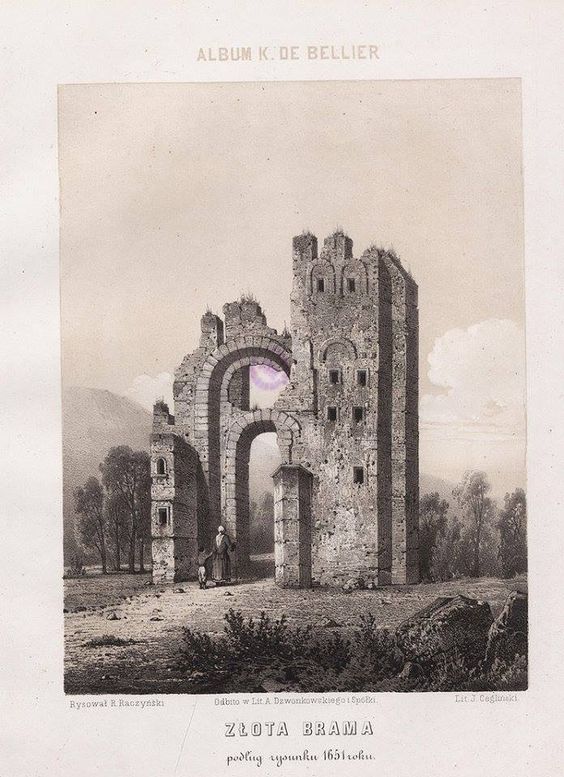
882. Oleg the Prophet captures Kyiv and moves the capital of the Viking kingdom from Novgorod to Kyiv. Thus the Rus becomes Kievan.
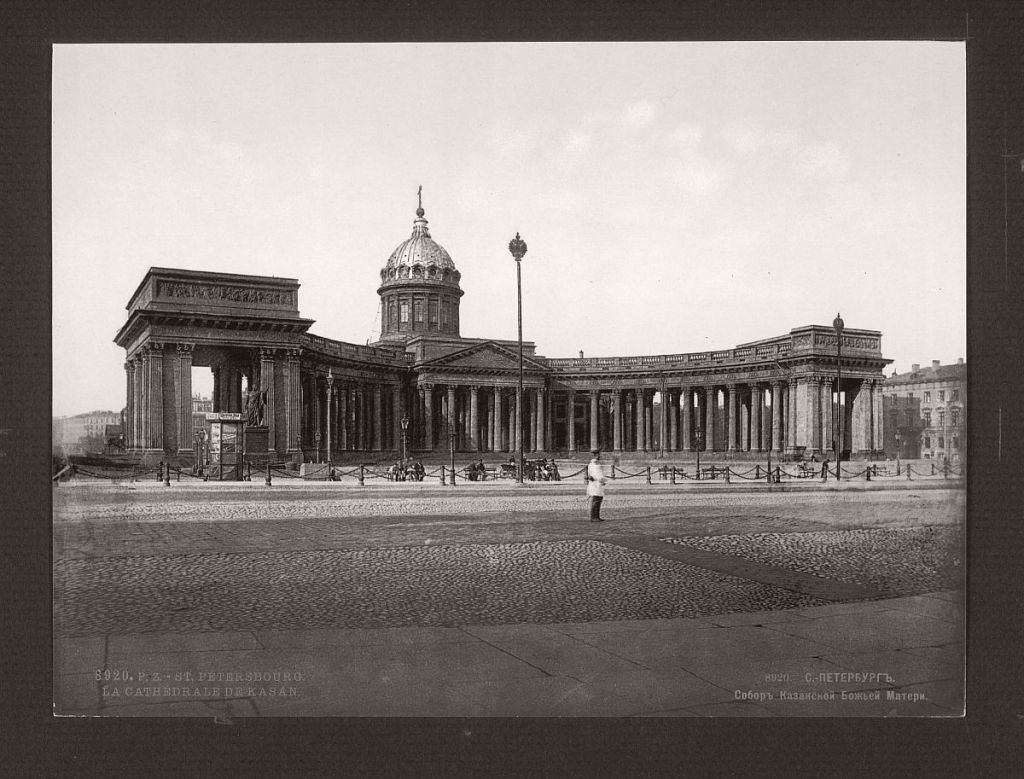
1703. Peter the Great of Rus-sia established Sank Petersburg as a bulwark against the Swedish Kingdom. The city served as Russia’s capital from 1712 to 1918
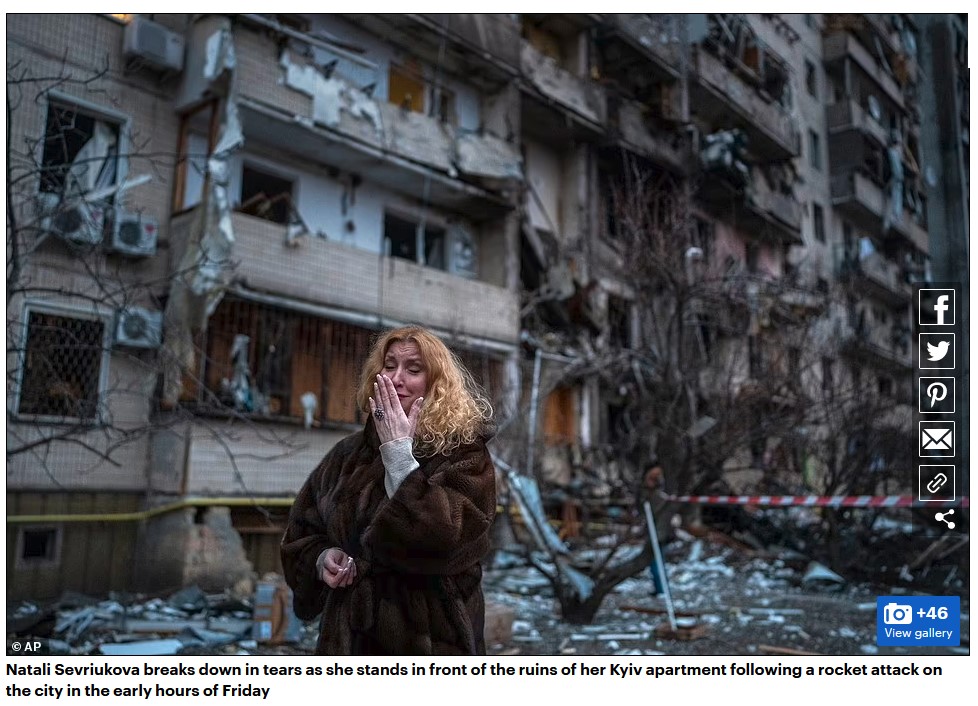
Kyiv hasn’t been besieged yet but has already been under heavy bombardment.
I’m Romanian. Romanians don’t have very fond memories of what had happened to their country whenever the Russian soldiers had come by to ‘visit’. As a teenager I read The 900 Days The Siege of Leningrad, 1968, by Harrison Salisbury
And wept.
Now, an already old man, I check out, on the Internet, what’s going out in Kyiv – the former capital of the Kievan Rus.
After you get used to it, being hanged becomes bearable.
Let me give you some context.
I live in Romania. You know, that country which shot its dictator, Nicolae Ceausescu, on the Christmas Day 1989.
I was drafted to the army in October 1980. When I left home, you could still find food to buy. Soap, chocolate, washing powder, toilet paper… you name it. Nothing fancy but life was ‘normal’. Nine months later, in July 1981, food was already scarce.
In 1985, things were already bad. You had to queue up for anything you needed. For all of the above mentioned items.
By 1988, things had become even worse. On top of what I had already mentioned, rolling blackouts were common. Those of us who lived in apartments connected to central heating were ‘enjoying’ running hot water for only a few hours a day/a few days a week. And shivered during the entire winter.
I’m telling you all these because in December 1989 most of us were hugely surprised when communism had fallen. With a bang.
We’d become so accustomed with what was happening to us that we were convinced our lives were ‘normal’.
Compare that to what you see below. Oh, I forgot to tell you that we had only 1 (one) TV channel. Which was on for 2 hours each working day from Monday to Saturday and 12 hours on Sunday. And 80% of what was churned out was pure propaganda.
1. Sow doubt. 2. Drop a loud fact. Or two… This will simultaneously ‘water’ the previously planted seed and act as a ‘foot in the door’ for your next move. 3. ‘Miss-interpret’ another fact. 4. Mention an universal human emotion, inviting your audience to identify itself with the ‘victim’. 5. Squarely state what you want your audience to believe.
1. ‘The Soviet Union didn’t crumple under its own weight. It was dissolved by Yeltsin so that Gorbachev’s position would disappear. Leaving Yeltsin as the top dog of the day. Even if at the helm of a little smaller empire…’
2. ‘After the Cold War had ended, the West should have treated the ‘defeated’ as Germany, Italy and Japan had been treated after WWII. The West should have helped the Soviet Union to overcome the transition hurdles by extending to it an equivalent of the Marshall Plan. Instead of that, the Americans had come up with the Wolfowitz – later Bush, Doctrine.’
3. ‘Gorbatchev was told by James Baker that NATO will not move an inch eastward’
4. “…1998, Yeltsin, late Yeltsin: ‘you promised not to do this! So, how do we trust you, if you make a promise?’ “
5.1. Vladimir Putin has been created by the United States. 5.2. The so called free media in general – and New York Times in particular, cannot be trusted to provide honest information.
Pozner’s discourse is far more ‘byzantine’ than the ‘stream-lined’ version I used to illustrate what skillful propaganda looks like. Skillful maskirovka, more likely?
This post has become long enough. Let me wrap it up.
The main question here being ‘did he actually say it? Did Baker actually promised Gorbachev that “NATO will not move an inch eastward” ‘?
The Soviet Union is long gone, all the states which have been admitted into NATO are ‘in’ because they had asked themselves to join – and are now extremely glad to be protected by the famous 5th article – … while the only (frustrated) ‘agent’ who ever cried foul was Putin. Not only cried foul but eventualy acted out his frustrations!
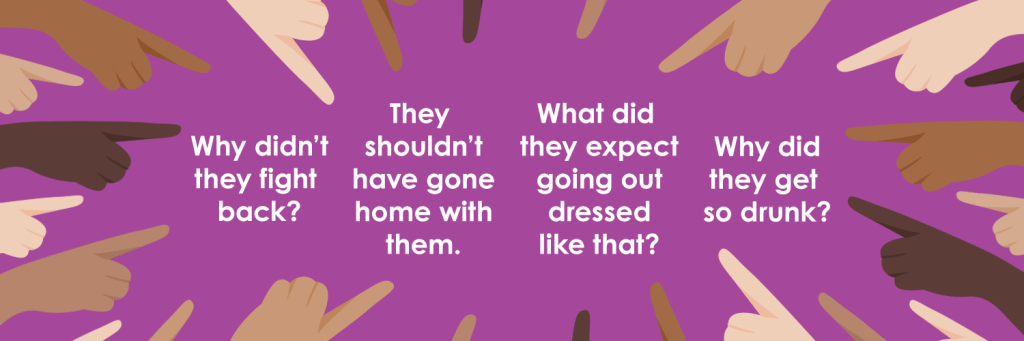
Victim blaming is a fact. As in ‘exists even if it doesn’t make much sense’. As in ‘still exists despite our intense efforts to make it disappear.’
Shouldn’t we try to understand it? Before blaming those who blame the victims?
What’s going on is that our minds are biased. And one of the two most powerful biases is our need to make sense of the word. We actually need to perceive the world as being rational. We need to have causes, to identify causes, for everything which happens around us. The other one being our need for relevance. We not only need to make sense of the world, we also need to control it. Hence we do our best to understand the world as controllable. Controllable by us! By us, the purveyors of the explanations. By us, those who understand it as a rational succession of causes and effects.
Let involve ourselves in a small thought experiment.
We’ve just had a few drinks. Not enough to get stoned but each of us is a little ‘merrier’ than usual. A tad dis-inhibited. In this condition, one of us has sex with an under-age person and the other has a car accident.
In which of these two cases, ‘being under influence’ would be seen as a mitigating circumstance? Why?
See what I mean?
Socially, it is unacceptable to DUI. Because you are far more likely to cause an accident. Socially, it is more than acceptable to have a couple of drinks at a party. Because you are going to be a far more ‘pleasant’ person that way. Well, most of us are…
It’s actually reasonable to expect a driver to be sober and a party-goer to be ‘tipsy’-ish. Simply because it’s a lot more unnatural to drive than to have social intercourse. Hence we need a lot more ‘self-control’ when driving than when talking to someone. Even if that person is very attractive. We, statistically speaking, have a gut feeling which tells us it’s harder to drive than to behave. Hence the biases.
‘OK, but has any of this anything to do with victim blaming?!?’
Victim blaming is the ‘easy way out’ for both would-be victims and would-be aggressors.
Remember what I said about our need to make sense of the world as a controllable environment? As a place where we, each of us, is in charge? With the known – and already agreed upon, limitations…
For those who see themselves as potential victims, doing the ‘right thing’ – or not doing the wrong one, is something which puts us in a safe place. We’ve done everything (in our power) so we’re safe. Or as safe as we could be… If we become a victim even after we’ve done everything in our power to avoid it, then it’s exclusively the fault of the aggressor. There was nothing more we could have done to avoid it. Hence there’s no self-guilt falling on our own shoulders. And if we have reached ‘this’ conclusion – that ‘this’ is the right behavior, then each of the ‘trespassers’ do nothing but ‘contradict’ our ‘good judgement’. Hence our ‘need’ to ‘educate’ them.
For those of us who conceivably might become or had ever been – directly or indirectly, as in ‘one of our relatives had done it and we didn’t see it coming’, – an aggressor, the logic follows the same path. The victim should have taken every precaution, we are naturally ‘limited’ individuals who cannot ‘resist’ when ‘pushed over certain limits’.
‘OK, and your point is? That it’s OK to blame the victim?!?’
Let me bring your attention back to the title.
‘Causing’ circumstances.
Who transforms a certain set of circumstances into a cause? Who sees a certain set of circumstances as an opportunity to do something or as an opportunity to do the very opposite? Or to simply stay put? To directly cave in to something which ‘might’ be seen as a provocation or to ask for permission first? And to accept ‘no’ for an answer, in no matter what circumstances …
Who bears the responsibility for choosing one way or another?
Using as little resources/effort as possible to get what you’ve set your mind to accomplish versus making as much profit as possible (in the given conditions)










 nicichiarasa