Archives for category: Bounded rationality

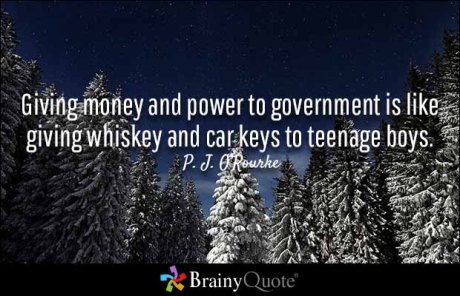
teenager-government

Why am I am trying to make any sense of something said by a comedian?

orourke-trump

Because he’s right?

With a twist, of course!

While ‘government’, all of them, tend indeed to behave like ‘teenage boys’ their actual behavior depends very much on their up-bringing and on the amount of supervising their stakeholders/parents invest in them.

Which brings us to

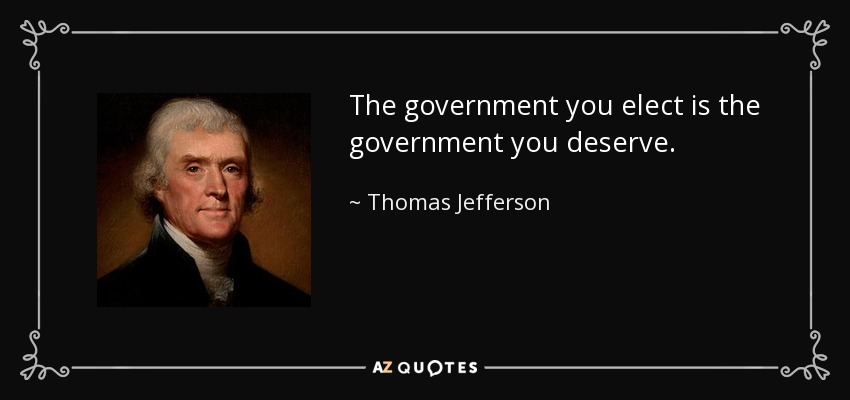
the-government-you-deserve

Now all that is left for us to do – for ‘all’ of us, that is, including ‘the Government’ – is to remember that the individuals who make up the government also belong to the people. They cannot be essentially different from the people itself and they will, eventually, share the same fate as the rest of us.

Or even worse.

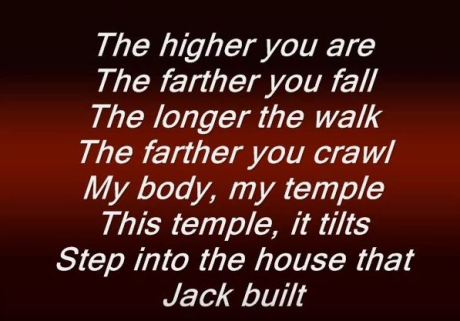
the-higher-you-are

The House Jack Built, Metallica


hacked doublespeak.JPG

The overseers of the U.S. intelligence community have not embraced a CIA assessment that Russian cyber attacks were aimed at helping Republican President-elect Donald Trump win the 2016 election, three American officials said on Monday.

Yet
“ODNI is not arguing that the agency (CIA) is wrong, only that they can’t prove intent,” said one of the three U.S. officials. “Of course they can’t, absent agents in on the decision-making in Moscow.”

The Federal Bureau of Investigation, whose evidentiary standards require it to make cases that can stand up in court, declined to accept the CIA’s analysis – a deductive assessment of the available intelligence – for the same reason, the three officials said.”

Now, since when is anybody in this ‘line of work’ concerned with anything more than ‘a deductive assessment of the available intelligence’?

Wasn’t it the DA’s office which was interested in making the cases ‘stand in court’?

Anyway, this whole exchange sends a very clear message.

Nobody disputes the simple fact that some Russians have indeed hacked into servers which harbor information pertaining to the electoral campaign. What the various branches of the intelligent services cannot agree about is the precise intent of the hackers.

Aha.

For John Locke and his followers “what makes a person identical with herself over time is her remembering or being able to remember the events to which she was witness or agent.” (According mostly to the followers. What Locke actually said is something else, to which I’ll come back shortly)
Jesse Prinz has another opinion.


In this video Prinz seems to advocate that we maintain the continuity of our selves by sticking to a set of values. But this is only ‘skin deep’.
He didn’t actually say ‘what keeps us ‘together’ over time but ‘what people think that is ‘keeping us together’ as time passes’.
These two are not necessarily the same thing.
The way I see it memories are just the ‘resource’ from which our identity is continuously being built and the ‘values’ we stick to are the ‘blue-prints’ we use/update during the process but that the ‘driver’ behind all this is our self-awareness/free willing soul.
All three are interdependent.
As Locke observed, without our memories we would be like balloons drifting in a cloud of deep fog. We wouldn’t even be able to determine whether we were moving or not.
As Prinz said, without our values we’re like ships which have lost their ‘compass’.  Just imagine a boat sailing during a starless night or in a cloudy day. There are ways that experienced sailors can use to determine whether the ship is moving – relative to the surrounding water – but not even Black Beard nor Magellan would have been able to reach their destinations without ever seeing the Sun, some stars or using a compass.
Not to mention the fact, sorry Jesse, that without our memory we wouldn’t be able to remember today what set of values we had been using yesterday.
Finally, but not lastly, without our self-awareness/free willing soul we would be like perfectly sea-worthy ships which have been abandoned by their crews. Adrift in the middle of the sea, at the mercy of the elements. Elements themselves being not merciless but amoral…
 I’m sure that by now you have already figured out what I mean.
It is “we” that ‘compares’ and ‘considers’ things, that forms “ideas of identity and diversity”, that sees “anything to be in any place in any instant of time”, that is “sure” of anything (or not)… and so on and so forth…
Without this “we” no discussion about memory nor values would have ever been possible
Without memories the “we” would go ‘hungry’. Or nuts.
Without values the “we” would be ‘toothless’. Or antisocial/in jail.
And all these have already been mentioned, albeit in different terms, by both Humberto Maturana and Stephane Lupasco.
PS.
Don’t tell me that none of you have ever thought, however passingly, of the other meaning of ‘stool’.
ganditorul


Until not so long ago it was possible to buy unlimited coverage against the risks that scared you.
After things became too complicated and fraud a too widespread occurrence even the Lloyd’s gave up and started to introduce caps on insurance policies.
In fact Lloyd’s of London was the only place – that I knew of – where risk was understood, at least in part, in a ‘functionalist’ manner.
Risk is something that can be seen in two ways.
As yet another opportunity for making profit or something that has to be mitigated for the profit of the entire community.
Let me deal with the latter ‘option’ first.
Somehow I don’t buy it that Bismarck was primarily motivated by the well-being of the workers.
But what the German industrial barons of the day needed in order to catch up with the British ones – the Albion was the industrial power house of that time, o tempora…- was more and more people willing to leave the relative safety of the country-side and come to the city to work in the newly built factories.
In order to appreciate the huge difference between these two situations we must remember that in those times families were a lot larger than they are now and that their members used to help each other in times of need. But this could happen only if the members of the same family remained in close vicinity and worked on very flexible schedules – agriculture or family owned shops. You cannot go help your ailing mother if you work in shifts and live two hundred miles away from her.
So, in order to ‘lure’ more and more people out of the fields, and in a very short time, Bismarck had to offer them a ‘safety net’.
OK, let’s accept the idea that, maybe, there are some risks that the society, as a whole, should concern itself with.
But how to fulfill this ‘social need’?
How to identify which risks should be dealt with in a collective manner and which should be left alone. Then how to manage the whole process?
‘State-wide’ or through privately owned/operated initiatives?
Does it really matter?
I don’t think there is a universally valid recipe here.
The Bismarck’s social insurance system worked in Germany.
Lloyd’s has functioned almost seamlessly for 3 centuries. In England.
Both systems, one centered mostly on profit and the other on the safety of those who took part in it, worked because they spread out both the risks and the profits.
Current systems, where only the risks are being mutualized while the benefits tend to become more and more centralized – by ‘design‘, by corruption or both – are no longer functioning properly.
Take ‘Obama Care’, for instance. Most people, including Donald Trump, agree that something has to be done about ‘public health’ but the whole thing isn’t yet working properly.
Instead of fighting among ourselves on whether the state/government should have anything to do with risk management how about considering for a moment where our current infatuation with ‘profit‘ has brought us?

Some people believe that “racial prejudice” is “the natural human inclination … to identity (sic) with members of one’s own tribe, race or ethnic group” and “Post-racial multiculturalism is the exact but equally extreme and insane opposite of Nazi racial ideology“.

Compare this to “Religion, which should foster sisterhood and brotherhood, which should encourage tolerance, respect, compassion, peace, reconciliation, caring and sharing, has far too frequently — perversely — done the opposite. Religion has fueled alienation and conflict and has exacerbated intolerance and injustice and oppression. Some of the ghastliest atrocities have happened and are happening in the name of religion. It need not be so if we can learn the obvious: that no religion can hope to have a monopoly on God, on goodness and virtue and truth“.

What’s going on here?

Where does all this ‘confusion’ come from?

Let me start from the ‘bottom’ of it.

“No religion can hope to have a monopoly on God, on goodness and virtue and truth”.

While I fully agree with Desmond Tutu on the gist of his words I must contradict him on something very important.

Religions cannot hope at all. About anything. Anyway you look at them. No matter which definition you use, religion – all of them – is something that people do together. A common effort.
It is the individuals who are the actual doers. Who love and hate. Or hope, in this case.
Who pretend that their religion is the only true one. Or understand, as Desmond Tutu did, that each religion is yet another manifestation of God.

“Religion has fueled alienation and conflict and has exacerbated intolerance and injustice and oppression.”

Again, it was individual ‘religious’ people who have done all of those things, not religion per se.
All sacred texts have been written by human people. I can even accept that the first manuscript of each religion was directly inspired by God. Only each of them have been copied a thousand times over. And heavily editated.
Then came the individual human people who have read those texts, interpreted them, passed them on and acted upon those interpretations. Upon their convictions, actually.

And this is how “Some of the ghastliest atrocities have happened and are happening in the name of religion”. Not because of ‘religion’ but ‘in the name of religion’.
Simply as a consequence of how certain people have chosen to interpret/use religious teachings.

And not only ‘religious’ teachings.

People are able to interpret – and use in their own (perceived) advantage, every bit of information that comes their way. And now, that we have started to understand more and more about how our brain is working, the manners in which we use that information have become more and more ‘convoluted’.

“Post-racial multiculturalism … began as an understandable overreaction to Nazi racial ideology…before being consolidated by academics into an instrument of socio-political intimidation, rewards, punishments, manipulation and control, a modern, secular replacement for the power-political role of medieval church ideology.”

So.
It was the academics/priests who have done the damage. Not their religion nor the information they had at their disposal.

But why?
How come people whose religions – all of them do this – are adamant about ‘respect your neighbor’ become involved in wars?  Sometimes even in ‘religious’ wars ….
How come academics, whose very job are to teach their students to think autonomously, use their ‘rank’ in order to subdue ‘their’ file?

Could the religious warriors have something in common with the intransigent academics?

How them sharing the unbreakable conviction that they own the truth?
Forged inside the ‘echo-chambers’ where they have grouped themselves according to their specific beliefs? (No matter whether those beliefs are of a religious or ‘rational’ nature…)

Only after I had reached this point in my discourse I was able to fully appreciate Desmond Tutu’s words: ‘Religion … should encourage tolerance, respect, compassion, peace, reconciliation, caring and sharing’.

He doesn’t say anything about giving up on your own kind.
Or about leaving your roots behind.

All he actually says is ‘Be very careful. If all of you will accept to see only the same side of things you will become a herd. And while there is indeed ‘safety in numbers’ all herd members are ultimately headed for the abattoir’.

Diversity isn’t something to be forcefully, hence falsely, celebrated. Or imposed on others.

What we need to preserve, and celebrate, is our ability to ‘walk around’ the things that we encounter. To entertain, and discuss among ourselves, different – even conflictingly different – versions of what we see around us. This ability would only enhance our chances to solve the problems we’ll certainly be faced with.

‘Culture’ is nothing but layer upon layer of place-specific information which have accumulated in time while ‘religion’ is how a certain group of people have learned, again in time, to cooperate in a certain environment.
It doesn’t matter whether that ‘environment’ has been created by a God, has evolved according to Darwin’s theory or both.
What really matters is how we react – conditioned by our cultures and by our religious upbringing – to what is happening to us. Both individually and collectively.

In this sense, each culture we manage to preserve will only add to our chances of long term survival. As long as we’ll learn to sincerely respect each-other, of course.
Again, both individually and collectively.

PS.
A comment on my FB wall, “True religion is God entering history and the lives of humans and revealing Himself. All other religions are man’s attempt to explain the world around him in terms of god or attempts to control lots of other people in the name of some god“, helped me to understand that “There is ‘religion’ – the shared attitude that helps us to cooperate, and there are religions – specific ways that individual communities have traveled in order to attain that attitude.
And something else. What if ‘God entering history’ and enough of us reaching the shared understanding that it is far better to cooperate amongst us – love thy neighbor – than to fight each-other are the same thing?
How to put this understanding into practice? In the various, and continuously changing, circumstances we have to face?

How about this being the very reason for us having so many religions/cultures?

People are very passionate when discussing about their future and their rights.
As they should be.

Children are a very strong ‘avatar’ for our future while the rights to live and to freely dispose of our bodies two of the most important rights.

And this is where things get really complicated.

Some people advocate mandatory vaccination against the most dangerous diseases.
Some people advocate women’s absolute freedom to have an abortion – a few of them extending this right up to the last moment of the pregnancy.

Other people believe that vaccines are mostly benefiting the big pharma and choose not to immunize their children.
Other people believe in the absolute right of the fetus to live – so much so that some of them would even ban all contraceptive methods.

The ‘interesting’ thing here is how this four categories of people intersect each-other.

A lot of the people who advocate women’s right to have abortions also advocate the mandatory vaccination of children while a lot of people who consider abortion a mortal sin also consider vaccination to be inspired by the devil.

Now let me get this straight.
You have the right to ‘kill’ your baby inside the womb but you should not be allowed to let them die of a preventable infectious disease?
You are to defend a fetus, at all costs and against all consequences for the mother, as long as they inhabit the womb only to let them catch whatever preventable infectious disease might come across their path?

Consistency is over-rated?

We really need to restart using our common sense?