Archives for category: Bounded rationality

Survival of the fittest“.

Evolution is not about survival of the fittest but about the demise of those unable to adapt. Even if the difference seems trivial this approach has vast consequences. As Ernst Mayr explains it What evolution is, (Basic Books, New York, 2002) one can never know what “best” may mean, in any situation. First of all because (Werner Heisenberg, Herbert Simon, Dan Ariely) you can never have a complete picture of anything and secondly because in the real world ‘situations’ are changing constantly – Panta Rhei.
So the only relevant test is survival, being able to cope with whatever comes along and not the brilliance with which one might be able to solve a very particular problem, at a particular moment in time.

Division of labor

After understanding ‘survival’, it’s a lot easier to figure why social strategy functions better than sheer individualism: by creating the right environment for its members to become specialists a complex team will cope better when confronted with  different complex situations than a mob composed of identically qualified members.
With the caveat that this arrangement works only as long as every member of the team realizes that it’s better for him to belong than to get out and only as long as all the members of the said team act consistently as if ‘one for all and all for one’. Otherwise put, complex teams where each has it’s own more or less indispensable role work properly only as long as most of the members continue to be ‘socially intelligent‘.

For those who feel there is an apparent contradiction here please note there are two levels of analysis/interaction.
Individually, each of us has to take care of him/herself (and his/hers immediate family).
Socially, each of us has the duty to evaluate the other members of the group and to exchange information with them about the well being of the whole group.

This can be taken even further. Whenever a subgroup becomes too ‘specialized’ –  as is in ‘becoming so preoccupied with it’s own well being as to stop caring about the rest’, its own survival is in danger. Time and time again, history shows us that those who become estranged from the rest of the society end up badly. Creating problems for the entire society, true, but ultimately their behavior amounts to a form of suicide. Callous royals end up on the chopping block, seemingly indestructible dictators end up at the hands of angry mobs… Erstwhile top of the feeding chain (too big to fail?!?) companies end up broke or bailed out by the government…

Politics versus Economics

I’m constantly amazed by the fact that politics and economy have grown so apart from each other and each of them so disconnected from reality.
Politics has become a constant struggle for administrative power while economy has ‘metastasized’ into a battle field where the foot soldiers struggle to survive while the big brass  gorge themselves with ‘money’.

Nowadays, too many politicians have forgotten that their job is to figure out, in close cooperation with the rest of the society, how to solve the various problems which  challenge us on a daily basis. Too many of them do nothing but fight among themselves, each of them attempting to impose their particular vision on all of us.
In the same time, the economic mechanism is no longer geared towards ‘making the ends meet’ – the original meaning of the Greek word oikonomia.
Our not so distanced ancestors have invented a self governing mechanism which very efficiently allocated the available resources to those who were able to put them to good use. Adam Smith described this mechanism as ‘the free market’.
Presently, we’ve corrupted this previously self leveling mechanism into a collective MMA arena where the heavier knock the wind out of the weaker in the name of ‘king profit’.

All this because we mistakenly believe free market capitalism to be an ideology when it is nothing but a mechanism for allocating resources.
The best to date, admittedly, but only as long as we’re wise enough to preserve the freedom of the market.
And as soon as we’ve mistakenly ‘anointed’ profit as the most important goal of any economic venture… the market had ceased to be free!  You see, profit is the best measure for efficiency – which, in its turn, is the best indicator for economic survivability, yet efficiency itself is pointless if the needs of the market are not met. Smith’s famous characters – the baker, the brewer and the butcher, went to the market to meet the needs of their customers. They became comfortably well off because they were successful in meeting those needs in an efficient manner, not because they were successful in cornering the market… as some of the present day tycoons are teaching us

Why do I maintain that a ‘profit obsessed’ market is no longer free?
Well, simply because the participants to such a market are just as free as those addicted to heroin. Both kind of addicts think of nothing but the object of their addiction and are oblivious to everything else. As in blind to everything else!
And I’m sure you all agree with me that being blind is detrimental to being able to stay alive. Specially so for those unaware of their blindness!
Or unaware of their addiction…
 

Part II ended on the Western side of the Mediterranean sea, right before WWII.
Which, by the way, was a consequence of the WWI victors making a terrible mistake.

For the III-rd part we have to cross to the Eastern side of the aforementioned sea and to fast forward to the aftermath of WWIII. The Cold One, if you haven’t figured that out by yourselves.

I’m going to make a small detour now and bring back a subject that I’ve already mentioned.
The changing nature of war itself.
Up to the start of WWI we had war as a conflict between ethnic/imperial chieftains while from then on really important wars had been started by ethnic/imperial chieftains and won by the attacked democracies. The key word here being ‘won’.
Which is not exactly true.
Those wars had not as much been won by the victors as lost by the aggressors. All that the democracies had to do was to (actively) resist long enough for the aggressors to rot from within and crumble under their own weight.
Actually all three WWs had been lost from the first moment. Simply because the aggressors had been inflexible ‘imperiums’ – social systems where the decision making mechanisms were controlled from the top in a more or less absolute manner.

Let’s go back to Syria.
What we had here was a population who had lost patience with being mistreated by a dictator and which, somewhat encouraged by what was going on globally, had tried to ‘buck the rider’. To carve a better future for themselves.

Just as in Spain, almost a hundred years ago, things had become way more complicated than they should have been.
Opportunists of all persuasions and from almost all over the world have jumped in to the occasion. And all those who could have dragged their asses instead of doing something useful for the longer term did exactly that. Dragged their asses and done nothing.

The parallel is staggering. Unfortunately things are becoming far worse and far more complicated.

In Spain, the world had perceived the whole movement as being predominantly of a communist nature. Which, eventually, made it so. Perception wise, in this case.
In Syria, the world perceived the whole movement as being predominantly of an islamist nature. Which, eventually, made it so. Simply because only the islamists of the world became involved, while all the rest did next to nothing. On the really ‘progressive’ side, that is.

In Spain, the only ‘outside’ power which had intervened decisively was the loser of the previous WW. More precisely, the decisive intervention was carried on by the  dictatorship established over the population which had felt mistreated after WWI.
In Syria, the ‘outside’ power which intervenes decisively, helping the ‘regressives’, is the loser of the previous WW. More precisely, the most effective outside intervention is carried on by the authoritarian regime established over the population which had felt mistreated after the Cold War. In Syria’s case we also have a second intervention on the side of the ‘regressives’, carried on by yet another authoritarian regime established over yet another population which feels mistreated by some of the most powerful governments on this Planet.

Then we have the popular sentiment in the rest of the World.
In Spain, people from some 50 nations had volunteered to fight on the Republican side. Very few of them entertained any communist convictions and most of them had a place of their own where to return after the war was over. And when they did return, they were welcome to do so.
Syria has also seen her ‘fair share’ of volunteers. But there’s a marked difference here. While those who went to fight on the Republican side in Spain were animated by some romantic ideals, most of the aliens who came to fight in Syria were driven by a sort of desperate ennui and an acutely perceived lack of any perspective in their countries of origin.
While those who went to Spain did it to help the Spaniards fulfill their dream, those who went to Syria were hoping to carve a piece of land where to build theirs.
While those who went to Spain were welcomed back by their families and neighbors, those coming back from Syria are shunned by their relatives and investigated by the authorities of the states they are returning to.

And the most complicated aspect of the whole thing is ‘separatism’.

To be continued.

At the beginning of Part I there’s a list of what we’ve accomplished during this century.
I’m going to remind you now some of the mistakes we’ve made.
Genocide, atomic bomb, global warming, widespread pollution… basically, we’ve turned the tables upon ourselves.

I had the first inkling of what’s going on when I started to compare what’s currently going on in Syria with the Spanish Civil War.
NB, even the name we use for this kind of conflict is an absolute aberration. War is, by definition, the opposite of civility. Why on Earth any of us might consider that war waged between co-nationals can be expected to be more ‘civil’ that the ‘regular brand’…

Spain and Syria have evolved in eerily similar manners. Multiple ethnic groups of multiple religious convictions have been forced by geography to coexist and to evolve together. Each of them had passed through very similar stages, albeit following different time-tables. The whole thing culminated with both of them passing, during the last century, through ‘revolutionary’ episodes. There are two small differences though.
Spain’s ‘revolution’ had taken place at the end of a turbulent period and had produced a dictatorship – Franco’s, while the Syrian one is the consequence of a dictatorship and has not yet yielded a clear result.

And why is any of this of any interest when analyzing the entire century? Except, maybe, that the two atrocious episodes have marked the start and the beginning of the said century?

Well, it’s how the rest of the world have chosen to react in each instance which I find extremely interesting.

First of all, let me remind you the broad picture in both cases.

Spain’s took place shortly after the end of WWI and immediately after the Great Depression. The most important ‘disruptive ferment’ was militant marxism and although not all of those fighting on the side of the revolutionaries adhered to this ideology the presence of the marxists had decisively shaped the reaction of the democratically elected governments of the world. They had chosen to basically stay out of it. Despite the fact that Franco was leading a rebellion and that the Republican Government had been dully elected to office.
At the beginning, France’s first socialist PM, Leon Blum, had assisted the Republicans but recanted shortly afterwards, “under pressure from Stanley Baldwin and Anthony Eden in Britain, and more right-wing members of his own cabinet”. Which, in a way, made some sense. Western Europe was frightened that communism might spread westwards and many of the Spanish Republicans were of communist persuasion. “Baldwin and Blum now called for all countries in Europe not to intervene in the Spanish Civil War. A Non-Intervention Agreement was drawn-up and was eventually signed by 27 countries including the Soviet Union, Germany and Italy. However, Adolf Hitler and Benito Mussolini openly ignored the agreement and sent a large amount of military aid, including troops, to General Francisco Franco and his Nationalist forces.” Stalin also ignored the agreement and send some help to the Republicans but got bored and by 1938 he practically forgot about the whole thing.
In the end, the conflict had been won by the side supported by those seeking revenge for being defeated during WWI – and for the harsh conditions imposed by the Treaty of Versailles.
That had been the ‘institutional’ reaction.
On the popular side, despite the ‘hang-over’ produced by the WWI and the Great Depression, some 60.000 volunteers from all over the world had joined the ‘fight for freedom’. The fact that they were organized by the Comintern didn’t help in the end, on the contrary, but the population at large looked at them with sympathy. Proven by the success enjoyed by the literature and art produced by some of the volunteers/sympathizers.

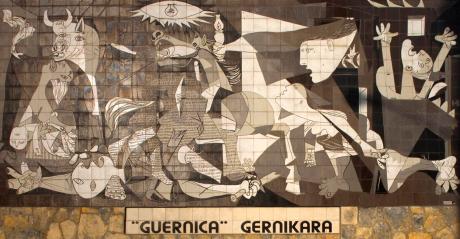
Guernica


We are constantly being told that we’re living in the best possible world.

I agree with that.
Of course it’s the best possible one… specially since there’s no other!

On this side of the Styx, anyway…

Let’s get real now.

This is the Century when we’ve managed to open up all corners of our round Planet. We’ve ‘conquered’ the most remote and inhospitable places – both poles, all mountain tops and most of the ocean floor, including that beneath the Arctic Ice Sheet, and, way more important, made most of the Earth solid surface accessible for almost everybody. By car, by train, by plane, by bike, by ferry …
We’ve managed to populate all the ‘cubicles’ designed by Mendeleev and we found uses for most of them.
We’ve managed to identify a vast array of natural resources. We’ve developed matching technologies to exploit each of them, to transform and combine them into what we thought it would fit our fancies and to distribute the results to whomever wished to receive them.
We’ve continued to develop already invented means of communication and we transformed them into something totally different. Practically, we’ve restored the world to it’s ‘Golden Age’. We now live in the Global Village.

Which is not that much different from the old one…

Now, with the world watching Aleppo burn, Daraya fall, and Idlib and other Syrian cities suffer so brutally, Pope Francis’s description of Syria as “abandoned and beloved” rings chillingly accurate. After Bosnia, I was sure the international community would never again stand by and watch in silence as hundreds of thousands of people were bombed relentlessly, starved, beaten, traumatized, and denied the most basic human rights, including education and medical facilities. During the height of the worst years in Sarajevo, from 1992 to 1994, you could chart the ebb and flow of the city’s hope, like the steady flow of the Mijacka River, whose shelled bridges we had to run across to avoid getting hit by snipers. Food supplies ran out; soldiers were getting slaughtered on the fronts; the hospitals’ generators went down.

Janine Di Giovanni, From Sarajevo to Aleppo, Lessons on Surviving a Siege,
The Atlantic, October 12, 2016

What happened with “only a fool learns from his own mistakes, the wise man learns from the mistakes of others“?

OK, back to square one…

1918 had seen the end of the First World War.
Which was the first ‘mixed’ war and the one which should have been the last…

‘The last’ part is obvious, let me elaborate on ‘the first mixed’ one.

Basically, people are both lazy and easily frightened. Their natural tendency is to ‘give in’, a.k.a. ‘trade in’ rather than ‘fight for it’ ‘to the ultimate consequence’.
Which actually makes a lot of sense. Just imagine what would have happened if we were just a tad more combative than we used to…

Need a clue? Click on the picture below.

sex bonobos chimps

Welcome back.

The proposition “Laziness and congeniality is our default mode (mood?)” is valid but from a ‘statistical point of view’.
On a ‘case by case approach’, the manner in which each of us reacts in specific circumstances depends both on those circumstances and on our own interpretation of what’s going on. In fact, it’s our individual consciousness which makes things even more complicated than the situation described in the video above.

During most of our history, human social arrangements have closely resembled those of the chimpanzees. Alpha males have somehow managed to climb to the top of the food chain while the ‘laziness’ of the rest kicked in and allowed the alpha males to do more or less what they pleased.
Which had included a lot of unwarranted aggression.

Up to WWI, most wars had been started by aggressive rulers who had somehow convinced their followers to attack one or more of the neighbors. Which neighbors were also organized more or less like a chimpanzee troupe – ‘lazy and congenial people’ ruled by which ever alpha male was aggressive/cunning enough to remain in power.
These social arrangements had a very interesting consequence.
All conflict was between rulers and all wars were ‘turf wars’.
The belligerents were not attempting to out-kill each-other but to establish hierarchies. More prosaically, war was nothing but ‘protection racket’. The loser had to pay a certain amount of money to the winner – ‘war reparations’, surrender a piece of the ‘turf’ or both at the same time.

In time – due to particular circumstances, some of what are currently known as ‘nations’ have learned that ‘chimpanzee social order’ leads to unnecessary suffering and have (re)invented an alternative. A.k.a. democracy.

WW1 was the first major war which pitted authoritarian regimes against democratic ones.
Yes, humankind had already witnessed some wars which had been started by more or less democratically run countries – the British Empire had attacked the Boer Republics in South Africa, for example, only this is but a blog post, not a 500 page dissertation…
Unfortunately, the democracies which had won the WWI had behaved totally inappropriately… with dire consequences. For them, as well as for the rest of the world.

The Treaty of Versailles imposed a huge amount of war reparations upon the main loser. Germany.
Two consequences have arisen from here.

The obvious one was WWII. And almost nobody disputes this.
The less obvious one was that those war reparations had transformed war itself.

A democratically run coalition imposing war reparations upon a defeated and leaderless/dispirited population had transformed war from a dispute between rulers into a dispute between nations.

This was the ‘accelerant’ used by Hitler to start the second funeral pyre which had engulfed Europe…

Democratically run nations behaving inconsiderately towards other nations also established an immensely dangerous precedent.

The first example of which had occurred less than 20 years later in Spain.


According to various theories, history is cyclical.
Meaning that we keep doing more or less the same things – or ‘errors’, until we figure them out for what they are.
And then we do them again, under a different guise…

“In China, people must use identity documents for train travel. This rule works to prevent people with excessive debt from using high-speed trains, and limit the movement of religious minorities who have had identity documents confiscated and can wait years to get a valid passport.

While this is the first time Chinese officials have used glasses to implement facial-recognition, the technology is widely used by police. China is also currently building a system that will recognize any of its 1.3 billion citizens in three seconds.”

We’ve spent most of our previously mentioned history living in closely knit and relatively small communities.
We made huge ‘progress’ during that time.
The period had started when we had climbed down from our ancestral tree – or had been made by God, take your pick, and had ended – for most of us, anyway, when we had moved to what we presently call ‘cities’.

Win some, loose some.

Apparently, ‘city-slickers’ are more ‘advanced’ than their rural cousins.
More people living together allows for a deeper division of labour, hence a higher specialization. Productivity increases faster and accumulated knowledge becomes simultaneously deeper and wider.
Unfortunately, all these come at a cost. At first for the individuals and, ultimately, for the society at large.

Living in smallish, and necessarily closer knit, groups provides a lot of ‘natural’ social solidarity. Individuals feel that they belong somewhere and, by sheer necessity, give relatively much to the community. Effort as well as attention.
Lost in the city‘, individuals are simultaneously freer to experiment/innovate and also more prone to growing alienated. So alienated as to become a danger to themselves and/or to those living around them.

On the other hand, small communities, where everybody knows everybody else, necessarily generate a lot of social conformity.
Individuals enjoy a lot of (relative) security and psychological comfort but don’t have very much lee-way.
Innovation, technological as well as social, is slower in this circumstances.
It took us some 130,000 years to ‘invent’ speech, another 65,000 to ‘invent’ writing and then, after no more than 6 short millennia we invented the printing press.
Less than another 6 centuries later we have the Internet.

Writing was invented by the Assyrians – an ‘imperial’ people who lived in cities and who needed a ‘technology’ to keep track of taxes due on the commercial trades which sustained the whole civilization.
Basically the same thing was repeated in many other places. Ancient Egypt, Ancient China, etc.
Written records and favorable geography had allowed the imperial administrations to control relatively vast tracts of land, relatively huge amounts of people and marshal considerable resources to whatever goals considered worthy by those who controlled the flow of information.
Writing down ones thoughts/discoveries also made it possible for humankind to better store its knowledge about everything. ‘Hard copies’ travel better through time than oral traditions.

Until something went wrong.
We all know that all those ancient ‘imperiums’ had crumbled, despite having been the most advanced civilizations of their times.
Other, more nimble, competitors were able to outmaneuver the older behemoths.
Maybe because the old behemoths had exercised too much social control?
‘Written’ central administration was able to marshal enough resources for the ruler to be able to impose stiffer rules towards his own personal safety. The most immediate consequence being that increased social conformity stifled innovation and, hence, created the conditions for the others to catch up, outmaneuver and eventually leave the behemoths behind…

The printing press had a relatively smaller impact than the mere pen.
OK, information was more readily available to those who wished to learn – hence the boost in science and technology, but was ‘useless’ as a ‘coercive tool’. It doesn’t make much difference to someone who wants to control a system whether the information used to do such thing is hand written or ‘pressed’. The small number of ‘insiders’ need to keep that information under tight control so…

The latest ‘gizmo’, the internet, is a totally different development than the printing press.
While the latter is unidirectional – from the author to the wide public, the former goes both ways with equal ease.

Each of us can, almost instantly, become a ‘shooting star’ and, simultaneously, all of us can be monitored by whom ever has the necessary means.

As if we’ve backtracked to a ‘Global Village‘.
In more ways than one.

In a traditional village, everybody knows more or less everything there is to be known about everybody else.
In the Global Village everybody can learn considerable amounts of information about almost anybody worth following while those with enough means can learn almost everything about everybody. Then analyze that information to whatever depth they are able to.  And store it for as long as they find any use for it.

What we call reality exists.
Regardless of us being able to faithfully express whatever we know about it.
Regardless of how much of what we know we are willing to share with others.
Regardless of some of us using their knowledge to impose themselves upon the less knowledgeable.

The irrefutable proof about reality being a fact is not that we have chosen to call it so. Or even to call it at all.

The irrefutable proof that reality is factual is, duh, another fact.
That nobody, no matter how knowledgeable, powerful or both at the same time, has ever been able to impose their will upon the said reality for any significant length of time.

No dictator has ever been able to consistently subdue a people. To kill it, yes. To consistently subdue it, NO. Lately, most of them have also lost an erstwhile relatively common ability… that of bequeathing their power to their intended successor.
No scientist has ever been able to pretend they really knew what they were talking about. No genuine scientist, that is… That they have a clue… yes. Of course!
A fair understanding of what’s going on… that is increasingly plausible.

That at least one of the above possesses the ultimate knowledge/power about even the minutest portion of reality…

According to Protagoras, we are here for but one reason. To determine whether anything which happens around us makes any sense.
Mind you, we are not supposed to knit fancy stories and to skillfully include in them everything we perceive! A.k.a ‘narratives’.
Just ‘measure’ things and call them out for what we think they are.

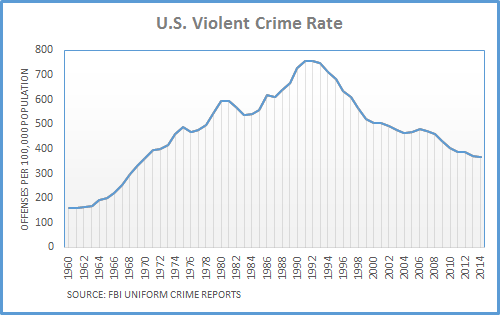
I’m going to enumerate a series of facts and let you figure them out.

“A well regulated Militia, being necessary to the security of a free State, the right of the people to keep and bear Arms, shall not be infringed.”

Violent-Crime-Rate-Chart1

Murder-Rate-Chart


guns in circulation per household

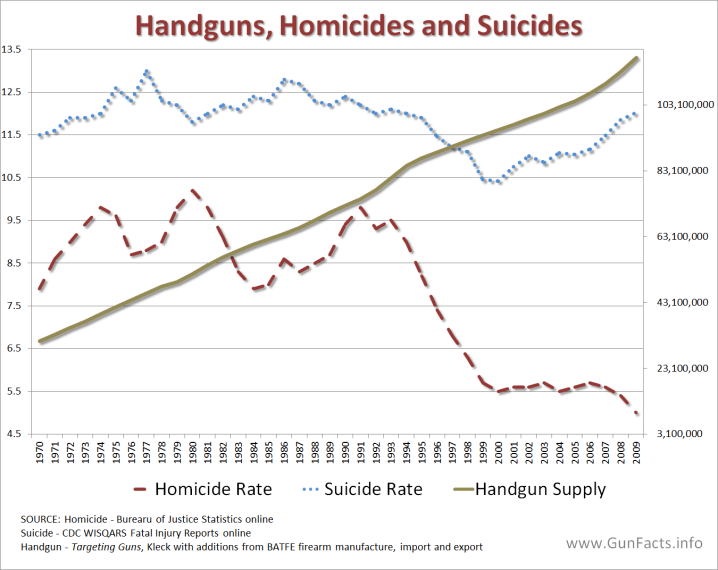
So, if people are less likely to be killed, in any manner, why a shrinking number of them buy an increasing number of guns?

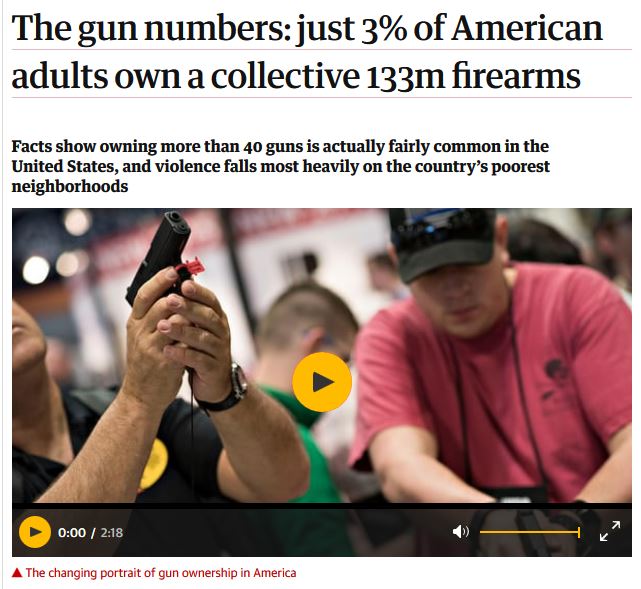
3% gun owners

AVAILABILITY-OF-GUNS-Handgun-Supply-and-Homicies-Suicide-Rates

suicide versus mass shootings


murders by type of gun

Then why are people so focused on ‘assault rifles’? Only because they tend to be used in mass murders? Is this a good enough reason to try to remove them from the eco-system?
And why is there so little fuss about the huge number of suicides?
Bzw, can ‘mass murders’ be considered a form of suicide? After all, very few of the perpetrators ever managed to leave the scene… And even fewer have never been identified.

number_of_nfa_firearms_processed_by_fy

According to the ATF, people in the USA buy an ever increasing number of guns each year yet since 2012 (Sandy Hook) Cerberus Capital Management has not been able to find a buyer for Remington Outdoor – the weapons manufacturer who produces, among other ‘things’, “the most popular version of the “modern sporting rifle” sold in the US.
People in the US are interested to invest in weapons per se but not in weapons manufacturers?

Considering that, according to Bloomberg, Cerberus Capital had eventually handed over Remington Outdoor to “Wall Street Creditors”…

Blackstone Group, which offers asset management services, has been reducing its weapons exposure for years. This weekend, it verified that no gun investments remained in its portfolios, according to the Wall Street Journal. The investment giant BlackRock Inc. said it, too, was exploring ways to cull gun companies from the portfolios of clients who no longer wish to invest in them.

20 years ago, very few people were talking to (by?!?) themselves while walking around the city.
And most of the passers-by were tempted to call 911 because they considered the ‘talkers’ had forgotten to take their medicine.

Nowadays, when quite a lot of people walk around speaking blindly – to a naive onlooker, nobody cares anymore.

As in nobody cares to check whether the ‘speakers’ have any ear-plugs stuck in their ears…

It was Hegel who first noticed that how much of ‘something’ was available at some point in place and/or time was determining the evolution of things.
Later, Marx and Engels ‘hijacked’ the idea and then corrupted evolution into revolution but I’ll set aside that subject for the time being.

“It is said that there are no sudden changes in nature, and the common view has it that when we speak of a growth or a destruction, we always imagine a gradual growth or disappearance. Yet we have seen cases in which the alteration of existence involves not only a transition from one proportion to another, but also a transition, by a sudden leap, into a … qualitatively different thing; an interruption of a gradual process, differing qualitatively from the preceding, the former state”

Georg Friedrich Hegel, Science of Logic

According to Ernst Mayr, evolution is a process which weeds out the misfits.
Which ascertains that at any given moment only those individuals/species who can survive the present conditions continue to enjoy life.
Regardless of who’s responsible for any changes in those conditions, of course…

And did I tell you that evolution is an impersonal process? Which has no goal, whatsoever?

We are currently witnessing an accumulation of heat on our Planet.
I’m not going to argue whether we are the main culprits or not. I don’t command any expertise in this domain, except that I know for a fact that increasing the relative content of CO2 in the atmosphere does increase the retention of heat by the aforementioned atmosphere.
I also know for a fact that we’ve burned in the last three centuries fossil fuels which had been accumulated during God only knows how many millennia. Releasing a huge amount of CO2 ‘in the aforementioned atmosphere’
Was it enough to raise the level of CO2 to the present figure? I don’t know… Volcanoes are another ‘prolific’ source for this fateful gas…

„Then why are you writing this post? Only to acknowledge your ignorance? Why should we bother?”

Dead saiga antelopes

Dead saiga antelopes in a field in Kazakhstan. About 20,000 of the species were found dead in one week. Photograph: Reuters

„The scientists on the ground pinpointed blood poisoning as the cause, but were puzzled as to why whole herds were dying so quickly. After 32 postmortems, they concluded the culprit was the bacterium Pasteurella multocida, which they believe normally lives harmlessly in the tonsils of some, if not all, of the antelopes. In a research paper published in January in Science Advances, Kock and colleagues contrasted the 2015 MME with the two from the 1980s. They concluded that a rise in temperature to 37C and an increase in humidity above 80% in the previous few days had stimulated the bacteria to pass into the bloodstream where it caused haemorrhagic septicaemia, or blood poisoning.”

You see, this post is indeed about ignorance.
We just don’t know what will happen if enough of something accumulates somewhere.
Until it does, of course.

And to find out we’ll need to survive the ‘happening’…

Remember Midas, the character who, after being granted a wish by a grateful Dionysus, “asked that everything he touched would turn into gold“?
And who was happy as a pig in mud after his wish was fulfilled … only to find out that he was going to die of hunger since everything he touched did turn into gold? Including his beloved daughter who had enthusiastically embraced her father upon his return from the fateful meeting with Dionysus?

Under the Violent Crime Control and Law Enforcement Act of 1994, the “Three Strikes” statute provides for mandatory life imprisonment if a convicted felon: (1) has been convicted in federal court of a “serious violent felony”; and (2) has two or more previous convictions in federal or state courts, at least one of which is a “serious violent felony” (the other offense may be a serious drug offense). The sentencing enhancements in this law can have a significant impact on a criminal defendant.

Now wait a minute! What has this got to do with anything?

Well, more than two and a half millennia after Midas had driven himself into a tight corner we continue to ignore his lesson. As a species…

And the key words here are ‘continue to’.

The axe.

Very soon after our flint knapping ancestors discovered that a shaped stone is very useful at chopping wood they tied it to a shaft and started bashing the heads of their neighbors with it.

stone axe

‘Corrupting’ tools into offensive weapons, strike one.


Articulated language.

Soon after learning to fight our fellow humans, we started to speak to each-other.
It might have started while hunters tried to coordinate their efforts or when strangers tried to barter things… Does it really matter?
For me, it’s enough that very soon after we learned to speak we were masters in the art of lying.

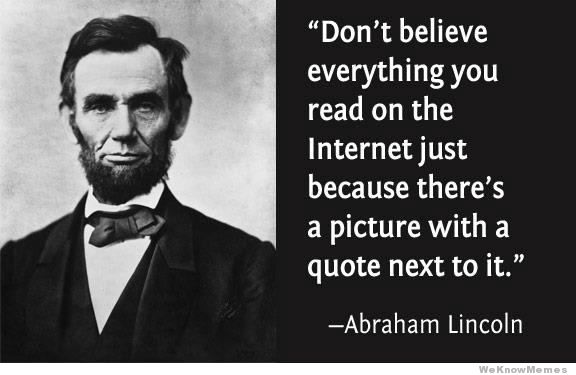
internet lies lincoln

Corrupting words into lies, strike two

Money.

At some point in our more recent history, we discovered that it was easier for each of us to learn a particular skill and to exchange goods among rather than each of us providing for all his (family’s) needs. Eventually we invented money and replaced barter with proper trading.
Soon after, some of us forgot that money was meant to facilitate trade and started to hoard it.

follow the money

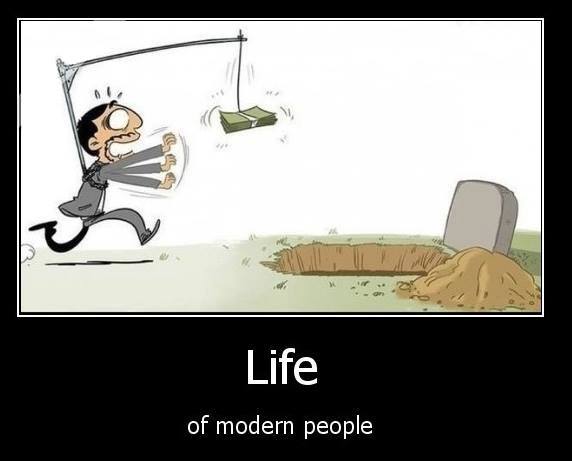
Elevating money to stardom against all historical advice, strike three.


Are you wondering whether I’ve lost it entirely?
Neah… just came home from the movies…

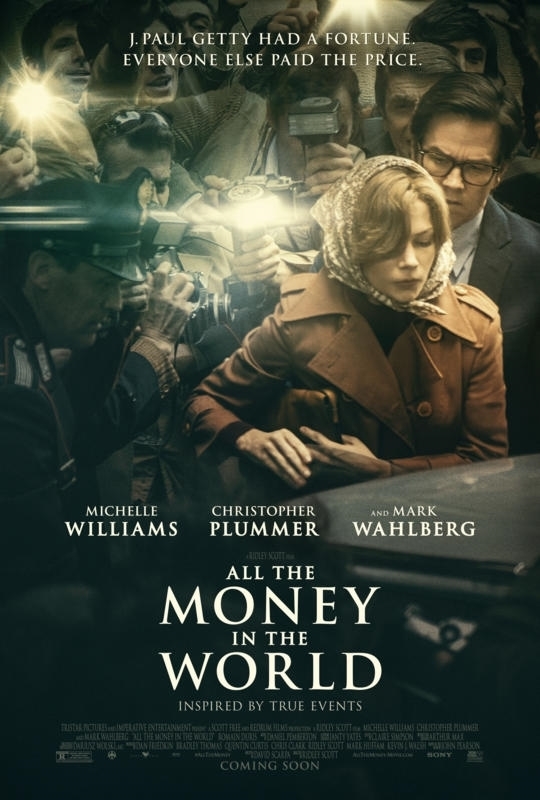
All the money in the world

Since the movie ended on the bright(-ish) side, I’m going to remind you that Midas also found a way out of his predicament.
The ‘golden’ King begged Dionysus to lift the cursed blessing bestowed upon his head, was instructed to wash his hands and everything else he wanted turned back to its original state in the Pactolus River – in present day Turkey, and presto, everything was fine again.

There’s only one small problem left.
Where are we going to wash our hands…. or should we cleanse our minds first?

Hopefully, before experiencing the hunger pangs which had driven Midas to wisdom…