“I’m going to die” and “I’m going to live” are ‘half-truths’. Glass half-full and/or half-empty is another.
Each of the above are true. Technically speaking. But also incomplete. Hence “half”-true. True, as in factual, but only half-true because each of the above are ‘incomplete’. Waiting!
‘I’m going to die’ makes absolutely no sense. Of course ‘I’m going to die’… Every individual ever born was meant to die from the first moment of their lives! ‘I’m going to live’ also makes very little sense. For as long as anybody is able to mutter a few words, that individual is going to live for a while. For a few seconds, at least…
Same thing with the glass. It being half-full or half-empty depends on the evaluation made by an interested party. Interested enough to make the evaluation…
Evolution-wise, ‘survival of the fittest’ denotes lack of adequate comprehension. Evolution is about survival. Coping with change. Getting through the ‘dire straits’. Evolution is free. The only thing that matters is to get through. Nothing else but getting through in one piece. No referee other than the dire straits themselves and no points for the artistic impression. ‘Survival of the fittest’ is ‘getting through in certain conditions’. Getting through after knocking down all competition… Survival of the fittest is not about coping with change. Survival of the fittest has nothing to do with evolution and everything to do with winning. Ernst Mayr, What Evolution Is
‘Now, will you make up your mind? Is there a best religion or not?!?’
Is there a better DNA? Or a better religion? Better against which benchmark?
Exactly!
DNA is how species translate information from one generation to the next one. Religion is how cultural species translate, and conserve, Weltanschauung.
Of course there are differences. But I’m more interested in the similarities present.
We have discovered DNA, and genetics, a couple of generations ago. Evolution, as a process, in the XIX-th century. Yet animal husbandry and plant breeding are as old as agriculture… Which means that in certain conditions – having reached a certain ‘maturity’ – humans have started to behave ‘as if’. Our ancestors, lacking any formal knowledge regarding genetics or evolution, somehow managed to breed a variety of farm animals and plant crops. Each adapted, as in bred to fulfill certain needs, to the ‘task at hand’.
DNA/RNA, the existence of genes, supports all life forms. Plants, animals, fungi, viruses and everything else that lives. As far as we know, there is no life form outside the ‘genetic’ realm. There are many forms of life and all of them work according to the same principle. Each species functions in a specific manner, which manner is transmitted from one generation to the other. The relevant information ‘written down’, encoded, in genetic messages is passed from parents to off-springs. Evolution, the phenomenon, is a consequence, not a goal. The messages passed from one generation to the next one are not ‘rigid copies’ of the previous ones. When the messages are put together by the previous generation alterations occur inexorably. Whenever an alteration, or a combination thereof, is incompatible with life, the organism sporting that alteration dies. The alteration disappears. If the individual organism survives, and is able to generate a new generation, the alteration also survives. And may come in handy when something changes in the environment. Or may prove to be too burdensome in certain circumstances. Individuals sporting certain alterations have better chances to survive in circumstances where the alterations are useful while the ‘normal’, unadulterated, individuals might struggle. Alternatively, alterations which may have survived for a number of generations might become too burdensome after something had changed. The point being that evolution occurs ‘outside’. None of the individuals has anything to say about the matter.
‘But you just said that animal breeders have altered their farm animals according to their wishes!’
Yes, the animal breeders have influenced the evolution of their animals! The animals themselves, the individual organisms suffering the process of evolution, still had nothing to say about what was happening to them.
Which brings us to religion. Information being transmitted from one generation of people to the next one and fundamentally shaping the fate of the community. Of the cultural species being defined by each religion.
And this is where the parallel between DNA/genetics and religion stops.
We don’t know for sure what was going on in our past. Historians and archeologists have a few ideas but those ideas change as more and more information is literally dug out. But no matter how much we’ll be able to learn in the future about our history it is safe to say that we’ll never know exactly how we got here. In the present. But it’s also safe to say that the past was different.
And the most obvious difference being the fact that community mattered more. In the sense that each and every member of the community was acutely aware of the fact that they could not survive alone. Each and everyone of the adults living a few thousand years ago were vastly more capable than any of us to survive, for a while, in the ‘bush’. Yet all the evidence we’ve gathered so far suggest they lived in close knit communities.
Absence of proof is no proof of absence? The fact that “all the evidence we’ve gathered so far suggest they lived in close knit communities” doesn’t mean there were no individuals who managed to survive for long periods of time on their own. Or in small groups. No, it doesn’t! The fact that “all the evidence we’ve gathered so far suggest they lived in close knit communities” only suggests, strongly, that close knit communities are more likely to survive. And to leave behind discoverable traces of their existence!
All religions worth their salt attempt to fulfill three needs.
A bed-time story, a survival manual and a get-back-on-track strategy.
The bed-time stories depend on what had already happened before their respective inceptions. On the particular histories of the people entertaining those stories. On the respective cultures which have generated each of the religions. The get-back-on-track strategies, again, depend on the specific social-psychological aspects of each individual civilization using a particular religion. Unsurprisingly, given the consistent nature of the human being, the survival manual is the same.
Regardless of the specific wordings used by various religions, the core of each of those manuals is faithfully summarized by “what goes around comes around”. Mind you, I’m speaking here about ‘successful’ religions. About religions which actually help the civilizations which use them to survive for sizeable amounts of time. About effective religions which create a collective mindset capable to cope with ‘the unexpected’. For example, the religion used by the Aztecs had failed in their hour of need.
The point I’m trying to make here is simple. The Aztec Empire observed a certain religion. They had to, in order to function as a state. As a social organism. Which religion allowed (demanded?) the rulers to treat the general population in a certain manner. Which general population ‘made good’ of the first opportunity to rebel. Little knowing that their new masters were no better than the old ones but …
The Aztec religion wasn’t good enough. Was unable to unite those who observed it into a community. Was unable to convince the believers to behave. To treat the ‘others’ in a respectful manner. Was unable to convince its believers that ‘what goes around comes around’!
The idea wasn’t mentioned at all in the Aztec ‘bed-time story’? The faithful stopped believing it at some point? For whatever reason? The religious leaders had given up promoting the concept? In earnest? As in behaving like they were convinced themselves as opposed to merely paying lip-service to the ‘whole thing’?
Does any of the above even matter? For us, trying to make sense of what had happened?
A perfunctory glance down the history alley is enough to convince us. Democratic decision making is slower than any of the alternatives. Yet, over the longer time frame, it begets better results.
Democratically run systems are more likely to survive, as long as they manage to preserve their democratic nature. While autocracies collapse, under their own weight, sooner rather than later. Because of their autarchic nature. Those running an autocratic regime – a small group to start with and growing smaller and smaller as time passes because that’s how autocracies work – don’t understand the observer effect.
But what is this famous ‘democratic nature’?
Each democratic ‘event’ has three ‘stages’. Like all other decision making processes. Information gathering, making the call, assessing the outcome.
Electoral campaign. ‘Political scientists’ use the above mentioned term to designate the democratic ‘fact finding phase’. Leaving aside the fact that people – potential voters – actually live. In the very circumstances they are called to vote about. To evaluate at the ballot box. Which highlights for us to the first ‘chocking point’.
Individual voters have a limited experience. Each of us gets in touch with a limited portion of the reality, remembers only some of it and tries to figure out only what each of us is interested in. If actual voting would take place in ‘absolute darkness’ – each of us voting based exclusively on our own, individual, experience – democracy would be demoted to ‘mob rule’. The largest group of people would run the show according to its own, specific, interest. While all the rest would be sidestepped. Not a sustainable way of running business. Specially when the business at hand is of a social nature. Hence democracy depends upon a continuous, honest and respectful exchange of information between all the members of a democratic society. People need to know what their neighbors feel about things before voting one way or another. Furthermore, and even more important, people need to care about what other people experience in their daily lives. ‘Political scientists’ – well, some of them – are convinced that ‘efficient campaigning’ is enough to do the trick. To convince enough voters to do as they are told. This conviction has transformed democracy into a war of words. Into a conflict fought inside a space defined by language. Fighting that war brought us where we are now. For the better and the worse of it.
‘It doesn’t matter what people vote. The important thing is that votes are counted by the right people.’ I rephrased here a quote attributed to Stalin. The communist dictator. Si non e vero, e ben trovato. The ‘original attribution’, “It is enough that the people know there was an election. The people who cast the votes decide nothing. The people who count the votes decide everything.” aptly describe Stalin’s attitude towards his subjects. The attitude demonstrated by the consequences produced by his actions. By his actualized decisions. His public positions on the matter? Read one of his discourses… He was lying through his teeth? Said one thing and done the very opposite? Judging by the very consequences of his reign? That’s what I meant by saying ‘the autocrats don’t care about/understand the observer effect’. Enough about vote rigging. The second ‘chocking point’.
Casting the ballots – and counting them, one way or the other – takes us only this far. Where we are ‘now’. ‘Going forward’ we also need to ‘evaluate’. You might think that evaluation is an integral part of the first phase. It is. The evaluation of the consequences. Before a new round of elections we need indeed to evaluate what the confirmed candidates had done. I’m talking about another evaluation. Very soon after the votes had been counted, the confirmed candidates ‘loose’ their masks. Relax their pretenses and start acting their truer selves. That being the moment when we need to evaluate our decisions. Our choices. What we have voted for…
Very soon after they get elected, the vast majority of the confirmed candidates start blaming their predecessors. ‘Things would be far better if the guy before me would had done that. Or refrained from doing the other that’. ‘Yes, I know. That’s why I voted for you! But you’re not delivering. Everything you promised…’ This being the moment when we, each of us, need to evaluate our own actions. Our own decisions!
Yes, ‘they’ have their share of guilt. ‘Had they done everything they promised…’ But first we need to figure out how, and why, WE have fallen for their ‘lies’. Cause, after all, we are the ones who have put our faith in their promises! And we are the ones experimenting the consequences.
Epigenetics refers to how your behaviors and environment can cause changes that affect the way your genes work. Unlike genetic changes (mutations), epigenetic changes are reversible and do not change the sequence of DNA bases, but they can change how your body reads a DNA sequence. CDC.gov, 31 Jan 2025
So. XII-th century alchemy was OK. And, eventually, had given birth to science. All the while, starting with the XV-th century, practicing witchcraft was punished by burning the culprit at the stake. In the same cultural space! Christian Europe…
Both alchemists and inquisitors read the same Bible. Followed the same precepts. Both alchemists and witches were involved in the same business. Performed, or tried to, the same kind of feats. Alchemists tried to out-rightly transform the reality, according to their particular wishes, while the witches were accused of achieving ‘unnatural goals’. Saving someone’s life – or that of some animal – who should have ‘normally’ died. Who would have ‘otherwise’ died… The interesting aspect of this whole thing is this: Alchemy was considered to be OK. Alchemists believed – and the general public obliged – that everything which existed came to be by design. Was wished into being by God. As a consequence of this belief, the alchemists – and the general public – were convinced that by studying nature they would, eventually, learn something about the will of God. And achieve some results along the way… Simultaneously, since the feats accomplished by the witches were ‘against the nature’, they must had been performed with the help of the devil. Hence had to be punished.
What about the miracles performed by Jesus?!? And promised by Him to all those who followed his teachings? In earnest… “Truly I tell you, if you have faith as small as a mustard seed, you can say to this mountain, ‘Move from here to there,’ and it will move. Nothing will be impossible for you.” Matthew, 17:20
What drove the XV-th century witch-hunters to the conclusion that miracles could be performed only with the help of the Devil? That God was no longer willing to assist?
‘Reality’ – as in ‘whatever happened on the face of the Earth’ – was considered to be the actualization of the Will of God, remember? Such a tragedy, “perhaps 50% of Europe’s 14th century population” disappearing in such horrible way, was bound to be interpreted as a punishment. Applied by God to a sinful population. And since God was perceived to be in a vengeful disposition, any ‘help’ could have come only from the ‘competition’. From the ‘sneaky’ one.
Farfetched? Believers don’t think like that? Don’t blame God for the bad things happening to Man?
Yet another interpretation? Of the same cultural tradition?
Indeed, this my very point. Just as individual living organisms somehow ‘tweak’ the information written in their DNA to increase their chances of survival in the specific conditions present in their environment, we – conscious human beings – have the opportunity, read ‘liberty’, to interpret the cultural traditions passed on to us by our ancestors. We do that ‘under influence’. Pressured by everything going on around us. Are we truly free when doing this? Does our conscience work as intended in such conditions? When in ‘dire straits’?
And God said… . . And God saw every thing that he had made, and, behold, it was very good.
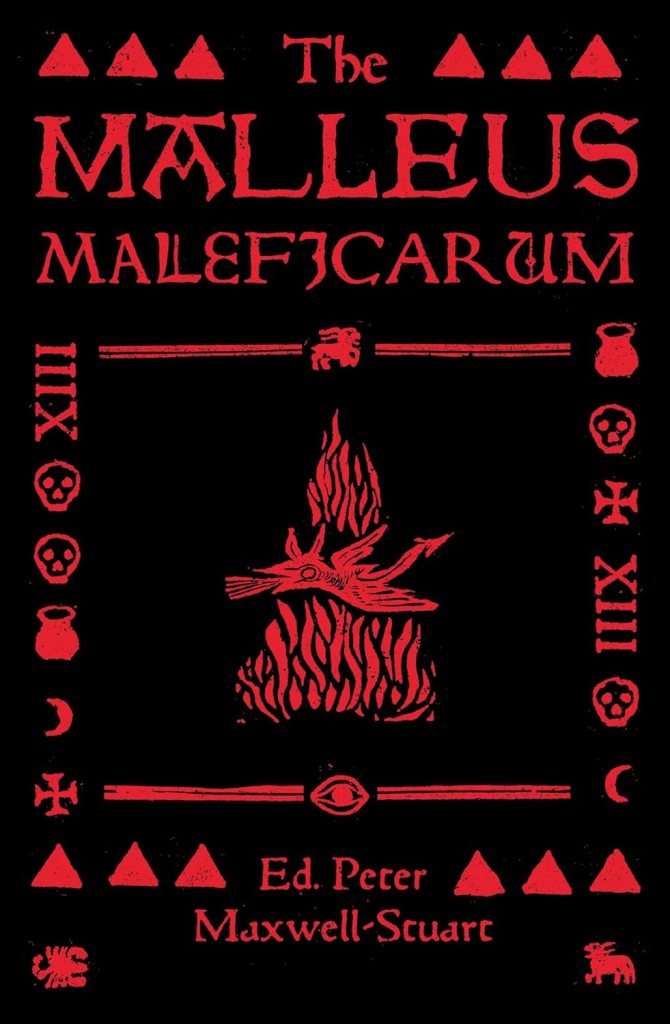
“Investigating Witch Trials In 1487, the zealous inquisitor Heinrich Kramer wrote a treatise that would have a remarkable influence on European history. Blaming women for his own lust, and frustrated by official complacency before what he saw as a monstrous spiritual menace, Kramer penned a practical guide to aid law officers in the identification and prosecution of witches. Fusing theology, lurid anecdotes and advice for those engaged in combating sorcery, The Malleus Maleficarum transports the reader into the dark heart of medieval belief – where fear and the supernatural converged in a gripping struggle for understanding and control. The book led to the burning of numerous heretics and ‘witches’ and had a lasting impact on the popular image of witchcraft.”
Basically, both – the alchemists as well as the witches – attempted the same thing. To perform/accomplish tasks which seemed impossible to the lay people. Witches were burned when caught by the ‘wrong people’ while the alchemists were feted.
Is there any sense to be made out of all this?!?
Well, let me go back. To the ‘genetic’ moment. When all ‘this’ started. As I’ve already mentioned, in my blog, I’m an agnostic. I don’t need a god as an explanation for anything. But I don’t know, as in ‘I can’t be sure’, whether any of this has been decisively influenced by a ‘deus ex-machina’. Hence my agnosticism. Furthermore, I’m absolutely convinced that the God worshiped by people is real. Made real by their belief! Now, anyway you look at the whole thing – believer, agnostic or even atheist – there is no denying that the Bible is choke full of information. Of sense!
‘But… but… how can you say something like that!?! What sense can you find in a book that inspired people to burn other people?’
Spot on, my dear Watson. That’s exactly the question I’ve been asking myself! What happened during those fifteen centuries. Between writing the Bible, as a collective work, and Heinrich Kramer writing Malleus Maleficarum. Between Christians building a certain culture and some people, claiming to belong to the same ‘denomination’, starting to burn witches, but not alchemists, at the stake. Stay tuned.
I posited in my previous posts that: a. Language is inherent to life. Since there can be no life unless there is a functional coordination between the inner reality of the living organism and the environment which constitutes the ‘outer’ reality. b. Language evolves. According to what needs to be coordinated. And, since the advent of man, according to their ‘wishes’.
Fast forward to the present. To the world of alternative facts…
Delanies Lawes, the author of a very interesting paper, “The Theater of the Absurd”, gives us a heads up. ‘Language is unreliable, “one can easily say one thing and do the opposite” ‘. She ends her study by pointing out “Essentially, the absurd dramatists redefined the art form and created a space in which succeeding movements could flourish.”
Reading forward, I came across an explanation by Kathrin Busch. Clarifying – for us, ordinary people – what Walter Benjamin meant when making the difference between ‘through language’ and ‘in language’. “he also draws a clear distinction between expression through language and expression within language. A specific content, i.e. what is meant by the word, is communicated through language – as befits its instrumental use. Items of information and semantic content are conveyed through the language as it is defined instrumentally. In contrast, something else again is communicated in language: a very particular type of meaning emerges in the expression or in the manner of speaking and this meaning in no way has to match the content of what is being said. Benjamin now imposes the mode of speaking, the form of language, on the concept of language in general, thereby implying that, for him, the form of articulation is more fundamental for language than the communicable nature of semantic contents or their referentiality. Benjamin’s argument thus goes considerably further than simply stating that the meaning of what is being said is inseparable from the way of saying it, that the content of a speech act is intrinsically bound up with its form. Rather, the more radical argument that the form of speech can produce a completely different, independent and above all latent meaning must be made…” “However, Benjamin doesn’t just mean that, within a language – in poetic usage for example – the “how” of the act of saying is relevant, but that every language is itself such a form of saying. Language is precisely the formative principle of expression in general. Here, Benjamin picks up on Humboldt’s concept of the inner form of language. According to this, a specific form of saying is expressed in a particular language and, at the same time, a particular cultural significance is generated through this linguistic form.”
Conventional language has failed man… one can easily say one thing and do the opposite… Hence conventional language has failed man by not being rigid enough. By being a flexible enough ‘space’ where man might say one thing while doing the exact opposite… Well… not so fast! “Essentially, the absurd dramatists redefined the art form and created a space in which succeeding movements could flourish.” By using language in a specific manner, theirs, the absurd dramatists created, opened up, the space for was going to happen next…
Not that different from what Benjamin, and Humboldt, had to say about the matter. That by using language, people build culture. And civilization. Interact with their environment. Benjamin was also speaking about the “language of things“. Coordinate their actions. One way or the other. Act as a team or deceive their marks…
The point being that all these people say the same thing. Using different words and, maybe, even without realizing how close they fit together.
Language is far more than what we say. Far more than what we do…
Basically, language is the interface we use to interact with the rest. A tool. A tool which seems to have a mind of its own, but only because it is wielded simultaneously by all of us.
I have already convinced myself that language is inherent to life. That each living organism remains in an animate state for only as long as a flow of information continues to coordinate the processes which make life possible. And since information needs to have the same meaning at both ends of a ‘conversation’, each coordination effort depends on information being conveyed using a language.
Successful coordination depends on information being conveyed in such a manner as to make sense, the same sense, for all those involved in conversation!
A perfunctory look at a world-wide map is enough to determine that there are three ‘dead-ends’. Places not that hard to go to but almost impossible to return from. Specially for our distant ancestors. Hunter-gatherers who lived off the land. Some of whom moved over whenever the population became too numerous for the place they inhabited at any given moment. If the new place was good enough, they thrived. Then, at some point, some of them went even further. If not…if the new place wasn’t that good … the best they could do was to survive. Going back was no option. The old place was already full when they left. The Namibian dessert in South Africa, the Southern tip of South America and Australia. OK, now that I remembered, I must add the Easter Island to the roster. Make it three and a tiny bit.
‘Living at the end of the trail’ means little to almost no interaction with your neighbors. Until the pestering Europeans started to ‘discover’ the world… but that’s another subject. While people living in the ‘middle of the action’ – the Ancient Egyptians make a very good example – meant having plenty of ‘intercourse’ with the neighbors.
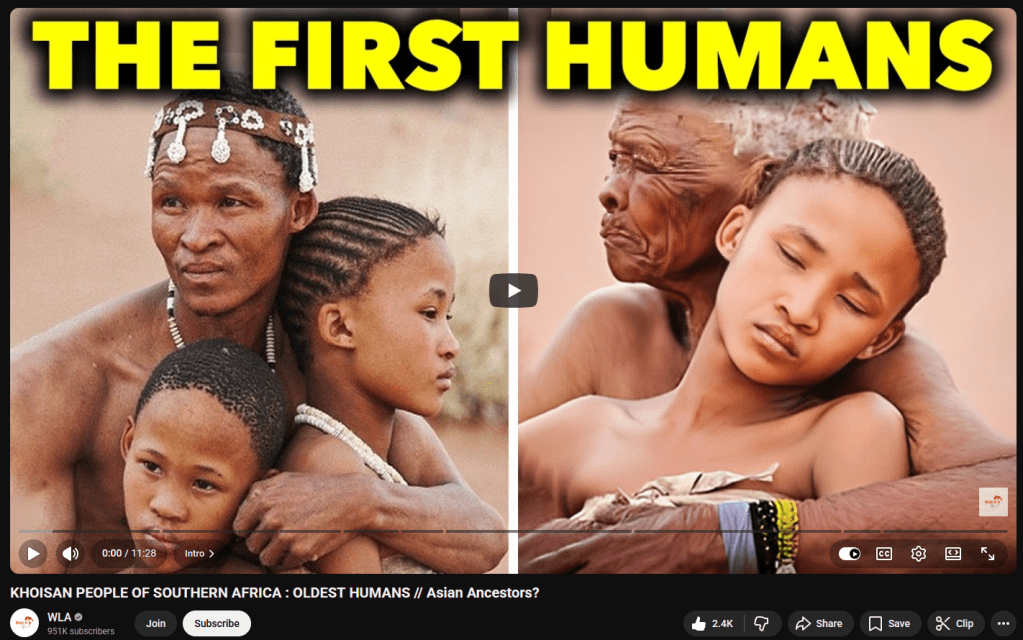
The Khoisan family of languages use a huge number of phonemes but in a rather rigid manner. The Australian Aboriginal Languages use 15 to 25 consonants and a system of 3 vowels ‘phonetically stretched’ to make 6 to 8 vowel sounds. The Chonan languages, spoken until recently in Patagonia, use 23 consonants and three to five vowels.
These are facts. Which can be checked online.
What can we make of them? Other than building an interpretation? An attempt to make some sense out of them? Knowing very well that any interpretation will remain just that? A simple, impossible to prove, interpretation…
The Khoisan didn’t have to travel much. To get there. If the cradle of modern mankind was somewhere in Ethiopia, it was a short walk in the park – well, in the savanna – from there to the Kalahari dessert. And, since we’re talking about the early days of humankind, probably the Khoisan were the first modern humans to take that walk. Meaning that they didn’t meet anybody during the journey.
Let me remind you that 70 000 years ago – read all about it over the internet – Homo sapiens almost disappeared. Population bottleneck due to a super-volcano event. 1000 to 10 000 of them survived, somewhere in Africa, and then moved about and reached almost every corner of the round Earth.
Going back to the Khoisan, what can we infer from the fact that they: – use so many phonemes, some of which are clicks – live in the same area since the start of human history?
Also to be taken into consideration: Some languages belonging to the Bantu family (Zulu, Xhosa, Ndebele and others) have borrowed some of the clicks used by the Khoisan. After the Bantu have arrived in the general area, came in contact with the Khoisan and drove them even further into the dessert. Some 1800 years ago.
So why would a ‘sophisticated’ civilization borrow sounds from hunter-gatherers living, literally, in the stone age? Taking into account that the Bantu used agriculture to provide for themselves and were savvy enough to transform iron ore into everyday tools…
Pidgin. English, Dutch and Portuguese colonists needed to get in contact with the locals. To ‘coordinate’ with them. To learn from them about the specifics of the place where they tried to make a living. Hence ‘pidgin’. Various pidgins, depending on the circumstances.
Now, what if the English, Dutch and Portuguese colonists could not go back? Reconnect to their original bases? For how long do you think they would have been able to preserve their original language? Keep in mind that the Bantu colonists did not use writing to preserve knowledge. Or their original language…
So, where are we now? A preliminary conclusion, not talking about a geographical position…
The Khoisan, after the shortest migration ever, continue to use a huge number of phonemes but in a rather rigid manner. The Australian Aboriginals and the Patagonian natives, after migrating to the other side of the world, literally, make do with less than half the phonemes used by the Khoisan. Leading a more or less similar way of life. Subsisting, for so long, in a such meager environment as to transform survival in a form of art. The more ‘sophisticated’ travelers who arrived later – in comparatively small numbers, at first – have integrated at least some of the native language into theirs. Needing to get in touch with the reality present in that place, to coordinate their efforts with that reality, the newcomers had to get in touch, to coordinate, with the locals. In order for that coordination to happen, a new language was developed. Out of what? Out of what the two people had at their disposal. The two already present languages..
In this context, we need to remember the fact that the natives were very curious about the travelers. At the beginning, at least…
Trust, but verify! Russian proverb, “adopted as a signature phrase” by Ronald Reagan
“Suzanne Massie, an American scholar, met with Ronald Reagan many times between 1984 and 1987 while he was President of the United States.[1][2] She taught him the Russian proverbdoveryai, no proveryai (доверяй, но проверяй) meaning ‘trust, but verify’. She advised him that “The Russians like to talk in proverbs. It would be nice of you to know a few.”
I posited yesterday that “languaging is how things work in the living world”. That a constant flow of information is piece and parcel of any living organism. I will add today that the information flow mediating the life of those organisms has to be reliable. To be true. To its stated purpose.
That an organism needs a dependable flow of information in order to remain alive. In order to be able to perform the feats which differentiate a living organism from a clump of inanimate matter. Maintaining its structural integrity and a controlled exchange of specific substances between the inside of the organism and its environment.
Well, the same principle ‘animates’ the meta-organisms we call ‘human communities’. With a single, but very important, difference!
We lie! On purpose…
There are many living species which use deceit in their quest to make a living. Carnivorous plants which trap their prey. Animals which use camouflage to pretend various things. Even birds which emit false signals in order to fool other animals.
Yet we, humans, are mastering this on the rim of disaster! We have not only invented the concept of lying but also mastered it to perfection.
How much sense does it make and how wise is it to harness the power of AI to a chariot full of deceit?
And when are we going to cut the crap? To adapt our languaging to the new reality?
‘Faith in the photographic image’… really?!? OK, human language cannot be as precise as the kind of information flowing to keep our organisms alive. Human language has to be more flexible than that. For evolutionary reasons to be mentioned at a later date. But let’s be reasonable. And keep it from ‘jumping the shark’.
By transforming artifacts into objects of faith we actually let the ‘makers’ walk scot-free. Allow deceivers to shed all shrouds of responsibility… What happened to ‘do not make idols’? OK, I don’t believe in ‘God’ either but it would be wrong for us to discard time sanctioned wisdom in the process of setting ourselves free from organized religion.
‘Faith’ should be reserved for people, not for objects. Faith, the word, stretches only as far as we pull it. It’s up to us to do that sparingly! Human language is far laxer than the ‘natural’ one. Which makes it less reliable. It’s up to us to keep it dependable.
“For by grace you have been saved through faith. And this is not your own doing; it is the gift of God” (Ephesians 2:8).
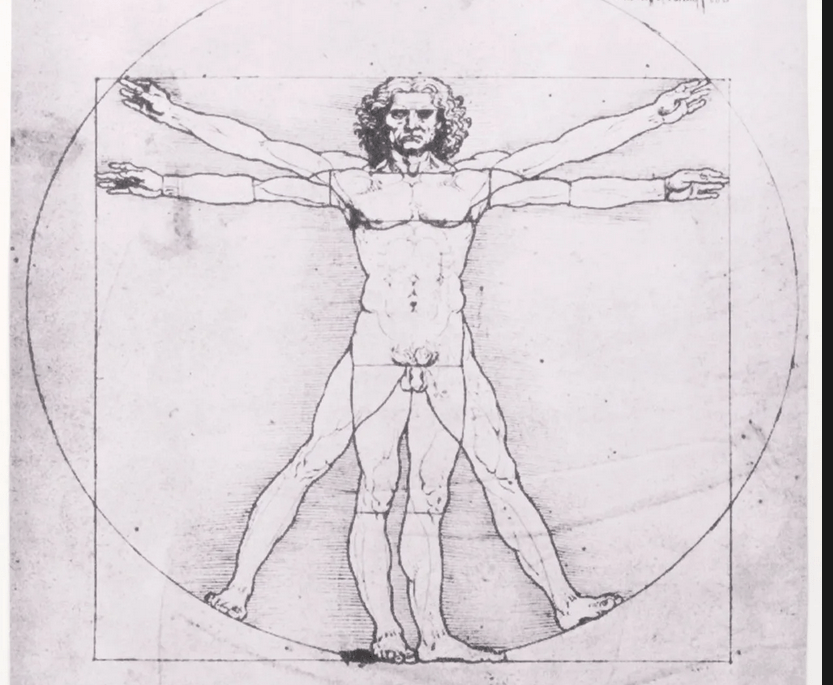
Same person, inscribed simultaneously in a square and in a circle. Leonardo da Vinci’s Vitruvian Man.
What better metaphor? We belong to the real world. And, simultaneously, to a world of our own making.
A ‘virtual’ world. In the sense that our world is crafted according to our ‘virtue’. Defined by our virtue… Our collective virtue, of course. Nobody has ever managed to make an entire world for themselves… The world we live in, we inhabit as quests, is the consequence of our cultured efforts. A collective endeavor in both space and time.
OK, and where’s the link between redemption by divine grace and this schizophrenic world of yours?
The virtual world we’ve made, innocently until people have started to guess what God had in mind for us, can be measured across two dimensions. Freedom and faith.
You don’t make any sense…
Freedom of will is what allows us to choose. Faith is what keeps us together.
To make sense, freedom and faith need reality. There’s no such thing as absolute freedom and faith needs to be anchored in… you guessed right, hard core reality!
So here we have it. Individual human beings collaborating in good faith and making good use of the amount of liberty made possible by the reality present in each consecutive moment.
Or
Herded people driven by blind faith ignoring the very concept of liberty. (Can you even consider these people as being human?)
Since both the above situations are fictional extremes, the truth is – as usual – somewhere in the middle.
Individual human people trying to make a living in whatever circumstances they have happened to open their eyes. Since nothing is perfect in any given situation, people have to make do with whatever they have at their disposal. One of the tools they use to keep going, to remain true to themselves, is the famous fallacy.