Archives for category: Bounded rationality

And the Truth shall set you free.

Heidegger, the philosopher, has an interesting take on this ‘truth’ thing.
Nobody does, and never will, know everything about anything. Lest of all about ‘everything’. Hence nobody has access to a ‘true’ piece of knowledge.
Furthermore, ‘truth’ is about communication. About a message. An expressed piece of knowledge. And since there is no language precise enough to allow a communicator to cram into a message all they want to express… nor precise enough to allow a ‘reader’ to figure out everything the communicator had attempted to express…
Which drives Heidegger to posit that truth depends on intent. On a communicator sharing honestly everything they know about a subject. On a communicator allowing the receiver of the message to reach their own conclusion.

I ended my previous post by mentioning the ‘fairy tales’ our ancestors have spun in order to ease their ‘passage into the great unknown’. Thus making their lives bearable. Enjoyable, even.
In those times, ‘the truth’ – the unconcealed truth, in Heidegger’s terms – was that nothing made sense. That life itself was a meaningless joke. As a Romanian saying goes, ‘life resembles a hair from the private parts of the body. Short and full of shit…’
I’m not going to make a historical inventory of the various fairy tales the humankind has used to lullaby itself into accepting life as it used to be. Enough to say that they, the fairy tales, did the trick. Helped us reach the present stage.

I’m going to make a break here.
And notice that any, or even all, of those fairy tales might, eventually, be proven as being true. No matter how improbable this might be. I’m not an atheist. I just don’t know whether a god, or more, do exist.
What I do know is that, by their own admission, all of those stories have been spun by people.
Each of those stories is about what the original ‘spinner’ saw fit to communicate on the subject.
And the better stories, those who made more sense in the particular circumstances where they had survived, made it up to the present.
Helped the respective believers to survive. Helped some of them to thrive, even.

Now, today, we need to make up our minds.
Accept that our consciences are works in progress.
That consciousness is a space caught up in an accelerating evolution. A cauldron of sorts.
That each of those ‘fairy tales’ was useful in its own time. That the need to mitigate our cognitive dissonances continues to exist.
That we’re responsible for our future. Nothing new here.
And that there’s no one to save us. Not now. Or after we will have fucked up everything.


The ‘Truth’ being that ‘Give me Liberty or give me Death’ was a very effective call at arms.
On the face of it, on the ‘logical front’, it doesn’t make much sense.
‘Death’ was, and continues to be, inexorable. Why, for the sake of ‘liberty’, jeopardize the few precious moments left to be experienced as a living creature? Specially when, according to the lore considered valid when Patrick Henry had uttered the words, a second life was going to open just ‘after’…
‘The Devil is in the details’!
The belief in the ‘after-world’ works both ways. It encourages the freedom-fighters to take risks – believing they will get their reward ‘afterwards’ – and encourages the prudent to endure. Believing that they will get also get their reward ‘afterwards’.

Now, that I’ve ‘spilled it out’, I must confess that I’ve successfully convinced myself.
I’ve rationalized, according to my standards, my belief that it’s our responsibility.
To understand and accept that we’re responsible for the consequences we’re leaving for those coming after us.
I don’t know what we should do. I’m no prophet.
But I do know what we shouldn’t.
You do too!

“WE ARE GOING TO CONTINUE TO FOCUS ON SOLVING PROBLEMS
FOR HARDWORKING AMERICAN TAXPAYERS”

LEADER JEFFRIES

(You might want to read my previous post before this one.
If you haven’t already done that, of course…)

Democrit’s atoms come with a clear cut set of rules. ‘Trapping’ them into a very predictable ‘future’. ‘If conditions are such and such, each of them atoms will do this and that’.
Furthermore, and as far as we know, that set of clear cut rules is valid everywhere. Was since the start of time and will remain valid for as long as the world will remain ‘as such’.
Our current understanding of the world – leaving aside various religiously motivated cosmogonies – actually depends on that set of clear cut rules being consistent over space and time.

At some point in time, and space, another set of rules had appeared. Even if we weren’t there to notice the event… Meaning that that appearance was a natural occurrence. We don’t yet know how that happened – not exactly, any-way – but we are satisfied that the first set of rules didn’t have to be broken in order for the second to appear. We consider that no miracle was necessary for life to happen. That happenstance and the first set of rules are a sufficient explanation.

This second set of rules is somewhat laxer than the first one.
It still traps those who have to obey it into a certain behavior but those respecting it enjoy a way wider ‘lee-way’ than Democrit’s atoms. The second set of rules makes it possible for evolution to happen.

While the individuals involved – atoms in the first case and individual living organisms in the second – don’t have any say in the matter, the first set of rules is consistent in space and time while the second one depends on the specifics of each region of the space and evolves in time.
Still trapped, but differently. The limitations pertaining to the first set of rules are drastic – life needs a very ‘narrow’ ‘window of opportunity’ in order to remain viable – yet the second set of rules ‘enshrines’ a certain amount of ‘individual freedom’. In the sense that individual living organisms do have a certain say when it comes to their own survival while the individual species have the ability to adapt to whatever changes happen where they have to survive.

Very recently – in the cosmological time-frame – yet another set of rules. Opening yet another space/place. Consciousness.
Not unlike a Matryoshka…, the first set of rules ‘opens’ the space where everything happens. Exists, but somehow ‘insulated’ when it comes to the passage of time.
The second set of rules opens a ‘narrower’ space. Narrower in the sense that life needs a very ‘narrow’ set of temperature, atmospheric pressure and the presence of certain substances. But a lot wider in the sense that the individuals involved have a certain autonomy and a certain sensitivity in the passage of time.
The third set of rules, the one opening up the space we call ‘consciousness’ is ‘written on the go’.

It does have a certain consistency.
For the simple reason that it is ‘written’ by statistically similar ‘authors’.
Take language, for example. One of the sub-sets belonging to the third set. It is shared solely by members of a single species, wielding more or less similar brains. OK, different languages have appeared in different geo-historical conditions but every human being who happens to be alive is potentially able to learn any of the languages ever spoken on Earth…
This third set of rules is usually referred to as ‘culture’. In the wider sense of the word. Information which is passed from one generation to the next one. Information which, shared among the members of the living generation, makes them conscious human beings.

I know, this is a startling manner of looking at things.
Please allow me to shed some light on the matter from another angle.
We have – we have noticed, more exactly – a ‘First Set of Rules’. FSR, let’s call it. Ingrained into the building blocks of the ‘real world’. Which rules will, hopefully, remain as they are for the entire foreseeable future… otherwise life, as we know it, will cease to exist in a jiffy.
We have also noticed, while attempting to understand ‘life’, a SSR. Second Set of Rules. Describing/making possible what we call life. Which life is, by nature/definition an evolving process. Hence the rules themselves not only allow a certain lee-way but also are bound to be rewritten whenever possible. Whenever the ‘altered version’ doesn’t jeopardize the survival of the individual harboring that version.
And whenever the accumulated alterations happen to be beneficial … a new rule is in place. Or a new species, according to the biologists.
The TSR is a work in process. A lot more so than the SSR. In the sense that each individual ‘rule’ – piece of information added to the corpus of work usually known as culture – has been put there teleologically. On purpose. Never fully aware of all the implications but always as the consequence of a conscious act.

This being the moment when I remind you that this blog is about “exploring the consequences of our limited conscience”.

https://books.google.ro/books/about/What_Evolution_Is.html?id=i8jx-ZyRRkkC&redir_esc=y

https://constructivist.info/1/3/091 regarding self awareness/consciousness

“Weaver pointed out that the word “information”
in communication theory is not related to what you do say, but to what you could say.
That is, information is a measure of one’s freedom of choice when one selects a message”

Space is where ‘evolution’ happens.
Where interaction shapes whatever is.

For space to exist, something must be there. Space needs ‘limits’. Which define it.
‘There’s a gap between these two bricks’.
‘This pile of bricks blocks the way’

‘Space’ is, simultaneously, a place, a concept and a word.
We, writing and reading about it, exist. Somewhere. Somewhere in ‘space’…
We’ve realized that. That we exist. Hence we came up with the concept.
We needed to share that knowledge. To discuss it. We needed the word!

A wise man, using tools crafted by his predecessors, has calculated that whatever exists in space shapes its form. The heavier the object, the deeper the dent.
Which depth of the dent influences the flow of time…

Time… the metric we use to measure ‘evolution’. The order and speed of happening…
Time… Another ‘thing’ which exists, simultaneously, as a ‘reality’, a concept and a word.

Einstein, the wise man with the calculus, did his thing trying to understand. To put together an explanation for everything.
Reading his findings, the results of his calculating, we can push our imagination.
How about switching time for space?

How about considering ‘time’ as being the place where events exist? Interact, producing the ‘space’ needed for that process?
Where the ‘weight’ of events, their ‘importance’, shapes the form of time. Which form of time influences the space ‘becoming’ as a consequence of those events existing/interacting in the place called time…

My point being …
You see, Einstein’s predecessors had developed what we call ‘mathematics’.
Our predecessors, also called ‘ancestors’, had developed a thing called language. Used it to communicate.
Among themselves, as individuals, and among themselves – as a cultural species – and the surrounding reality.
Language as the tool we use to digest and reshape the reality… Before we ‘do’ anything, we think about it. Using language to parse pertinent information stored in memory. Using language to consult with others. Using language to coordinate with others…

One of the languages we’ve developed is mathematics.
Einstein, using this language, reached a ‘conclusion’. Wrote a story. Others call it a theory.
Convincing enough for interested people to try. To try to prove it, to try to disprove it. To attempt to implement it into practice…

We exist.
In space, using whatever resources we can identify and building time as a consequence of our actions. We do this using language. To explore, think and coordinate.
That’s how we’re calling things. Space is where things happen and time is the ‘conclusion’ of whatever we do. Mathematics suggest that time and space are interchangeable.

So what?!?

Have we already solved all our immediate problems?

After all, we’re the only adults in the room. In the limited space called planet Earth.
Or, at least and for all that it might matter, we’re the only adults in the room who care. Who should care about our own fate…
Time’s running out, faster on the route we’re currently using!

The Ancient Greeks made the difference between Nomos and Phusis.
Phusis was Nature and Nomos was what they made of it. And as long as the story ‘held water’… that was it.

By figuring out that they were the link between Phusis and Nomos, the Ancient Greeks were capable of integrating the miraculous into their daily lives. As long as they kept believing ‘the story’…
For as long as ‘faith’ was doing its magic, things were OK.
They, individually speaking, didn’t feel the need for much additional explanation. They kept figuring out what they could and accepted the rest. As belonging to the ‘other’ half of the realm they were inhabiting. People and gods sharing the same (cultural) space….

Phusis was what there was and Nomos was the words they used to describe what they saw.
The words they used to make sense of what they were living. The words they used to spin ‘the story’ which kept them at ease with everything they couldn’t figure out.

Phusis and Nomos, together, was what made us possible. What we call ‘the Western Way of life’.

At some point, we’ve started to study physics.
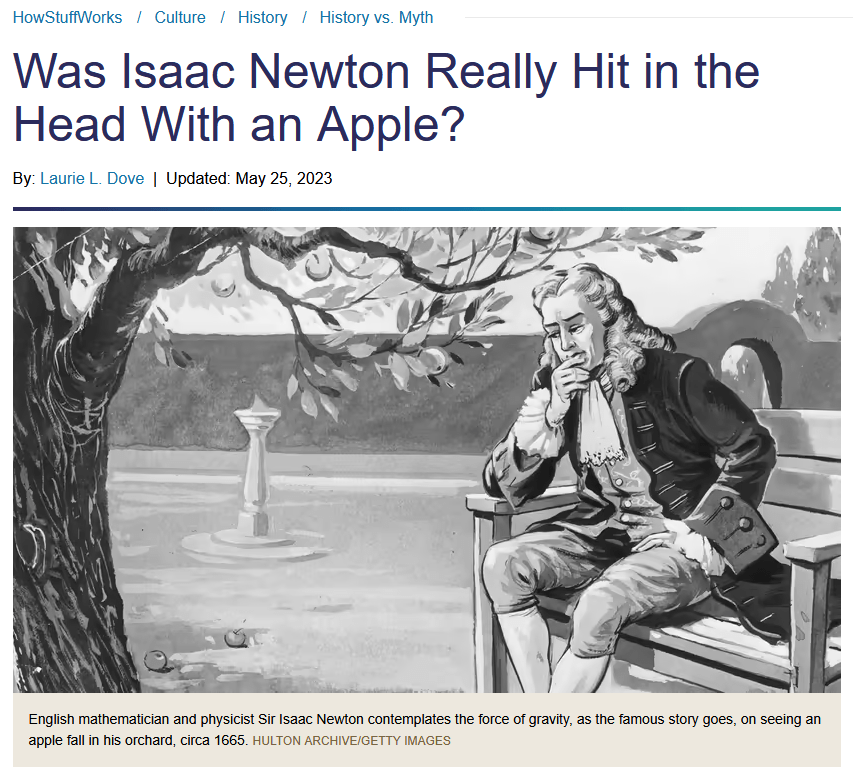
Newton figured out gravity. Not why things fell down, only the rate at which they did it. 9.81 m/second squared at sea level.
Using far more advanced mathematical gimmicks, Einstein was able to calculate a lot more. But we still don’t know why mass tends to pull together. But we stopped worrying about it… now that we’ve been able to measure G. “Big G”, the gravitational constant, different from the “small g” measured by… Galileo Galilei. Forget it.
The point being that we still don’t know why mass tends to pull together, to coagulate, as opposed to attempting to dissipate. As gases do… as long as there’s enough heat available!

To cut the long story short, we’ve cut out the miraculous from what we consider to be normal. Acceptabil in nominal terms.
We attempt to measure everything. And to calculate what we cannot measure.

After all this time, we haven’t yet been able to accept our limits.
Which is good.
We keep pushing them.

Only sometimes we push them too hard.
We keep pushing those limits where they have given up previously. And we don’t always notice what’s really going on.

Trying to understand physics, we’ve learned to fly. Hot air balloons, fixed wing air-crafts, rotary wing air-crafts, Lunar landing modules, nuclear-tipped cruise missiles…
Trying to understand chemistry, we’ve learned to transform matter. The food we eat, the clothes we wear, the materials we use, prescription drugs, life-saving vaccines, poison gasses….
Trying to understand biology, we’ve learned to influence evolution. Cross-bred plants and animals, decoded – and then coded back – genetic information…
Trying to understand economics, we’ve built the world as we currently have it. And put together the Efficient Market Hypothesis which keeps failing us…
Trying to understand consciousness we’re messing up everything. Fake-news, post-truth, “artificial intelligence”…

And we still don’t know why mass tends to coagulate, how life came up to be, how consciousness grew up on top of everything…

You’re handed a pot.
So heavy, you need to hold it with both hands.
So hot, you want to let go of it.
On your feet?!?

I’ve argued sometime ago that all living organisms act as if they were ‘aware’.
All of them are adept at keeping their insides in, most of the outside out and, most importantly, they are the ones deciding what from the outside goes in and what from their inside goes out. And when!
I call this awareness 1.0. Or life…

We congratulate ourselves over being the only creature wielding ‘self-awareness’. The ‘full fledged’ variety… according to our way of understanding it, of course. “Consciousness”, we call it.
How about ‘awareness 2.0’?

Some of us are involved, heavily, into ‘faking’ things. From building something called ‘artificial intelligence’ to using ‘technology’ to mess up other people’s minds.
They are ‘delving’ in the ‘next’ level. Knowingly but unwittingly playing god.

Life is driven by ‘natural selection’. Or ‘evolution’… as Darwin called them.
‘Happenstance’, if you look at it from another angle.
The process of life/natural selection/evolution depends on it taking place ‘individually’. While evolution is a matter regarding ‘species’ – as Darwin itself had put it – the whole process depends on the fact that each individual organism which belongs to each species is distinct/different from all other members of the same species.

‘Self-awareness’ depends on the existence of other self-aware individuals. Willing to cooperate with the ones developing it. Just as no living organism has been observed, yet, while putting itself together starting from innanimate matter, no individual has ever been observed developing self-awareness with no outside help.
Mind you, while the process involves ‘mature’ individuals helping ‘fledglings’ to ‘fly’, the process isn’t entirely ‘voluntary’. The outcome, the emerging individual consciousness, depends on the actions performed by those helping it but only inasmuch as the result of the natural evolution depends on the actions performed by the previous generation. Achieving ‘self-awareness’ is a ‘natural’ process, not a ‘deus ex machina’ machination!

Awareness 3.0, on the other hand… the ‘artificial’ kind…
In this context, I wish to remind you of what happened when we, willingly but unwittingly, have reduced the natural bio-diversity in certain areas. According to our needs and understandings…

The Green Revolution’s success also brought serious costs: intensive farming drained groundwater, degraded soil and contaminated fields with pesticides, while wheat and rice monocultures eroded biodiversity and heightened climate vulnerability, especially in Punjab and Haryana.
Swaminathan acknowledged these risks and, in the 1990s, called for an “Evergreen Revolution” – high productivity without ecological harm. He warned that future progress would rely not on fertiliser, but on conserving water, soil, and seeds.
A rare public figure, he paired data with empathy – donating much of his 1971 Ramon Magsaysay Award amount to rural scholarships and later promoting gender equality and digital literacy for farmers long before “agri-tech” was a buzzword.
Reflecting on his impact, Naveen Patnaik, former chief minister of Odisha, says: “His legacy reminds us that freedom from hunger is the greatest freedom of all.”
In Swaminathan’s life, science and compassion combined to give millions that very freedom. He died in 2023, aged 98, leaving a lasting legacy in sustainable, farmer-focused agriculture.

https://www.bbc.com/news/articles/cn7eln1pm4ro


God blessed them and said to them:
“Be fruitful and increase in number; fill the earth and subdue it.
Rule over the fish in the sea and the birds in the sky
and over every living creature that moves on the ground.”
Genesis 1:28

Engineers are trained to think first. And ‘shoot’ only after they have figured out what was going on. What was going to happen as a consequence of their enacted decision…
Handymen, the hard working people who actually prevent the ‘wheels’ from halting screechingly, are trained – self trained, mostly – to repeat what has worked in the past.

Both engineers and handymen are convinced that they know better. That each of their Weltanschauungs are more appropriate.
Both are right.
The distance between them can be construed as (one of) the depths we need to fathom. If we wish to understand ‘reality’…

An engineer myself, MSc level, I had my midlife crises rather early. Went back to school. BA in Sociology. Trying to understand ‘decision making’. Figure out what reality really is…
How to make a wise decision if you don’t know what’s going on?!?

Almost 20 years later – and a few entries in my blog – I found out that I was not alone. That more than a century ago, another guy – a former mathematician, had already broken the ‘glass-ceiling’.
While ‘process philosophy‘ is as old as philosophy itself – traceable back to Heraclitus, Panta Rhei – it was Alfred N. Whitehead who had introduced enough epistemological order into the matter to make it a ‘real’ issue.

What’s the meaning of all this?
Why haven’t we changed tack since Whitehead gave us such a powerful heads-up?
Why most of us continue as ‘handymen’?!?

Process philosophy, as I understand it – with my engineering mind, is mostly about responsibility.
Marx’s was about ‘taking charge’. Shoot first, ask questions later – if ever, was how communism had been translated into reality. Like all other dictatorial processes…
Whitehead’s – if I read him correctly – is about understanding responsibility. Not about ‘merely’ assuming it but about accepting it. About accepting the fact that it will be us – or our children – at the receiving end of the processes we initiate.

‘Uncomfortable position’ is a very lame expression for feeling alone. When trying to decide ‘what next’…
‘Maybe we should just proceed as we used to?’

The Sapir-Whorf hypothesis, following ideas put forward by Wilhelm von Humboldt, posits that the kind of language used by various categories of people have a meaningful impact upon the ways each of those categories of people think. And see the world.
The last iteration of the above hypothesis being the advent of AI. We train it using various languages. Those trained using precise languages – chess, go, ‘mathematics’ – work more or less as intended – aka ‘perfectly’ – while those trained using everyday English end up hallucinating…

https://www.jstor.org/stable/43102168: Sapir-Whorf
https://www.ibm.com/think/topics/ai-hallucinations
Moloch’s Bargain: Emergent Misalignment When LLMs Compete for Audiences:
https://arxiv.org/abs/2510.06105

Probably the most important of the ‘solved‘ wars…

Xi needs Putin to remain in power. To keep the Western Europe focused on something else but China.
Trump needs Putin to remain in power. Otherwise the Western Union would stop begging for protection. And stop buying American built ‘defense hardware’…
Meanwhile, various ‘fragments of the world’ pursue their own interests… as perceived by their respective leaders, of course!

Evolution is not about ‘survival of the fittest’.
Evolution is about the demise of the unfit.

Ernst Mayr, What Evolution Is, 2001

Well, it actually makes a lot of sense.

Being healthy is relative.
On having a diagnostic hanging over your head.

Here’s another way of looking at things.

Functional versus dysfunctional.
For as long as one is functional, that person is not a burden for anybody. Regardless of any diagnostic.
Even a dysfunctional person can be useful for those around them. Even if that person is completely dependent on those taking care of them. A good word spoken at the right moment makes wonders.

So yes, I would also love to die ‘healthy’. As in trying to do my best to be useful.
At least, to be as light a burden as possible.

On the other hand, health is yet another virtual thing. ‘Virtual’ as in man made…
Until not so long ago, ’cause of death’ for people over a certain age was always ‘old age’.
No longer. No matter how old the deceased, the body is transported to a medical facility and the particular cause of death is forensically determined.
It makes perfect sense. Scientifically speaking. There is no such thing as too much data, specially when it comes to something as precious to us as human life.
And it raises a ‘somewhat’ unreasonable kind of hope. That sometime, somehow, all causes of death will be mitigated. Diagnosed and treated.
That life will become ‘longer’. That we, humans, will live if not forever… then until an accident will happen to shorten our destiny.

Can you imagine something like that?
People living for 3 or 4 hundreds of years?

No retirement.
No risk taken.
No change…

“Our measures do not tell us whether philosophy majors
go on to apply their newfound abilities in the service of truth and justice
or, conversely, for personal gain and glory.
Settling that question would require gathering a different kind of evidence.”

Reading it, https://theconversation.com/studying-philosophy-does-make-people-better-thinkers-according-to-new-research-on-more-than-600-000-college-grads-262681, brought back to memory another research subject. Linking a ‘reasonable consumption of alcohol’ to various health benefits.
A quick google search produced this:

The paper I found now, https://www.phcc.org.nz/briefing/glass-half-full-alcohols-health-benefits-cardiovascular-disease-still-controversial-and, is quite thorough.
More importantly, for me, it raises the points which bothered me when I first found out about the claim. On FB, more than five years ago.
I’ll put it in my own words.

Being able to drink for a relatively long time means one had a fairly strong health at the start of the whole process. And at least some degree of self-control.
Otherwise the drinker would have very soon become ill, an alcoholic, suffered some accidents… or any combination thereof.

Same thing regarding the findings of the first study.
Take a number of smart people. One has to be smart in order to be interested in philosophy! And able to graduate…
Train those people’s abilities. Help them develop whatever they’re good at. And like doing…
Then wonder about the good results you’ve achieved!

Writing this post made me realize that it goes far deeper than this.
No, this is not a self-congratulatory study. Far from it.
It’s stark warning!

“Public trust in higher education has hit record lows in recent years, according to polling by the Lumina Foundation and Gallup. Meanwhile, the rapid advance of generative AI has threatened the perceived value of a traditional college degree, as many previously vaunted white-collar skills are at risk of being automated.
Yet now more than ever, students must learn to think clearly and critically. AI promises efficiency, but its algorithms are only as good as the people who steer them and scrutinize their output.
The stakes are more than personal. Without citizens who can reason through complex issues and discern good information from bad, democracy and civic life are at risk.”

This paper is not about the virtues of learning!
It’s about us.
So many of us still have so much more to learn about the virtues of learning…

One possible explanation for what’s going on is that not enough of the learned people “go on to apply their newfound abilities in the service of truth and justice“.
Me starting this post with the distinct feeling that this was a self-congratulatory study is yet another confirmation of the generalized distrust which permeates the whole society.
We’ve reached that stage where we primarily look for reasons to refute.
Some say a little paranoia is good for you. That it keeps you safe.
I’m afraid we’ve reached exactly where ‘they’ want us to be.
Distrusting, paranoiac people cannot do anything together.

Constantly looking over your shoulder will never lead you forward.
Will only make you, us, susceptible to manipulation.
Remember, in this context, how many reasonable posts we get from people supporting various horrendous ideas.
How many ‘think with your own head’ messages we get from those ‘also’ promoting MAGA. How many times Putin says he only makes ‘reasonable’ demands.

How can we build trust?
I don’t know how but I do know we don’t have any alternative.

We either learn to respect each-other, and build trust together, or become subjects.
And I’ve already been a subject. To a communist regime. Don’t want to repeat the experience.