Archives for category: authoritarianism

We are constantly being told that we’re living in the best possible world.

I agree with that.
Of course it’s the best possible one… specially since there’s no other!

On this side of the Styx, anyway…

Let’s get real now.

This is the Century when we’ve managed to open up all corners of our round Planet. We’ve ‘conquered’ the most remote and inhospitable places – both poles, all mountain tops and most of the ocean floor, including that beneath the Arctic Ice Sheet, and, way more important, made most of the Earth solid surface accessible for almost everybody. By car, by train, by plane, by bike, by ferry …
We’ve managed to populate all the ‘cubicles’ designed by Mendeleev and we found uses for most of them.
We’ve managed to identify a vast array of natural resources. We’ve developed matching technologies to exploit each of them, to transform and combine them into what we thought it would fit our fancies and to distribute the results to whomever wished to receive them.
We’ve continued to develop already invented means of communication and we transformed them into something totally different. Practically, we’ve restored the world to it’s ‘Golden Age’. We now live in the Global Village.

Which is not that much different from the old one…

Now, with the world watching Aleppo burn, Daraya fall, and Idlib and other Syrian cities suffer so brutally, Pope Francis’s description of Syria as “abandoned and beloved” rings chillingly accurate. After Bosnia, I was sure the international community would never again stand by and watch in silence as hundreds of thousands of people were bombed relentlessly, starved, beaten, traumatized, and denied the most basic human rights, including education and medical facilities. During the height of the worst years in Sarajevo, from 1992 to 1994, you could chart the ebb and flow of the city’s hope, like the steady flow of the Mijacka River, whose shelled bridges we had to run across to avoid getting hit by snipers. Food supplies ran out; soldiers were getting slaughtered on the fronts; the hospitals’ generators went down.

Janine Di Giovanni, From Sarajevo to Aleppo, Lessons on Surviving a Siege,
The Atlantic, October 12, 2016

What happened with “only a fool learns from his own mistakes, the wise man learns from the mistakes of others“?

OK, back to square one…

1918 had seen the end of the First World War.
Which was the first ‘mixed’ war and the one which should have been the last…

‘The last’ part is obvious, let me elaborate on ‘the first mixed’ one.

Basically, people are both lazy and easily frightened. Their natural tendency is to ‘give in’, a.k.a. ‘trade in’ rather than ‘fight for it’ ‘to the ultimate consequence’.
Which actually makes a lot of sense. Just imagine what would have happened if we were just a tad more combative than we used to…

Need a clue? Click on the picture below.

sex bonobos chimps

Welcome back.

The proposition “Laziness and congeniality is our default mode (mood?)” is valid but from a ‘statistical point of view’.
On a ‘case by case approach’, the manner in which each of us reacts in specific circumstances depends both on those circumstances and on our own interpretation of what’s going on. In fact, it’s our individual consciousness which makes things even more complicated than the situation described in the video above.

During most of our history, human social arrangements have closely resembled those of the chimpanzees. Alpha males have somehow managed to climb to the top of the food chain while the ‘laziness’ of the rest kicked in and allowed the alpha males to do more or less what they pleased.
Which had included a lot of unwarranted aggression.

Up to WWI, most wars had been started by aggressive rulers who had somehow convinced their followers to attack one or more of the neighbors. Which neighbors were also organized more or less like a chimpanzee troupe – ‘lazy and congenial people’ ruled by which ever alpha male was aggressive/cunning enough to remain in power.
These social arrangements had a very interesting consequence.
All conflict was between rulers and all wars were ‘turf wars’.
The belligerents were not attempting to out-kill each-other but to establish hierarchies. More prosaically, war was nothing but ‘protection racket’. The loser had to pay a certain amount of money to the winner – ‘war reparations’, surrender a piece of the ‘turf’ or both at the same time.

In time – due to particular circumstances, some of what are currently known as ‘nations’ have learned that ‘chimpanzee social order’ leads to unnecessary suffering and have (re)invented an alternative. A.k.a. democracy.

WW1 was the first major war which pitted authoritarian regimes against democratic ones.
Yes, humankind had already witnessed some wars which had been started by more or less democratically run countries – the British Empire had attacked the Boer Republics in South Africa, for example, only this is but a blog post, not a 500 page dissertation…
Unfortunately, the democracies which had won the WWI had behaved totally inappropriately… with dire consequences. For them, as well as for the rest of the world.

The Treaty of Versailles imposed a huge amount of war reparations upon the main loser. Germany.
Two consequences have arisen from here.

The obvious one was WWII. And almost nobody disputes this.
The less obvious one was that those war reparations had transformed war itself.

A democratically run coalition imposing war reparations upon a defeated and leaderless/dispirited population had transformed war from a dispute between rulers into a dispute between nations.

This was the ‘accelerant’ used by Hitler to start the second funeral pyre which had engulfed Europe…

Democratically run nations behaving inconsiderately towards other nations also established an immensely dangerous precedent.

The first example of which had occurred less than 20 years later in Spain.


According to various theories, history is cyclical.
Meaning that we keep doing more or less the same things – or ‘errors’, until we figure them out for what they are.
And then we do them again, under a different guise…

“In China, people must use identity documents for train travel. This rule works to prevent people with excessive debt from using high-speed trains, and limit the movement of religious minorities who have had identity documents confiscated and can wait years to get a valid passport.

While this is the first time Chinese officials have used glasses to implement facial-recognition, the technology is widely used by police. China is also currently building a system that will recognize any of its 1.3 billion citizens in three seconds.”

We’ve spent most of our previously mentioned history living in closely knit and relatively small communities.
We made huge ‘progress’ during that time.
The period had started when we had climbed down from our ancestral tree – or had been made by God, take your pick, and had ended – for most of us, anyway, when we had moved to what we presently call ‘cities’.

Win some, loose some.

Apparently, ‘city-slickers’ are more ‘advanced’ than their rural cousins.
More people living together allows for a deeper division of labour, hence a higher specialization. Productivity increases faster and accumulated knowledge becomes simultaneously deeper and wider.
Unfortunately, all these come at a cost. At first for the individuals and, ultimately, for the society at large.

Living in smallish, and necessarily closer knit, groups provides a lot of ‘natural’ social solidarity. Individuals feel that they belong somewhere and, by sheer necessity, give relatively much to the community. Effort as well as attention.
Lost in the city‘, individuals are simultaneously freer to experiment/innovate and also more prone to growing alienated. So alienated as to become a danger to themselves and/or to those living around them.

On the other hand, small communities, where everybody knows everybody else, necessarily generate a lot of social conformity.
Individuals enjoy a lot of (relative) security and psychological comfort but don’t have very much lee-way.
Innovation, technological as well as social, is slower in this circumstances.
It took us some 130,000 years to ‘invent’ speech, another 65,000 to ‘invent’ writing and then, after no more than 6 short millennia we invented the printing press.
Less than another 6 centuries later we have the Internet.

Writing was invented by the Assyrians – an ‘imperial’ people who lived in cities and who needed a ‘technology’ to keep track of taxes due on the commercial trades which sustained the whole civilization.
Basically the same thing was repeated in many other places. Ancient Egypt, Ancient China, etc.
Written records and favorable geography had allowed the imperial administrations to control relatively vast tracts of land, relatively huge amounts of people and marshal considerable resources to whatever goals considered worthy by those who controlled the flow of information.
Writing down ones thoughts/discoveries also made it possible for humankind to better store its knowledge about everything. ‘Hard copies’ travel better through time than oral traditions.

Until something went wrong.
We all know that all those ancient ‘imperiums’ had crumbled, despite having been the most advanced civilizations of their times.
Other, more nimble, competitors were able to outmaneuver the older behemoths.
Maybe because the old behemoths had exercised too much social control?
‘Written’ central administration was able to marshal enough resources for the ruler to be able to impose stiffer rules towards his own personal safety. The most immediate consequence being that increased social conformity stifled innovation and, hence, created the conditions for the others to catch up, outmaneuver and eventually leave the behemoths behind…

The printing press had a relatively smaller impact than the mere pen.
OK, information was more readily available to those who wished to learn – hence the boost in science and technology, but was ‘useless’ as a ‘coercive tool’. It doesn’t make much difference to someone who wants to control a system whether the information used to do such thing is hand written or ‘pressed’. The small number of ‘insiders’ need to keep that information under tight control so…

The latest ‘gizmo’, the internet, is a totally different development than the printing press.
While the latter is unidirectional – from the author to the wide public, the former goes both ways with equal ease.

Each of us can, almost instantly, become a ‘shooting star’ and, simultaneously, all of us can be monitored by whom ever has the necessary means.

As if we’ve backtracked to a ‘Global Village‘.
In more ways than one.

In a traditional village, everybody knows more or less everything there is to be known about everybody else.
In the Global Village everybody can learn considerable amounts of information about almost anybody worth following while those with enough means can learn almost everything about everybody. Then analyze that information to whatever depth they are able to.  And store it for as long as they find any use for it.

It was Hegel who first noticed that how much of ‘something’ was available at some point in place and/or time was determining the evolution of things.
Later, Marx and Engels ‘hijacked’ the idea and then corrupted evolution into revolution but I’ll set aside that subject for the time being.

“It is said that there are no sudden changes in nature, and the common view has it that when we speak of a growth or a destruction, we always imagine a gradual growth or disappearance. Yet we have seen cases in which the alteration of existence involves not only a transition from one proportion to another, but also a transition, by a sudden leap, into a … qualitatively different thing; an interruption of a gradual process, differing qualitatively from the preceding, the former state”

Georg Friedrich Hegel, Science of Logic

According to Ernst Mayr, evolution is a process which weeds out the misfits.
Which ascertains that at any given moment only those individuals/species who can survive the present conditions continue to enjoy life.
Regardless of who’s responsible for any changes in those conditions, of course…

And did I tell you that evolution is an impersonal process? Which has no goal, whatsoever?

We are currently witnessing an accumulation of heat on our Planet.
I’m not going to argue whether we are the main culprits or not. I don’t command any expertise in this domain, except that I know for a fact that increasing the relative content of CO2 in the atmosphere does increase the retention of heat by the aforementioned atmosphere.
I also know for a fact that we’ve burned in the last three centuries fossil fuels which had been accumulated during God only knows how many millennia. Releasing a huge amount of CO2 ‘in the aforementioned atmosphere’
Was it enough to raise the level of CO2 to the present figure? I don’t know… Volcanoes are another ‘prolific’ source for this fateful gas…

„Then why are you writing this post? Only to acknowledge your ignorance? Why should we bother?”

Dead saiga antelopes

Dead saiga antelopes in a field in Kazakhstan. About 20,000 of the species were found dead in one week. Photograph: Reuters

„The scientists on the ground pinpointed blood poisoning as the cause, but were puzzled as to why whole herds were dying so quickly. After 32 postmortems, they concluded the culprit was the bacterium Pasteurella multocida, which they believe normally lives harmlessly in the tonsils of some, if not all, of the antelopes. In a research paper published in January in Science Advances, Kock and colleagues contrasted the 2015 MME with the two from the 1980s. They concluded that a rise in temperature to 37C and an increase in humidity above 80% in the previous few days had stimulated the bacteria to pass into the bloodstream where it caused haemorrhagic septicaemia, or blood poisoning.”

You see, this post is indeed about ignorance.
We just don’t know what will happen if enough of something accumulates somewhere.
Until it does, of course.

And to find out we’ll need to survive the ‘happening’…

Are you done laughing?

It isn’t funny?

Well, it wasn’t meant to be funny… only illustrative for the way in which some people understand freedom… ‘they’ being free to impose their will upon others while all the rest are free to obey. Or else.

My point being that freedom is nothing more and nothing less than what we make of it.

In order to make myself understood I have to mention that there are two kinds of liberty and that, historically, there have been two only apparently conflicting visions on whether freedom is real or not.

Freedom, like most things human, is both a concept and a reality.
We think about it, hence it is relatively simple to accept ‘freedom as a human concept’.
If you find it hard to accept that liberty is also real… when was the last time you took a dog to a park where you can unleash it? To a meadow where it can run its heart out without you being afraid of the city warden? And no, I’m not thinking about the joy experienced by the dog…

We have ‘internal’ freedom – the manner in which each of us relates, in their heads, with the concept, and ‘social’ freedom – the vectorial sum of all that the members of a certain society put in practice about freedom.
It’s a matter of ‘obvious evidence’ that these two may swirl in two directions.
Form a virtuous circle – the natural evolution of humankind, from slavery to feudalism to democratic capitalism, sometimes interrupted by ‘vicious’ epicycles –  the last two being fascism and communism.

Before discussing whether liberty is real or just an illusion let me poke another wasp nest.
How big is this thing we call ‘freedom’?
How big can this ‘vectorial sum’ be?

Infinite? Nobody can live that long, anyway…

Then where does it stop? At the ‘tip of our collective nose’?
It’s up to us to decide? Through constant negotiation? Always keeping in mind that all ‘imperial’ endeavors have failed, sooner or later? That no human being has ever been able to survive alone for any considerable length of time, let alone to grow up by him/herself?

Communism and fascism being only the last two examples of what happens when too many of us forget the most important lesson history teaches us?

One more thing. I still owe you an explanation about why I consider the conflict between the ‘promoters’ and  ‘deniers’ of liberty to be a false one.
Currently, most people agree – even if most of them only implicitly, about ‘your liberty to swing your fist ending where my nose begins’.
From time to time various ‘hot headed’ individuals have contested this.
Either philosophically – Nietzsche, Marx, or practically – Lenin, Stalin, Hitler, Pol-Pot…
The most interesting aspect of all this being that there still are ‘philosophers’ (?!?) who continue to argue one side of the argument against the immense historical evidence which keeps growing. Not only ‘against’ the immense… but also producing fresh pretexts for the ‘willing practitioners’ to try for yet another time. And to continue to increase the mountain of evidence…

‘But what are the arguments marshaled by the ‘freedom deniers’?
What if they are right, after all, only the ‘practitioners’ have not yet been able to ‘do it right’? You, of all others’ – that would be me, ‘should remember that “Critics of early steam-spewing locomotives, for example, thought “that women’s bodies were not designed to go at 50 miles an hour,” and worried that “[female passengers’] uteruses would fly out of [their] bodies as they were accelerated to that speed”!
And, even more importantly, who are you to tell us that freedom is real?’

OK.
As I mentioned before, there are two categories of deniers.
‘Relative’ and ‘absolute’ deniers. The ‘Nietzsche-s’ and the ‘Marx-s’.
The ‘Nietzsche-s’ argue that freedom is up for grabs, that it can – no, actually that it should – be cornered by those having the strongest “will to power”. ‘Finders keepers, losers weepers’.
The ‘Marx-s’ argue that freedom is nothing but an illusion and that everybody must observe the implacable laws which derive from the world being made of nothing else but matter. Hence, according to Marx, the ‘communists’ – those who have understood the ‘scientific’ nature of the world/society, have the duty to take over the society and to take it, forcefully if needed, to its ‘scientifically’ determined destination.
‘Quite a Platonic vision of the world, don’t you think?’
‘Well… I’ve already covered this subject…’
Coming back to the apparent conflict between the promoters and the deniers of freedom, it is now rather simple to observe that ‘Marx’ is nothing but ‘Nietzsche’ dressed up in ‘scientific’ garb – don’t be fooled by the fact that Nietzsche was way younger than Marx, they had been kindred souls, while ‘Nietzsche’ had been a very focused ‘freedom fighter’ – focused exclusively on ‘his’ freedom, that is.

A petty conflict about ‘who has the bigger one’, hidden under pretentious make-up…

‘And were does all this leave us?’

At the conclusion that being free means, before and above anything else, being responsible?
For one’s own fate and for at least some of what’s going to happen in the (near) future?


I keep hearing about this issue and I can’t stop wondering about how parallel to each other are those defending this idea with those denying its merits.

Pro:

-Robots are eating more and more jobs so more and more people will end up hungry.
-AI will make robots so productive that it will be far more efficient to use robots than human workers.
-A decent income is a human right.

Con:

-This is a socialist move, hence it will end up in failure – no other reason offered.

As it is obvious to all, both sides score big.

Yes, including ‘a decent income is a human right’ and ‘all socialist ideas end up in failure’.

Then what are they fighting each-other about?!?

Let me rephrase that.
WHY are they fighting, in the first place?

Because neither listen to what the other has to say… as simple as that…

Let me discuss some of the practicalities involved.

Robots eating up jobs and AI being able to continually increase financial efficiency are so evident that they do not deserve much consideration.

‘All socialist moves ended up in failure’.
We need to define socialism in order to make sense of this sentence.
Mainly because ‘socialism’ is one of the most abused words nowadays, on a par with liberalism. Sometimes they are even considered synonyms…
Well, ‘liberalism’ comes from liberty and  bona fide liberalism is concerned with individual freedom.
Socialism, on the other hand, comes from social. And is concerned with the the workings of the entire society.
The point being that there are two types of socialism. One which is ‘somewhat’ synonym with liberalism – the ‘reverse’ side of liberalism, actually, while the latter is the exact opposite.

I’m not making any sense?

Let me start from the other side.
All forms of socialism which have failed have been excessively centralized forms of government. And it was because of that excessive centralism that they had failed, not because of being ‘socialist’. The evident proof being that the same thing has happened with all right-wing dictatorships, which had used the very same excessively centralized decision making mechanism – the totalitarian government …

Which brings us back to the problem at hand.

For Universal Basic Income to work – or Guaranteed Basic Income, as some insist on calling it, it has to be financed.
Through taxes, right? Which means that those owning the robots would have to be somehow convinced to give up a huge proportion of their profits… Then why bother in the first place…? Why start any businesses, at all?
We’ll have the government run the whole show? Remember what history teaches us about centralized decision making?

So?!?

Well, not all is lost while there’s still hope!

Let me rearrange the arguments.

We not only live in an inherently limited space, with inherently limited resources, but we’ve also finally started to understand our predicament. Which calls for as much efficiency as possible.
Only for a different kind of efficiency than that we’ve accustomed ourselves to.

Until recently, we’ve been trying to get as much money under our belts as possible. Without much regard for anything else.
That’s why we’ve been cutting down secular forests, feeding almost all the fish we’ve been pulling from the oceans to the domestic animals we were raising for their meat, polluting our breathing air, selling our fellow humans which happened to had a different skin color than ours into slavery… As if there was no tomorrow…

Slowly, we’ve started to realize that this won’t work for very much longer.

That no matter whether we’re responsible for the global warming – or if it’s real at all, sooner or later we’ll exhaust the planet.
OK, it is highly plausible that we’ll discover/learn to use new classes of resources.
But this eventuality doesn’t constitute, in any way, a valid reason for us to continue squandering the meager resources we have at our disposal.

Hence the need for increased efficiency.

Only this has to be a different kind of efficiency. The kind that focuses on minimizing waste instead of maximizing profits. The kind that recycles because it makes obvious sense, not because it is cheaper.

Along the same path we’ll discover that it would make a lot of sense to help the less developed nations to catch up with the most advanced ones.
For starters, because the ‘advanced economies’ no longer need cheap workers. They use robots instead.
Secondly, because better living people tend to have less children than those struggling to survive. And we’ve already agreed about the planet being rather limited…

Nothing too fancy… until now, right?

Well, the next item will be trickier..

Remember that Ford had raised dramatically the wages he paid to his workers?
With tremendous results?

OK, his reasons were not the ones, generally but erroneously, attributed to him.
He didn’t do it to ‘encourage’ his workers to buy cars from him… or because of philanthropy…

Actually, it was the turnover of his staff.

At the time, workers could count on about $2.25 per day, for which they worked nine-hour shifts. It was pretty good money in those days, but the toll was too much for many to bear. Ford’s turnover rate was very high. In 1913, Ford hired more than 52,000 men to keep a workforce of only 14,000. New workers required a costly break-in period, making matters worse for the company. Also, some men simply walked away from the line to quit and look for a job elsewhere. Then the line stopped and production of cars halted. The increased cost and delayed production kept Ford from selling his cars at the low price he wanted. Drastic measures were necessary if he was to keep up this production.”

But, whatever Ford’s reasons were, the long term results have been abundantly clear.
Nowadays people who build cars are being paid well enough to afford buying the same kind of cars they are building. At least in the advanced economies…

What happened was that Ford, in order to keep the assembly line going, paid his workers as much as he afforded to. With spectacular results.
While nowadays most employers tend to ‘compensate’ their employees with as little as possible. Which makes perfect economic sense… doesn’t it?

The same economic sense which used to drive us into “cutting down secular forests, feeding almost all the fish we’ve been able to pull from the oceans to the domestic animals we were raising for their meat, polluting our breathing air, selling our fellow humans which happened to had a different skin color than ours into slavery… As if there was no tomorrow…”

See what I mean?
Instead of attempting to mandate a ‘Guaranteed Basic Income’, calculated by the central government and financed through forcefully levied taxes, how about hiring as many people as it would make sense, let them work as little days per week as they want and pay them as much as we can afford to instead of programmatically replacing as many of them with robots and paying the remaining ones as little as we possibly can?

OK, some of us won’t get as rich, as fast, as our grand-fathers did… So what? None of us can eat even close to what our grand-fathers used to… and food is a lot cheaper, anyway…

This is would be a considerably shorter way to get more people out of poverty than any scheme concocted by any government and it would have the same snow-ball effect as Ford’s wage increase had.

Economists describe this as Rostow’s ‘take off effect’.


For attaining adequate finance for take off it is necessary that:

(a) The community’s surplus over consumption does not flow into the hands of those who will utilize it by hoarding, luxury consumption or low productivity investment out-lays;

(b) Institution for providing cheap and adequate working capital be developed;

(c) One or more sectors of the economy must grow rapidly and the entrepreneurs in these sectors must plough back a substantial portion of their profits to productive investment; and

(d) Foreign capital can profitably be utilized for building up social and economic overheads.”


Obviously, any attempt to instate a guaranteed basic income, (except for those too young, too old or otherwise un-able to pull their weight, of course) would grind any ‘take-off’ to a stand-still.

And no, getting people out of poverty is not a valid goal, per se.
Poverty is a relative thing, which relies more  on feelings than on hard reality.
The real problem with poverty is that it reduces the ability of poor individuals to lead meaningful lives. Poor people are a lot less autonomous than self sufficient ones, meaning that decision making ability is impaired by the fact that they need to focus their attention on the short term time span.

This whole thing has long term consequences on societal level.

Remember what I said about centrally planned socialist countries constantly failing.
About all dictatorships eventually crumbling under their own weight, because of too much decision power being concentrated in too few hands?

Excessive wealth polarization produces the same results. Economic decision becomes too concentrated, political decision follows through and…

What next?
The world has already experimented with communism. Didn’t work.
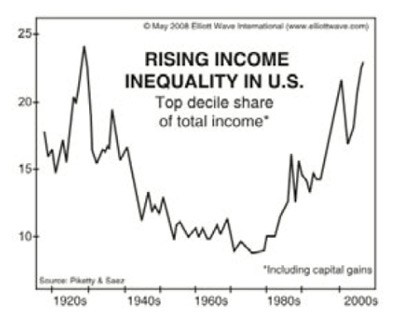
It also experienced two economic meltdowns, exactly when wealth polarization was at relative peaks.

income-inequality-08

When are we going to learn anything from what happens to us?
Why do we continue to waste the accumulated lessons collectively known as ‘history‘?


Let me first clear up something.
I’m an engineer. Converted to sociology, indeed, but still an engineer.
So don’t expect any fancy wording or very sophisticated philosophical considerations!

Let’s pretend, for a moment, that we’ve just arrived on this planet. Just ‘you and me’, not ‘us humans’.
Being sent by some alien civilization to see what’s going on here.
Like we, ‘the civilized people’, study the natives still living in the Amazonian forest – minimum contact and so on, no intention what-so-ever to invade the territory or any other-way purposely intervene in the natural evolution of things.

I don’t know about you, but my report would be something like this:

The most interesting aspect of the planet is the manner in which the intelligent inhabitants have evolved.
Those living in a relatively small and isolated corner of the landmass have somehow developed the most consequential culture and then imposed some very important aspects of it on most of the rest.

Even more baffling is the fact that all major religions observed on this planet start from the same tenet.

the golden rule

The only thing which singles out those who had managed to impose their culture on most the rest being that they apply the rule in a ‘pro-active’ manner.
‘Do unto others what you wish others to do unto you’ versus ‘do not do unto others what you don’t like being done unto you’. ‘Normative’ versus ‘preemptive’.

– Why are you so baffled about any of this? The universal law of evolution maintains that things which are not suitable enough for the environment where they happen to exist will eventually disappear… Each culture produces a certain civilization – modifies the environment according to its wishes/as a consequence of its mistakes, and the other cultures have to adapt/evolve to the new situation… nothing new or peculiar here…

– Nothing new, indeed, except for the fact that while most of the cultures on this planet learned to ‘live and let live’ – “do not do unto others…”, while the two most successful ones have adopted the slightly but very consequentially different “do unto others…”, a.k.a. ‘who’s not like us is against us’….

– Is there any explanation for the most aggressive attitude being the most successful one?
Until now, at least… considering that the two cultures which share the ‘do unto others what you wish to be done unto you’ attitude seem to ‘have worked themselves up’ into a rather ‘confrontational situation’… both intra and inter culturally…

– The only putative explanation I can come up with for such a divergent evolution is that Plato, the seminal intellectual figure of the ‘doers’, taught his followers not only that the world is knowable but also that he who has reached a learned state must, forcefully if necessary, lead his peers to the ‘light’ he had found while the ‘significant others’ believe that the learned ones should speak out, at their discretion, only when somebody asks them to.

.

.

– One more thing.
The immediate consequence of Plato’s teachings was that Alexander – an emperor who was tutored by Plato’s eminent student, Aristotle, had conquered most of the then civilized world only to die, untimely, a drunkard’s death… intoxicated by booze, intoxicated by power… who cares?

From the airlift which kept the flame of liberty alight in West Berlin to “Trump’s decision (to stop supplying arms to Kurdish fighters in Syria) appeared to catch both the Pentagon and the U.S. State Department off guard. Officials at both agencies, who would normally be informed of changes in U.S. policy toward arming the Syrian Kurds, said they were unaware of any changes. The officials spoke on condition of anonymity. It was unclear whether the Trump administration notified the Kurds of the move before telling the Turks. Nor was it how much significance the change would have on the ground, considering the fight against Islamic State is almost over.

Ich bin ein Berliner

What happened to “Ich bin ein Berliner”?!?

I’m afraid that  too many people continue to not understand what’s ‘the big issue between the free world’ and the authoritarianism which still encroaches it. They should indeed ‘go to Berlin’!

Fake news

“Federal lawmakers on Wednesday released samples of 3,000 Facebook ads purchased by Russian operatives during the 2016 presidential campaign. The ads conveyed the wide range of influence Russian-linked groups tried to enact on Americans…”

Let’s zoom out in order to gain some perspective over all this.

Fake news are defined by Oxford Learner’s Dictionaries as “false reports of events, written and read on websites“.

The way I see it, “fake news” have a lot in common with counterfeit currency.
In more ways than one!

First of all, most money in current use is ‘fiat money’.
We are dealing with either printed pieces of paper or otherwise useless pieces of metal.
We ‘trust’ them for trading purposes simply because we are convinced that the institution which stand behind them – Central Banks, free(ish) markets and law enforcement, will do what they are meant to do. We trust that the Central Banks will not print too many of those pieces of paper, that the free(ish) markets will set a reasonable price to everything and that the police will manage to weed out (most of) those who try to circulate fake money.
Not even a return to ‘real’ money – a.k.a. gold,  wouldn’t insulate us from crooks. Gold coins can be, and had been, tampered with in so many ways. Human greed is a very powerful motivator but not necessarily a good mentor.

Which brings us to the reason for why fake money came to be.
Simply because some ‘industrious’ people ‘make’ them and some other, equally greedy, people knowingly distribute them.

In conclusion, we wouldn’t have to deal with fake money if money wasn’t essential for an efficient free market and we would have a lot less of it if greed were not such a widespread attitude. And no, a cash-less economy would not solve the problem. A printing press is no longer essential for faking money. Hacking skills have become  a good enough substitute.

Let’s translate this rationale to (fake) news.

We need to know what’s going on around us so we’ve developed an equivalent to the financial system. The mass media.
Which has a more or less equivalent set of ‘guardians’.
The ‘printers’ are responsible for the equivalence between their ‘product’ and the reality it represents while the market (readers, that is) is responsible for ‘setting the price’.

Of course, there are also differences.
‘Law enforcement’ has indeed a role to play in the news industry but its scope is a lot narrower than in the first case. And rightfully so. The ‘information’ market needs to be a lot more ‘flexible’ than the one dealing in ‘economic goods’. There’s a lot to discuss on this subject, I’ll leave it here.
There’s also no Central Bank to ‘tug at the sleeves’ of those who ‘jump the shark’.

As a consequence of these two differences, the ‘counterfeiters’ have an easier life and the consumers/victims a far greater responsibility for what’s going on. Simply because the consumers/potential victims cannot rely on any third party to do their job. To sniff out the ‘bad thing’.

But what if ‘it’s the thief who plays the victim’?
That very much depends on who the ‘thief’ is!

Let’s go back in time for a short while.
First to the American Revolutionary War. During which the British attempted to crash the American economy by injecting in it enough counterfeit money to cause hyperinflation. “No economy, no more war.” The British did manage to produce and distribute a huge amount of fake money yet the outcome was not the intended one. “Even when at one point the amount of counterfeit currency in circulation may have exceed the amount of legitimate currency, the economy hung on by its eye teeth and never fully collapsed.”
One and a half centuries later, the British had found themselves at the receiving end of the same game. “…during World War II the Nazis almost destroyed the credibility of the British pound sterling by producing near-perfect forgeries, The Telegraph reports. By the end of the war the forgeries were so rife that Bank of England notes would not be accepted by any neutral country on the Continent “except at a very large discount…”.
Hitler was even less successful than the British had been but the inflicted injuries were huge nonetheless.
Now, would Hitler have attempted this on his own, without the British establishing a precedent?
We’ll never know… Sufficient to say that the US has also used fake money, obviously fake this time. For propaganda reasons and not as an attempt to ‘crash the economies’ of the countries they were fighting.

To close the circle, we must ask ourselves how successful would Putin’s trolls have been if Trump wouldn’t have beaten so hard the ‘birther’ drum…

Seriously now, propaganda is a very efficient weapon. Maybe more efficient than guns.
But, and in total contrast with a gun, propaganda is useless against really determined people.
“Sticks and stones may break my bones but names can never hurt me” is true. But only as long as those being called names are in the right state of mind. As soon as they start feeling hurt, all hell comes loose.

If you think of it, Trump’s birther campaign, fake as it was – he had admitted that much, eventually, was a very successful ‘fake news campaign’. It had established Donald Trump as  shrewd  media manipulator.
Unfortunately, it had an even worse outcome. It had very much helped those who wanted the American public split into warring parties.

And who are now pushing these parties further and further apart.

PS. While researching for this post, I found out that “fake news” has been declared ‘word of the year’ for 2017. A fitting development… last year’s ‘champion’ was “post truth”…
What next? Doublethink?

trump on corker


corker on WH

OK, let me wrap my head around this.

So Corker doesn’t have enough guts to run for re-election without Trump’s blessing but has enough to openly tweet his mind about what’s going on in the White House?!?
A reality show run by the supposedly most powerful man on Earth?
Who’s about to transform the “Great” America into the biggest laughing stock of the world?

Am I the only one wondering whether any of these can be described as “adult” behavior?

There’s a glimmer of hope though.

401K is way bigger than 65K. And big enough to rise above 65K+57K+62K… I know, adding this numbers up doesn’t make much sense – there is a strong possibility that many individual readers may have liked more than one of these tweets, but still…

For some people the fog may have started to rise.

The fog generated by the fake news manipulated by the ‘Great Deal Maker’, that is.
Compare the comments which accompany those tweets.


A whole century has passed since the events described in Erich Maria Remarque’s Nothing New on the Western Front/Im Westen nichts Neues.

Not that we’ve learned much during this time…

1968

Brezhnev sends Russian troops to freeze back the Prague Spring.
Ceausescu, the communist dictator who ruled Romania at that time, refused to take part. He had even summoned enough courage to chastise the ‘outside intervention’.

Ceausescu praga

“No excuse can be found for…”

1978

Ten years later he was driven around London in a state carriage by Queen Elizabeth.
As a pat on the the back for his apparent independence from Moscow, as an attempt to weaken the communist ‘camp’ … both at the same time…
Never mind… We, Romanians, were very proud at that time while Elizabeth – and her advisers, must have had quite a heart-burn… specially later, after Ceausescu had started flying his true colors…

Ceausescu cu Lizica

1989

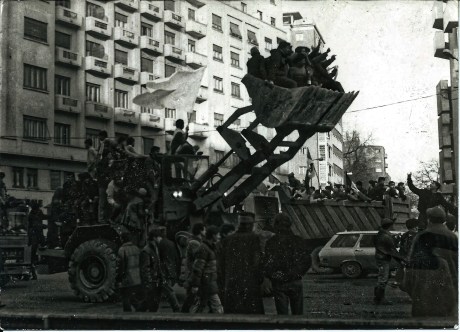
Romania’s was the second to last European communist regime to disintegrate and the only one which had ended in a self inflicted blood bath.  Ceausescu, and his wife – ‘the Presidential Couple’!, were shot at the end of a very short trial during which both had been found guilty of genocide, treason and subversion.

1989 Cu excavatorul la revolutie2005 Niagara

2014

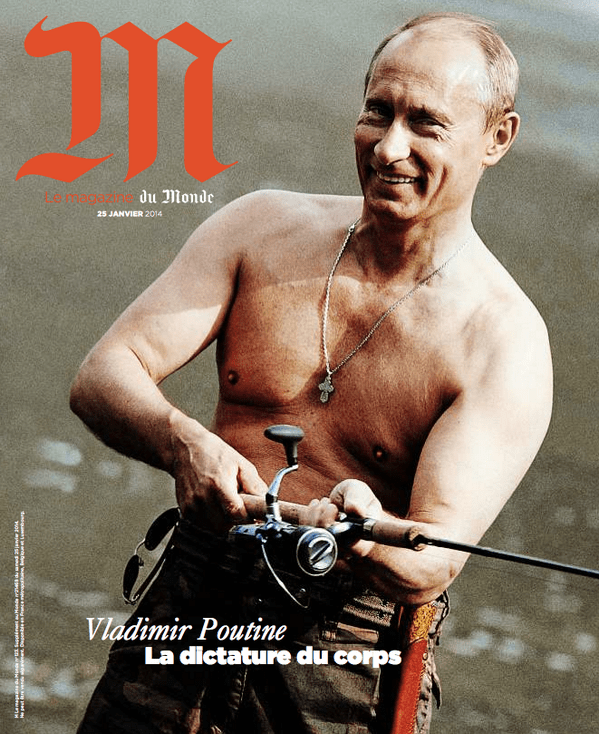
Twenty five years later, Russia’s rising star was lionized by some in the European media.

the emperors clothes

Hungary’s Prime Minister was jokingly hailed as “the dictator” by the President of the European Commission.

Orban the dictator


Currently the Americans are trying to determine whether Putin has somehow influenced their last electoral process,

Putin Trump Hamburg

while Orban continues to build walls around Hungary.

hungary wall

Small wonder then for these two to become bosom buddies, regardless of what drives each of them…

Putin honorary

“Putin will receive the honor in the Parliament during his visit to the 2017 World Judo Championships in Budapest on Monday.”
“Putin will attend the judo by invitation of Prime Minister Viktor Orbán. It will be Putin’s second visit to Hungary this year.”