Archives for category: arrogance

Communism failed. Like all other totalitarian regimes.
Some people, most living in countries where it has never been experimented, consider communism to be an interesting idea. They also believe that what took place in the communist lager was not the real deal. Not what Marx had in mind!

First things first.
According to Marx’s Communist Manifesto, communism – as in the communist regime – was going to be instated by “the most advanced elements of the working class”. The communist activists… And the regime was going to be imposed by revolutionary means.
For a very simple reason…

The whole rationale of communism was that everything bad came from private property.
Abolish private property and everything will be just fine.
Yeah but… who in their right minds would accept that? Those who have only their chains to lose, right, but what about the rest? Hence the need for revolution! Which revolution was to install the dictatorship of the proletariat…

Forget about the proletariat and focus on the idea of dictatorship. Top down decision making, at its worse.
Remember the ‘who in their right minds would accept anything like that’ part…

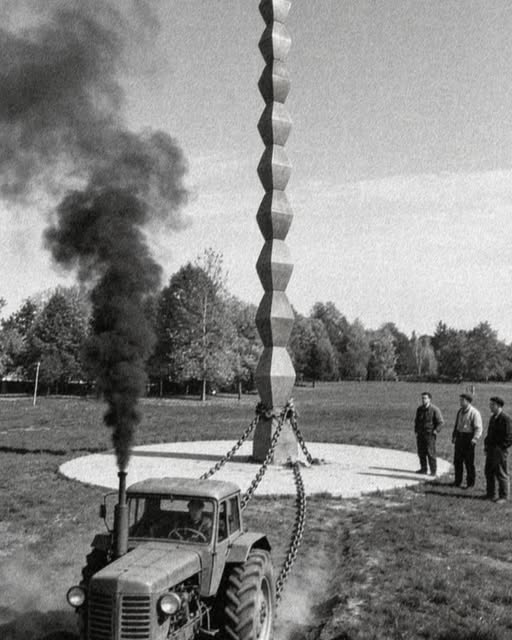
You might have already recognized Brancusi’s Endless Column. World famous sculpture built in Targu Jiu, Romania. Considered to be ‘decadent’ by a local communist activist in the 1950’s. So, being ‘decadent’, it had to be removed. The recovered iron was going to be melt and used in the industry.

Fortunately, the activist running the show was an idiot.
A smarter guy would have attached those chains higher. Far higher. The results may had been different.
The rig pictured above didn’t accomplish anything. The chains broke and the column didn’t budge.

The whole thing is a perfect example.
For what happens when an ignorant nincompoop tries to remodel the reality.
Nothing if the reality is lucky.
Nothing good in all other instances…

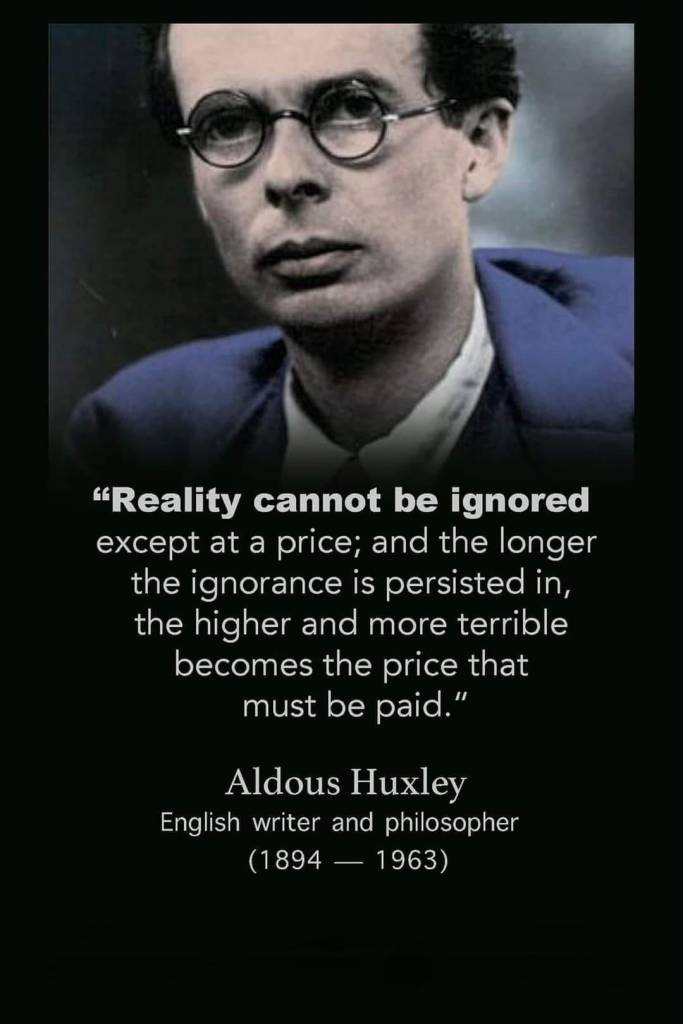
In America,
voters don’t pick their politicians.
Politicians pick their voters.”

Wayne Dawkins

America is the land of the free.
‘The people’ can, according to the Constitution, choose among the candidates.
The politicians can, also in ‘certain’ conditions, choose their voters…

And those so inclined can choose their gender!

Do I have a problem with that?

No!
But I find it very interesting that ‘gender-mandering’ is such a divisive subject.
Very revealing, actually.

Let me start with the beginning.
“The word gerrymander (originally written Gerry-mander; a portmanteau of the name Gerry and the animal salamander) was used for the first time in the Boston Gazette[b] on 26 March 1812 in Boston, Massachusetts, United States. This word was created in reaction to a redrawing of Massachusetts Senate election districts under Governor Elbridge Gerry, later Vice President of the United States. Gerry, who personally disapproved of the practice, signed a bill that redistricted Massachusetts for the benefit of the Democratic-Republican Party.” https://en.wikipedia.org/wiki/Gerrymandering.
In this context, it’s worth mentioning that the Democratic-Republican party very soon later divided itself into the present day Republican and Democratic parties…

So, gerrymandering is one of the many common traits shared by both parties…
“The Founders frequently wrote about the dangers of political parties. They often labeled them “factions” that were divisive and rooted in self-interest. In Federalist #10, James Madison wrote that factions were a majority or minority animated by “some common impulse of passion, or of interest” harmful to the rights of others and the common good. They could be a source of unjust laws and a threat to popular self-government. President George Washington concurred and warned in his 1796 Farewell Address that “the baneful effects of the spirit of party” included strong passions, jealousies and revenge, dissention, and despotism.” https://billofrightsinstitute.org/essays/the-history-of-political-parties-in-the-united-states

“Some common impulse of passion, or of interest”

And there is a common impulse of passion. And of interest!
Both parties want power. And in order to get it…

Hence not only gerrymandering – used by both parties – but also ‘gender-mandering’.
Using gender as a bone of contention. A very useful posturing pretext…

Who, but those experiencing gender-dysphoria, is actually interested in the subject?
Maybe those baffled by the insistence with which some trans-women demand to be allowed to participate in professional sports… against cis-women, of course!

On the other hand… as a posturing pretext, the subject is invaluable!
To some, it epitomizes ‘you can be whatever you want to become’. ‘Progress’ in its purest form.
To others, it is anathema. The very notion of ‘against’. Against of nature, defying God’s will, you name it!

Did I make myself clear?

What about those living ‘in hell’?!? ‘Caught in the wrong person’?
Who cares about them?!? They are few enough to be negligible. Except for when a scapegoat is in order…

Greeks, the Ancient ones, has been the first people which had allowed its culture to waste its civilization.

By considering their neighbors as being ‘barbaric’, the Ancient Greeks have isolated themselves from the rest of the world. From the rest of the reality.
Shutting themselves out from the exterior, they turned their attention towards their own interior. Towards themselves.
Found differences among themselves.
Ranked themselves.
And ended up fighting among themselves.

Allowed themselves to be conquered.

First by home grown tyrants. Pericles, Alexander the Great…
And then by foreign emperors. Persian, Roman, Ottoman…

Establishing a pattern.
And constituting a warning.

Every time when people become complacent, somebody will seize the opportunity.

Every time people will stop – for whatever reasons and under whatever pretexts – respecting each other in earnest, scheming con-artists will step in. Identify the situation and taking the opportunity to deepen the differences between the people into chasms. Into unbridgeable chasms which make it impossible for people to reconnect.
Unbridgeable chasms which destroy the community.
Rendering it to the mercy of tyrants.
To the mercy of tyrants who constantly lurk in what we call reality and which, under ‘normal circumstances’ – a.k.a. ‘democracy’, are kept in check. In a normal, functional, social setting. By a functional community.

The fact that all tyrannies end up badly, for all those involved, is no consolation.

And all these – social settings, democracies, tyrannies, etc, – are as real as it gets.
Only this level of reality is being created by us. By us, people.
By ‘the people’ who not only creates the reality but also has to make do with the consequences derived from the reality it has created for themselves. Knowingly or ignorantly.

The Dunning-Kruger effect occurs
when a person’s lack of knowledge and skill in a certain area
causes them to overestimate their own competence.

‘Experience’… as in “drag you down to their level and beat you with experience”…

But is this even possible?
For a really stupid individual to survive for so long?!? For long enough to become ‘old and experienced’…

Maybe we need to reconsider the whole thing!

My own experience – ‘Trust me, I’m an engineer!’ and I’m not kidding – strongly suggests that ‘bona fide’ stupidity is far less abundant than currently advertised.
The hard reality we have to deal with is the one described by the Dunning-Kruger effect.

Whenever we don’t understand other people’s actions, or motives, we tend to consider them as being stupid. Actions, motives and even the people themselves.
Specially when we experience the slightest discomfort as a consequence of such actions.

Furthermore, much of what is currently considered to be a consequence of stupidity is rather the result of accrued ‘misguided smartness’.

The law of unintended consequences
was first mentioned by British philosopher John Locke
when writing to parliament about the unintended effects of interest rate rises.
However, it was popularized in 1936 by
American sociologist Robert K. Merton who looked at
unexpected, unanticipated, and unintended consequences
and their impact on society.

On the other hand, never underestimate what mere happenstance can accomplish!

If you don’t fight like hell, you’re not going to have a country anymore!
Donald J. Trump, President of the USA, January 6, 2021,
Save America March, Washington DC
“The J6 hostages, I call them.
Nobody has been treated ever in history
so badly as those people nobody’s ever been treated in our country.”

Donald J. Trump, GOP Presidential candidate, January 5, 2024, Iowa.

A group of Colorado voters contends that Section 3 of the
Fourteenth Amendment to the Constitution prohibits for-
mer President Donald J. Trump, who seeks the Presidential
nomination of the Republican Party in this year’s election,
from becoming President again. The Colorado Supreme
Court agreed with that contention. It ordered the Colorado
secretary of state to exclude the former President from the
Republican primary ballot in the State and to disregard any
write-in votes that Colorado voters might cast for him.
Former President Trump challenges that decision on sev-
eral grounds. Because the Constitution makes Congress,
rather than the States, responsible for enforcing Section 3
against federal officeholders and candidates, we reverse.

Read carefully, this means that the Supreme Court of the USA is telling the Colorado Supreme Court:
‘Stand down, this is a matter too important to be decided state by state! This has to be settled at the federal level’!
Nota Bene, the gist of the matter – was Trump involved in insurrection? – remains in limbo!
The Supreme Court says nothing which might enlighten us about this subject.

“In interpreting what is meant by “liberty,” the
Court must guard against the natural human tendency to confuse
what the Fourteenth Amendment protects with the Court’s own ardent
views about the liberty that Americans should enjoy. For this reason
the Court has been “reluctant” to recognize rights that are not men-
tioned in the Constitution. Collins v. Harker Heights, 503 U. S. 115, 125.
Guided by the history and tradition that map the essential compo-
nents of the Nation’s concept of ordered liberty, the Court finds the
Fourteenth Amendment clearly does not protect the right to an abor-
tion. Until the latter part of the 20th century, there was no support in
American law for a constitutional right to obtain an abortion. No state
constitutional provision had recognized such a right. Until a few years
before Roe, no federal or state court had recognized such a right. Nor
had any scholarly treatise. Indeed, abortion had long been a crime in
every single State. At common law, abortion was criminal in at least
some stages of pregnancy and was regarded as unlawful and could
have very serious consequences at all stages. American law followed
the common law until a wave of statutory restrictions in the 1800s ex-
panded criminal liability for abortions. By the time the Fourteenth
Amendment was adopted, three-quarters of the States had made abor-
tion a crime at any stage of pregnancy. This consensus endured until
the day Roe was decided. Roe either ignored or misstated this history,
and Casey declined to reconsider Roe’s faulty historical analysis.

The Constitution does not confer a right to abortion; Roe and Casey are overruled; and the authority to regulate abortion is returned to the people and their elected representatives.

Do I have to remind you that up to 1865 it was legal, in some US states, for people to own other people?
People could be lawfully owned as slaves…
And “the people and their elected representatives” were OK with that. In some states!
So OK that a war had to be won by those who were not OK with “elected representatives” having the power to determine whether people could be owned. Only after the conclusion of that war the 13th Amendment could be adopted!
Enshrining each individual’s freedom to steer their own fate, within the confines of the law!

Fast forward back to our days.

When “elected representatives” – at state level – have been given back the power to determine how wide is the lawful space inside which a woman can dispose of her own body.
When “elected representatives” – at the same state level – are denied the power to ascertain whether a president, after losing an election, has incited his supporters to storm the Capitol.

And who has done that?
Who’s been determining what “the people and their elected representatives” might do at which level?
A team of nine individuals named by various presidents and only vetted by the Senate? Who are judging according to their “own ardent views about the liberty that Americans should enjoy.“?!?

“Weird” is not enough to describe this!

What happened to our capacity to compromise?
When did life become nothing but a zero sum game?

Our capacity to compromise – in the good sense of the word – has diminished when religion – the thing which keeps us together – has been split into religions.

And it completely drained out when we’ve become too confident in our ability to think things over.

We’re so confident now that our solution/decision is not only better than any other but the only one possible that we’re no longer capable of considering a compromise.

While religion taught us to respect and trust each-other, religions have split us into factions.
Our intellectual arrogance has done the rest.

There are no facts, only interpretations.
Friedrich Nietzsche

I’m afraid the political world wasn’t where this intellectual leprosy had originally came from.
The political world was only the place where this disease had become ‘viral’.
Where this manner of (not) thinking had been weaponized!

Its origin can be traced back to our intellectual arrogance.
To our conviction that ‘I can be right on my own’. Without any ‘input’ from the outside…
Even in spite of whatever information might reach me from ‘outside’, if that information doesn’t fit my already held convictions. My ideology….

In fact, this belief – ‘I’m entitled to my own convictions’ – is exactly what people on both sides of the divide have in common. Intellectually speaking!
A shared disease… a virus infecting indiscriminately…

What are the errors of Marxism?

Marxism is an ideology.
Ideologies don’t have errors, they are thought templates used to evaluate a certain situation and to determine what to do next. Ideologies are tools.
They can be used properly or improperly.
Sometimes, the best use for certain tools is to be left alone. Particularly when you understand they are useless. If you understand they are useless…
Hence it’s not Marxism which is full of errors, it’s the Marxists who are barking up the wrong tree.

If you really need to put your finger on something, if you need to point out a culprit, I give you Marx.
Yes, Karl Marx is your man.
His analysis was brilliant. His diagnostic was spot on.
Finally, in times when the class struggle nears the decisive hour, the progress of dissolution going on within the ruling class, in fact within the whole range of old society, assumes such a violent, glaring character, that a small section of the ruling class cuts itself adrift, and joins the revolutionary class, the class that holds the future in its hands. Just as, therefore, at an earlier period, a section of the nobility went over to the bourgeoisie, so now a portion of the bourgeoisie goes over to the proletariat, and in particular, a portion of the bourgeois ideologists, who have raised themselves to the level of comprehending theoretically the historical movement as a whole.
His cure – the mandate he gave to the “bourgeois ideologists who have raised themselves to the level of comprehending theoretically the historical movement as a whole”, and whom he called “communists” – was abysmal.

Which tells us Marx’s brilliant analysis wasn’t deep enough. He had noticed a series of facts but he had failed to notice the bigger picture. He had failed to see that all authoritarian regimes had failed. Under their own weight. Inevitably. And he had failed to notice that all democratic regimes had survived, and thrived, for as long as they had managed to preserve their democratic nature.

Hence the Marxist cure, communism, was stillborn.
A tool to be left alone.
The attempt to impose yet another authoritarian regime – with no matter how generous intentions – after the overwhelming experience of all other authoritarian regimes failing abysmally, is nothing but the compelling proof of social and historical blindness.

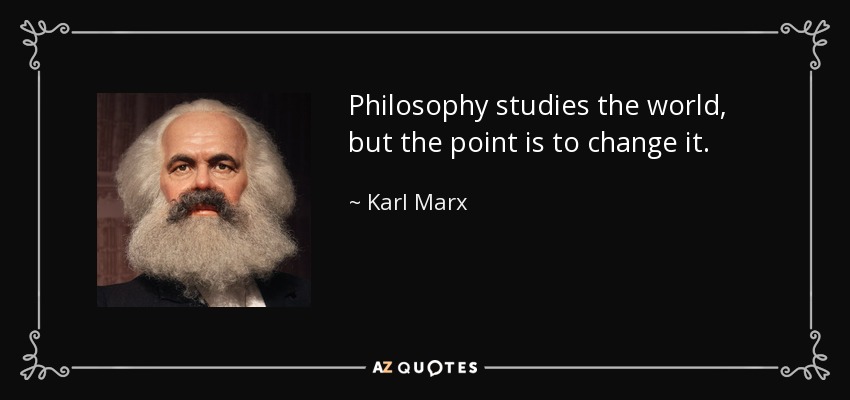
And why start this post by quoting Marx himself?
Because that quote is more than enough. More than enough proof for Marx being a bully.
It’s OK to ‘change the world’ if you own it. If it was yours…
But bearing in mind that there are other people living in the same world… wouldn’t it be nice to ask their opinion about the whole thing? About the changes you want to make? Which changes will dramatically affect the world they live in?!?
They are simpletons? Whose opinions are worthless? Because you said so yourself?

“The lower middle class, the small manufacturer, the shopkeeper, the artisan, the peasant, all these fight against the bourgeoisie, to save from extinction their existence as fractions of the middle class. They are therefore not revolutionary, but conservative. Nay more, they are reactionary, for they try to roll back the wheel of history. If by chance, they are revolutionary, they are only so in view of their impending transfer into the proletariat; they thus defend not their present, but their future interests, they desert their own standpoint to place themselves at that of the proletariat.

The “dangerous class”, [lumpenproletariat] the social scum, that passively rotting mass thrown off by the lowest layers of the old society, may, here and there, be swept into the movement by a proletarian revolution; its conditions of life, however, prepare it far more for the part of a bribed tool of reactionary intrigue.”

As I just said.
Bullly!!!

If medieval advances in the plough didn’t lift Europe’s peasants out of poverty,
it was largely because their rulers
took the wealth generated by the new gains in output
and used it to build cathedrals instead.

And this has happened many more times across the world/along human history.

The fact that Stonehenge exists is ample proof that those people had been able to generate enough ‘wealth’ to build it.
We’ve been able to find out that the boulders had been sourced from two places. The 20 tons hard-sandstone sarsenes ‘traveled’ about 20 miles while the 2 tons blue-stones had been schlepped for about 220 miles. According to Mark Pitts, writing for the British Museum. And we think we have a fair idea about how the whole thing had been put together. Read the paper.
But we know close to nothing about the people who did it.

The stone ring is all that’s left of them.
Isn’t it strange? For such a technologically sophisticated people – and rich enough to afford such a herculean endeavor – to disappear in the mist of history?

And here’s a selection of other abrupt endings/’hibernations’:

Mohenjo-Daro and Harrapa in Pakistan.
Angkor Wat.
The Great Chinese Wall
The Egyptian pyramids
The Athenian Parthenon
The Roman Coliseum and the roads cris-crossing more than half of Europe
Kuldhara, the ghost-city
Machu Picchu
And, last but not least, the cathedrals mentioned by Reuter’s Mark John.
Europe did take a break after finishing building those cathedrals….

What am I trying to ‘suggest’?

That we, as a cultured species, have a tendency to evolve in fits and starts.
We tend to reach pinnacles only to descend – sometimes temporarily – in abject ‘marasmus’.

Could ‘self-sufficiency’ explain at least some of this?

While the spinning jenny was key to 18th century automation of the textiles industry,
they found it led to longer working hours in harsher conditions.
Mechanical cotton gins facilitated the 19th century expansion of slavery in the American South.

NOTA BENE!

Don’t tell me capitalism is at fault for any of this.
Capitalism is but a way of doing things. A road. Which we followed to where we are now.
How we behaved en-route and what we decide right now was/is our own contribution!

Have you no sense of decency, sir, at long last?
Have you left no sense of decency
?”
Joseph Nye Welch, 9 June 1954,
replying to Senator Joseph McCarthy.

As an European, I’m fascinated with how intense the Americans are.
‘knows nothing (nor cares) about Kommunism’…
As if Joe McCarthy had never existed – btw, he was a fascist – and Kommunism had been a German thing. All other languages use “c” when spelling the word, you know…

As a Romanian – who had spent the first 30 years of his life under the yoke – I can pretend to know a thing or two about the subject. Given the fact that Romania had been subjected to both fascist and communist rule. 1938-1945 and 1945-1989, respectively.

Apparently, and declaratively, those two are at the opposing ends of the political spectrum.
In the day to day practice, both belong to the totalitarian mode of controlling a society/country.

Before going any further, I’m going to mention a few traits shared by both modi operandi.

Communism had been first formulated – by Marx – and only then put in practice.
Fascism, like most other political ideologies, had been first practiced and only later put into words.
As far as I know, for communism to be successfully instated in a country, that country had to have had experienced a bout of fascism. Even if it had not been declared as such. This is a necessary condition but it isn’t sufficient. Fascism had been invented – declaratively – in Italy, but Italy hasn’t – not yet, anyway – become communist.
All communist and fascist regimes had ended in abject failure.
While all communist regimes had been instated in former fascist(oid) countries – to the best of my knowledge – fascistoid regimes may be, and already have been, reinstated in former communist countries.

There are also a few notable differences.
Communism pretends all property belongs to the entire people while fascism allows individuals to retain the ownership of their ‘belongings’. But only theoretically and subject to various limitations.
Under communist rule, the ‘democratic process’ is used exclusively to rubber-stamp whatever decisions had already been made by the current dictator while some fascist regimes use the electoral process to gouge the ‘social temperature’ of the ‘political organism’.
While the communist regimes tend to crumble under their own weight, the fascists usually grow too big (cocky) for their own good.

Before ending, I must mention the fact that both China and Russia have become fascist countries, despite China’s leaders pretending their country, literally their country, continues to be communist and despite Putin pretending Russia is a democracy. A democracy which attempts to denazify Ukraine…