‘Truth’, ‘freedom-fighter’ and ‘terrorist’ are words. On the side where we get in touch with them. We see/hear them first before they penetrate our minds. If at all… We think of them and only afterwards they get pronounced by our mouths or typed by our fingers.
On the other hand, ‘propaganda’ – another ‘word’ – is a ‘technology’. A particular manner in which some of us choose to spread out their ideas. Same thing goes for ‘conspiracy’. A particular manner of doing things. ‘Cloaked’. Hidden from sight and involving a number of vetted participants. Nota Bene! Those involved in ‘conspiracy theory’ are also vetted. The ‘theorists’ vet their targeted audience by choosing the subjects of their discourse and by wording it in a certain manner. The members of the ‘public’ ‘vet’ the ‘influencers’ by following them. And themselves – they set themselves apart from the rest – by allowing themselves to be ‘entertained’ by the message they keep returning to. ‘Terror’ itself is also a ‘technology’. A sort of ‘propaganda’ 2.0.
While ‘propaganda’ is a manner of spreading ‘the word’ around – presenting the ‘message’ in an easier to ‘accept’/’digest’ form for the targeted audience – ‘terror’ is a ‘technology’ used to convince an entire population that there’s no alternative. No alternative other than that ‘proposed’ by the terrorist. A technology used to break the will of those whom the terrorist wants to submit.
And what ‘happened to THE truth’?!?
The truth of the matter is that there is no ‘truth’. No ‘one size fits all’ kind of truth!
A truth is something we agree upon. In this moment! Something we agree to consider as being true for as long as nothing meaningful contradicts the generally accepted ‘true thing’.
But what if there’s no longer a ‘we’? What if those who – for whatever reasons – want to separate us manage to do exactly that? What if ‘we’ no longer see each other eye to eye regarding not so long ago widely accepted ‘subjects’? What if ‘we’ – a sizeable portion of us – accept ‘alternative facts’ as being at least as valid as the ones previously accepted as being true? What if we, too many of us for our own good, start to doubt as a matter of creed?
“Too many of us for our own good”?!? What happened to ‘doubting as a matter of creed’ being the ‘stepping stone’ for science?!?
Words… so many words, no matter how beautiful…
‘Science’ is, first and foremost, a state of mind. The ‘open’ state of mind which conserves the willingness to change ‘the truth’ according to the newly acquired information, if this new information is convincing enough. If it comes from more than one sources AND if ‘the conclusion’ can be reached again and again. Independently! Being in a scientific state of mind means keeping the door open for new information. Questioning everything with the transparent intent to impose a single version of ‘the truth’ is more than propaganda. It’s a form of terrorism!
For ‘man made’ things to happen – for anybody to do anything – three requirements must be met first. ‘Circumstances’, ‘determination’ and ‘opportunity’.
To serve a meal, the chef needs ingredients and tools, willingness to do it and a hungry client. To engage in an act of terrorism, the terrorist needs a certain set of circumstances, the ‘determination’ to do ‘it’ and a ‘trigger’.
Is it far-fetched to compare these two things? Feeding people and killing them?
From a ‘deterministic’ point of view, there’s no difference between deciding to serve a bowl of pasta and deciding to deliver a bomb. The consequences are, obviously, completely different. Supporting life versus taking it away.
There are more differences. Nobody has yet seriously considered banning restaurants and everybody hates terrorism. When subjected to acts of terrorism! Otherwise…
Meanwhile, PKK continues to remain a terrorist organization!
So… Just as food tastes vary enormously, so does various people’s interpretations on what constitutes a terrorist act. The first constant being the fact that food sustains life while terror tends to make it difficult. And the second one being the fact that both restaurants and terrorist acts are community based phenomena.
A restaurant depends on the people who deliver the goods, on those who operate it and on the paying customers who keep the business afloat. A terrorist depends on those who help and facilitate. And a terrorist depends on the rest of the community turning a blind eye towards what’s going on. For no matter what reasons! Until they realize how foolish they have been…
‘But who is a terrorist?’
That’s a very good question! There are up to three types of ‘associates’ in any act of terrorism. The ‘direct operator’, the ‘first hand facilitators’ and the ‘people behind’. While it is quite simple to understand the roles played by the ‘direct operators’ and by the ‘first hand facilitators’, things become murkier when it comes to the ‘people behind’. For some – including for me, the current Iranian leadership are among the ‘people behind’ the Hamas terrorist organization. But what about those who, willingly or unwittingly, make it so that whole communities become ‘restless’? Restless enough to generate terrorists and careless enough to turn a blind eye towards terrorist acts being prepared in their midst?
My point being that just as nobody becomes a celebrity chef overnight, it’s almost inconceivable that anybody might engage in major acts of terrorism without being helped by some and noticed by many. And just as a chef has to be talented to become noticed, a ‘direct operator’ needs to be in a ‘particular’ state of mind in order to operate. But just as an untalented cook is, eventually, ‘set aside’ by a run of the mill community, a willing ‘direct operator’ ends up, literally, being embraced by a ‘triggered’ community. Or is eventually ‘sent away’ by a normal one. By a properly functioning society!
Just before starting this post, I heard somebody commenting on Antonio Guterres’s words: ‘Even if he will not have to resign, he won’t get another mandate’… Now, as a coda, I feel the need to share that comment with you.
“Today, our fellow citizens, our way of life, our very freedom came under attack in a series of deliberate and deadly terrorist acts.” “We will make no distinction between the terrorists who committed these acts and those who harbor them.”
Is it possible to wage war upon a concept? Is it possible to win a war against a concept?
So what are we going to do? Cave in? Only because we cannot win a war against a concept?!?
How about redefining the problem?
How about choosing an achievable goal? After all, we’ve been reasonably good at beating the terrorists themselves. And those harboring them…
Only if we had made some difference between these two! Between the terrorists and those in the middle of whom they were hiding. And continue to hide…
Let’s get back to square one.
How does terrorism work?
Some ‘agents’ determine that what they want cannot be achieved in normal ways. And choose instead to use terrorism as their tool ‘of choice’.
What do they need?
Man power, material resources, pertinent knowledge, time to organize the ‘heist’, a place to put it all together and a practical method to apply the ‘pressure’.
There are some things which are hard to control. Not impossible but hard. Material resources, for instance. A knife, or even a cutter blade, can be used for terrorist purposes. Money are also a very fungible resource.
Place is also a tricky thing. A remote ‘hamlet’ is easy to find. But transporting a terrorist ‘solution’ from a remote hamlet to a place where that ‘solution’ might produce the intended result is not so simple.
Time. The longer it takes to design a ‘solution’ and to implement it, the easier for the general public to find out what’s going on.
Pertinent knowledge. The more sophisticated the solution, the more pertinent knowledge is needed. Which knowledge comes comes attached to the man-power involved.
So. What drives a knowledgeable person to use their skills towards producing terror? Hard to say. And hard to change the mind of a person who has already become a terrorist. Either a person who had spent years descending into the ‘mood’ or somebody who had been convinced on the spur of the moment to ‘participate’ as a suicidal driver. Explosive vest wearer. Or knife wielder.
The above mentioned motives make it hard, almost impossibly hard, to prevent terrorist acts committed by deranged persons, specially when they act alone. Or as a very small ‘team’.
But when we the ‘solution’ has a certain degree of sophistication – terrorist plots, that is, there are many kinds of people involved. Initiators/backers, operatives, facilitators and ‘neighbors’.
It’s hard, almost impossible to change the minds of a determined ‘initiator’. Or of some of the ‘operatives’. The initiators tend to be sociopaths while many of the operators, specially those committing suicide, must be ‘hopeless persons’. Not only clinically depressed but outright hopeless.
But the rest?
Why would anybody back a terrorist plot if there’s another way of achieving a goal? There’s always the sociopathic explanation but not all ‘backers’ are sociopaths. Not in an obvious manner, anyway…
Which brings us to the facilitators and the neighbors.
We have, broadly, two situations. When the terrorists want to inflict pain in the middle of the enemy territory or when the terrorists want to gain control over a territory.
In 2015 ten terrorists have killed some 130 people in Paris. Wounded a couple of hundreds. And wrecked the lives of many others. Nine of them had been killed by the law enforcement agencies. On the spot or during the next few days. Only one of the assailants has survived and had been apprehended later. The process has just begun. Besides the surviving shooter there are other 19 other people against which have been brought charges. “some are accused of helping the gang without necessarily knowing the extent of the conspiracy.“ Many of the accused, including some of the assailants, have lived – at least for a while, in Molenbeek, Belgium. A suburban commune where quite a high percentage of the population feel ‘there’s no way out’.
Are you familiar with the studies which maintain that both people and mice prefer social interaction to using drugs? Statistically speaking, of course. A very few individuals get hooked and cannot give up while the vast majority stop using drugs when conditions return to normal. When the American soldiers had come back from the VietNam war, for instance.
Same thing is valid with ‘terrorism’. Along with other kinds of fundamentalism.
When too many members of a community become despondent some can be ‘converted’, many others will help – even if not engage directly, while the majority will turn a blind eye to what’s happening in their middle.
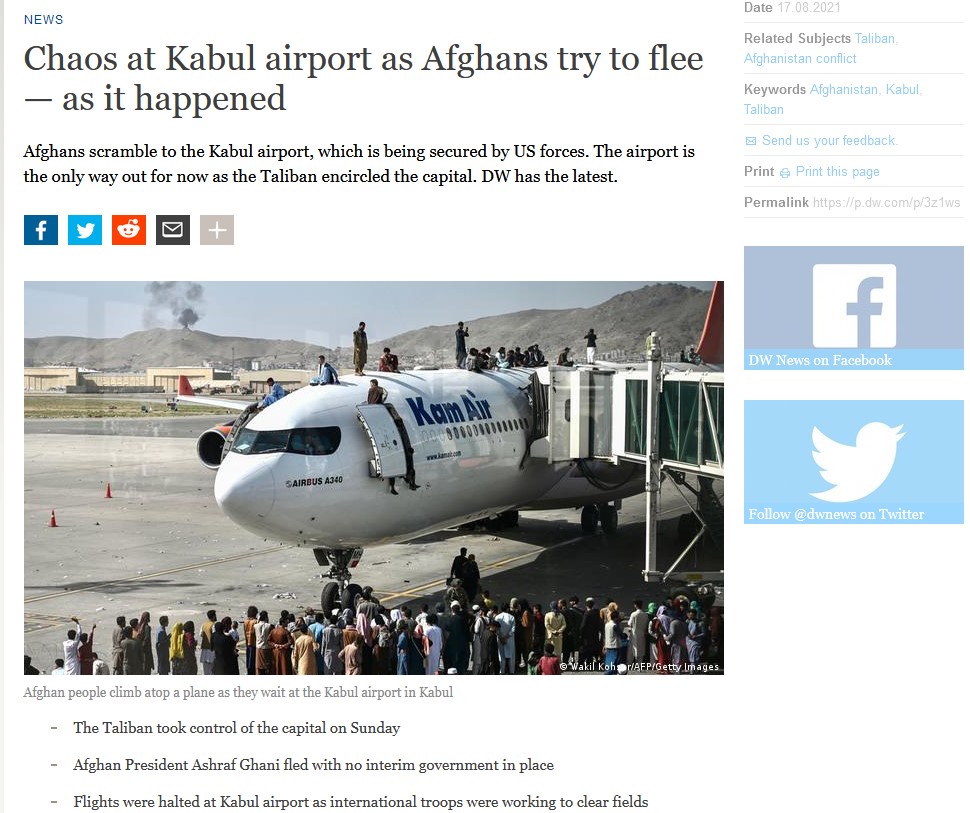
That’s why the terrorists who had wreaked havoc in Paris had been able to organize themselves in Molenbeek without the police finding out what was going on. That’s why the Americans had not been able to wipe out the Taliban. And why the Taliban have grabbed back power so quickly once the Americans had decided to pull back. Because not enough of those living there – in both Molenbeek and Afghanistan, were hopeful about their future.
Because not enough of the Afghani hearts and minds have been won over.
I’m afraid that making “no distinction between the terrorists who committed these acts and those who harbor them” wasn’t helpful. On the contrary…
And please, please, click the first picture and read the article.
When facing an uncertain future, people are hard wired to search their past.
Some look for things that have gone well and hope that reenacting them will bring back a measure of order in their lives.
Some others look for clues pointing to things that went bad, hoping that making them right will change their prospects.
In this respect I remember how fascinated I was when I first heard about Malraux’s “The XXI-st Century will be religious or will not be at all“.
When trying to understand what Malraux wanted to convey we must remember that he started as a left wing intellectual who, at some point, felt an admiration for Stalin. Later, after he found out what Stalin was really up to, Malraux had given up on Stalinism but never on his atheism. So?
Looking even further back in time we arrive at Emile Durkheim’s Suicide.
Written at the end of the XIX-ht century the book teaches us that while suicide remains a profoundly individual decision those who consider it are deeply influenced, when making the call – one way or another, by the strength and nature of the social ties that connect him to the community to which each of them belongs. Further into the book Durkheim also discusses the fate of the communities themselves, arguing that a society needs to keep a dynamic balance between social control – that keeps a community together – and a healthy dose of deviance – which might pull at the seams of a society but simultaneously allows it to change when it has to do that in order to survive.
OK, all these are very nice but will you come back to our present? You promised us something about the future and you are leading us further and further into the past. Into a ‘mythological’ past, no less…
Well, I strongly disagree with this line of thinking.
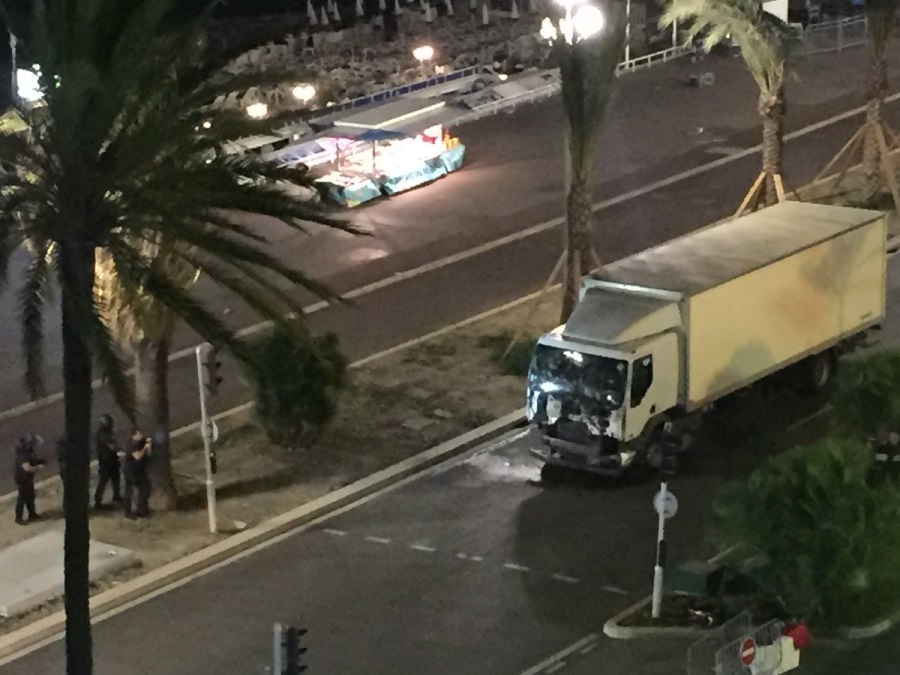
What happened in Nice, where a lunatic drove a truck through people gathered to watch fire-works celebrating Bastille Day and killed 86 of them, is proving that both Malraux and Durkheim were spot on. Each in his own right.
In the last twenty or so years, terrorist acts have doubled as suicides. Some perpetrated by ‘simple minded’ youngsters driven to desperation by perceived socio-economic inequities and primed by callous so called religious leaders while others were carefully planned and cold-bloodedly executed by apparently sophisticated members of the middle class.
If we interpret these acts according to Durkheim’s theories we might reach the conclusion that the communities that harbor the terrorists do not function properly. Either the individuals feel so constraint by the existing rules that they cannot find enough breathing space – and snap – or that they cannot find enough social support – and go out ‘with a bang’.
Or both, at the same time.
Let’s remember that those who comited most recent terrorist acts, in Europe and in the Middle East – if we count those who joined ISIS coming from the Western Europe, are second generation Muslim immigrants or new Islamic converts.
I’ll deal with these two categories separately.
The second generation immigrants had a very frustrating experience.
Their parents came from abject poverty, worked hard and, most of the time, fared a lot better in their new countries than any of them even dreamed of on arrival – specially when comparing to the situation in their countries of origin. The youngsters went to school alongside the natives, watched the same television programs and read the same books and magazines. And grew to have the same expectations. But had a lot more difficulties when tried to fulfill them. Because of their skin color, religion, etc., etc. Add to that the nefarious propaganda coming from the Wahhabi preachers and you have an already primed keg of gun-powder waiting for a spark.
But let’s not forget that these people live in otherwise closely knit communities.
And that preparations for terrorist acts do take some time and effort.
How come these preparations go unnoticed and, even more important, unreported?
Can we conclude that whole communities have went past the ‘I don’t care anymore’ point?
A situation for which Durkheim used the term ‘Anomie‘?
Could we consider that not only the immigrant Islamic communities are in an anomic state but also the larger, host ones? For letting the whole situation degrade to such an extent? Not only at home but also at the door steps of Europe?
And please remember the new converts to Islam. What happened to those youngsters – most of them are young people – that they became so estranged to their native society that emigrated to a totally different realm, not to a different country? A few of them might be explained away by individual ‘deviance’ but such a large number becomes a social phenomenon that begs a different explanation.
Should we accept the situation – and the degradation that would inevitably follow if nothing is done – or should we heed to Malraux’s advice and do our best to find new, and more efficient, communication channels so that we’ll be able to built some much needed trust amongst us? Based on mutual respect, not on MAD force?
A Facebook friend of mine shared this Daily Mail article with the following comment:
“Sad… well educated, accomplished, but lost spiritually… perfect for being radicalized…”
It couldn’t be their religion.
First of all mainstream Islam, like all other bona fide religions, does not condone senseless murder.
Secondly only a very small minority of the Islamic immigrants become ‘radicalized’.
Thirdly, some of them even turn on their own people.
What if they use religion, Islam in this case, as a pretext for destruction rather than a way to connect with the others? As religion was meant to – reliegare, in Latin, means ‘connecting to’.
What if for them religion is more about ritual than about true spirituality?
I’ve slowly reached the conclusion that what these guys are doing can be interpreted as a form of ‘assisted suicide’. They are pissed off by what has happened to/around them, they blame it on the ‘society’ and they just want out. So they commit suicide and exact vengeance at the same time.
Maybe we need to pay closer attention to what the classics have taught us.
“Suicide is used by Durkheim as a means of demonstrating the key impact of social factors on our personal lives and even our most intimate motives. The book succeeds brilliantly, both as a technical study of suicide and as a fundamental contribution to this broader issue. Students of sociology will continue to be required to study this book, which will remain on the sociological agenda for many years yet to come.” Anthony Giddens.




 nicichiarasa