Archives for posts with tag: sin

Classic sociologist Emile Durkheim theorizes that crime exists
in all societies because it reaffirms moral boundaries and at times
facilitates needed social changes,
while former U.S. Senator Daniel Patrick Moynihan believes that
Durkheim’s views omit the possibility of too much crime, especially violent crime,
so that deviance as a serious social problem is not addressed.

“Normlessness and deregulation are poor translations of dereglement for several reasons. They did not enter into common English usage until the 1960s and certainly didn’t exist in Durkheim’s time. Dereglement is difficult to render in English. It carries with it in French the connotations of immorality and suffering, but is perhaps best translated as derangement. Anomie as dereglement implies a condition of madness or something akin to sin. This concides with the observation that over 20 words denoting sin were translated as anomia when the Bible was translated by St. Jerome and others.”

Durkheim was right after all.
‘Crime’ does fulfill a social function.
Some deviance, when well ‘managed’, can be useful. The US have somehow managed to transform a rather high level of deviance into ‘speed’. 250 years ago, the 13 American colonies were almost insignificant.
Today, the US is the most powerful/wealthy nation on Earth. While the Union continues to be the most ‘deviant’ among the civilized nations. On all conceivable metrics.

The key words here being, of course, “well managed”!
Maybe the time has come for the likes of Senator Daniel Patrick Moynihan to go back to class. And to finish reading what Durkheim had to say about things.

The problem with the current political class, not only in America, being the fact that too many politicians ‘outsource’ responsibility!
It’s not history’s job to maintain accountability!

The politicians themselves need to provide enough reasonable alternatives for the ‘people’ to chose from!

Durkheim, read from both ends, told us that much.
We are the ones who need to maintain the balance.
For it’s us who will bear the consequences!

No matter who was the culprit, we’ll have to clear up the mess.
So we’d better stop the fan from spreading the mess around!

After all, shit happens. It’s a natural occurrence.
We have to eat so we need to relieve ourselves.
But how about doing this in a civilized manner?
And not rewarding those bragging about ‘inappropriate behavior‘….

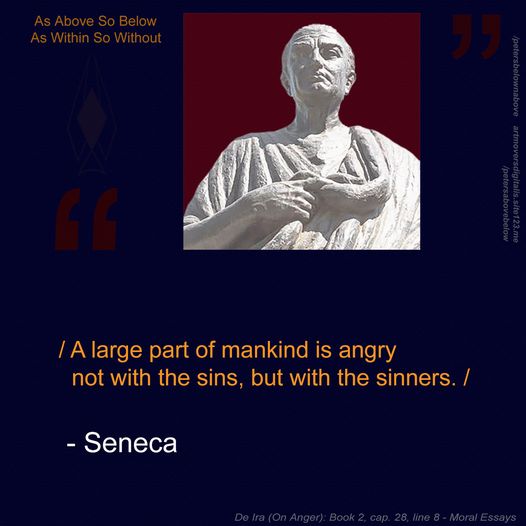
The key word here is ‘anger’.

Had we been less angry, maybe our reaction would have been more ‘efficient’.

Instead of being angry with the sinners, we could try to convince them. Those of them who can be convinced…

After all, a sin is but a possibility. An ‘opportunity’, not a fatality.

Many people consider man – as in ‘human people’, is a fallen creature.

For the simple reason that we had failed to obey our father.

Failing to obey your father may be considered a bad thing. The particulars of the incident should also be taken into account but, generally speaking, we should indeed obey our fathers. At the bare minimum, we should pay attention to what they have to say about things.

Coming back to us, humans, being fallen creatures, let’s examine what we’ve done to deserve this label.
According to the ‘many people’ I’ve already mentioned, we are fallen creatures because we have eaten – against our father’s specific interdiction, “from the tree of the knowledge of good and evil“.

Further more, the guilt for our transgression is unequally shouldered between men and women. Since it had been Eve who had talked Adam into eating that fruit, women are considered to be the ‘weaker’ amongst us, humans.

Now it’s the moment for me to remind you about Cain.
Abel and Cain had been the two children brought to life by Eve.
For whatever reason – and, again, against God’s advice, Cain had slain his brother Abel.

We – according to what the ‘many people’ continue to believe, in a literal manner – are the direct descendants of Cain. And of Eve, of course.

Yet we are ‘fallen’ because Eve had helped her husband, Adam, to develop a conscience. To learn the difference between good and evil.
Cain killing his brother has nothing to do with our promiscuous nature …

To me, it’s more than obvious that our fallible – not fallen – nature consists in the fact that we are prone to ‘misunderstandings’. We tend to see things in the most favorable manner.
Favorable for us, those who get to call things as being good or evil.

Whenever we are able to do it, we distribute ‘guilt’ and appropriate success.

Eve had offered us the ‘apple’. The opportunity to see ‘the’ difference.
From now on, it’s up to us to consider the facts.

Then the Lord said to Cain, “Why are you angry? Why is your face downcast? If you do what is right, will you not be accepted? But if you do not do what is right, sin is crouching at your door; it desires to have you, but you must rule over it.””

“You shall not make for yourself an image in the form of anything in heaven above or on the earth beneath or in the waters below. You shall not bow down to them or worship them; for I, the Lord your God, am a jealous God, punishing the children for the sin of the parents to the third and fourth generation of those who hate me, but showing love to a thousand generations of those who love me and keep my commandments.

Science teaches us many things.

In fact no, science teaches us nothing!
Science cannot teach, at all. Simply because science is not a teacher.

At individual level, science is an attitude. A mind open enough to accept its own fallibility. To accept the fact that, sooner rather than later, it will fail.
To accept the fact that the image it constantly generates during its interaction with the surrounding world is, at best, incomplete.
To accept the fact that the understanding it has reached during its existence is, and will remain forever, a work in progress.

At the social level, science is a way of conducting business.
Based on ‘trust but verify’. A scientifically minded community trusts its individual members to be honest in their efforts but verify their work because – as mentioned above, each of us will, sooner rather than later, fail.
Hence, by aggregating their efforts, a scientifically minded community will eventually paint a still imperfect image but one closer to the reality than any of those belonging to its individual members.

In order for the community to be able to continuously improve their ‘work in progress’ each, or at least, enough of its members need to preserve their scientific mental attitude. Their intellectual humility.
As soon as too many of the individuals reach the conclusion that their image of the world is the only correct one – and they start not only to bow towards it but also to convince others to join them, things start going south.

“Let any one of you who is without sin be the first to throw a stone at her.”

Who among us is perfect? Perfect enough to be sure?

And why had been chosen an adulterous woman as the main character for this lesson?
Because adultery is a sin which cannot be committed in solitude? Only in cooperation with ‘the other’? As a relationship? Where each member contributes to the shared doom?

Do you see how similar science and sin are?

Both start ‘individually’ and are put in practice ‘together’.
Both are initiated as individual pulsions and put in practice as choices.

I’ve started this post by mentioning science.
The scientists among us have reached the conclusion that there was no need for a God to start the process of which we are the alleged pinnacle. That evolution was enough to drive the whole thing. I tend to agree.
On the other hand, history – yet another branch of science, has produced enough evidence to prove that God had a tremendous contribution to the present state of civilization.

Not God himself but the image of God we have created for ourselves. The Image we’ve been bowing to for some time now.

Go figure….