And the LORD God said, Behold, the man is become as one of Us, to know good and evil. Genesis, 3:22
The point of this post is simple. The difference between ‘bad’ and ‘evil’.
‘Good’ is straightforward. It doesn’t matter – evolution wise – whether the ‘good’ has happened ‘naturally’ or ‘intentionally’. But it makes all the difference in the world whether the ‘bad’ only happened or it was the consequence of somebody planning it to happen.
Even if that difference is visible only to us. Conscious humans beings who use language to communicate and to consider.
Visible as well as ‘accessible’. How many among you consider that anybody else but us, human people, is capable of ‘evil’?
And what about the perpetrators? How many of them consider themselves to be ‘evil’? To have become evil, as they had intentionally hurt somebody?
And how come this simple ability was enough to elevate us to “one of Us” status?
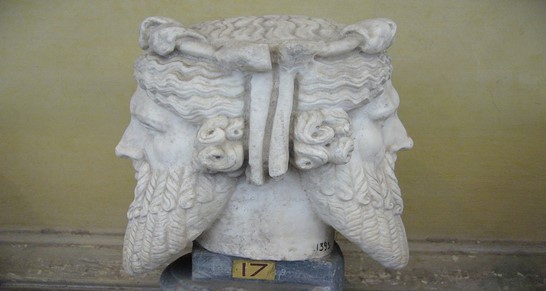
Time, like everything else human, has two sides. Like a coin.
A ‘base’ and an interpretation.
There’s no interpretation without a base – even hallucinations are based on ‘something’ – and there’s nothing which has penetrated human conscience and ever managed to evade interpretation. In fact, human conscience needs to interpret, to assign meaning to, everything it ‘sees’. Everything it perceives. Anything which is uninterpretable, which has no meaning, cannot be controlled.It is, hence, dangerous. If you don’t know what’s going to happen next, you can assume anything. And since assuming the worst – and preparing for it – is far more useful towards survival than sleeping over it, we are biased towards erring on the side of caution. And towards relentlessly searching for meaning.
Time, like everything else human, is both a phenomenon – it happens – and a concept. The difference between the ‘time’ of a star and the human time being that ours has a name – given by us – and that the star cannot do anything about it. While we do!
We can do things to and about time!
We named it, we measure it, we attempt to interpret it…. and we try to do the best of it! We try to do, while alive, what we consider to be ‘the best’.
The best (?!?) for whom?
Tao.
The ‘road’. If everything flows, it has to flow ‘somewhere’. Not only from the start/spring to the ‘end’ (?!?)/never tranquil sea. Everything flowing needs a ‘riverbed’ to flow ‘through’. A plant needs soil to sprout, grow, bear fruit and ‘return to nature’. Even a star needs an Universe in order to shine… besides enough ‘fuel’, of course! I have started this post by saying that there’s no interpretation without a ‘base’ and that we, conscious human beings, need to attach meaning (a.k.a. interpretations) to everything of which we become aware. Same thing here. For anything to happen, a venue is needed. Some wise people in our past have used ‘Tao’ as a name for THE venue. For the venue where everything takes place.
Karma.
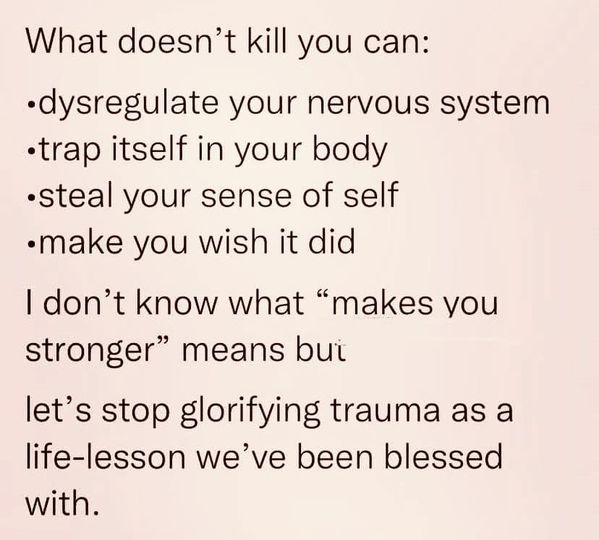
At first, when conscience had dawned on us, we were alone in the ‘dark’. And afraid about what was going to happen to us. To assuage that fear, we have identified God. As the ‘the meaning’ of the world. At first, when both the world and time seemed to be endless – to us, consequences came from God. We had to behave. Or else… God was there to punish each and every transgression. Sometimes using one of us as his proxy. After a while, some of our ancestors have learned to write. To reliably transfer information over generations. Very soon, those ancestors of ours have learned the link between cause and effect. Between behavior and consequence. Very soon God had become an outside observer. Or was out-rightly forgotten. But Karma survived.
Future.
I keep hearing that ‘evolution has no purpose’. Like many other human utterances, this one conveys far more information about the utterer than about the phenomenon described by the utterer.
‘This wooden table has 4 legs’. We learn about the table that it is in front of us, that it is made of wood and ‘has’ 4 legs. We learn about the utterer that: It was conscious when uttering those words. Only conscious agents are capable of ‘speaking like a human’. It has, at some point, learned to speak. English, and possibly other languages. It has, at some point, learned to count. At least up to four. And it had conserved that ability up the moment when it uttered those words. It was capable of identifying ‘wood’ as a material. When uttering that phrase, it was in a ‘casual’ state of mind. A ‘scientifically minded person’, a ‘grammar nazy’, for example – when in that mood, would not attribute human ‘abilities’ to a table. Which table is a mere object and objects cannot posses other objects. Tables cannot ‘have’, hence that person was speaking colloquially. Or, given the current ‘technological’ developments, those words might have very well been uttered by a statistically ‘minded’ AI application…. A man made ‘parrot’!
See what I mean?
Let’s go back to the presumably purposeless evolution.
Evolution is a phenomenon. Like a thunder. It takes a lot more time to unfold than a thunder, it’s about as hard as a thunder to predict the exact point where it will ‘strike’ but we know enough about both to be able to point out, quite reliably, a few ‘rules’ about how both phenomena take place. About where, when and how they will unfold. What’s the purpose of thunder? To ‘close the circuit’? To discharge the energy pent up in the cloud? I’m afraid that attributing purpose to thunder is akin to allowing tables to ‘have’ legs. What we have here is a ‘figure of speech’. An ‘implicit’ figure of speech… so implicit that it’s not even considered as such… Same thing when it comes to evolution.
Which evolution is paramount to survival. Just as no cloud can accumulate ad infinitum electric energy – hence thunder – no living thing ever – no species, more exactly – has yet been able to survive ‘everything’. Everything mother nature has thrown at it. Hence ‘evolution’! Which is a mere process which makes life possible. In certain conditions – in a certain Tao – after it had sprung up. And, again, attributing purpose to evolution is akin to allowing a table to own legs.
Then what about ‘future’? If God no longer decides for us – the God we have identified – and if evolution is ‘pointless’… then ‘future is blind’?!?
Not so fast!
Question: Where was God at Auschwitz? Answer: Where was man at Auschwitz?
Could any of those present at Auschwitz have done anything to fundamentally change the outcome? Probably not. Could we, as a species, have done – have behaved, actually – in such a manner as to avoid Auschwitz altogether? Specially after the Armenian Genocide had already taken place? Should we, as a species, have done differently when so many Tutsi had been killed in Rwanda? When 8000 Muslim Bosniak men and boys had been murdered in Srebrenica?
See what I mean? About the future? About our future?
What do we have here? “Eternity and endless return?” Or past mistakes haunting us through time? Until we figure out the way forward? Or else…
“Denn selbst muss der Freie sich schaffen” Hence the free must define their own nature Richard Wagner, Die Walkuere
In my previous post, I related to ‘life’ as a living creature. I described life from the inside. The perception of a living organism. But what if ‘life’, as a phenomenon, is how meaning is created by the environment where the process takes place?
For an outside observer, there are three stages. Pre-biotic, self-driven and meaning-driven life.
Life, as we know it, cannot exist on the surface of the Sun. Or on the surface of any other star. But neither can life exist without the processes taking place inside the stars. Without the energy being radiated by the stars and without the atoms being ‘cooked’ inside them and spewed out during the last stages of their ‘lives’.
Having said that, the rest is simple. Where ever conditions are ‘right’, atoms get together in such a manner that ‘structures’ become ‘alive’. Those structures become organisms and display the characteristics we’ve come to associate with life. In this stage, the only ‘force’ which drives the process is what we call ‘evolution’. Species cease to exist as they are no longer able to weather changes in their environment and new species arise along with the advent of new opportunities. And, at this stage, a second ‘disturbing agent’ starts to influence the environment. Living organisms, in order to live, need to ingest portions of where they live. To excrete the by-products of their metabolism. And they leave behind ’empty carcasses’ at the moment of their death. For example, the oxygen we breathe in is the by product offered to us by the plants which live at our side. And the fertile soil those plants ‘eat’ in order to provide us – the oxygen breathing organisms – with what we need to survive, is the consequence of previously living creatures.
In the third stage, that where ‘meaning’ becomes a force to be reckoned with, the changes perpetrated to the environment cease to remain ‘natural’. As they used to be during the second, self-driven, stage. In the third stage, an increasing number of changes to the environment are driven by purpose. Are purposefully staged by agents acting according to the meaning they have found.
Individual organisms, working in concert, for a while, organize themselves in such a manner as to be able to keep the inside it, the outside out, to ingest what ever they need to survive from outside and to excrete the byproducts of their living. Also known as the by-products of their metabolism.
In order to perform the above, the individual organisms use information gathered by their ancestors and transmitted over generations. Which information has been shaped in time, through an evolutionary process, in order to remain useful for the currently surviving organisms. Which said shaping has happened through the natural culling of the individuals bearing information no longer fitting to the then existing natural circumstances.
For life to continue, individuals living at anyone time must engage in reproduction.
‘Now, that you’ve reached your personal pinnacle, which do you think is more important? Setting the right goal for yourself or reaching it by keeping on the ‘straight and narrow’?’
Well, staying on the straight and narrow is a goal in itself… The way you put it, you’re asking me to determine which came first, the chicken or the egg?
Neither. Evolution came first. At some point reached the ‘chicken and egg’ stage then went forward to giving birth to living offspring.
Same thing here. Life is opportunistic. Setting goals and following rules is OK, as long as you keep an open mind about things. Keep your eyes wide open yet fully aware that nothing is exactly as it looks like.
The only legitimate long term goal is ‘sustainable survival’. The rest are nothing but ‘staging posts’. In order to be able to do something – anything – you need to be alive. And kicking! In order to stay alive, you need to make as little damage as you go along. To yourself – as a living organism – and to the environment in which you live. To the natural environment each living organism depends on and to the social environment which allows us, human beings, to maintain and develop our human-ness. Our capacity to generate meaning by making successive decisions.
How to achieve this meta-goal? By following the common sense rules which become apparent as we go forward in time. Which become evident as long as we keep our eyes open….
It ends almost like it had started. Make good use of the interval!
Life and death are two strange words. Very different yet they describe the very same thing. If you think of it, death and life are like the faces of a coin. After all, the exclusive qualification for being able to die is to have been born… And it’s only us, languaging rational beings, who make the difference between living and dying. At the conceptual level, of course. OK, many others are capable of making the functional distinction between a corpse and a living body. We are impressed by the mourning behavior displayed by the elephants, for example. And even more so by the chimpanzee mothers who continue to carry the bodies of their deceased babies… But since we are the only species – known to us, humans – who uses language to relate to each-other, to think about the world and to plan ahead, I’m going to discuss here only the languaging/reasoning aspects of us making the difference between life and death. By making this difference we actually separate the inseparable. With momentous consequences. For us – individual human beings, for the species as a whole, for the rest of the species and for the rest of the world. The world as we know it… The origin of this difference is our conscience. Which is sophisticated enough to be able to make it and to talk/think about it. The elephants are also conscient enough to act upon the difference between a living body and a corpse. To recognize the skeleton of a deceased relative. To remember it. But, at least apparently, they are not able to speak about the whole thing. Nor to transmit over generations that those particular bones belonged to a particular individual who had been related to … As soon as all individuals who had directly known the deceased individual, all information about the identity of the corpse/skeleton are lost. For a while, the survivors remember only the fact that their ‘mothers’ used to ‘mourn’ over this particular set of bones but nothing more. Again, this is what we know, now, about the manner in which the elephants treat their dead. Which is very different from how we treat ours. And from how we relate to matters pertaining to life and death. We cherish life and we dread death. We cherish our lives and we dread our death. Ours and that of our (cherished) relatives and friends. And we are somewhat indifferent to the lives of others… To the tune of being able to dispatch animals, and plants, for food. And to kill other human beings. In war but not exclusively.
And this has happened many more times across the world/along human history.
The fact that Stonehenge exists is ample proof that those people had been able to generate enough ‘wealth’ to build it. We’ve been able to find out that the boulders had been sourced from two places. The 20 tons hard-sandstone sarsenes ‘traveled’ about 20 miles while the 2 tons blue-stones had been schlepped for about 220 miles. According to Mark Pitts, writing for the British Museum. And we think we have a fair idea about how the whole thing had been put together. Read the paper. But we know close to nothing about the people who did it.
The stone ring is all that’s left of them. Isn’t it strange? For such a technologically sophisticated people – and rich enough to afford such a herculean endeavor – to disappear in the mist of history?
And here’s a selection of other abrupt endings/’hibernations’:
Mohenjo-Daro and Harrapa in Pakistan. Angkor Wat. The Great Chinese Wall The Egyptian pyramids The Athenian Parthenon The Roman Coliseum and the roads cris-crossing more than half of Europe Kuldhara, the ghost-city Machu Picchu And, last but not least, the cathedrals mentioned by Reuter’s Mark John. Europe did take a break after finishing building those cathedrals….
What am I trying to ‘suggest’?
That we, as a cultured species, have a tendency to evolve in fits and starts. We tend to reach pinnacles only to descend – sometimes temporarily – in abject ‘marasmus’.
Could ‘self-sufficiency’ explain at least some of this?
Don’t tell me capitalism is at fault for any of this. Capitalism is but a way of doing things. A road. Which we followed to where we are now. How we behaved en-route and what we decide right now was/is our own contribution!
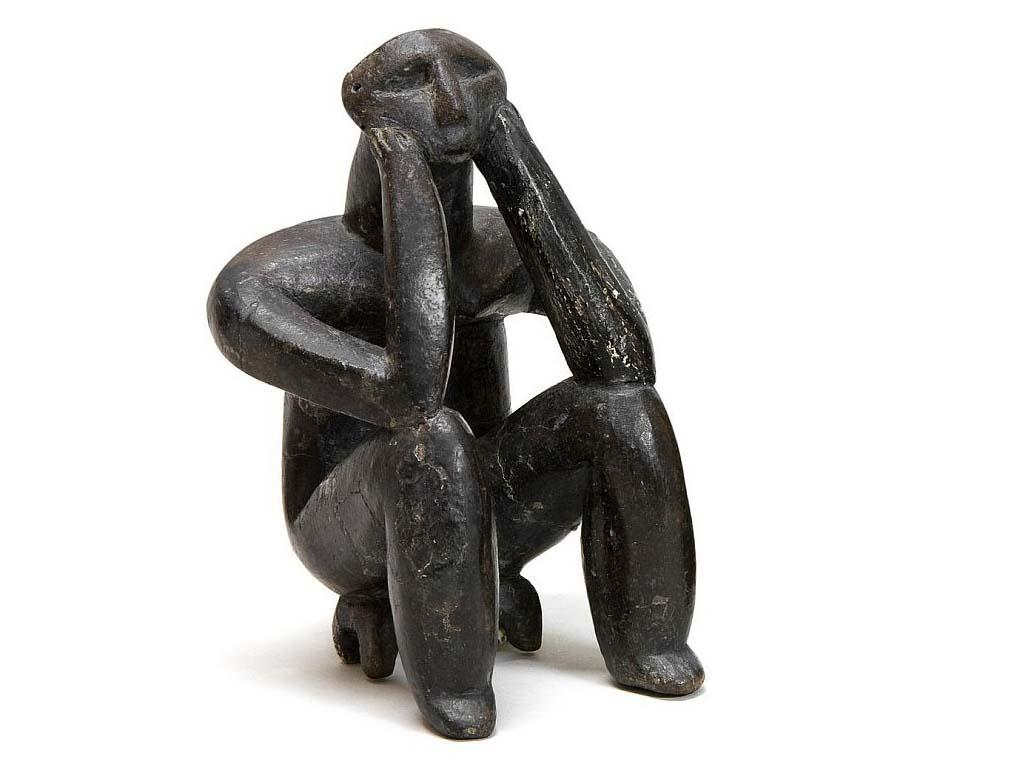
‘After a trip abroad, the Thinker from Cernavoda and the Sitting Woman will be available for the locals.’
What makes us think that the Thinker is thinking while the Woman is just sitting?!?
Is there any meaning in this?
Newton had only described gravity, he didn’t invent anything. Noticed it – like many others before him, thought about it – more (better?) than all those before him, and came up with a deeper meaning for the whole ‘falling thing’. Nobody cared to contradict him. Because everything, once exposed, was so obvious!
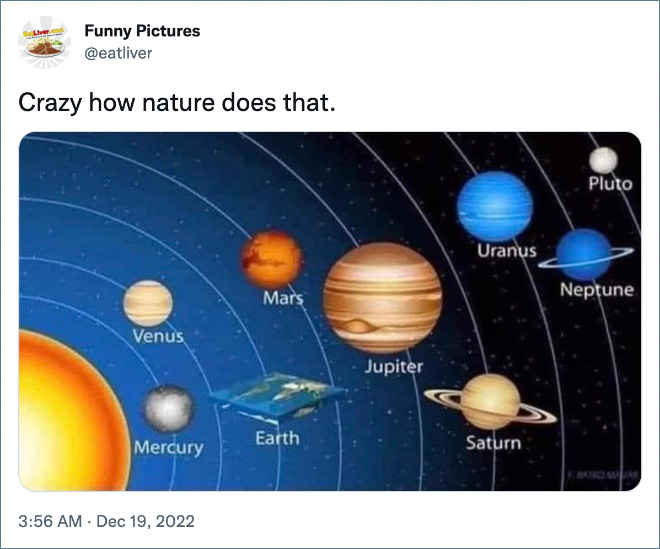
I’ll make a break here and wonder… what does the Flat Earth Society think about gravity?
Had your laugh? OK, let’s move on.
Darwin had also noticed things. Thought about them. Really hard. And put together a theory. Which continues to be considered a theory because not everybody is yet convinced… OK, things are a little harder to swallow. Specially the part with us being relatives, no matter how distanced, with Judy…
Furthermore, the evolution thing is not as obvious as the gravity thing… most of us would have to take Darwin’s word for it… something we don’t do that easily, specially if/when we dislike – for what ever reason, the outcome.
Then why do we ‘swallow’ – line, hook and sinker, however implicitly, the names affixed on those two prehistoric figurines?!? Because they are obvious? Just as obvious as gravity?
The guy must be thinking and it’s obvious that the woman is just sitting?!?
Or is it that we believe what we want to believe? We attribute meaning according to our own standards. Then stick to our opinion. Almost no matter what…
How about He nursing a hangover and She guarding him against predators?
Destination first. If you know where you’re going, getting there will be a lot simpler.
According to Daniel Moynihan – “you are not entitled to your own facts”, facts are obvious. So obvious that doubting their existence, their factuality, would push us beyond the realm of the reasonable. Appropriating facts – transforming them into ‘private property’, banishes the perpetrator from the community….
Hm…
Let me put it differently. Moynihan had said something. What was it? A fact? Or an opinion?
Currently, we – well, most of us – believe that freedom of opinion is the cornerstone of our Weltanschauung. When it comes to facts… We’re OK with the definition – we do use the word/concept, quite extensively – but we seem to have some problems when dealing with the actual reality. Remember the still famous ‘alternative facts’?
Let me add something personal to all this. My opinion about ‘facts’.
The current definition is somewhat incomplete. We take something for granted. To the tune of no longer mentioning it. We assume all of us see the elephant in the room and no longer talk about it.
For something to become a ‘fact’ we have to notice it. First. And then we have to agree among ourselves about its meaning!
Things used to fall down since …. We’ve been discussing the matter since… we’ve learned how to speak! But gravity had become a fact only after Newton had noticed the famous apple, wrote about it and we agreed. Gravity had become a fact, and continues to be one, only because his contemporaries had agreed with Newton on this matter. And we continue to believe Newton was right!
In this sense, alternative facts have been with us since day one. Well, something like that… God had told something to Adam and Eve, the serpent had said something else… and the rest is history! For some…
Newton had said something to us. And most of us had chosen to believe him. Or ignore his words… Darwin had said something to us. Many of us have chosen to believe him. To accept his arguments about the matter. While some others have chosen to dispute Darwin’s findings. To actively negate Darwin’s explanations about how we’ve got here.
Gravity is a fact while Evolution is still a theory. Statistically speaking, of course.
In this sense, Moynihan was wrong. For his words to ‘hold water’, we must to agree on how to separate facts from opinions. Until we agree among ourselves about how to determine ‘factualness’, we’ll keep having to deal with ‘alternative facts’.
I actually cannot wrap this up before ‘unveiling’ my litmus test for factualness. Consequences.
Does it have consequences?
Yes? It’s a fact! No? Then it’s not – not yet, at least – a ‘fact’. It did happen – otherwise we wouldn’t be speaking about it. It even does have consequences – we do speak about it, but that occurrence doesn’t yet have meaningful consequences. It is not a ‘factual’ fact.






 nicichiarasa