Archives for category: teleology

The Ancient Greeks made the difference between Nomos and Phusis.
Phusis was Nature and Nomos was what they made of it. And as long as the story ‘held water’… that was it.

By figuring out that they were the link between Phusis and Nomos, the Ancient Greeks were capable of integrating the miraculous into their daily lives. As long as they kept believing ‘the story’…
For as long as ‘faith’ was doing its magic, things were OK.
They, individually speaking, didn’t feel the need for much additional explanation. They kept figuring out what they could and accepted the rest. As belonging to the ‘other’ half of the realm they were inhabiting. People and gods sharing the same (cultural) space….

Phusis was what there was and Nomos was the words they used to describe what they saw.
The words they used to make sense of what they were living. The words they used to spin ‘the story’ which kept them at ease with everything they couldn’t figure out.

Phusis and Nomos, together, was what made us possible. What we call ‘the Western Way of life’.

At some point, we’ve started to study physics.
Newton figured out gravity. Not why things fell down, only the rate at which they did it. 9.81 m/second squared at sea level.
Using far more advanced mathematical gimmicks, Einstein was able to calculate a lot more. But we still don’t know why mass tends to pull together. But we stopped worrying about it… now that we’ve been able to measure G. “Big G”, the gravitational constant, different from the “small g” measured by… Galileo Galilei. Forget it.
The point being that we still don’t know why mass tends to pull together, to coagulate, as opposed to attempting to dissipate. As gases do… as long as there’s enough heat available!

To cut the long story short, we’ve cut out the miraculous from what we consider to be normal. Acceptabil in nominal terms.
We attempt to measure everything. And to calculate what we cannot measure.

After all this time, we haven’t yet been able to accept our limits.
Which is good.
We keep pushing them.

Only sometimes we push them too hard.
We keep pushing those limits where they have given up previously. And we don’t always notice what’s really going on.

Trying to understand physics, we’ve learned to fly. Hot air balloons, fixed wing air-crafts, rotary wing air-crafts, Lunar landing modules, nuclear-tipped cruise missiles…
Trying to understand chemistry, we’ve learned to transform matter. The food we eat, the clothes we wear, the materials we use, prescription drugs, life-saving vaccines, poison gasses….
Trying to understand biology, we’ve learned to influence evolution. Cross-bred plants and animals, decoded – and then coded back – genetic information…
Trying to understand economics, we’ve built the world as we currently have it. And put together the Efficient Market Hypothesis which keeps failing us…
Trying to understand consciousness we’re messing up everything. Fake-news, post-truth, “artificial intelligence”…

And we still don’t know why mass tends to coagulate, how life came up to be, how consciousness grew up on top of everything…

God blessed them and said to them:
“Be fruitful and increase in number; fill the earth and subdue it.
Rule over the fish in the sea and the birds in the sky
and over every living creature that moves on the ground.”
Genesis 1:28

Engineers are trained to think first. And ‘shoot’ only after they have figured out what was going on. What was going to happen as a consequence of their enacted decision…
Handymen, the hard working people who actually prevent the ‘wheels’ from halting screechingly, are trained – self trained, mostly – to repeat what has worked in the past.

Both engineers and handymen are convinced that they know better. That each of their Weltanschauungs are more appropriate.
Both are right.
The distance between them can be construed as (one of) the depths we need to fathom. If we wish to understand ‘reality’…

An engineer myself, MSc level, I had my midlife crises rather early. Went back to school. BA in Sociology. Trying to understand ‘decision making’. Figure out what reality really is…
How to make a wise decision if you don’t know what’s going on?!?

Almost 20 years later – and a few entries in my blog – I found out that I was not alone. That more than a century ago, another guy – a former mathematician, had already broken the ‘glass-ceiling’.
While ‘process philosophy‘ is as old as philosophy itself – traceable back to Heraclitus, Panta Rhei – it was Alfred N. Whitehead who had introduced enough epistemological order into the matter to make it a ‘real’ issue.

What’s the meaning of all this?
Why haven’t we changed tack since Whitehead gave us such a powerful heads-up?
Why most of us continue as ‘handymen’?!?

Process philosophy, as I understand it – with my engineering mind, is mostly about responsibility.
Marx’s was about ‘taking charge’. Shoot first, ask questions later – if ever, was how communism had been translated into reality. Like all other dictatorial processes…
Whitehead’s – if I read him correctly – is about understanding responsibility. Not about ‘merely’ assuming it but about accepting it. About accepting the fact that it will be us – or our children – at the receiving end of the processes we initiate.

‘Uncomfortable position’ is a very lame expression for feeling alone. When trying to decide ‘what next’…
‘Maybe we should just proceed as we used to?’

Each situation comes with possibilities.
Which of them happen, and in which order, determine the ‘future’.

As of now, AI – plain vanilla, generative and even agentic – is nothing but a tool.

A tool used by us to peruse what ever information it has access to. Information already ‘generated’ by us…
A tool used to organize, and present, said information according to algorithms. Algorithms learned from us…
A tool used to solve tasks we have set for it. According to our needs, whims and, above all, our ability to relate with the surrounding reality.

And now we’re scratching our collective head.
Wondering why the result isn’t that different from the one we get when using our own heads…

https://www.theregister.com/2025/08/18/generative_ai_zero_return_95_percent

https://www.theregister.com/2025/08/19/us_government_ai_procurement

Deeds?
Or individuals?
What do you see first?

Most of you are more likely than not to be familiar with the ‘straw that broke the camel’s back’ metaphor.
My straw borrowed the shape of a book. Erich Fromm’s The Anatomy of Human Aggression.
At some point, when discussing the differences between Skinner and Freud, Fromm asks more or less the same question. His point of interest being different from mine… his thoughts follow a different path from mine…

So? What do you you reckon?

I feel the need to remind you a few things.
Fromm, a famous psychologist, had a PhD in sociology.
I, an engineer, have a BSc, in sociology.
Skinner, the entire behaviorist school of thinking, was contemporary with the dissolution of ‘God’.

Once the camel’s back had given way, things have started to fall into place.
Those who see ‘individuals’ first are psychologists, at heart, and those who see ‘deeds’ are sociologists.

‘So Skinner should have been a sociologist?!?’

I would never go as far as telling people what any of them should be doing!
I leave that to Marx’s followers. To all those, in general, who are confident enough to do it. I’m sure this is a wrong thing to do but I’m not here to judge. Only to express a few considerations.

‘You don’t tell people what to do, only what to NOT do! Semantics…’

There is an old story which sheds some light on this problem.

A teacher gave an after school assignment:
‘Do a good deed. Come back tomorrow and share the experience.’
John:
‘At a traffic light, sounding the right kind of beep, a blind person was already halfway across. A runaway truck was fast approaching without a sound. I pulled the person out of the danger. They was very grateful.’
Kevin:
‘An elderly lady was approaching a traffic light which was about to change. There was no chance in hell that she could have made it. I hoisted her over my shoulder and carried her across. She screamed and kicked like hell. She had no business on that side of the road. I felt ashamed and I left her there.’

Skinner, the behaviorists in general, do not care about ‘intent’. ‘I have no clue about what’s going on inside people’s heads. All I know, and can ‘measure’, is what they do. How they behave. In any given circumstances after whatever conditioning had been exerted upon them’.

Which makes a lot of sense, right? Specially for an engineer…

Freud, on the other hand, puts the onus on the manner in which each individual ‘digests’ – ‘internalizes’, according to the lingo – the whole history of interactions (conditioning?!?) they have experienced on the road towards their present state.

For Freud, behavior is something to be studied in order to understand the individual while for Skinner behavior is something to be fine-tuned.

Not so different, from my perspective.
Both Freud and Skinner somehow forget about the elephant in the room.
Who studies the individual? Who makes the (psycho)analysis? Who attempts to fine-tune ‘the behavior’?
I’m not going to go any further. And ask ‘why?’. What’s the end goal of any of those individual ‘experimenters’. ‘Motives’…
I’m no psychologist.

Being an engineer, I’m more interested in consequences. In what comes out…

In what we, ordinary people, have to survive in!

All of a person’s behaviors and emotions
serve the purpose of moving them closer to their goal
—which arises from the individual’s feelings of inferiority
and the desire to become perfect.

Alfred Adler

I am, first and foremost, an engineer.
‘Down to earth’ used to be my middle name.

Until I started to notice things. And to ask questions…
At first, under communist rule, I worked blue-ish collared jobs. Despite – or because?!? – holding an MSc in Mechanical Engineering. For me, ‘industry’ had a very clear meaning. And involved getting your hands dirty.
After the regime change, I also changed tack. My hands were still dirty but with a difference.
That was when I first got in contact with the ‘banking industry’.
At the time, those two words put together didn’t make much sense to me. But I was too busy making money…
Now, half a life later, things are falling into place.

‘Industry’ is the where things actually happen. Banking, hospitality, ‘heavy’, transportation, mining, garment, you name it! The point being that ‘industry’ is an actual place. A factory, an office, the open sea, a rolling meadow or a ‘dust bowl’, industry needs an actual place for the people involved to do their thing. Solving other people’s problems and meeting their needs.

Why? Why do we do it? Toil?!?
Because we cannot escape ‘economy’. A virtual space we inhabit, which conditions us to be efficient. Money-wise.

Where?
Inside ‘politics’!

– But you just said that ‘actual things take place inside industry’…

Yep. Actual things do take place inside industry and the interaction between industry and economy takes place inside ‘politics’.

You see, we’ve lived – for a very long time, at least three millennia – in a virtual world.
Vir is a latin word. Has a lot of meanings, ‘hero’ amongst them. ‘Virtual’ means ‘made, on purpose, by a hero’. By us, actually.
People who pretend to be civilized live in a world of their own doing. Knowingly and purposely.
A world carved according to those people’s wishes. Maybe not exactly but at least tentatively.

How did they pull this stunt? Built their own world? As close to their wishes as humanly possible?
Industriously, economically and driven by politics.


If it walks like a duck…
James Whitcomb Riley

By 1917 it seemed to Lenin that the war would never end and that the prospect of revolution was rapidly receding. But in the week of March 8–15, the starving, freezing, war-weary workers and soldiers of Petrograd (until 1914, St. Petersburg) succeeded in deposing the Tsar. Lenin and his closest lieutenants hastened home after the German authorities agreed to permit their passage through Germany to neutral Sweden. Berlin hoped that the return of anti-war Socialists to Russia would undermine the Russian war effort.

Do you remember the story about the early American Colonists “gifting of blankets and linens contaminated with smallpox” to the native inhabitants of the place?
It worked, to a degree, because the natives had no prior experience with the disease. Their immune systems had no prior experience with this pathogen. Which had been construed as an opportunity by those who had cooked up the plan, even though – in those times – nobody had any idea about ‘immunity’.

Lenin was also effective towards pulling the Czarist Empire out of WWI. Do we really care whether he was aware of the fact that he had been used as a 5-th column by Kaiser Wilhelm II’s strategists?

Do we learn anything?

The resistance that had been everywhere at first faded as the years went on.
The spectacles were exciting. Being amid the crowds was exciting.
The certainty, the unity—the pleasure in being superior to the scorned minority,
as well as the Dostoevskyan pleasure in overthrowing everything
—was exactly what had been missed.
Politicians, business leaders and others who should have known better
—and some who later deeply regretted it—drifted to his side, quietly,
often one by one, drawn by the thrill of power, plus the useful patronage it could give.
There also was the pleasure, relief, in not being targeted themselves.
David Bodanis, The Art of Fairness: The Power of Decency in a World Turned Mean (2021)

Life, in general, is about species evolving in a given set of circumstances. If the circumstances allow it, live will appear. And survive for as long as the circumstances remain livable. We must keep in mind that life changes the environment in which it evolves.
Social life, the human kind in particular, is about cultural species evolving in given sets of circumstances. For as long as the circumstances remain livable, cultural species will continue to evolve. To put their culture to work and to build civilizations. Each set of circumstances influencing both the culture which inhabits the circumstances and the civilization being built there.

Currently, there are three main categories of cultures. Imperial, democratic and incomplete.

I will start by noting that those cultures which are ‘incomplete’ have remained so because they didn’t have enough time to make ‘full use’ of the limited resources they had at their disposal.
The difference between the imperial and the democratic cultures being the fact that the imperial ones stagnate as soon as they reach a certain level of development while the democratic ones continue to evolve for as long as they manage to remain democratic. To retain their ability to change as soon and as far as they need in order to survive. To maintain their democratic character.

Need proof?
Are you familiar with any empire which had lasted for long?
The Egyptian? 33 dynasties covering 3 millennia? Is that long enough for you?
Well, not so fast. ’33 dynasties’ actually means 33 different empires. It was very seldom that a dynasty ended when/because there was no available successor… Most dynasties were removed from power rather than petered out. And, nevertheless, who cares about why a certain dynasty was replaced by the next one?!? The simple fact that it was replaced is enough for me. The replaced dynasty was no longer able to cope! Hence it had to make place for the next one. Another set of decision makers, naturally following a (however slightly) different mantra.

Don’t believe me? Consider any other empire. Evaluate the duration for which each dynasty had managed to hold the helm. And compare it with the fact that the Roman Republic had survived, as a functional democracy, for almost 5 centuries.

And no, Europe isn’t the only place where democratic forms of self-rule had happened during human history. Kurultai, Loya-Jirga… The mere existence of the concepts is proof enough for the budding democracies which might have developed in those places, given enough time and resources.

Then, if democracy is so much ‘better’ – as in more helpful towards the survival of a certain set of mores/culture – then why is it so ‘scarce’?

Well, for democracy to remain functional, at least some wise men need to remain both strong and focused on the job at hand. Otherwise, the helm will be confiscated by the would be strong but not so wise….

And why is it that good times tend to make weak people?
First of all, good times tend to weaken ‘the people’. Not as much to weaken the individuals living a good life as to make them careless. To take the good times for granted. To convince them that ‘times’ will continue to remain good regardless…..

Not having to struggle for their day to day existence tends to make ‘some of the wisest, happiest, and most peaceful men and women to spend much of their time alone at home, steering clear of UNNECESSARY drama, negativity and chaos’.

This being how successful democracies sometimes succumb to tyranny and how empires eventually crumble under their own weight.

We don’t get what we deserve,
we get what we put up with.

How did we get here?

Then

What is Truth?
Pilate

Well, there are two kinds of truth.
The one you feel with your shin when you hit a coffee table.
And the one you feel in your heart when those present laugh at you hopping on one leg while caressing the hurt one.

Which two kinds of truth divide us, people, into two categories.
Those trying to patch ‘an ever-changing truth’ out of many individual pictures – each of them the consequence of a ‘shin’ happening to connect with a portion of the ‘outside world’. Which people are currently known as ‘scientists’.
And those trying to reach ‘the truth’. By thinking, by divination, by… God only knows what any other means… Philosophers, theologians, quacks…

I was trained as an engineer.
To notice needs and to design solutions while evaluating the possible consequences of those needs being met by the proposed solutions. Which places me squarely into the first category.

“Russia’s U.N. Ambassador Vassily Nebenzia acknowledged “constructive changes” in the U.S. position on the conflict. He told the council the resolution was “not an ideal one,” but “a starting point for future efforts towards peaceful settlement.””

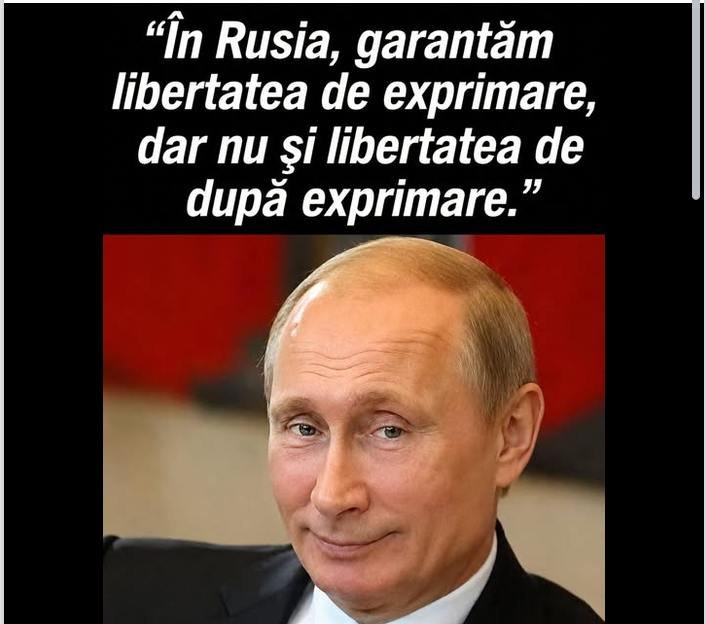
By sending the Red Army to invade Ukraine, Putin had crossed a red line.
The rest of the world noticed.

Some played possum. ‘Let’s stay out of it. And maybe, maybe, get something for ourselves’.
The majority said “No! This is too much.”

Russia does have veto-power in the UN Security Council. Hence the dead-lock.

The Biden led US and the EU had chosen to support Ukraine. And to sanction the Putin regime.

Every day, people are being killed. Soldiers on the front and civilians under aerial bombardment.
Reasonable individuals want the fighting to stop.

Easier said than done.
Putin might say: ‘My bad!’ and tell his soldiers to go home.
Ukraine might agree, on its own volition, with enough of Putin’s demands. And, hopefully, get at least a respite.
Or those helping Ukraine might say: ‘We had enough. From now on, you’re on your own.’

Putin is not yet ready to back off. Ukraine is not yet ready to cave in.
‘Somebody’ is getting ready to act as a mediator.

What are the immediate consequences?

Putin is back. No longer an outcast!

Is the rest of the world ready?
For it to go back? Back to what was going on before WWI but on a far wider scale?

Two things cannot exist
simultaneously
in the same place

Logic, ‘the correct way of thinking’, starts from the notion that no two things can exist, simultaneously, in the same ‘place’. Not even in our own head… Until they do, actually.

I’ll make a break here and tell you about Oscar Hoffman. A Romanian Teacher.
Who kept telling us, those who had the privilege to hear him teaching,
‘It’s not enough for a proposition to be valid from the logical point of view. It also has to make sense. Epistemologically speaking.’

The bottom part of the picture describes a stance which does make some epistemological sense and is seriously deficient when examined logically.
The top part is logically correct but also includes the meaning hidden in the bottom part.
Let me elaborate.

“100% irrefutable study that is proof and absolutely statistically significant.”
Absolute BS.
No scientific study has ever proved anything. Other than the facts examined confirm, or contradict, the hypothesis being tested during that study. Hence the hypothesis is allowed to stand, temporarily, as a theory or declared to be wrong.
A single study being claimed to be ‘absolutely statistically significant’ is so outrageous that it isn’t worth any comment.
“100% paid studies with an agenda and of little to no value or significance whatsoever”…
Nowadays 99.99% of the studies do involve money changing hands. Scientists have to eat and ‘money’ want to learn things. Hence ‘agendas’, on top of ‘money’.
‘Little to no value’ makes a lot less sense. If those studies yield results without any “value or significance whatsoever”, then why is any money involved and any time spent? To discuss about them, let alone to put them together….
To fit an agenda?
The scientists involved – all of them?!?, “100%” – are frauds and all those paying the hefty sums of money are suckers?
Then how can be explained the huge technological leap and the scientific breakthrough we currently witness?

‘Outlier’ versus ‘General trend’, is a far more ‘logically sound’. But also a lot more vague… The first proposition/picture, when examined with an open mind, does include everything claimed by the science deniers and the conspiracy speculationists. An outlier can be right, all change starts with one, and trends can be wrong. As all of them end up being…

So. What will it be?
Are we going to let ourselves be divided into warring camps?
Or understand ‘superposition’? Accept that having an agenda is not necessarily bad and that money is an excellent servant but a horrible master?
Or continue the current trend? Until we will have killed each-other along the line of divide et impera while repeating at nauseam ‘greed is good’?