Archives for category: politics

Karl Marx. The world is crooked – there is too much exploitation imposed by the haves upon the have-not’s – so it has to be righted by those who have the right answer to the problem. And because the world doesn’t know what’s good for it, the ‘enlightened’ – the communists who are at the forefront of the class struggle – have the duty to impose the revolution by force.
The crux of the ‘solution’ being the abolition of both private property and the state. The private property because it is the tool with which the haves dominate the have-not’s and the state because it is the tool used by the haves to protect their private property from the have-not’s who continuously try to steal it.
But what tool can be best used to enforce the dissolution of the private property and to insure that the misguided and the ill intended don’t revert to the ‘old and corrupt ways of the bourgeoisie’? The state, of course. Hence we’ll have to postpone a little its dissolution, only until the first chores would have been completed, of course.

Max Weber. The world is too complicated to be understood/run by a single man, no matter how capable. That’s why the decision making process must be rationalized. Weber’s main methodological tool was the ‘ideal type’, a mental construction that is to be substituted to replace the real problem that has to be solved or the real thing that is being studied. This ideal type being stripped of the ‘unimportant’ aspects of the reality will make it a lot easier for the ruler/decision maker/scientist to understand what is going on there and to come up with the ‘correct’ decision or ‘clear’ understanding of the matter. This means that Weber was convinced that individuals are able, in certain conditions, to reach valid conclusions. Which is, of course, OK. Furthermore Weber had ‘reached the conclusion’ that if larger problems are to be solved then the efforts of single individuals are not enough and that in order to fulfill this task in a satisfactory manner many rational decision makers (which have been properly trained in their strict domains) have to be inter-connected into a well structured ‘net’. This way the big problem will be sliced into more manageable sub-problems which will be analyzed by specialists and then the final solution will be re-assembled by people specially trained for exactly this task. Nowadays this entire concept is known as ‘bureaucracy‘. In theory it sounds right, doesn’t it? What could be better than an all encompassing net comprised of rational/professional decision makers who act according to a well considered and well intended ‘ideal type’? Whose ideal type? Good question, indeed. Just as good as ‘who and how trained the ‘decision makers’?’.
(There is something we must keep in mind when discussing Weber, as a person. He died relatively young, before having a chance to reach a ‘final conclusion’, or at least one to satisfy him. That also has to be the reason for which he hasn’t published much during his lifetime.)

Plato. Society (the city, the “Republic’) should be run by a specific kind of (dedicated) people and because “those with the philosopher’s natural abilities and with outstanding natures often get corrupted by a bad education and become outstandingly bad” this ‘special kind of people’ need to receive “the proper kind of education“. Meaning that ‘a true philosopher’ has to be versed in ‘the Forms of Good’, which are amply explained in ‘The Cave Allegory’.
The gist of the matter is two layered.
1. The reality is hidden behind some ‘veils’ (or in ‘shadows’ if you prefer the original metaphor) but properly trained professionals (the philosophers) can be taught to see what Plato describes as ‘the ultimate truth’.
2. These professional truth seekers have not only the right to lead the rest of the people ‘into the light’ but the obligation to do so! Furthermore, for Plato the ‘ideal political structure’ – the Republic – would be so organized as to ‘force’ into public duty those who have been specially ‘bred and trained’ to perform such duty:
“Observe, Glaucon, that there will be no injustice in compelling our philosophers to have a care and providence of others; we shall explain to them that in other States, men of their class are not obliged to share in the toils of politics: and this is reasonable, for they grow up at their own sweet will, and the government would rather not have them. Being self-taught, they cannot be expected to show any gratitude for a culture which they have never received. But we have brought you into the world to be rulers of the hive, kings of yourselves and of the other citizens, and have educated you far better and more perfectly than they have been educated, and you are better able to share in the double duty. Wherefore each of you, when his turn comes, must go down to the general underground abode, and get the habit of seeing in the dark. When you have acquired the habit, you will see ten thousand times better than the inhabitants of the cave, and you will know what the several images are, and what they represent, because you have seen the beautiful and just and good in their truth. And thus our State which is also yours will be a reality, and not a dream only, and will be administered in a spirit unlike that of other States, in which men fight with one another about shadows only and are distracted in the struggle for power, which in their eyes is a great good. Whereas the truth is that the State in which the rulers are most reluctant to govern is always the best and most quietly governed, and the State in which they are most eager, the worst.”

I believe that by now you have grasped where I’m headed to. There is not much difference between Marx and Plato and a very close relationship between these two and Weber. Still, the fact that Weber was not yet done thinking about this matter at the moment of his untimely death makes me believe that if he had some more time at his disposal he would have understood what Laozi taught us about the concept of “nonaction”:

And isn’t it very strange that the best (short) presentation I was able to find about Laozi is hosted by a site called “Plato.Stanford.edu”?

https://www.marxists.org/archive/marx/works/1848/communist-manifesto/
http://www.academia.edu/4192854/Weber_s_methodology_understanding_concept_of_ideal_type_as_necessary_element_of_Weberian_comprehensive_sociology_Working_paper_
http://www.cf.ac.uk/socsi/undergraduate/introsoc/weber12.html

http://www.historyguide.org/intellect/allegory.html
http://plato.stanford.edu/entries/laozi/
http://izquotes.com/quotes-pictures/quote-the-wicked-leader-is-he-who-the-people-despise-the-good-leader-is-he-who-the-people-revere-the-lao-tzu-188515.jpg

This was inspired by the title of a Facebook post that shared an article from The Telegraph.
The guys ‘in charge’ of Saudi Arabia must be in a terrible situation.
Punishing the guy according to their own laws will further the perception of Islam as a ‘violent religion’ and thus make it less acceptable for the rest of the world.
Not punishing him would mean tacit acceptance of the fact that laws are made and applied by humans, not by any God, thus totally demolishing the brand of legitimacy the Saudi’s have worked hard to build for themselves.
Terrible predicament. I suggest we allow them to settle this among themselves.
Blaming ‘Islam’ indiscriminately for some horrible acts perpetrated in its name by a bunch of zealots would make things worse for everybody. So yes, let’s ‘move along’!
What we can, and definitely should do, is to insist on the ‘humanitarian’ side of the whole business.
PS Here is an interesting article about Sharia: http://www.pewforum.org/2013/04/30/the-worlds-muslims-religion-politics-society-beliefs-about-sharia/

I started to comment on “The reason the economy crashed and has been slow to rebound is because of government intervention, not the market mechanism” by Nick Sorrentino and got carried away. So I transformed the comment into a post of my own.

I fully agree with your conclusion “I prefer an open sourced economy to one which is manipulated by programmers writing in a language which is full of bugs and which brings the system down periodically.” but I find your initial assumption to be too vague.
The current situation was indeed heavily influenced by government decisions. And yes, they were completely out of touch with reality – central planning never works.
But here is where our ways depart.
The solution for the current situation is not at all ‘less’ government. Or, god forbid, ‘no government’!.
Free market is the most efficient way of running an economy only it has two limitations. It is populated by people and the total amount of trade-able goods is limited. Hence the market is never really free. We do need a free market only the natural evolution of any limited system is to gradually loose it’s freedom. So it is us who have to guard the freedom of the market.
And this is what ‘government’ business should really be. Not to tell us what to do – to plan for all of us – but to make sure that nobody becomes so powerful as to be able to dictate to others what to do.

Some of you might wonder “Why should we not accept any monopoly if it has been ‘lifted to power by the free market'”?
I mentioned earlier that there is no such thing as a really free market.
OK, you might disagree with that, after all we both advocate freedom and I’ll use a reason we both agree upon: “central planning doesn’t work“. Ever! So why do you think that a private monopoly would be able to function any better than a public one? Just because it’s private? I assure you that Lenin saw the entire Russia as his back yard and that didn’t stop him from messing that country so big that it’s still reeling under the consequences. King George saw the American colonies as his private possessions and that didn’t make the early Americans any happier.
So what we have to implement is a completely different kind of government, not a weaker one. Blaming ‘the (notion of) government’ instead of specific government decisions only induces the impression that ‘government’ as a whole is useless/despicable and that drives people away from (the concept of) government.

What we really need, that different kind of government I was speaking about, is a government that is closely watched by the people and who jealously defends both the political and economic freedom of the individuals, not either notion of ‘central planning’ or ‘vested interests’ – which, in the end, are uncannily similar.

http://www.againstcronycapitalism.org/2015/01/the-reason-the-economy-crashed-and-has-been-slow-to-rebound-is-because-of-government-intervention-not-the-market-mechanism/

Vaccines work.
OK, there are exceptions. Some batches are botched, some people develop allergies, some viruses mutate so fast that in those cases vaccination isn’t very effective.
But as a principle vaccination works as intended.

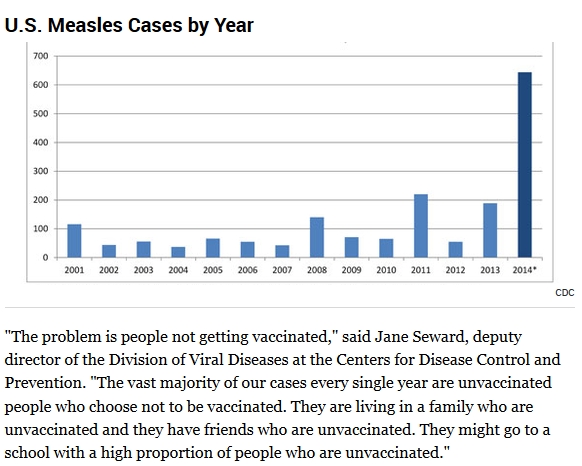
Despite all that, some people choose to deny their children the protection offered by vaccines, without any specific reason – such as an allergy or something similar. Just because they have heard that vaccination may cause autism. Or other equivalent baloney. Against advice vehemently pressed by most doctors.

As a consequence, people have re-started to die. After contracting perfectly preventable diseases.

vaccination

I have a rather ambivalent attitude towards Ayn Rand. I admire her razor sharp mind yet I find her a little too callous for my liking.

But sometimes it’s exactly this combination of traits that helps her pin point the essence of a situation:

http://www.theatlantic.com/health/archive/2015/01/the-new-measles/384738/

2014-12-19 fructe ciudate

Înțelepciunea populară spune că ‘peștele de la cap se-mpute dar se curăță de la coadă’.

OK. Se pare că noi aștia de la coadă ne-am cam săturat de ceea ce s-a tot întâmplat „sus la cap” și, de data asta, am ales altfel decât până acum.
Iohannis a înțeles ce așteptăm de la el și spune, cu subiect și predicat, ce este de făcut:

”Reconstrucţia clasei politice nu poate porni de la calcule de partid, de la distribuiri de funcţii şi de la calcule pentu următoarele alegeri.
.
Este nevoie de înţelegerea clară, la nivelul clasei poltice, a unui principiu: nu există altă şansă pentru România decît o ţară lipsită de corupţie. Mi-aş dori la finalul mandatului meu ca tema corupţiei să nu mai existe pe agenda publică. În cel mai scurt timp voi chema la consultări partidele politice pentru a discuta ce obiective de ţară ne asumăm şi pentru a stabili un calendar de lucru pentru a trece de la vorbe la fapte. Guvernele nu vor găsi niciodată bani pentru Educaţie şi Sănătate, dacă nu vor şti încotro merg şi unde vor să ajungă”

De acum încolo începe misiunea noastră. Noi suntem coada peștelui, noi trebuie să facem curat în jurul nostru.

Spor la treaba.

New York Times has published recently an article about various unexpected effects of automation. The way I see it the whole thing can be boiled down to:

“Artificial intelligence has become vastly more sophisticated in a short time, with machines now able to learn, not just follow programmed instructions, and to respond to human language and movement.

At the same time, the American work force has gained skills at a slower rate than in the past — and at a slower rate than in many other countries. Americans between the ages of 55 and 64 are among the most skilled in the world, according to a recent report from the Organization for Economic Cooperation and Development. Younger Americans are closer to average among the residents of rich countries, and below average by some measures.”

The point is that ‘classic’ automation freed the individual from the repetitive chores that transformed man into a machinery, as depicted by Chaplin in ‘Modern Times’, and allowed him to pursue more challenging/interesting ways to ‘make ends meet’. The current phenomenon turns the tide in exactly the opposite direction, demeaning the individual to the role of a ‘servant’ for the almighty machine. That’s why people become less and less skillful and, even worse, less and less proud about what they do for a living.

Dangerous situation.

‘We already know that, why are you bothering us?’

“labour-power can appear upon the market as a commodity, only if, and so far as, its possessor, the individual whose labour-power it is, offers it for sale, or sells it, as a commodity”

“labour is not a commodity”

OK, reconcile these two declarations… The first belongs to Marx himself while the second is an integral part of the 1944 Philadelphia Declaration made by the International Labor Organization… And if any of you has any doubts about the ILO thinking not being heavily tainted by Marxism please check this out: “the war against want requires to be carried on with unrelenting vigour within each nation, and by continuous and concerted international effort in which the representatives of workers and employers, enjoying equal status with those of governments, join with them in free discussion and democratic decision with a view to the promotion of the common welfare.” Not exactly the Communist Manifesto itself but too close to it for my comfort.

So is it or is it not?

No it isn’t. Not even Marx ever thought it was.

When Marx speaks of labor power as a commodity he only wants to demonstrate the need for the worker to be free in order for the system to function. For him this is the difference between feudalism – when the peasant (the worker of those times) was heavily dependent on the land owner – and capitalism – where the possesor of the labour power is free to sell ‘his commodity’ to the higher bider – is the existence of the free market where commodities – including ‘labour power’, which is traded as if it was a commodity – are exchanged. And the fact that the market is free also determines individual freedom of both the worker and the capitalist, seller and buyer of the labour power.

But this trading of labour power as if it was a commodity doesn’t transform it into a real commodity.

In fact labour is more a form of communication than anything else.
By labouring the worker transforms something into something else, usually in a way that is not so easily reproduced, not even for low skilled jobs. Had it been possible to automate the working process we would have used exclusively robots or morons. Do you really think a robot or a moron could flip burghers at McDonald’s? Are you sure you’d like that to happen?

Confused?
It’s not that complicated. Marx had an insight – that human history is nothing but the story of the individual man enjoing more and more autonomy – and then blew it. He took it upon himself not only to speed up the history of the mankind but also to lead us (even against our will) where he thought that we should finally arrive (communism). Rather arrogant, don’t you thing?
In time that arrogance seems to have mellowed somewhat (or became more conceited?) but it is still very much alive: ‘the war against want requires to be carried…to the promotion of the common welfare’….

What is that ‘the common welfare’? Can something like that ever be determined? Even in a ‘democratic’ way?!?

Had Marx refrained himself at studying the effects of increased individual autonomy on the workings of the human society he would have been considered the undisputed thinker of the second millennium and we’d have been sparred from witnessing (or experiencing) the horrors of communism…  I know, I know, counter-factual history is not acceptable… just saying…

I came across this extremely interesting article about Hitler being a socialist.

After making his point, impeccably, Daniel Hannan – the author – ends up with: “My beef with many (not all) Leftists is a simpler one. By refusing to return the compliment, by assuming a moral superiority, they make political dialogue almost impossible. Using the soubriquet “Right-wing” to mean “something undesirable” is a small but important example.”

To me this article is nothing but another reminder that the the only reasonable alternative to any extremism is the living center, not the dead opposite extremism.

Every time that the functional equilibrium between the content (because of their affluence, carelessness or both) and the strugglers (people who are on a constant quest for new solutions, irrespective of their motivation) has been breached things tended to become rather ugly before coming back towards normalcy.
Just compare how people around the Mediterranean sea used to live during the four centuries straddling AD 1 with what happened during the next millennium, otherwise known as the Dark Ages.
Why? Just because the Roman emperors used ‘panem et circensis’ as their main political concept and the population obliged. Until things went so far that the whole empire failed abysmally…
Same things happened before the French Revolution and before Lenin and Hitler came to power in Russia and Germany, respectively. Nowadays it is currently happening in Russia and the huge gap between the oligarchs and the modern muzhiks is the sole explanation I need for how come Putin has such a stronghold on the Russian people – he is keeping both categories happy by feeding their imagination with dreams about the Greater Russia and their bellies full with the money he gets from selling oil and natural gas.
For people on both sides of the political spectrum to restart a real dialogue all of them need to understand that the other side has legitimate concerns too.
Nowadays most on the left insist on ‘equality’ while most on the right speak of nothing but ‘individual freedom’. And both of them blame the state. The left accuses the government for not doing enough to promote the sacrosanct ‘equality’ while the right blames the state for infringing on the individual’s right to do whatever it wants…  As if equality (of chances) is in anyway different from individual freedom… As if authoritarianism could exist without the guys at the top enjoying a lot  more freedom than those at the bottom of the social ladder… As if functional social order could be maintained without people cooperating among themselves based on mutual respect, said cooperation  having evolved through time and currently reaching the modern form known as “the democratic state”…
I agree with concerned people on the both sides of the divide that the state could, and has indeed in more than one occasions, represent an extremely powerful repression tool in the hands of callous political operators but the answer to this is to make sure that the democratic mechanisms work smoothly, not to thoroughly dismantle the state itself….  Precisely because a skeleton state is a lot more easily highjacked by the ‘political thugs’ than one which has respected and balanced (hence functional) institutions in the right places.
Now please allow me to end my post by extending the invitation made by Daniel Hannan and urge you, all of you, to stop assuming ‘moral superiority’ based exclusively on ideological motives. Ideology is fine but we should never forget that it is nothing but a tool and it is us who do things and are responsible for both our deeds and our fate.
If ideology is diverse enough as to help us see how complex the world really is then we are better off because of it. If, instead, we use our diverse ideologies as filters to shun whatever ‘the others’ are trying to tell us… then it’s curtains for all of us, together at last… but not in the right place.
PS
To read the article – it is brilliant – you can either click on the yellow highlight near the top of my post or here: http://blogs.telegraph.co.uk/news/danielhannan/100260720/whenever-you-mention-fascisms-socialist-roots-left-wingers-become-incandescent-why/.

layered smoke screens

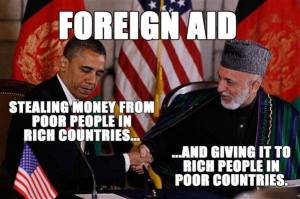
This post is not about Foreign aid per se but rather about how a generous idea becomes thwarted in the hands of some callous people who are left to their own devices by the public’s initial lassitude.
This is also about how the public’s justified frustration (after they had realized what was going on behind their backs) is misguided by the same kind of callous people like the ones who orchestrated the shenanigans in the first place.

Din punct de vedere pur tehnic ar fi posibil sa inhami caii si in spatele carutei.
Merge mai greu, e mult mai complicat sa iei curbele dar, una peste alta, daca cineva ar avea vre-un avantaj din chestia asta, sunt sigur ca si o asemeanea aiureala ar putea fi construita. Chiar daca foarte multi ar face pe ei de ras.

De vreo doua saptamani incoace ma mir continuu.
A fost un fel de cutremur politic iar cel considerat outsider a fost ales cu o majoritate covarsitoare.

Si de atunci incoace aproape toata lumea – majoritatea celor care se vad pe sticla sau isi fac simtita prezenta pe net – discuta despre orice altceva decat despre semnificatia acestui lucru.
Unii se plang, sau chiar isi pun cenusa in cap, pentru ca n-au reusit sa intuiasca/masoare ce avea sa se intample.
Altii analizeaza, in detaliu, cum se paruiesc cei din PSD.

Foarte putini spun, sau scriu, ceva despre situatia ‘macro’ care a produs circumstantele in care atat de multi oameni au iesit sa voteze, si nu oricum ci pentru a-si manifesta nemultumirea cu privire la directia in care mergea Romania.

Motivele sunt arhicunoscute. Oamenii s-au saturat sa tot treaca istoria pe langa ei – asa cum s-a intamplat in ultimii 25 de ani –  au inteles ca acest lucru se intampla si din cauza coruptiei aproape generalizata SI s-au hotarit in sfarsit sa faca ceva pe chestia asta. Si atunci de ce nu vorbeste nimeni serios despre chestia asta? Serios, adica nu la modul declarativ – asa cum a facut-o, de exemplu, Basescu.

Azi dimineata am inteles, in sfarsit.

Din cele mai vechi timpuri partidele au urmarit castigarea puterii politice pentru a putea astfel conduce, influenta, pentru a-si putea impune propriul program, propria viziune despre conducerea societatii

Si cum ‘scopul scuza mijloacele’ iar ‘hotul neprins e negustor cinstit’ nu mai conteaza cum castigi puterea politica cu conditia sa nu fii prins. De ‘oamenii legii’ sau de electorat, nu conteaza. Ce conteaza e ca tu sa ajungi la putere, sa-ti poti ‘impune propriul program’ fara ca ceilalti sa se prinda ca au fost trasi pe sfoara.
Ca se vor prinde peste vreo cativa ani, dupa ce tu ti-ai facut suma… asta e alta chestie. Daca la alegerile urmatoare nu mai reusesti sa repeti isprava – ai promis prea mult data trecuta sau te-ai compromis prea tare pe parcurs – te dai la o parte – elegant sau cu scandal, dupa cum ti-e felul – si te pregatesti pentru data viitoare.

Oare asta sa fie cu adevarat continutul conceptului de democratie?
Nu cumva e de fapt invers?
Mie mi se pare ca rolul functional al partidelor este, de fapt, de a identifica si concentra diversele alternative care devin posibile pe masura ce trece timpul, sa le articuleze in propuneri de actiune politica si sa le prezinte ‘in piata publica’, demosului. Acesta alege una dintre variante si partidul sau alianta care a propus respectiva varianta are la dispozitie o anumita perioada de timp sa puna acea varianta in aplicare. Adica alegatorii ‘impun’ viziunea lor asupra societatii si nu partidele….

Poate ca sunt eu naiv numai ca cea mai superficiala privire asupra istoriei ne spune ca Platon a gresit fundamental atunci cand a spus ca cel care a descoperit adevarul are nu doar dreptul ci chiar obligatia morala de a-i convinge si pe ceilalti sa accepte acel adevar.  (Platon, Mitul Pesterii.)
E foarte plastica toata descrierea lui cu peretele pe care joaca umbrele si foarte didactica metoda folosita – concluziile sunt trase, sau macar acceptate, de invatacel si nu predate didactic de magistru – dar asta nu reduce cu nimic mirarea cu privire la ‘ce il face pe cel iesit din pestera sa fie convins ca locul in care a ajuns nu este o pestera si mai mare’?
A, ‘mai mare si mai buna’ o sa spuna cineva!
Mai buna pentru cine? Daca lui i se pare asa asta nu inseamna ca este neaparat mai buna si pentru ceilalti!

‘Relativism absolut’, va fi concluzia aceluiasi ‘cineva’, ‘nu se poate sta de vorba cu el!’.

Pai da, asa au spus toti dictatorii. Stim noi mai bine decat supusii nostrii asa ca astia n-au decat sa asculte ce le spunem noi.

Daca ne uitam cu un pic mai multa atentie la istoria Greciei perioada lui Pericle – contemporanul lui Platon – o fi fost varful de glorie al Atenei democratice numai ca asta inseamna ca de acolo incoace Grecia nu a facut altceva decat sa decada!
Iar Pericle a fost doar primul dictator dintr-un sir care nici macar nu a fost prea lung. Transformarile pe care el, Pericle, le-a pus in practica aplicand invataturile lui Platon si transformand Atena dupa cum a considerat el ca era mai bine au pregatit locul pentru a fi cucerit de Filip al Doilea al Macedoniei. Acesta avea un fiu, Alexandru, exact asa cum Platon avea si el un elev, pe Aristotel. Si cum geniile se atrag Alexandru a fost elevul lui Aristotel si, banuiesc eu, a primit de la acesta cam acelasi gen de invatatura precum a primit Pericle de la Platon.

Asa ca Alexandru s-a pornit sa cucereasca lumea… si a murit, in culmea gloriei, de prea multa bautura. Iar Grecia nu a mai cunoscut o clipa de independenta pentru urmatoarele doua milenii. O fi bine, o fi rau…

Urmatorul imperiu, cel Roman, a inceput tot in mod democratic. Cata vreme a ramas democratic, sau macar a pastrat o aparenta democratica – adica pana la Cezar – s-a dezvoltat organic. Dupa ce capii ‘partidelor politice’ au inceput sa se razboiasca intre ei au mai construit intr-adevar niste palate si niste temple splendide dar imperiul in sine incepuse deja sa intre in declin.

De fapt intreaga istorie Europeana este dominata de aceasta constanta, atata vreme cat autonomia indivizilor este pastrata sau creste bunastarea intregii societati este prezervata sau se imbunatateste. In perioadele in care societatea isi ‘pierde vigilenta’, devine osificata se complace in situatia in care conducerea treburilor se face de la centru lucrurile se inrautatesc rapid iar citeodeata atat de tare incat este nevoie de cate o revolutie pentru a le repune pe fagas.

Secolul douazeci a cunoscut trei razboaie, mondiale, pe tema asta.
In WWI cele doua imperii central europene – Wilhelm al II-lea era Kaizer, adica imparat, exact acelasi titlu ca cel purtat de Franz Joseph, imparat al Austriei si rege al Ungariei – incercau sa supravietuiasca impotriva transformarilor ce aveau sa vina.
In WWII trei autoritarisme – German, Italian si Japonez – au incercat sa controleze cat mai mult din restul lumii.
In timpul celui de-al treilea, cunoscut indeobste sub numele de Razboiul Rece, un ‘lagar’ – care se alinta singur cu apelativul ‘socialist’ – a incercat sa puna in practica acelasi principiu al lui Platon – convinge-i cu forta ca ce le spui tu e mai bine pentru ei insisi, chiar daca lor nu le vine sa creada – camuflat de data asta sub forma invataturilor lui Marx.In prezent, la inceputul secolului XXI, ne pregatim de un nou razboi ‘aproape rece’ si de un altul cat se poate de cald iar toate astea se intampla tot din cauza ca unii se incapataneaza sa creada ca ‘stiu ei mai bine’.

Acum intelegeti de ce spun ca ne chinuim sa punem in miscare o caruta la care caii au fost inhamati invers?
Procesul democratic nu este despre a castiga puterea cu orice pret pentru ca apoi sa iti impui viziunea ta asupra societatii.
Mai devreme sau mai tarziu oamenii isi vor da seama ca au fost pacaliti si se vor ‘razbuna’. Nu cred ca un sir de razbunari duce la un rezultat cat de cat multumitor.

Cred ca a venit momentul sa meditam mai degraba la ce greselile au fost comise si la cum putem readuce lucrurile pe un fagas functional in loc sa ne mangaiem pe cap cu pe vot normal, Victor Ponta era preşedintele României astăzi.” (Gheorghe Nichita, RFI)
Iar primul lucru pe care trebuie sa facem este sa intelegem o data este ca nu politicienii stabilesc ce e normal sau nu.
Ei doar trebuie sa puna in practica normalul pe care poporul il considera potrivit intr-o anumita situatie. Altfel dam in totalitarism iar de acolo pana la prabusire nu mai este decat un pas.