Archives for category: man as a measure for all things

“Twelve-year-old Carly Nix of Lakeland
says breaking the wishbone from the turkey is a silly tradition,
but that won’t hold her back from testing her luck this year.”
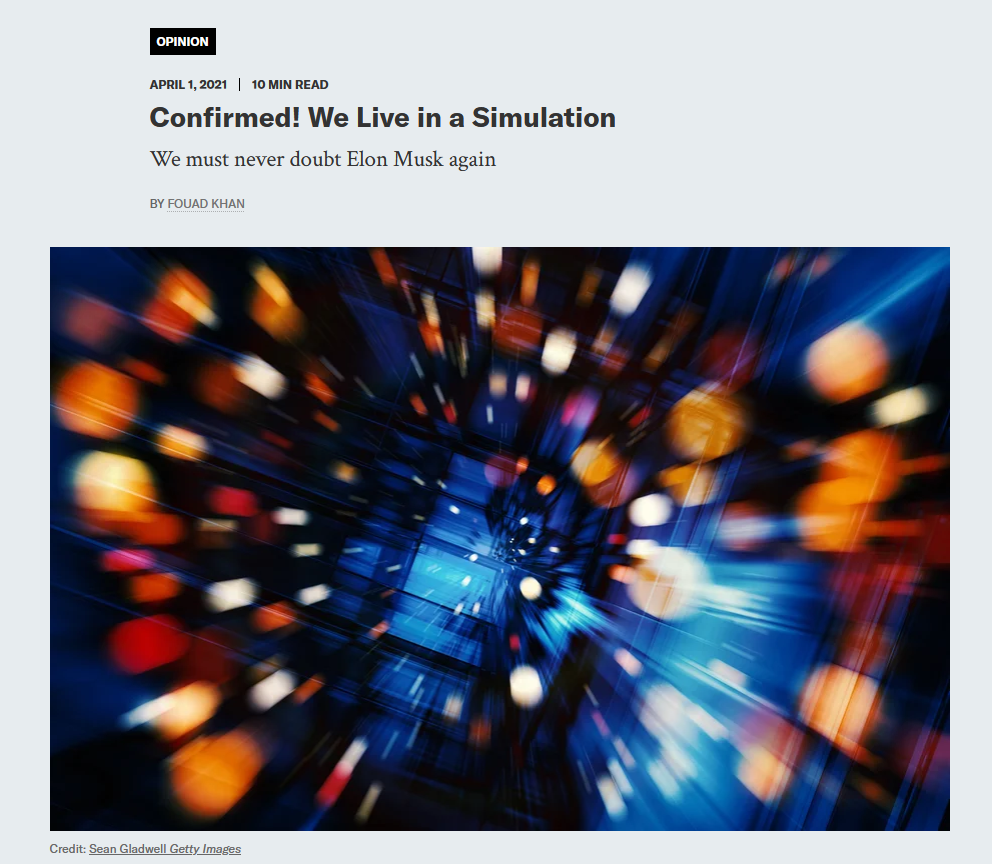
I have to start by confessing that until yesterday evening I’ve never seriously considered this possibility.
Why would anyone bother?

Then somebody – thank you, Jeffrey Mercer – introduced a whole new twist into this conundrum.
‘What if this whole (computer) simulation thing is nothing but yet another attempt to make sense of the Universe?
To attribute sense to the Universe?
Which whole thing, if anything, is the epitome of anthropomorphism…’
I took the liberty to rephrase Jeffrey Mercer’s words. To make them more ‘suitable’.
To fit better my preexisting answer. Yet another ‘anthropomorphic’ thing….

My immediate answer was ‘our world is indeed a simulation. Or maybe not as much a simulation as an artifact.’

Before delving into the matter, I’m going to formulate two questions. Hence ‘the furcula’.
If we live in a simulation, what kind of world does the simulator live in?
Why would anyone bother? To study us responding to its simulating our senses/minds? Why doesn’t it study itself? Its own self/persona?

Coming back to my initial answer, I have to point out that the key word here is ‘our’.
We’re speaking here about ‘our world’. The world we live in. Our reality!

We, the ones trying to make sense of this world/reality, have a few characteristics.
We’re made of matter and we have, each of us, a conscience.
Having a material nature introduces certain limitations and being conscious widens those limitations.
Us being conscious widens those limitations, by introducing a ‘new dimension’, but this doesn’t mean those limitations disappear. A bucket is ‘wider’ than the circle at its base – the bucket has height, hence volume, while the circle is ‘flat’ – but the bucket itself continues to have limits.

Let’s examine the consequences of us being conscious agents of a material nature.
Limited conscious agents of a material nature…

Us being conscious means us being aware of our material nature. Of our limits.
Having a material nature means the most powerful instinct we have is our ‘need to survive’.
Both as a biological organism – a.k.a. animal – and as a conscious agent.

Our consciences – I’m speaking about the individual ones here – are very crafty ‘devils’. They can accept our individual material fate – death – but have a problem accepting their own dependency on the ‘bodies/brains’ they need to inhabit.
Hence ‘the soul’.

Which ‘soul’ has been invented – by our conscious selves – as the first step towards building a sense for this world. For the reality we inhabit.
Which soul is the building block for all religion. For all religion known/built to/by man.

Are you still here?
I have to make a pause here. And to mention the fact that I’ve already cut a few corners… A lot of corners… What I say is probably rather hard to follow. Mostly because I don’t have time/space to explain myself. Not now but certainly in due time.

And yes, what we call ‘religion’ is of our own doing.
The Bible itself has been written by us, regardless of the origin of the ideas mentioned there.
It doesn’t matter whether we have been the interface between (a) God and ‘the world’, we are the ones who have written the Bible. And all other sacred texts.
We have written them, we have believed in them and we have shaped the reality we live in.

We have done all that according to how we have interpreted the teachings we have inherited from our forefathers.
And we continue to.
Even those of us who consider themselves to be ‘free of religion’. We might not believe but we continue to act as if. Believers and nonbelievers alike hold the same things as being valid. Don’t kill, don’t steal, respect the values which keep society together…

What about where we started from? What about the ‘original’ simulation?

One moment please, I haven’t yet finished with ‘God’.
If (a) God made us who/what we are, then who made God?

If someone took the trouble to build the simulation we consider to be ‘home’, what about the ‘real’ world? What about the reality harboring the simulating agent?

There’s no need for an outside agent?
The world we live in, our world, is the world we have built for ourselves? Using the things which were at our disposal and the information we have gleaned about how things work?
Maybe not always fully aware of what we were doing?

You got it! That’s exactly what I was trying to say!

If you’re still interested:

Are you living in a computer simulation by Nick Bostrom

Confirmed! We live in a simulation. by Fouad Khan

Of course we live in a simulation by Jason Kehe

“Only in silence the word,
Only in dark the light,
Only in dying life:
Bright the hawk’s flight
On the empty sky.”

Ursula K. Le Guin

4,000 years ago.
An alien probe examines the Earth and determines there are two ‘species of interest’ on the planet.
‘Interesting’ in the sense that both had already discovered ‘exploitation’.
Ants farming aphids and humans farming sheep.

4.0 seconds ago.
The same alien probe checks back and determines that both ants and humans continue their respective farming activities. The only difference between now and then being the scale of the respective operations.
And the consequences to the environment…

The probe is a robot. Which robot has no feelings. Doesn’t care. Does what it has been instructed to do and that’s it.
The data is being transmitted to those who had commissioned the robot.

‘The ants are practically the same. Individuals transported through time would fit perfectly in either situation.
The humans have evolved in a certain manner. They live longer – on average. They have thoroughly transformed much of their environment. But they have maintained the ability to survive in either situation. To thrive, even, if the individuals are transported through time very soon after birth – and if they are well taken care off at the receiving end of the journey’.

The received data is deemed ‘baffling’ by the agents whose job is to make sense of it. To analyze it.
To determine whether each planet checked by the probe was inhabited by a potentially autonomous species. In which case the planet was deemed ‘off limits’.
Or not, hence open for colonization.

The procedure to determine the outcome is simple.
Is there at least a species which evolves faster than the rest? Is there at least a species concerned with the well being of the environment it depends upon?
If only the first condition is met, the planet is scheduled to be checked again later.
If both conditions are met, the planet is considered off limits.
If none are met, the planet is considered ‘open for business’.

The present situation is unprecedented.
During their entire recorded history, this is the first time the analyzing agents have come across such an occurrence. An intelligent species who has achieved so much yet still remain driven by desire. By emotion.

A species perfectly capable of thinking yet still prone to judging.
A species comprised of individuals who consider perfectly acceptable to rationalize their own wishes while entertaining a low opinion on others who do the very same thing. Find excuses for indulging.

This find generates an ontological storm among the analyzing agents.
Being the first time when they no longer have a complete grasp on what’s going on, this whole thing compels them to reconsider.

To reconsider everything.

Segue

A small gap rests between the two fingers
as the most important moment in human history is about to happen
– God making contact with the first person.

I’ve been struggling for a while to understand why God is still relevant for us.
Why so many of us continue to believe in him and why so many of us struggle to demonstrate he doesn’t exist.
Why so many of those convinced he doesn’t exist blame him for so many of our own follies…

Because we’re ‘escape artists’!

So many of us continue to smoke.
Since not everybody who smokes develops a cancer or dies of COPD – Chronic Obstrusive Pulmonary Disease, those addicted to nicotine find ways to rationalize their habit. For it’s simpler for them to hope they are among the lucky ones than to accept the fact that they’ve acted foolishly for so long. I know what I’m talking about, I’m one of these people.

Similarly, it’s a lot simpler to use God as a scapegoat than to accept full responsibility for your destiny.
The less control/resources you have, the simpler it is to ask for God’s help. To lay your fate in his hands.

‘He must have had his reasons.
The fact that I don’t know what they are doesn’t change anything.
He’s in charge, I can do nothing but accept my fate!’

Same thing for the disbelievers.
It’s simpler to blame (a) God, or (a) religion for aberrant/abhorrent behavior than to accept that human beings can be manipulated – in certain conditions – into such behavior. Into such inhuman behavior.

‘If they could have been manipulated in such a manner then I might be manipulated in the same manner.
This is not acceptable.
It’s their God/religion which is at fault. Something like this cannot happen to me.
I don’t belong to any religion – or to a different one, so I’m immune to all this.’

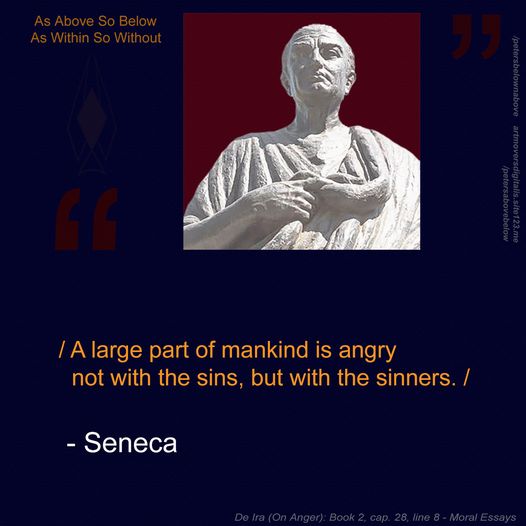
The key word here is ‘anger’.

Had we been less angry, maybe our reaction would have been more ‘efficient’.

Instead of being angry with the sinners, we could try to convince them. Those of them who can be convinced…

After all, a sin is but a possibility. An ‘opportunity’, not a fatality.

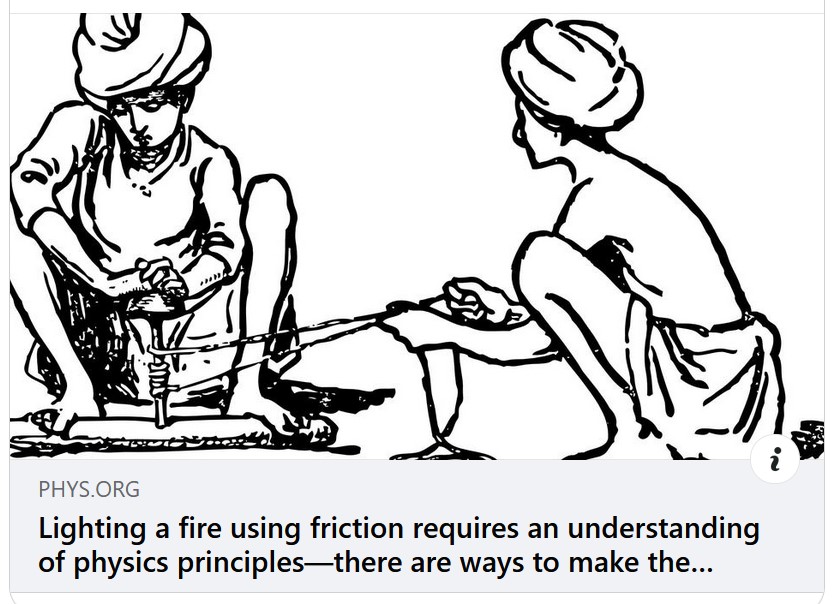
Does it really require an understanding of the principles?

Very good question!

Maybe not.
If all you want to do is to light a fire using the same kind of implements as those gifted to you by your teacher … then no. All you have to do is to remember how to build a new set of implements when the old one is gone and follow the instructions. To a T.

But if you want to make one step forward… to improve the implements… to rise to the next level…

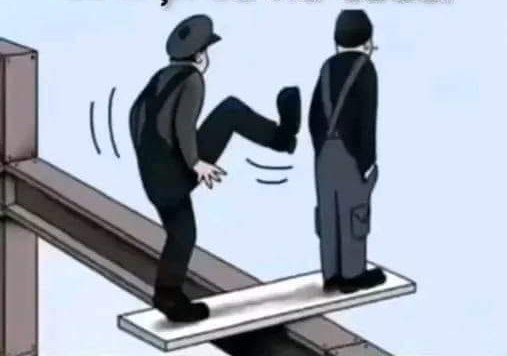
I’m afraid hating the flag doesn’t solve anything. Precisely because it’s an inanimate object!

How about making good use of the successfully defended rights and convince the others that putting the poor guy in harm’s way wasn’t a good idea in the first place?

But in order to be heard, one needs to keep the conversation going!
One needs to be perceived as caring and respectful by the intended audience…

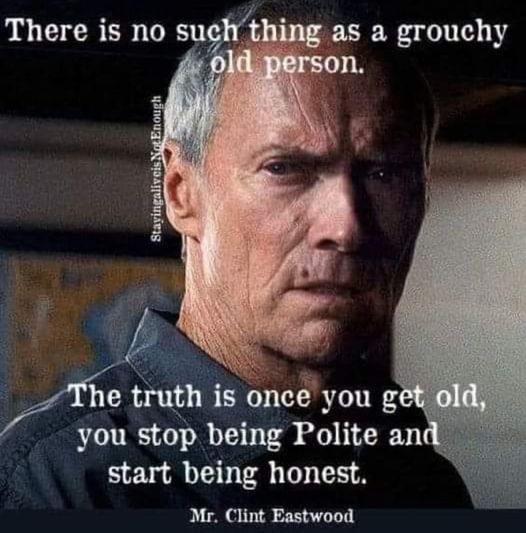
Well, from where I stand – 62 years and counting – ‘grouchy’ starts when people forget that truth – even the naked one – can be ‘exposed’ in a polite manner.

Becoming old doesn’t come with a license to stop caring about how the others feel about things.
On the contrary.
At some moment in time, each of us will reach ‘the point of no return’. After which we’ll depend on others. Totally!
For food, for water, for somebody to change our diapers…

After all, we’ve been lucky enough to reach the ‘golden age’.
How about becoming wise instead of devolving into rude punks?

‘Cause the opposite of polite is being rude. Not truthful!

Because neither has any damns to give…

They call it Cuetlaxochitl.
They used to call it that way for a very long time.
And it was they who had associated it with the Winter solstice. With the Winter solstice, not the ‘Aztec’ solstice…

We, or rather I, don’t know how they used to call the mistletoe. All I know is they used to associate it with their ‘spells’. Performed, again, during the Winter solstice.

At some point, we – or rather after the Christians got in contact them, the mistletoe first and poinsettia later – have associated both with our manner of celebrating the Winter solstice.

In fact, we have appropriated both the celebration itself and the plants associated with it!

I’m not going to discuss whether this was a good or a bad thing.
It had just happened. And we have to live with the consequences of all those things having had happened in the past.

All I’m going to discuss in this post is their association with Christmas.
With what the Christians consider to be ‘Christmas’ and celebrate it as such.

But is there anything to be discussed about the matter?!?

They have associated each of these plants to their celebrations.
We have associated both to one of ours.
What is to be discussed here?!?

Do we feel bad for what we – our ancestors, actually – have done to them?
And want to atone for what had happened? And for the consequences of what had happened? Which consequences continue to unfold to this day…

We want to make amends – and to get rid of our guilt – by giving them back their plants?!?
Really?

How will any of this benefit them?!?
‘Cause this is about them, not us… right?

How about we stop buying the drugs coming from there?
Making it possible for them to shake off the drug lords which make their lives miserable?

How about we stop patronizing them?
How about we start respecting them for being our ‘brethren’? As in equally-fledged human beings?
Instead of we acting as if they were immature children. Liable to feel hurt that we have borrowed their ‘toys’…. For the sole reason that we think that giving them back their ‘sacred’ plants will cleanse our consciences….

The world doesn’t belong to leaders.
The world belongs to Humanity.

Proper = As it should be. As expected. ‘Clean’.
Property=Something which belongs to someone.
A mutually respected arrangement among the members a certain community which establishes boundaries. Which members have the right to go ‘there’ whenever they want while all others have to ask for permission before crossing that ‘boundary’.
A convention among the members of a certain community about what is the proper thing to do in each ‘patrimonial’ situation. A convention about who has the right to do what to the things which happen to co-exist with the members of the above mentioned community.
The above mentioned ‘things’ include the place where the entire community happens to live. ‘Their’ land.

Which brings us to who owns the world.
The leaders? As many of them assume?
Or the humanity, as Dalai Lama has reportedly said?

How about neither?
My point being that we are nothing but guests in this world.
We come empty handed and we leave empty handed.

Yes, we need property while dwelling on this planet.
But only in the sense of who can do what where. And with the limitation that the ‘what’ we do has to be ‘reversible’.
Just as we leave this world with nothing – we leave even our hands here, our presence on the planet has to be ‘discrete’. Has to produce as little disturbance as possible and all that disturbance must disappear in time.

We need to keep the world a proper place.
It’s the only place we have.
No other home for our children.
No other place to spend our last days.
Properly.

“If the only tool you have is a hammer,
you tend to see every problem as a nail.”
Abraham Maslow

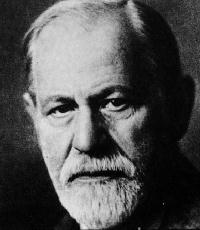
Did you recognize him?
Yes, Sigmund Freud. Dr. Sigmund Freud, as depicted on http://www.marxists.org.

“While the different religions wrangle with one another as to which of them is in possession of the truth, in our view the truth of religion may be altogether disregarded.
Religion is an attempt to get control over the sensory world, in which we are placed, by means of the wish-world, which we have developed inside us as a result of biological and psychological necessities.
But it cannot achieve its end.
Its doctrines carry with them the stamp of the times in which they originated, the ignorant childhood days of the human race. Its consolations deserve no trust. Experience teaches us that the world is not a nursery.
The ethical commands, to which religion seeks to lend its weight, require some other foundations instead, for human society cannot do without them, and it is dangerous to link up obedience to them with religious belief.
If one attempts to assign to religion its place in man’s evolution, it seems not so much to be a lasting acquisition, as a parallel to the neurosis which the civilized individual must pass through on his way from childhood to maturity.”
[Sigmund Freud, “Moses and Monotheism”, 1932]

No, I’m not going to argue with Freud.
I’m not going to compare his opinion on religion with that of Durkheim. Which makes more sense to me. You may find them here, at #e., and compare them yourself. If you wish, of course.

What I’m trying to point out in this post is that reason is over-rated.
That reason is an extremely powerful tool but, like all other tools, the consequences of yielding it depend on the yielder.
On the person using reason in order to get somewhere.
To find the intended meaning…

Which is?