Archives for category: evolution

Living organisms constantly exchange information with their environment.

Then where is the difference between ‘us’ and the rest of the living creatures?
Information-wise, of course!

Language…

As far as we know, humans are the only critters currently living on Earth which are interested in how other creatures learn. Or teach…

An individual actor A can be said to teach if it modifies its behavior only in the presence of a naive observer, B, at some cost or at least without obtaining an immediate benefit for itself. A’ behavior thereby encourages or punishes B’s behavior, or provide B with experience, or sets an example for B. As a result, B acquires knowledge or learns a skill earlier in life or more rapidly or efficiently that might otherwise do, or that it would not learn at all.” Caro and Hauser, 1992

In the 20 odd years since Caro and Hauser have set the bar for what teaching means quite a number of species have been found to do it. To fully or at least suggestively cross all the necessary t-s. From ants to primates.

Interestingly enough, all of those species have a clear ‘collective’ behavior.
All individuals belonging to a species collaborate, of sorts, towards the survival of that species. This goes without saying.
But in some species this collaboration is more intense than in others.
Ants and bees versus most other insects.
Elephants versus cheetahs. Or leopards.
Even chimpanzees versus orangutans…

OK, for some species hand to hand collaboration between generations is impossible. Most parent insects are dead when their offspring hatch. Orangutans live in forests where food is too scarce for more than 1 individual to forage.
Others have found their niches. Where the individual approach is good enough for them to survive. Cheetahs, leopards. Bears, even…

Charles Darwin taught us about evolution. Merging individual lives into the survival of the species those individuals belong to.

Life, as I see it from a “functional and mechanistic perspective“, is yet another manner in which matter is organized. Yet another ‘state of matter‘.
For life to be present, three conditions have to be met.
– Individual organisms have to be exchanging, in a controlled manner, substances with their environment. To ingest nutrients and to excrete the by-products of their metabolism.
– Individual organisms have to be exchanging information with their environment. And with their interior. Otherwise the exchange of substances would no longer be controlled by the individuals.
– Individual organisms have be passing to the next generation the pertinent information needed for the species to survive. In the kind of life we are familiar with, that would be ‘the genetic information’.

Considering the above, I dare to make a difference between what Caro and Hauser consider to be teaching and what we, humans, do.
Intent!

I doubt that any of the ‘animal teachers’ do it under their own volition.
After all, nobody has yet identified an animal con-artist who cons the members of their own species… as we do!
As far as we currently know, ‘teaching behavior’ is displayed inside species which collaborate more closely than other species. Which suggests that that kind of behavior is somehow innate to those species. A ‘habit’, not a choice. As it is with us.

What makes it possible? This difference?
Our special kind of conscience and our use of language.
The fact that we are the only species – as far as we know – capable of building a ‘virtual image’ of the surrounding reality. Capable to select certain aspects of what surrounds us and codify them using various forms of ‘notation’.
And to do this according to our own, individual, interests!
Sometimes even against the interests of the community/species to which we belong.

“If the only tool you have is a hammer,
you tend to see every problem as a nail”

Abraham Maslow

“The answer: Free market capitalism”?!?

I was arguing in the previous post that we think using images stored in our memory. While we are convinced that we deal with real ‘objects’… ‘Hammers’ versus ‘nails’…

As you should have already noticed, Abraham Maslow had said more or less the same thing sometimes in the first half of the previous century… Well, he was a ‘clinical’ psychologist while I’m nothing more than an engineer. He was interested in how our mind works, I’m interested in the consequences of how our minds work. If you understand what I mean…

‘And what about the pretext you used for today’s post?’

Free market capitalism is nothing but an environment. Man made, for sure, but also ‘natural’. As in ‘evolved’ to the present state as opposed to ‘designed’ in the present state.
Free market capitalism doesn’t do/cause anything. People toiling in this environment do whatever happens here.

Gravity doesn’t cause any falls.

Gravity pulls us, all of us, towards the center of the Earth.
Regardless.
Of us walking sober in the middle of the town versus skating ‘under the influence’ on a thin iced lake in the middle of nowhere.

The resistance that had been everywhere at first faded as the years went on.
The spectacles were exciting. Being amid the crowds was exciting.
The certainty, the unity—the pleasure in being superior to the scorned minority,
as well as the Dostoevskyan pleasure in overthrowing everything
—was exactly what had been missed.
Politicians, business leaders and others who should have known better
—and some who later deeply regretted it—drifted to his side, quietly,
often one by one, drawn by the thrill of power, plus the useful patronage it could give.
There also was the pleasure, relief, in not being targeted themselves.
David Bodanis, The Art of Fairness: The Power of Decency in a World Turned Mean (2021)

Life, in general, is about species evolving in a given set of circumstances. If the circumstances allow it, live will appear. And survive for as long as the circumstances remain livable. We must keep in mind that life changes the environment in which it evolves.
Social life, the human kind in particular, is about cultural species evolving in given sets of circumstances. For as long as the circumstances remain livable, cultural species will continue to evolve. To put their culture to work and to build civilizations. Each set of circumstances influencing both the culture which inhabits the circumstances and the civilization being built there.

Currently, there are three main categories of cultures. Imperial, democratic and incomplete.

I will start by noting that those cultures which are ‘incomplete’ have remained so because they didn’t have enough time to make ‘full use’ of the limited resources they had at their disposal.
The difference between the imperial and the democratic cultures being the fact that the imperial ones stagnate as soon as they reach a certain level of development while the democratic ones continue to evolve for as long as they manage to remain democratic. To retain their ability to change as soon and as far as they need in order to survive. To maintain their democratic character.

Need proof?
Are you familiar with any empire which had lasted for long?
The Egyptian? 33 dynasties covering 3 millennia? Is that long enough for you?
Well, not so fast. ’33 dynasties’ actually means 33 different empires. It was very seldom that a dynasty ended when/because there was no available successor… Most dynasties were removed from power rather than petered out. And, nevertheless, who cares about why a certain dynasty was replaced by the next one?!? The simple fact that it was replaced is enough for me. The replaced dynasty was no longer able to cope! Hence it had to make place for the next one. Another set of decision makers, naturally following a (however slightly) different mantra.

Don’t believe me? Consider any other empire. Evaluate the duration for which each dynasty had managed to hold the helm. And compare it with the fact that the Roman Republic had survived, as a functional democracy, for almost 5 centuries.

And no, Europe isn’t the only place where democratic forms of self-rule had happened during human history. Kurultai, Loya-Jirga… The mere existence of the concepts is proof enough for the budding democracies which might have developed in those places, given enough time and resources.

Then, if democracy is so much ‘better’ – as in more helpful towards the survival of a certain set of mores/culture – then why is it so ‘scarce’?

Well, for democracy to remain functional, at least some wise men need to remain both strong and focused on the job at hand. Otherwise, the helm will be confiscated by the would be strong but not so wise….

And why is it that good times tend to make weak people?
First of all, good times tend to weaken ‘the people’. Not as much to weaken the individuals living a good life as to make them careless. To take the good times for granted. To convince them that ‘times’ will continue to remain good regardless…..

Not having to struggle for their day to day existence tends to make ‘some of the wisest, happiest, and most peaceful men and women to spend much of their time alone at home, steering clear of UNNECESSARY drama, negativity and chaos’.

This being how successful democracies sometimes succumb to tyranny and how empires eventually crumble under their own weight.

And the LORD God said,
Behold,
the man is become as one of us,
to know good and evil:

We live in a world of our own making.
We build it by talking ourselves into shaping it one way or another.
If not careful, we end up building a lie!

Competition has nothing to do with what’s going on in the jungle!

The jungle is about eat or be eaten!
Competition is about rules. Follow the rule or you’re kicked out before you get to the end!
The competition stops being true the moment you break the rule and your co-competitors do not throw you out.
By not throwing you out, those in attendance have just transformed that particular pitch into a jungle!

Cooperation is the law of the civilization!
This part is true. But incomplete!
As I explained before, to compete implies to cooperate. Those involved in a competition want to know who amongst them is better in a particular field. And COOPERATE in order to find that answer. By doing that they also build what we currently call ‘civilization’.

Kropotkin might be forgiven for what he had said.
He didn’t get to witness the Chinese Cultural Revolution. That was the true pinnacle of ‘cooperation’! Not civilized by any measure…

We really need to be more careful with words.
With what we say and with what we end up holding to be true!

It’s one thing to be able to see white from black.
And a lot more complicated to see black and white…

Being reasonable means listening to what the world has to say about things.
Being reasonable means being open minded.

Being rational means balancing your means with your wishes.
Being rational means actively identifying resources which might help you attain your goals and the pitfalls you need to avoid.

Being reasonable means choosing goals which ‘do not disturb’.
Being rational means transforming things into what they should be. Into what you think they should be…

Being reasonable means getting along.
Being rational means going alone.

Being reasonable means trying to get all in.
Being rational means being able to get to the bottom of it.

The point being that evolution is about the species, not about the individual.
And this point can be made out but individually…

And the LORD God said,
Behold, the man is become as one of Us,
to know good and evil;
and now, lest he put forth his hand,
and take also of the tree of life,
and eat, and live for ever.

“And the LORD God called unto Adam, and said unto him, Where art thou?

Adam called back and we all what happened next.

The serpent was cursed for his role, Eve was cursed for tempting Adam and Adam was cursed for….
In the end, all those involved – including the serpent, for whatever reason – were banished from the heaven. “Lest he put forth his hand…”

What are we to understand from all this?
That God, the omniscient and all powerful Father, was ‘evil’?
He must have known what was going to happen… he was omniscient, wasn’t he?

There are people who believe the Bible to be an accurate rendering of the past.
I happen to be one of them.
Only I don’t interpret what I read in the literal sense… the narrative is true, those things did happen, only not in the ‘real’ world. The Bible is not the story of flesh but a story of mind.

It is the story of what has happened in our minds. In our collective mind!

Genesis is the story of how we’ve grown conscious!
Starting from the sensations perceived during our interaction with the ‘real’ world – read ‘serpent’ – and using the evolutionary accrued ability to speak among ourselves – we’ve learned to identify ‘information’.
We, like all other living things, were already able to make the difference between good and ‘bad’. All living things ‘know’ what’s good for them and what to avoid. Or, at least, act as if…
We, like all other primates and along many other animals, were already adept at ‘reading minds’. Were already able to figure out intentions.
As conscious ‘human beings’ we have started to attribute intent! “To know good and EVIL”!

So evil is of a conscious nature, right?

‘How about ‘God’? Is it real?’

Sorry, I don’t have a reasonable answer for this question.
All I know is that the God so many of us believe in is nothing but a representation.
A figment of our collective imagination. And since we cannot imagine things but starting from the real world, there is a strong possibility that there is something, somewhere, which fits, however loosely, our concept. Our concept of a God…

Humberto Maturana, The origin and conservation of Self
https://constructivist.info/radical/pub/hvf/papers/maturana05selfconsciousness.html
Frans de Waal, Are we smart enough to know how smart animals are?
https://www.goodreads.com/book/show/30231743-are-we-smart-enough-to-know-how-smart-animals-are

“Intelligence is the ability to think, reason, and understand
instead of doing things automatically or by instinct.

Nerve cells, after all, do not have intelligence of their own.

Theoretically, we do have a certain understanding regarding the thing we call ‘intelligence’. After all, there are some dictionary entries discussing the matter.
But when it comes to measuring the said intelligence… nothing is straightforward anymore. So we still have a lot to learn about the thing. About our ability to understand, after all… About our ability to understand, period, including our own intelligence.

Click the picture above and read the article. It is interesting. The most interesting part being what it misses.

The first really intelligent computer application put together by man was the one who defeated Garry Kasparov.
Has anyone been invited to play chess by an application?
Is anybody aware of any chess or go application who had any initiative? Meaningful initiative? Other than making this or that move only AFTER a human had initiated the game?

What are we discussing here?
The intelligence level of any of the many, present or future, artificial intelligence applications or their ability to become aware? Aware of anything…

Furthermore, when we discuss whether AI, ANI, AGI or even ASI would erase humankind from the face of the Earth… nobody has yet mentioned us. After all, we are the ones building the applications. The computers on which we run the applications…
Instead of worrying whether any of the AI versions would do anything to us, we should worry about what some of us will do after they will have laid their hands on a really powerful AI application!

“There’s going to be things we do and the superintelligences just get fed up with the fact that we’re so incompetent and just replace us.”
Nearly 10 years ago, Elon Musk, founder of SpaceX and CEO of Tesla Motors, told American astrophysicist Neil deGrasse Tyson that he believes AI will domesticate humans like pets.
Hinton ventures that we’ll be kept in the same way we keep tigers around.
“I don’t see why they wouldn’t. But we’re not going to control things anymore,” he said.
 “

It’s the ‘vengeance’ part which spoils the whole thing.

Evil is to be resisted, of course, only this is better done in a sustainable manner.

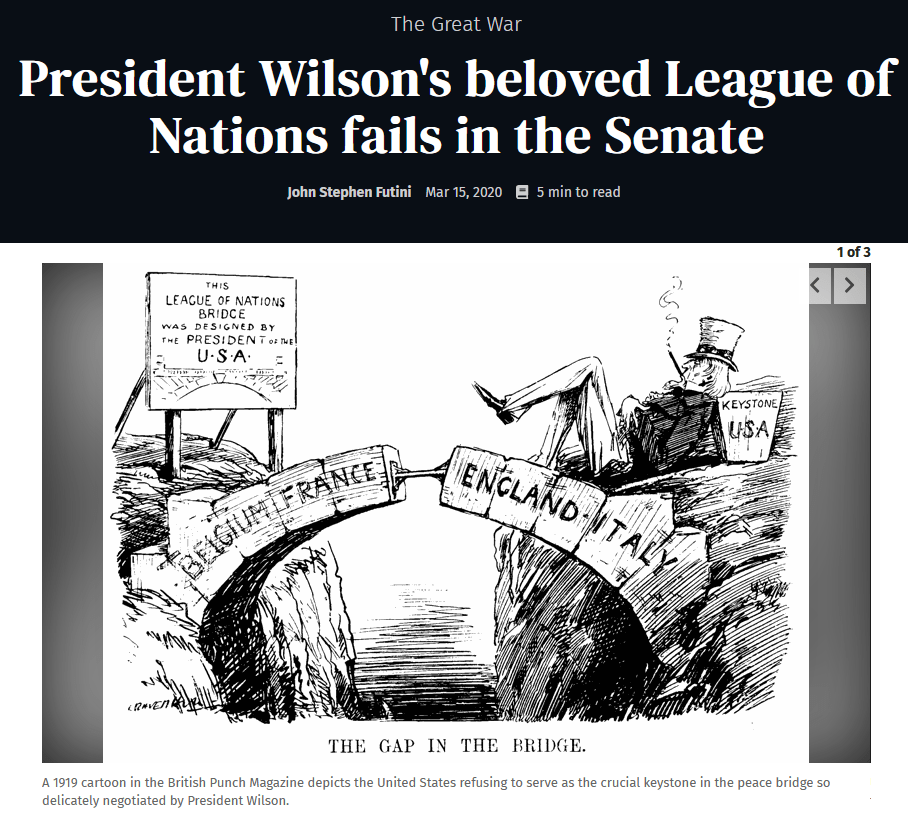
WWI was won for nothing. The vengeance part in the Versailles ‘peace process’ had spoiled the whole thing.
Hence the war had to be won again.
During the process, the winners had become wiser. Some of them, at least.
The peace process had been inclusive this time.
The North Atlantic region, the end result of that peace process – no scare marks needed this time, is one the most successful stories of human development.

There’re no blinder people
than those who don’t want to see…

Attempting to determine who ‘made that’ is similar to trying to find out which came first.
The chicken or the egg…
As if one was possible without the other…

Yeah, it’s labor which makes each thing.
And it’s capitalism which makes things possible…

Capitalism is a setting. A way of doing business.
Labor is a process. Through which some things – ideas included – are transformed into solutions.

If you want to plant a tree, you have to dig a hole.
If there was no shovel around – no capital available – you’d have to dig the hole using your bare hands. And dig the sapling out from the forest. Still bare handed.
If you happen to live in a capitalist setting – you may borrow a shovel and a sapling, if you didn’t have them already. And start an orchard.

The interest is too high? Capital has become too concentrated/expensive?
It happens from time to time. Usually just before a major crises.

Is there anything that might be done? To mitigate this boo-bust cycle?
Make sure the market remains actually free. That no one becomes too powerful.
Too powerful for our own good.

The Sherman Antitrust Act “makes it illegal to monopolize, conspire to monopolize, or attempt to monopolize a market for products or services“.
The Clayton Act “aims to promote fair competition and prevent unfair business practices that could harm consumers.

Actually simple… if dully implemented …

And don’t fool yourself.
Socialism is nothing but state-run capitalism. A bunch of con-men take over the government and make all the decisions. Everything of value – all capital – theoretically belongs to the people and all the meaningful shots are called exclusively by the big shots who control the government.
Fascism, the other ‘alternative’ experimented during the XX-th century, is very much similar. Property remains, theoretically, private but the major calls are also called by the big shots who control the government.


Engine

In their attempt to accomplish their own bidding, people use tools.
From the simplest – a crow bar, for example – to the more and more complicated ones.
The engine is one of the most interesting tools invented by us. While all the tools we used before were mere extensions of our hands, engines directly transform energy into movement. We, the operators, only control them. And provide them with energy.

But don’t have to transform that energy into movement ourselves. As we do when shoveling coal to feed a stove. Or to stoke a steam engine…

Wait a moment! You said we “don’t have to transform that energy into movement ourselves”. Then ‘we have to shovel coal to stoke the steam engine whenever we need that steam engine to work for us’.

Yep. An engine is still a tool. Still an extension of ourselves. And we still have to move our limbs – spend some energy – when operating one. The main difference between a hand shovel and a backhoe being the fact that all the energy needed to ‘activate’ the hand shovel flows through our muscles while most of the energy used to move the backhoe comes from its engine.
Another example being a horse drawn cart. We can carry things on our back – using exclusively the energy provided by our muscles – or we can load those things onto a horse drawn cart. Then drive it, channeling horse-muscle energy into the process – where ever we need those things to arrive.

Savvy?