Archives for category: evolution

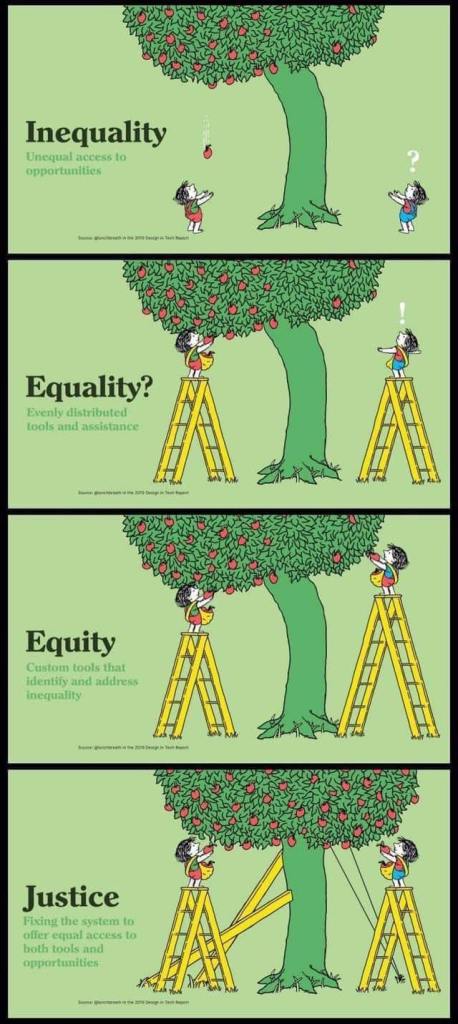
‘On the face of it’, it makes perfect sense.

But why bother?

If I’m on the ‘right’ side, why would I make it easier for the other guy?
If on the ‘wrong’ side, why not just switch sides? Why would I bother to straighten the tree? Against the wishes of those who have a lot to lose in the process?

From the other side of the looking glass, things are a lot simpler.

‘Fiat justitia, ruat caelum’ is a warning, not a behest.

‘Make sure that justice is served, unless you want the heavens to fall on your shoulders’ is what any open minded reader of history makes of this ancient adage…

The fact that we concentrate our attention on what justice means for each of us is a measure of our individualism.
Of our nearsightedness…

Our respective individualities, each and everyone of them, have grown into what they are now in a social context.
None of us can exist for long, let alone protect and develop their individuality, in solitude.

We need the others.
We, each and everyone of us, need to belong. To a community.

To a functional community!
To a community where each individual is cherished.
Where each individual can develop its potential.

Where each individual has the opportunity and the tools to develop their potential.
For his own good, in concert with the main interest of entire community.

Survival.
Things remaining as they should be.

Us toiling here, on the surface of the Earth.
The heavens perched safely up there.

Justice must be served if things are to remain as we, each and all of us, need them to be.

Can we do without it?
And if not, how much of it?

– If ‘no government’, then who would pay for the army we need to defend ourselves?

Ooops… you’ve just answered the ‘why does Russia ‘encourage’ the trolls who push ludicrous libertarian ideas’ question. Which trolls attempt to achieve two things at once. Weaken the concept of free government and give libertarian-ism a bad rep. Transforming libertarian-ism into yet another form of extremism.

Let’s get serious and try to find an answer to ‘why, and how much of it, do we need government?’

The boring one would be: ‘Whenever one government falls, another one takes over. The interregnum is always bad so… let’s get used to it’.

‘Getting used to it’ works only for very short expanses of time. Left on its own, all ‘government’ becomes sloppy. So sloppy that it soon becomes such a burden that even the most ‘used to it’ lose their patience.
Government, all of them, need to be kept on a tight leash. Otherwise it will soon cease to perform as intended.

– But if you have to keep it on a tight leash, why bother with any in the first place?
Can’t we do without such a bothersome pet?
What’s the point of the whole thing, anyway?

Instinctively, we’re against ‘government’ for two reasons.
It costs us a lot and it used to represent the interests of the ruler.

Until 10 000 or so years ago, we didn’t need ‘government’.
People were living more or less like the modern day Sun People still do. In the Kalahari desert… small bands roam the place, living of the land. The bands are small – so that they might find sustenance, they don’t have any ‘private’ property to protect, hence they don’t need government. Neither did our ancestors.

As soon as people ‘invented’ agriculture – raising ‘tame’ animals at first and working the land soon after, things had changed dramatically.
The advent of agriculture brought two things. An increased productivity and private property.
Soil has not been born equal. Both pastures and arable land can be good, passable or bad. People wish to have the best. Those who already have it are willing to defend it and those who don’t are willing to steal it.
Increased productivity means that those who produce are able to hire people to protect their ‘means of production’. Their property. As a consequence of fighting for it, some people accumulate more and more of it.
More and more ‘means of productions’ – property, means an ever increasing need for ‘management’ and an ever increasing need for ‘protection’. Soon you have a very ‘wealthy’ owner – the lord of the place, call it what you like or use the name given to him by his subjects, the people who perform the day to day management of the ‘whole-sale property’ and those who protect it from ‘marauders’. Both the ‘managers’ – read ‘government’, and the ‘protectors’ – read ‘army’, used to be under the direct supervision of the local lord.
For a while – for as long as the lord kept everything in balance, everybody was happy. The ‘peasants’ were happy because thy were safe, the ‘managers’ were happy because the wise lord used to appreciate their work and ‘compensated’ them accordingly, the ‘protectors’ were happy because they were well fed and taken care of. According to this article, the great Egyptian had been built by willing people, not by slaves.
https://www.harvardmagazine.com/2003/07/who-built-the-pyramids-html
But soon enough, the lord had become estranged from his people. Government had become an instrument used to extract more and more wealth from the peasants while the army was used to protect the government against the people and, whenever possible, to increase the property of the ruling lord by stealing some from the neighboring ‘lords’. The ’empire’ was born.

But this development could take place only in certain circumstances. Where those below the ruling lord had nothing more to do than to obey. Where the best subject was the disciplined one. Where autonomous thinking and imagination were frown upon by the ruler. Where one mind was enough.
Whenever the ‘environment’ mandated the individuals to remain relatively autonomous, proto-democratic forms of self government had been experimented. From the nomadic pastoralists of the Central Asia to the sailing communities in Ancient Greece and Medieval Scandinavia. Those driving herds or sailing ships need to be a lot more independent-minded that those who just tile the earth. No offense intended here! Simple observation will notice that where the geography of the place had allowed it, somebody had ‘built’ an empire. The Nile Valley, the Middle East, the Russian plain, China, Mexico…
Where ever the geography of the place was fragmented enough by sail-able sea, proto-democratic forms of self-management had been developed. The sailing Ancient Athens versus the land-locked Sparta, Medieval Scandinavia versus Medieval France…

Fast forward to present day.
When we have two forms of government.
The more or less democratic ones. Those under whose ‘guidance’ discussions like the present one can happen.
And the more or less authoritarian ones. Which actively discourage autonomous thinking.

Mind you, there are no ‘perfect’ governments.
There’s no perfectly democratic arrangement anywhere on Earth. Because we are imperfect human beings.
And there’s no ‘perfect’ authoritarian government. Because no government can survive for long if it attempts to centralize the decision power. The closer a government gets to being perfectly authoritarian, the smaller is the crisis needed to topple it. Unless it is supported from the out-side but that’s another topic.

So. It is fairly simple to understand how authoritarian governments fail. Too much ‘stiffness’ makes it impossible for authoritarian governments to evolve. To find solutions for whatever challenges pop up constantly.

But what can go wrong with the collective forms of self-rule? With the participative forms of social self management? Otherwise known as democracies?
Lack of enough popular involvement. Due to a sense of apparent safety, initially. And to a feeling of apparent impotence, soon after.
Lack of enough fore-sight. Those who should know better become distracted, for whatever reasons.
Too much opportunism. More and more of the ‘insiders’ use ‘the power of the government’ to fulfill their own, private, goals instead of making sure that ‘government’ works properly.

And what does that mean?

A government works properly when the community which self manages itself using that particular (form of democratic) government survives in the long run.
When those momentarily working inside the government make things happen for the community at large.
When people, both inside and outside the government, follow, in spirit, Kennedy’s words.

Am I being naive?
Maybe… But wouldn’t it be a nice thing to have?
A nice thing to chase, anyway?

And what better way to chase ‘it’ than voting for people who at least pretend to be honest? Who at least make the ‘right’ noises? Whom we can hold accountable whenever they break their promises?
Instead of voting for those who promise barrels and barrels of ‘pork‘?
https://grammarist.com/idiom/pork-barrel/

Ideological pork or hands-on pork, I don’t know which is worse…

– In which direction?

– I thought we were talking about a glass ceiling, not a glass bottom…

You see, we have to deal here with the difference between depth and thickness.

A ‘coat of paint’ has a certain thickness – we know where it starts and where it ends, while a sea has a certain depth. We know it’s there, we know where it starts – at the surface of the water, but we’re never exactly sure where it ends. How deep it actually is!

Another way to put this would be to compare the depth of human consciousness with the thickness of the cerebral cortex.
The depth of the reality we perceive using our brain and the thickness of the cerebral tissue where this perception takes place.
The depth of the reality we, humans, have built during our history inside the relatively shallow portion of the Earth where we feel at home.

We use a small number of phonemes to communicate among ourselves.
A relatively small number of words to convey hugely complicated concepts.
Two digits, 0 and 1, to build artificial intelligence… inside a wafer thin ‘slab’ of doped silicon.

– OK, enough introduction. How about making in clear what you really meant?
A glass ceiling or a glass bottom?

Whether it is a glass ceiling or a glass bottom is a matter of perspective.
A matter of where you are when looking at it. Above or below.
The only thing which really matters being the fact that you see it despite of it being made of glass.
Despite it being transparent.

Transparent to our eyes but not to our conscious mind.

– But if it’s already transparent, why is it such a big thing to break through it?
We already know what’s behind/above it…

Seeing is not the same thing as knowing… just as 0 and 1 scribbled on a computer chip is not enough to make an intelligent computer…

Some say that history repeats itself until we figure out what it meant in the first place.
Others maintain that history’s first ‘helping’ comes as a tragedy while the second becomes a farce.

Well, I’m afraid things are a little more complicated.

For starters, history doesn’t do anything.
History is nothing but a string of events. Considered noteworthy and written down by some of those who have survived the above mentioned events.
NB, ‘winning’ is not necessary. Being able to survive – and to write, of course, is!

It is us who consider some of the events we have witnessed – or read about, to be noteworthy.
It is us who attempt to draw meaning from what we ‘hear about’.
It is us who are arrogant enough to believe we have learned anything.

Which brings me to the next step.

We live in a huge reality.
But see only a small portion of it. Understand even less than that.
But consider ourselves rational human beings. We are convinced that what we do – the decisions we reach and then put in practice, are based on reason. And good will!!!

Day to day practice tells us that individuals make mistakes.
I’ll leave ‘alone’ the actual ‘criminals’, I’m going to consider – for the scope of this post, that all of us act in good faith, all of the time.
Hence we need a mechanism to cope with the ‘honest mistakes’ made by every one of us.
No matter how low or how high in the ‘pecking order’.
No matter how feeble or how powerfull each of us is.
How much decision power each of us musters at any one moment.

We need a ‘procedure’, an ‘opening’, for each of us who sees something going amiss to be able to tell the others that ‘the emperor is naked’.

That’s what ‘democracy’ is for.

But there’s a caveat here.

Like history, democracy is a human concept. A man-made ‘tool’!

Each of the individual members of the group using this tool is ‘limited’. Has a limited knowledge and a limited ‘processing power’. By definition… Otherwise, democracy wouldn’t have been necessary in the first place. If at least one of the individuals involved would have been omniscient, they would have – somehow, climbed to the pinnacle of the hierarchy.
The fact that all imperia – all ‘arrangements’ where one individual garners a lot of power over a complex system comprising of many other people, have inevitably collapsed is a very powerful empirical proof for my assertion.
Further more, the number of individuals involved in any democratic arrangement is also limited. Also by definition. There’s no place on Earth – there are no humans living someplace else, for an infinite number of people. Hence even the ‘aggregate understanding of things’ any democracy might reach is also limited. Fallible, that is.

Thus even democracies need to follow rules. They just cannot ‘vote’ whatever their members wish to happen…

The first rule, of course, being you should not vote ‘against’ the rules of nature. You cannot, for instance, abolish Newton’s gravity by voting it ‘unlawful’…
The second rule being that the individuals comprising the democratic arrangement have be convinced that each of them is equivalent. Not equal, that’s impossible, but ‘equivalent’. That each of them should be able to vote, that each of them should have only one vote and that each of them should have the opportunity to voice their concerns. In a nutshell, that all of them have equal rights and that nobody – no individual or a smaller number of people than the entire ‘congregation’, has the right to tell anybody else what to do. Or what to refrain themselves from doing.

Now, that I have reached this point, let me go back to history.

The first ‘democratic arrangement’ known to us was the Ancient Athens.
It had evolved, for while, as an increasingly democratic form of government. During this time, the city’s fortune and influence in the region had grown almost constantly until Pericles had ‘bent’ the democratic principles so that he could yield more influence. Almost two centuries of democratic ebbing on and off followed until Philip II of Macedonia had taken over entirely. As a consequence, Athens’ influence had waned and then disappeared entirely.
The second one had dawned in Scandinavia, during the Viking era.
That democratic seed had, in time, spread in Europe, America and, gradually, in many other countries.

In the US, for example, at first only the white men were involved in the democratic process. They were the ones who voted and who were elected into office. Gradually, the democratic ‘rights’ had been extended to the female portion of the society and to the ‘members of the other races’. These successive ‘extensions’ had been parts of the general improvement of the society as a whole. During this period – not necessarily due to but certainly simultaneously with, the entire population lived better and longer lives while the country as a whole had become more and more powerful. The energy and potential of the population – of an ever increasing proportion of the population, had been put to better and better uses.

Simultaneously, individuals – an ever increasing proportion of the individual members of the society, with the criteria of sex, gender and race gradually losing the previously held power of discrimination, had enjoyed more and more power. More and more autonomy to determine their own fate.

Which brings us to the current developments in the US.

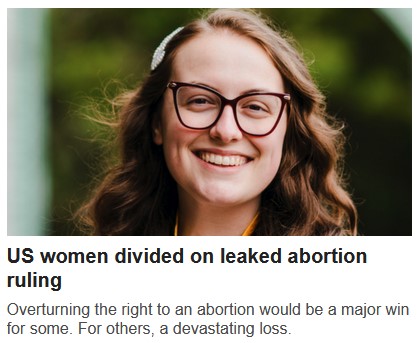
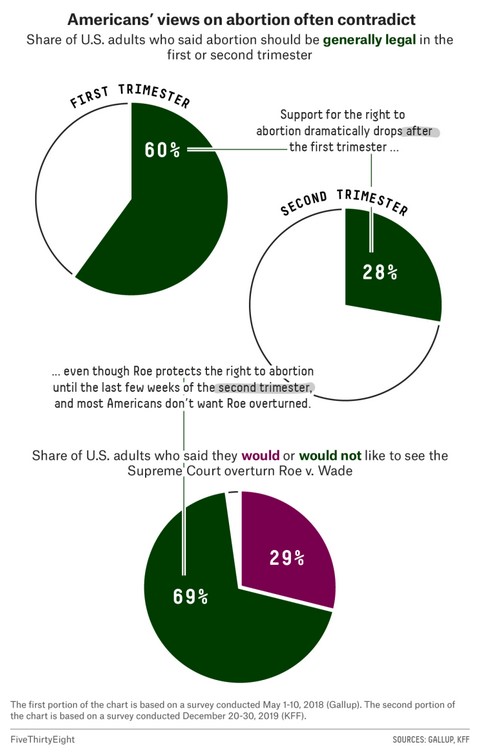
Some people, far from a majority of “The People”, would like to see the ‘other end’ of Roe v Wade.
‘These’ people seem to have somehow convinced a majority of the Justices sitting in the Supreme Court not only to hear their plea but also to ‘consider it in a favorable manner’.

In other words, a very small number of people – five out of nine, are going to restrict a previously granted right which had been enjoyed for almost 50 years by more than half of the American Population.

‘You have got it completely wrong!
Scotus isn’t going to prohibit abortion. Only the states can do that!’

Do you remember what the Civil War had been fought over?
Basically, the Confederates were claiming that individual states had the right to determine which people were to be considered ‘free’ while the ‘others’ kept maintaining that all people, regardless of their skin color, were free. That individual freedom was something which had to be determined at federal level, not by each ‘individual’ state.
Nowadays we have the very same thing. Some states claim it’s their ‘right’ to tell ‘their’ women whether, and in which circumstances, they may – or not, have an abortion.

Not a very ‘appealing’ proposition.
It opens the door for individual states claiming more and more ‘rights’ over their ‘specific subjects’.

The absolutely baffling thing about this whole development is the fact that those who want Roe v Wade to be repelled claim they do this in order to enhance individual rights (to live). I can understand that. I even sympathize with them. Ending a life, even that of an embryo, is not something to be treated easily.

But for a minority to impose their point of view – no matter how sound it might appear to some of us, to a majority… that cannot be, either, taken lightly.

After reading this interview for a second time, I asked myself: ‘Why are you paying so much attention to this guy?!? After all, he doesn’t say anything new…’

Then it hit me!

“Russia” and “we” are two different things.

Russia, the country, cannot indeed afford to “lose”. To ‘lose it’, to be more precise.
Russia will survive, no matter how many more ‘mistakes’ the morons currently running it will commit.

“We”, on the other hand, are the ones who can. And eventually will. Lose. Everything.

And the longer those “we” are allowed by Russia itself to run the Kremlin, the worse it will be.
For everybody. Us – the rest of the world, included.

‘But when will this nightmare end?’

That I don’t know.
All I know is that it will eventually do that. End.

Look at the picture above.
When have you seen anything more British than that?
OK, fake British. Make-believe British. But British nonetheless.

That was which hit me.
That during its entire history, Russia had tried to emulate Britain.
The Russian elite has for ever tried to rise itself to ‘British standards’. From Peter the Great to Putin.
All the while convincing the Russian People that the road they were trundling on was unique…

The sooner the ordinary Russians will figure out that they have been misled – and enough of the elite will understand that British-ness is good only for the Brits, they will make peace.
Among themselves.
With the their Ukrainian cousins.
And with the rest of the world!

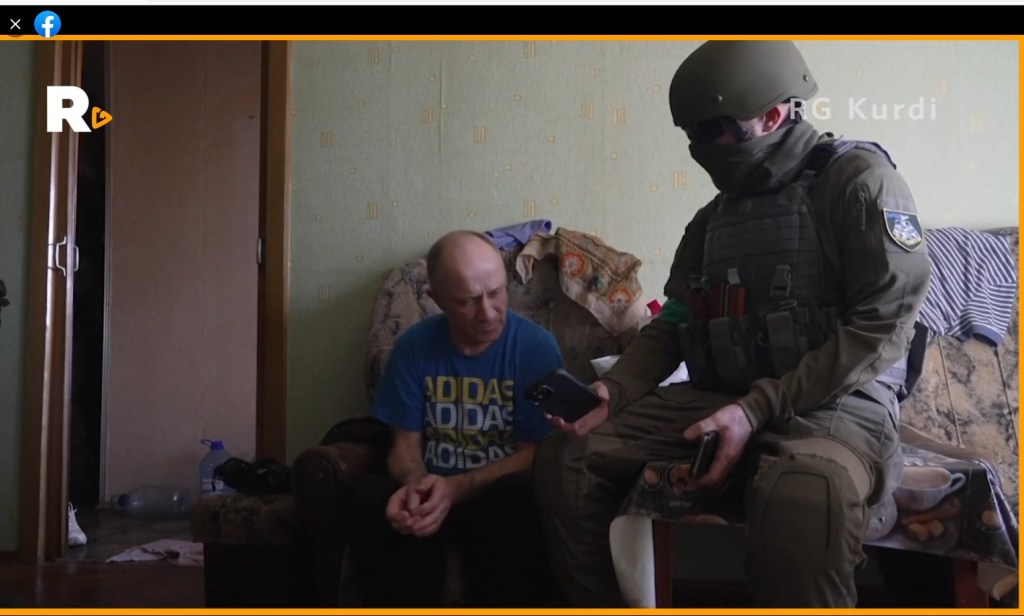
The guy in the blue T shirt is being questioned by the Ukrainian police about his activity on ‘social media’.
You probably guessed already what kind of ‘activity’ we’re talking about…

Which brings back painful memories.

During my childhood, in communist Romania, you could get arrested for listening to Radio Free Europe. Or for speaking against the communist rule.

In present day Russia, you’ll soon enough be arrested if you use the word war in relation to what is going on in Ukraine.

In Ukraine itself, you can be arrested for publicly supporting Putin’s actions.

The worst thing being the fact that there still are people out there who consider Putin is right and the Ukrainians – those who do nothing but defend their country, should be ‘left alone’.

To be ‘left alone’ to what?!?
To be bombed away by Putin?
So that we may continue our ‘peaceful lives’?

Peaceful only until Putin – or someone equivalent, will ‘change his mind’?

The guy above hasn’t figured out yet, in spite of the bombs falling over his head, that there’s no such thing as ‘peaceful life’ under dictatorship! Any kind of dictatorship…
Nor have any of those who continue to defend Putin’s actions!

Or use their ‘freedom of speech’ in an attempt to sow doubt about the matter.

A beautiful country, inhabited by a beautiful and proud people who ‘generate’ such beautiful music…
Yet this is how their freedom looks like!

Two successive dictatorial regimes, the first headed by Fulgencio Batista and the second by Fidel Castro…

Read what brittanica.com has to say about each of them. Just click their names.

Then tell me why are we, any of the democratic countries in the world, still making business with any of the dictatorial regimes still plaguing the Earth?
Why do we continue to harbor any of the yachts owned by corrupt oligarchs? Or their money?

Isn’t the other party always the guilty one?

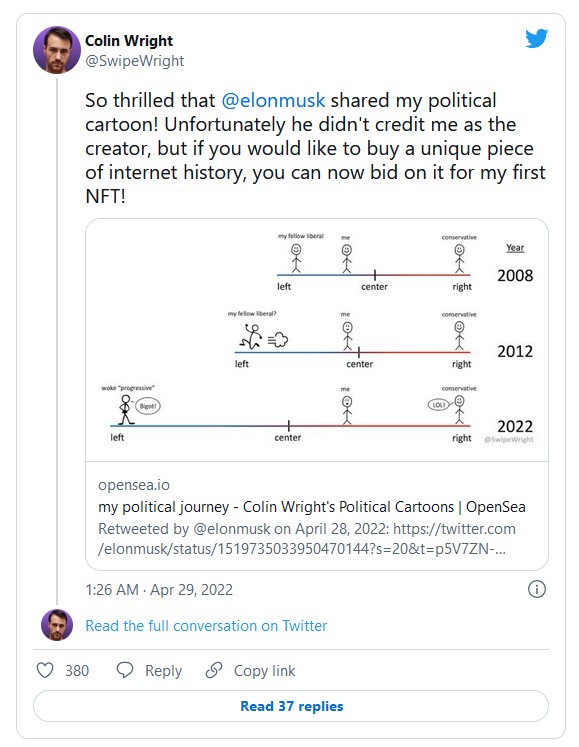
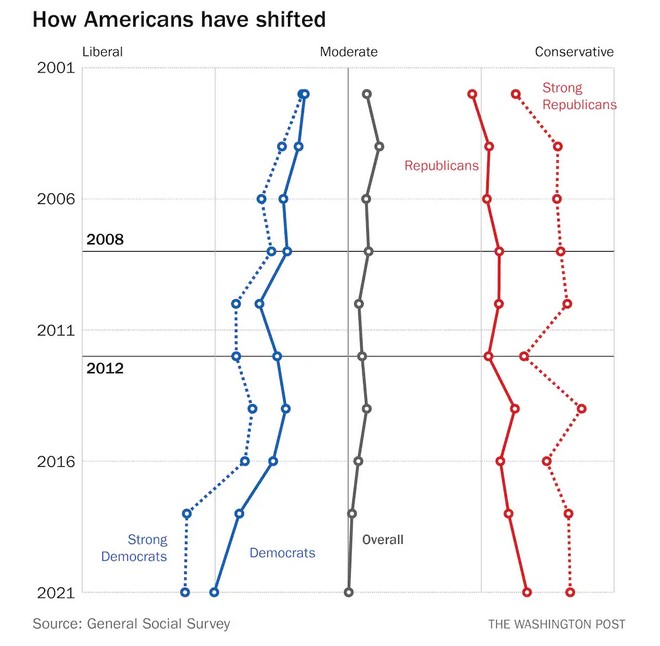
Or, otherwise put, Musk – who in 2008 was left of center, currently finds himself in a moderate conservative position because the woke progressives have displaced the center. To the left of where Musk was in 2008. And where he still is…

This might have not been uttered by Churchill but nevertheless rises some questions…

‘If you’re not a liberal when you’re 25, you have no heart.
If you’re not a conservative by the time you’re 35, you have no brain.’

What? The cartoon wasn’t Musk’s to share in the first place? He had just ‘borrowed’ it from somebody else?!?

And here’s what ‘Big Data’ has to say about the whole thing.

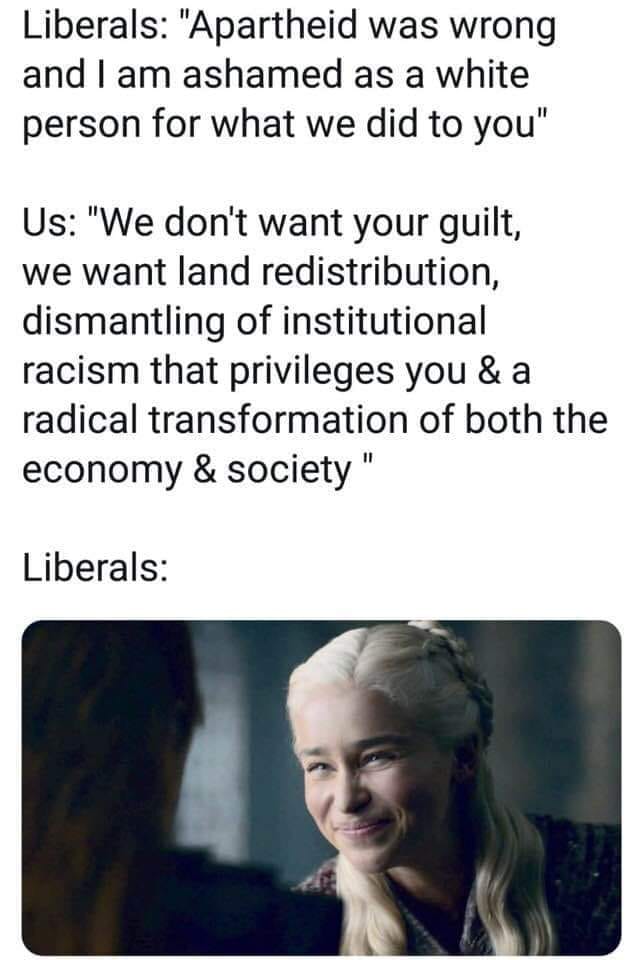
The fact that too many self styled liberals hold on to their ill begotten wealth while distributing a lot of quilt doesn’t obliterate the fact that very few of the ‘self believed’ conservatives share much of their wealth… while seldom admitting any responsibility for what had happened in the past. And continues to this day, in very insidious ways.

As for any attempt at a radical transformation of both economy and society – as in making them actually free for all us – white, black and all the other hues… forget it.

NB. All of us will eventually lose. Everything. Things are becoming too lopsided.

To make sense of that we have already passed through?

What does ‘worst’ mean in this circumstances?
Until now, I was under the impression that ‘critics’ were good.
That in a democratic setting, the critics are those who pull at our sleeves when we go astray.
That the critics are those who bring us back to the straight and narrow.
How can ‘critics’ become ‘bad’? Let alone “worst”…

“”Free speech is the bedrock of a functioning democracy, and Twitter is the digital town square where matters vital to the future of mankind are debated” said Mr. Musk. “I also want to make Twitter better than ever by…””

As many of you already know, I grew up under a communist regime. In Ceausescu’s Romania.
That was were I learned to decipher messages transmitted using the ‘wooden language’.
Or, in Orwell’s parlance, “newspeak”…

Here’s what I make of Elon Musk’s words:

‘From now on, the “digital town square where matters vital to the future of mankind are debated” is mine. Mine to make what I see fit of it. To “make better” under my own terms. And if you don’t like it, keep ‘barking’. There’s nothing you can do to me. I’m going to make Twitter ‘private’. A.k.a. free from any ‘market interference’. Furthermore, your ‘barking’ will only increase the traffic. Hence the money I’ll be making on the back of your ‘free speech’.’

Twenty four years ago, in 1998, I spent a fortnight visiting Tunisia. I still remember the discussions I had with my wife. In our native Romania, we – the country, not the two of us – already had a couple of malls – which were quite new for us.
Each time that we entered a Tunisian suk – also known as a bazaar, we felt like strolling through a mall.

In the Middle Ages, a suk was the property of the local sheik. Even if each ‘stall’ was operated as an individual business, the whole thing was run at the whim of the local ruler.
According to the laws of the land, but still at the mercy of the landlord.

Each mall, the building, is owned by a company. And, the business, operated by another. Usually by a chain. Hence the ‘freedom’ of the individual businesses ‘housed’ by each mall is ‘defined’ by the rules put in place by the owners and the operators. Under the laws and by laws valid for the physical location of the building but still at the ‘mercy’ of those who own/operate the mall.

From now on, the “digital town square where matters vital to the future of the mankind” are ‘freely debated’ by us will be owned and operated by yet another one of Elon Musk’s enterprises.
Who, for now at least, promises to welcome his “worst” critics, whatever that might mean.

And an after thought.
A way shorter translation of Musk’s words might be: ‘Freedom of speech means being able to say ‘those who criticize me are bad people”. With the corollary that some are worse than others…