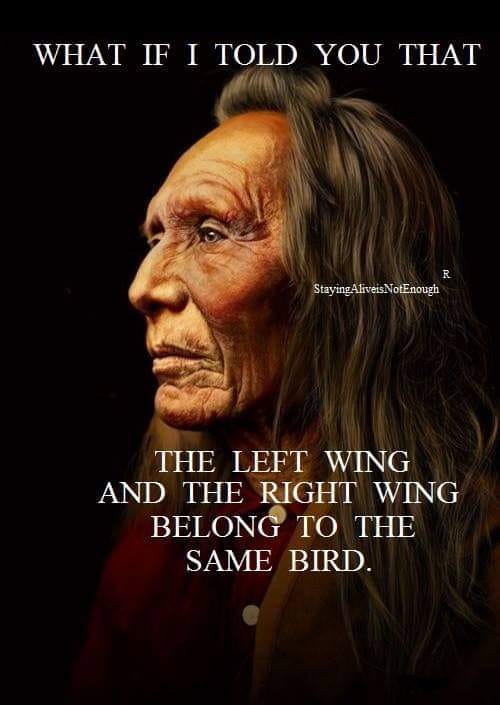
What happened to our capacity to compromise? When did life become nothing but a zero sum game?
Our capacity to compromise – in the good sense of the word – has diminished when religion – the thing which keeps us together – has been split into religions.
And it completely drained out when we’ve become too confident in our ability to think things over.
We’re so confident now that our solution/decision is not only better than any other but the only one possible that we’re no longer capable of considering a compromise.
While religion taught us to respect and trust each-other, religions have split us into factions. Our intellectual arrogance has done the rest.
Your previous actions that were done in error now have consequences. Karma.
My father has cancer. And an eye problem. The cancer is being treated in a public hospital while the eye problem is taken care of at a private facility. In the last couple of days we have visited them both.
Besides the obvious differences there’s a huge, and overpowering, ‘common ground’. The money problem.
No, not the money you have to fork out if you want to be treated in a private facility. The fact that money has been elevated to goal status.
Functionally speaking, health-care is a ‘social function’. By helping each member to remain healthy, the society – as a whole – preserves it’s overall health. It preserves it’s functionality. It’s ability to survive and to thrive. By helping my father with his medical conditions, the society makes it possible for me and my family to remain productive. Instead of taking care of him – which we can’t do properly – we can continue to do what we’re good at.
And no, the subject of this post is not ‘who should pay for health care’. There is no ‘free’ anything so everything has to be paid, one way or another. The problem is the fact that money becoming the main goal has consequences.
Instead of trying to maintain the well being of the population – in an economically sensible manner – the health industry is focused on making profit. Instead of trying to maintain the well being of the population – in an economically sensible manner – the public health system is focused on being ‘thrifty’. The consequences are similar. Overworked doctors, crowded waiting rooms, impatient personnel, long waiting hours, irritation… And no spare capacity to cover ‘mass emergencies’!
Unfortunately, things go way deeper than this.
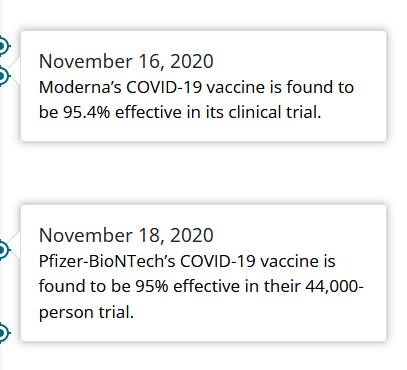
Do you remember what else ‘surfaced’ in the winter of 2020?
Put two and two together and it becomes a lot easier to understand how and why a huge number of people ended up believing that COVID-19 was a scam. A scam concocted by Big Pharma to convince us to buy their products…
In retrospect, what happened doesn’t make much sense, does it? So many people who had died because so many of us didn’t have enough trust in masks and vaccines… So many of us were convinced that we were being played! For money…
Because it had already happened!
“These consumers were getting a raw deal. They were being exposed to Mylan’s price increases and excluded from the market forces that might cushion them. They were getting ripped off. And it’s no wonder they got angry.”
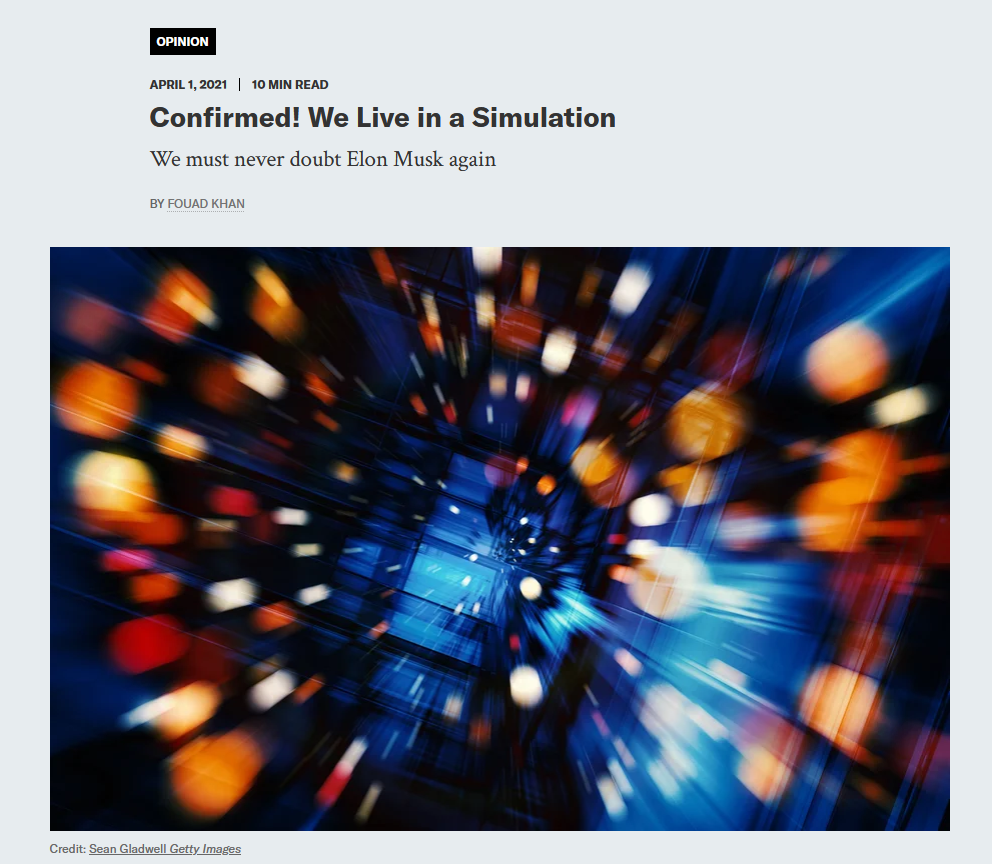
I have to start by confessing that until yesterday evening I’ve never seriously considered this possibility. Why would anyone bother?
Then somebody – thank you, Jeffrey Mercer – introduced a whole new twist into this conundrum. ‘What if this whole (computer) simulation thing is nothing but yet another attempt to make sense of the Universe? To attribute sense to the Universe? Which whole thing, if anything, is the epitome of anthropomorphism…’ I took the liberty to rephrase Jeffrey Mercer’s words. To make them more ‘suitable’. To fit better my preexisting answer. Yet another ‘anthropomorphic’ thing….
My immediate answer was ‘our world is indeed a simulation. Or maybe not as much a simulation as an artifact.’
Before delving into the matter, I’m going to formulate two questions. Hence ‘the furcula’. If we live in a simulation, what kind of world does the simulator live in? Why would anyone bother? To study us responding to its simulating our senses/minds? Why doesn’t it study itself? Its own self/persona?
Coming back to my initial answer, I have to point out that the key word here is ‘our’. We’re speaking here about ‘our world’. The world we live in. Our reality!
We, the ones trying to make sense of this world/reality, have a few characteristics. We’re made of matter and we have, each of us, a conscience. Having a material nature introduces certain limitations and being conscious widens those limitations. Us being conscious widens those limitations, by introducing a ‘new dimension’, but this doesn’t mean those limitations disappear. A bucket is ‘wider’ than the circle at its base – the bucket has height, hence volume, while the circle is ‘flat’ – but the bucket itself continues to have limits.
Let’s examine the consequences of us being conscious agents of a material nature. Limited conscious agents of a material nature…
Us being conscious means us being aware of our material nature. Of our limits. Having a material nature means the most powerful instinct we have is our ‘need to survive’. Both as a biological organism – a.k.a. animal – and as a conscious agent.
Our consciences – I’m speaking about the individual ones here – are very crafty ‘devils’. They can accept our individual material fate – death – but have a problem accepting their own dependency on the ‘bodies/brains’ they need to inhabit. Hence ‘the soul’.
Which ‘soul’ has been invented – by our conscious selves – as the first step towards building a sense for this world. For the reality we inhabit. Which soul is the building block for all religion. For all religion known/built to/by man.
Are you still here? I have to make a pause here. And to mention the fact that I’ve already cut a few corners… A lot of corners… What I say is probably rather hard to follow. Mostly because I don’t have time/space to explain myself. Not now but certainly in due time.
And yes, what we call ‘religion’ is of our own doing. The Bible itself has been written by us, regardless of the origin of the ideas mentioned there. It doesn’t matter whether we have been the interface between (a) God and ‘the world’, we are the ones who have written the Bible. And all other sacred texts. We have written them, we have believed in them and we have shaped the reality we live in.
We have done all that according to how we have interpreted the teachings we have inherited from our forefathers. And we continue to. Even those of us who consider themselves to be ‘free of religion’. We might not believe but we continue to act as if. Believers and nonbelievers alike hold the same things as being valid. Don’t kill, don’t steal, respect the values which keep society together…
What about where we started from? What about the ‘original’ simulation?
One moment please, I haven’t yet finished with ‘God’. If (a) God made us who/what we are, then who made God?
If someone took the trouble to build the simulation we consider to be ‘home’, what about the ‘real’ world? What about the reality harboring the simulating agent?
There’s no need for an outside agent? The world we live in, our world, is the world we have built for ourselves? Using the things which were at our disposal and the information we have gleaned about how things work? Maybe not always fully aware of what we were doing?
You got it! That’s exactly what I was trying to say!
They call it Cuetlaxochitl. They used to call it that way for a very long time. And it was they who had associated it with the Winter solstice. With the Winter solstice, not the ‘Aztec’ solstice…
At some point, we – or rather after the Christians got in contact them, the mistletoe first and poinsettia later – have associated both with our manner of celebrating the Winter solstice.
In fact, we have appropriated both the celebration itself and the plants associated with it!
I’m not going to discuss whether this was a good or a bad thing. It had just happened. And we have to live with the consequences of all those things having had happened in the past.
All I’m going to discuss in this post is their association with Christmas. With what the Christians consider to be ‘Christmas’ and celebrate it as such.
But is there anything to be discussed about the matter?!?
They have associated each of these plants to their celebrations. We have associated both to one of ours. What is to be discussed here?!?
Do we feel bad for what we – our ancestors, actually – have done to them? And want to atone for what had happened? And for the consequences of what had happened? Which consequences continue to unfold to this day…
We want to make amends – and to get rid of our guilt – by giving them back their plants?!? Really?
How will any of this benefit them?!? ‘Cause this is about them, not us… right?
How about we stop buying the drugs coming from there? Making it possible for them to shake off the drug lords which make their lives miserable?
How about we stop patronizing them? How about we start respecting them for being our ‘brethren’? As in equally-fledged human beings? Instead of we acting as if they were immature children. Liable to feel hurt that we have borrowed their ‘toys’…. For the sole reason that we think that giving them back their ‘sacred’ plants will cleanse our consciences….
Proper = As it should be. As expected. ‘Clean’. Property=Something which belongs to someone. A mutually respected arrangement among the members a certain community which establishes boundaries. Which members have the right to go ‘there’ whenever they want while all others have to ask for permission before crossing that ‘boundary’. A convention among the members of a certain community about what is the proper thing to do in each ‘patrimonial’ situation. A convention about who has the right to do what to the things which happen to co-exist with the members of the above mentioned community. The above mentioned ‘things’ include the place where the entire community happens to live. ‘Their’ land.
Which brings us to who owns the world. The leaders? As many of them assume? Or the humanity, as Dalai Lama has reportedly said?
How about neither? My point being that we are nothing but guests in this world. We come empty handed and we leave empty handed.
Yes, we need property while dwelling on this planet. But only in the sense of who can do what where. And with the limitation that the ‘what’ we do has to be ‘reversible’. Just as we leave this world with nothing – we leave even our hands here, our presence on the planet has to be ‘discrete’. Has to produce as little disturbance as possible and all that disturbance must disappear in time.
We need to keep the world a proper place. It’s the only place we have. No other home for our children. No other place to spend our last days. Properly.
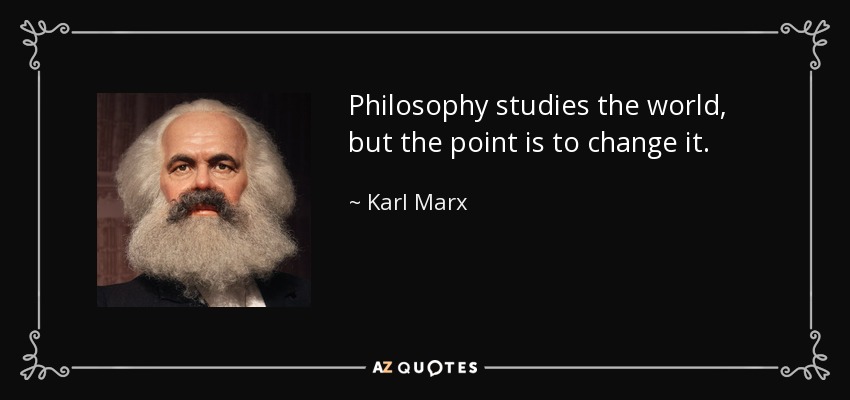
Marxism is an ideology. Ideologies don’t have errors, they are thought templates used to evaluate a certain situation and to determine what to do next. Ideologies are tools. They can be used properly or improperly. Sometimes, the best use for certain tools is to be left alone. Particularly when you understand they are useless. If you understand they are useless… Hence it’s not Marxism which is full of errors, it’s the Marxists who are barking up the wrong tree.
Which tells us Marx’s brilliant analysis wasn’t deep enough. He had noticed a series of facts but he had failed to notice the bigger picture. He had failed to see that all authoritarian regimes had failed. Under their own weight. Inevitably. And he had failed to notice that all democratic regimes had survived, and thrived, for as long as they had managed to preserve their democratic nature.
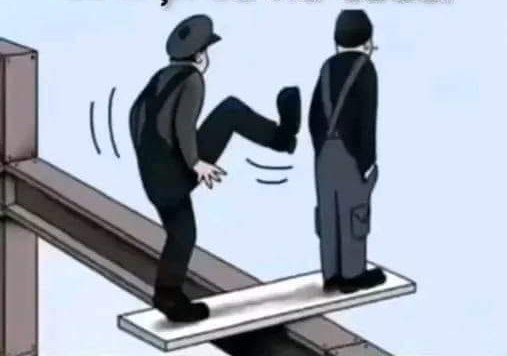
Hence the Marxist cure, communism, was stillborn. A tool to be left alone. The attempt to impose yet another authoritarian regime – with no matter how generous intentions – after the overwhelming experience of all other authoritarian regimes failing abysmally, is nothing but the compelling proof of social and historical blindness.
And why start this post by quoting Marx himself? Because that quote is more than enough. More than enough proof for Marx being a bully. It’s OK to ‘change the world’ if you own it. If it was yours… But bearing in mind that there are other people living in the same world… wouldn’t it be nice to ask their opinion about the whole thing? About the changes you want to make? Which changes will dramatically affect the world they live in?!? They are simpletons? Whose opinions are worthless? Because you said so yourself?
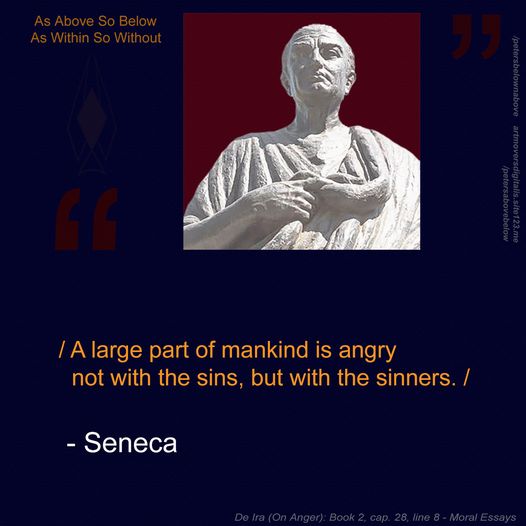
For everybody, no matter how powerful, crimes are those that others commit….
The powerful are the ones who have the means to evade the consequences but when it comes to ‘who thinks what’, there’s no difference among variously powerful people!
The things we believe are what we have in common with those who promote them.
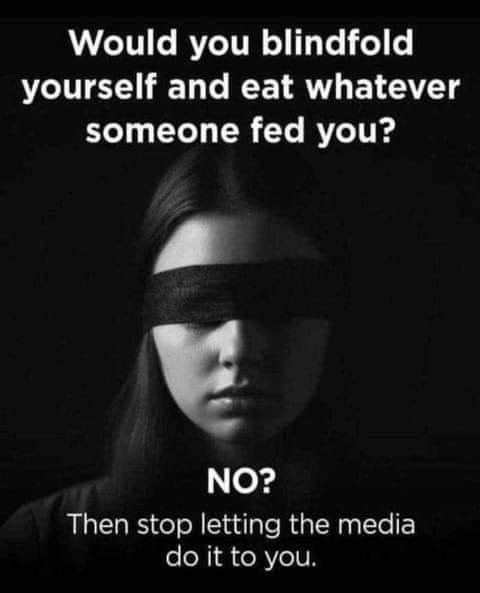
Well, nobody ‘blindly’ beliefs anything published in the media! We use our cognitive biases in order to do that.
The media publishes the things we like to hear. To sell advertising space, to please their sponsors… While those who actually do this, the journalists, appease their consciences with ‘we have to give them what they want’. ‘Cause we actually do ‘buy’ their stuff…
And we believe the things we read in the kind of press we ‘buy’ because we no longer bother to keep in check our cognitive biases!
Who has anything to gain? From this vicious circle spinning faster and faster?
Nobody, really! But we all have something to lose.
Everything, actually!
When was the last time you met a dead person who regretted anything?
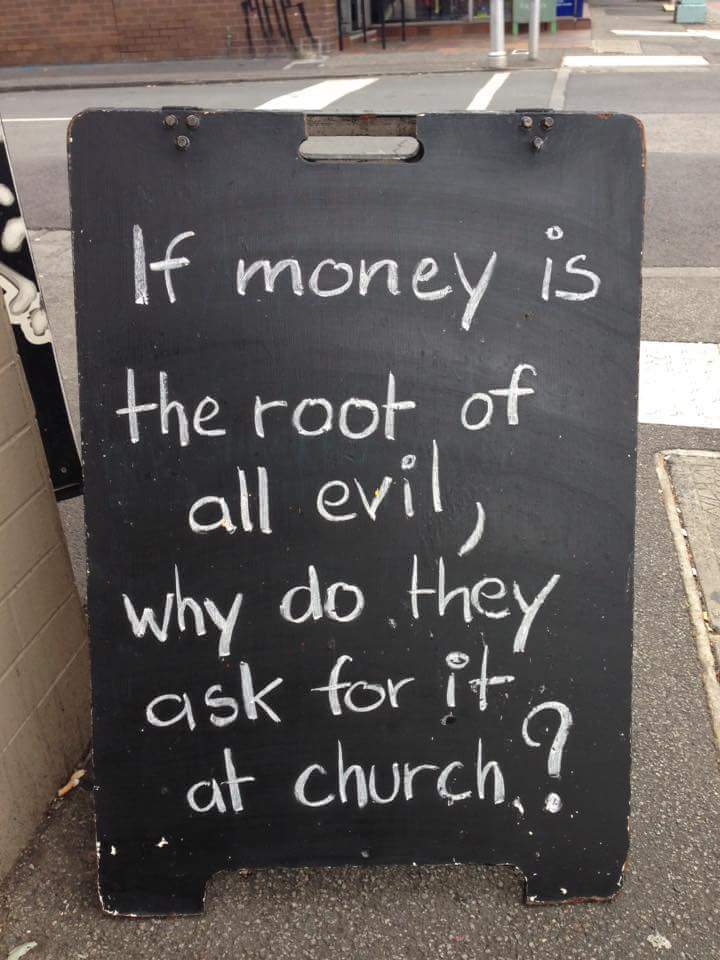
Then Jesus entered the temple and drove out all who were selling and buying in the temple, and he overturned the tables of the money changers and the seats of those who sold doves. He said to them,






 nicichiarasa