Archives for category: Choices we make

‘Universe’ has no meaning. Other than what we assign to be its meaning…

‘Universe’ is a word we use to encompass everything around us. Whether we know of it or not. Whether we understand (of) it or not.

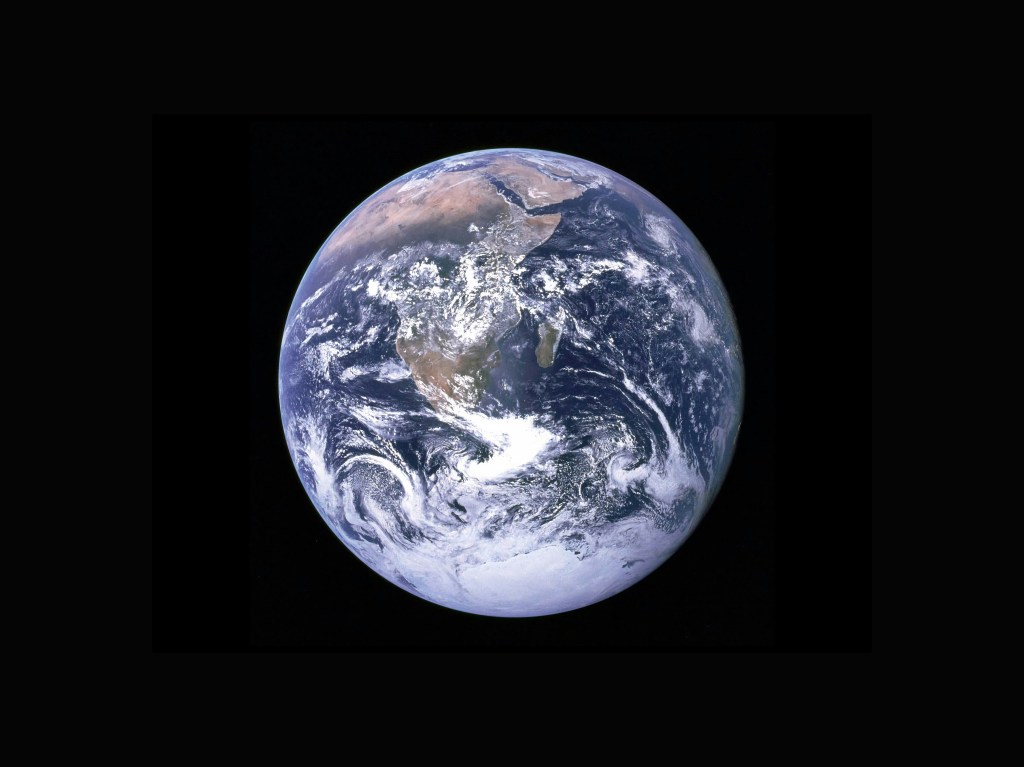
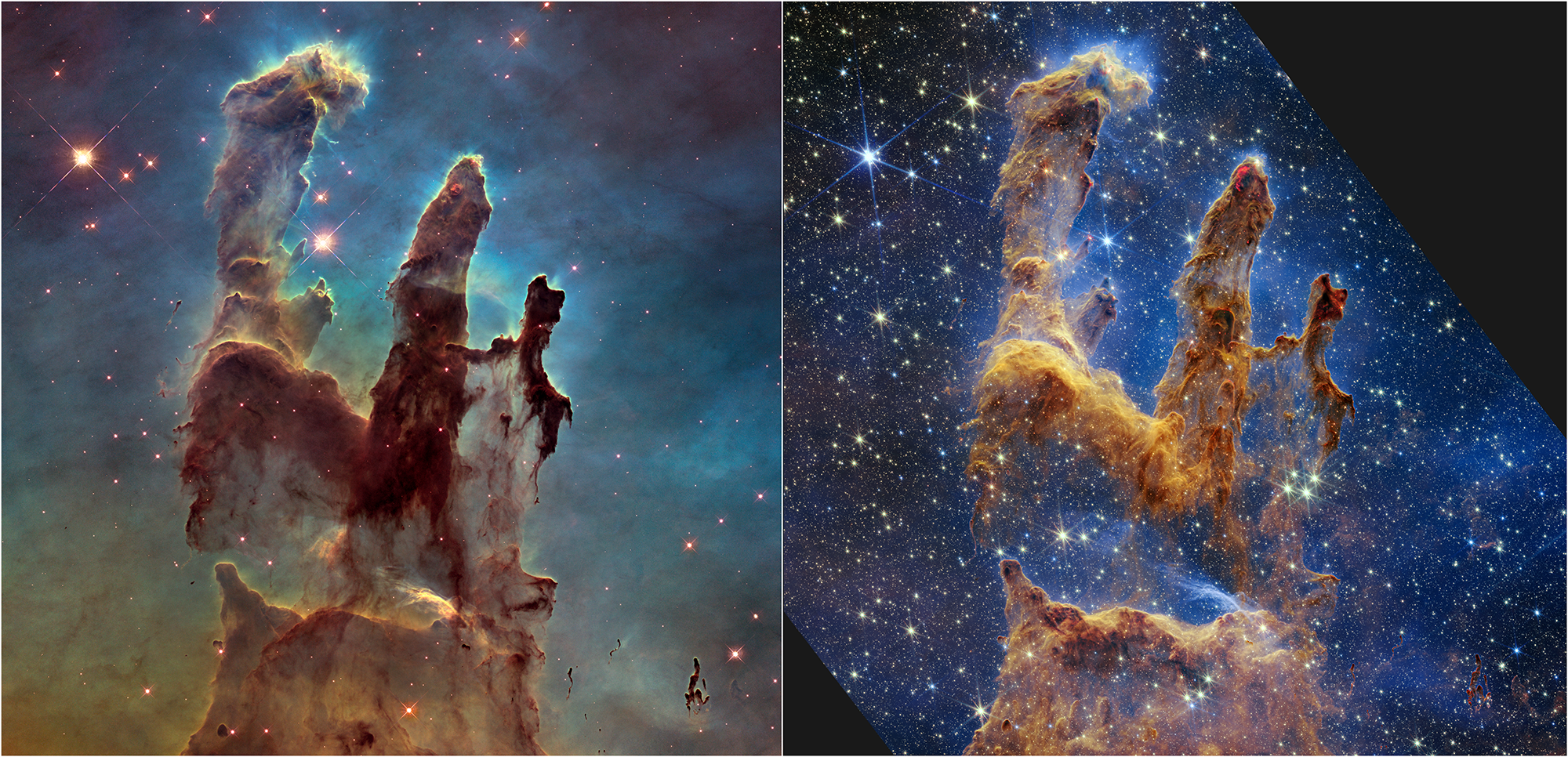
From ‘where’/’when’ we are in/attempt to perceive this huge environment, things look like ‘this’.
Depending of the wavelength of the light we use to ‘reinterpret’ the picture…
Nota bene, the colours were assigned by a computer app, starting from a series of ‘black&white’ images shot using filters which select short intervals of light-wavelength.

By sheer change, life appeared on Earth. And on who knows, if ever, how many other planets.
Evolution, an impersonal process, playing the odds in the current setting, had engendered the set of circumstances into which we happened to ‘burst’ into existence.

We, for better or for worse, have shaped the planet into what it has become.

Regardless of what each of us believes, religiously speaking, it doesn’t actually matter whether a god did or didn’t do anything. Since each and every religion currently biasing human thinking on Earth speaks about individual responsibility – hence freedom, for you can’t have individual responsibility without freedom – it actually doesn’t matter whether any of the teachings we refer speak about have been induced by an outside agent or have been produced ‘in house’.
Since each of us is individually responsible for our thoughts/actions – hence ‘free’ – then the meaning we assign to the object of our judgement, the ‘Universe’, belongs to us. To each and to all of us.

‘God save us!’

But since we’re ‘free’, we must save ourselves.

And since nobody can be free on their own – freedom has been defined by ‘us’ and put in practice collectively – saving ourselves will be a collective effort.
Or else.

Nota bene!
We are a ‘collection’/community of individual human beings.
We either ‘save’ ourselves maintaining what makes us human – our distinct individual individualities – or we become a hive. Of something else but ‘human’.
Of what we currently understand as being ‘human’…
“statuuntque latiores terminos scientiae Dei quam potestatis,
vel potius ejus partis potestatis Dei (nam et ipsa scientia potestas est)
qua scit, quam ejus qua movet et agit:
ut praesciat quaedam otiose, quae non praedestinet et praeordinet”

Francis Bacon, 1597
“and they set wider limits for the knowledge of God than for power,
or rather for that part of God’s power (for knowledge itself is power)
by which he knows, than that by which he moves and acts”
Google Translate

scientia potentia est
Thomas Hobbes, 1668

E=mc2
Einstein, 1905

In fact, power produces; it produces reality;
it produces domains of objects and rituals of truth.
Michel Foucault, 1991

“They” – as in ‘the knowing people’ – ‘set the limits for the knowledge of God’.
Then it was ‘they’ who had the real power over (their) God…

A little later, another thinker simplified the whole thing into ‘knowledge is power’.

Which, already collective, state of mind morphed into the socio-cultural environment into which Einstein was able to notice that E=mc2. That apparently different things can morph one into the other, given the right circumstances.

Which brings us to Foucault noticing that power produces reality. Including knowledge…

But is there a real difference between ‘power produces reality’ and ‘they set different limits for God’s knowledge than for God’s power’?
In fact, there is.

According to Foucault power is exercised directly.
According to Bacon, people exercise power by ‘fine tuning’ their ultimate tool. Their God. Which god, like all others, acts like an agent. Its powers might be limited – it is able to do/know only as much as those who have faith in it believe it to be able to know/do – but inside those limits it is as free as each of those who believe in it.

And the difference is huge.
As soon as Nietzsche had noticed that ‘God was dead’, ‘reality’ had shattered.
While God was alive, power created one reality. Also known as “God”.
As soon as there was no more God to mediate between reality and those gathering knowledge about it and exercising power while recreating it… reality became many!

And not only many versions of reality are competing for our attention, each of these realities are farther and farther away for the ‘hard’ one. The one harboring Einstein.

“People know what they do; frequently they know why they do what they do; but what they don’t know is what what they do does.”

Michel Foucault, Madness and Civilization:

“I suppose it is tempting,
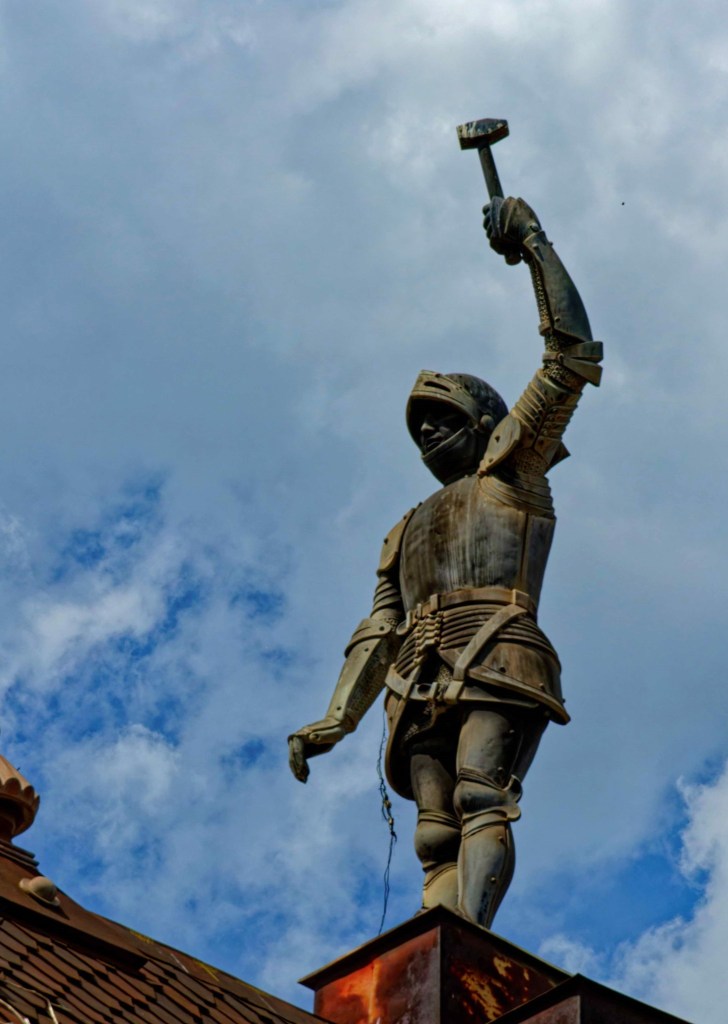
if the only tool you have is a hammer,
to treat everything as if it were a nail”

Abraham Maslow

I write this blog in the hope that ’embodying’ my thoughts will somehow help me.
Help me solve some of the quirky questions which have been haunting me for sometime now.

Why so many people have been convinced that thinking may help them make sense of things?
Why so many otherwise smart people have convinced themselves that thinking ‘in solitude’ would take them to the ‘right’ place?
Why so many seemingly reasonable people have somehow become certain that their version of things was the only one valid? To the tune of trying to impose it to those happening to be around them?

The first answer was easy to find.
Because that’s how we make sense of things.
And because that’s what people do when they have no other alternative.
They start thinking about how to get out of the mess into which they have entered by not thinking! Enough…

The second one was also easy. Ish… specially after I did come up with the question formulated like this.
Apparently, to shield their minds from ‘distraction’. From the mundane ‘minor’ problems which might have wasted their ‘brain power’.
In reality, simply because they could do it. They had a great time doing it – thinking, that was – so they indulged on every occasion they had. And smart as they were, they made it possible for them to have more and more time available for thinking.
And they cut themselves off from the rest of the world because the few people able to partake in the process not always shared the same opinion. Thus otherwise smart thinkers ended up in the company of sycophants…

Having found the answer for the second question opened, wide, the door for the third answer.
No, it wasn’t the presence of the sycophants which convinced the otherwise reasonable thinker that their was the only valid solution for whatever problem they had in mind at anyone time.
Sycophants showering praise were only a ‘favorable circumstance’. A mere opportunity for it to happen.

Unhindered by any outside intervention, the tinkering thinker turned his tool to his own head.
And hammered out all the remaining doubts his mind was still harboring.

Expect nothing.
You’ll never be disappointed.

Buddhism 101

Language, one the tools we use for thinking, is an interesting subject.
For study!

Whenever there are two different words referring to something not exactly different, there’s a huge opportunity. For us to understand how our minds work.

Buddha said nothing about wishing. As far as I know, and I’m not an expert in Buddhism…
But since all those who bother themselves to help us becoming the better – read happier – version of us quote Buddha as speaking exclusively about ‘expecting’ and nothing about ‘wishing’ … I’ll just consider it yet another fact of life.

When speaking about expectations, Buddha starts by saying that “attachment to desire causes suffering“.
Which brings us back to the minute differences between words!
Wishes, desires… expectations…

Buddha’s first Noble Truth is stated as “Life is Suffering“. Very interesting formulation but today’s subject is somewhat different.
Life, as we experience it, needs a living organism.
Which living organism, in order to remain alive, has to meet some of its own ‘needs’. Subsistence, shelter…
For us to experience something – including life – we need to become and remain conscious. We need to build and preserve self-esteem…
For our living organism to inform our conscience about its needs, the body sends sensations to the higher echelons of the mind. Where sensation is transformed into perception. And becomes desire.

‘Pangs’ become perceptions of hunger. And our mind discovers that it – or ‘we’, as in ‘body and mind’?!? – desires to eat.
Is there any reasonable way in which we – any of us – may give up trying to fulfill this desire? This need, actually…

‘I wish I had eggs for breakfast!’
Nothing unreasonable about that, right? Nothing likely to make us suffer…

Well, maybe for us.
For me, writing this on a computer, and for you reading my thoughts over the internet. Highly unlikely for any of us to be unable to fulfill such a ‘dream’. Those allergic to eggs are excepted, of course.

This being the moment when I draw your attention to what other people may think. Feel…
Parents who can feed their children nothing but stale bread. If at all. And not for lack of trying!
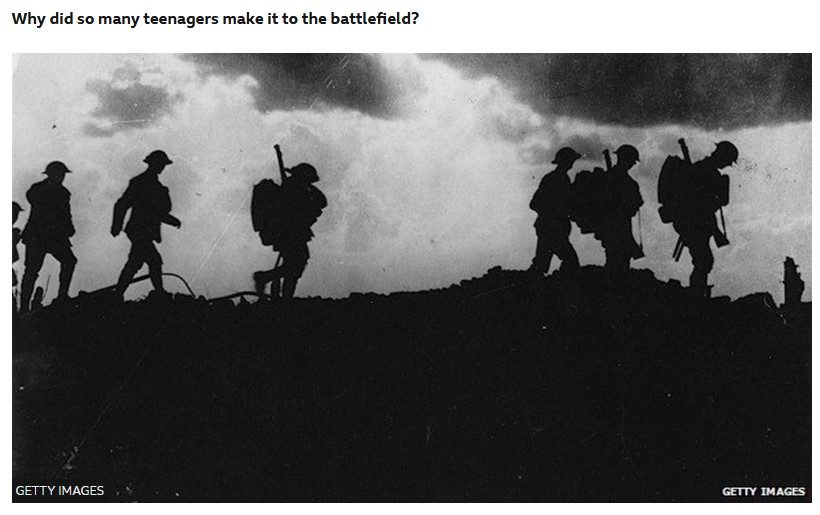
Hungry teenagers who expect their parents to be able to feed them. Decently…

“Fifteen-year-old Cyril Jose was a tin-miner’s son from Cornwall. With the region suffering from heavy unemployment, the boy with a strong sense of adventure joined up.”https://www.bbc.com/news/magazine-29934965

The Polish state broadcaster on Saturday suspended
a television journalist who, during the Olympic Games opening ceremony,
reacted to a performance of John Lennon’s “Imagine” by saying it was a “vision of communism.”

And now I wonder…

What kind of communism had Przemyslaw Babiarz, the Polish journalist, experienced?
And where, since the Polish people did not enjoy what had been dished to them by the communist rulers?!?

What a waste of energy….
John Lennon had invited us to dream!
The communists, the real ones, had acted worse than the worst robber barons.
What I had experienced under communist rule, in Romania, had nothing to do with what Lennon had invited us to dream about.
Comparing Lennon’s dreams with the crimes committed by the communists is narrow minded to say the least.
Firing a guy for airing a ‘less than inspired’ statement and pretending to do it in the name of “Mutual understanding, tolerance, reconciliation” is nothing short of idiocy!
For it gives ammunition, and plenty of it, to those who wish to torpedo any mutual understanding and tolerance that still survives.

My first hand experience has driven me to understand:
That ‘government’ – which is nothing but an instrument – will be hijacked whenever ‘the people’ doesn’t pay enough attention. Or has been incapacitated. One way or another.
That communism is just another pretext used by those yearning to hijack the government. And that those people would use any pretext to ‘prime’ the attention of those they want to use in their quest. In their quest to hijack the government.
That democracy – the kind that works – is not about electing the best man for the job. For the simple reason that there’s no way to determine what that person will have to do! The actual things they will be confronted with! In practice, the really useful kind of democracy is that which makes it simple for the people to remove from power/refuse those obviously unfit for the task.

For instance, what’s currently going on in Venezuela. The people tries to remove Maduro from office and the incumbent president refuses to go.

Sounds familiar?
Happened, tentatively, even where democracy was considered ‘too deep rooted to collapse’?

The third thing I understood living under a communist regime was that reproductive rights are very important. That if you want women to have more children, you have to make them ‘feel good’ about it!
That banning abortion will get you nowhere. That banning abortion – and books – will only show your true nature.

I’m vocal about these three things. Including on FB.
Exposing these ideas on FB made it so that I have friends who love Trump and friends who hate Trump.
As a matter of fact and all things considered, I’d describe myself as a Republican rather than as a Democrat. A never-Trumper Republican…

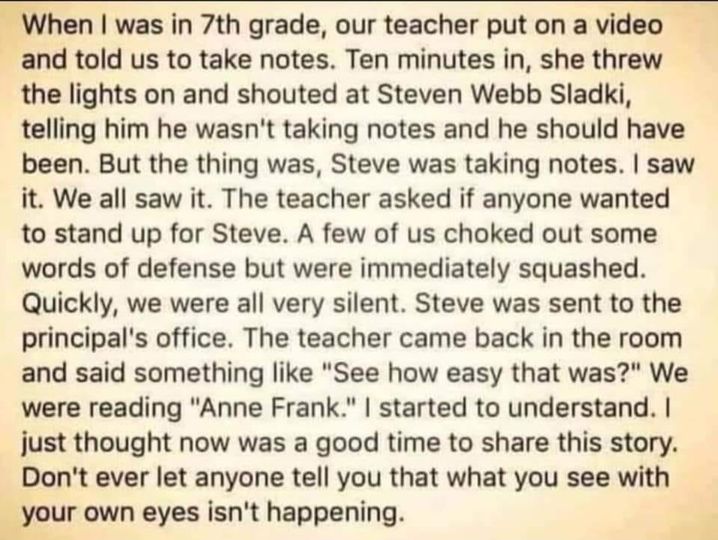
A couple of days ago, the meme above had been shared by a FB friend of mine. A Democrat.
Yesterday it was shared by a Trump die-hard.

Is this strange?

No, not really. We’re all people. Normal people concerned about the future.
The current situation is the consequence of what we’ve done.
Allowed ourselves to be divided into camps.
By those willing to do anything in order to hijack the government. Even if only temporarily.

How many of you cringe when hearing ‘X party/candidate has won the elections’?
Why do we continue to listen when the talking head/would be influencer makes such a horrible mistake?
An electoral process is about us deciding our fate, not a pageant!
Our collective fate!
We, as a community/people, are supposed to be the winners, not any of the candidates/parties…

“To use rules or laws to get what you want in an unfair but legal way”
From Longman Dictionary of Contemporary English

Having a name for ‘it’ means that we’re aware of it’s existence.
We’re still using it, though.
It is wise?

We’re not the first ones to use the method.
The HIV virus has somehow ‘learned’ to hide itself inside our immune system.
Not only to ‘bend the rules of life’ – all viruses do that for a living – but to bend the very rules of immunity!
But we are the first ones to use ‘it’ knowingly!

Not fully aware of the consequences but nevertheless on purpose!

How did we get here?

By ‘gaming’ the laws of nature!
Our ancestors believed flying was reserved for birds. By making good use of what we’ve learned about the ‘system’, we’ve been able to overcome many of our limitations.
We’ve also overcame our common sense…

We forget our planet is limited.
Vast but still limited.
We also tend to forget that our knowledge/understanding is also limited.
We’ve become so confident in our ability to game the system that we tend to ignore the two facts I’ve just mentioned.

Even worse, we’ve given up ‘the brotherhood of man’.
We’ve become humans by talking to each-other. By hunting together. By tilling the earth together.
Then we’ve started to fight. For the same earth we’ve been tilling together…
We’ve invented ‘capitalism’. A manner of doing business which relies mostly on trust. On the rational expectation that the partners will rather fulfill their respective parts of the deal than becoming known as fraudsters.
About the same time, we’ve also invented ‘democracy’. A social arrangement relying on mutual respect.

And we “saw that it was good“.
It lasted for a while…

Recently, capitalism has been gamed into a relentless hunt for profit.
Currently, democracy is being played with alternative facts.

We’re becoming viruses!
Some of us, anyway.


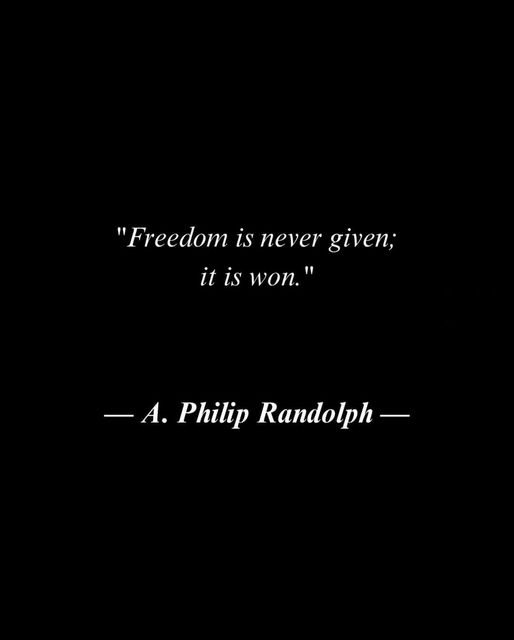
With Chandler Owen, A. Philip Randolph founded and became co-editor of The Messenger,
an African American socialist magazine, in 1917.
In 1925, Randolph established the first predominantly black labor union,
the Brotherhood of Sleeping Car Porters, to improve working conditions
for the nearly 10,000 black railroad employees.
The Brotherhood would enjoy longstanding prominence in the labor and civil rights movements.

According to the English lore, “there’s more than one way to skin a cat”.
According to the cat, ‘who cares about how I lose my coat? I’ll end up dead anyway!’
According to the fur tanners, ‘the manner of skinning the pelt is of utmost importance for the end-result of the operation’.

Whom to believe? Specially since all of them seem to be right…

Well, truth has a marked tendency for being complicated.
Hard to comprehend in its entirety and even harder to express in a concise manner.
Meanwhile we, conscious human beings, have a marked tendency to notice only what we’re interested in. To notice only what we care about…

In fact, the manner in which we notice things speaks volumes about who we are. About how we relate to what we call ‘reality’.

The white colonists inhabiting a certain area in Northern America had become ‘Free Americans’ after fighting the British. Only after they had freed themselves through battle!
A. Philip Randoph had fought for his freedom. And for human rights.

All this fighting leads to a bout of pondering.
Are we free together? As in ‘all of us’ and ‘once and for all’?
Or our freedom is defined against other people? Who might try to steal our liberty from us?

What is freedom, after all?
A zero sum game? Where liberty is up for grabs but in limited supply?
Or a ‘grace’ we impart with and upon our fellow human beings?
Something to be jealously guarded or something to be collectively and cooperatively maintained and enhanced?

And one final question.
Why would anyone attempt to steal other people’s freedom?
When history gives us plenty of evidence that whenever freedom was out to be shared people were happy while whenever freedom was in short supply the entire society eventually crumbled under it’s own weight…

Your Liberty To Swing Your Fist Ends
Just Where My Nose Begins

Now, what would you have done if this guy had started to swing his fists? In the very proximity of your precious nose?
“Stood your ground” or gave him enough ‘space to exercise’?

You’re not exactly comfortable with the current meaning of ‘stand your ground’?

Then maybe it’s high time for us to understand that ‘stand your ground’ is the direct consequence of ‘your liberty ends where my nose begins’.

Not comfortable with the current situation?

Then maybe it’s high time for us to come up with another definition for liberty.
One which brings forward the cooperative effort which made liberty possible in the first place.
Instead of the confrontational one currently in use. Which serves perfectly the interests of those powerful enough to define evolution as “survival of the fittest”.
Which serves perfectly the interests of those powerful enough to be convinced that only those able to defend their liberty are worthy to be free.

The key word here being “their”, not “liberty”!
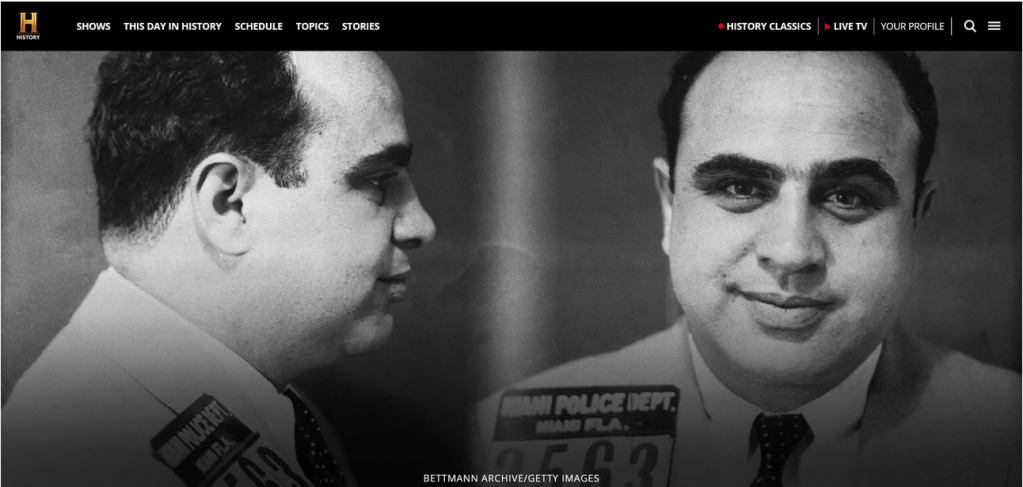
For this kind of people, for the Capones of this world, freedom – their freedom – is something to be appropriated rather than shared.

Think about it!
Do you remember the argument ‘the west has provoked the current situation’?

“Mr Farage said he had been arguing since the 1990s that “the ever eastward expansion” of the Nato military alliance and the EU was giving President Putin “a reason to [give to] his Russian people to say they’re coming for us again and to go to war”.
He added: “We provoked this war. Of course, it’s [President Putin’s] fault.””

What kind of freedom do we want?
For us and for our children?
The kind that must be constantly wrenched from the likes of Putin or one shared freely among all those present?
Built cooperatively or defended against all others?

Shaking willing hands or swinging fists?

The only thing I know is that I know nothing,
and i am not quite sure that i know that.

Socrates

“The demand for certainty is one which is natural to man,
but is nevertheless an intellectual vice.
To endure uncertainty is difficult, but so are most of the other virtues.“

Bertrand Russell

Socrates and Bertrand Russel, both, knew everything there was to be known in their respective times.
Socrates and Bertrand Russel, both, had enough guts to acknowledge their doubts. To themselves and to the rest of us.

On the other hand, Russell presents us with a very interesting riddle.
Is it possible for a naturally occurring thing to become a vice?

““Humans have an affinity for ethanol (plant-derived alcohol), and captive primates are well known to like to drink anthropogenically sourced ethanol,” Dudley told Sciam.com….
The appeal of naturally occurring alcohol has not yet been investigated because, in the handful of previous studies, animals expressed no interest. Anthropologist Katherine Milton of UC Berkeley surveyed primate researchers, working with 22 species, on whether they had seen animals reach for fermented fruit. All said they had not. Scientists at Israel’s Ben Gurion University of the Negev studying bats reported that the animals shunned foods with elevated alcohol concentrations, despite higher sugar levels. Perhaps this is because,  says animal physiologist Berry Pinshow, a co-author of that study, “a drunk bat is a dead bat.””

Cynthia Graber, Scientific American, 2008

Humans, and their pets, also get fat.
Humans – some of them and alone, this time – like to get ‘high’. Exclusively on naturally occurring substances, until recently.

Humans are the only animal species – known to ‘man’ – displaying a certain kind of consciousness. Self-awareness, as defined by Humberto Maturana. Also known as ‘Human Consciousness’.

So, consciousness drove us to become vicious?
To eat too much? To drink alcohol? To use drugs?
To introduce other animals to drugs? In the name of science

The way I see this, consciousness didn’t drive us to become vicious.
Only made it possible.

Being aware of ourselves – being able to observe ourselves ‘in the act’, according to Maturana – has added ‘purpose’ to the whole thing.
Animals do experience pleasure. Pet your pet and then call me a liar.
Animals have even learned from us to ask for pleasure. Many of our pets beg for food and to be petted.
But most wild animals – with the exception of pentailed treeshrews, whatever they might be – shun alcohol. While capable of learning to ‘douse their angst’ from us. In captivity…
Which makes us the only species which has learned to behave viciously on its own. By itself…

To over indulge on purpose.
Do you have a better definition for vice?

Which brings us back to Russell’s “intellectual vice”.

Which intellectual vice does have two aspects.
Overconfidence in one’s own intellectual prowess and over-reliance on other people’s expressed opinions, despite those opinions having a very slim chance of being true. The point being that the second aspect is a ‘simplification’ of the first one. The opinions believed despite being unrealistic do match the biases entertained by the believer.
By the ‘vicious’ believer, albeit the second aspect is less vicious than the first one. Where the overconfident should have known better.

To over-think on purpose.
To convince yourself of your own rectitude… on your own or with the help of others…