Archives for category: Choices we make

Imagine a beach.
Where enough of the patrons pick up rocks and throw them into a pile whenever they move around.
Where enough of the patrons throw the trash into the bin instead of leaving it for the employees to do .
Would you feel any better?

You don’t work there?
No, you don’t! But would you feel better?

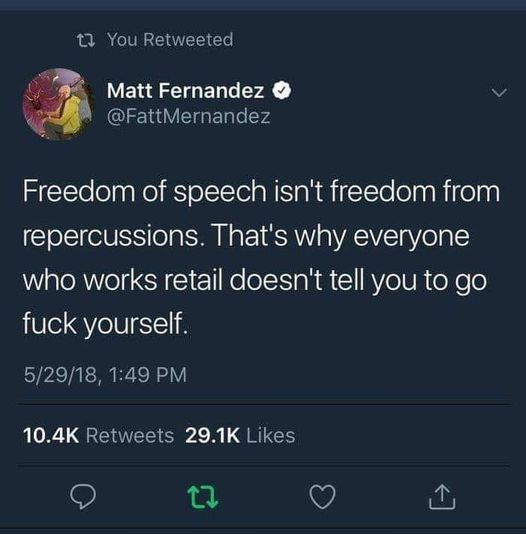
“Only freedom of speech with repercussions isn’t anything special.
That has existed throughout every dictatorship.
If we consider freedom of speech as a value,
it must be something else.”

Whenever somebody opens their mouth, they reveals things about themselves.

That’s a repercussion.

Whenever somebody acts upon information gleaned this way, those acts also have repercussions.

The repercussions belonging to the second category are the ones which ensure that, in the end, every dictatorship ends up in failure. In abject failure.

Out of fear, everybody shuts up. So nobody yells anymore ‘The emperor is naked. And about to be run over by a bus’. So the emperor, and his henchmen, end up hanged by an angry mob. Process usually called retribution. Or revolution?

““We are not extremists. We are just angry,” explains Lazar Potrebic, a 25-year-old from a Hungarian minority in Serbia who is entitled to vote.

He – and many of his peers – are worried about the future, and feel that the more traditional parties are not listening to their concerns.

“We feel like our needs are not being met. People our age are taking really important life steps. We’re getting our first jobs, thinking about starting a family…but if you look around Europe, rent prices are going through the roof – and it’s hard to get work.”

.

.

Of course the feeling of not being listened to when you’re young, of not being part of the equation, is nothing new. But many of the parties on the far right are actively courting the young vote, says Dave Sinardet, a professor of political science at the Free University of Brussels.

“The radical right channels anti-establishment feelings,” he told the BBC. “They have a bit of a rebellious vibe – especially when it comes to their anti-woke agenda – and that appeals to young people.””

I’m acquainted with a relatively large number of people. From all walks of life. My experience suggests that it’s not the ignorance which is the problem but our (collective) unwillingness to accept/assume it. After all, we are ignorant. All of us, albeit in various degrees. Even the smartest amongst us ‘controls’ more ignorance than knowledge.

The real problem stems from us being cock-sure about things. Across the board!

Some of the smart ones are fully aware about the fact that they don’t know everything. But only some.

Some of the ‘ignorant’ are aware of their ignorance. Not all of them, but way many more than the smart ones. Simply because it’s easier to notice how much more you have to learn when you are at the start of the process.

And the problem is compounded by the fact that some of the smart ones who have chosen to ignore their ignorance team up – or more exactly organize – the ignorant who refuse to learn. This being the reason for so many actual human beings behaving as if they were some faintly intelligent ‘bots’.

A process, a space and some consequences.

The process through which individual agents transmit and receive information.

The space inside which the above mentioned individuals do what ever they set their minds to do.
The stage used by each of us, according to our own goals and abilities, to perform our self assigned roles. Inside and/or outside the roles bestowed upon us by ‘fate’.

Consequences?
The shapes and content of our individual consciences.
Consciousnesses.
Culture, as the historically accrued trove of knowledge more or less accessible – through language and subjected to interpretation – to each of us.
Civilization, as the result of our cooperative effort to ‘make good’ the knowledge we have inherited and/or gleaned ourselves.

The Dunning-Kruger effect occurs
when a person’s lack of knowledge and skill in a certain area
causes them to overestimate their own competence.

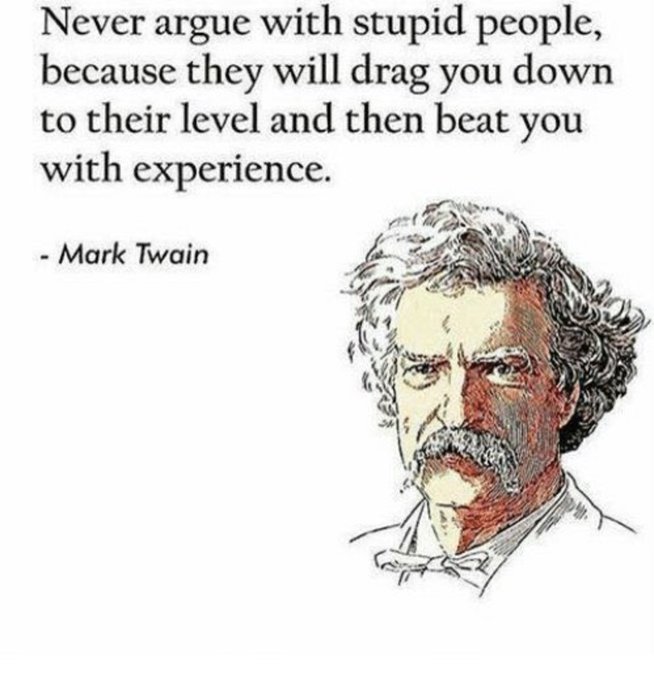
‘Experience’… as in “drag you down to their level and beat you with experience”…

But is this even possible?
For a really stupid individual to survive for so long?!? For long enough to become ‘old and experienced’…

Maybe we need to reconsider the whole thing!

My own experience – ‘Trust me, I’m an engineer!’ and I’m not kidding – strongly suggests that ‘bona fide’ stupidity is far less abundant than currently advertised.
The hard reality we have to deal with is the one described by the Dunning-Kruger effect.

Whenever we don’t understand other people’s actions, or motives, we tend to consider them as being stupid. Actions, motives and even the people themselves.
Specially when we experience the slightest discomfort as a consequence of such actions.

Furthermore, much of what is currently considered to be a consequence of stupidity is rather the result of accrued ‘misguided smartness’.

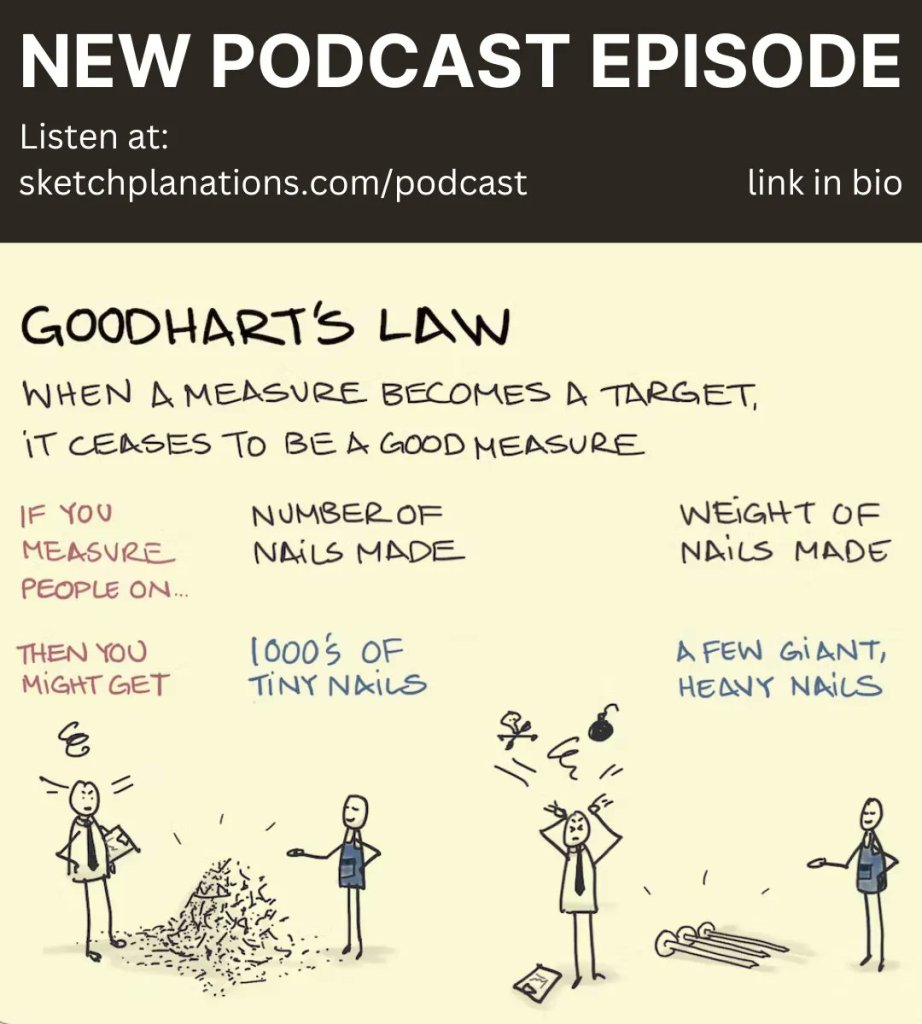
The law of unintended consequences
was first mentioned by British philosopher John Locke
when writing to parliament about the unintended effects of interest rate rises.
However, it was popularized in 1936 by
American sociologist Robert K. Merton who looked at
unexpected, unanticipated, and unintended consequences
and their impact on society.

On the other hand, never underestimate what mere happenstance can accomplish!

If you don’t fight like hell, you’re not going to have a country anymore!
Donald J. Trump, President of the USA, January 6, 2021,
Save America March, Washington DC
“The J6 hostages, I call them.
Nobody has been treated ever in history
so badly as those people nobody’s ever been treated in our country.”

Donald J. Trump, GOP Presidential candidate, January 5, 2024, Iowa.

A group of Colorado voters contends that Section 3 of the
Fourteenth Amendment to the Constitution prohibits for-
mer President Donald J. Trump, who seeks the Presidential
nomination of the Republican Party in this year’s election,
from becoming President again. The Colorado Supreme
Court agreed with that contention. It ordered the Colorado
secretary of state to exclude the former President from the
Republican primary ballot in the State and to disregard any
write-in votes that Colorado voters might cast for him.
Former President Trump challenges that decision on sev-
eral grounds. Because the Constitution makes Congress,
rather than the States, responsible for enforcing Section 3
against federal officeholders and candidates, we reverse.

Read carefully, this means that the Supreme Court of the USA is telling the Colorado Supreme Court:
‘Stand down, this is a matter too important to be decided state by state! This has to be settled at the federal level’!
Nota Bene, the gist of the matter – was Trump involved in insurrection? – remains in limbo!
The Supreme Court says nothing which might enlighten us about this subject.

“In interpreting what is meant by “liberty,” the
Court must guard against the natural human tendency to confuse
what the Fourteenth Amendment protects with the Court’s own ardent
views about the liberty that Americans should enjoy. For this reason
the Court has been “reluctant” to recognize rights that are not men-
tioned in the Constitution. Collins v. Harker Heights, 503 U. S. 115, 125.
Guided by the history and tradition that map the essential compo-
nents of the Nation’s concept of ordered liberty, the Court finds the
Fourteenth Amendment clearly does not protect the right to an abor-
tion. Until the latter part of the 20th century, there was no support in
American law for a constitutional right to obtain an abortion. No state
constitutional provision had recognized such a right. Until a few years
before Roe, no federal or state court had recognized such a right. Nor
had any scholarly treatise. Indeed, abortion had long been a crime in
every single State. At common law, abortion was criminal in at least
some stages of pregnancy and was regarded as unlawful and could
have very serious consequences at all stages. American law followed
the common law until a wave of statutory restrictions in the 1800s ex-
panded criminal liability for abortions. By the time the Fourteenth
Amendment was adopted, three-quarters of the States had made abor-
tion a crime at any stage of pregnancy. This consensus endured until
the day Roe was decided. Roe either ignored or misstated this history,
and Casey declined to reconsider Roe’s faulty historical analysis.

The Constitution does not confer a right to abortion; Roe and Casey are overruled; and the authority to regulate abortion is returned to the people and their elected representatives.

Do I have to remind you that up to 1865 it was legal, in some US states, for people to own other people?
People could be lawfully owned as slaves…
And “the people and their elected representatives” were OK with that. In some states!
So OK that a war had to be won by those who were not OK with “elected representatives” having the power to determine whether people could be owned. Only after the conclusion of that war the 13th Amendment could be adopted!
Enshrining each individual’s freedom to steer their own fate, within the confines of the law!

Fast forward back to our days.

When “elected representatives” – at state level – have been given back the power to determine how wide is the lawful space inside which a woman can dispose of her own body.
When “elected representatives” – at the same state level – are denied the power to ascertain whether a president, after losing an election, has incited his supporters to storm the Capitol.

And who has done that?
Who’s been determining what “the people and their elected representatives” might do at which level?
A team of nine individuals named by various presidents and only vetted by the Senate? Who are judging according to their “own ardent views about the liberty that Americans should enjoy.“?!?

“Weird” is not enough to describe this!

If ye continue in my word, then are ye my disciples indeed;
And ye shall know the truth, and the truth shall make you free.

John, 8:32

Bruno, Giordano Bruno, was speaking the truth.
Something we consider to be true…
Yet he ended his career as a definitely unfree person! At the hands of people who considered themselves to be disciples of Christ…

Something doesn’t add up!
Either at least some of the truth mentioned here isn’t actually true… or we’re dealing with altogether different truths!

The way I see it, Giordano Bruno had died because he was defending an absolute truth while his killers had never realized that the truth pronounced by Christ was relative.

Let me elaborate.

An absolute truth – there are many – is a piece of truth of the kind which will eventually trips over you.

‘Reckless driving will kill you’.
‘High water will knock down the levy’.
‘A red hot iron will brand a cow’.

Relative truth, which has many faces but is essentially one, depends on us.
According to Christ, those who follow his word – who remain his disciples – will know the truth. And will become free.

According to Christ, it is not possible for an individual to know the truth – nor become free – in an individual manner. To accomplish the feat, WE have to follow his word.

We have to ‘love’ each-other. To respect each-other!
To turn the other cheek…

For us to be able to get near the truth – near the many absolute truths that are there – we need to share whatever knowledge we have.
Keeping anything hidden from our brethren – not turning the other cheek for ‘inspection’ – means disrespect. Means distrust. Lack of love. Inability to be in communion with the rest. Incapacity – or unwillingness – to partake in the same piece of reality. To partake in the same piece of absolute truth.

This is why Christ, who was right, has been killed. By those who didn’t want to share freedom. Who wanted to keep freedom for their own use. Who wanted to restrict the freedom of others.
This is why Bruno, who was right, has been killed. By people who behaved exactly – and for the same reasons – like those who have killed Christ. Despite declaring themselves to be the disciples of Christ…

Truth and freedom are human concepts. Words.
Both need us, human action, to become reality.
Both need us, working in communion, to become practice!

Individual absolute truths are relative to us. Are relative to us noticing, formulating, sharing and validating each of them.
‘Relative truth’, the ‘only one’, is absolute. In the sense that the only absolute – and definitive – truth is the fact that we can learn, and become free, only in concert. Respectfully helping each-other.

Question: Where was God at Auschwitz?
Answer: Where was Man at Auschwitz?

What do Jews think about God not intervening in the Holocaust to save His chosen people?

“An old Jewish Rabbi dies and goes to heaven. He stands in line for a while for his chance to meet God in person.
His turn comes and he steps forward.
God says “Welcome. Do you have any questions for me?”
Rabbi: “No, I just want to tell you a joke about my time in that concentration camp.”
God: “How can you joke about such a thing?”
Rabbi: “I guess you had to be there.” “

‘A proposition needs more than ‘mere’ Logic
in order to be True.
It also needs to be epistemologically correct.’

Oscar Hoffman, 1930-2017

This morning (February 22, 2013, thanks FB) I had a very interesting discussion with my son.

Trying to ‘soften’ him up to my arguments I said: “I don’t understand how a person with such a command of logic as yourself is unwilling to accept that…”

I should have seen this coming:
“If you have such an admiration for MY logic why don’t YOU accept that…”
That very moment I recalled a lecture by Professor Oscar Hoffman: ‘A proposition needs more than ‘mere’ Logic…’

How do you translate that to a 13 years old?

“Look here. Being Logical is only the beginning. You cannot do anything without it but it isn’t enough just by itself. It’s only the formal side of Things”.
And that was the very moment when inspiration hit me:
“Let me give you an example. You have a lot of wooden pieces: spheres, cubes, pyramids, cylinders, cones..etc. and two boards with holes in them: circles, squares, triangles. Your task is to put each wooden piece through the corresponding hole but you must also follow a second rule: half the wooden pieces are made of red oak and they belong to the red board while the other half are made of birch and they belong to the blue board”.

“Let’s presume you have no idea about either geometry or kinds of wood. Using logic you might separate red oak from fir using the grain and then learn to thread various shapes each through the corresponding hole. But no amount of logic will ever enable you to associate the correct pile of wooden pieces to which colored board unless somebody tells you which pile is made of red oak and which pile is made of fir.
Savvy?”

I’m proud to report that he got the point!

Present day edit.
He remembers the discussion but neither of us can recall where it started!

Language is the tool we use to convey information.
To speak our minds…

The consequences of tool use – messages, in this case – depend on the yielder.
The consequences of shooting a gun depend mainly on the person aiming the gun.
The consequences of using language … depend on those who are at the both ends of the ‘barrel’.

Messages – consequences of language being used to put together batches of information with the intent of transmitting them to an audience – are interpreted as soon as they reach their ‘target’.
Meaning – what the receptor makes of a message, using the same languaging tools as those put to work by the emitter – depends mainly on the receptor. In fact, most of the times, there’s more information to be gleaned from a message than that intended to be conveyed by the person initiating the exchange.

The text attributed to Orwell is too simplistic and too misleading to had been penned by Orwell.
Hence Google…
There is no substantive evidence that George Orwell who died in 1950 made this remark. The earliest known matching statement appeared in a column in the Washington Times newspaper written by the film critic and essayist Richard Grenier in 1993

If interested in who said what and what Orwell thought about the subject… just click on the link above.
I’ll only add the reasons for which I know it to be a misleading affirmation.

The factual truth is that only dictators need to be guarded by rough men during their sleep. And during the rest of their lives…
We, the rest of ‘the people’, go to sleep at night knowing there’s only a very slim chance to be targeted by thieves. Yes, we know that the police will likely come to investigate after the fact. After the fact…
But we also know that we are less likely to fall prey to violence than those living in other countries because our societies work better than those which are more violent than ours.

Because our society works better, not because we employ more ‘rough men’ to guard us…
On the contrary!
The more violent a country, the more ‘popular’ the ‘rough men’ are. On both ‘sides of the isle’!

And the more violent a country, the less peacefully people sleep in that country…