Archives for category: Choices we make

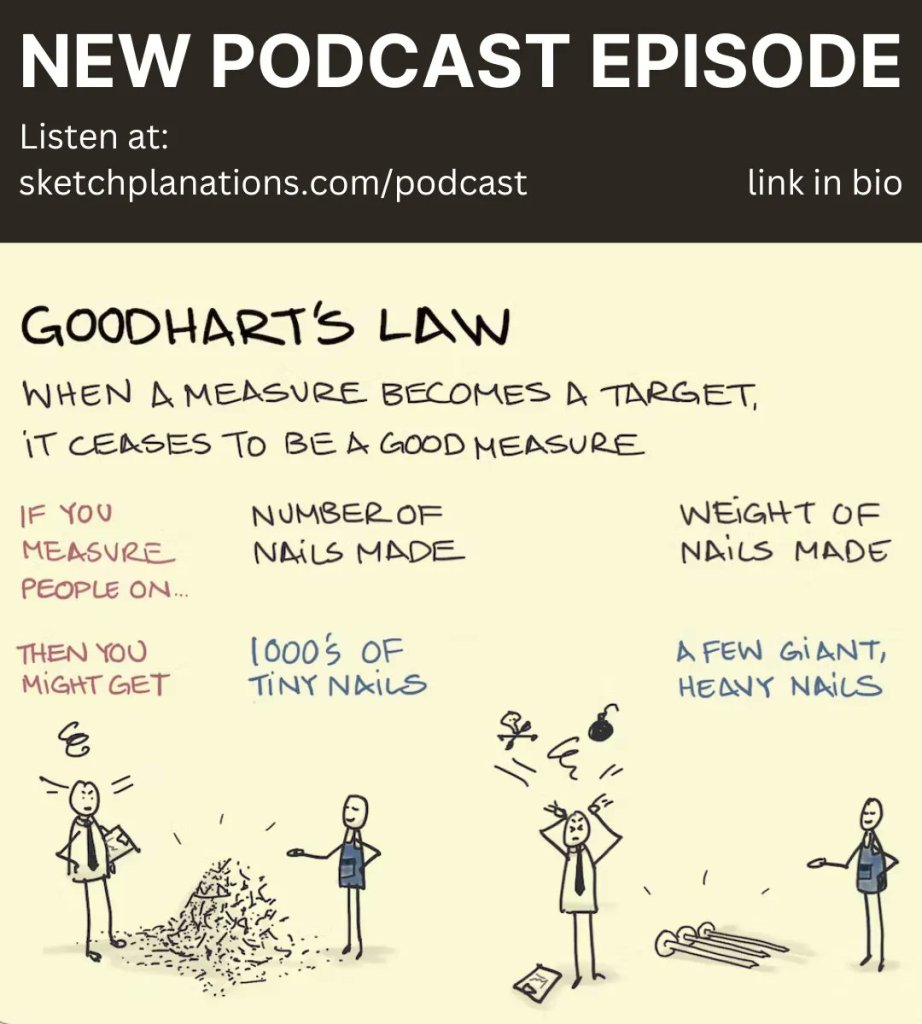
“To use rules or laws to get what you want in an unfair but legal way”
From Longman Dictionary of Contemporary English

Having a name for ‘it’ means that we’re aware of it’s existence.
We’re still using it, though.
It is wise?

We’re not the first ones to use the method.
The HIV virus has somehow ‘learned’ to hide itself inside our immune system.
Not only to ‘bend the rules of life’ – all viruses do that for a living – but to bend the very rules of immunity!
But we are the first ones to use ‘it’ knowingly!

Not fully aware of the consequences but nevertheless on purpose!

How did we get here?

By ‘gaming’ the laws of nature!
Our ancestors believed flying was reserved for birds. By making good use of what we’ve learned about the ‘system’, we’ve been able to overcome many of our limitations.
We’ve also overcame our common sense…

We forget our planet is limited.
Vast but still limited.
We also tend to forget that our knowledge/understanding is also limited.
We’ve become so confident in our ability to game the system that we tend to ignore the two facts I’ve just mentioned.

Even worse, we’ve given up ‘the brotherhood of man’.
We’ve become humans by talking to each-other. By hunting together. By tilling the earth together.
Then we’ve started to fight. For the same earth we’ve been tilling together…
We’ve invented ‘capitalism’. A manner of doing business which relies mostly on trust. On the rational expectation that the partners will rather fulfill their respective parts of the deal than becoming known as fraudsters.
About the same time, we’ve also invented ‘democracy’. A social arrangement relying on mutual respect.

And we “saw that it was good“.
It lasted for a while…

Recently, capitalism has been gamed into a relentless hunt for profit.
Currently, democracy is being played with alternative facts.

We’re becoming viruses!
Some of us, anyway.

With Chandler Owen, A. Philip Randolph founded and became co-editor of The Messenger,
an African American socialist magazine, in 1917.
In 1925, Randolph established the first predominantly black labor union,
the Brotherhood of Sleeping Car Porters, to improve working conditions
for the nearly 10,000 black railroad employees.
The Brotherhood would enjoy longstanding prominence in the labor and civil rights movements.

According to the English lore, “there’s more than one way to skin a cat”.
According to the cat, ‘who cares about how I lose my coat? I’ll end up dead anyway!’
According to the fur tanners, ‘the manner of skinning the pelt is of utmost importance for the end-result of the operation’.

Whom to believe? Specially since all of them seem to be right…

Well, truth has a marked tendency for being complicated.
Hard to comprehend in its entirety and even harder to express in a concise manner.
Meanwhile we, conscious human beings, have a marked tendency to notice only what we’re interested in. To notice only what we care about…

In fact, the manner in which we notice things speaks volumes about who we are. About how we relate to what we call ‘reality’.

The white colonists inhabiting a certain area in Northern America had become ‘Free Americans’ after fighting the British. Only after they had freed themselves through battle!
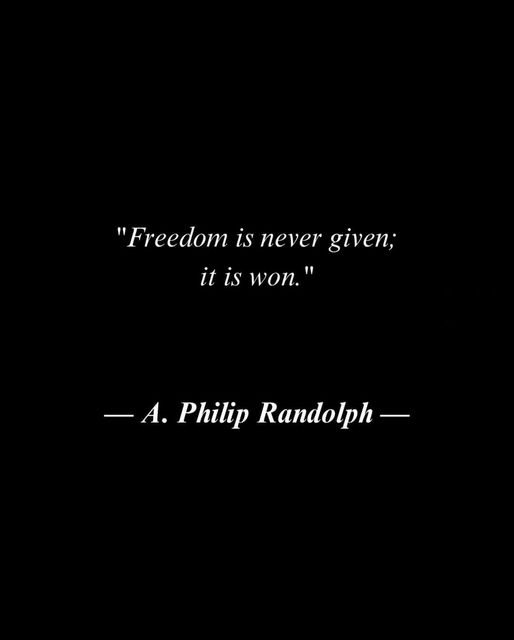
A. Philip Randoph had fought for his freedom. And for human rights.

All this fighting leads to a bout of pondering.
Are we free together? As in ‘all of us’ and ‘once and for all’?
Or our freedom is defined against other people? Who might try to steal our liberty from us?

What is freedom, after all?
A zero sum game? Where liberty is up for grabs but in limited supply?
Or a ‘grace’ we impart with and upon our fellow human beings?
Something to be jealously guarded or something to be collectively and cooperatively maintained and enhanced?

And one final question.
Why would anyone attempt to steal other people’s freedom?
When history gives us plenty of evidence that whenever freedom was out to be shared people were happy while whenever freedom was in short supply the entire society eventually crumbled under it’s own weight…

Your Liberty To Swing Your Fist Ends
Just Where My Nose Begins

Now, what would you have done if this guy had started to swing his fists? In the very proximity of your precious nose?
“Stood your ground” or gave him enough ‘space to exercise’?

You’re not exactly comfortable with the current meaning of ‘stand your ground’?

Then maybe it’s high time for us to understand that ‘stand your ground’ is the direct consequence of ‘your liberty ends where my nose begins’.

Not comfortable with the current situation?

Then maybe it’s high time for us to come up with another definition for liberty.
One which brings forward the cooperative effort which made liberty possible in the first place.
Instead of the confrontational one currently in use. Which serves perfectly the interests of those powerful enough to define evolution as “survival of the fittest”.
Which serves perfectly the interests of those powerful enough to be convinced that only those able to defend their liberty are worthy to be free.

The key word here being “their”, not “liberty”!
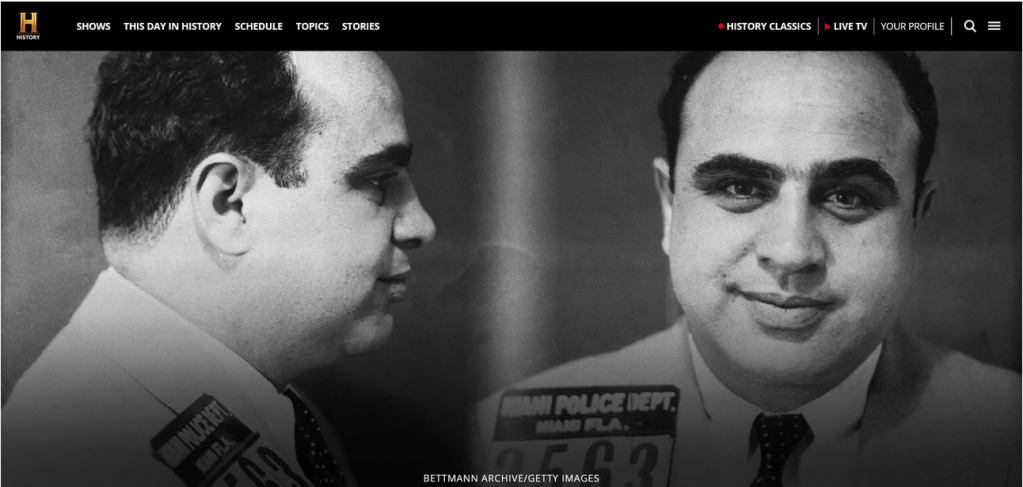
For this kind of people, for the Capones of this world, freedom – their freedom – is something to be appropriated rather than shared.

Think about it!
Do you remember the argument ‘the west has provoked the current situation’?

“Mr Farage said he had been arguing since the 1990s that “the ever eastward expansion” of the Nato military alliance and the EU was giving President Putin “a reason to [give to] his Russian people to say they’re coming for us again and to go to war”.
He added: “We provoked this war. Of course, it’s [President Putin’s] fault.””

What kind of freedom do we want?
For us and for our children?
The kind that must be constantly wrenched from the likes of Putin or one shared freely among all those present?
Built cooperatively or defended against all others?

Shaking willing hands or swinging fists?

The only thing I know is that I know nothing,
and i am not quite sure that i know that.

Socrates

“The demand for certainty is one which is natural to man,
but is nevertheless an intellectual vice.
To endure uncertainty is difficult, but so are most of the other virtues.“

Bertrand Russell

Socrates and Bertrand Russel, both, knew everything there was to be known in their respective times.
Socrates and Bertrand Russel, both, had enough guts to acknowledge their doubts. To themselves and to the rest of us.

On the other hand, Russell presents us with a very interesting riddle.
Is it possible for a naturally occurring thing to become a vice?

““Humans have an affinity for ethanol (plant-derived alcohol), and captive primates are well known to like to drink anthropogenically sourced ethanol,” Dudley told Sciam.com….
The appeal of naturally occurring alcohol has not yet been investigated because, in the handful of previous studies, animals expressed no interest. Anthropologist Katherine Milton of UC Berkeley surveyed primate researchers, working with 22 species, on whether they had seen animals reach for fermented fruit. All said they had not. Scientists at Israel’s Ben Gurion University of the Negev studying bats reported that the animals shunned foods with elevated alcohol concentrations, despite higher sugar levels. Perhaps this is because,  says animal physiologist Berry Pinshow, a co-author of that study, “a drunk bat is a dead bat.””

Cynthia Graber, Scientific American, 2008

Humans, and their pets, also get fat.
Humans – some of them and alone, this time – like to get ‘high’. Exclusively on naturally occurring substances, until recently.

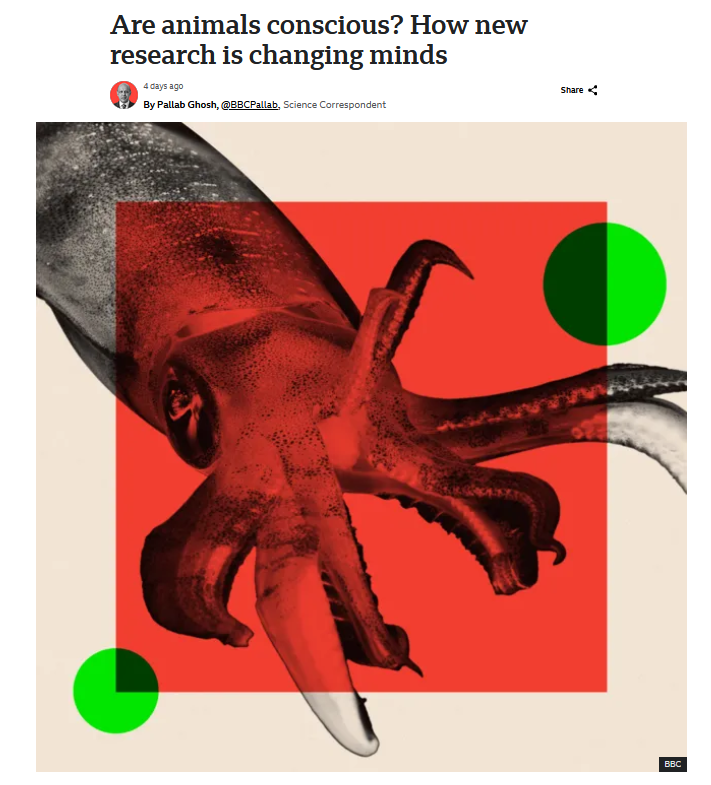
Humans are the only animal species – known to ‘man’ – displaying a certain kind of consciousness. Self-awareness, as defined by Humberto Maturana. Also known as ‘Human Consciousness’.

So, consciousness drove us to become vicious?
To eat too much? To drink alcohol? To use drugs?
To introduce other animals to drugs? In the name of science

The way I see this, consciousness didn’t drive us to become vicious.
Only made it possible.

Being aware of ourselves – being able to observe ourselves ‘in the act’, according to Maturana – has added ‘purpose’ to the whole thing.
Animals do experience pleasure. Pet your pet and then call me a liar.
Animals have even learned from us to ask for pleasure. Many of our pets beg for food and to be petted.
But most wild animals – with the exception of pentailed treeshrews, whatever they might be – shun alcohol. While capable of learning to ‘douse their angst’ from us. In captivity…
Which makes us the only species which has learned to behave viciously on its own. By itself…

To over indulge on purpose.
Do you have a better definition for vice?

Which brings us back to Russell’s “intellectual vice”.

Which intellectual vice does have two aspects.
Overconfidence in one’s own intellectual prowess and over-reliance on other people’s expressed opinions, despite those opinions having a very slim chance of being true. The point being that the second aspect is a ‘simplification’ of the first one. The opinions believed despite being unrealistic do match the biases entertained by the believer.
By the ‘vicious’ believer, albeit the second aspect is less vicious than the first one. Where the overconfident should have known better.

To over-think on purpose.
To convince yourself of your own rectitude… on your own or with the help of others…

Imagine a beach.
Where enough of the patrons pick up rocks and throw them into a pile whenever they move around.
Where enough of the patrons throw the trash into the bin instead of leaving it for the employees to do .
Would you feel any better?

You don’t work there?
No, you don’t! But would you feel better?

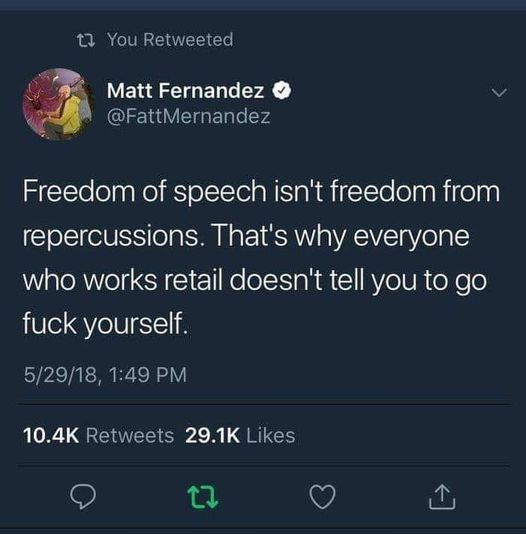
“Only freedom of speech with repercussions isn’t anything special.
That has existed throughout every dictatorship.
If we consider freedom of speech as a value,
it must be something else.”

Whenever somebody opens their mouth, they reveals things about themselves.

That’s a repercussion.

Whenever somebody acts upon information gleaned this way, those acts also have repercussions.

The repercussions belonging to the second category are the ones which ensure that, in the end, every dictatorship ends up in failure. In abject failure.

Out of fear, everybody shuts up. So nobody yells anymore ‘The emperor is naked. And about to be run over by a bus’. So the emperor, and his henchmen, end up hanged by an angry mob. Process usually called retribution. Or revolution?

““We are not extremists. We are just angry,” explains Lazar Potrebic, a 25-year-old from a Hungarian minority in Serbia who is entitled to vote.

He – and many of his peers – are worried about the future, and feel that the more traditional parties are not listening to their concerns.

“We feel like our needs are not being met. People our age are taking really important life steps. We’re getting our first jobs, thinking about starting a family…but if you look around Europe, rent prices are going through the roof – and it’s hard to get work.”

.

.

Of course the feeling of not being listened to when you’re young, of not being part of the equation, is nothing new. But many of the parties on the far right are actively courting the young vote, says Dave Sinardet, a professor of political science at the Free University of Brussels.

“The radical right channels anti-establishment feelings,” he told the BBC. “They have a bit of a rebellious vibe – especially when it comes to their anti-woke agenda – and that appeals to young people.””

I’m acquainted with a relatively large number of people. From all walks of life. My experience suggests that it’s not the ignorance which is the problem but our (collective) unwillingness to accept/assume it. After all, we are ignorant. All of us, albeit in various degrees. Even the smartest amongst us ‘controls’ more ignorance than knowledge.

The real problem stems from us being cock-sure about things. Across the board!

Some of the smart ones are fully aware about the fact that they don’t know everything. But only some.

Some of the ‘ignorant’ are aware of their ignorance. Not all of them, but way many more than the smart ones. Simply because it’s easier to notice how much more you have to learn when you are at the start of the process.

And the problem is compounded by the fact that some of the smart ones who have chosen to ignore their ignorance team up – or more exactly organize – the ignorant who refuse to learn. This being the reason for so many actual human beings behaving as if they were some faintly intelligent ‘bots’.

A process, a space and some consequences.

The process through which individual agents transmit and receive information.

The space inside which the above mentioned individuals do what ever they set their minds to do.
The stage used by each of us, according to our own goals and abilities, to perform our self assigned roles. Inside and/or outside the roles bestowed upon us by ‘fate’.

Consequences?
The shapes and content of our individual consciences.
Consciousnesses.
Culture, as the historically accrued trove of knowledge more or less accessible – through language and subjected to interpretation – to each of us.
Civilization, as the result of our cooperative effort to ‘make good’ the knowledge we have inherited and/or gleaned ourselves.

The Dunning-Kruger effect occurs
when a person’s lack of knowledge and skill in a certain area
causes them to overestimate their own competence.

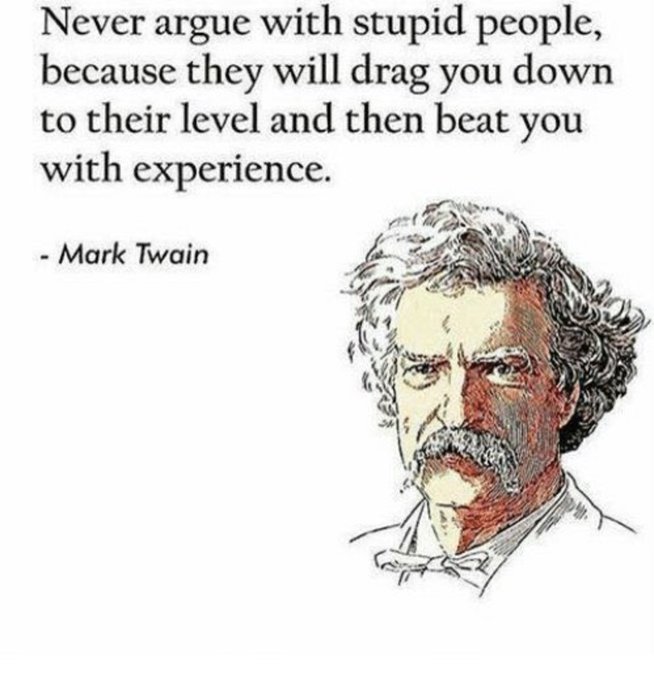
‘Experience’… as in “drag you down to their level and beat you with experience”…

But is this even possible?
For a really stupid individual to survive for so long?!? For long enough to become ‘old and experienced’…

Maybe we need to reconsider the whole thing!

My own experience – ‘Trust me, I’m an engineer!’ and I’m not kidding – strongly suggests that ‘bona fide’ stupidity is far less abundant than currently advertised.
The hard reality we have to deal with is the one described by the Dunning-Kruger effect.

Whenever we don’t understand other people’s actions, or motives, we tend to consider them as being stupid. Actions, motives and even the people themselves.
Specially when we experience the slightest discomfort as a consequence of such actions.

Furthermore, much of what is currently considered to be a consequence of stupidity is rather the result of accrued ‘misguided smartness’.

The law of unintended consequences
was first mentioned by British philosopher John Locke
when writing to parliament about the unintended effects of interest rate rises.
However, it was popularized in 1936 by
American sociologist Robert K. Merton who looked at
unexpected, unanticipated, and unintended consequences
and their impact on society.

On the other hand, never underestimate what mere happenstance can accomplish!

If you don’t fight like hell, you’re not going to have a country anymore!
Donald J. Trump, President of the USA, January 6, 2021,
Save America March, Washington DC
“The J6 hostages, I call them.
Nobody has been treated ever in history
so badly as those people nobody’s ever been treated in our country.”

Donald J. Trump, GOP Presidential candidate, January 5, 2024, Iowa.

A group of Colorado voters contends that Section 3 of the
Fourteenth Amendment to the Constitution prohibits for-
mer President Donald J. Trump, who seeks the Presidential
nomination of the Republican Party in this year’s election,
from becoming President again. The Colorado Supreme
Court agreed with that contention. It ordered the Colorado
secretary of state to exclude the former President from the
Republican primary ballot in the State and to disregard any
write-in votes that Colorado voters might cast for him.
Former President Trump challenges that decision on sev-
eral grounds. Because the Constitution makes Congress,
rather than the States, responsible for enforcing Section 3
against federal officeholders and candidates, we reverse.

Read carefully, this means that the Supreme Court of the USA is telling the Colorado Supreme Court:
‘Stand down, this is a matter too important to be decided state by state! This has to be settled at the federal level’!
Nota Bene, the gist of the matter – was Trump involved in insurrection? – remains in limbo!
The Supreme Court says nothing which might enlighten us about this subject.

“In interpreting what is meant by “liberty,” the
Court must guard against the natural human tendency to confuse
what the Fourteenth Amendment protects with the Court’s own ardent
views about the liberty that Americans should enjoy. For this reason
the Court has been “reluctant” to recognize rights that are not men-
tioned in the Constitution. Collins v. Harker Heights, 503 U. S. 115, 125.
Guided by the history and tradition that map the essential compo-
nents of the Nation’s concept of ordered liberty, the Court finds the
Fourteenth Amendment clearly does not protect the right to an abor-
tion. Until the latter part of the 20th century, there was no support in
American law for a constitutional right to obtain an abortion. No state
constitutional provision had recognized such a right. Until a few years
before Roe, no federal or state court had recognized such a right. Nor
had any scholarly treatise. Indeed, abortion had long been a crime in
every single State. At common law, abortion was criminal in at least
some stages of pregnancy and was regarded as unlawful and could
have very serious consequences at all stages. American law followed
the common law until a wave of statutory restrictions in the 1800s ex-
panded criminal liability for abortions. By the time the Fourteenth
Amendment was adopted, three-quarters of the States had made abor-
tion a crime at any stage of pregnancy. This consensus endured until
the day Roe was decided. Roe either ignored or misstated this history,
and Casey declined to reconsider Roe’s faulty historical analysis.

The Constitution does not confer a right to abortion; Roe and Casey are overruled; and the authority to regulate abortion is returned to the people and their elected representatives.

Do I have to remind you that up to 1865 it was legal, in some US states, for people to own other people?
People could be lawfully owned as slaves…
And “the people and their elected representatives” were OK with that. In some states!
So OK that a war had to be won by those who were not OK with “elected representatives” having the power to determine whether people could be owned. Only after the conclusion of that war the 13th Amendment could be adopted!
Enshrining each individual’s freedom to steer their own fate, within the confines of the law!

Fast forward back to our days.

When “elected representatives” – at state level – have been given back the power to determine how wide is the lawful space inside which a woman can dispose of her own body.
When “elected representatives” – at the same state level – are denied the power to ascertain whether a president, after losing an election, has incited his supporters to storm the Capitol.

And who has done that?
Who’s been determining what “the people and their elected representatives” might do at which level?
A team of nine individuals named by various presidents and only vetted by the Senate? Who are judging according to their “own ardent views about the liberty that Americans should enjoy.“?!?

“Weird” is not enough to describe this!