Archives for category: Choices we make

Civilizations rarely collapse in moments of chaos.
More often, they decay through a sequence of decisions
designed to postpone accountability.
By the time destruction arrives, it feels abrupt
only to those who refused to look directly
at what was already happening.

Genny Harrison

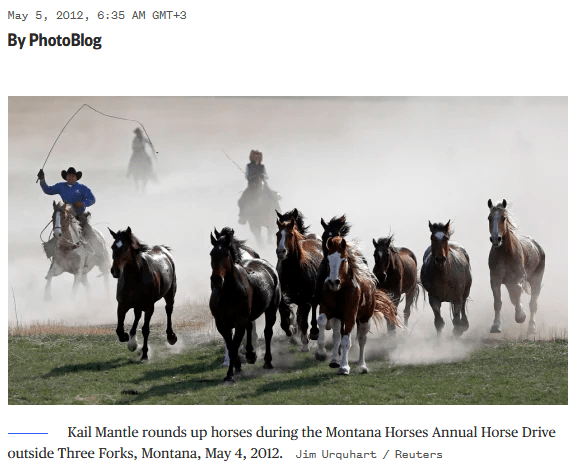
At some point, there were way more driven/ridden horses than wild ones.
Currently, there are substantial numbers of cows, chicken, pigs and so on raised by humans and almost no wild brethren of the above mentioned animals. Same with quite a number of plants.

Are we even aware of the whole situation?

Why?
Because so few of us are still needed when it comes to ‘raising food’?

I’m afraid we’re very soon going to face the consequences.
Directly!

Neo-liberalism – a ‘folly’, to be polite – was, and continues to be, a reaction to an all-encompassing left wing etatism. A reaction to the overbearing attitude of the government. Of too many of the governments around the world.
The fact that neo-liberalism has ‘gone too far’, way too far ‘in the right direction’, doesn’t excuse etatism. One folly doesn’t justify another.
Since Milei’s Argentina is a particularly poignant example of neo-liberalism, I may very well point out that ‘it takes two to tango’…
As for the root of all our problems… that’s ideology itself. Left, right… each and everyone of them. Each of every pre-scripted attitudes we tend to adopt when trying to cope with the excesses we need to survive on a daily basis.
We no longer examine the factual reality whenever we need to figure something out. To solve a problem. To cope with a situation.

We check what ‘our’ ideology has to say about the subject…

Evolution is not as much about the survival of the fittest
as it is about the demise of the unfit‘.
Ernst Mayr, What Evolution Is

As an engineer, I’m more concerned about consequences than fascinated by explanation.
OK, explanation – as in understanding the process – is necessary when trying to improve things. To fine tune. To ‘increase efficiency’…
But ‘survival wise’… sometimes it’s enough to bring things back to square 1. To repair. Specifically when the thing which no longer works used to make wonders.

Passeist? Anti-progressive?!?
No, as I already mentioned, I’m just a ‘don’t fix it if it’s not broken’ engineer. And currently … IT is broken.

Democracy doesn’t work anymore. Not like it used to, anyway!
If we want to fix it, we don’t necessarily need to understand what happened. Only to return democracy back to where it was.
For that, we need to understand what democracy is, not what had happened to it.

Looking back, we notice that all authoritarian regimes had failed. Crumbled under their own weight, usually, and failed abysmally when attacked from outside. Usually, again.
While no democratic regime had ever failed as long as it had managed to conserve its democratic nature.

‘But the Pharaohs have run Ancient Egypt for three millennia, give or take. In a very authoritarian manner…. they were absolute monarchs, you know!’
Not so fast. During those three millennia, The Ancient Egypt had been run by 33 dynasties. By 33 different authoritarian regimes… When each of those dynasties were no longer able to run the country – when each regime fell under the weight of its own mistakes, with or without ‘outside’ contribution – another dynasty, the next one, took over. ‘Usually’ not in a nice manner…
Same goes for all other authoritarian regimes!

While under a democratic regime, whenever those at the helm of the government start behaving badly, or commit too many mistakes, they are changed in a peaceful manner.

So, basically, democracy is a social arrangement which is able to change itself. To adapt! To what happens inside or outside it.
While the authoritarian rulers do their best – or worse? – to conserve their own power/position at the helm, the democratic regimes contribute to the survival of the entire society.
For as long as they manage to conserve their true democratic nature. Their openness. Their ability to depose those who overcome their welcome at the helm of the government.

Corruption kills.
Sometimes literally.

Some ten years ago – 2015, October 30 – a fire broke out in a Bucharest night-club.
64 people died on the spot, including 4 members of the band. “The day we give is the day we die” was one of the tunes Goodbye to Gravity played that night.

The inquiry had determined that corruption was the main cause for what had happened. Safety certificates issued outside any norms, dysfunctional health care, unresponsive authorities… Massive popular protest forced the prime-minister to resign.
Things are better now, in Romania, but only slightly. Too slightly…

The point being that we’ve been warned.
Lord Acton: “Power tends to corrupt and absolute power corrupts absolutely.
Frank Herbert: “It is not that power corrupts but that it is magnetic to the corruptible.

Both were right.
Power both corrupts and is a magnet for the corruptible!
Hence we need to keep it in check…

Nothing moves without power. We need it. To make things happen.
We also need to survive. To remain alive after things will have happened!

In order to do that, we need to understand something.
About the thing which may derail the whole thing.
About corruption!

Current events – Andriy Yermak resigning his post in Ukraine and Federica Mogherini being detained – are hailed as being ‘flaws’. As highlighting the weakness of Ukraine and the EU, respectively. Their ‘unworthiness’.

I forcefully disagree.
Corruption, like decay, is a natural thing.

Let me put it in a different perspective.
Decay may happen in an abandoned fridge. A closed space in which all kind of ‘unnatural things’ will happen if left unattended.
Decay naturally takes place in a forest. Where ‘no longer living’ organisms ‘turn back to dust’.

A fridge – which is a dead thing, specially when abandoned – is incapable of managing anything. Including a process of decaying.
A forest – which is a meta-living organism, if you’ll allow this expression – thrives as long as natural processes can take place. Decaying being one of the most important ones.

Same thing goes for societies.
Open societies – the ones known as democracies – are no more and no less ‘corrupt’ than the closed ones. The ones usually known as autocracies. In the sense that those in powerful positions are equally tempted by corruption. Equally tempted to misuse their power…
The difference being that the open societies deal with corruption in an open manner. Above the board. In public. In a court of law.
While autocracies deal with the corrupt people only when the autocrat allows it. Only when the autocrat feels that a particular act of corruption is detrimental for his own well being…

So.
Every time an open society exposes an act of corruption, that society becomes stronger.
While autocratic regimes are corrupt from top to bottom. By definition. Very much similar to an abandoned fridge brimming with ‘hairy’ things.

Winning the war is not enough.


At the end of WWI, the vanquished was left to her own devices. After having been saddled with huge war reparations. The US – whose President, Woodrow Wilson, had been the brain behind the League of Nations – went back into its ‘splendid isolation’.
Adolf Hitler rose to power. Conquered the western part of Europe and then attacked the Soviet Union, convinced that the US would not intervene into the conflict. Convinced that ‘Western Civilization’ had become weak. That the good life enjoyed by those living there had ‘mellowed’ the people. Read ‘castrated’.
Japan was convinced that attacking the US was a good idea. For more or less the same reasons used by Hitler to convince himself that America wasn’t going to fight back.

America had to fight on two fronts. For otherwise all her partners would have been conquered. For otherwise America would have been left alone…

Any resemblance with the current situation, when America seems to be extracting herself from the European front and when Russia has been left to her own devices after loosing the Cold War, is purely coincidental. And since there’s no such thing as a coincidence…

Doing business is not enough.
America and Nazi Germany did a lot of business.
Nazi Germany and the Soviet Union did a lot of business.
The EU and the US did a lot of business with Russia.

WWII is ample proof.
Winning a war is useless unless followed by a workable peace. Which comprises the integration between the victor and the vanquished.

Yet winning the war comes first.
Any attempt to integrate an unrepentant aggressor is doomed to fail.
1938 Munich Agreement and 2014 Crimea should be enough.

Things – every’thing’, actually – are/is relative.
Relative to the agent evaluating each of those things
.
Accordin’ to Einstein, that is.
He was the one who taught us to use whatever reference frame suits our needs.

Do you reckon anybody wasted any time or energy thinking about freedom before the advent of slavery?
Me neither.
Forget about the fact that, in those times, people didn’t have much time left for abstract thinking. Finding food and enjoying it with friends kind of drains your energy when you have to do it yourself… The point being that, in those times, everybody was free. Hence ‘had’ nothing to compare freedom with… No lack of freedom, no reason to speak/think about it.
No reason to notice the thing and no reason to coin the concept…

Hunter-gatherers have no use for ‘property’. Personal objects are just that and everything else either belongs to Mother Nature or to the entire group. And this goes without saying. Or thinking about it. People share everything as a matter of fact and common sense discourages the others to use anybody’s personal objects unless in an emergency.
Agriculture – either herding animals or growing crops – changed everything. Property, both as a concept and as an everyday manner of dealing with ‘things’, was invented and introduced in daily use. Productivity increased dramatically. Which made it possible for people to have ‘spare time’. For thinking.
And for planning…

‘The neighbors have better crops. Let’s go take some for us. And while we’re at it, let’s take some of their women too’.
The first slave was probably the first person to long for freedom…

‘Cheap’ slave work coupled with the increased social productivity induced by a markedly improved technology for obtaining food meant that some individuals could afford the luxury of thinking.
The Ancient Athenians had both slaves and philosophers. The slaves did whatever was needed to be done while some of the ‘beneficiaries’ had enough time, and energy, to let their minds ‘free’. To roam free in search for meaning.
To coin the concept and to explore freedom…

Relative “To whom”? To us!
We’re responsible for freedom and freedom is relative to us.
We have invented it. We’re the ones using it. In the sense that we’re the ones who need to notice that freer communities fare a lot better than the less free.

So freedom is relative both to those thinking about it and to each particular community.
To each particular community which puts freedom into practice!

The answer you get depends on the question you try to answer…

“To see Steve Lazarides, Banksy’s former manager, tag his creative genius by staging an unsanctioned exhibit, complete with a souvenir shop, is the greed Banksy graffitied against,” Chapman responded by email. “I can only await his response – and I envision a large mural featuring a rat with a human face.”

‘Art’s uneasy alliance with capitalism’…
‘the greed Bansky graffitied against’!

I gather from Chapman’s words that Bansky has a grudge with greed, not necessarily with capitalism itself.
And I wonder how ‘art’ and ‘capitalism’ may ever enter into an alliance. However uneasy…

Both art and capitalism are, first and foremost, concepts.
On a more practical level, both can be construed as ‘places’.
Art is the place where people so inclined ‘do their thing’.
Capitalism is a social arrangement. The current manner in which most social organisms – nations, in modern parlance – run their economies. Organize the constant exchange between them, nations, and their environment. As well as the economic relations which exist between the individual members of each society.

OK, artists do need to eat… to wear clothes, to use a shelter… Artists are involved in the economic life of the society at large. So artists do have capitalist ties with the rest of the world. Organic ties, not agentic ones. The artists’ need to eat does not depend on their will. Only their greed, in as much as they allow that sentiment to manifest itself.

Which brings us back to Bansky…
I understand from Chapman’s words that Bansky has a grudge against greed!
Which is fine by me…

Some other people, quite a few, have developed a grudge against capitalism itself.
Google ‘anti capitalist art’.
Click ‘images’.
Most of the ideas present there are valid. Many of those yielding a lot of power, a lot of ‘capitalist power’, do behave badly. Are too greedy. Disrespectful. Towards other people and towards the environment.
But should we toss the baby out with the dirty bath water?

“How is capitalism better than socialism and communism?”

First of all, capitalism, socialism and communism are four different things.
Socialism, per se, is two things.
Funny, right?

There is the democratic socialism. A social arrangement where ‘nobody is left behind’ and where the economy is run according to capitalist principles.
And there is the ‘stepping stone’ socialism. The ‘prep class’ a Marxist society was supposed to graduate from before acceding to communism. In fact, the former USSR – as well as all the other former ‘communist’ countries had never reached that stage. Stepping stone socialism is something nobody has yet been able to graduate from.

‘Stepping stone’ socialism and communism are bad. For the simple reason that both are authoritarian regimes. Run by a small group of people according to their own whims. Pretending to mind the best interests of the entire people but, in reality and like all other dictatorships, minding exclusively their own businesses.

Capitalism? Nazi Germany was capitalist. Not good. Because it was Nazi…

‘Capitalism’, the entire gamut covered by the blanket term, is neither good nor bad. People collaborating using capitalist principles can reach for the stars – literally – while people obsessed with amassing money will, eventually, end up in a cul de sac. Remember what happened in 2008?
Free market capitalism, run by a democratic society, makes wonders. The USA until 2008, Canada, Australia, New Zealand, Japan and South Korea after they had regained their freedom, W. Europe. Great Britain.
The problem with free-market capitalism being the freedom of the market. In order to make wonders, the market must remain functionally free. Free from obsessions, free from monopolies, free from political heavy handed interventions. And equipped with a sturdy social safety net. The US used to have one. W. Germany also. Unfortunately, that kind of capitalism is very hard to find nowadays… Too many oligopolies have cornered too much of the former free market and too many safety nets have been transformed into pampering devices for dependent people. Some of whom are already rich!

We’re currently experiencing a tug-of-war.
Frustrated people have been harnessed to pull in diametrically opposed directions.
Some have somehow been convinced that the free market should be allowed to become a MMA cage. A no holds barred free for all fighting place. And what if the whole thing will eventually be dominated by your local bully? We’ll deal with that if/when it will happen.
Others have been duped to believe that capitalism is bad. That usury is not an abuse but the defining characteristic of capitalism. Hence a compelling reason for capitalism to be rejected lot, stock and barrel!

OK, for the sake of the argument, let’s look for a replacement. A replacement for Adam Smith’s capitalism.

Let me remind you that bona fide socialism relies on redistributing wealth created using capitalist principles.
That stepping stone socialism is a mockery. An undercover capitalism where all significant property is owned by the state. Where all decisions are made by the government. By the revolutionary government which pretends to know better, as advertised by Marx. Karl, not Groucho.
And that ‘real communism’ is nothing more than a thought experiment! Wouldn’t it be nice if? Yes, it might have been nice if the practical aspects of the whole thing didn’t prevent those who have tried it from reaching their goals.

And the LORD God said,
Behold, the man is become as one of us, to know good and evil.

After learning godlike skills – after becoming a conscious human being, that is – man has set his sights on the next target.
Apportioning blame. Finding culprits. The only way forward, right? Bulldoze the obstacles away, lose the dead weight and you’ll get there a lot faster.
Where? Where is that elusive ‘there’? We’ll find out about the place when we’ll get there!

If we’ll get there… If we’ll ever get anywhere with that attitude, for that matter!

Researching for this post, I came across Dietrich Bonhoeffer’s Theory of Stupidity.

First things first.
Bonhoeffer was a German theologian who happened to come of age right when Hitler was confiscating political power in Germany. Even though Bonhoeffer belonged to a church which denounced violence, even in self defense, Bonhoeffer eventually joined a conspiracy trying to assassinate the dictator.
“Here the law is being broken, violated,” he deplored. It might be true that “the commandment is broken out of dire necessity,” but to say he broke the commandment of necessity is still to say he broke the commandment. Rather than pretend this was some positive moral good, Bonhoeffer instead threw himself at God’s feet and begged forgiveness for the sin he could not but commit.

In his writings, Bonhoeffer was abundantly clear.

The fact that the stupid person is often stubborn must not blind us to the fact that he is not independent. In conversation with him, one virtually feels that one is dealing not at all with a person, but with slogans, catchwords and the like, that have taken possession of him. He is under a spell, blinded, misused, and abused in his very being. Having thus become a mindless tool, the stupid person will also be capable of any evil and at the same time incapable of seeing that it is evil. This is where the danger of diabolical misuse lurks, for it is this that can once and for all destroy human beings.
‘Yet at this very point it becomes quite clear that only an act of liberation, not instruction, can overcome stupidity. Here we must come to terms with the fact that in most cases a genuine internal liberation becomes possible only when external liberation has preceded it. Until then we must abandon all attempts to convince the stupid person. This state of affairs explains why in such circumstances our attempts to know what ‘the people’ really think are in vain and why, under these circumstances, this question is so irrelevant for the person who is thinking and acting responsibly.


The key concept here, as I read Bonhoeffer’s work, is that external liberation must come first. As a precondition for the ‘internal liberation’. For a shackled individual, reaching a peaceful state of mind is almost impossible. And since nobody can exercise their will in a free manner unless their mind is ‘level’….
Further more, in order to learn one needs an open mind. A free, level and open mind. And being able/willing to learn is the only road out of ‘stupid-land’. The only way to overcome the ‘what I already know is plenty’ attitude.
Only a free individual can choose to independently examine the facts. A shackled one will almost always give up. And accept whatever official version is being shoveled down their throat.

And here’s the catch.
In conversation with him, one virtually feels that one is dealing not at all with a person, but with slogans, catchwords and the like, that have taken possession of him. He is under a spell, blinded, misused, and abused in his very being.

Having grown up, and being socialized, under a communist regime – somewhat different but not entirely from the nazism experienced by Bonhoeffer – I understand how it is to live under symbolical duress. Under a constant deluge of lies. Which were meant to effectively shackle us. Not to educate but to condition us.
During that time, I had also noticed the deluge was poured by intellectuals. The very people who were supposed to do the exact opposite. To enlighten us. To elevate the willing people to the ‘next level’. Teachers, writers, artists … and even clergy. Not all the intellectuals were involved in this process but all those used by the dictating party to destroy both our external and internal freedom did belong to the intellectual caste.

Communism and nazism had been somewhat ‘natural’ occurrences.
Ruthless political operators – evil people, in Bonhoeffer’s words – have noticed an opportunity – the existence of economically distressed people – and used their ‘knowledge of words’ to ideologically shackle those people to symbolical totem-posts.

What is currently going on is akin to a suicide of sorts.
We might believe those who had instated communism and fascism had good intentions. Misguided – to say the least, according to the horrible results attained by those regimes, but well intended naive individuals.
Nowadays, after having already experienced those episodes, we should be threading very carefully…
The same level of popular dissatisfaction, the same level of finger-pointing, of frustration… everything stirred up and brought to paroxysm by the same kind of manipulation.
Propaganda spun by the same kind of callous intellectuals as those involved in the advent of communism and fascism. I call them callous because this time they should know better. It is their job to know these things. For it is the intellectuals who are supposed, according to their social role, to “know good and evil”.

This is why I cringe every time I see/hear/read an intellectual who blames the ‘stupid people’ for what’s going on.
Blaming the ‘others’ for things they have done unwittingly is a huge error. For one simple reason.
It’s self defeating. And, hence, treasonous!
We all, both the ‘stupid’ and the rest of us, need to liberate ourselves. From the “slogans, catchwords and the like, that have” been used to shackle us, all of us, into a state of ideological prostration.

We blame them. They blame us. And those who have planned all this cannot believe how successful they have been.
But for the very shortest of times…
Social uniformity begets ‘morass’. Like water, a society needs to flow in order to remain reasonably clean. To remain functional.
Communism, artificial equality, brings everything to a stand-still.
On the other hand, too much social disparity, too much power concentrated in a very small number of hands while the rest are reduced to a state of prostration, begets revolution. Like a body of water perched on a cliff wanting to climb down, a strung up society will, eventually, find ‘relief’. Sometimes explosively.
It is the intellectuals who need to figure this out. For it is them who fare worst under all dictatorial regimes. Regardless of anything a dictator might promise.

In the 1970s, Carlo Cipolla, a social psychologist, developed FIVE LAWS OF STUPIDITY. The term itself, he said, wasn’t a description of intellectual acuity, but of social responsibility. A stupid person is a person who causes losses to another person, or to a group of persons, while deriving no gain for himself, and possibly incurring losses. Cases in which someone takes an action by which both parties gained, was deemed intelligent.

Cipolla’s words are correct. But incomplete.
Even if the individual who causes losses to others people do it for personal gain, their endeavor is still stupid! Because that ‘thing’ is unsustainable! People taking advantage of other people leads the whole party into a dead-end.
Adam Smith was describing ‘the butcher, the brewer and the baker working for their own personal interest and so driving forward the entire market/society’. The entire society!
Indeed! Only those people were working together!
Not each of them against all others! Those who tried to con their business partners were thrown away!That was the essence of Adam Smith’s free market!
The freedom enjoyed by everybody. The freedom from being swindled.

Do you feel free?


“WE ARE GOING TO CONTINUE TO FOCUS ON SOLVING PROBLEMS
FOR HARDWORKING AMERICAN TAXPAYERS”

LEADER JEFFRIES

(You might want to read my previous post before this one.
If you haven’t already done that, of course…)

Democrit’s atoms come with a clear cut set of rules. ‘Trapping’ them into a very predictable ‘future’. ‘If conditions are such and such, each of them atoms will do this and that’.
Furthermore, and as far as we know, that set of clear cut rules is valid everywhere. Was since the start of time and will remain valid for as long as the world will remain ‘as such’.
Our current understanding of the world – leaving aside various religiously motivated cosmogonies – actually depends on that set of clear cut rules being consistent over space and time.

At some point in time, and space, another set of rules had appeared. Even if we weren’t there to notice the event… Meaning that that appearance was a natural occurrence. We don’t yet know how that happened – not exactly, any-way – but we are satisfied that the first set of rules didn’t have to be broken in order for the second to appear. We consider that no miracle was necessary for life to happen. That happenstance and the first set of rules are a sufficient explanation.

This second set of rules is somewhat laxer than the first one.
It still traps those who have to obey it into a certain behavior but those respecting it enjoy a way wider ‘lee-way’ than Democrit’s atoms. The second set of rules makes it possible for evolution to happen.

While the individuals involved – atoms in the first case and individual living organisms in the second – don’t have any say in the matter, the first set of rules is consistent in space and time while the second one depends on the specifics of each region of the space and evolves in time.
Still trapped, but differently. The limitations pertaining to the first set of rules are drastic – life needs a very ‘narrow’ ‘window of opportunity’ in order to remain viable – yet the second set of rules ‘enshrines’ a certain amount of ‘individual freedom’. In the sense that individual living organisms do have a certain say when it comes to their own survival while the individual species have the ability to adapt to whatever changes happen where they have to survive.

Very recently – in the cosmological time-frame – yet another set of rules. Opening yet another space/place. Consciousness.
Not unlike a Matryoshka…, the first set of rules ‘opens’ the space where everything happens. Exists, but somehow ‘insulated’ when it comes to the passage of time.
The second set of rules opens a ‘narrower’ space. Narrower in the sense that life needs a very ‘narrow’ set of temperature, atmospheric pressure and the presence of certain substances. But a lot wider in the sense that the individuals involved have a certain autonomy and a certain sensitivity in the passage of time.
The third set of rules, the one opening up the space we call ‘consciousness’ is ‘written on the go’.

It does have a certain consistency.
For the simple reason that it is ‘written’ by statistically similar ‘authors’.
Take language, for example. One of the sub-sets belonging to the third set. It is shared solely by members of a single species, wielding more or less similar brains. OK, different languages have appeared in different geo-historical conditions but every human being who happens to be alive is potentially able to learn any of the languages ever spoken on Earth…
This third set of rules is usually referred to as ‘culture’. In the wider sense of the word. Information which is passed from one generation to the next one. Information which, shared among the members of the living generation, makes them conscious human beings.

I know, this is a startling manner of looking at things.
Please allow me to shed some light on the matter from another angle.
We have – we have noticed, more exactly – a ‘First Set of Rules’. FSR, let’s call it. Ingrained into the building blocks of the ‘real world’. Which rules will, hopefully, remain as they are for the entire foreseeable future… otherwise life, as we know it, will cease to exist in a jiffy.
We have also noticed, while attempting to understand ‘life’, a SSR. Second Set of Rules. Describing/making possible what we call life. Which life is, by nature/definition an evolving process. Hence the rules themselves not only allow a certain lee-way but also are bound to be rewritten whenever possible. Whenever the ‘altered version’ doesn’t jeopardize the survival of the individual harboring that version.
And whenever the accumulated alterations happen to be beneficial … a new rule is in place. Or a new species, according to the biologists.
The TSR is a work in process. A lot more so than the SSR. In the sense that each individual ‘rule’ – piece of information added to the corpus of work usually known as culture – has been put there teleologically. On purpose. Never fully aware of all the implications but always as the consequence of a conscious act.

This being the moment when I remind you that this blog is about “exploring the consequences of our limited conscience”.

https://books.google.ro/books/about/What_Evolution_Is.html?id=i8jx-ZyRRkkC&redir_esc=y

https://constructivist.info/1/3/091 regarding self awareness/consciousness