Archives for category: Bounded rationality

Do you really care about where your car was built?
No, but I am interested in how it works.
I need that in order to use it properly!
‘Ordinary matter’ is ‘lifeless’. Inanimate.
The rules which ‘shape’ the interactions between pieces/portions of the lifeless matter are the same ‘all over the place’. As far as we know, anyway.
The pieces/portions consisting of ordinary matter are more or less similar. There’s nothing to tell apart one proton from another. One rock from another one. One drop/bucket of water from the rest of the pond.

And there’s life.
‘Technically’, the living organisms are made from inanimate matter.
And, anyway, while ‘ordinariness’ is forever, life is temporary. Individual organisms have a limited lifespan, species evolve and life itself has appeared some time after the ordinary matter.
The rules which shape the interaction between the living organisms and their environment are species specific. Further more, individual sets of data set apart each individual belonging to each species. Which means that each species interacts in a specific manner with their environment while each individual organism does have its own particular ‘manner of doing things’. ‘Inside’ the species specific behavior but nevertheless particular.

Then there’s conscience.
Which conscience is nothing but a concept. Like everything else here.
Which concept, like all other concepts, has been coined by us. By us, conscient human beings.
The point being that we, conscient human beings, attempt to understand conscience by thinking about it.
Somewhat similar to looking inside an eye when attempting to understand sight. Or listening attempting to understand hearing.

Freud came up with the notion that studying what’s wrong, out of the ordinary, might help us to understand ‘normal’. But Freud was a psychologist…
Engineers prefer to ‘look from above’. To extricate themselves from the problem in order to see it ‘whole’. And I’m an engineer…

So, what is conscience?
An individual ability and a space/place.

There is life and there are individual living organisms.
Life goes on regardless of a number of individual organisms passing away. As long as one individual living organism continues to be alive, life itself will continue to exist.
Further more, regardless of how life might have appeared, presently it seems impossible to have life, the kind we have learned to appreciate, with only one species being alive. Let alone with only one living organism…

Same thing with conscience.
Humans become conscient through human interaction. Our ancestors had become conscient way before anybody was thinking about conscience. People who, in various circumstances, have had a limited interaction with other people struggle to develop a functional conscience. A full fledged one…

But humans are not exactly alone when it comes to being conscient.
Not exactly aware of their own selves, but still functionally ‘conscient’.

Being alive, individually speaking, means being able to:
Maintain the ‘structural identity of the organism’. As in keeping the inside in and the outside out.
Manage to breathe, eat, drink and excrete.
Life, as larger process, means successive generations of individual organisms transmitting the pertinent species specific genetic information to the next cohorts.
Maintaining the inside in, the outside out and managing to breathe, drink, eat and excrete means behaving in a conscious manner, albeit in a very limited sense.
This behavior being specific to ‘life’ and life being dependent on species specific information being passed from one generation to another means that human conscience – acceded by individual humans imbibing culturally specific information – is nothing but a particular example, maybe the most evolved one to date, of an otherwise widespread phenomenon. As a matter of fact, people who – for various reasons – are not ‘conscious’ – as in aware of themselves – continue to ‘breathe, eat, drink and excrete’. ‘Incompletely’ and only for a short while, if left unattended, but that’s another matter.

Furthermore, there is a ‘continuum of conscience’ starting from plants and culminating with the human awareness.
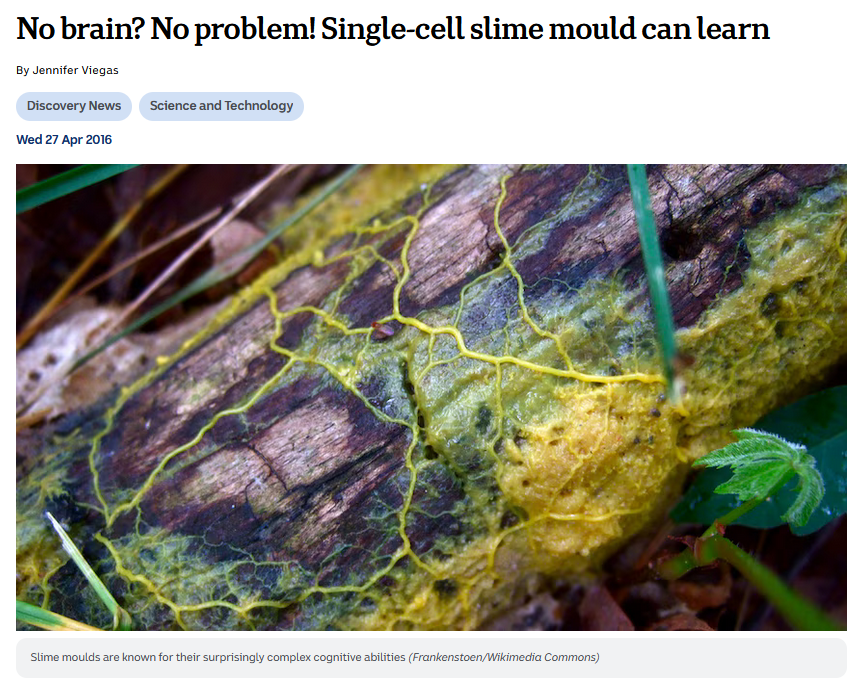
While plants and fungi manage to stay alive, animals display a widely nuanced repertoire of behavior. From the learning slime to our cousins, the apes.
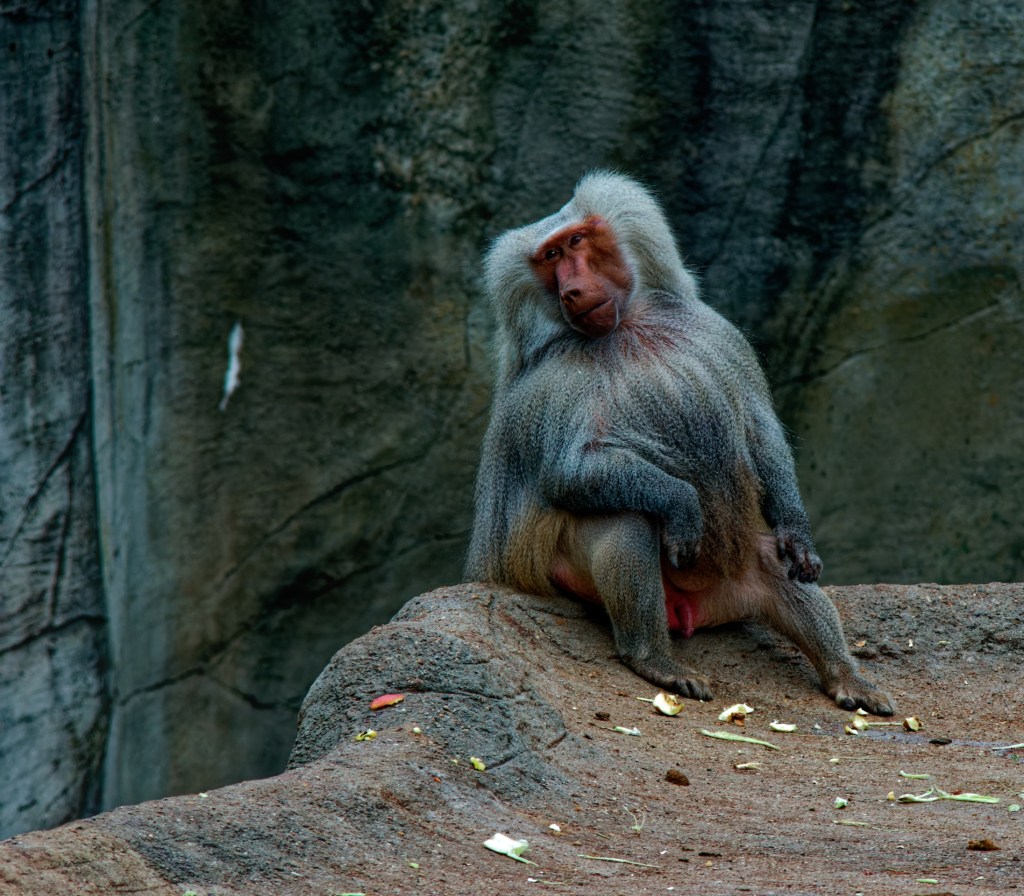
A hamadryas baboon, Hagenbeck Tierpark, 2009

https://constructivist.info/1/3/091.maturana

If you use your mind to study reality,
you won’t understand either your mind or reality.
If you study reality without using your mind,
you’ll understand both.

Bodhidharma

According to “William Stein, a technology analyst at Truist Securities“, as of 28th of August 2024, “Tesla self-driving vehicles not ready for big rollout“.

Self driving vehicles rely on AI to navigate. The streets. To relate to, and to avoid, the other ‘objects’ which happen to be/pass by in the vicinity during the feat.
In a sense, each of the self driving vehicles behave as if they are alive(ish).

They take matter/energy from their ‘outside’ and transform it into ‘action’.
They attempt to ‘survive’ by reacting to what’s going on around them. They gather information through sensors and decide according to already learned algorithms. Which algorithms do include a certain lee-way.

So far, self driving vehicles – or, more exactly, those who promote them – haven’t performed convincingly enough to be accepted by ‘the general public’.

The ‘problem’ – one of them, anyway – resides in the manner we, the ‘general public’, understand ‘artificial intelligence’.

Which ‘artificial intelligence’ is a huge misnomer!

‘Intelligence’, the word, means at least two things.
An ‘ability’ shared by most human beings. Unevenly, but this is another subject.
An individual ability, used by each of the individuals to pursue their individual purposes. Each behaving according to their individually ‘accrued’ manners.
In this sense, individual intelligence is already ‘artificial’. Individual intelligence is relative to each ‘individual endowment’. To each individual’s ‘brain power’. The manner in which each individual tends to use their intelligence has been shaped by education and life experience. And each individual is able to choose, inside the ‘parameters’ I’ve already mentioned, what purposes to fulfill. To which ends to use their individual intelligence. And how to behave while attempting to fulfill those goals…

If individual intelligence is already ‘artificial’ then what about AI?

Let’s discuss first the difference between artificial and synthetic textile fibers.
We have natural – cotton, wool, silk – and man made fibers. Tencel, cupro, etc – collectively known as rayon – and nylon, Lycra, acrylic. Tencel is made of wooden cellulose. Cupro – a stand in for silk, used mainly for stockings, around 1900 in Germany – was made from ‘cotton waste’. Meanwhile, nylon, Lycra, acrylic and others are made from oil.
So, basically, both artificial and synthetic fibers are made by man. The artificial ones by slightly adjusting the nature of the original material while the synthetic ones are ‘achieved’ after the raw material – oil – has suffered a series of drastic transformations.

Same thing with ‘intelligence’.

As such, intelligence is an ‘animal’ ‘thing’. It’s the animals who do ‘intelligent’ stuff. We haven’t, yet, identified any intelligent actions performed by plants. Or fungi…
Each animal species has it’s own kind of intelligence. And each individual animal belonging to each of those species has its own level of that specific intelligence. But seldom in the animal world, with a few exceptions and in a rather limited manner, individual animal intelligence is honed through interaction between individuals.
Maybe this is why we, humans, consider some animals to be superior to others? Those who are able to learn? As they live? From us, as well as from other animals?

Compare animal intelligence with it’s human counterpart.
We learn during our entire life. We deposit the consequences of our intelligence – accrued knowledge – for later retrieval. By successive generations of intelligent agents willing to learn from past experience.
In fact, our collective intelligence is the consequence of a collective effort and all of our individual intelligences have been shaped through human interaction. Hence human intelligence, the collective as well as each of the individual ones, is ‘man made’. Already ‘artificial’.

But there’s more.
Life shapes its environment. The place it inhabits. Builds its ‘habitat’.
Yeast dramatically changes the dough, grasses transform soil into meadows and wolves fine tune the ecosystem in the Yellowstone park.

Back in 1968, said Smith, when the elk population was about a third what it is today, the willow stands along streams were in bad shape. Today, with three times as many elk, (wolves had been reintroduced in 1995) willow stands are robust. Why? Because the predatory pressure from wolves keeps elk on the move, so they don’t have time to intensely browse the willow.

Life, in general, shapes its environment.
In a natural way. ‘Unassumingly’ and without any intent, the mere interaction between life itself and the environment where living takes place shapes that very environment.

Humans have changed the nature of the interaction between life and the environment.
By assuming to know what they are doing and by having precise intentions about what they want to achieve, humans have started to build on purpose.

And the first thing we’ve built was an ontology.
While the rest of the living takes place directly in what we call “reality”, we live in the image we’ve built, for ourselves, about ‘reality’. While the rest of the living takes place directly in the hard reality – our ancestors had started their evolution in the very same place – we’ve gradually moved out to an ‘alternative’ reality. One – two, actually – of our own making.
We have the hard, but artificial, reality we have built for ourselves. Cities, agricultural fields, means of communication, pollution, global warming… and the image we have about ‘the Universe’.
The ‘stone built’ reality we inhabit and the culturally accrued understanding we have been distilling, since becoming conscious human beings, from the hard realities around us, for our own use.
Nolens volens, our hard reality has to be anchored in the real/natural hard reality. For it was made from the same ‘raw material’. Furthermore, our ontology has to make sense. Otherwise it would be contradicted – as it so often was – by the implacable real reality.

We have currently reached a very interesting moment in our evolution.
Until now, technology – the manner in which we put into practice the understanding we have about the world – was mostly about ‘outsourcing’ physical labour. A tool to extend our ‘practical intelligence’. Then we have invented the computer. A tool used to extent our ‘brain power’. Yet another lever…
At first, the computer apps were used to ‘mechanically’ amplify our individual intelligence. You know what I mean. Even now, if you have enough individuals with pen, paper, adequate knowledge and powerful enough communication means, you can calculate almost everything a computer can calculate.

Machine learning has changed all that.
Not only that we can’t replicate what’s going on inside the machine, we no longer fully understand the process.
‘Machine learning’ actually means that a machine develops its own understanding of something. Its own understanding/image regarding a piece of ‘reality’. Given the fact that machines learn/try to understand starting with/from a data base provided by humans… I have to conclude that the understanding/image developed by an AI machine regards a piece of an already artificial reality. A piece of a man made reality.

Meaning that the intelligence appeared/grown as the consequence of this process is a fully synthetic intelligence. And that the machine generated ‘ontology’ is twice removed from the hard reality.
Twice removed from the hard reality we try to understand by ‘training’ our machines at it…

For this is what we’re trying to do. Willingly or unwittingly…
We attempt to outsource thinking.
By training what we call ‘Generative Artificial Intelligence’ we attempt to build machines which would elaborate an alternative understanding of the world. Alternative from ours…
Will any of those alternatives fit?

Into the hard, real, reality?

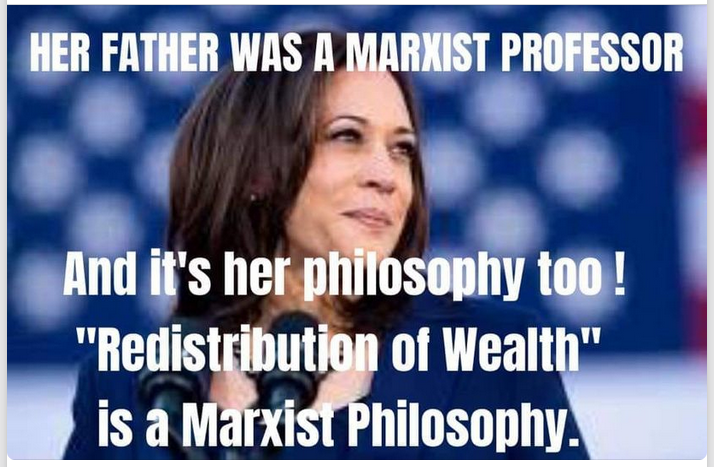
Redistribution of wealth is an anti-marxist technology.

Taxing the super-wealthy and redistributing the proceeds towards education, health care and infrastructure makes it possible for the middle class to survive.

Otherwise, the marxist prophecy will come true.

No sooner is the exploitation of the labourer by the manufacturer, so far, at an end, that he receives his wages in cash, than he is set upon by the other portions of the bourgeoisie, the landlord, the shopkeeper, the pawnbroker, etc.
The lower strata of the middle class — the small tradespeople, shopkeepers, and retired tradesmen generally, the handicraftsmen and peasants — all these sink gradually into the proletariat, partly because their diminutive capital does not suffice for the scale on which Modern Industry is carried on, and is swamped in the competition with the large capitalists, partly because their specialised skill is rendered worthless by new methods of production. Thus the proletariat is recruited from all classes of the population.

Read what Marx had to say about things if you want to avoid the marxist abomination.

Marx’s idea of revolutionary progress was based on the notion that property, hence wealth, must be abolished. Abolished, altogether, and not redistributed!

‘Redistribution of wealth’ means everybody pulling their own weight/contributing their fair share instead of ‘the the already rich taking the lion’s share’.

Redistribution of wealth means preserving the concept of property/wealth and maintaining the functionality of the capitalist free-market.

‘Universe’ has no meaning. Other than what we assign to be its meaning…

‘Universe’ is a word we use to encompass everything around us. Whether we know of it or not. Whether we understand (of) it or not.

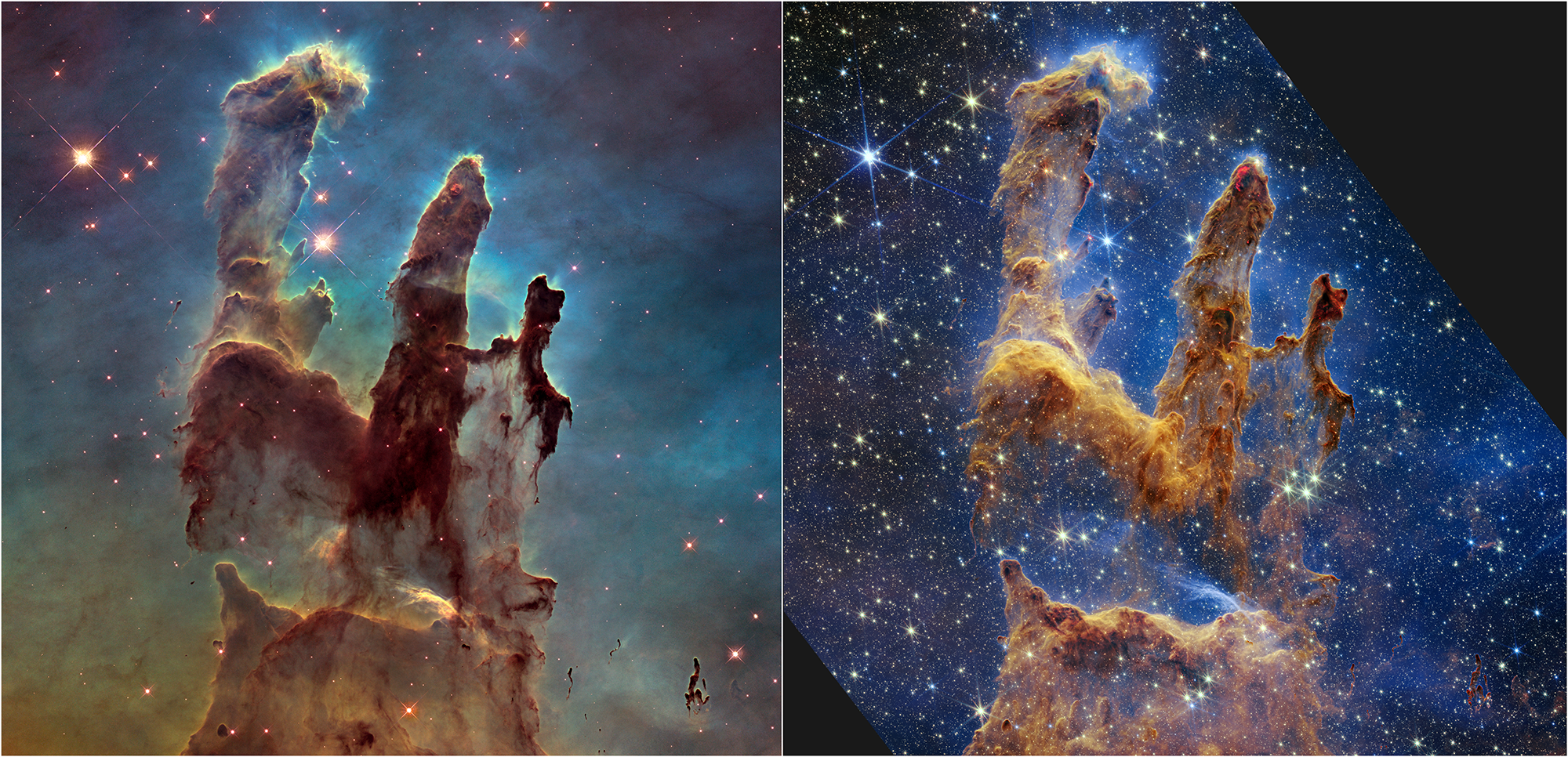
From ‘where’/’when’ we are in/attempt to perceive this huge environment, things look like ‘this’.
Depending of the wavelength of the light we use to ‘reinterpret’ the picture…
Nota bene, the colours were assigned by a computer app, starting from a series of ‘black&white’ images shot using filters which select short intervals of light-wavelength.

By sheer change, life appeared on Earth. And on who knows, if ever, how many other planets.
Evolution, an impersonal process, playing the odds in the current setting, had engendered the set of circumstances into which we happened to ‘burst’ into existence.

We, for better or for worse, have shaped the planet into what it has become.

Regardless of what each of us believes, religiously speaking, it doesn’t actually matter whether a god did or didn’t do anything. Since each and every religion currently biasing human thinking on Earth speaks about individual responsibility – hence freedom, for you can’t have individual responsibility without freedom – it actually doesn’t matter whether any of the teachings we refer speak about have been induced by an outside agent or have been produced ‘in house’.
Since each of us is individually responsible for our thoughts/actions – hence ‘free’ – then the meaning we assign to the object of our judgement, the ‘Universe’, belongs to us. To each and to all of us.

‘God save us!’

But since we’re ‘free’, we must save ourselves.

And since nobody can be free on their own – freedom has been defined by ‘us’ and put in practice collectively – saving ourselves will be a collective effort.
Or else.

Nota bene!
We are a ‘collection’/community of individual human beings.
We either ‘save’ ourselves maintaining what makes us human – our distinct individual individualities – or we become a hive. Of something else but ‘human’.
Of what we currently understand as being ‘human’…

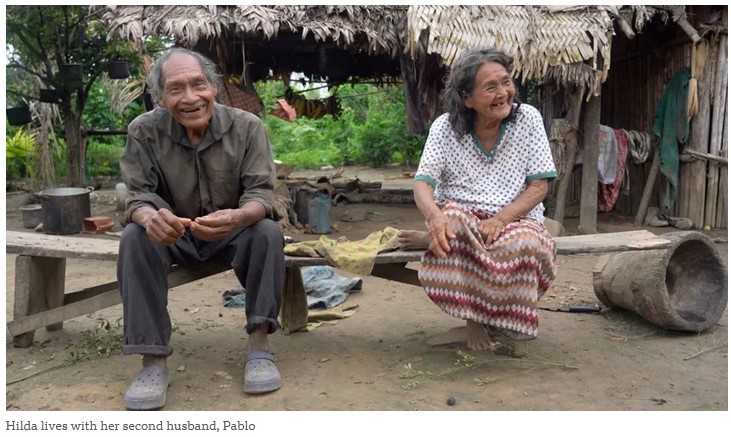
“According to their records, Hilda is 81,
but she says recently her family killed a pig to celebrate
her “100th birthday or something like that”.”
“Many Tsimanes never reach old age, though.
When the study began,
their average life expectancy was barely 45 years – now it’s risen to 50.
“But for Hilda, old age is not something to be taken too seriously.
“I’m not afraid of dying,” she tells us with a laugh,
“because they’re going to bury me and I’m going to stay there… very still.””

Big Bang 1.0 had been inconspicuous. There was nothing there to vibrate so sound could not travel. Also, there was no space so light had nowhere to travel to. On top of everything else, there was nobody there/then to notice.
What am I talking about? There even weren’t any ‘there’ nor ‘then’ at ‘that moment’…

Not for us, anyway!
Hence ‘Big Bang’ is a rather blatant misnomer.

Big Bang 2.0, the currently unfolding one, is an increasingly flashier event.
It began when we have started to talk. And developed conscience as a consequence. According to Humberto Maturana.

The first thing our ancestors had discovered was that they were heavily dependent.
On each other and on what we currently call ‘nature’.
Not having any of what we consider to be ‘scientific knowledge’ they didn’t know much about how things worked.
But they learned, slowly, to use fire.
How to make tools. And how to improve their dwellings.
All these things – fire, tools and protection from the elements – were auspicious circumstances for the first qualitative transformation of the genus. Not only our direct ancestors – Homo Sapiens – but also their cousins – Homo Neanderthalensis – had started to consider ‘the future’.

‘What is going to happen to me/us?’

This question, ‘am I going to eat this much/tasty again?’, demands three things.
A full belly, some time off and a (proto)conscience. At least some self awareness.
The fact that our ancestors, both the Sapiens and the Neanderthalensis, buried their dead and used tools to build/carve ‘jewelry’ strongly suggests that both of them did have a certain awareness/preoccupation about their own condition.

We don’t know whether they were ‘religious’ people.
What we do know is what people very close to what was going on then were doing until recently. And some continue to do. Populations which until have been ‘discovered’ were living like our ancestors used to do. They used to thank their totems for the food they hunted. And they erected ‘altars’ to celebrate the movements of the Sun.
Which strongly suggests that ‘what am I going to eat tomorrow?’ was far more important to them than ‘how much longer am I going to live?’.

The way I see it – following Maslow’s cue – people who live in rather ‘undeveloped’ communities don’t have enough ‘time’ to think about ‘death’.
They are accustomed to it – death is a lot more present in their life than it is in ours – and they still haven’t solved the ‘basic needs’. Not to the tune of reaching the ‘re-actualization’ stage.
They do think about tomorrow but they do it in far more practical terms than we do it.

They are not afraid of death as they are of dying of hunger. Painfully. Or both.

It was us, the ‘civilized’ people, who have become afraid of dying.
Concerned about ‘redemption’.
Thirsty for ‘meaning’.

Which ‘meaning’ brings me back to where this post has started.
One of the experiments which have convinced Rosenblatt et all to develop the ‘Terror Management Theory’ involved a number of municipal judges. Half were ‘primed’ by making them think about death while the others were left ‘unprimed’. The primed ones had imposed tougher bonding conditions to similar fictional suspects.
The experimenters posited that death was so important to them that thinking of it changed the conclusions they derived from the information available to them. Which is more or less correct.
Yet this experiment suggests something even more interesting. To me, at least.

Death is, besides a biological phenomenon, a cultural construct. An artifact.
And the fact that the judges had to be primed in order to be influenced by ‘death’ is a strong suggestion that they were rather influenced by the artifact than by the biological phenomenon.

We do know that we’re gonna die.
But we don’t constantly think about it. Our mere mortality isn’t a constant presence in our mind.
For it doesn’t make sense. It doesn’t help any. A waste of brain power which brings no real benefit.

What we do think – those of us who have a full belly and enough spare time, only during some of that spare time – is ‘what’s all this fuss about?’

What’s the meaning of all this?
Of all this man-made terror which is creeping on more and more of us…

An amount of interaction expressed in the considered amount of time.

Where ever there is power, there is also resistance.
Michel Foucault in the footsteps of Isaac Newton

Michel Foucault used to be a post-Marxist philosopher and sociologist.
As the rest of the Marxists, two of his main subjects were Power and the individual’s (philosopher) duty to put their own convictions into practice. To make a difference, preferably ‘against’ the establishment.

From a Darwinian point of view, Foucault’s insistence that we shouldn’t restrict ourselves to the ‘straight and narrow’ makes perfect sense. The ability to change along with the changes in the environment is paramount to survival. Furthermore, the ability to induce change is paramount to what we call ‘progress’.

On the other hand, life itself demands that we, successive generations of individuals belonging to different evolving species, need to retain a certain congruence.
Succeeding generations share the genetic information needed to preserve the nature of the species.
Species living together evolve in such a manner as to maintain the viability of ‘their’ ecosystem. Or else…

The ‘law of the jungle’ is nothing more than something we believe to have noticed. And then convinced ourselves that we were right when we have formulated our observation in the current form. “The law of the jungle…

“Power” is but a word.
And words have the nasty habit of cloaking more than one meanings. Well, most of them…

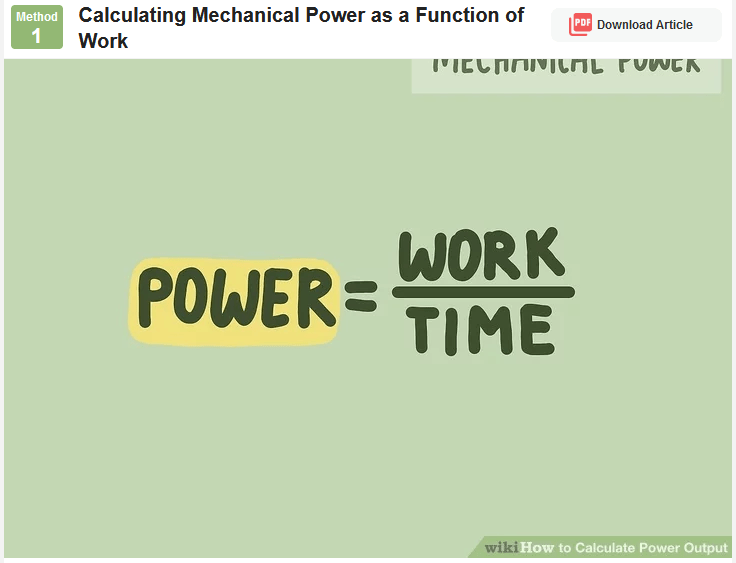
“Power” means many.
From a ‘certain amount of work divided by the time in which that work had been performed’ to ‘the influence somebody has over the people happening to live in the vicinity.
And also something very pervasive yet seldom noticed.

Something which ‘permeates everything and “makes us what we are”‘.

Contradictory?
A tool, teleologically yielded by agents, or a fixture of the ‘environment’?
Both a the same time!
Imagine a group of people cavorting in a pool. Each of them using water to splash the others.
Or two ‘teams’ of angry men fighting near a river and using stones retrieved from the riverbed to crack each-others’ skulls.

‘A fixture of the environment’ identified as such and used by agents as a tool with which to further their goals.

Knowledge is power and power creates knowledge...
Both Bacon/Hobbes and Foucault have been right.
By identifying new and increasingly powerful instruments people have transformed knowledge into power while by putting power to work, the powerful have generated new meaning and driven things towards where they wanted them to be.

Having been able to draw from more accrued knowledge (a.k.a. culture) than Hobbes. Foucault is marginally ‘even more right’ than his predecessors.

“People know what they do;
frequently they know why they do what they do;
but what they don’t know is what what they do does.”

This being the explanation for all ‘social arrangements’ where power has been concentrated in a too small number of hands/heads having eventually failed.

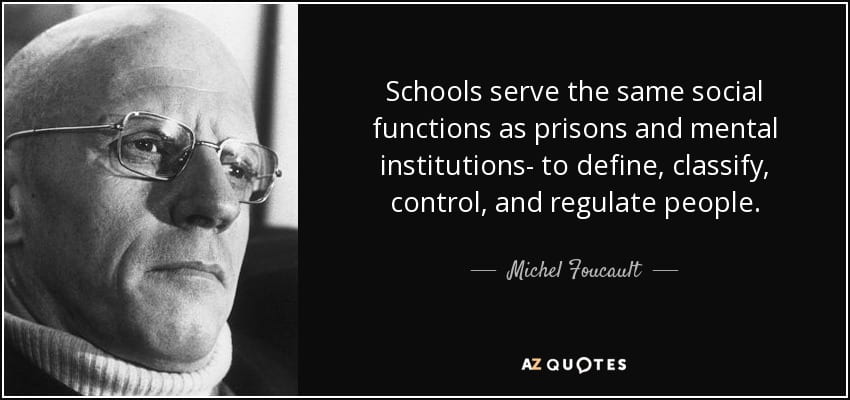
A society where schools and prisons are hard to tell apart – or perceived as such by those who have to spend time in any of them – is sooner rather than later going to reconsider it’s ‘knowledge’ regarding ‘power’. Or else…

“statuuntque latiores terminos scientiae Dei quam potestatis,
vel potius ejus partis potestatis Dei (nam et ipsa scientia potestas est)
qua scit, quam ejus qua movet et agit:
ut praesciat quaedam otiose, quae non praedestinet et praeordinet”

Francis Bacon, 1597
“and they set wider limits for the knowledge of God than for power,
or rather for that part of God’s power (for knowledge itself is power)
by which he knows, than that by which he moves and acts”
Google Translate

scientia potentia est
Thomas Hobbes, 1668

E=mc2
Einstein, 1905

In fact, power produces; it produces reality;
it produces domains of objects and rituals of truth.
Michel Foucault, 1991

“They” – as in ‘the knowing people’ – ‘set the limits for the knowledge of God’.
Then it was ‘they’ who had the real power over (their) God…

A little later, another thinker simplified the whole thing into ‘knowledge is power’.

Which, already collective, state of mind morphed into the socio-cultural environment into which Einstein was able to notice that E=mc2. That apparently different things can morph one into the other, given the right circumstances.

Which brings us to Foucault noticing that power produces reality. Including knowledge…

But is there a real difference between ‘power produces reality’ and ‘they set different limits for God’s knowledge than for God’s power’?
In fact, there is.

According to Foucault power is exercised directly.
According to Bacon, people exercise power by ‘fine tuning’ their ultimate tool. Their God. Which god, like all others, acts like an agent. Its powers might be limited – it is able to do/know only as much as those who have faith in it believe it to be able to know/do – but inside those limits it is as free as each of those who believe in it.

And the difference is huge.
As soon as Nietzsche had noticed that ‘God was dead’, ‘reality’ had shattered.
While God was alive, power created one reality. Also known as “God”.
As soon as there was no more God to mediate between reality and those gathering knowledge about it and exercising power while recreating it… reality became many!

And not only many versions of reality are competing for our attention, each of these realities are farther and farther away for the ‘hard’ one. The one harboring Einstein.

“People know what they do; frequently they know why they do what they do; but what they don’t know is what what they do does.”

Michel Foucault, Madness and Civilization:

“I suppose it is tempting,
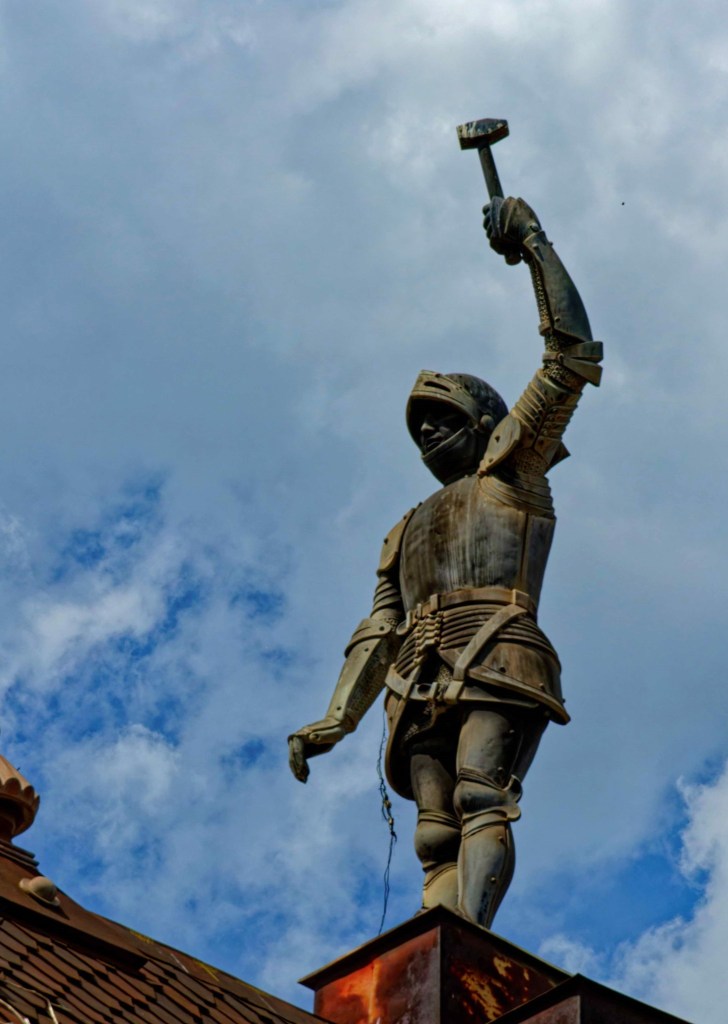
if the only tool you have is a hammer,
to treat everything as if it were a nail”

Abraham Maslow

I write this blog in the hope that ’embodying’ my thoughts will somehow help me.
Help me solve some of the quirky questions which have been haunting me for sometime now.

Why so many people have been convinced that thinking may help them make sense of things?
Why so many otherwise smart people have convinced themselves that thinking ‘in solitude’ would take them to the ‘right’ place?
Why so many seemingly reasonable people have somehow become certain that their version of things was the only one valid? To the tune of trying to impose it to those happening to be around them?

The first answer was easy to find.
Because that’s how we make sense of things.
And because that’s what people do when they have no other alternative.
They start thinking about how to get out of the mess into which they have entered by not thinking! Enough…

The second one was also easy. Ish… specially after I did come up with the question formulated like this.
Apparently, to shield their minds from ‘distraction’. From the mundane ‘minor’ problems which might have wasted their ‘brain power’.
In reality, simply because they could do it. They had a great time doing it – thinking, that was – so they indulged on every occasion they had. And smart as they were, they made it possible for them to have more and more time available for thinking.
And they cut themselves off from the rest of the world because the few people able to partake in the process not always shared the same opinion. Thus otherwise smart thinkers ended up in the company of sycophants…

Having found the answer for the second question opened, wide, the door for the third answer.
No, it wasn’t the presence of the sycophants which convinced the otherwise reasonable thinker that their was the only valid solution for whatever problem they had in mind at anyone time.
Sycophants showering praise were only a ‘favorable circumstance’. A mere opportunity for it to happen.

Unhindered by any outside intervention, the tinkering thinker turned his tool to his own head.
And hammered out all the remaining doubts his mind was still harboring.

Congress shall make no law respecting an establishment of religion,
or prohibiting the free exercise thereof;
or abridging the freedom of speech, or of the press;
or the right of the people peaceably to assemble,
and to petition the Government for a redress of grievances.

Doesn’t make much sense?
Mentioning ‘God’ on money is the first step towards the establishment of an officially sanctioned religion?

Well…

In my previous post I posited that property, the concept, is the stepping stone for social order.
I’ll add to that a simple observation. Whenever too much property gets hoarded by a too small number of people, the community which had allowed that to happen is in great danger.

Same thing here.
We have religion – a social phenomenon – and religions.

We have a certain understanding of the world, shared by the members of a community – which allows the community, as a whole, to behave in a coherent manner. Not that much different from what happens when people use a common language. They can communicate. Same thing happens with people partaking in a religion. They ‘see’ things in a coherent manner. Hence can coordinate their efforts.

And we have religions…
To reach the ‘certain understanding of the world’ I mentioned before, each community had traveled a road. A particular road through the particular circumstances in which each cultural community – currently known as ‘nation’ – had had to build their culture. Their identity.
Some communities had put together certain scenarios to accompany them along this road. To help them make sense of what was happening to them.
Some communities have used more than one scenario during that journey while others use more scenarios simultaneously.

Sociologically speaking, all that matters is social coherence.
All is well as long as the community conserves its ability to function. To survive.
As long as the individuals who compose that community continue to have a common enough understanding of the world in which they live.

For the simple reason that they, we, live in the same world!
And if we, individually or in small ‘gangs’, start behaving as if the world is different for each of us…

The Founding Fathers had a common understanding of the world. They belonged to the same (functional) religion despite belonging to different ‘denominations’. For them, the First Amendment was about reigning in the powers of the Government. They had realized that a Government able to impose a certain religion – a certain scenario – upon the entire community would eventually bring destitution.
The Founding Fathers could not foresee a situation in which a few of us would deny the practical daily realities of this world. Invoking their particular scenario as an argument… As the supreme argument for refusing to see the reality.

The reality as it is.
And as it is seen by a majority of us.

I mentioned earlier that some communities have changed their scenario along their history.
They did it when they have found new meanings. They have seen new things about the reality and they have integrated those new things into their newer scenario.
By changing the scenario they have actually built a new reality.
Societies which have clung to their scenario to the bitter end… are no longer with us.
Societies which have somehow found it in their collective minds to adapt their scenarios to the reality changed by their own efforts continue to survive. To thrive, even.

“Hoarded by a too small number of people” means controlled by a handful of people.
Sometimes coordinated.
As it happens in any dictatorial regime. It doesn’t matter who formally ‘owns’ something if the use of that something is tightly controlled by somebody else.
Furthermore, a certain ideology may end up having a lot of clout without being imposed by an authority. Nevertheless, the fact that an ideology dominates, for a while, makes it so that the community which allows this to happen to experience a dictatorial regime.
For whatever reason, some people were convinced that witches were real. And burned them at the stake.
For whatever reason, a lot of people continue to believe that communism might be a good thing.
For whatever reason, some people continue to believe that they are entitled to determine whether a woman may or may not abort a fetus.

What is the difference between an ideology and a scenario?
The manner in which people relate to it.

Having been told that they were the children of the same God made it possible for the believers to stick together. To act like brothers. To respect each-other. To invent and implement capitalism and democracy. Both relying on trust. On mutual trust and on the freedom of the market. Both the market where goods and services are traded and the public forum. Where ideas are traded…

Being told that only one particular understanding of a certain text/idea/concept is correct some people remove themselves from the ‘general population’. Which ‘general population’ becomes ‘the others’.

‘The others with whom we don’t have anything in common’.

Quite an untenable situation, given the fact that the world is becoming smaller and smaller.

The Polish state broadcaster on Saturday suspended
a television journalist who, during the Olympic Games opening ceremony,
reacted to a performance of John Lennon’s “Imagine” by saying it was a “vision of communism.”

Communism is perfect!
Communism is the perfect lie…

Communism was ‘invented’ by Marx and proposed as the only solution to a real problem.

The problem with communism as a practical solution is that it cannot be put into practice!

Humans, both at individual and social level, need freedom.
Without individual and social freedom, individuals regress to an animalic state and societies fail. Abysmally!

According to Marx, communism was the only solution for what he had perceived as a problem.
According to Marx, when a critical mass of people belonging to the middle class will become destitute, they will accept to be led out of their predicament by ‘the communists’. But since the rest of the society continues to enjoy their perks or to ignore the dangers ‘lurking in the future’, in order to achieve their goal – communism for everybody, including for the unwilling, the communists will have to institute the socialist dictatorship. As a transition phase to communism. A phase in which the unwilling will be convinced.
According to history, no dictatorship – including the socialist – has ever survived. Has ever achieved its goal.

Communism, at least for now, is unattainable. For the simple reason that humankind has not yet learned how to survive dictatorship. How to live without freedom.

On the other hand, communism is very alluring.
For the idealists amongst us…
Communism is a very suitable subject for dreaming. A very nice thing to have, albeit impossible to achieve…

Since the idealists are hard to convince, let me speak to the practical minded amongst you.
John Lennon invited us to dream. To dream a world with ‘no possessions’ and with ‘no need for greed or hunger’. What’s not to like in this dream, except for the fact that it can’t be put in practice?
Hunger is natural. Why eat if not hungry?!?
Greed is also natural.
Who doesn’t like/want more of what they consider to be pleasant?!? The wise amongst us?
How do we become wise? As wise as each of us is able to become…
By interacting with others? By learning from them? And from the consequences of those interactions?

Property – possessions – is a tool.
A tool society uses to make order. If each of us knows what they are able to use for what purpose things go smooth. There’s no need for outside intervention. Granted, this is valid for only as long as each – well, at least most – members of the society have enough to eat, where to sleep and what to protect their backs with.
Without the order construed by the society, collectively, using the tool known as ‘property’, how are the people going to cooperate?!? To interact? To learn, even…

How about we wake up?
Sleep is essential and dreaming a normal part of it.
But we also need some wake up time!
Pun intended…