Archives for category: alternative ways of acquring knowledge

Engine

In their attempt to accomplish their own bidding, people use tools.
From the simplest – a crow bar, for example – to the more and more complicated ones.
The engine is one of the most interesting tools invented by us. While all the tools we used before were mere extensions of our hands, engines directly transform energy into movement. We, the operators, only control them. And provide them with energy.

But don’t have to transform that energy into movement ourselves. As we do when shoveling coal to feed a stove. Or to stoke a steam engine…

Wait a moment! You said we “don’t have to transform that energy into movement ourselves”. Then ‘we have to shovel coal to stoke the steam engine whenever we need that steam engine to work for us’.

Yep. An engine is still a tool. Still an extension of ourselves. And we still have to move our limbs – spend some energy – when operating one. The main difference between a hand shovel and a backhoe being the fact that all the energy needed to ‘activate’ the hand shovel flows through our muscles while most of the energy used to move the backhoe comes from its engine.
Another example being a horse drawn cart. We can carry things on our back – using exclusively the energy provided by our muscles – or we can load those things onto a horse drawn cart. Then drive it, channeling horse-muscle energy into the process – where ever we need those things to arrive.

Savvy?

“All governments suffer a recurring problem:
Power attracts pathological personalities.
It is not that power corrupts but that it is magnetic to the corruptible.”

Frank Herbert, Chapterhouse:Dune

How can Orson Scott Card be so bigoted, but the Ender’s Game series is about empathy and acceptance of others?

– “Circle of Empathy. If you’re inside the circle, you are worthy of empathy and it applies to you. If you’re outside the circle, you are not worthy of empathy and bigotry towards you doesn’t count because you don’t count. If you’re ever baffled by how one person can be forgiving and accepting towards one group and turn around and be rabid dogs towards another group it’s because in their emotional calculus the second group literally doesn’t count as “deserving”.
Does it make sense? No. Do humans make sense? No.
“”

Card was young when he wrote Ender’s Game and for what it’s worth I think it reflected his real views on the world at the time. He’s since spent decades of his life in a high control cult that has told him constantly that gay people are moral failures.
I think there’s a chance that Card is actually closeted from remarks he’s made on the subject and fear of discovery has made him feel he has to be even more dogmatic on the matter.
I grew up queer in fundamentalist churches. I’m always going to think of people like this as partial victims, even if it would be easier to just hate them. Brainwashing is real. It’s not just something you shrug off because you’re an adult.
I love his Ender series and think it’s beautiful. It doesn’t actually matter to me what he personally believes because his work is saying something else.

Discussion found on Reddit:
https://www.reddit.com/r/books/comments/14mmmu0how_can_orson_scott_card_be_so_bigotted_but_the/?rdt=42921

Alive in a living context.

Try to imagine a single living organism.
Forget about ‘where did it came from’. Forget about ‘what does it drink/eat/breathe’.
Now, does the existence of a single living organism mean that life is present? When attempting to answer this, pretend no observer is present…

‘Life’ is ‘wide’ word. It covers a lot.
From ‘life’ as a phenomenon. That thing studied by biology.
To ‘life’ as an ‘individual experience’. That thing cared for by medicine. Human, veterinary… By the way, how do you call a person who takes care of sick plants?

Am I making any sense here?

My point being that life is both a phenomenon and an experience.
As a phenomenon, life – as we know it – needs a certain environment. And a ‘push to start’.
According to what we presently know, life may appear, on it’s own, in certain conditions. We don’t know, yet, which are those exact conditions. Nor exactly how it happened. Only that it seems possible. And that’s enough for me.
If certain conditions are met, life – as a phenomenon – is possible.

Furthermore, if life as a phenomenon has established itself in a certain environment, life as an experience becomes certain. Each individual organism living in that environment experiences its own life. Regardless of whether a particular organism is aware of its being alive or not.

Shared Awareness

Life, as a phenomenon, is a ‘process’.

Individual organisms become alive. One way or another but always as a ‘continuation’.
Each generation of individual living organisms live by the same rules as the generation before it. Each ‘child’ generation follows in the footsteps of the ‘parent’ generation. A ‘blue print’, a genetic blue-print, is passed over from generation to generation. OK, let’s pretend we haven’t yet learned about genetic variation…
Each individual organism continues to be alive for as long as:
– It remains ‘functionally whole’. A human can continue to live, at least for a while, without any limbs. But not without its head or heart. Well, you understand what I mean.
– It continues to exchange substances with the environment in which it lives. Which means that the individual organism is the entity controlling which substances get inside and which substances are ejected from its interior. OK, we need to breathe so we inhale microorganisms and pollutants ‘on top’ of the air we need to survive – and some of them make it into our blood-stream – but it’s still our lungs which absorb oxygen, eliminate carbon dioxide from the blood and leave nitrogen alone. I’m sure you get my drift.

This ability of even the most basic/primitive individual organisms to interact with the environment – along the rules inscribed in their genetic inheritance – allows us, conscient observers of the phenomenon, to consider that individual organisms, while alive, display a certain degree of awareness. They behave as if being aware of the difference between oxygen and nitrogen. As being aware of the need to breathe. As being aware of the fact that too much carbon dioxide in your blood is something to be avoided… And so on.

Fast forward from bacteria – individual organisms which are able to extract specific nutrients from a broth to, say, chimpanzee. Who are very picky about food. When there is plenty enough to choose from…
There is a certain commonality between these two very different kind of organisms being able to feed themselves, right? And if we, humans, pretend to be aware of (some of) our our actions… how do we name this ability of our fellow living organisms? Their, our?!?, ability to choose?

Together?

“The greatest consequence of the arising of self-consciousness and self-awareness in the constitution of humanness, is that to the extent that we human beings are self-conscious beings we are aware of what we do, and of the possible consequences of what we do to ourselves and to other human and not human beings. Self-awareness and self-consciousness are manners of relational living that as they are lived constitute a relational grounding for all else that is being lived. The self-conscious person lives his or her living in a manner in which a question such as, “are you aware of what you are doing?” always makes sense. The self-conscious person lives his or her being in self-consciousness as if he or she were distinguishing him or herself as an independent entity, and operates comfortably in that way. Yet, if we seriously want to explain how is it that self-consciousness happens under the circumstances that we cannot distinguish in the experience between what we call perception and illusion, and, therefore, that we cannot make any reference to an independent reality, we cannot but Þnd out that it is not possible to do so if we do not accept that languaging is not a system of symbolic communications about entities assumed to exist independently of our distinguishing them, but it is a manner of living together in a recursive flow of co-ordinations of consensual co-ordinations of doings.”
Humberto Maturana, The origin and conservation of self-consciousness, 2005

According to Maturana, self-consciousness is somebody’s ability to observe themselves ‘in the act’. To observe themselves observing. Ability developed alongside other self-conscious ‘agents’ through the use of language.
“It is not possible to understand the nature of self-consciousness without understanding the operation of human beings as living systems that exist as emotional languaging living systems: self-consciousness is a manner of living.” Op. cit.

The way I see it, consciousness – self-awareness in Maturana’s terms – is life 2.0.

Just as there are life as a phenomenon and life as an individual experience, there are also human consciousness – a shared ability – and individual conscience.
Just as there’s no way in which a single living organism might appear ex nihilo – unless some ‘outside agent’ introduces it, there’s no way in which anybody might become aware of their own self by themself.
Life – the phenomenon, once established – opens up a huge field of opportunity. Mere chemicals, entangled, ‘cooperate’ towards maintaining the life of the individual organism inside which they happen to ‘cooperate’. Evolution, the process, makes it possible for new forms of life to appear as the environment is shaped by the formerly living organisms. Or by other naturally occurring phenomena.
Consciousness, our shared ability, opens up the next level of opportunity. The opportunity for each of us, individual self-aware agents, to show/prove our ‘true nature’.

Individually as well as collectively.

The World Health Organization explains QoL
as a subjective evaluation of one’s perception of their reality
relative to their goals as observed through the lens of their culture and value system.

Until not so long ago, all people were busy surviving.
‘Waking alive to see another day’ wasn’t taken for granted.
Food was scarce, illness was plenty and war was a constant presence. And these were shared by all. From kings to their last subject. “Although (Queen) Anne (of Great Britain and Ireland, 1702-1714) was pregnant 18 times between 1683 and 1700, only five children were born alive, and, of these, only one, a son, survived infancy.”

And this need to survive didn’t stop at death.
Since most people were convinced that, one way or another, there was life after death, they were also concerned about redemption. It doesn’t matter what you believe in, if your belief includes any kind of an after life … you need to prepare yourself for it. Either to avoid reincarnation or to ascend to heaven/escape going to hell.

This commonality insured that all people had something to share. A common ground.
Which made it possible for them to see eye to eye regarding at least something.
Which common understanding of one thing made it possible for them to live in a (sort of) community. Together!

Nowadays…
Too many of us continue to have a hard time foraging for the essentials. Continue to survive.
While others have it differently.

Haven’t experienced hunger. Nor need. And their most dangerous experience is speeding on the highway. Dangerous in the sense that they may pay a fine if caught ….
Surviving has been replaced by searching for a better quality of life!

Which is fine!
One should make the most of the opportunities present, right?

But do we really know what we’re doing?
The consequences of our actions?
Specially since surviving was a team effort while ‘quality of life’ is a solitary quest… With nobody in attendance – except for the occasional life coach – to warn us when we ‘jump the shark’.

And what’s in it for us, ordinary people?”
My 90 years old father, commenting the news just running on TV

Nothing but what we can make of it.

The Earth was circling the Sun since the very beginning. Way before Bruno ‘discovered’ the phenomenon. Again…
The egg was sending ‘chemical signals’ since … who knows when. We, all of us, have been born without any knowledge on this matter.

Giordano Bruno was burnt at the stake.
He wasn’t the only one to face the consequences of his discovery. The lives of everybody else have been changed by his discovery. And the way we understand the world!
Sooner or later, somebody will find a way to use the information about ‘how the egg works’. To make some money out of it, to help people… or even to make an ‘ideological point’. “Yet another male dominated fantasy about the creation of life…”

So, Giordano Bruno was burnt at the stake as a consequence of his discovery?!?

Nope!
Bruno was burnt at the stake as a consequence of what we, the people, have made of his work.
Well, not exactly us but our ancestors. And not exactly we, the ordinary people, as the ‘bright minds of the day’. They had to be bright since ‘they’ were the ones running the show, right?!?

OK, so ‘those who know how to weave a story are those who order around those who know the facts’.
According to Yuval Noah Harari.
And, again, what’s in it for us?

Nothing but what we can make of it.

For as long as we’ll continue to chase power, ‘political power’, things will continue as they were.
As we’ve conditioned ourselves to expect them to be.

But, hopefully, when the next Giordano Bruno will tell us things can be spun the other way around, we’ll know better than to burn him at the stake. Alive. Again!

Power can be exercised in many ways!
The more sustainable of which being in favor of the general public.
‘For the long term benefit of the self aware social organism’ instead of ‘for how the public has been led to believe by the spin doctors’.

When will we be able to figure this out?
When those who know how things work will spill the beans out-front instead of choosing whose arse to lick.
After all, the egg encourages the most suitable sperm, not the most enchanting one…

“Complementarity is a principle that illuminates
an “honest anthropology”
based on “the nature of the subjects themselves who are performing the act””

John Paul II

The manner in which people chose to speak about the subjects they consider to be of great importance sheds a lot of light.
On the speakers!

The notion of “complementarity” was coined by John Paul II in 1979-1981. He was the reigning pope at that time.
I must remind you he was born Karol Wojtyla and his native language was Polish.

Well, nobody bothered to tell him that, in English, “complementary” has a rather limited ‘range’.
“Combining in such a way as to enhance or emphasize the qualities of each other or another. “they had different but complementary skills””

The notion was, and continues to be, used as the reason for which women cannot be made priests or deacons in the Catholic Church. And to deny marriage to the homosexual couples.

I find this whole thing rather baffling.

Man and Woman do not complement each-other. Not always, anyway.
Man and Woman survive together.

If you don’t understand the difference, don’t bother reading any further.

Now, if we need a certain ‘interaction’ between Man and Woman for the species to survive, then certainly we need to condemn homosexuality, right?

Wrong!

We have a series of facts here.

For the species to survive, Man and Woman are equally needed.
For the species to survive, it isn’t necessary for all men and women to bear children.
Homosexuality and gender dysphoria are realities. Regardless of what each of us thinks about each of them.

Humankind has survived. For now, at least.
The three facts I mentioned above have existed along the entire human evolution. We’re still here.

Back to square one.

I can ‘understand’, for the sake of the argument, the notion that homosexuality should not be ‘encouraged’. Homosexual couples are not naturally ‘productive’ so they shouldn’t be sanctioned by the church…
But if both Man and Woman are so indispensable, in their respective ‘natural roles’, for the survival of the humankind and “equal”, according to mainstream Catholic theology, then how can be explained the fact that Woman always comes second? And cannot be ordained?

Why do we allow a rather obscure thinker from the IV-th century B.C. to influence our decisions!?!

“The polarity position, first articulated by Aristotle
(384–322 b.c.), rejected fundamental equality while defending the
natural superiority of man over woman.”

Prudence Allen, RSM: Man-Woman Complementarity, The Catholic Inspiration

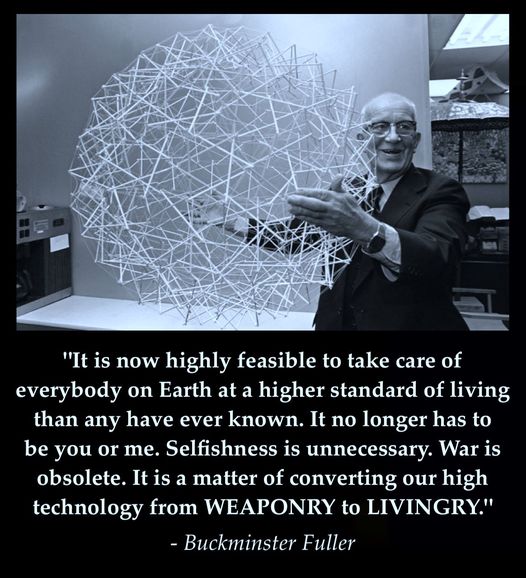
Buckminster Fuller prodded us to ‘convert our high technology’ into something really useful.

To do that, we need to perform a ‘self-actualization’ act.
Maslow considered self-actualization to be a need. An actual need, on par with the rest of them. Basic resources, safety, a place in society, esteem…
Maslow was right. Even if somewhat ‘incomplete’.

We need to crawl through the first four stages of Maslow’s pyramid in order to reach the fifth level. Where we have the opportunity to perform a self-actualization.
The result is up to us! There’s no rule nor any guaranteed outcome.

Eat and you’ll live another day. Feel safe and you’ll sleep well. Be loved and you’ll find your place. Feel good about yourself and you’ll be more ‘useful’. For yourself and for those around you.
To become a ‘better person’ you have first to find out what ‘better’ means.
And we really need self-actualization. In order to fulfill the first four needs, we’ve changed the ‘environment’. The place we call ‘home’.
We’ve built the technologies mentioned by Fuller! To make life easier…

To accept Woman as Man’s equal, as a full fledged equal, needs accepting that Man has been borne by Woman.
Some believe that Man has been made by God, ‘In His Image’. I can accept that but I must point out that God made only one Man. Adam.
All the rest have been given birth. By Woman. And raised by the extended family. By Men and Women, together.

After all, what’s keeping us from following Buckminster Fuller’s advice?!?
And is there any real difference between not allowing a woman to be ordained and not allowing her to speak ‘publicly’?

Survival of the fittest?!?
No, only the demise of the unfit!

Ernst Mayr, What Evolution Is?

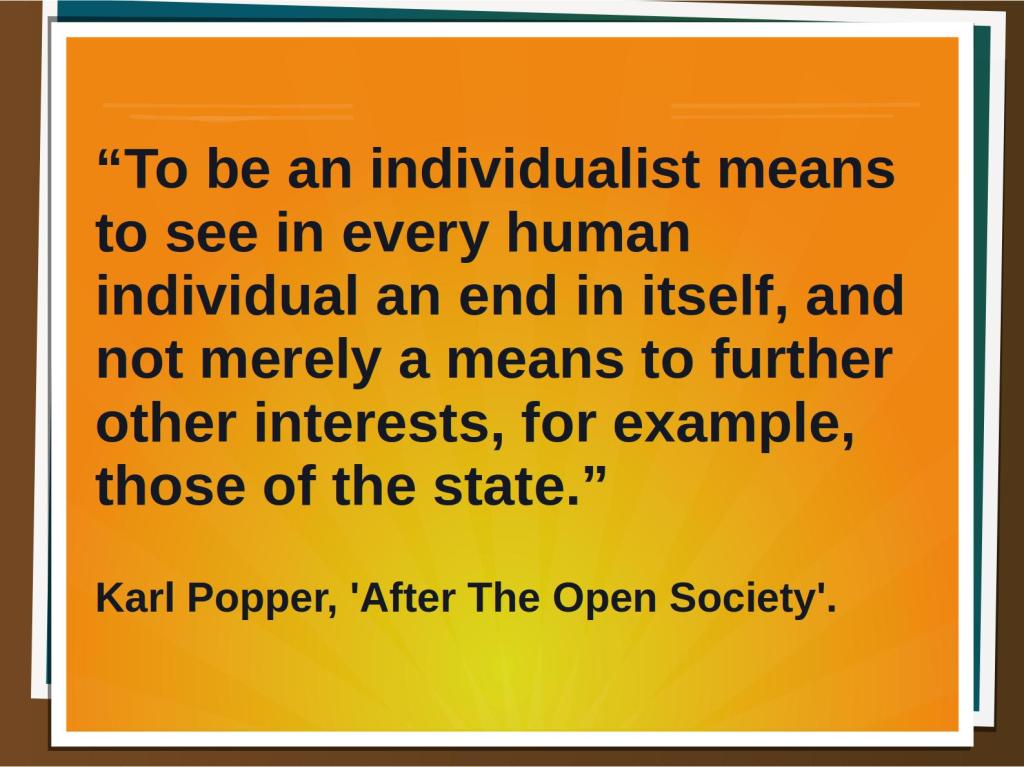
An end in itself…

For whom? For the concerned individual?
For the philosopher pondering the concept?
For the ideologue promoting the idea?

And who determines ‘the interests of the state’?!?

“Plato suggests, and all later collectivists followed him in this point, that if you cannot sacrifice your self-interest for the sake of the whole, then you are a selfish person, and morally depraved.”

Since there’s no better judge for ‘sustainability’ than mere history, let’s ‘look back’.

Whenever the powerful of the day considered that everything belonged to them, and that the collective wasn’t worth any consideration, that ‘arrangement’ soon ended in chaos. From Alexander the Great to Saddam Hussein. Hitler, Stalin, Ceausescu…
Whenever the meek had accepted everything which came from ‘above’, very soon the ‘arrangement’ also ended in chaos. The Khmer Rouge experiment, the Chinese Cultural Revolution, communism being instated in the Eastern Europe by the Soviets…

As a rule of thumb, individuals can exist only as members of a collective.
None of us can birth itself (?!?)
None of us can educate itself ON ITS OWN. OK, one might teach itself to read. And then devour a whole library. But for that to happen, somebody else must have invented the letters first!
None of us can develop into a conscious human being without living with other human beings.

Furthermore, the same rule of thumb states that collectives which value their individuals, all of them, fare a lot better than the highly ‘hierarchical’ ones.
In this sense, Popper was right. ‘Individualistic’ societies – the collectives which ‘see individuals as ends to themselves’ – fare better than the collectives which allow, for a while, their temporal leaders to lure them into obedience.

Do you really care about where your car was built?
No, but I am interested in how it works.
I need that in order to use it properly!

‘Ordinary matter’ is ‘lifeless’. Inanimate.
The rules which ‘shape’ the interactions between pieces/portions of the lifeless matter are the same ‘all over the place’. As far as we know, anyway.
The pieces/portions consisting of ordinary matter are more or less similar. There’s nothing to tell apart one proton from another. One rock from another one. One drop/bucket of water from the rest of the pond.

And there’s life.
‘Technically’, the living organisms are made from inanimate matter.
And, anyway, while ‘ordinariness’ is forever, life is temporary. Individual organisms have a limited lifespan, species evolve and life itself has appeared some time after the ordinary matter.
The rules which shape the interaction between the living organisms and their environment are species specific. Further more, individual sets of data set apart each individual belonging to each species. Which means that each species interacts in a specific manner with their environment while each individual organism does have its own particular ‘manner of doing things’. ‘Inside’ the species specific behavior but nevertheless particular.

Then there’s conscience.
Which conscience is nothing but a concept. Like everything else here.
Which concept, like all other concepts, has been coined by us. By us, conscient human beings.
The point being that we, conscient human beings, attempt to understand conscience by thinking about it.
Somewhat similar to looking inside an eye when attempting to understand sight. Or listening attempting to understand hearing.

Freud came up with the notion that studying what’s wrong, out of the ordinary, might help us to understand ‘normal’. But Freud was a psychologist…
Engineers prefer to ‘look from above’. To extricate themselves from the problem in order to see it ‘whole’. And I’m an engineer…

So, what is conscience?
An individual ability and a space/place.

There is life and there are individual living organisms.
Life goes on regardless of a number of individual organisms passing away. As long as one individual living organism continues to be alive, life itself will continue to exist.
Further more, regardless of how life might have appeared, presently it seems impossible to have life, the kind we have learned to appreciate, with only one species being alive. Let alone with only one living organism…

Same thing with conscience.
Humans become conscient through human interaction. Our ancestors had become conscient way before anybody was thinking about conscience. People who, in various circumstances, have had a limited interaction with other people struggle to develop a functional conscience. A full fledged one…

But humans are not exactly alone when it comes to being conscient.
Not exactly aware of their own selves, but still functionally ‘conscient’.

Being alive, individually speaking, means being able to:
Maintain the ‘structural identity of the organism’. As in keeping the inside in and the outside out.
Manage to breathe, eat, drink and excrete.
Life, as larger process, means successive generations of individual organisms transmitting the pertinent species specific genetic information to the next cohorts.
Maintaining the inside in, the outside out and managing to breathe, drink, eat and excrete means behaving in a conscious manner, albeit in a very limited sense.
This behavior being specific to ‘life’ and life being dependent on species specific information being passed from one generation to another means that human conscience – acceded by individual humans imbibing culturally specific information – is nothing but a particular example, maybe the most evolved one to date, of an otherwise widespread phenomenon. As a matter of fact, people who – for various reasons – are not ‘conscious’ – as in aware of themselves – continue to ‘breathe, eat, drink and excrete’. ‘Incompletely’ and only for a short while, if left unattended, but that’s another matter.

Furthermore, there is a ‘continuum of conscience’ starting from plants and culminating with the human awareness.
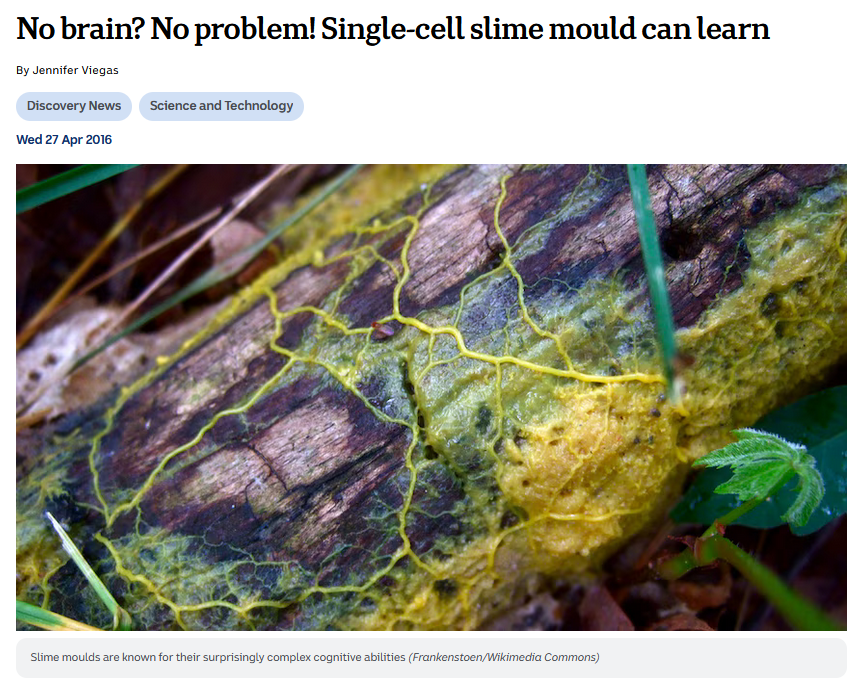
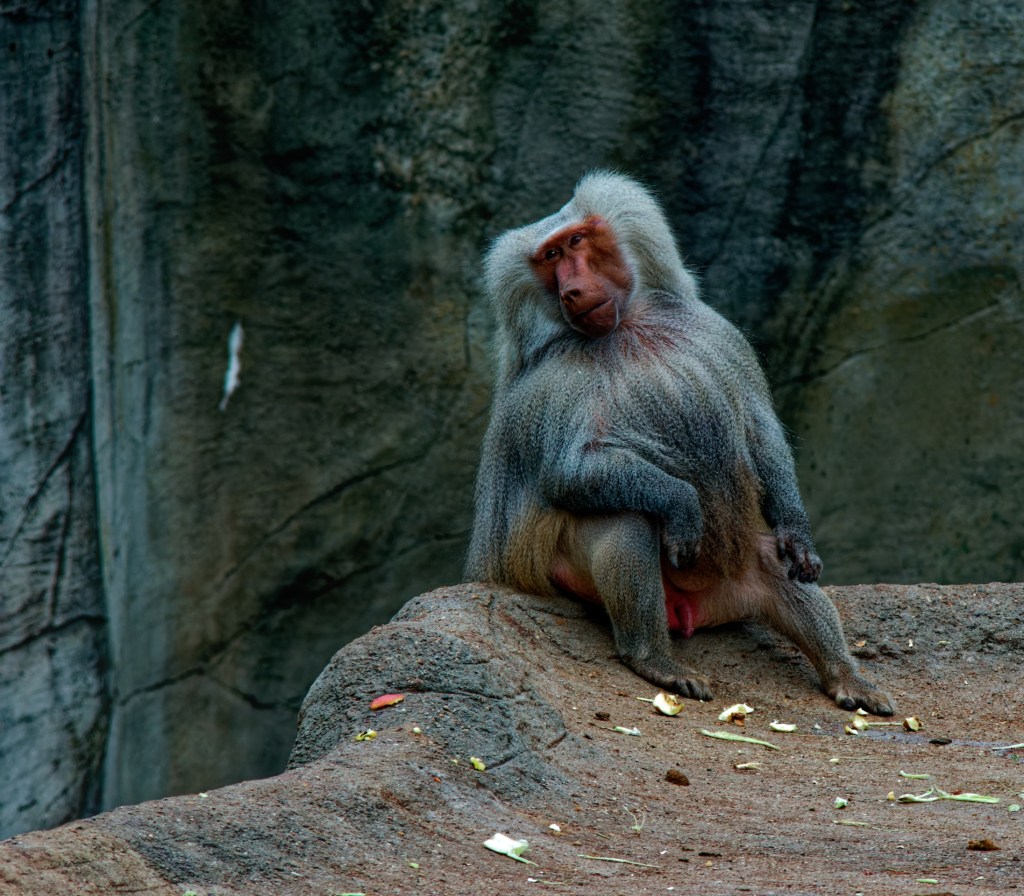
While plants and fungi manage to stay alive, animals display a widely nuanced repertoire of behavior. From the learning slime to our cousins, the apes.

A hamadryas baboon, Hagenbeck Tierpark, 2009

https://constructivist.info/1/3/091.maturana

If you use your mind to study reality,
you won’t understand either your mind or reality.
If you study reality without using your mind,
you’ll understand both.

Bodhidharma

According to “William Stein, a technology analyst at Truist Securities“, as of 28th of August 2024, “Tesla self-driving vehicles not ready for big rollout“.

Self driving vehicles rely on AI to navigate. The streets. To relate to, and to avoid, the other ‘objects’ which happen to be/pass by in the vicinity during the feat.
In a sense, each of the self driving vehicles behave as if they are alive(ish).

They take matter/energy from their ‘outside’ and transform it into ‘action’.
They attempt to ‘survive’ by reacting to what’s going on around them. They gather information through sensors and decide according to already learned algorithms. Which algorithms do include a certain lee-way.

So far, self driving vehicles – or, more exactly, those who promote them – haven’t performed convincingly enough to be accepted by ‘the general public’.

The ‘problem’ – one of them, anyway – resides in the manner we, the ‘general public’, understand ‘artificial intelligence’.

Which ‘artificial intelligence’ is a huge misnomer!

‘Intelligence’, the word, means at least two things.
An ‘ability’ shared by most human beings. Unevenly, but this is another subject.
An individual ability, used by each of the individuals to pursue their individual purposes. Each behaving according to their individually ‘accrued’ manners.
In this sense, individual intelligence is already ‘artificial’. Individual intelligence is relative to each ‘individual endowment’. To each individual’s ‘brain power’. The manner in which each individual tends to use their intelligence has been shaped by education and life experience. And each individual is able to choose, inside the ‘parameters’ I’ve already mentioned, what purposes to fulfill. To which ends to use their individual intelligence. And how to behave while attempting to fulfill those goals…

If individual intelligence is already ‘artificial’ then what about AI?

Let’s discuss first the difference between artificial and synthetic textile fibers.
We have natural – cotton, wool, silk – and man made fibers. Tencel, cupro, etc – collectively known as rayon – and nylon, Lycra, acrylic. Tencel is made of wooden cellulose. Cupro – a stand in for silk, used mainly for stockings, around 1900 in Germany – was made from ‘cotton waste’. Meanwhile, nylon, Lycra, acrylic and others are made from oil.
So, basically, both artificial and synthetic fibers are made by man. The artificial ones by slightly adjusting the nature of the original material while the synthetic ones are ‘achieved’ after the raw material – oil – has suffered a series of drastic transformations.

Same thing with ‘intelligence’.

As such, intelligence is an ‘animal’ ‘thing’. It’s the animals who do ‘intelligent’ stuff. We haven’t, yet, identified any intelligent actions performed by plants. Or fungi…
Each animal species has it’s own kind of intelligence. And each individual animal belonging to each of those species has its own level of that specific intelligence. But seldom in the animal world, with a few exceptions and in a rather limited manner, individual animal intelligence is honed through interaction between individuals.
Maybe this is why we, humans, consider some animals to be superior to others? Those who are able to learn? As they live? From us, as well as from other animals?

Compare animal intelligence with it’s human counterpart.
We learn during our entire life. We deposit the consequences of our intelligence – accrued knowledge – for later retrieval. By successive generations of intelligent agents willing to learn from past experience.
In fact, our collective intelligence is the consequence of a collective effort and all of our individual intelligences have been shaped through human interaction. Hence human intelligence, the collective as well as each of the individual ones, is ‘man made’. Already ‘artificial’.

But there’s more.
Life shapes its environment. The place it inhabits. Builds its ‘habitat’.
Yeast dramatically changes the dough, grasses transform soil into meadows and wolves fine tune the ecosystem in the Yellowstone park.

Back in 1968, said Smith, when the elk population was about a third what it is today, the willow stands along streams were in bad shape. Today, with three times as many elk, (wolves had been reintroduced in 1995) willow stands are robust. Why? Because the predatory pressure from wolves keeps elk on the move, so they don’t have time to intensely browse the willow.

Life, in general, shapes its environment.
In a natural way. ‘Unassumingly’ and without any intent, the mere interaction between life itself and the environment where living takes place shapes that very environment.

Humans have changed the nature of the interaction between life and the environment.
By assuming to know what they are doing and by having precise intentions about what they want to achieve, humans have started to build on purpose.

And the first thing we’ve built was an ontology.
While the rest of the living takes place directly in what we call “reality”, we live in the image we’ve built, for ourselves, about ‘reality’. While the rest of the living takes place directly in the hard reality – our ancestors had started their evolution in the very same place – we’ve gradually moved out to an ‘alternative’ reality. One – two, actually – of our own making.
We have the hard, but artificial, reality we have built for ourselves. Cities, agricultural fields, means of communication, pollution, global warming… and the image we have about ‘the Universe’.
The ‘stone built’ reality we inhabit and the culturally accrued understanding we have been distilling, since becoming conscious human beings, from the hard realities around us, for our own use.
Nolens volens, our hard reality has to be anchored in the real/natural hard reality. For it was made from the same ‘raw material’. Furthermore, our ontology has to make sense. Otherwise it would be contradicted – as it so often was – by the implacable real reality.

We have currently reached a very interesting moment in our evolution.
Until now, technology – the manner in which we put into practice the understanding we have about the world – was mostly about ‘outsourcing’ physical labour. A tool to extend our ‘practical intelligence’. Then we have invented the computer. A tool used to extent our ‘brain power’. Yet another lever…
At first, the computer apps were used to ‘mechanically’ amplify our individual intelligence. You know what I mean. Even now, if you have enough individuals with pen, paper, adequate knowledge and powerful enough communication means, you can calculate almost everything a computer can calculate.

Machine learning has changed all that.
Not only that we can’t replicate what’s going on inside the machine, we no longer fully understand the process.
‘Machine learning’ actually means that a machine develops its own understanding of something. Its own understanding/image regarding a piece of ‘reality’. Given the fact that machines learn/try to understand starting with/from a data base provided by humans… I have to conclude that the understanding/image developed by an AI machine regards a piece of an already artificial reality. A piece of a man made reality.

Meaning that the intelligence appeared/grown as the consequence of this process is a fully synthetic intelligence. And that the machine generated ‘ontology’ is twice removed from the hard reality.
Twice removed from the hard reality we try to understand by ‘training’ our machines at it…

For this is what we’re trying to do. Willingly or unwittingly…
We attempt to outsource thinking.
By training what we call ‘Generative Artificial Intelligence’ we attempt to build machines which would elaborate an alternative understanding of the world. Alternative from ours…
Will any of those alternatives fit?

Into the hard, real, reality?

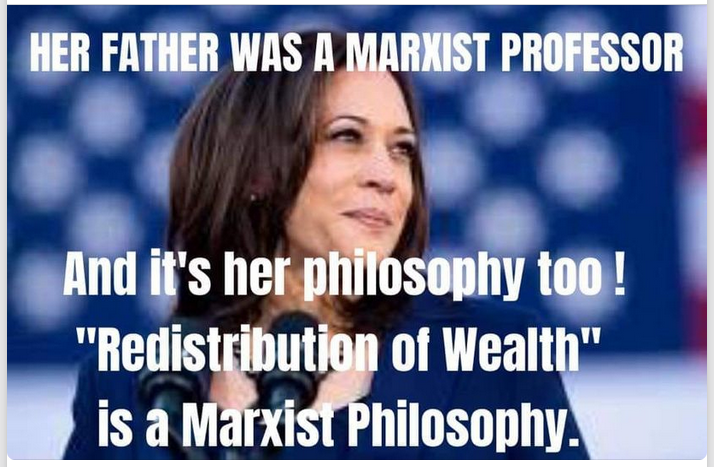
Redistribution of wealth is an anti-marxist technology.

Taxing the super-wealthy and redistributing the proceeds towards education, health care and infrastructure makes it possible for the middle class to survive.

Otherwise, the marxist prophecy will come true.

No sooner is the exploitation of the labourer by the manufacturer, so far, at an end, that he receives his wages in cash, than he is set upon by the other portions of the bourgeoisie, the landlord, the shopkeeper, the pawnbroker, etc.
The lower strata of the middle class — the small tradespeople, shopkeepers, and retired tradesmen generally, the handicraftsmen and peasants — all these sink gradually into the proletariat, partly because their diminutive capital does not suffice for the scale on which Modern Industry is carried on, and is swamped in the competition with the large capitalists, partly because their specialised skill is rendered worthless by new methods of production. Thus the proletariat is recruited from all classes of the population.

Read what Marx had to say about things if you want to avoid the marxist abomination.

Marx’s idea of revolutionary progress was based on the notion that property, hence wealth, must be abolished. Abolished, altogether, and not redistributed!

‘Redistribution of wealth’ means everybody pulling their own weight/contributing their fair share instead of ‘the the already rich taking the lion’s share’.

Redistribution of wealth means preserving the concept of property/wealth and maintaining the functionality of the capitalist free-market.

‘Universe’ has no meaning. Other than what we assign to be its meaning…

‘Universe’ is a word we use to encompass everything around us. Whether we know of it or not. Whether we understand (of) it or not.

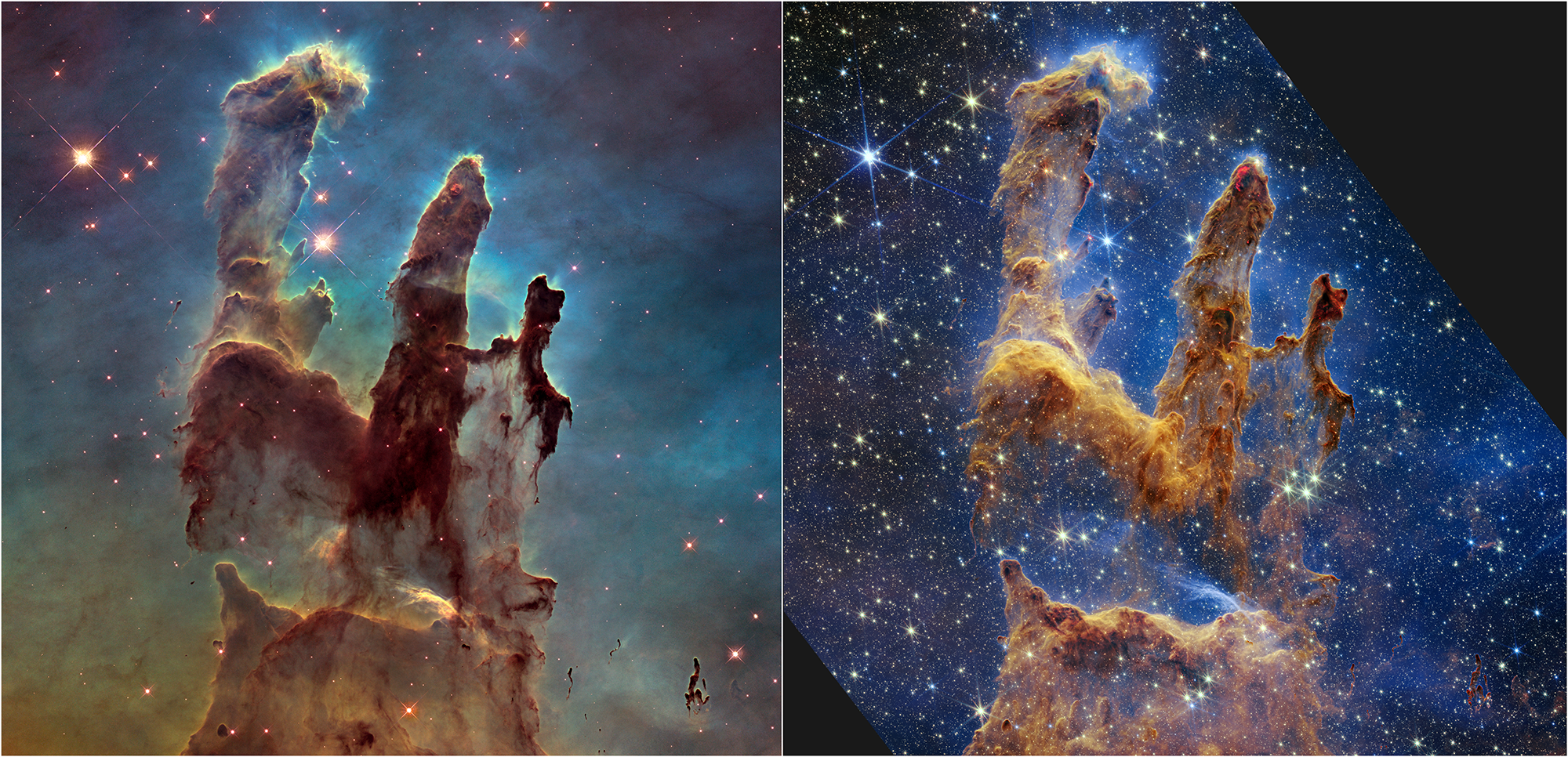
From ‘where’/’when’ we are in/attempt to perceive this huge environment, things look like ‘this’.
Depending of the wavelength of the light we use to ‘reinterpret’ the picture…
Nota bene, the colours were assigned by a computer app, starting from a series of ‘black&white’ images shot using filters which select short intervals of light-wavelength.

By sheer change, life appeared on Earth. And on who knows, if ever, how many other planets.
Evolution, an impersonal process, playing the odds in the current setting, had engendered the set of circumstances into which we happened to ‘burst’ into existence.

We, for better or for worse, have shaped the planet into what it has become.

Regardless of what each of us believes, religiously speaking, it doesn’t actually matter whether a god did or didn’t do anything. Since each and every religion currently biasing human thinking on Earth speaks about individual responsibility – hence freedom, for you can’t have individual responsibility without freedom – it actually doesn’t matter whether any of the teachings we refer speak about have been induced by an outside agent or have been produced ‘in house’.
Since each of us is individually responsible for our thoughts/actions – hence ‘free’ – then the meaning we assign to the object of our judgement, the ‘Universe’, belongs to us. To each and to all of us.

‘God save us!’

But since we’re ‘free’, we must save ourselves.

And since nobody can be free on their own – freedom has been defined by ‘us’ and put in practice collectively – saving ourselves will be a collective effort.
Or else.

Nota bene!
We are a ‘collection’/community of individual human beings.
We either ‘save’ ourselves maintaining what makes us human – our distinct individual individualities – or we become a hive. Of something else but ‘human’.
Of what we currently understand as being ‘human’…