Archives for posts with tag: Reason

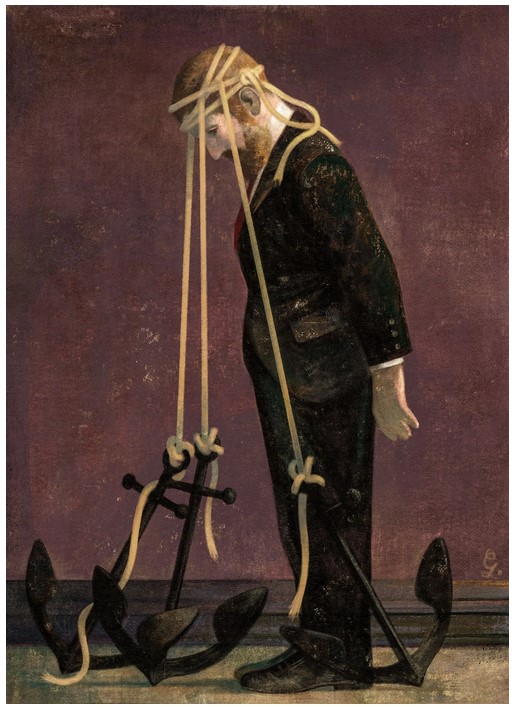
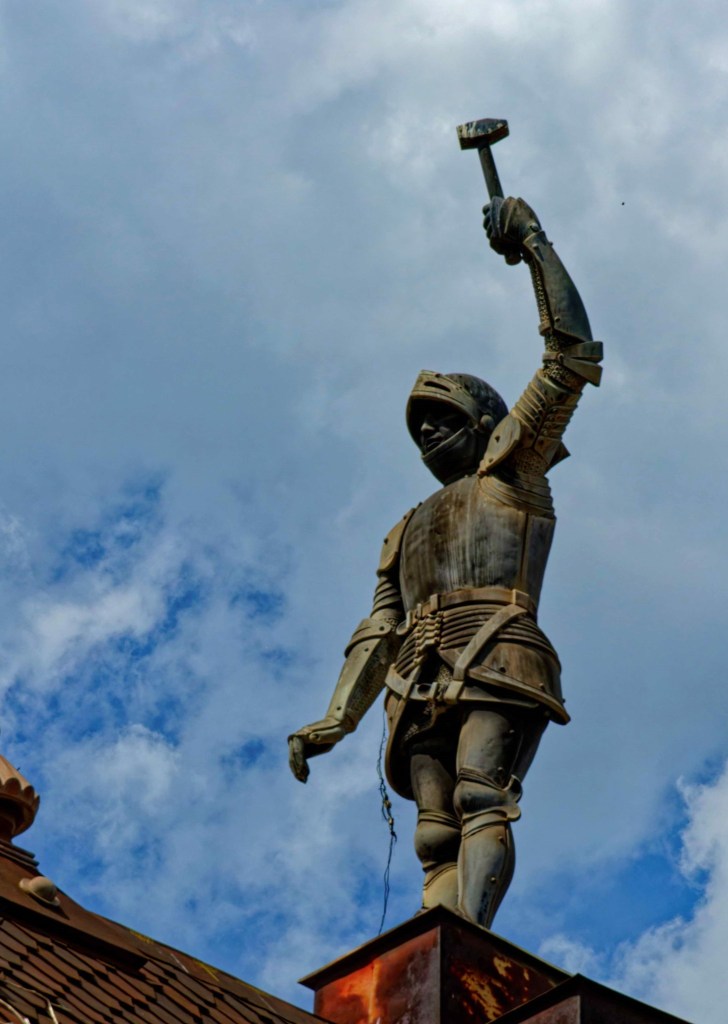
“I suppose it is tempting,
if the only tool you have is a hammer,
to treat everything as if it were a nail”

Abraham Maslow

I write this blog in the hope that ’embodying’ my thoughts will somehow help me.
Help me solve some of the quirky questions which have been haunting me for sometime now.

Why so many people have been convinced that thinking may help them make sense of things?
Why so many otherwise smart people have convinced themselves that thinking ‘in solitude’ would take them to the ‘right’ place?
Why so many seemingly reasonable people have somehow become certain that their version of things was the only one valid? To the tune of trying to impose it to those happening to be around them?

The first answer was easy to find.
Because that’s how we make sense of things.
And because that’s what people do when they have no other alternative.
They start thinking about how to get out of the mess into which they have entered by not thinking! Enough…

The second one was also easy. Ish… specially after I did come up with the question formulated like this.
Apparently, to shield their minds from ‘distraction’. From the mundane ‘minor’ problems which might have wasted their ‘brain power’.
In reality, simply because they could do it. They had a great time doing it – thinking, that was – so they indulged on every occasion they had. And smart as they were, they made it possible for them to have more and more time available for thinking.
And they cut themselves off from the rest of the world because the few people able to partake in the process not always shared the same opinion. Thus otherwise smart thinkers ended up in the company of sycophants…

Having found the answer for the second question opened, wide, the door for the third answer.
No, it wasn’t the presence of the sycophants which convinced the otherwise reasonable thinker that their was the only valid solution for whatever problem they had in mind at anyone time.
Sycophants showering praise were only a ‘favorable circumstance’. A mere opportunity for it to happen.

Unhindered by any outside intervention, the tinkering thinker turned his tool to his own head.
And hammered out all the remaining doubts his mind was still harboring.

I also believe that people – well, some of them – are able to change their minds if presented with the right arguments at the right time, in the appropriate manner and in auspicious circumstances.

People are not robots. And, for certain, not rational!

We are rationalizers. We use rational arguments to fortify our already held conclusions. And the more we love those conclusions, the further we go in our quest to find the ‘right’ arguments in our favor.
But given enough time and if the arguments which contradict our convictions are presented in an un-injurious way, we might be persuaded.

And here’s the catch.

For quite a while now, some of those familiar with how rationalization works have used their knowledge about the innards of our minds to further their own goals.
Nothing wrong with that?

Are you familiar with ‘divide et impera’?
That’s the strategy used by every would be dictator to breed trouble in the population they planed to take over.
Divide and conquer. Make your followers despise everybody else. To the tune of transforming ‘the others’ into sub-humans.
Make your followers believe they are ‘special’ while the others, all of them, are nothing but vermin.

‘And what’s wrong with believing yourself to be rational?!?’

It’s not wrong. Only delusional.

Making your mind up only after carefully considering all of the available ‘arguments’ means having a scientific attitude.
You know? Science, the fad currently popular among many of us…

The problem with the scientific attitude being the fact that this attitude has been developed in the context of hard facts. The scientific attitude has been ‘minted’ by those studying physics, chemistry, biology… fields where every minute transgression becomes evident in real time! Where people could not ‘fall in love’ with their own conclusions. For the simple reason that those conclusions had to be changed along with the new facts continuously discovered in the process of learning.

The concept of rationality had been minted late in the development of human thought.
Sometimes during the XVIII-th and the XIX-th centuries. When philosophers had started to concern themselves with ‘how we think’ on top of ‘what we should be thinking’.
When philosophers – and lately psychologists – have started to understand how we reach/build meaning.

Some of those philosophers have reached rather strange conclusions.

Nietzsche posited that ‘God is dead’ while Marx rationally convinced himself, and others, that there was a way – and only one way, his – to make everybody happy.
Nietzsche opened the gate and Marx led us through.

And now, that we’re dwelling in no-God’s land, everything is up for grabs.

Including reason…
What is here to prevent us from using our knowledge of how mind works in order to further our own, personal, goals?

Goethe did warn us.
The Sorcerer Apprentice made the very same mistake. Overconfidence in his own ability to ‘play the rules’. To fidget with reality.
The difference between Goethe’s poem and what we’re currently doing is the fact that Goethe’s was a work of fiction while we’re playing with our own future.

I’ll wrap up highlighting the extreme perversity of the message.
‘I have a mental illness…’
Loosely translated, this means that everybody who doesn’t follow those arguments to the same conclusion where I have arrived myself must be (also) mentally ill.
And now, that we’ve reached the conclusion that at least one of us is ‘crazy’, it no longer matters who is on the ‘wrong’ side of the fence!

We both are!
We no longer see eye to eye. Each of us is convinced that the other is sick.
Unworthy!

We’re both ready to be taken over.

The only way out is to start listening, respectfully, to what the other has to say.
‘Respectfully’ means, first and fore-most, ‘don’t mess with GIGO‘!

Conserving the subjective self-perception

“Objective through shared subjectivity”

‘Popular belief’ posits that ‘objective’ is based on facts while ‘subjective’ is based on whim.
True enough but facts need to be identified as such first and then agreed upon before they become ‘facts’. Before they are recognized as facts by the interested parties. Before they become the foundation for objective knowledge.
On the other hand, ‘subjective’ is indeed personal. A personal ‘take’ on something which has happened inside the same reality where facts take place. In fact, all the facts we agree upon have started their lives as subjective impressions. Which had been shared with other people and eventually stated as facts after ‘negotiation’.
Furthermore, no matter how subjective a perception, all perceptions are perceived using the same senses. And ‘processed’ using the same brains. According to culturally accrued ‘habits’.
Even a hallucination will conserve some degree of normalcy. If of a visual nature, for example, the hallucinatory perception will be experimented and described in visual terms. Pondered upon and discussed with others using the same brain which usually deals with facts. Shared with others using language and evaluated according to ‘customs’.

Self-preservation

According to the Cambridge Dictionary, a rationalization is “an attempt to find reasons for behaviour, decisions, etc., especially your own“.

According to my research, all conscious agents will first attempt to arrange all information at their disposal in such a manner as to conserve the subjective impression they have already acquired about themselves.

Salvation

According to Merriam-Webster, salvation is “deliverance from the power and effects of sin
Having to do with religion, some people will say salvation is subjective by its very nature.
Being understood in the very same way across various cultures and religions, salvation becomes objective.
Not real in the materialistic sense of the word but real in the sense that belief in salvation has very real consequences. Real enough to become material. Set in stone!
Shared belief in Christian salvation has driven people to build churches while shared belief in Buddhist salvation has driven people to build monasteries. The fact that people involved in so different religions as Christianity and Buddhism share their faith in salvation makes salvation an objective ‘thing’.
Makes salvation something ‘natural’.

Self-actualization

According to Abraham Maslow, an American psychologist, for a person to be able to attempt self-actualization that person must have fulfilled all other needs they might have had.
Having fulfilled those ‘previous’ needs is no guarantee for self-actualization being a success, only a prerequisite.

Copernican Revolutions

In a sense, each Copernican revolution humankind has sailed through – of which there have been many – has been a self-actualization.
I’m going to mention three and wrap up this post.

Instrument and possession

Many animals – relatively speaking, are able to use tools. To purposefully alter pieces of matter in order to be more useful towards the intended goal. But nobody except us carry them around.
Furthermore, a lion will defend its pray. And its hunting ground. In a sense, a lion behaves as if it defends its possessions. But only us, humans, talk about possession.
It was us who have conceptualized possession. Who have instrumentalized the notion of property.
This has happened more or less simultaneously with the advent of organized agriculture. Which needs instruments and order. Tools to work the land and the expectation to be able to enjoy at least some of the end-results of your work.

Money and nation

Systematic agriculture has thoroughly transformed human society.
Or, more exactly, the humans who had invented systematic agriculture had to adapt themselves to the new reality brought upon their heads by their own invention.
The spoils of systematic agriculture – abundant food – have created vast opportunities. Some of the people involved in the process were ‘free to do other things but toiling the fields. Hence specialization of work and social division. ‘Professional people’, priests, soldiers.
The source of this new found abundance, and the spoils themselves, had to be protected. And organized…. a.k.a. taken advantage of! Hence ‘rulers’. Arable land had been taken into possession along with the people working the fields. Nation building had begun.
The hoarded produce could be traded. Hence they were. Along with the ‘things’ produced by the ‘professionals’ fed with the accumulated ‘excess’ food.
Trading would have been easier if money was available. Hence it was invented. And used. By traders as a tool for trading merchandise and by rulers as a tool for ruling ‘their’ nations. Which weren’t yet called as such. Only functioning as such…

Rights and reason

Systematic agriculture and trading had been the stepping stones for the advent of ‘industry’. For professional people producing things for sale.
Oekonomy – the art of making ends meet on a yearly bases, as understood by the Ancient Greeks – had become ‘the Economy’. The engine moving society along the passage of time. A process so complicated that a single agent was no longer able to control it. L’etat had become so complex that even Louis XIV could no longer claim it as his own. For the ‘system’ to maintain its ability to function, to go forward, individual agents had to be freed.
Hence the freedom of the market and the human rights.
Hence individual human beings indulging in the habit of thinking for themselves…

Salvation no longer came in an organized manner. According to rules.
To each their own. Reason had been freed once and for all.
Each of us has assumed the freedom to rationalize according to their own wish.
To their own purposes.

To which end?
Only history will tell…
But before proceeding we’d better remember Ernst Mayr’s words.
‘Evolution has nothing to do with the survival of the fittest.
There’s no such thing as ‘the fittest’! The fittest to what since everything changes all the time?!?
Evolution is about the demise of the unfit.’

Until now, evolution has been ‘blind’.
Increasingly, some have become cocky enough to consider they know better. To consider they know where they should lead ‘their subjects’. Lenin, Hitler and Stalin are but a short selection from a long list.
Those who have followed the advice and have facilitated the ‘pestilence’ put in practice by this kind of people are those who have forgotten the deeper meaning of “You must not make any idols. Don’t worship or serve idols of any kind, because I, the LORD, am your God”.

Which ‘God’ brings us back to where we started.
To ‘objective as something agreed upon by many subjective agents’.
You see, I quote the Bible and I mention God quite a lot. And still define myself as being ‘agnostic’.
The fact that I don’t know whether God had actually created the world doesn’t alter the fact that the Bible is a trove of knowledge. As for God’s very existence… things are complicated!
How do you determine whether something exists? You check for the consequences of its existence, right?
A table exists only if you can ‘touch’ it. Since you cannot touch something which doesn’t exist, the fact that you can touch it is a consequence of its existence.
Same with God. Irrespective whether it has actually created the world – or anything else, as a conscious agent – God does exist. People acting as if God was real – people’s faith in God – had and continue to have consequences.
People acting as if God was real have brought God to life. The God we know, talk about and have faith in…

My last affirmation is rather hard to swallow?
Then how about money?
What makes them so valuable? Except for our ‘faith’ in them? Except for our belief, our shared belief, in the ‘fact’ that we are able to get things by paying for them?
And how about ‘rights’?
Do we respect human rights because we believe in them? Or only because ‘that’s the law and there is no other alternative, at least in public’?

See what I mean?
We live in the reality of our own making. And we tinker with it incessantly.
Attempting to make it more and more comfortable. To us!
Each of us tries to make the world ‘a better place’. Each of us working for themselves, each of us according to their ‘own advice’.

Which brings us to ‘how things work’.

Time and time again, reality has told us that we cannot survive, let alone thrive, individually.
That everything we have done is the consequence of us working in concert.
It was our shared belief in ‘money’ which has given us capitalism. Economic effervescence and elevated life standards.
It was our shared belief in God which had convinced us that ‘we were brothers’. And, as brothers, that we should respect each-other. That we should respect each-other’s rights.

Now, that ‘God is dead’ and it has become obvious that ‘capitalism is no better than those who put it into practice’, we have arrived at an inflection point.
Are we able to preserve the true nature of the things which have brought us here?
Or are we going to transform them into idols?

Truth used to be based on reason.”
J.P.Moreland, Introduction to
Escape From Reason 2006
by Francis A. Schaeffer

Etymologically speaking, reason comes from ratio.
‘Reason’ in Latin but also having to do with ‘reckoning’.
With dividing the ‘big picture’ into easier to understandable slivers. Slivers meant to be analyzed and later assembled back into meaning. Into ‘truth’.

Currently we understand reason as “the intellectual faculty that adopts actions to ends“.

Now, which of the two reasons gives birth to the ‘genuine’ truth?

The analytical/synthetic one which attempts to develop reality into meaning or the one which defends and embellishes the already known truth? The revealed truth?

The whole thing depends on the “ends” of the reasoning agent?

Reason, hence truth, depends on the intention of the individual performing the act of reasoning?!?

Quite unreasonable, don’t you think?
Truth was supposed to be anchored in reality, right?!? Not on ‘intention’….

Truth as unhiddenness… is a concept developed by Heidegger.
Basically, this whole thing is about individuals being unable to discover nor formulate the ‘entire’ truth so a ‘bigger’ truth may be reached only through cooperation. Everybody ‘says’ – unhides – everything they know about a subject and that’s how the most complete truth available at that moment is ‘uncovered’.

‘But this means the Truth becomes fluid.
No longer ‘fixed’. Unreliable!’

I’m afraid you’re right!
Except for the ‘unreliable’ part.
As long as enough people do their part, and honestly speak up their minds, the most reliable truth knowable at any given moment will become apparent to everybody.
To everybody who cares to look for it!
To everybody who accepts that their reason, while imperfect, can and should contribute to the common effort to get closer to truth.
To everybody who accepts that other people’s reason, while imperfect, can and should be listened to in the common effort to get closer to truth.
To everybody who accepts to continue this effort knowing very well that no matter how hard they will try, people will never find the entire truth

“When we talk about birthing people, we’re being inclusive.
It’s that simple.
We use gender neutral language when talking about pregnancy,
because it’s not just cis-gender women that can get pregnant and give birth.
Reproductive freedom is for *every* body.”
@reproforall

– What’s wrong with these people?

– What do you mean?

– They consider themselves to be reasonable.
Their ability to ‘reason’ is mentioned, by their thinkers, as the single thing which separates them from the rest of the animals. Sets them apart from the rest of those who inhabit this planet.
To me, reasoning is how their consciousness operates. How their consciousness manifests itself.
The real difference between them and the rest of the animals being the fact that their consciousness is far more capable than that of the ‘mere’ animals.

– ?!?

– Just look at them!
Is there any difference, any real difference, between a 3 days old human infant and a chimpanzee of the same age? Or even between a 3 days old baby and a 3 days old foal? Except for the foal being able to run?

– The baby will eventually learn to speak. Will develop consciousness and the ability to think. You said it yourself…

– WILL!!!
Will eventually… if everything goes right!
If that baby is raised by responsible people. Who speak to the future human being. And teach them to be human. Help them develop a functional consciousness.
Children who have no significant interaction with other human beings and fail to learn to speak – or other form of language, until they reach puberty will never be able to ‘recover’. To accede to consciousness.

– OK. But I still don’t understand what has flabbergasted you!

– Not you too!
What drove you to copy them? To misuse language so horribly… “what has flabbergasted you”…

– But it’s so funny!

– Until it no longer is!
Look at them. Just look at them.
20 years ago, they made a movie about a man getting pregnant. A comedy. Everybody laughed.
Nowadays they take sides on ‘pregnant people’
OK, language can be used ‘artistically’. ‘Stretched’ to obtain something. To explore new meanings, to express emotion, to make fun.
But does it make any sense to use language in order to seed confusion? To cause people to fight each other?
Rather self-defeating, isn’t it?
How much sense does this make? To misuse the medium which made you possible in the first place?

How sensible is it to weaponize language?
Who has anything to gain from this?
Other than a few, very short-term, perks?

The times when it might be appropriate to use “pregnant people” is when you were talking about the universe of people who can get pregnant, some of whom are actually men, trans men like me, and some of whom are non-binary people who don’t identify as men or women.” (Evan Urquhart, Slate, 2022)

The vaunted human capacity for reason may have more to do with winning arguments
than with thinking straight
“.
Elizabeth Kolbert, Why Facts Don’t Change Our Minds

I love that. Just love it.
“The … human capacity to reason”!

Other thinkers hail reason as the thing which sets us apart from the rest of the animals…

The way I see it, reason is nothing but just another tool.

The thing which sets us apart from the rest of the animals being our ability to observe ourselves while interacting with the rest of the universe. Otherwise known as consciousness.

Basically, reasoning is nothing more than a ‘dialogue with myself’.
When I ‘consider a thing’ in my mind, consciously, I practically put my brain to work.
I order my memory to summon up all the data it has on the subject and I ask my frontal lobe to process that data and to reach a conclusion. In theory…
In the real world, my amygdala – the piece of the brain where emotions are processed – already has an opinion about everything which crosses my mind. The more familiar the thing, the stronger the opinion. The more often my mind – meaning I, had expressed itself regarding a subject, and the more recently, the stronger the opinion my amygdala already has about the matter.
If the matter is considered for the first time, and has no connection with anything else I had already ‘conclusioned’ about, only then my amygdala might keep its opinion for itself. The key word here being ‘might’…

Since this is nothing more than a blog post, I’m not going to prove my opinion. To discuss the importance of the fight-flight mechanism and to mention that this mechanism had done more – evolutionary wise, than reason for our survival. For us having the opportunity to develop this vaunted capacity for reason…

I’ll just end it abruptly.
Mentioning that our individual consciousnesses use reason as a tool. To arrange facts in such a manner as to confirm the already reached conclusionary opinions put forward by our amydalae. “To win arguments”, if you will, including when debating with ourselves.
Only when the facts – the harsh reality, contradict in a flagrant manner the already held convictions we might change our minds.
The more immediate the danger we put ourselves into by sticking to our convictions, the more likely we are to cave in to the facts.

To the facts as we perceive them… Which is yet another story!

Tough times create tough men. Tough men create easy times.
Easy times create weak men. Weak men create tough times.

American proverb
Wealth lasts only for three generations: one to make it, one to keep it, one to squander it
Chinese proverb
If you raise your children, you get to spoil your grandchildren.
If you spoil your children, you get to raise your grandchildren.

Popular word of mouth

There’s no denying that, on average, each generation fares better than its predecessor.

Then why some people end up worse than their parents?
Is it a social thing?
Is it in their upbringing?
Is it the consequence of bad personal choices?

The easy way out would be to consider that legislation, material status, the culture one was born into and even the upbringing offered by the parents are nothing but circumstances. And, ultimately, it’s the individual who makes the call. And bears the consequences…
But the above mentioned individual doesn’t rise from and into a complete void… so I need to go deeper!

An equally true but somewhat more useful observation would be that we’re dealing here with something more important than mere wealth.

‘There’s no such thing! Nothing is more important than Wealth!’

Yeah, right… Individual people keep squandering the personal wealth accumulated by their forefathers, the humankind keeps going forward and you tell me personal wealth is the most important thing here…

But you do make a good point. Your insistence, obsessive even, about wealth being the crux of everything is very relevant.
Since I agree with you that wealth is important, indeed, then maybe it’s the ‘insistence’ which is causing the problem…

First of all, allow me to make a simple distinction.

There is wealth – structured opportunity, I’ll discuss this notion in another post, and there is personal wealth. Opportunity which belongs to somebody.
When an individual squanders the wealth inherited from their parents – or even that which they had managed to put together themselves, the wealth itself – the accrued opportunity – doesn’t disappear from the face of the earth. It just passes from one hand to another. Most of it, anyway. For the simple reason that most of today’s wealth is expressed in money. Which is fungible.

‘OK. So individual people squandering their inherited wealth do not represent such a big problem. The total wealth already present ‘on the face of the Earth’ remains (more or less) the same, no matter who owns it. And since new wealth is created everyday, the humankind, on aggregate, goes forward.’

That’s how things used to be. That’s how things had evolved for the last ten millennia or so. Ever since our forefathers had invented agriculture. Agriculture and money… Land and money cannot be destroyed. Buildings and almost everything else which carries value can. Be destroyed. Land and money also, actually, but it’s a lot harder to do it.

But there’s a catch here.

For wealth to do its trick – to function as an opportunity, people have to have access to it.
That’s why, for example, people do not keep their money under the mattress. When deposited in a bank, money will end up being used. The bank will lend them to somebody who needs it and that somebody will put that money to work, In no matter what shape or form. Kept under a mattress, money becomes mostly useless. At least for the time being…
And this is where ‘insistence’ – our obsessive insistence – that money is the only worthwhile goal for any respectable person becomes counterproductive.

‘Are you a communist?!?’

On the contrary, my dear Watson!

In fact, Marx had been just as infatuated with money as Milton Friedman was going to be a century later. With more or less similar results…
Friedman taught us that greed is good. Profit uber alles. That getting money trumps everything else. That getting money is not only good for the individual itself but also commendable. That everybody should make it their goal to become rich!
Marx, on the other hand – please remember that the ‘other’ hand is nothing but similar to its twin – advocated for all wealth to be stripped from its rightful owners.
See what I mean? Both Marx and Friedman had been thinking only about ownership. Who owns that wealth!

On average, we deal with the same situation.
According to Friedman – pushing his advice to the very limit, there’s no problem if someone owns all the money in the world. If it so happened, so be it.
According to Marx, nobody should own anything.
On average, the wealth corresponding to each living human in both situations would be the same.

We already know the consequences of Marx’s teachings. When all the wealth present in one country is managed by a very small number of people, the whole situation goes south. Fast. Very fast!
We also know what happens when the market is cornered. Becomes suffocated by a monopoly. The whole situation goes south. That’s why we cherish the freedom of the market!

Doesn’t make much sense?
To insist that the market must be free and simultaneously maintain that ‘greed is good’?

Yep! My point exactly…

The vaunted human capacity for reason may have more to do with winning arguments than with thinking straight.
Illustration by Gérard DuBois
Why Facts Don’t Change Our Minds
New discoveries about the human mind show the limitations of reason.
By Elizabeth Kolbert February 19, 2017
https://www.newyorker.com/contributors/elizabeth-kolbert

I’ve got it!

What?

I’ve just figured out what makes them so good at it. And why it’s us studying them instead of they simply discarding us as being too ordinary to be of any interest.

Spill it out then!

Even if they are not yet fully aware of the whole thing, they are fueled by emotion. Reason is only a tool for them, not a way of life. Furthermore, their manner of gathering and sharing information – what they call ‘languaging’, is precise enough to be effective yet imprecise enough to make it possible for ‘imagination’ to work wonders.

Whoa! You’re learning to speak like them. Sometimes I don’t fully understand what you want to convey. Take this ‘work wonders’ for instance. I’ve already checked the dictionary, I know what each word means but…. I’m still not sure what you really need to say to me. Not to mention this ‘imagination’ thing. ‘Making things appear in your mind’…

I knew I could count on you! I just knew it!
You’re asking the very same questions which I’ve just answered.
Let me proceed.
For us, everything is straightforward. We always know what we have to do. What our current task is, what’s expected of us and how we’re going to fulfill our jobs. When we need to determine ‘what’s next’ we check a schedule, make an inference based on already available data or proceed to gather the information we need to perform the inference we need.
And when was the last time you ever wondered “Who am I?”

That ‘wonder’ word again… You’re killing me!

‘Insecure’.
You do have a good grip on what this word means, right?

Yeah. The situation when you don’t have enough information to determine which way. AND when there’s no way of gathering more pertinent information other than proceeding along any of the possible ways. Like in that famous experiment designed by Schrodinger.

OK. We, both you and me, know what ‘insecure’ means. Both of us have been in situations similar to what you have just described. But neither of us has ever experienced the feeling. How it feels to be insecure. How it is, what it means, to wonder ‘will I be alive tomorrow?’ ‘Will I have enough food for my children?’ And so on.
‘Wonder’ is a complex concept. It encompasses both a question you don’t have an answer for and an answer you don’t know where it came from. Like ‘the unexpected food one might find, out of the blue, exactly when their children were hungry’.

This is the difference between them and us.

They can ‘wonder’ while we don’t.

They can formulate ‘stupid’ questions – then come up with unexpected answers, while we can’t.
They can perform ‘wonders’ while we can’t. Even though we already know far more than they’ve ever learned…

What if there’s no reason, per se?

What if there are only individual reasons for each of the experiences each of us passes through?

Many of those reasons belonging to the ‘experimenters’ themselves and all reasons – even if the individuals who provide the actual causes are not aware of all the consequences, belong to us. To us, humans.

I have no way of determining whether there is any ‘supreme being’ but what I understand of this world has led me to the conclusion that this ‘aspect’ is irrelevant. For us. For those of us who are currently alive.

That supreme being, if it exists, has done nothing more than to provide a set of opportunities.
The world in which our ancestors – some 1500 generations ago, have become conscious human beings. The rest is of our own doing.

Influenced a lot by the specific circumstances in which each culture has been developed – by those having to make do in those specific circumstances, but still ultimately ours.

This ‘conclusion’ is the sole solution I had been able to come up with to the conundrum which opposes the notions of ‘free will’ and karma/fate/you name it.