Archives for posts with tag: Long time survival.

Image

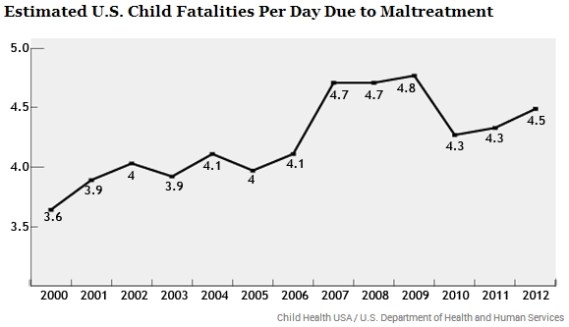
Emile Durkheim, a French sociologist, amply demonstrated that the act of committing suicide is not only a manifestation of one’s free will but also a reliable indicator of what kind of society/community that person belongs to.

What are we to understand from the graph above, beside the fact that 2006 to 2010 was indeed the pinnacle of the socio-economic crises that is still haunting us?
That we are killing our future/children with our own hands and we do it with ever increasing intensity even after the brunt of the crises has passed?
Or that 2006 to 2010 was just a spike of another, still festering and deeper than meets the eye, kind of crises?

Image

I found this question on FB and I believe it’s worth an answer:

“Why?” as to “how come?” or “why” as to “for what purpose?”

By pure chance and it is up to us to set our goals but we must always take good care not to thread on Mother Nature’s toes or it’s curtains for all of us and for our petty goals.

Cassandra:
‘Oh God, please make it so that my prophecies won’t come true!’
God:
‘I’m sorry Cassandra. This is what I’ve made Man for. It’s His business to heed to your warnings!’

De fapt a spune ca ‘politica este o curva’ e echivalent cu a spune ca a face sex e tot una cu prostitutia.

Am formulat asa tocmai pentru a sublinia ca expresia consacrata cu privire la politica e deficienta si din punct de vedere al exprimarii, o activitate – politica – nu poate fi ‘curva’ ci cel mult ‘curvasarie’. Partea proasta este ca expresia ne-a fost fluturata atat de mult prin fata ochilor incat ne-am obisnuit cu ea si am inceput sa o consideram a fi adevarata.
Nu, nu este intotdeauna asa ci doar in masura in care ii permitem noi sa fie.
Atunci cand facem sex (ma rog, eu unul prefer sa fac dragoste, nu sex, asta este expresia consacrata) ne alegem partenerul dupa preferinta si comoditate. Preferam o noapte salbatica dar fara batai de cap? Ne ducem la curve. Preferam o relatie stabila dar care implica responsabilitati? …

Cam asa e si cu politica. E o activitate esentiala, la fel ca sexul, fara de care comunitatile umane nu ar putea supravietui, si care poate fi incredintata unor oameni seriosi sau unor ‘curvari’.
Iar asta nu e totul.
Nici curvasaria si nici politica nu pot fi practicate de unul singur.
Dupa cum bine spunea Basescu: “Statul nu poate fi necompetitiv sau corupt fara un partener – mediul privat. Responsabilitatea trebuie asumata de ambele parti” tot asa politicienii nu ar putea sa-si bata joc de noi daca noi ne-am purta cu mai multa responsabilitate, pentru noi si pentru copii nostri.
Si inca ceva.
Cele mai multe curve ajung sa faca trotuarul de nevoie sau fortate de altii, nu de placere iar odata ajunse acolo nu mai pot scapa din cercul vicios. Am impresia ca tot cam asa se intampla si cu politicienii, odata ajunsi in hora nu mai pot da inapoi. Si hora se invarte din ce in ce mai tare…

Bine, si ce facem?
Legalizam prostitutia?
Se spune ca dupa ce ‘se potolesc’ curvele devin neveste foarte bune. Pare plauzibil. Dupa ce au trait in infern cele care au fost suficient de puternice si de inteligente incat sa supravietuiasca si sa iasa de acolo ar trebui sa fie tampite sa vrea sa se mai intoarca acolo.
Pe de alta parte orice om normal nu intra intr-o relatie pe termen lung cu altcineva fara sa afle ce a facut celalalt inainte.
Iar dupa aceea, indiferent de cata incredere are in partenerul sau, este atent sa vada ce face – exista si posibilitatea ca acesta sa innebuneasca la un moment dat si sa dea foc la casa, nu?
Primul si cel mai important lucru pe care il avem de facut este sa nu mai credem ca politica este neaparat curvasarie.
Conceptul asta a fost pus pe tapet tocmai de cei care vor sa ne obisnuiasca cu ideea ca nu mai este nimic de facut si ca trebuie sa ne obisnuim cu situatia. Iar partea si mai proasta este ca repetand-o nu facem decat sa ii descurajam pe oamenii cinstiti care ar vrea sa intre in politica: ‘pai daca acolo sunt numai curve eu de ce sa ma duc, ca sa se spuna si despre mine tot asa?’
Iar al doilea lucru este sa nu mai acceptam genul asta de comportament. Tin minte ca l-am auzit o data pe Basescu la un ‘telejurnal’ si nu reusesc sa gasesc undeva citatul ca: ‘nici un ministru sau director n-ar putea face nimic fara unii care sa-l ajute si fara ca cei din jurul lui sa inchida ochii’.
Pana la urma si politicienii sunt conectati la viata reala. Pe vremuri, cand politica era apanajul capetelor incoronate, lucrurile erau mai simple dar mult mai brutale. Daca cel care detinea controlul situatiei (suveranul, singurul care avea autonomie fata de ceilalti) o dadea in bara tara era atat de slabita incat cei din jur incepeau sa profite de situatie: mai luau o bucata de pamant, cateodata o ocupau cu totul…si uite asa se incheia domnia celor nepriceputi.
Acum teoretic e mai simplu, ne alegem conducatorii. Chestia e ca daca nu-i alegem cu grija, si mai ales daca nu stam cu ochii pe ei, ajung sa faca ce le trece lor prin cap si nu ce ar trebui sa faca pentru ca lucrurile sa functioneze cat mai bine. Asa ca nu mai este cazul sa asteptam sa ne cada sandramaua in cap si abia dupa aceea sa luam masuri.
De fapt scandalul care ia amploare in invatamant, cel cu banii din care urmau sa fie luate cadouri pentru profesori, este inca un semn ca oamenii s-au saturat sa mai rabde.

Image

” “Fiat justitia ruat caelum” is a Latin legal phrase which means “let justice be done though the heavens fall.” It signifies the belief that justice must be realized regardless of the consequences.”

Really?
Since when (rational) human beings do something (willingly and knowingly) without being interested in the outcome of their actions?

Let’s find a better interpretation!

I’ll start with Humboldt’s observation that the inner workings of a language are in strong connection with the way the native users of that language relate themselves to the world at large, observation that was later developed into the Sapir-Whorf hypothesis. I find this important because it perfectly explains the fact that a translation will hardly ever be as explicit as the original, precisely because the interpreter needs to translate both the meaning of the text and the frame-mind of the writer.

Back to the Latin phrase.
The Romans were warriors, not literates, so they favored direct talk even if it was sometimes so direct as to become a puzzle. After all they were familiar with their own way of talking!
Take for instance ‘Ubi bene, ibi patria!’
Apparently it’s an immigrant’s motto: “Where there is good (prosperity), there is my fatherland (country), Wherever I prosper, there is my fatherland.”
Now what if there is a lot more to it?
Let’s remember first that the Romans, like the early Americans, were not immigrants but colonists. Quite a difference between these two notions, isn’t it?
So what if ‘Ubi bene, ibi patria’ has a slighter different meaning than the generally accepted one, like ‘if we arrived this far let’s make this place our home’? As in ‘if we’re stuck here at least let’s make this place comfortable’!

I think you already have a fair idea about what I’m trying to suggest but I’d like to explore the concept of ‘justice’ before going any further.
The English term “Justice” is related to two Latin words:
– “Jus” = 1. Law; 2. Right
 “Justitia”= 1. Equity, 2. Justice
In these conditions it is safe to say that ‘justice’ is not only about the rule of law but also about the congruence between the behavior of an individual and his social status. Simply by having said that I got a lot nearer to ‘why on Earth do we care so much about justice?’.

Without justice the social fabric, the spider’s net that keeps us from wandering aimlessly through time, would simply disappear. Direct interactions between (no longer human) individuals would be governed exclusively by brute force and indirect relations would no longer exist.

And this was common knowledge since the dawn of time. Shortly after learning how to speak people have started to teach their children: “Don’t do unto others what you don’t want others to do unto you”. And one of the reasons people invented writing was for them to be able to pass that rule over and over across generations.

About the same time justice started to be ‘administered’. People no longer relied solely on their muscles to defend themselves, if they felt they had been mistreated they could raise the problem before the common gathering of the tribe or before the ruler of the place. And both of these instances would take swift action since none of them had any interest in things escalating any further, friends or relatives of those involved to take sides and the situation to degenerate into open conflict between sections of the community.

In order for a ‘sentence’ to be effective it has to be both just (according to the rules) and pertinent (according to the reality).
In practical terms before punishing somebody for stealing you need to have in place a rule stating clearly what constitutes an ‘act of stealing’, the penalty for purporting such an act, to have sufficient proof that the act has been committed and by whom; otherwise the whole enterprise would defeat its purpose since it would be perceived as arbitrary: a proof that the rule of law no longer operates, the new rule is ‘free for all’ and that individuals are no longer members of a society but hapless constituents of a mob.

I find it extremely significant that some of the most democratic nations had, for long periods of time and quite a few of them still have it, something called ‘judgement by peers’. This way not only the accused doesn’t find himself at the mercy of the ruler of the land, or one of its ‘henchmen’, but also the general public is assured that no monkey business is taking place during the final stage of the judicial process. (NB, judges might have had their powers ‘vested in them by God’ but they were, and still are, vetted by those in power at a given moment).

But the main difference between a jury trial and a bench trial is that while jurors receive strict orders from the judge that they have to be convinced ‘beyond any reasonable doubt’ before passing a ‘guilty’ decision, it is in the very nature of a judge’s job to interpret the law. And it is here where ‘fiat justitia, ruat caelum’ comes into play.
The classic ‘translation’ of this is that “justice must be realized regardless of the consequences” and this interpretation may ‘help’ a judge to pass a verdict one way or another just because he, personally, is ‘satisfied’ with the evidence presented to him and he feels that he has reached the just decision.
Maybe a more useful interpretation would be ‘be careful when dispensing justice otherwise the heavens will fall upon your head’.
Not in the mundane sense that you, personally, would have to suffer the consequences of your decisions but that you, the judge, have contributed – by twisting the due course of justice – to the weakening of the entire society. And by doing so you have brought great danger upon us all.

PS.

Here is another thing about ‘justice’ that is not exactly as conventional wisdom has it.
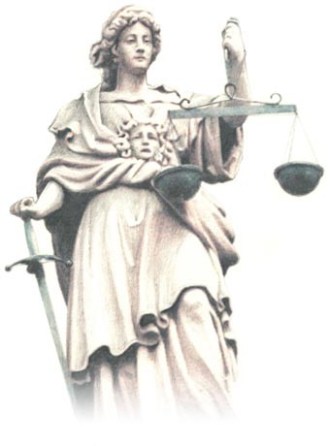
The blindfold that sometimes adorns the representations of Lady Justice is not so much a symbol of its impartiality and more a sign that she is going to (or at least should) ignore the ‘bribes’ being offered to her.

I, personally, prefer a ‘justice’ that is fully aware of what is going around her so that she might have as much pertinent information as possible at her disposal when reaching a decision.

Fiat justitia, ruat caelum insemna mult mai mult decat “faca-se dreptate chiar daca ar fi sa se prabuseasca cerul” (condamna-l cu orice pret daca il crezi vinovat).

Bunicii nostri romani erau mai degraba razboinici. Scrijeleau cuvintele cu varful sabiei, nu le mangaiau cu varful vreunei pene. Spusele lor erau mai mult avertismente si mai putin indemnuri metafizice.
Erau mult mai interesati de amanuntele practice ale guvernarii imperiului decat de aspectele morale ale justitiei abstracte.

Si pentru ca toate astea trebuiau sa se termine cu o interpretare alternativa a maximei din titlu….

“Ai grija! Daca dreptatea din care te impartasesti nu este cu adevarat justa, mai devreme sau mai tarziu cerul de de-asupra capului iti va cadea de sub picioare”!

Aveti aici o excelenta argumentare din punct de vedere teologic, chiar daca un pic pro-domo, a zicalei de mai sus.

Eu ma voi margini sa spun ca ‘popii’, in sensul de persoane initiate intr-un anumit domeniu, dispun de un set mult mai mare de cunostinte relativ la acel domeniu decat noi ceilalti dar asta nu-i scuteste de slabiciunea tipica fiintei umane: tendinta de a ceda ispitei.

De unde capacitatea ‘popii’ de a da sfaturi excelente dar si posibilitatea ca acesta sa nu se tina intotdeauna de propriile sale invataturi.

Acum se impune o precizare de ordin metodologic.
Dupa cum se vede cu ochiul liber am pornit de la ipoteza bunelor intentii. Bineinteles ca ‘popa’, avand atat avantajul belsugului de informatii cat si pe cel al ascendentului moral, ar putea sa dea niste sfaturi intentionat gresite dar asta ar insemna ca respectivul sa fie rau intentionat. Exact din momentul acesta incepe vina enoriasului – cine l-a pus sa asculte cuvintele unui profet mincinos? – asa ca voi ramane in conditiile ipotezei initiale: ‘popa’ este un om ca toti ceilalti, supus greselii, doar ca mai informat si de aceea un pic mai puternic decat ceilalti.

In conditiile astea e de presupus ca la un moment dat ‘popa’ isi va da seama de greselile pe care le-a facut si va incerca sa le dreaga. Nici macar nu conteaza daca face acest lucru de frica pentru ce i se va intampla dupa moarte sau daca si-a dat seama ca efectele actiunilor lui pot face atata rau incat chiar el insusi, copiii si apropiatii sai sunt supusi pericolului. Important este ca omul din el incearca sa dreaga din ce a facut.

Si exact din acest moment incepe sa devina o prostie sa nu asculti cu mare atentie ce are de spus:

“Basescu: Statul nu poate fi necompetitiv sau corupt fara un partener – mediul privat. Responsabilitatea trebuie asumata de ambele parti” si “Eu nu spun că sunt un sfânt. Este controversat modul cum am primit apartamentul din Mihăileanu. Legal, dar controversat din punct de vedere moral. Acum, este controversa cu creditul fiicei mele. În mod cert, este legal. Deci, nu vorbesc de pe poziţia unui sfânt, dar lucrurile au limite”.

Putem sa discutam la nesfarsit despre variatele interpretari care pot fi brodate pe marginea acestor spuse.

Cert este ca are dreptate. Coruptia implica atat corupti cat si corupatori iar odata scapata din frau va distruge intreaga societate.
Noi toti, atat cei cu ‘mainile curate’ cat si cei implicati in acte de coruptie, trebuie sa intelegem odata ca daca o mai tinem mult asa ne va cadea sandramaua in cap!

Ce ziceti de urmatorul scenariu:

Antonescu se retrage pentru ca nu simte vreo mare dorinta reala de schimbare din partea populatiei ‘de rand’ iar el nu pare a fi din tagma ‘populistilor’, dispus sa faca oricui orice promisiune doar pentru a ajunge ‘la putere’ si apoi sa se scuze: ‘nu s-a putut’.

In turul doi ajung Gabriela Vrinceanu Firea din partea PSD si Elena Udrea din partea ‘dreptei reunite’ in conditiile in care prezenta la vot in turul I a fost sub 30%, majoritatea electoratului fiind atat de scarbita de campania de la europarlamentare incat a considerat ca nu mai are nici un rost sa voteze.

Ce va face PNL in situatia in care chiar daca USL nu s-a destramat inca deja a devenit evident ca indiferent cine va castiga la prezidentiale Ponta isi va pastra postul de prim-ministru?

Image

Please read first Mr. Binswanger’s article by clicking on the picture and only then proceed to my humble comments.

Even though I’ve been disappointed by Obama I don’t think yours is the right way out the current mess.
While you are right when claiming that the regulatory/welfare state is part of the problem I strongly oppose your solution: wholesale dismantlement.
The point of contention between us is the Sherman Antitrust Act of 1890.
You are right when you say that ultimately the free market will take care of everything – eventually even the ‘too big to fail’ will ‘eat the dust’, no matter what – my only problem is why allow them to grow so big as to put all of us in jeopardy when they fail/fall?
So how about putting the Sherman Antitrust Law to its intended use, to protect the freedom of the market from any entity, public or private, gaining any degree of control over the economic agents? (Here is a lot to be discussed, what I mean is that the state should only be able to restrict economic agents from acts that would harm the others – including from getting control over a market – and not to tell any of them what to do)
How about putting the entire state back to its intended use, a regulatory tool for making sure that the table stays level?
Right now it is anything but that but, I repeat, dismantling it altogether would not bring in freedom. It will bring very shortly a long period of dictatorship punctured by brief but very intense episodes of anarchy. Some like to call them revolutions …
In fact there is no difference between a state run monopoly and a private one, both fail eventually. And this is what Sherman had in mind, back in 1890.

Image

http://www.newindianexpress.com/cities/bangalore/Chasing-the-Evasive-Muck/2013/12/24/article1961626.ece

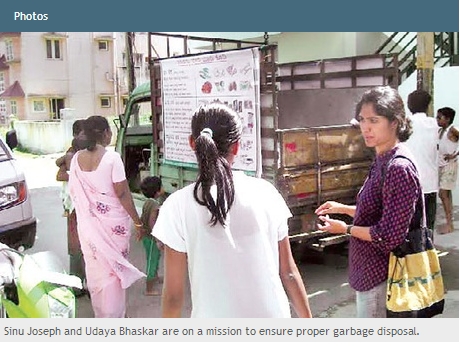
This is the most effective way to introduce something new to people.
Preaching isn’t enough, there are a lot of small hurdles that need to be removed before change will actually be implemented.
Enlisting the help of those involved insures that the new thing is OK with them – otherwise you wouldn’t be able to convince them – and that they understand what it’s going on!