Archives for posts with tag: corruption

Image

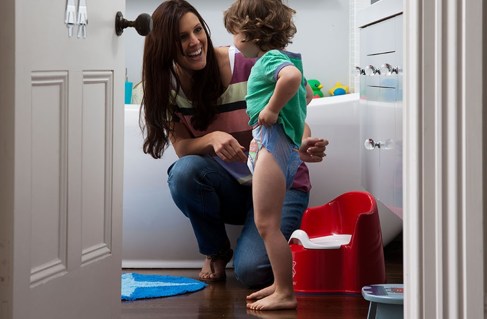
“Vezi fa ca ala micu iar s-a cacat pe el. Ce facem, il schimbam odata sau facem altul?”

Cam asa si cu clasa politica, ne tot plingem de ea, ‘din toate pozitiile’ spectrului politic, dar nu facem nimic concret pentru primenirea ei.

Ca in bancul de  mai sus, aparent avem doua variante, schimbam ‘scutecele’ celor deja acolo – constienti fiind de faptul ca nici un ‘bebelus’ nu invata din prima sa se tina curat dar ca o data si o data tot va trebui ‘pus pe olita’ – sau ii schimbam cu o garnitura complet noua?

In realitate, tot ca in bancul de mai sus, nu prea avem de ales: ‘Si cu asta (astia de acum) ce facem?’
In cazul copilului e evident, in cazul politicienilor poate mai putin: ‘ce ma intereseaza pe mine ce se intampla cu ei, au facut deja destule belele si oricum s-au infruptat pe saturate!’

De fapt lucrurile nu stau chiar atat de simplu. Asa cum nici un copil nu se invata ‘curat’ din prima si de unul singur tot asa nici politicienii nu au actionat de unii singuri. In termenii lui Basescu “Let’s drop the hypocrisy. A state on its own cannot be either uncompetitive or corrupt, because the state always has a partner, which is the private sector.”

Toata chestia e ca trebuie sa intelegem o data ce a vrut Gresham sa spuna cu “banii ‘rai’ ii gonesc de pe piata pe cei ‘buni’ “ Povestea a inceput atunci cand au inceput sa fie folosite monezile de metal aur sau argint. Valoarea unei monezi consta in cantitatea de metal pretios continuta. Cum aurul este cu atat mai usor de prelucrat cu cat este mai curat, primele monezi au fost batute din aur aproape pur. Aurul pur este insa foarte putin rezistent asa ca cei care faceau monezi (si bijuterii) au inceput sa experimenteze diverse aliaje. In acelasi timp cei care aveau de a face cu multe monezi – marii comercianti si ‘zarafii’, cei care schimbau banii dintr-o moneda intr-alta – incepusera sa pileasca cate un pic de aur din fiecare moneda care le trecea prin mana.
In situatia asta cei care utilizau monezile aveau in fata doua incertitudini: cat aur intra in realitate in compozitia aliajului din care a fost batura o anumita moneda si cat din cantitatea initiala de aliaj se mai afla in moneda atunci cand ea era oferita la schimb – pentru marfa sau pentru alte monede.
Prima problema a fost rezolvata de Arhimede – asta descoperise el de fapt atunci cand a luat-o la fuga dezbracat pe strada strigand Eureka, o metoda sa masoare simplu densitatea unui aliaj, si deci procentajul de aur din acel aliaj – iar a doua prin introducerea monedelor zimtate – din cauza zimtilor orice tentativa de a pili o moneda iese foarte repede in evidenta.
Numai ca pana la rezolvarea lor circulatia banilor nu fusese pe atat de simpla pe cat ar fi trebuit sa fie. Orice noua emisiune monetara era tratata cu neincredere pana cand nu se afla ‘in piata’ cu certitudine titlul (continutul in aur) aliajului din care fusese batuta si apoi fiecare moneda era cantarita cu grija la zaraf. Iar monezile noi si fara zgarieturi din seriile ‘bune’ erau tezaurizate cu grija, ceea ce provoca o criza de bani pe piata, adica deflatie.
Pe de alta parte, din punct de vedere individual, in conditiile in care pe piata circulau si bani ‘prosti’ (adica ‘piliti’, pentru indivizi era practic imposibil sa bata ei moneda dintr-un aliaj mai prost) ar fi fost de-a dreptul o prostie sa nu incerce si ei sa pileasca cate putin din monezile care le treceau prin mana sau cel putin sa le cantareasca pe cele care li se ofereau inaite de a le primi ca plata.

Numai ca toate astea distorsionau piata in asa masura si presiunea pentru ca problemele sa fie rezovate a fost atat de mare incat cei din ‘fruntea  bucatelor’ au fost fortati sa implementeze masurile care se impuneau: emiterea de monezi cu continut fix de metal pretios si care aveau zimti de siguranta.
Aici trebuie facuta remarca ca cei care au avut cel mai mult de castigat din masluirea aliajului si din pilirea banilor erau cei care bateau moneda (suveranii locurilor, de cate ori trebuiau sa isi plateasca creditorii sau armatele mai bateau o cantitate noua de moneda in care puneau atat aur pe cat aveau sau pe cat credeau ca vor accepta creditorii) cat si marii comercianti ai momentului (cei care aveau oportunitatea sa pileasca cat mai multe monezi). Totusi si acestia au inteles pana la urma ca le va fi si lor mai bine daca instrumentele de plata vor functiona corect si intreaga economie va fi deblocata.

Cam acelasi lucru ar trebui sa se intample si in politica actuala. Nu e nevoie de cine stie ce filozofie. In momentul in care cei aflati ‘la butoane’, atat cei de la putere cat si cei din opozitie, vor intelege ca daca mai continua asa li se va prabusi sandramau in cap sa vedeti ce repede vor incepe sa faca ce trebuie.
Numai ca oamenii acestia, ca noi toti de altfel, au nevoie sa fie trasi tot timpul de maneca. Ce sa intelega ei daca noi, cei de rand, atunci cand avem o problema ‘sarim la cap cu cate o spaga’? Ca li se cuvine, nu? Iar atunci cand ne vine randul sa spunem ce parere avem despre ei nici macar nu mergem la vot.

“Pai degeaba merg la vot, ca nu am pe cine sa votez. Toti sunt la fel!” Poate ca or fi ei atat de asemanatori incat e greu sa-i deosebesti dar daca nu mergem de loc la vot semnalul pe care il trimitem este ca nu ne pasa, ca ei pot face ce vor si ca noi nu vom reactiona. Asa ca daca suntem atat de scarbiti incat nu ne vine sa votam cu nici unul dintre candidati ar trebui sa le spunem clar chestia asta si sa punem doua trei stampile pe buletinul de vot ca semnalul sa fie atat de puternic incat sa il auda si ei: “ne pasa de ce faceti voi acolo, aveti grija!”

Asa ca mai usor cu spaga si mai mergeti pe la cabina de vot.

Apropo, cati dintre voi stiu cine ii reprezinta in parlament sau in consiliile locale?

Dar cati dintre voi s-a gandit pe vremea lui Boc ca in loc sa fie taiate lefurile ar fi mai eficient sa fie stavilita ‘risipa’ resurselor statului si ca in loc sa fie marit TVA-ul ar fi fost mai bine sa fi fost imbunatatita colectarea lui? Cele 30-40% din economie care raman nefiscalizate sunt populate tot cu oameni din tara asta, nu?

Extrapoland citatul din Basescu rezulta ca ‘nici un smecher de pe lumea asta nu poate face nimic de unul singur’. Ar fi timpul ca toti, atat smecherii cat si cei care ii ajuta, sa inteleaga ca nu mai tine.
Mai e un pic si chiar ne cade sandramaua in cap.

Intotdeauna lucrurile au mai multe fete si fiecare le poate intoarce dupa cum poate sau in functie de ce interese are la un moment dat.
Trebuie sa tinem cont totusi noi ne putem uita la ele din ce parte dorim si sa le simplificam cat vrem numai ele raman acolo in toata complexitatea lor si se mira: ‘Oare cand or sa ne bage astia in seama?’

Tocmai am citit pe Twitter: “Dati-mi voie ca, in ultima zi din an, sa-i adresez presedintelui Basescu racoroasa urare:” La anu, multi ani!” “ (Mircea Badea)

Cei cu inclinatii literare pot admira ascutimea verbului, cei preocupati de drepturile omului pot exclama ‘iata adevarata libertate de exprimare’ iar basistii pot spune ‘ce magar!’ doar ca problema ramane.

Iar aceasta nu este Basescu ci cum de a fost ales ca presedinte de tara un om care poate declara linistit: ““Eu nu spun că sunt un sfânt. Este controversat modul cum am primit apartamentul din Mihăileanu. Legal, dar controversat din punct de vedere moral. Acum, este controversa cu creditul fiicei mele. În mod cert, este legal. Deci, nu vorbesc de pe poziţia unui sfânt, dar lucrurile au limite”.”

Broadly speaking all humans are intellectuals since all of them are conscious so, at least sometimes, they ponder upon things before deciding one way or another.

Nowadays, since we live in the era of the ‘peer reviews’, the concept is defined a lot stricter: one is an intellectual only if at least one ‘certified gatekeeper’ affixes him with an approval stamp…

OK, let me get serious.

Some people use their brains a lot more than others. Does this simple fact turn them into intellectuals?
Not so long ago, when books were not yet written directly on laptops, publishers used to hire people to do this job. Practically to copy a ‘manuscript’, usually typed (?!?), on a computer. Now, is that kind of a person an intellectual or not? After all he is working mostly with his brain, right? And in general people who work as clerks, or in a call center, are they intellectuals just because of their daytime jobs also?

No? Because their honest and respectable work, otherwise very useful, doesn’t result in anything new or original?
I concur.

So we might say that an intellectual is a person that uses his brain in such a manner that the end result of his activity is a new idea or concept, one that either fixes a problem that has become apparent, broadens the human knowledge or contributes to the artistic treasure of the mankind.
If we take this definition to be true then the limitation described when talking about peer reviewing looks rather stupid. Asking highly original people to evaluate the work of other highly original people would seem to be both a waste of their time and a subtle form of pressuring those whose work is being evaluated to conform to the established norms and customs of the ‘discipline’.
And this would be at loggerheads with the need for originality, wouldn’t it?
On the other hand in the modern days of very specialized science and technology it would be preposterous to accept every new ‘contribution’ as valid without previously checking it in some way or another…

And here we get to the really interesting part. The professionalism of the intellectuals.

What?!?

It’s simple actually. A professional is by definition a person who not only has the command of whatever skills he needs to perform his job but also such a high degree of self esteem that he always strives to do his best. In short a professional is a person who sees/describes himself as somebody who is able to perform a certain job above a certain level.

And exactly as we have doctors who save lives and quacks, writers and pen-pushers, cooks and people who waste good food, we also have people who love to think in searching for a solution or for the next new thing and people who think mainly about how to advance their ‘intellectual’ careers…

I’m not trying to convince any of you that bona-fide ‘intellectuals’ should volunteer their life and energy,  live on stale bread and dress miserably. I’m only suggesting that when a passionate one meets a ‘career’ man things will probably not work smoothly between them and if the career guy gets the upper hand it is the rest of us who are the real losers. The same thing happens if the society at large is not wise enough to make sure that the ‘professional’ ones have ‘enough to eat’ but this is a rather different problem.

Image

M-a intrebat cineva ce cred despre articolul asta:

“Nouă personalităţi răspund pe ce se întemeiază credinţa lor: De ce cred în Dumnezeu”

Dupa ce am citit (doar) “Omul fara rost” am raspuns repezit:

“Icoana de pe peretele clasei nu este un indemn catre narcomanie sau orice altceva (din ‘clasa’ celor evocate de Dan C. Mihailescu) ci este unul catre conformism.

Si exact asta este motivul pentru care am intrat, cu totii, in criza in care suntem de vreo 50-60 de ani: am ascultat prea tare de altii si am imprumutat prea disciplinati modelele care ne-au fost propuse.
E adevarat ca dezvoltarea la care a ajuns spatiul cultural din care facem parte (cel ‘vest european’) are foarte mult de a face cu faptul ca am fost crestini numai ca noi oamenii am dat nastere crestinismului nu invers.
Cu alte cuvinte noi am dezvoltat crestinismul, noi l-am creat pe Dumnezeu (tocmai pentru ca avem credinta – “Nu M-ai cauta daca nu M-ai fi gasit!”) si nu invers.
Distanta care a aparut acum intre oameni si Dumnezeu nu se datoreaza faptului ca Dumnezeu ar fi facut ceva rau (nici nu poate, el este insasi ‘firea’ – tot ce exista – asa ca daca ar face ceva rau ar fi ca si cum si-ar trage un glont in picior.) Se datoreaza faptului ca unii smecheri incearca sa profite de credinta oamenilor. Prea mult preoti catolici isi bat joc de copii. Ortodocsii construiesc prea multe biserici monumentale si prea putine azile de batrani. Prea multi protestanti se straduie sa invete pe unii cum sa-i urasca pe altii (legile anti-homosexuali din Uganda se pare ca sunt opera unor evanghelisti americani) in loc sa-i indemne sa depaseasca diferentele dintre ei. Prea multe ulemale indeamna la varianta exterioara, violenta a jihadului.
In realitate oamenii nu se indeparteaza de Dumnezeu. Se indeparteaza de chipul pe care i l-au cioplit smecherii astia si ii cauta adevarata fata, cea care se arata fiecaruia dintre noi in particular si nu atunci cand batem matanii in fata bisericii ca Iliescu sau ca Bush dupa ce s-a ‘nascut a doua oara’. Sau ca sa ma intorc la Mihailescu oamenii merg “prin păduri, pe vârfuri de munte, prin livezi, podgorii, fâneţe, ori în largul mării” tocmai pentru ca acolo gasesc o fata a lui Dumnezeu mult mai sincera decat cele zugravite prin unele ‘altare’ sau zbierate prin difuzoare de unii predicatori!”
Abia dupa aceea am citit si restul articolului. Merita. Pe mine m-au interesat mai ales cele spuse de Radu Gologan. Pe urma am mai citit odata si predica parintelui Galeriu.

Image

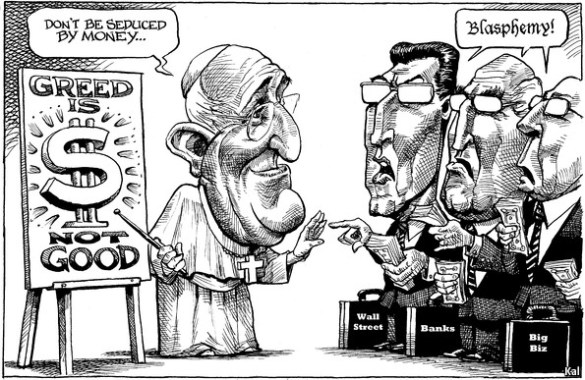
Yesterday I shared this picture on FB.

One of my friends asked me:
“How do you define “greed”. In the movie “Wall Street” Michael Douglas has this great speech saying that “greed is good” meaning that passion for things in life is good. Where is the line between greed and passion? Does that line look differently depending on where you are in the deal chain?”

This was my answer:
“This one is simple.
If you are willing to do your best in order to get something then you’re passionate ABOUT that something.
If you are ready to ‘step on corpses’ to reach your goal then you are ‘greedy’ FOR that something.”

Another friend commented:
“Well I have a problem with this; the Catholic church is one of, if not the richest organization in the world, how does the pope plan on distributing the assets? The church generally asks for 10% of your income to be ‘donated’; not mandatory but one of the heftiest taxes around. Practice what you preach.”

Me again:
“It seems that Romanians have already solved this conundrum.
We have a saying that goes like this: “Do what the priest says, not what he does!” ”

Thank you guys!

Ca tot ‘sarbatorim’ trezirea din 1989…

In postarea trecuta am adus vorba despre Sven Hassel.
Cei mai tineri dintre noi s-ar putea sa nici nu fi auzit despre el. A fost un soldat din armata germana care a reusit sa supravietuiasca razboiului – si l-a facut pe tot, din ’39 pana in ’45 – iar apoi a povestit ce i s-a intamplat.

In ’40 a dezertat. A fost condamnat la puscarie iar dupa cateva luni a fost transferat intr-un regiment disciplinar. Ca atare a mai facut un stagiu de instructie. Numai ca de data asta ‘instructia’ avea mai degraba de a face cu ‘reeducarea’ (vezi ‘Fenomenul Pitesti’) decat cu antrenamentul specific militar. Intr-una din cartile lui povesteste ca ‘instructia’ asta cuprindea si momente in care trebuiau sa se prezinte la o ‘inspectie de front’ (unde pentru o pata de noroi pe uniforma primeau pedepse crunte) la o jumatate de ora dupa ce se intorsesera din cite un mars de doua zile prin noroaie. Singura solutie era sa intre sub dus cu uniforma si tot echipamentul pe ei si sa spele tot acolo, pe loc. E de presupus ca apa de la dus era daca nu calda atunci macar incropita, altfel nu ar fi avut nici o sansa…

Ei bine, in primele 3 sau 4 saptamani de armata acolo unde si cand am fost eu incorporat nu a curs apa aproape de loc. Nici rece si cu atat mai putin cea calda. Si mi-am “satisfacut stagiul militar” in mijlocul unui municipiu – Focsani – din Romania anului 1981 si nu undeva in Germania anului 1940…

Pana la urma asta a fost motivul pentru care au cazut regimurile comuniste. Nu comunismul nu ‘a cazut’ inca, mai sunt nostalnici care mai cred ca utopia asta ar fi putut fi pusa in practica, dar despre asta mai tarziu!

Regimurile comuniste au cazut pentru ca asa ceva nu putea functiona!

It’s the economy, stupid!

Premonition or what?

And now, thirty years later, Merkel is pissed off because her phone was tapped. By none other but the ally who saved her part of Germany from being completely overrun by the Soviets and who organized the Berlin  Airlift.

History moves along very twisted paths indeed. Otto von Bismarck, the first German Chancellor, came up with the concept of Realpolitick and his ‘great-great-daughter’ gets to feel it being applied to her own mobile phone. It probably was very strange for her to find out that her American Allies behaved no differently than her ‘beloved’ Stasi did… Realpolitick or not, sometimes its smell is not at all prety.

Well, get used to it. I just found out – that’s what friends are for – that our forays into the world wide web are “Tracked without traces”. So no matter what we do it’s recorded someplace. In a way it’s not at all new, two or three hundreds ago – when we still lived in close knit communities – everybody who was paying any attention knew what everybody else was doing.
Coincidentally  or not the big social, scientific and technological breakthroughs happened only after humanity grew out of this phase of its development but there still are a lot of people who deplore the ‘good old times’ when mores were not corrupted by modernity.

And there is some truth is this also. Corruption – altering the original meaning/use/destination of something so that the perpetrator gets undue benefits – is our main method of shooting ourselves in the foot.

For me this article, if the allegations are true, proves a lot on things.

Boeing ‘selling used parts as new to the Pentagon’ means not only that the the lust for money is strong as ever but that it has reached a new dimension: it seems that consequences don’t matter anymore.
After all it is one thing for Lockheed to bribe  some foreign officials – who might had abused their positions – to buy something of an otherwise excellent quality and quite a different one to overburden the defense budget of your own country, to say the least – assuming that the used parts were of the same quality and reliability as the news ones would have been.

American companies – supposedly operating in the freest and most transparent market in the world – perpetrating such practices cast a dark shadow on the future of the whole planet. In the light of these happenings one can only wonder about what is going on in the more ‘opaque’ areas of the Earth….

Legislation without social consent is akin to window-dressing. After the Lockheed scandal the whole world supposedly ‘tightened the spigots of corruption’. So what? Nowadays people question some of the President of the US ‘s actions while on the international arena Siemens, for example, has attracted the lime-lights.

The notion that corruption is something that has to do exclusively with the public employees is half backed. While I may accept the idea that maybe the Japanese officials involved in the Lockheed scandal asked for kick-backs themselves – a practice revived nowadays in some ex-communist countries – I am convinced that nobody from the Pentagon is guilty of anything more than, at most, having too much trust in Boeing. In fewer words it becomes clearer that in quite a lot of instances the active corruption comes from the private sector, specially so in countries were it has the upper hand – precisely the civilized democracies that the most parts of the Earth try to emulate. Maybe these people should exercise more discretion about what attitudes to adopt and what to have second thoughts about – the most important of the latter being the indiscriminate lust for money that has been the first western ‘obsession’ to have been globalized.

I need to end this in a more optimist key. Traian Basescu, the current Romanian President – who is not above suspicion himselfputs it very clearly: “‘Corruption rests with two sides. I do not want to change responsibility, but it must be shared and assumed. A corrupt civil servant cannot be corrupt if they do not have a partner to put money into their hands, a ministry cannot pay by 50 percent more if there is not a consultant to sustain what the constructor says: ‘Yes, we’ll raise the bill’.” and “‘I believe we must, first and foremost, leave hypocrisy behind. The state alone cannot be corrupt, it has a partner, if there is corruption. The state alone cannot be non-performing, it has a partner. Let us together assume what we have to do. The easiest thing for the private sector to do is to criticise the state and the easiest thing for the state to do is to show indifference to the problems facing the business environment.”
Now even if the translation is not very good the message is indeed clear. Swim or sink together. Either we all understand that we cannot go on this path much further – every step in the wrong direction will provoke additional pain on the return trip –  or we’ll have to face really dire straits at the end of it.

But the direction we chose depends on nobody but US.